Get Premium
Dark mode theme is available exclusively for premium users. Learn more about the benefits of subscribing.
No fees, cancel anytime.

 Dark Mode Ad-Free Browsing Unlimited Content
 Ad-Free Browsing Unlimited Content Dark Mode
Join 1.2 million Panda readers who get the best art, memes, and fun stories every week!

It’s normal at the beginning of a relationship for people to “analyze” their new partner. After all, the couple needs to find out if they’re compatible.
However, there comes a point where that scrutiny is no longer about getting to know someone but about projecting your own fears and insecurities onto them.
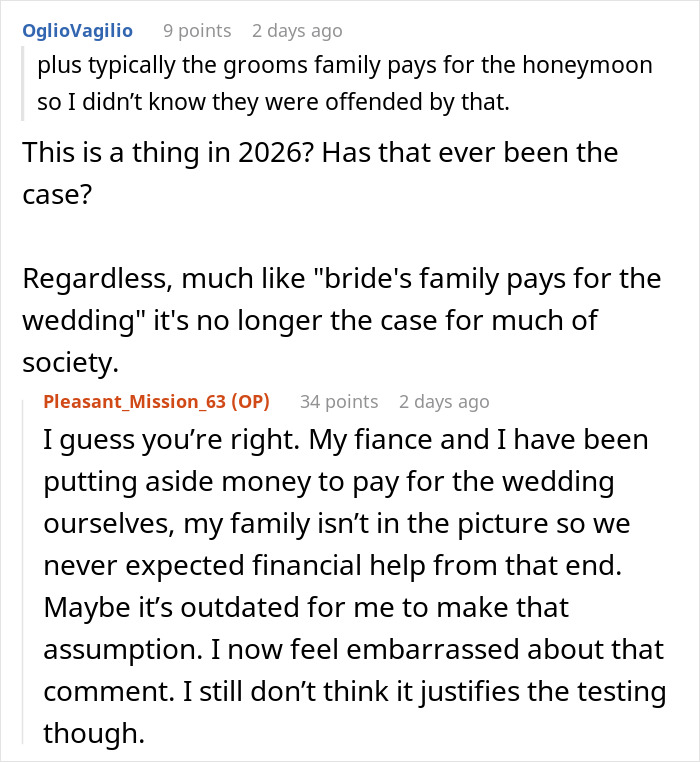
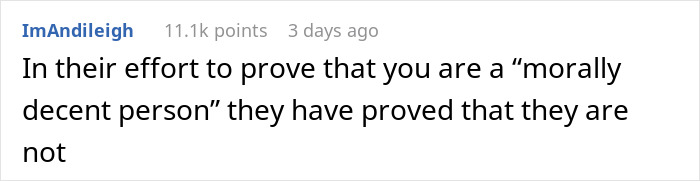
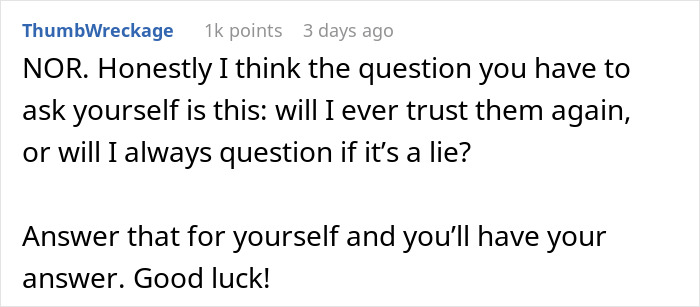
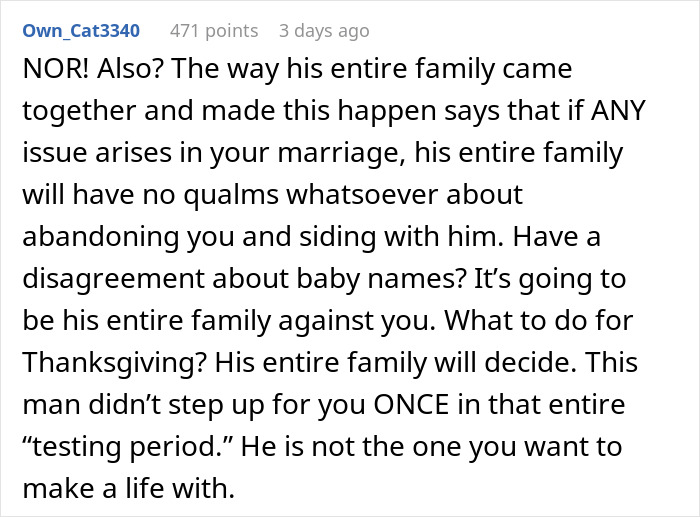
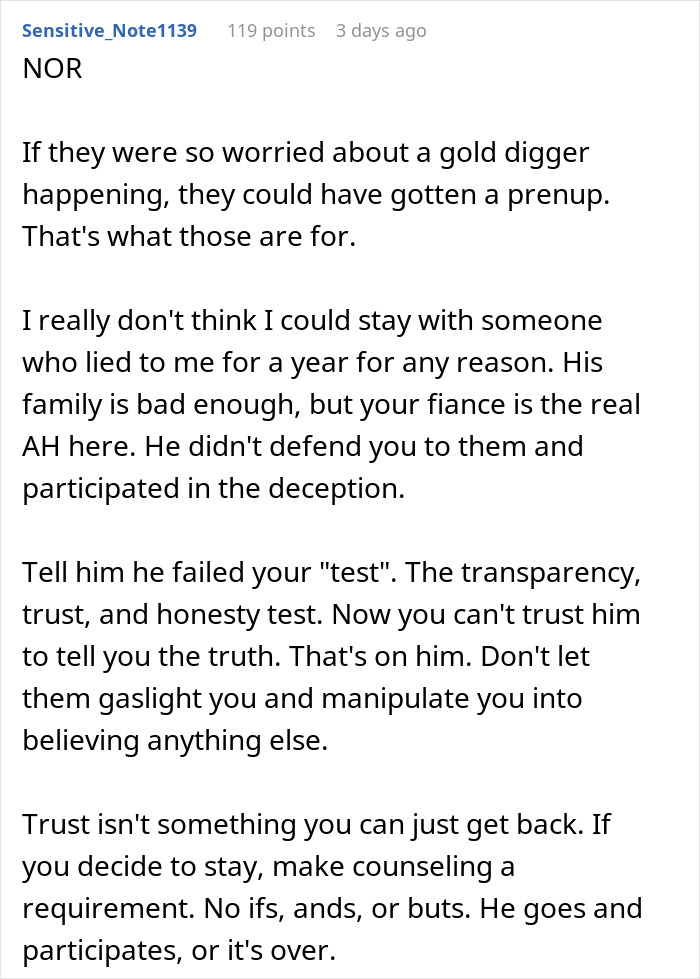
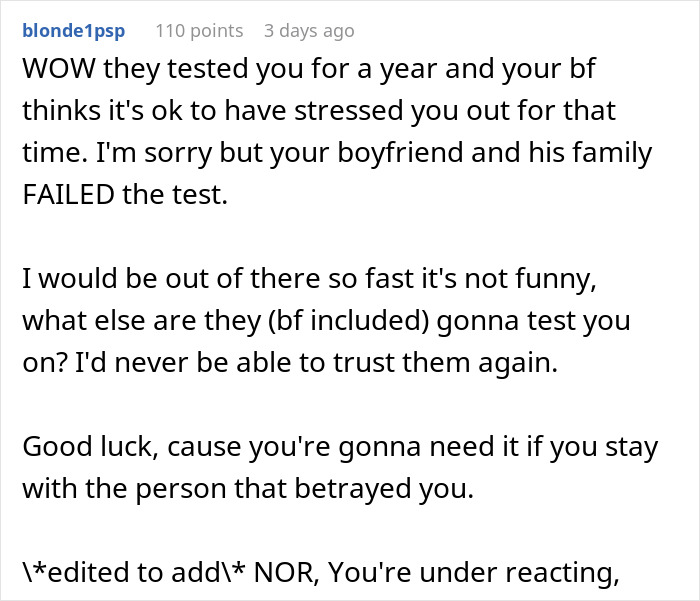
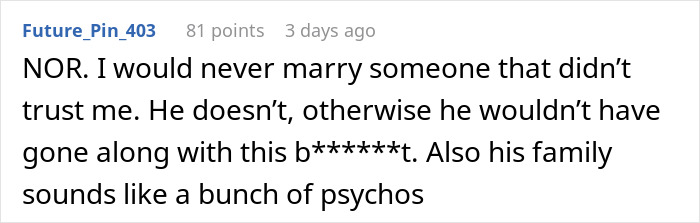
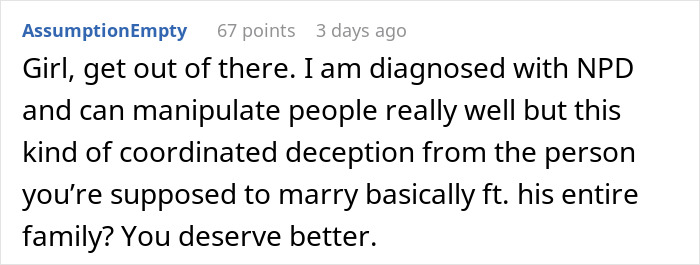
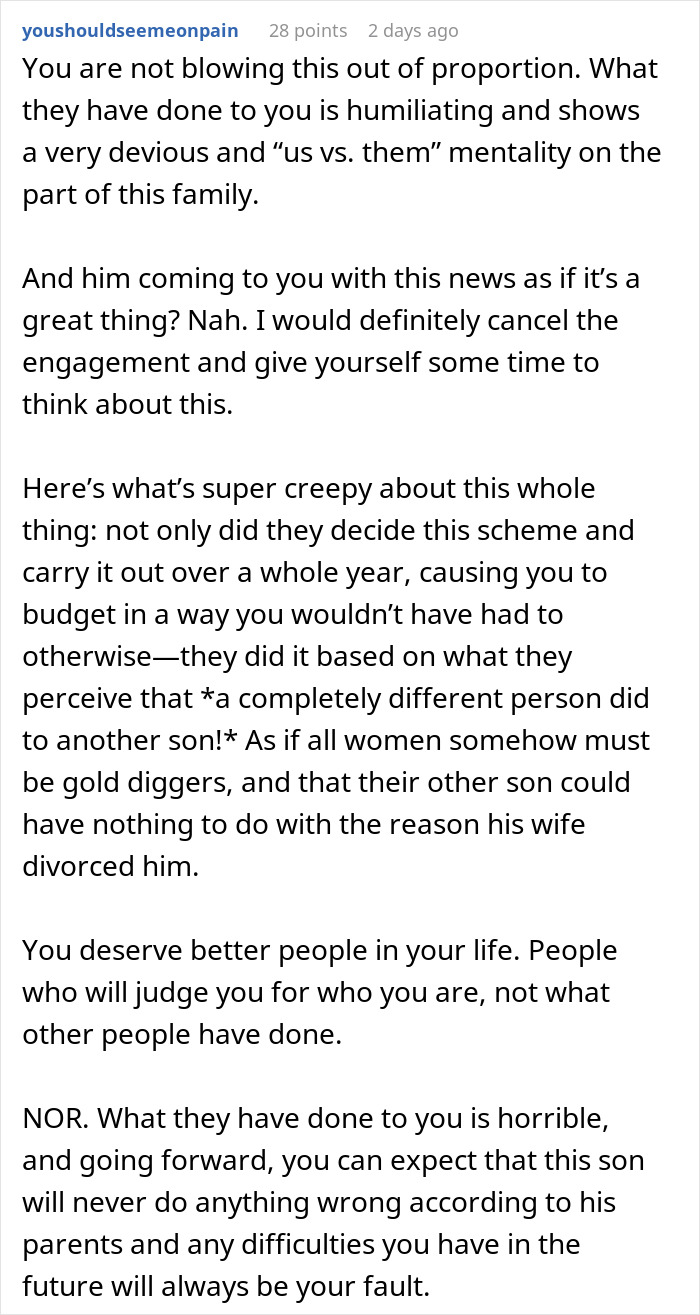
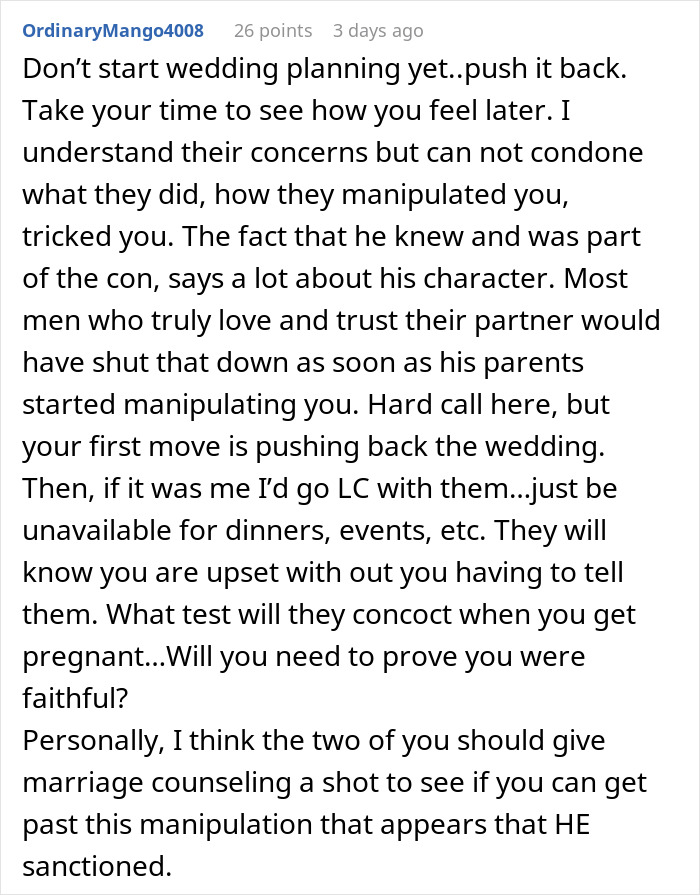
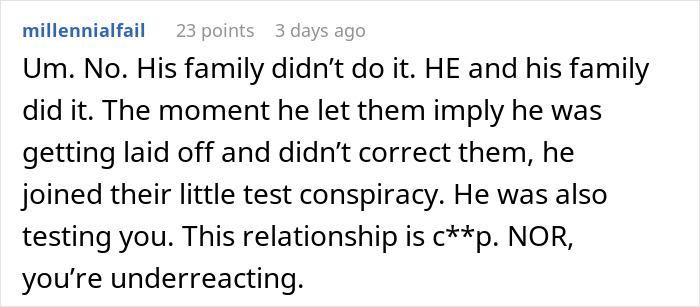
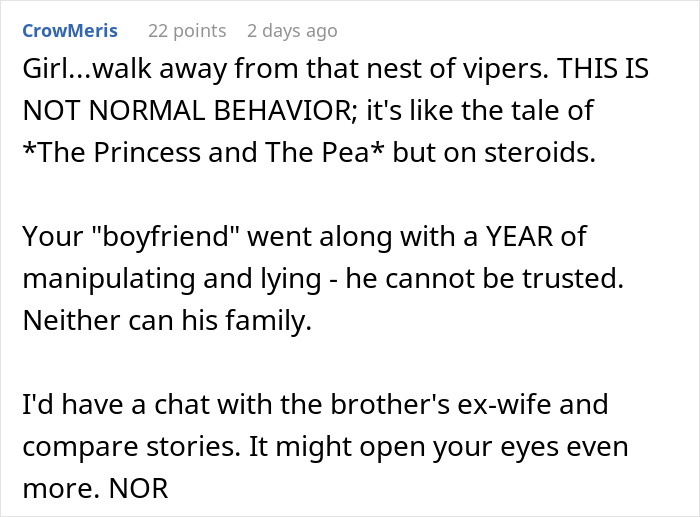
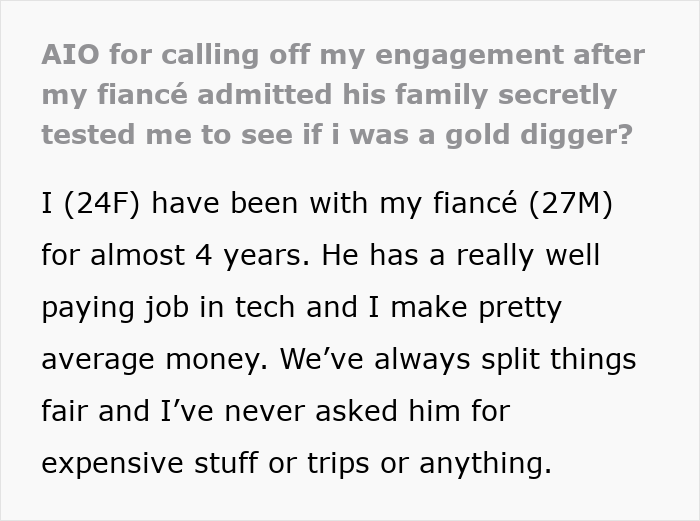
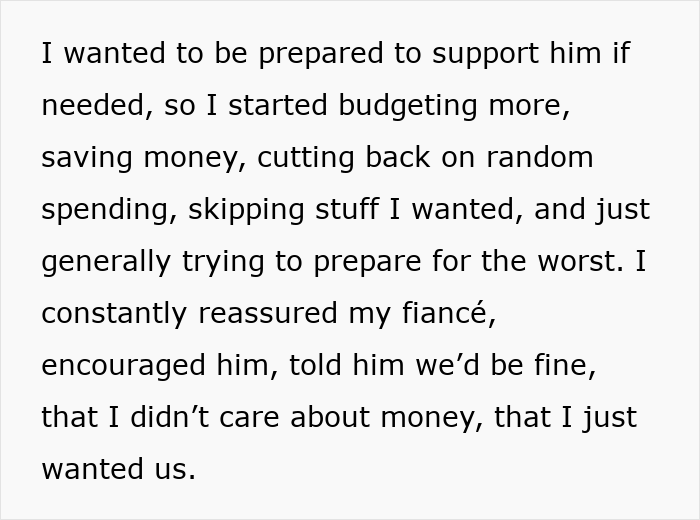
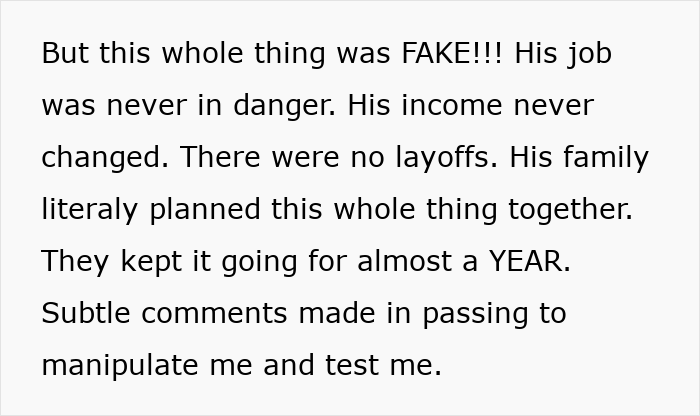
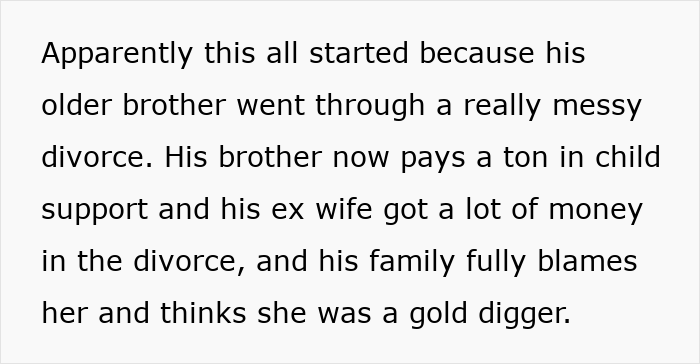
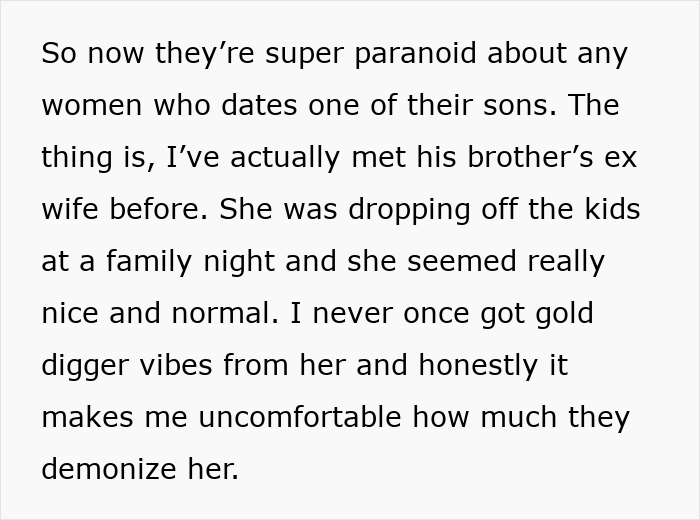
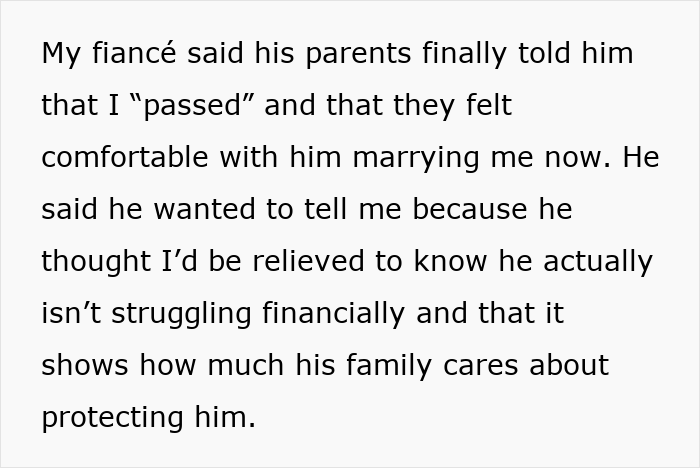
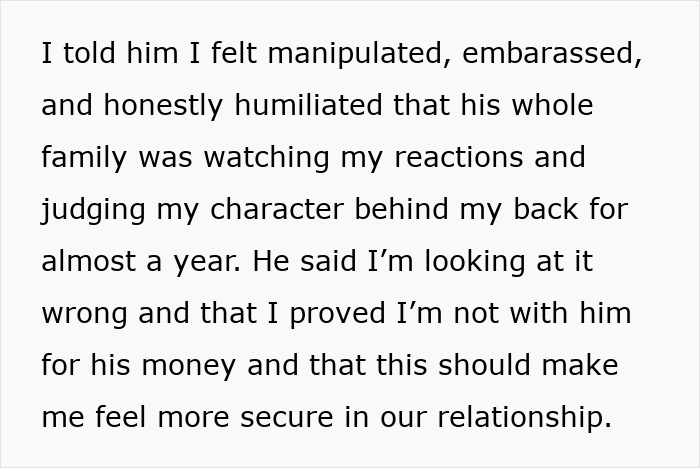
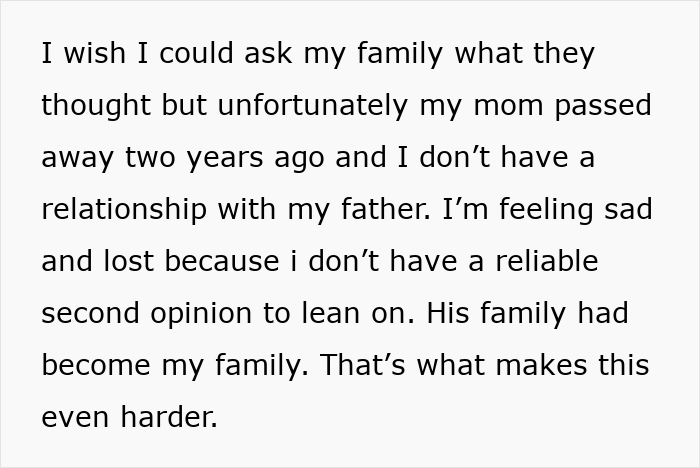
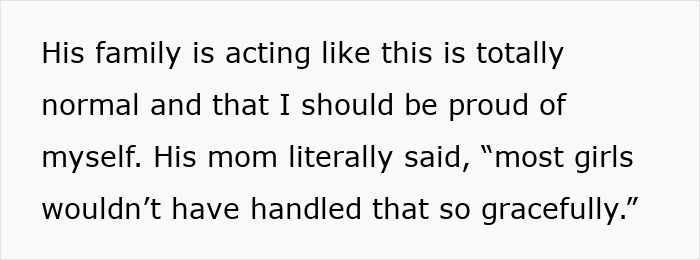
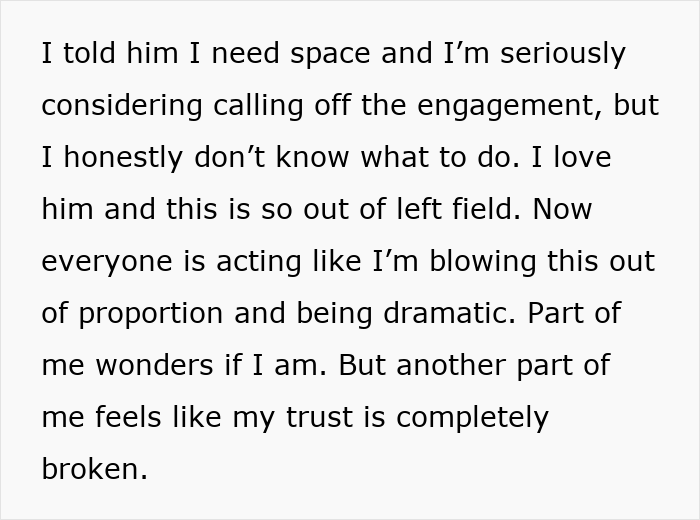
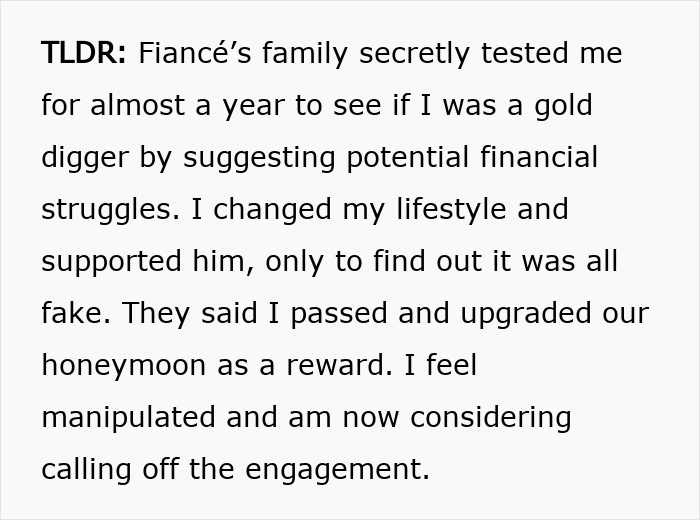
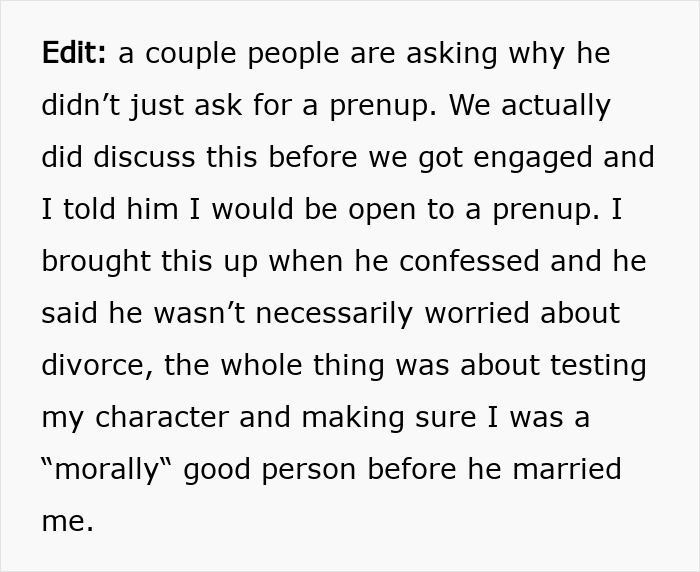
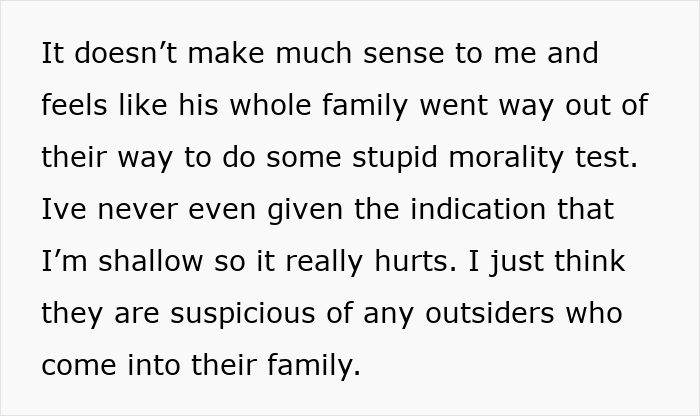
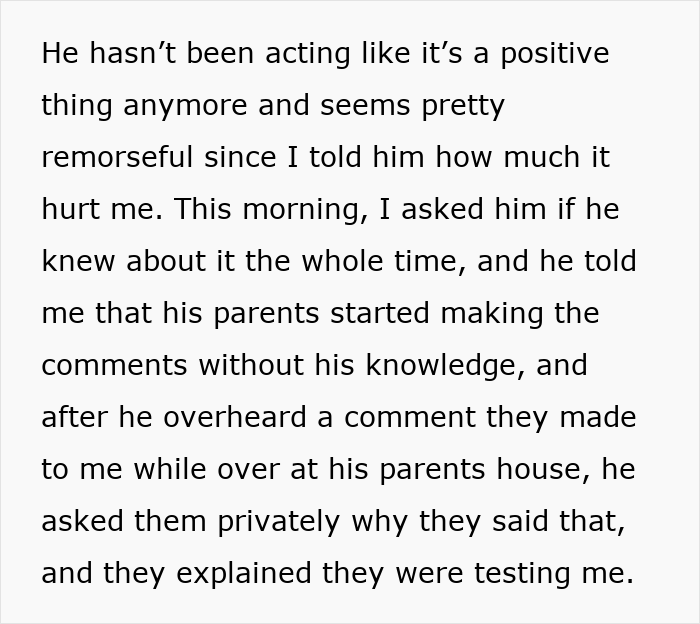
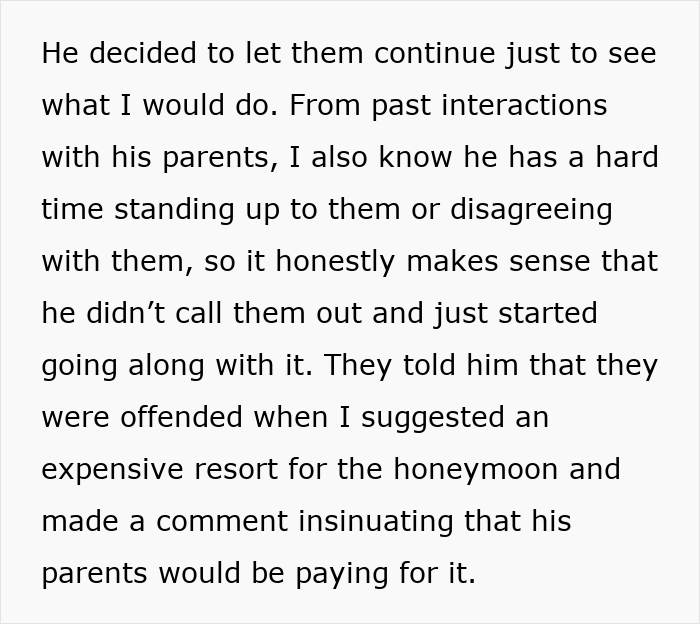
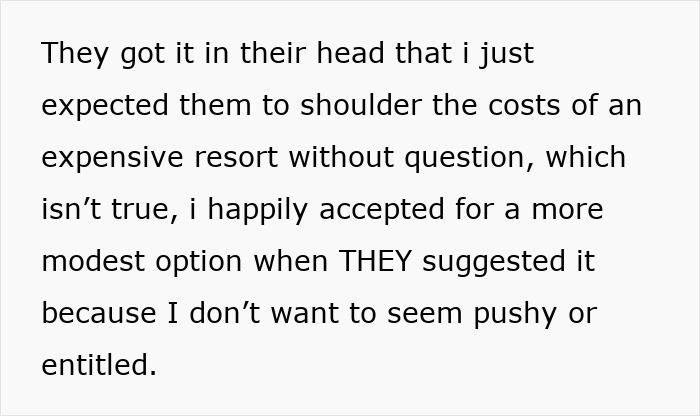
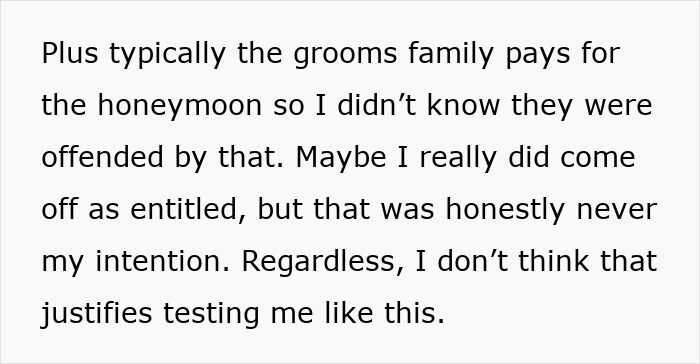
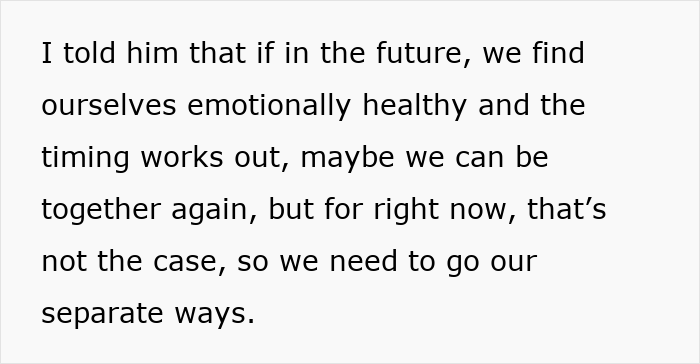
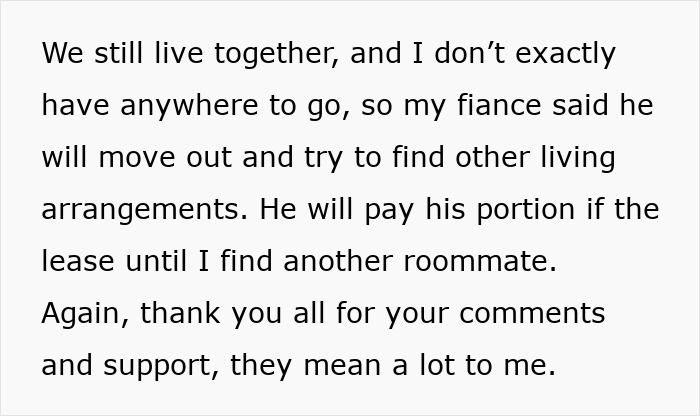
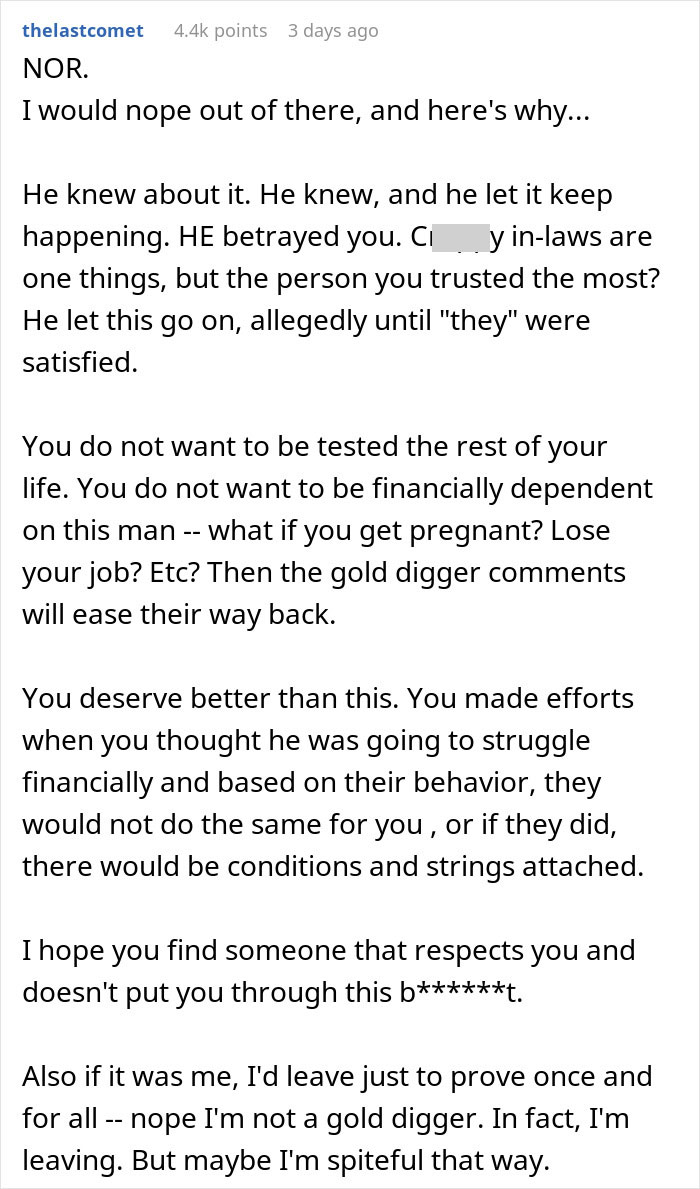
And Reddit user Pleasant_Mission_63 thinks her fiancé and his family have crossed that line. In a candid post on r/AmIOverreacting, the woman revealed she was subjected to a gold-digger test without even realizing it.
Image credits: Getty Images / Unsplash (not the actual photo)
Image credits: Jordan González / Unsplash (not the actual photo)
Image credits: Getty Images / Unsplash (not the actual photo)
Lately, stories like this—where a man or his family tests a new partner to see if she has any ulterior motives—have been appearing all over the internet. And while some of them might be just a figment of people’s imagination, meant to score cheap likes, Christine Rafe, a Sydney, Australia-based relationship expert, sees this trend as symptomatic of a broader cultural shift.
“The rise of ‘gold digger tests’ reflects the growing gender divide and rhetoric on social media and ‘alpha male podcasters’ suggesting heterosexual women only want the ‘top 10 percent’ of socially, financially and physically attractive men,” she explains.
“This baseless theory, popularized by Andrew Tate and his followers, encourages men to be suspicious of women’s intentions, leading them to ‘test’ financial expectations by making women pay for dates or lying about their jobs to see if they stay interested.”
According to Rafe, everything’s then worsened by political advocates calling for a return to traditional gender roles.
But they are manipulative and seriously damage trust.
The relationship expert believes there are healthier ways to navigate financial expectations, such as learning about your partner’s hobbies, lifestyle, travel plans, values, and then putting in the effort over time to learn about the way they handle bills and other expenses.
She also encourages self-reflection. “If you have concerns about expectations or motives in dating, explore them through therapy or journaling to understand where your views on status and money come from, and what a healthy relationship looks like,” Rafe adds.
“When discussing these topics, share your vulnerabilities rather than projecting insecurities.”
Image credits: Getty Images / Unsplash (not the actual photo)
Image credits: Getty Images / Unsplash (not the actual photo)
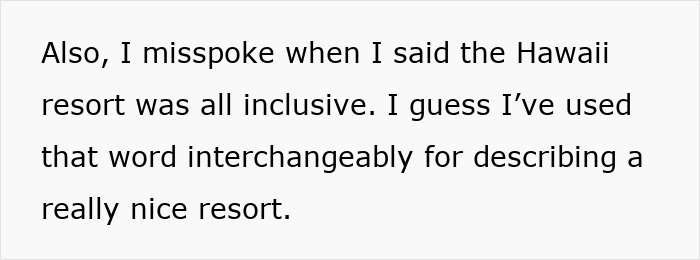
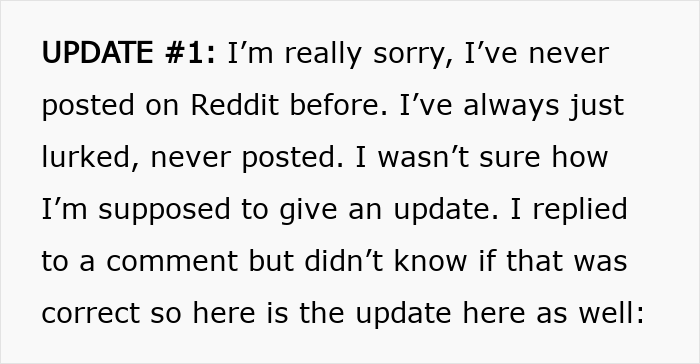
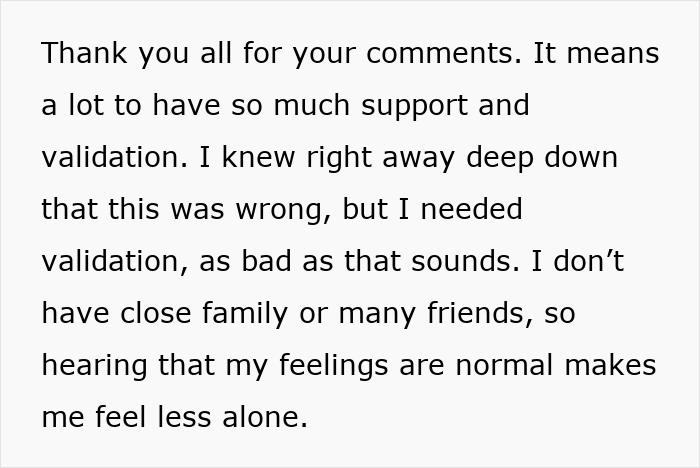
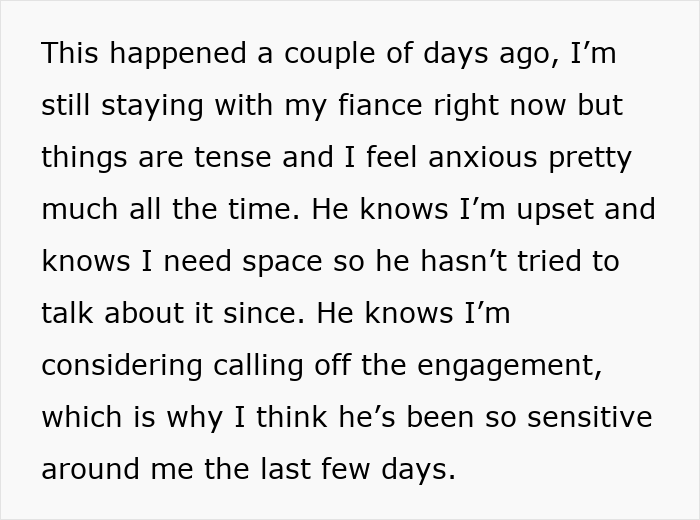
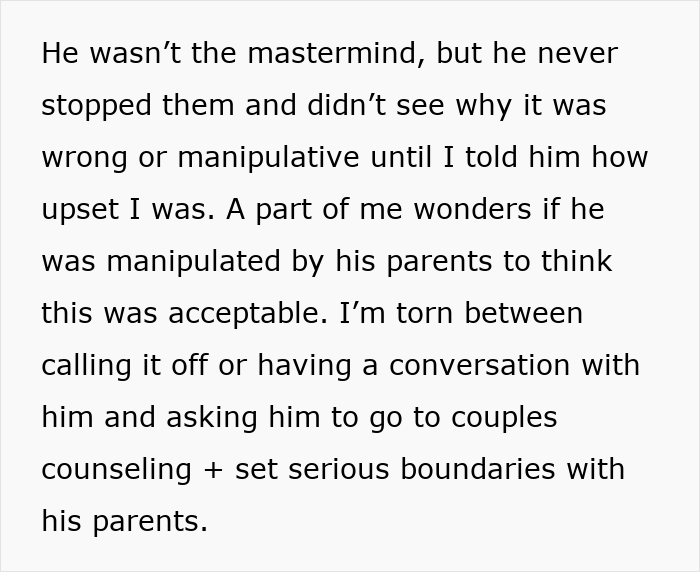
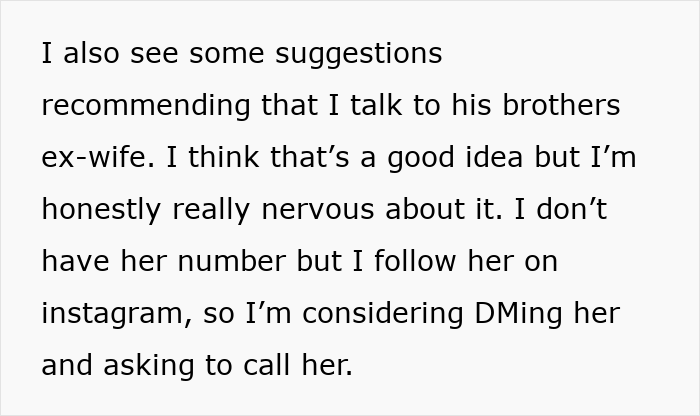
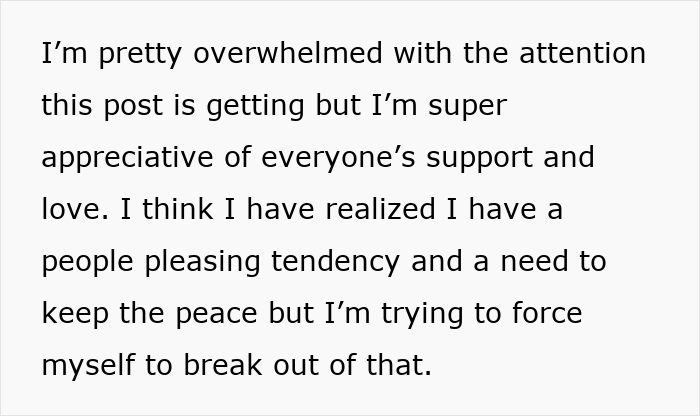
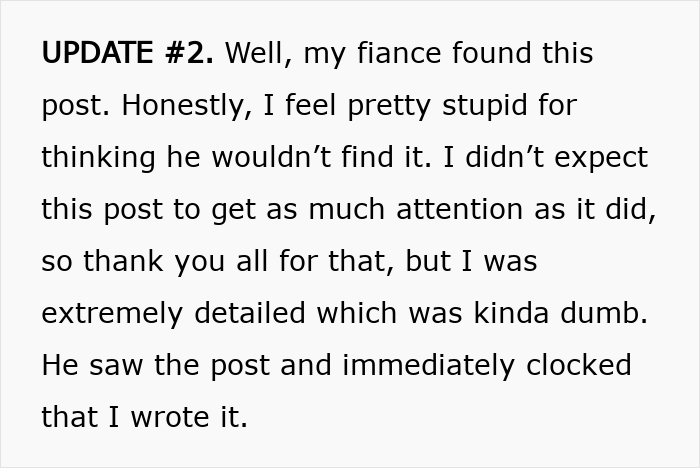
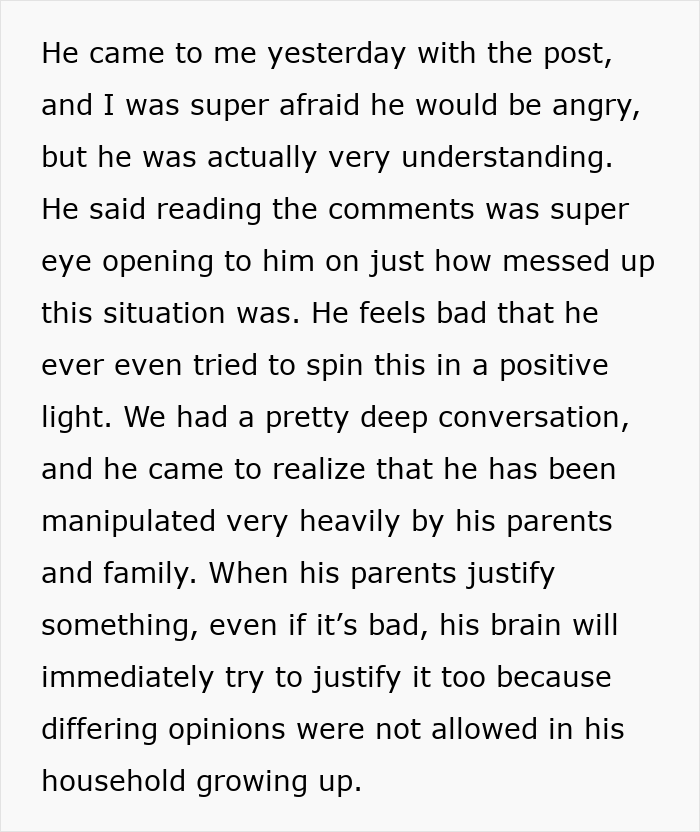
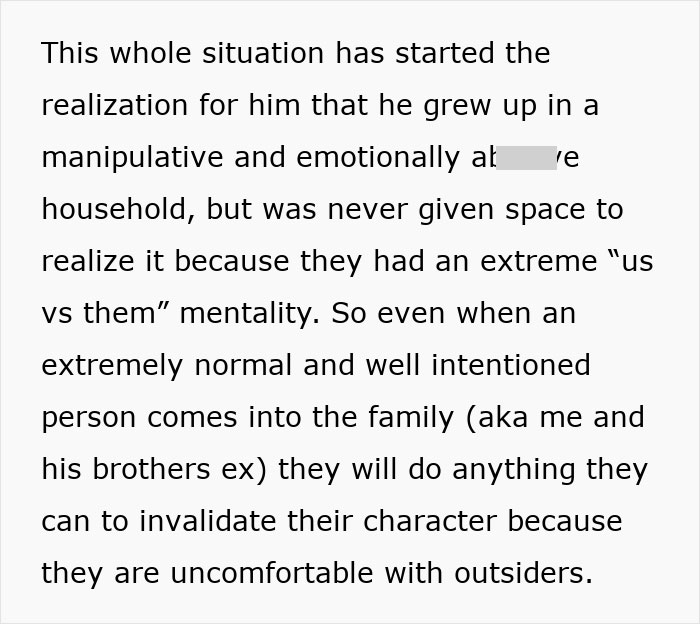
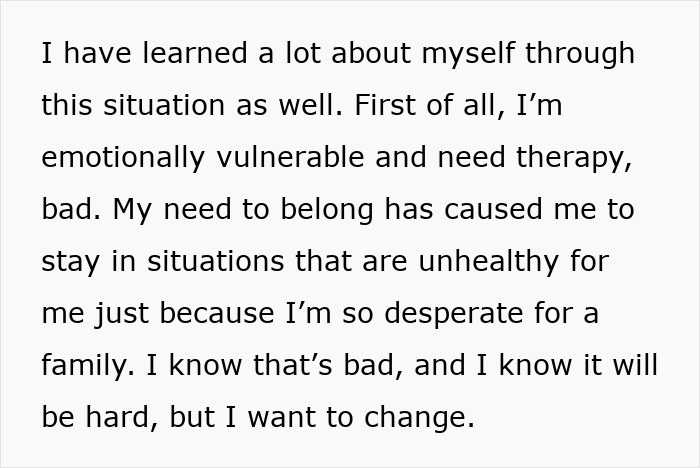
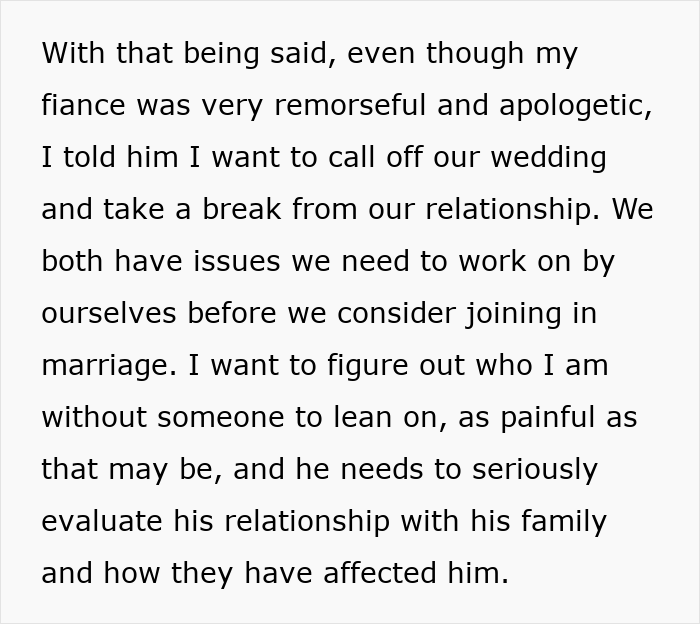
Image credits: Pleasant_Mission_63
Whatever you might think of the Redditor’s decision to break up with her fiancé, there’s a good chance there would have been even more conflict with her in-laws had the two of them tied the knot.
A study published in the Evolutionary Psychological Science journal found that both men and women report having more conflict with their mothers-in-law (44%) than with their own moms (39%).
The majority of conflicts between spouses and their mothers-in-law revolved around, surprise, surprise, finances and child care.
The researchers suggested that these conflicts may be “influenced by genetic conflict” as each person “unconsciously acts in the interest of their genetic kin” instead of in each individual’s best interest.
“This genetic conflict may cause affines (in-laws) to disagree about the distribution of resources and investment, just as we see mothers and fathers disagreeing in these domains,” the authors of the paper wrote. “Our results are consistent with the hypothesis that genetic conflict may underlie negative social interactions that occur in affinal (in-law) relationships.”
The researchers noted that animosity between in-laws is also likely due to the fact that they “do not choose to have relationships with one another” but are forced into familial bonds as “unintended consequences” of their children’s romantic relationships.
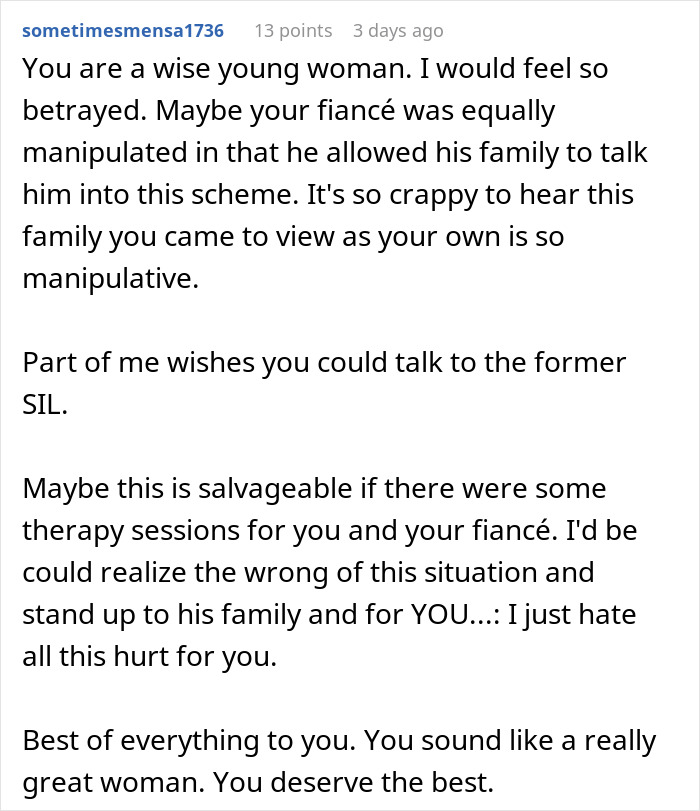
But as this post showed, you can’t forget everyone’s own baggage, either.















By entering your email and clicking Subscribe, you're agreeing to let us send you customized marketing messages about us and our advertising partners. You are also agreeing to our Privacy Policy.
Thank you! You've successfully subscribed to newsletters!


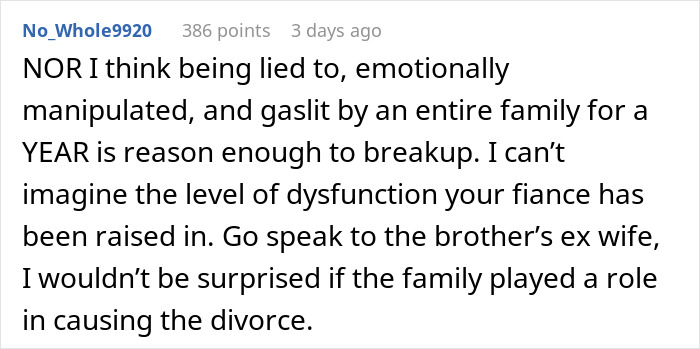
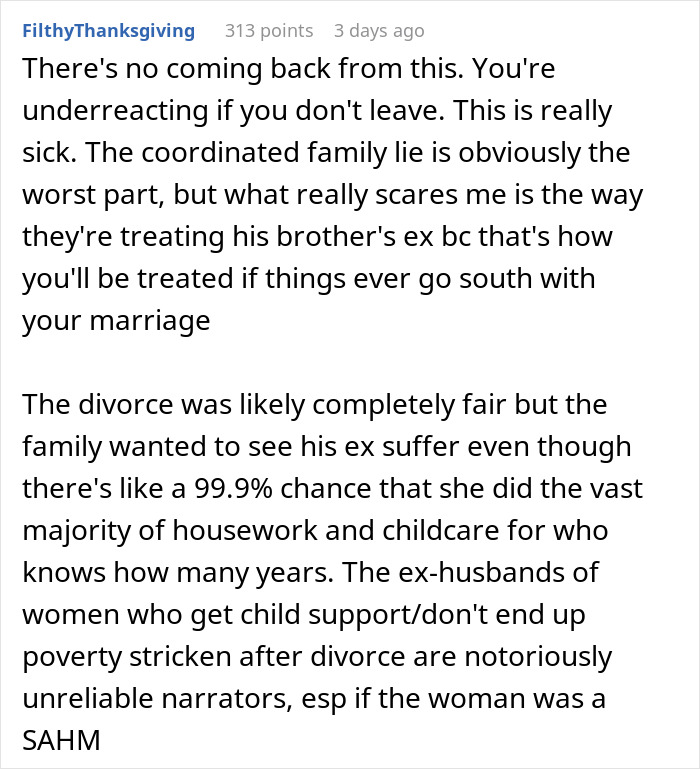
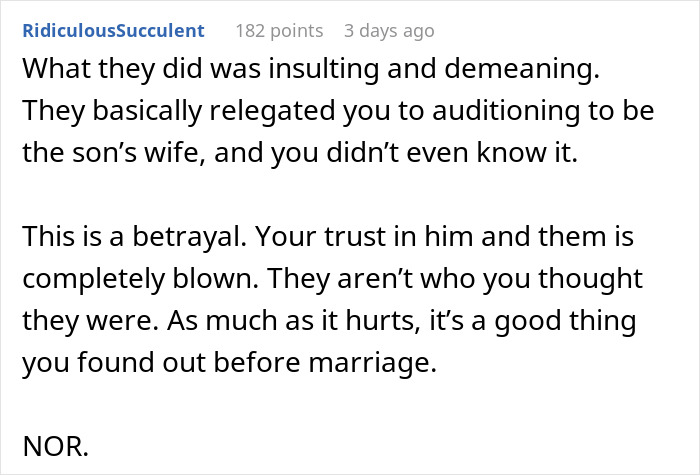
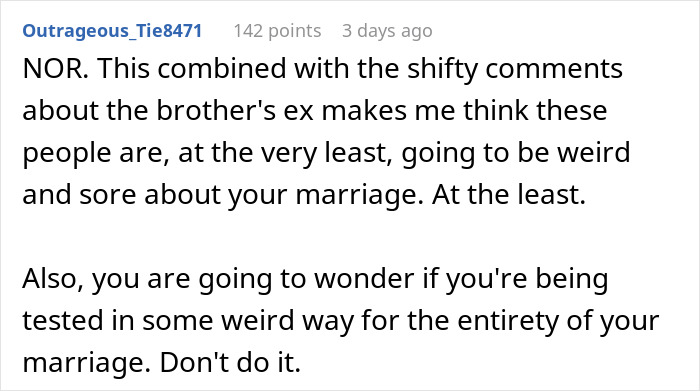
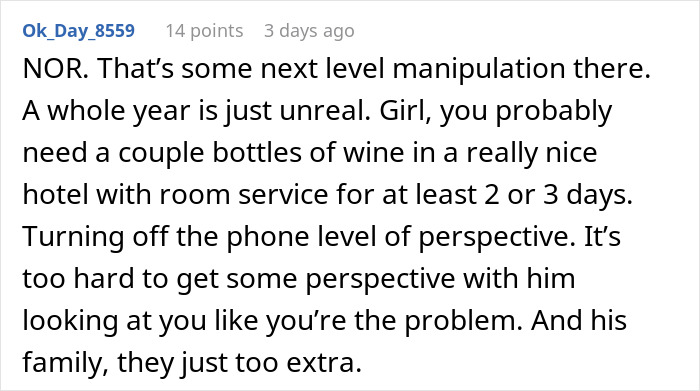
Any kind of "testing" is a huge red flag. On the other hand, the guy seems sincerely remorseful, so I'd give him a second chance, if I were in OP's shoes.

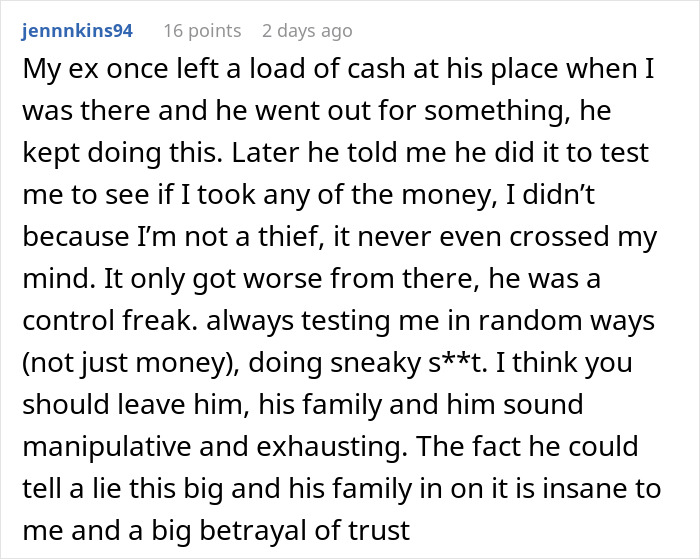
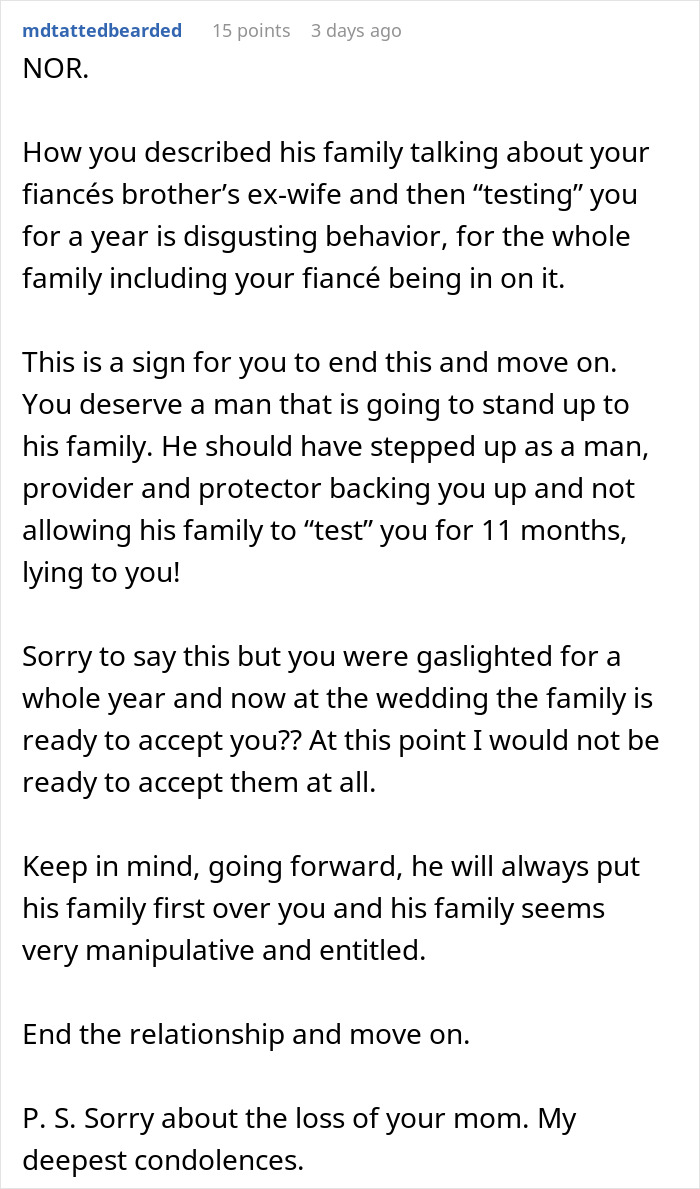
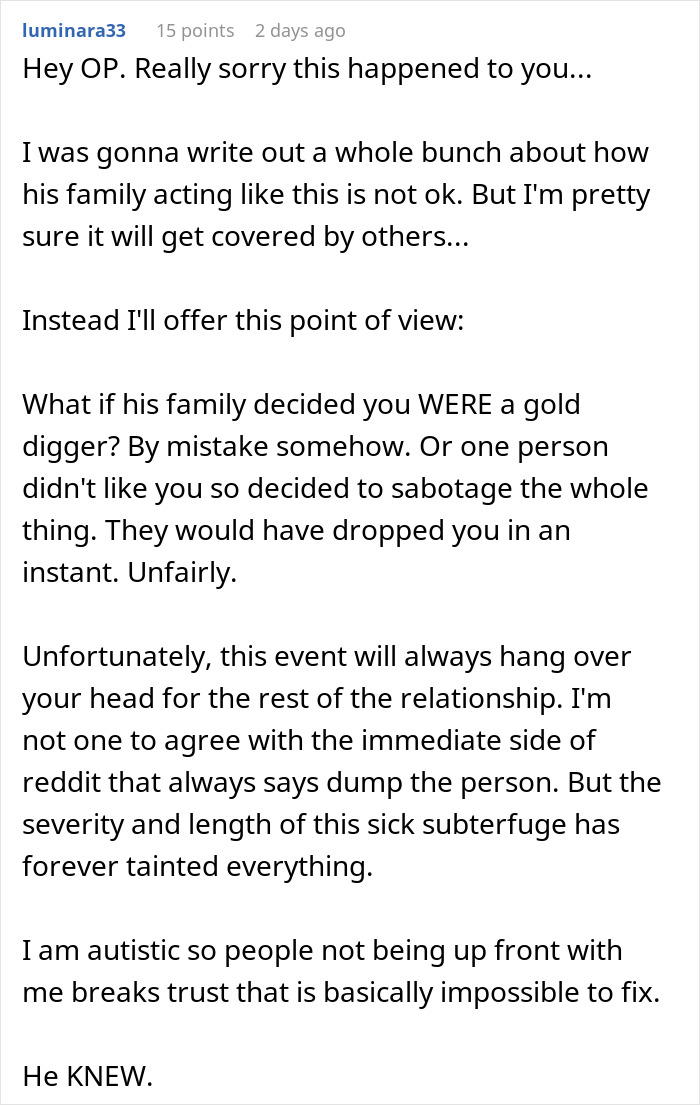
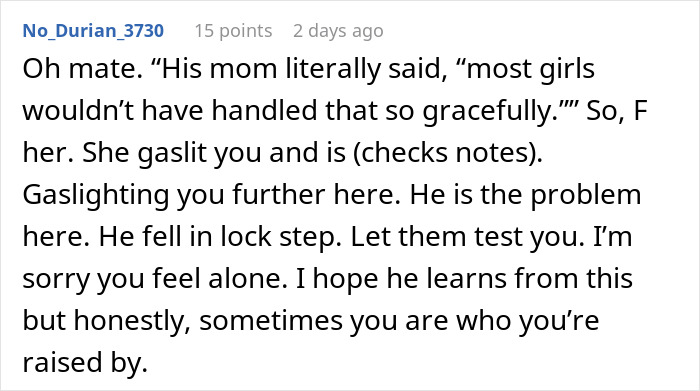
the guy wasn't remorseful. He was caught. Those are two different things. He knew all that was happening all along, and let people deceive and lie to her for a year, because it was convinient to him not to go against his parents. Op is better off far away from that guy.
Load More Replies...

So much manipulation. Glad they both recognized the toxicity and are willing to seek counseling. The author possesses a great deal of strength, good for her.
Any kind of "testing" is a huge red flag. On the other hand, the guy seems sincerely remorseful, so I'd give him a second chance, if I were in OP's shoes.
the guy wasn't remorseful. He was caught. Those are two different things. He knew all that was happening all along, and let people deceive and lie to her for a year, because it was convinient to him not to go against his parents. Op is better off far away from that guy.
Load More Replies... So much manipulation. Glad they both recognized the toxicity and are willing to seek counseling. The author possesses a great deal of strength, good for her.























 No fees, cancel anytime











48
23