Get Premium
Dark mode theme is available exclusively for premium users. Learn more about the benefits of subscribing.
No fees, cancel anytime.

 Dark Mode Ad-Free Browsing Unlimited Content
 Ad-Free Browsing Unlimited Content Dark Mode
Join 1.2 million Panda readers who get the best art, memes, and fun stories every week!

There are more than a thousand ways to meet your maker. For some, just a few tiny particles of a peanut can spell the end. Nut allergies can range from mildly annoying to absolutely fatal, and many of those on the more dangerous end of the spectrum tend to avoid exposure altogether.
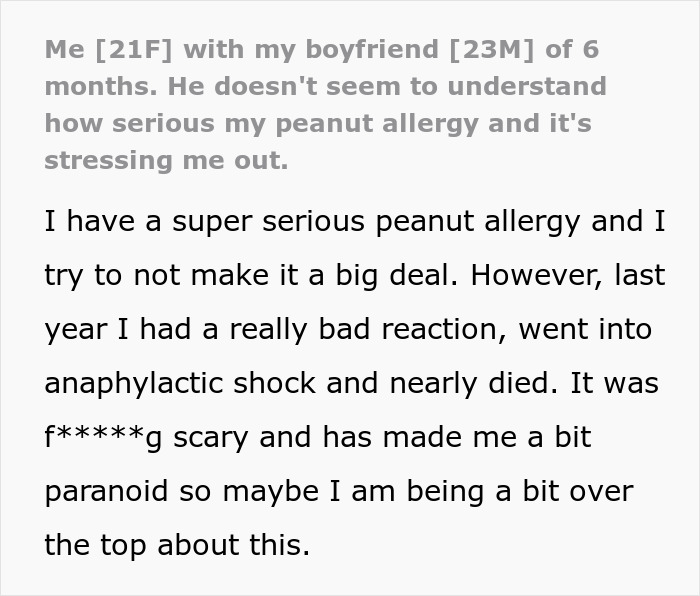
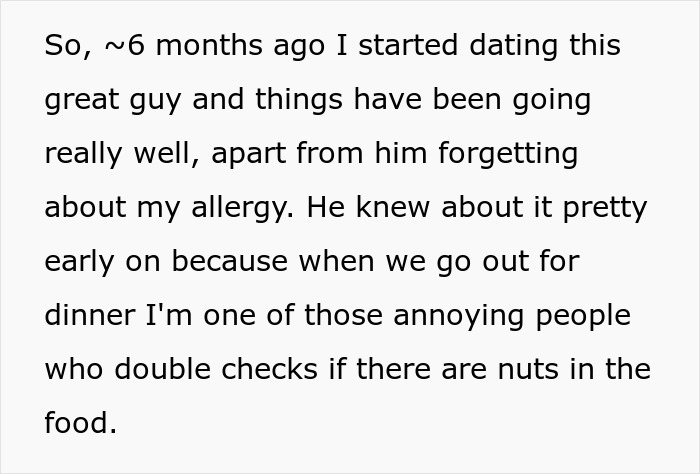
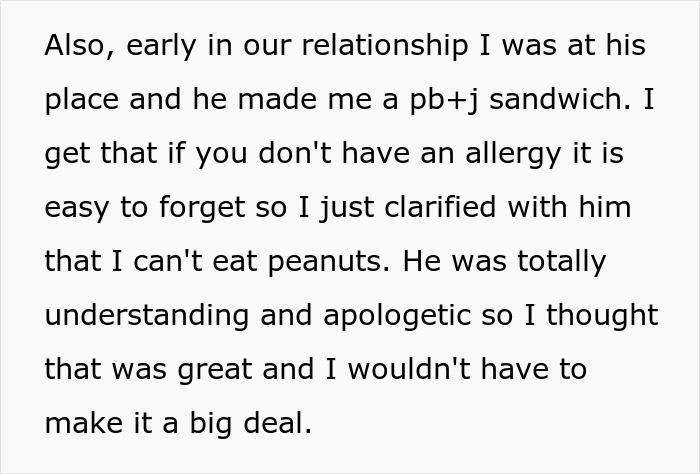
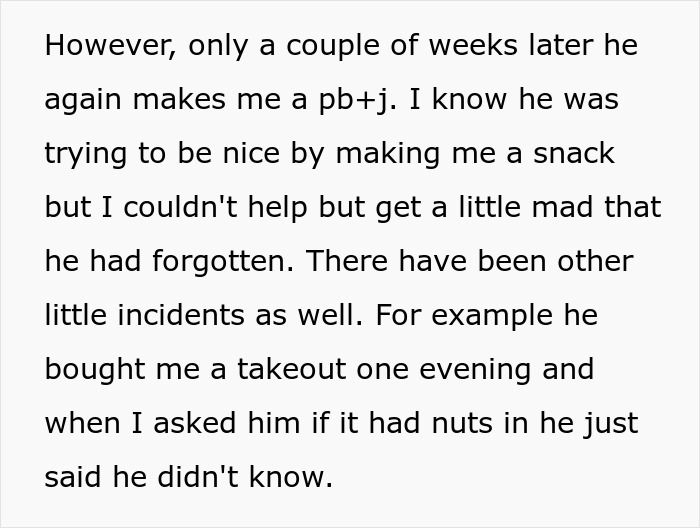
A woman almost lost her life due to anaphylaxis after ingesting peanuts. The hospital stay still haunts her. So when she started dating her boyfriend, she made sure to inform him of her super serious allergy. Despite this, the guy continued to offer her peanut butter and jelly sandwiches… until she finally decided to teach him a very scary lesson.
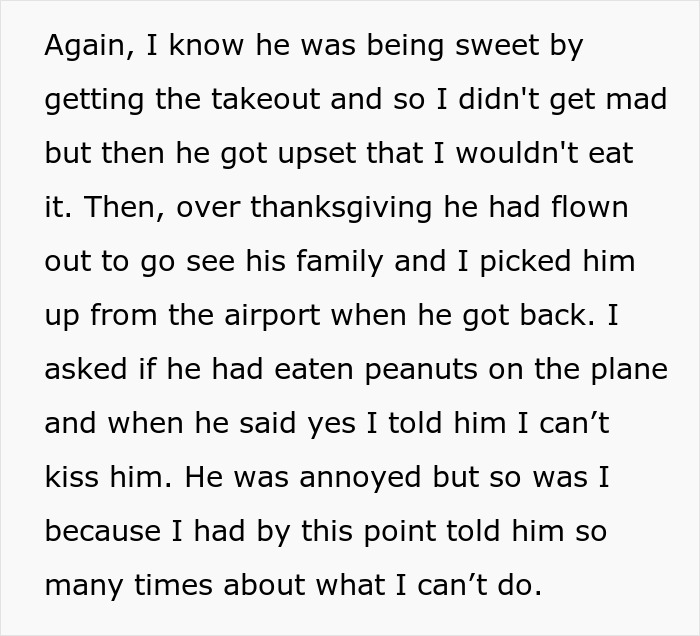

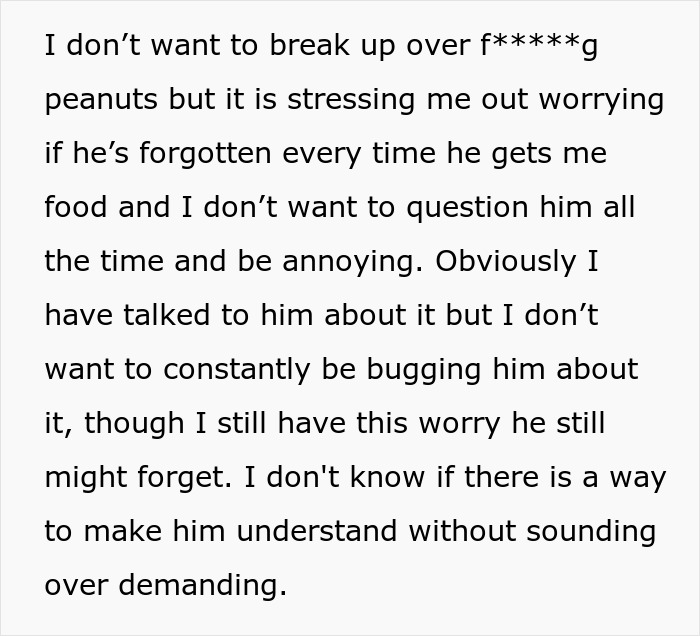
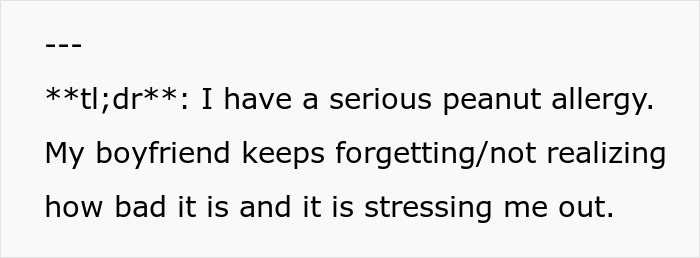
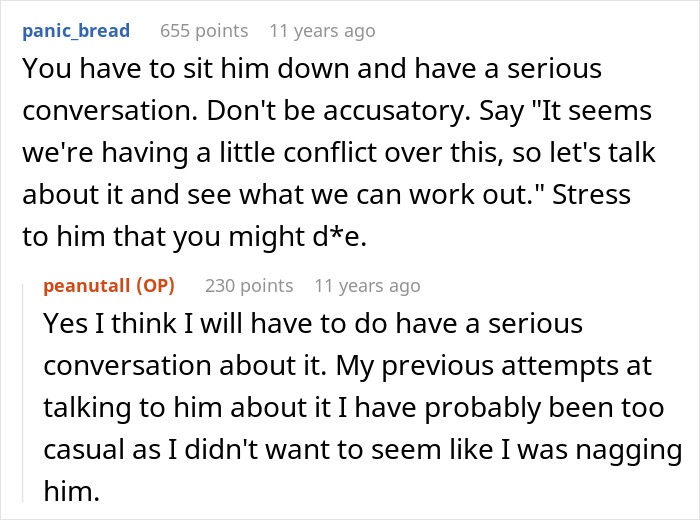
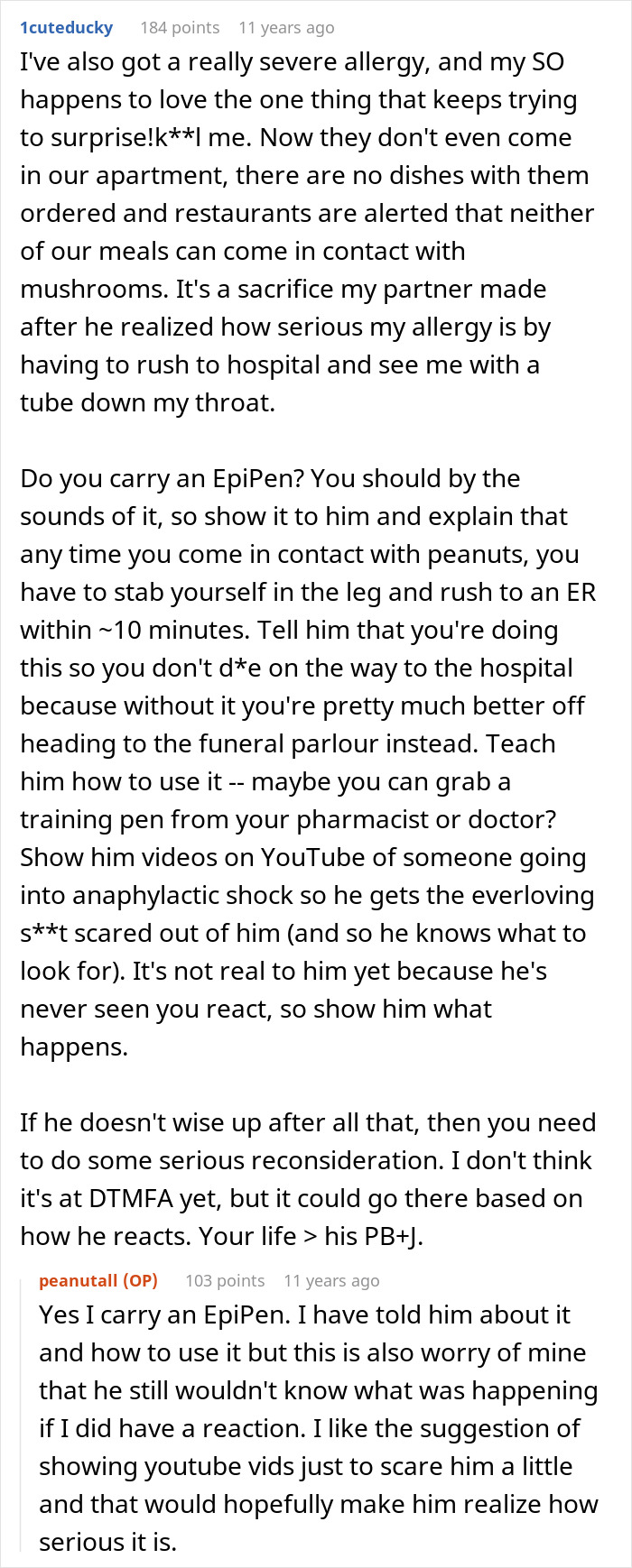
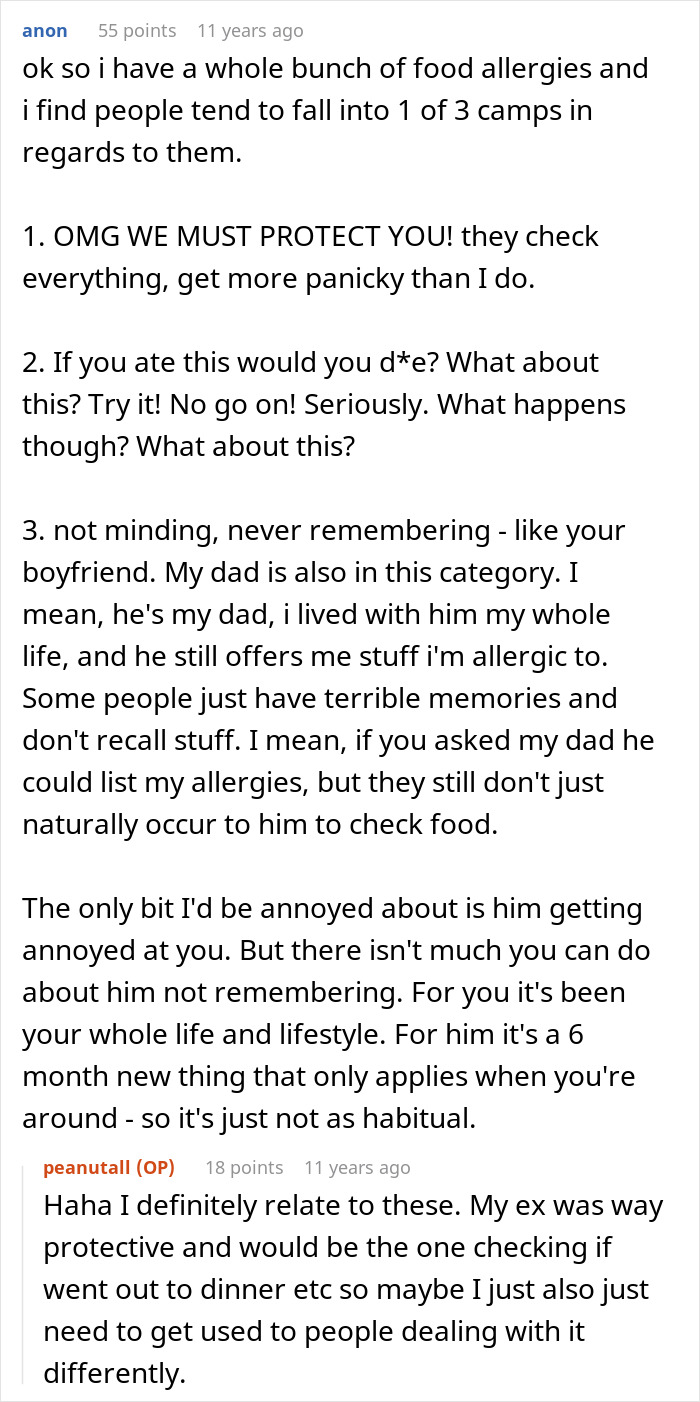
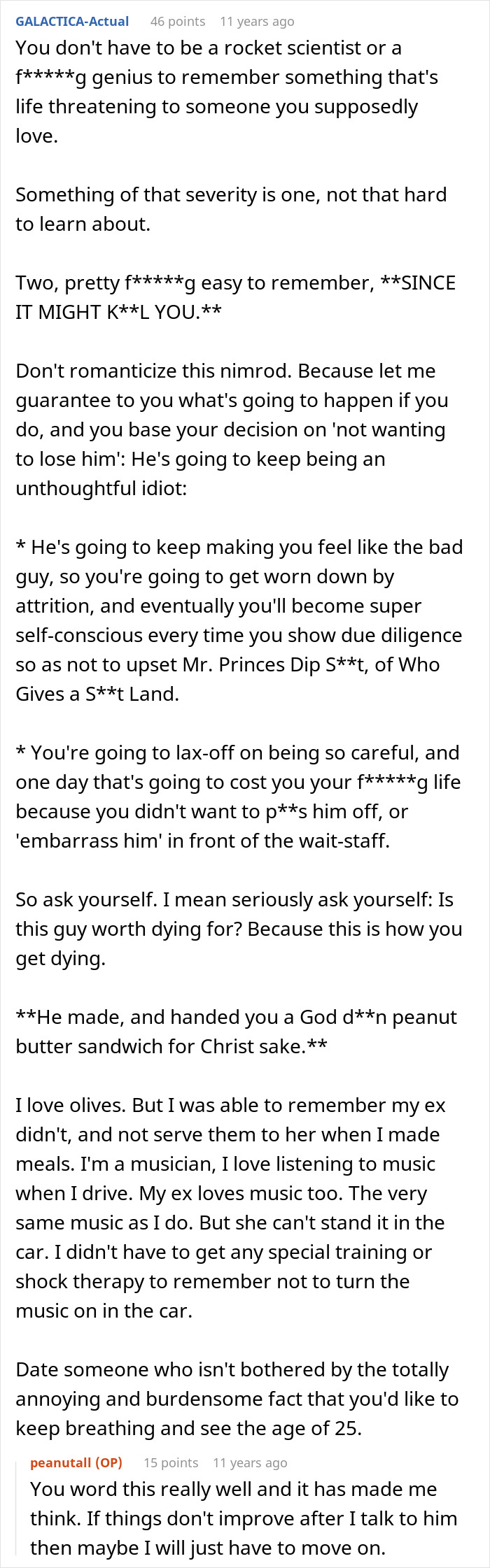
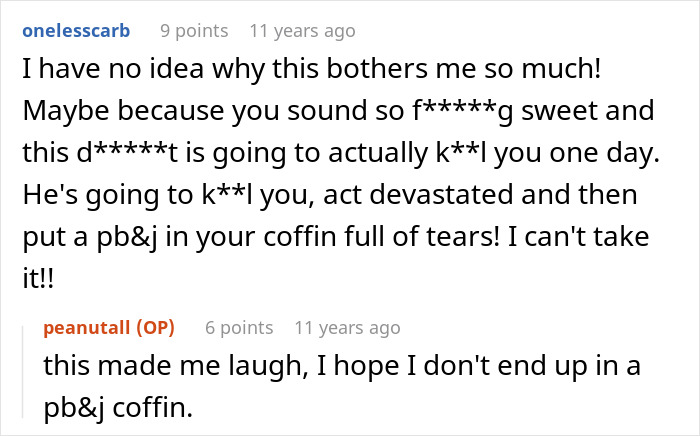
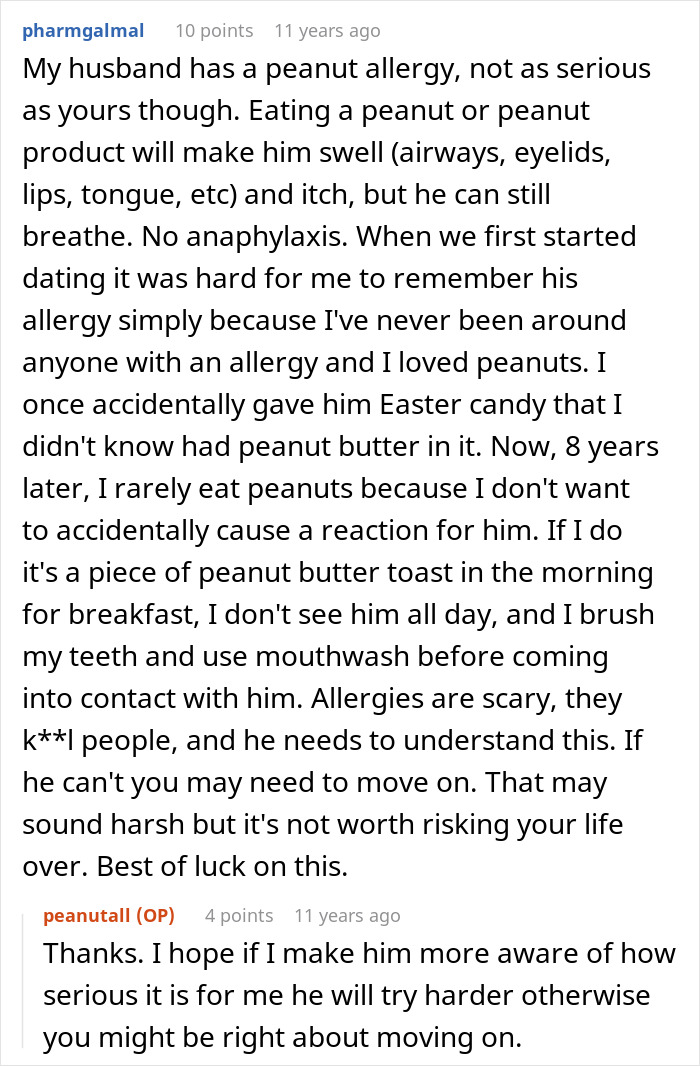
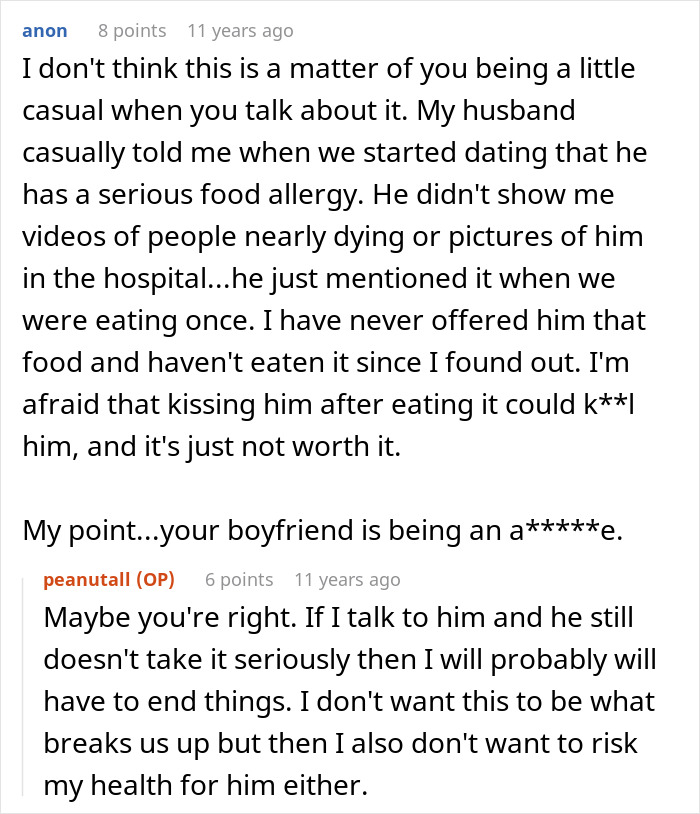
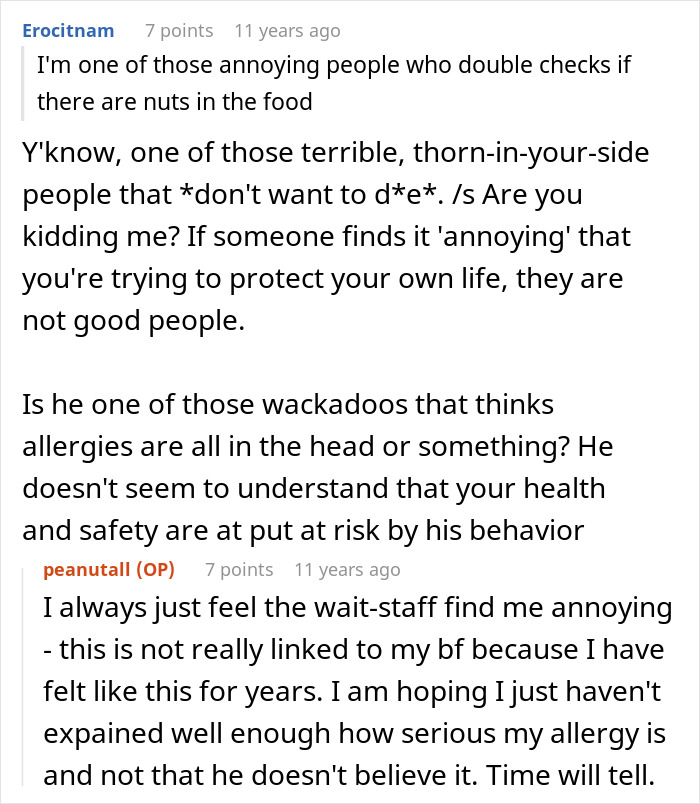
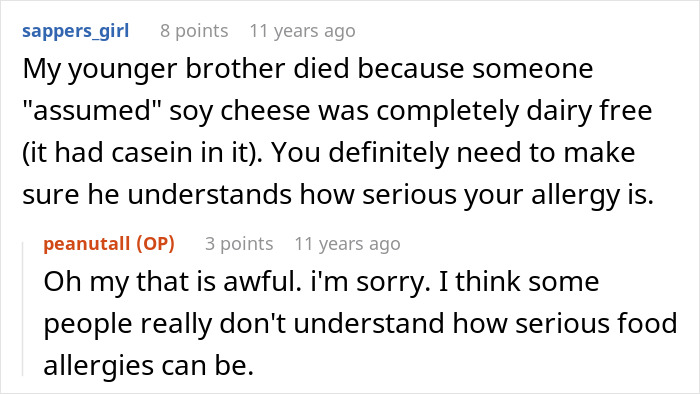
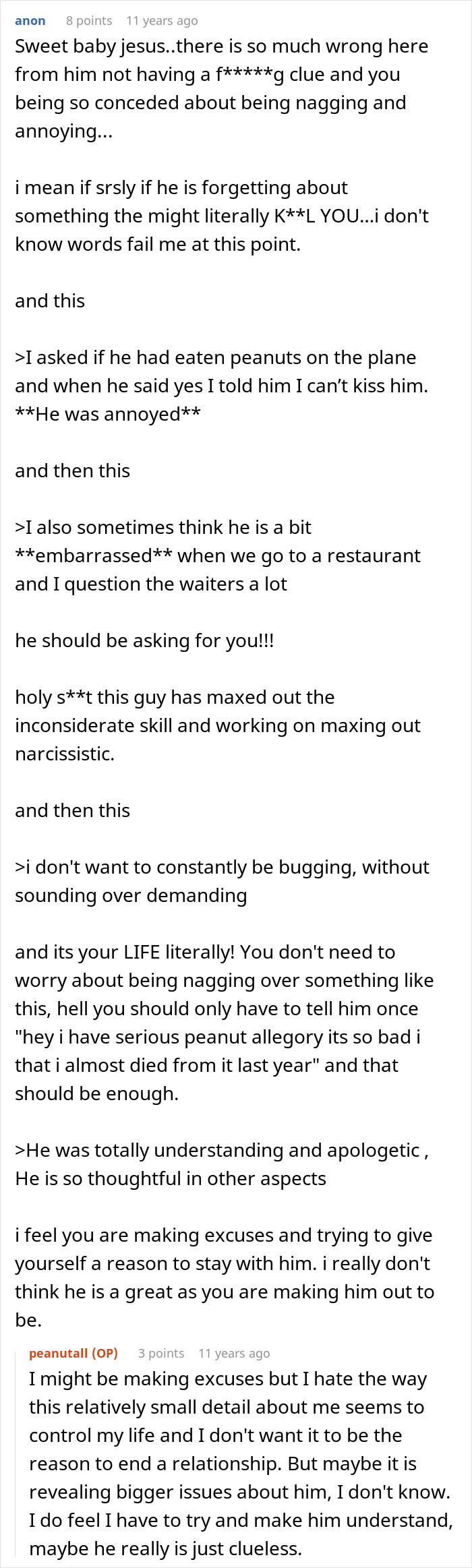
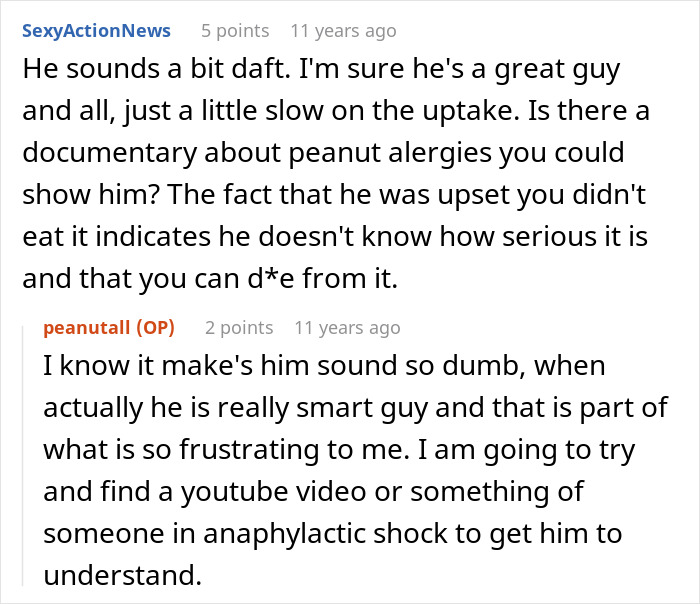
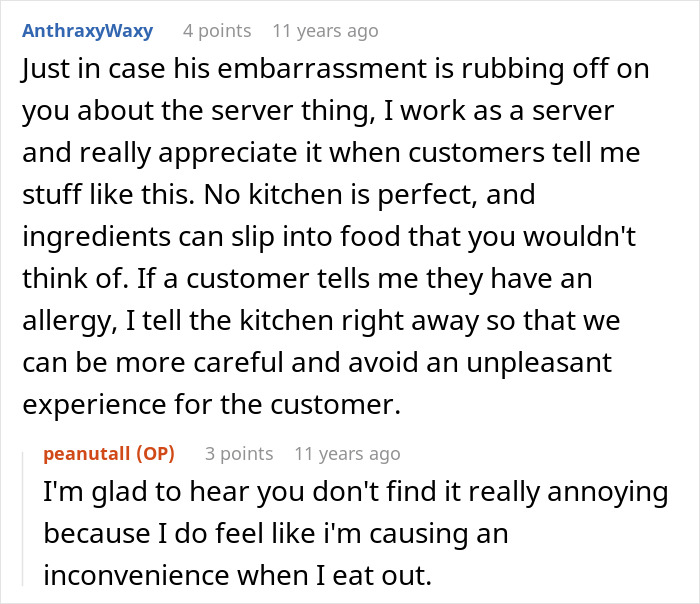
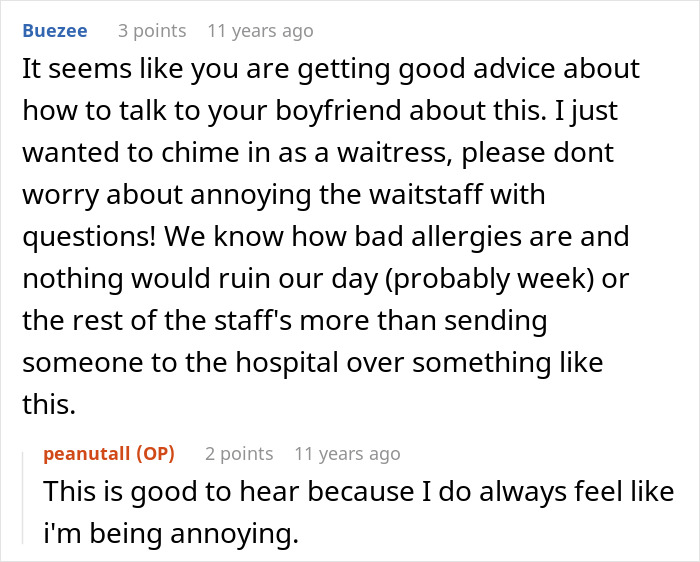

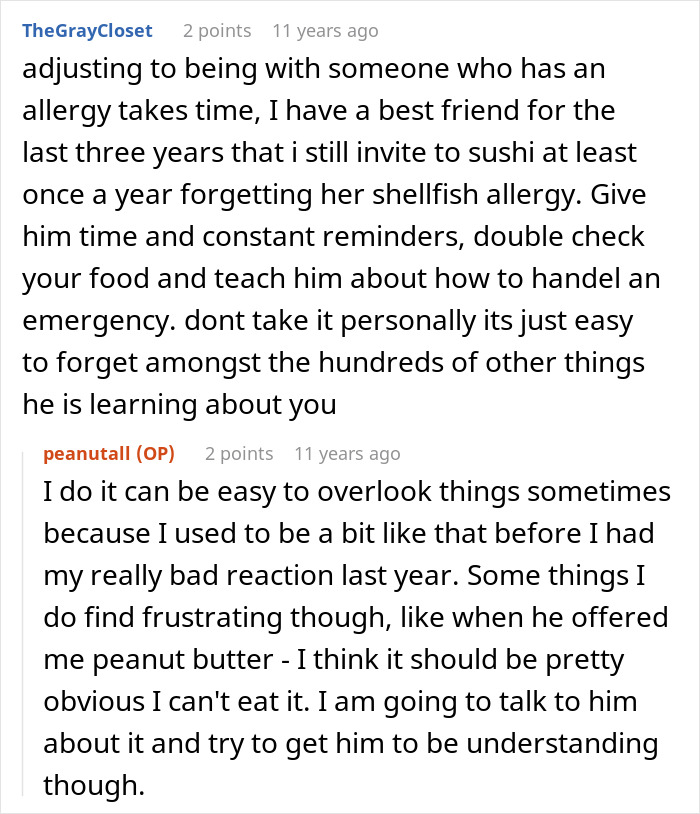
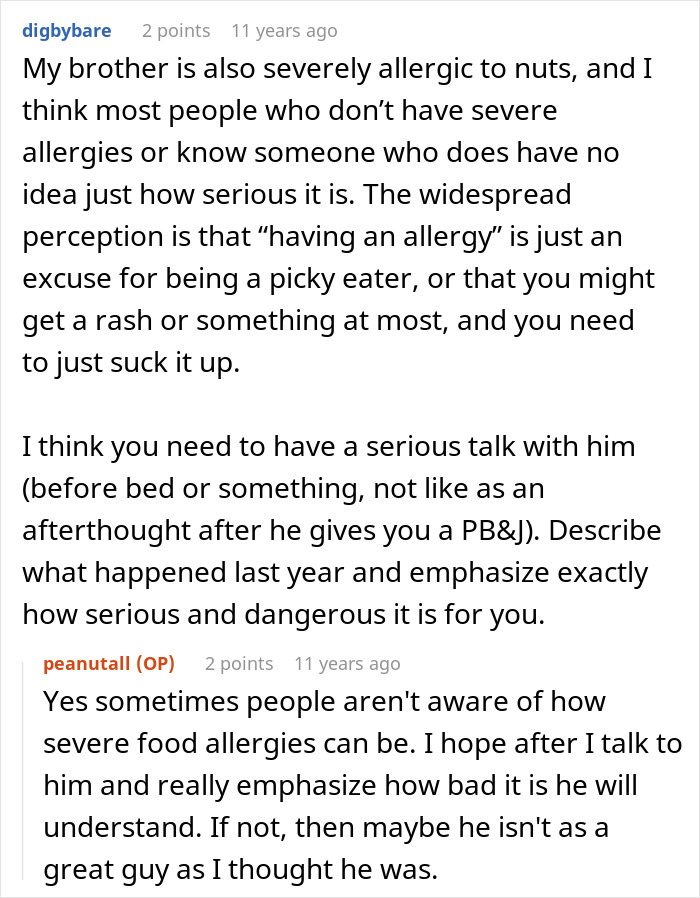
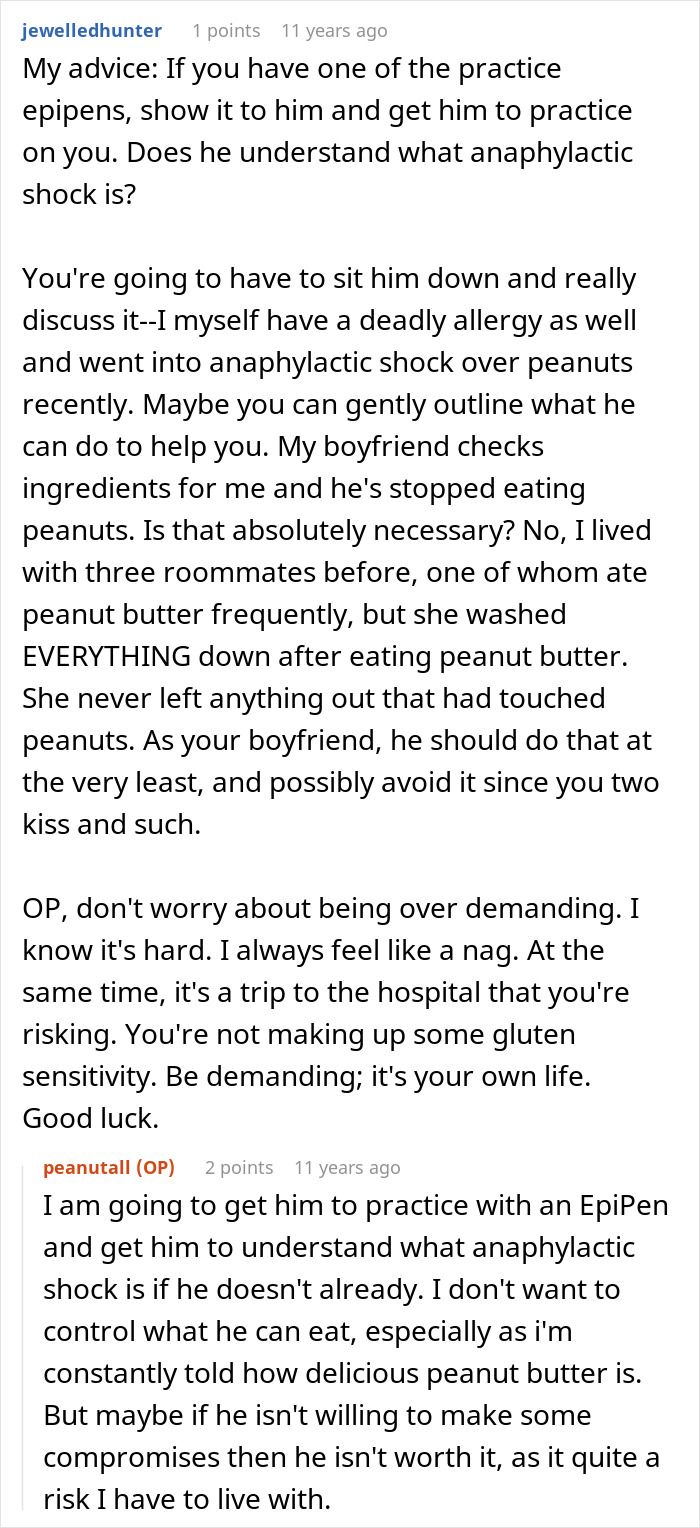
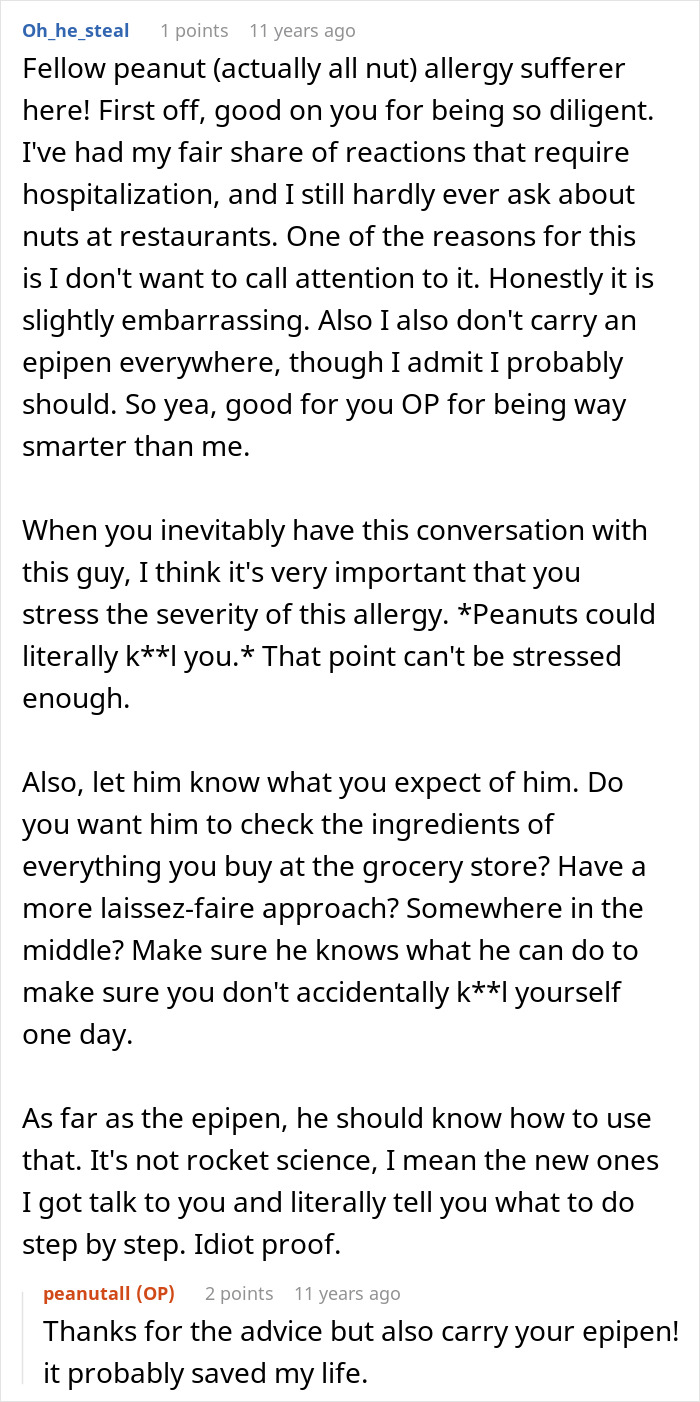
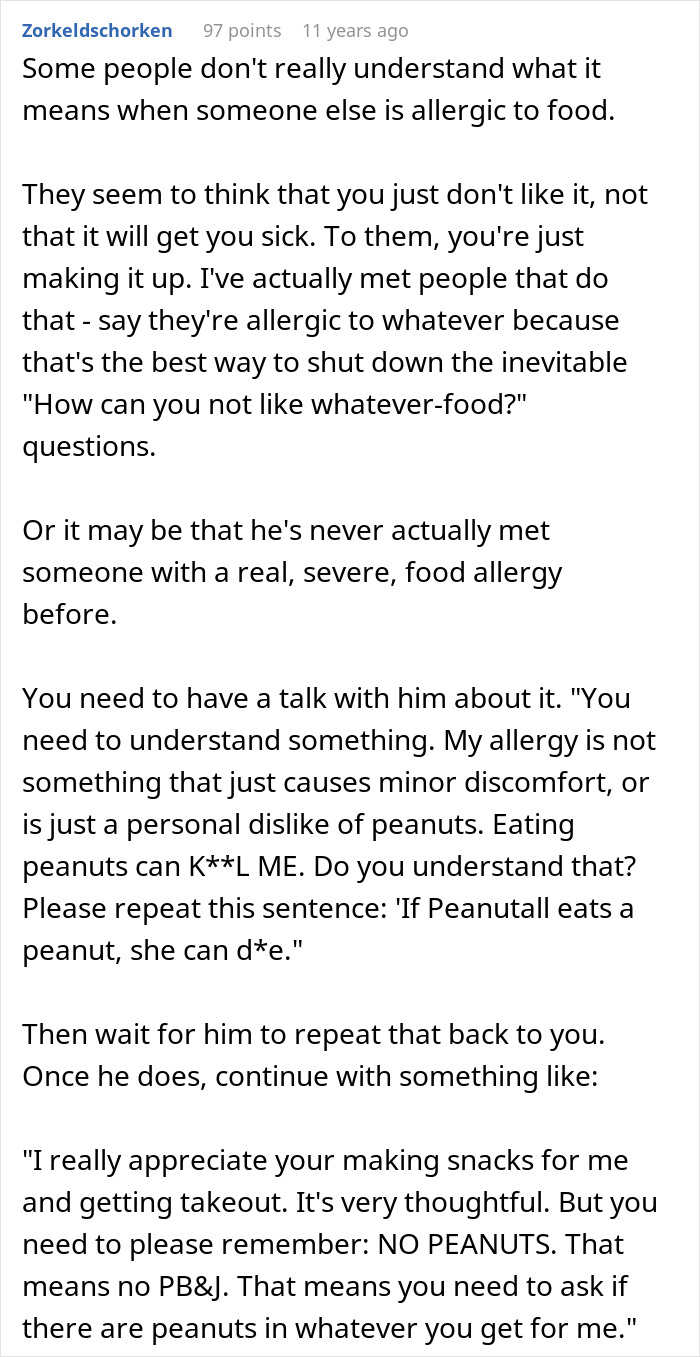
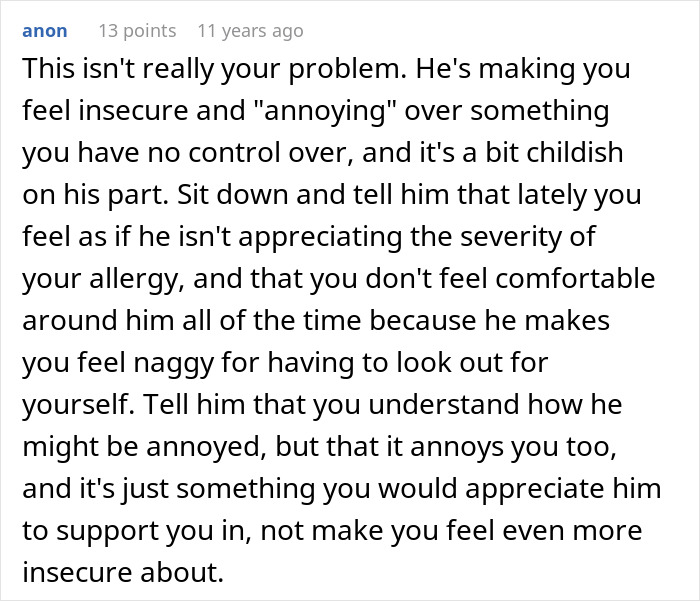

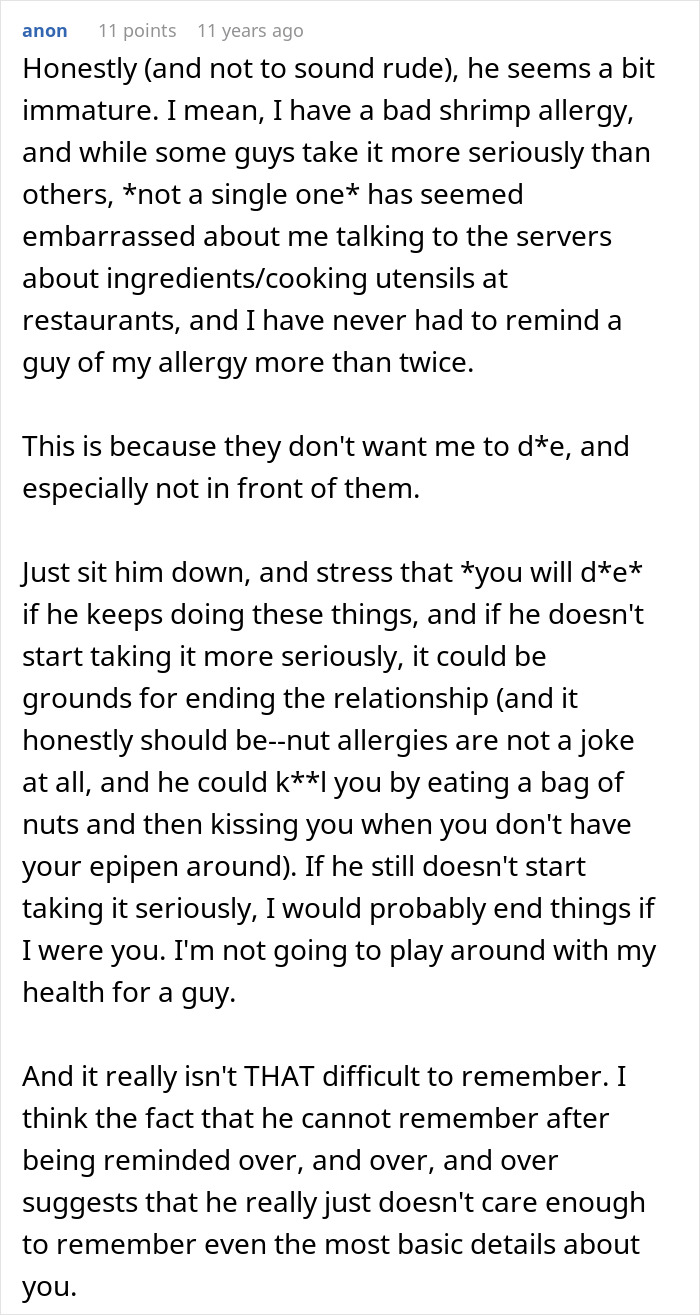
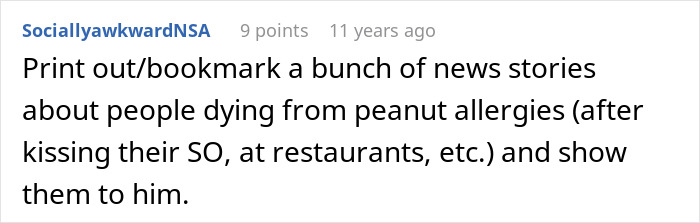
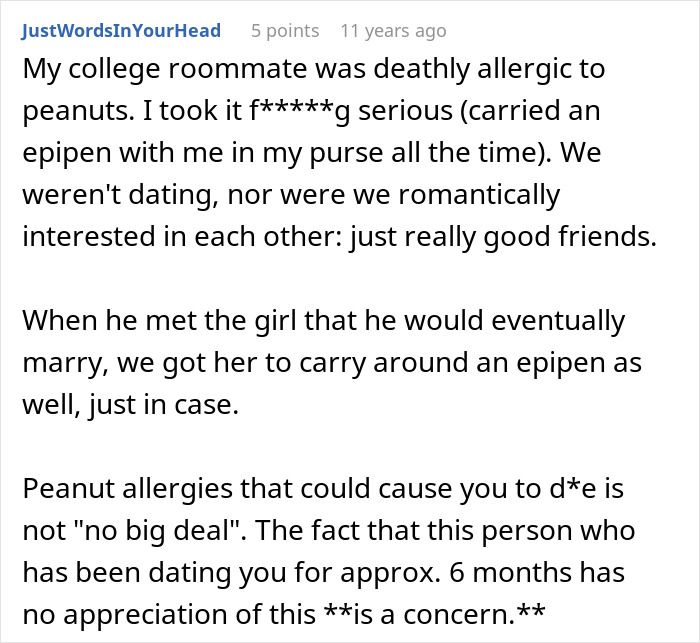
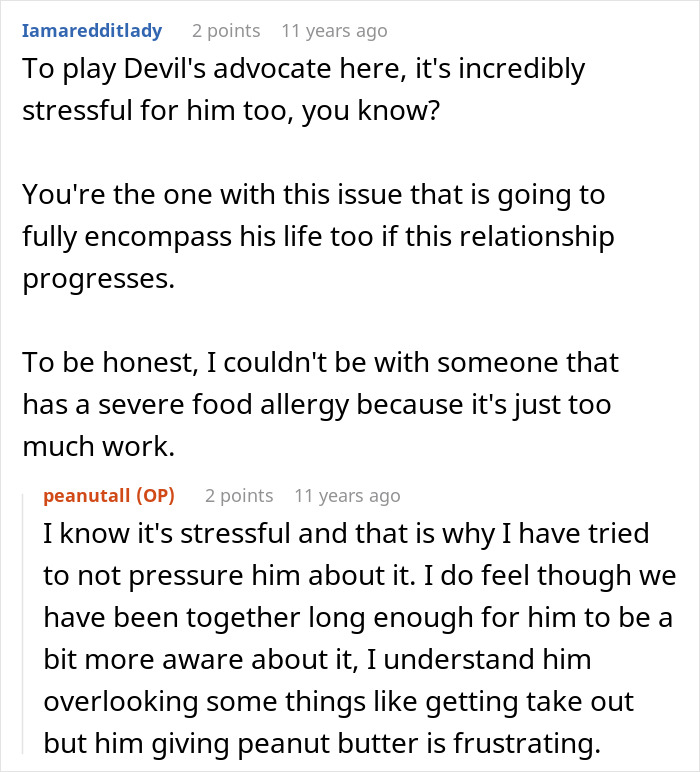
In case you’re still a non-believer, let us assure you that peanut allergies are real. Sometimes, they’re mild. Other times, they can be fatal.
According to Mayo Clinic, a peanut allergy happens when the body’s immune system mistakes safe proteins in peanuts for dangerous germs. It reacts by creating an ‘army’ of special antibodies to defend itself. The ‘army’ is always on standby, and when the person eats or touches a peanut again, the antibodies spring into action. They trigger cells to release chemicals like histamine, which causes a sudden and dangerous physical reaction.
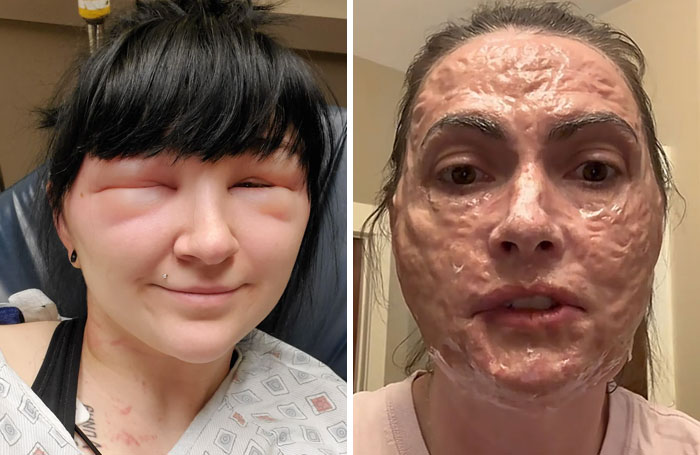
The allergic reaction usually occurs within minutes of exposure. Symptoms can include skin reactions, such as hives, redness or swelling; itching or tingling in or around the mouth and throat; digestive problems, such as diarrhea, stomach cramps, nausea or vomiting, tightening of the throat; Shortness of breath or wheezing; and a runny nose.
But for those with very serious allergies, exposure to peanut particles can cause anaphylaxis. In this instance, the person can experience a constriction of their airways; swelling of the lips, tongue and throat that makes it hard to breathe; a severe drop in blood pressure, also known as shock; rapid pulse; dizziness, light-headedness or loss of consciousness. In the most severe cases, they might not survive.
People with peanut allergies don’t need to eat and swallow the nuts to experience symptoms, although direct contact is the most common cause. They might also have an allergic reaction due to simply breathing in dust or aerosols containing peanuts, such as peanut flour.
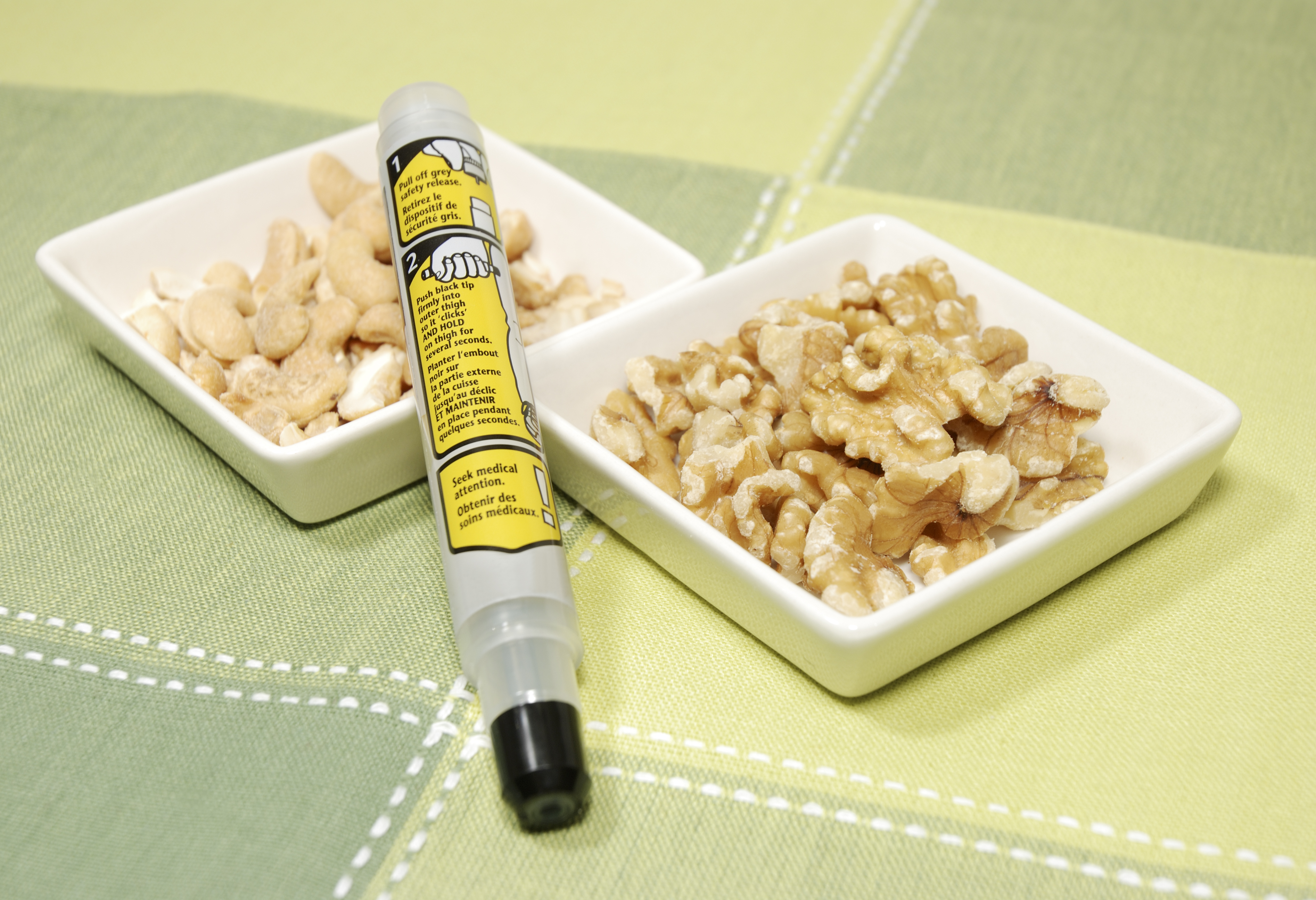
Those with severe peanut allergies should always carry an Epi-Pen, or epinephrine autoinjector. It contains adrenaline and is typically injected into thigh during an anaphylaxis episode. It opens the airways, raises blood pressure, and reduces severe swelling but a trip to the emergency room may still be necessary.
According to the American Academy of Allergies, Asthma and Immunology, around 1%-2% of Americans are allergic to peanuts. The academy notes that the allergy typically starts in childhood and persists throughout life.
“Approximately 20% of individuals may outgrow peanut allergy over time,” it adds.
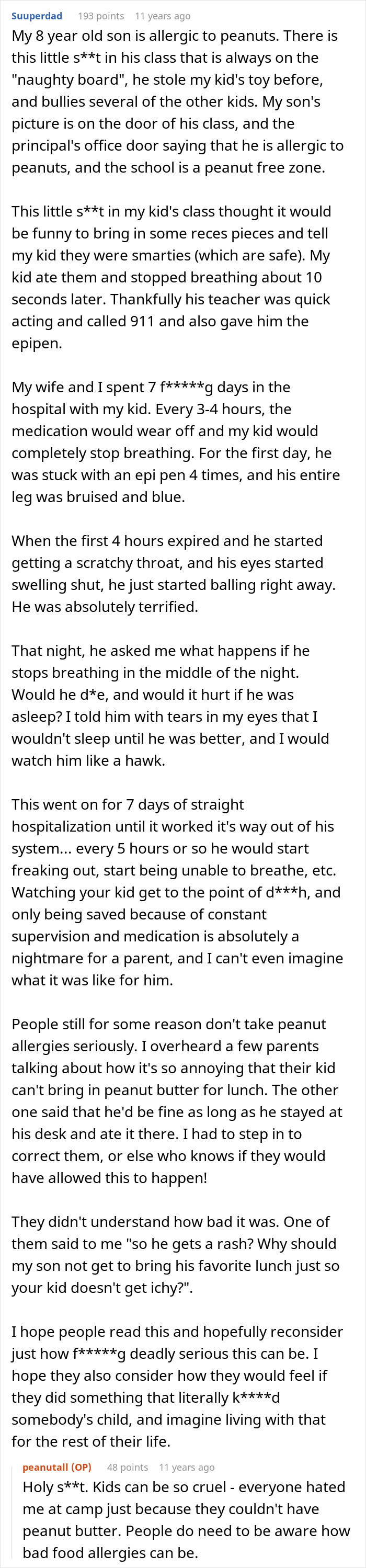

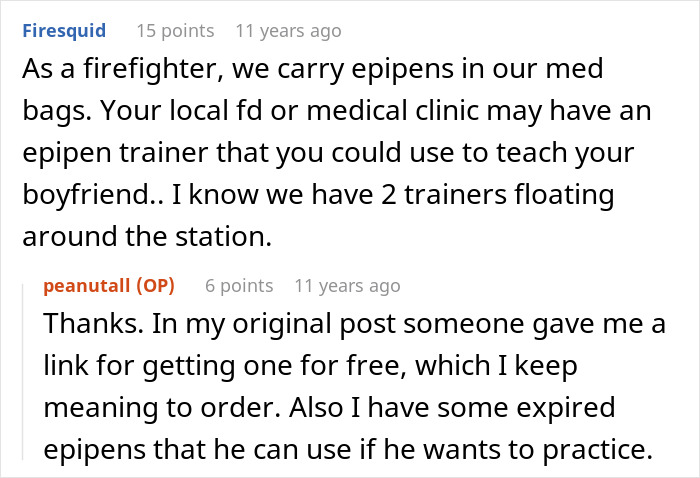



By entering your email and clicking Subscribe, you're agreeing to let us send you customized marketing messages about us and our advertising partners. You are also agreeing to our Privacy Policy.
Thank you! You've successfully subscribed to newsletters!


I don't believe anyone is that forgetful, and if I were OP I wouldn't be willing to bet my life on the guy behaving better in the future, which is what she appears willing to do.

he isn't forgetful, he just doesn't care, at all, about OP. When he is "being nice" by doing something that can actually k**l her, it shows how little he cares, op is an idiot
Load More Replies...

Part of the problem is a lot of people claim serious allergies when they have a slight intolerance or even if they just don't like something. I've had to use an epipen on someone at work, so I know how bad it can be. Thankfully they were just well enough to point at the drawer that held it and their thigh (though unable to talk at that time). It was enough for me to find it, understand what it was and work out they wanted it in their thigh, which made logical sense as it is a big muscle (using the pen is actually easy to learn, even in the heat of the moment). Once you've done that, you never dispute someone with an epipen about their allergies, but someone who doesn't have one because no doctor has ever prescribed them....
Load More Replies...
I don't believe anyone is that forgetful, and if I were OP I wouldn't be willing to bet my life on the guy behaving better in the future, which is what she appears willing to do.
he isn't forgetful, he just doesn't care, at all, about OP. When he is "being nice" by doing something that can actually k**l her, it shows how little he cares, op is an idiot
Load More Replies... Part of the problem is a lot of people claim serious allergies when they have a slight intolerance or even if they just don't like something. I've had to use an epipen on someone at work, so I know how bad it can be. Thankfully they were just well enough to point at the drawer that held it and their thigh (though unable to talk at that time). It was enough for me to find it, understand what it was and work out they wanted it in their thigh, which made logical sense as it is a big muscle (using the pen is actually easy to learn, even in the heat of the moment). Once you've done that, you never dispute someone with an epipen about their allergies, but someone who doesn't have one because no doctor has ever prescribed them....
Load More Replies... 




































 No fees, cancel anytime

















36
20