Get Premium
Dark mode theme is available exclusively for premium users. Learn more about the benefits of subscribing.
No fees, cancel anytime.

 Dark Mode Ad-Free Browsing Unlimited Content
 Ad-Free Browsing Unlimited Content Dark Mode
Join 1.2 million Panda readers who get the best art, memes, and fun stories every week!

There are few things more dangerous in the workplace than a freshly promoted manager armed with buzzwords, a clipboard, and this strange belief that everyone else has been doing their jobs wrong for years. Truth is, entire companies have been brought to their knees by people who think adding paperwork magically creates productivity.
Today’s Original Poster (OP) worked as a lead technician and things were going smoothly at work until this one guy was promoted to director of operations. Suddenly, the director demanded that the perfectly-working operations be changed, and the OP decided to maliciously comply.
More info: Reddit
Image credits: pressfoto / Magnific (not the actual photo)
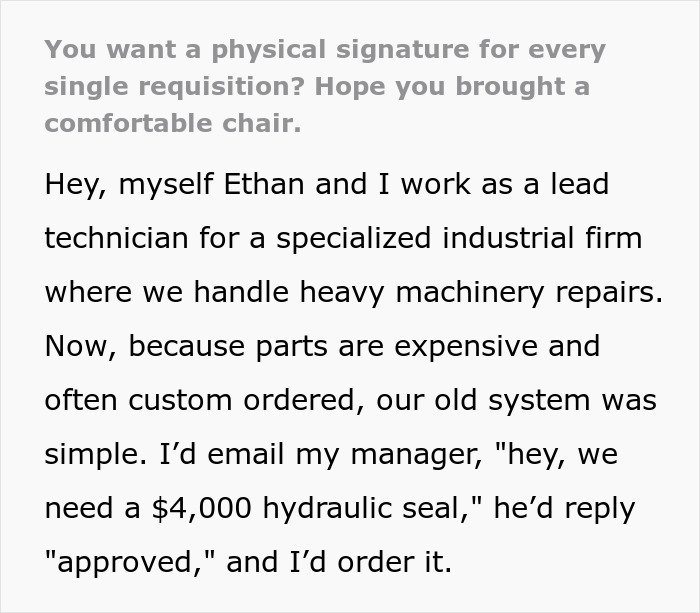
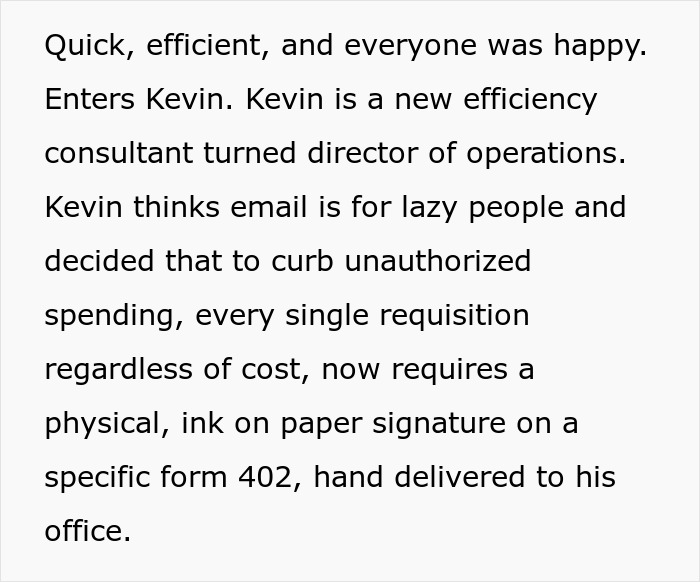
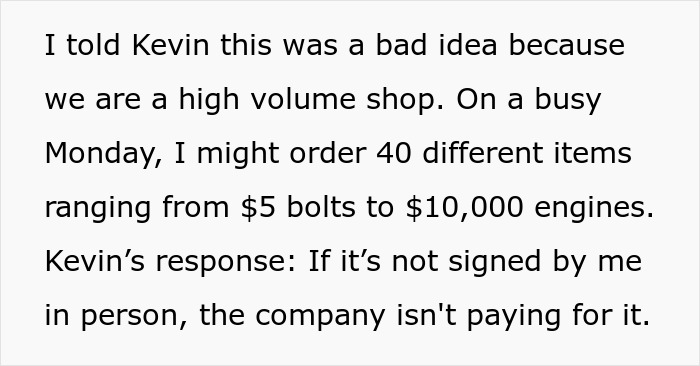
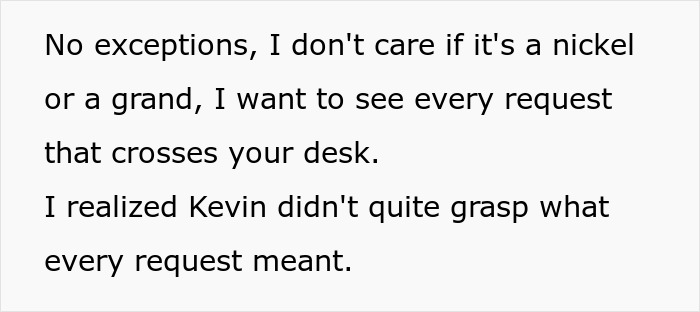
Image credits: Frolopiaton Palm / Magnific (not the actual photo)
Image credits: freepik / Magnific (not the actual photo)
Image credits: cookie_studio / Magnific (not the actual photo)
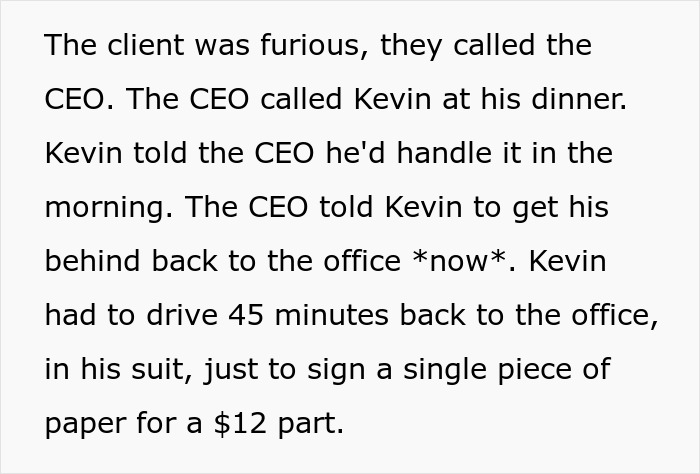
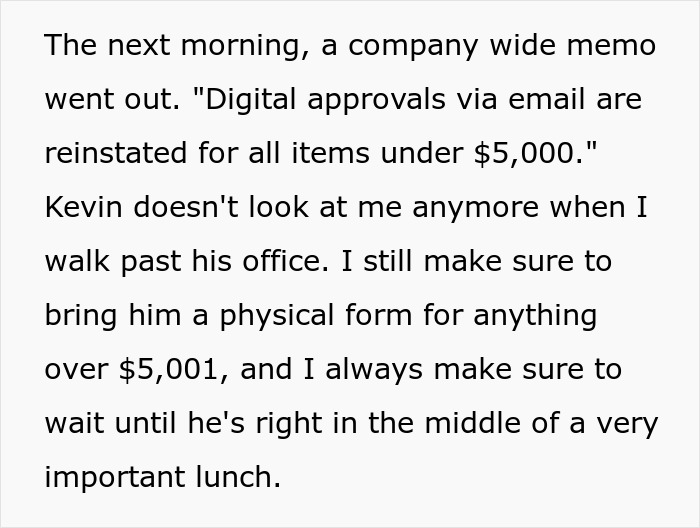

Image credits: jatinsuri332
Before the company hired the new director of operations, the OP explained that the repair shop he worked at had a simple system that actually worked. If he needed a part, he’d send an email to management, get approval, and place the order. However, the director believed the process was too relaxed.
Determined to crack down on unauthorized spending, he introduced a strict policy requiring every single purchase request to be submitted on a physical Form 402 with an ink signature from him personally. The OP warned him the policy would become a nightmare in a high-volume shop, but the director insisted he wanted to personally review every request. Instead of arguing further, the OP simply complied.
Rather than batching small supply needs together like he normally did, he submitted separate forms for absolutely everything. Because of this, the OP spent large chunks of the day walking back and forth to the director’s office waiting for approvals instead of repairing machinery. By the second day, the director was visibly irritated, but the real problems were only beginning.
Repair jobs started falling behind because the OP physically couldn’t perform maintenance work while constantly chasing signatures. Soon, several major clients began calling the company asking why their machines weren’t being repaired on time. Now, a local plant experienced a massive overnight equipment failure involving a pump worth roughly $200,000.
The repair required only a $12 O-ring, but the director had already left for a networking dinner. The OP then told the client he couldn’t buy the part without physical approval from the director himself. The client called the CEO who contacted the director, asking him to go back to the office to sign the paperwork. Needless to say, the company issued a new memo restoring digital approvals for all purchases under $5,000.
Image credits: Drazen Zigic / Magnific (not the actual photo)
What happened in the OP’s workplace actually reflects a much larger issue experts have warned companies about for years. Common Ground notes that excessive bureaucracy can seriously damage productivity, especially in fast-paced industries where workers depend on quick decisions and flexibility to keep operations moving.
MaxGrip affirms this, explaining that too much “red tape” often slows workflows, wastes valuable time, and reduces motivation among employees. According to them, unplanned downtime in industrial operations can cost businesses anywhere from thousands to hundreds of thousands of dollars per hour depending on the machinery involved.
Psychology Today also suggest that the director’s management style likely made the situation even worse. According to them, micromanagement often creates bottlenecks because employees spend more time seeking approvals and reporting small details than actually performing their jobs. Overly controlling leadership can also lower morale, reduce trust between workers and management, and slow down day-to-day operations.
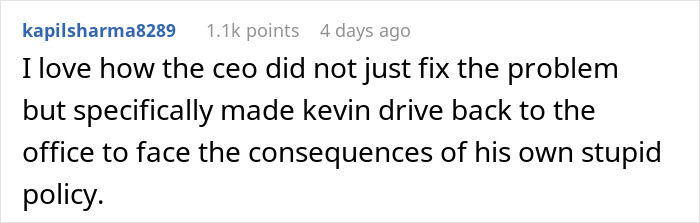
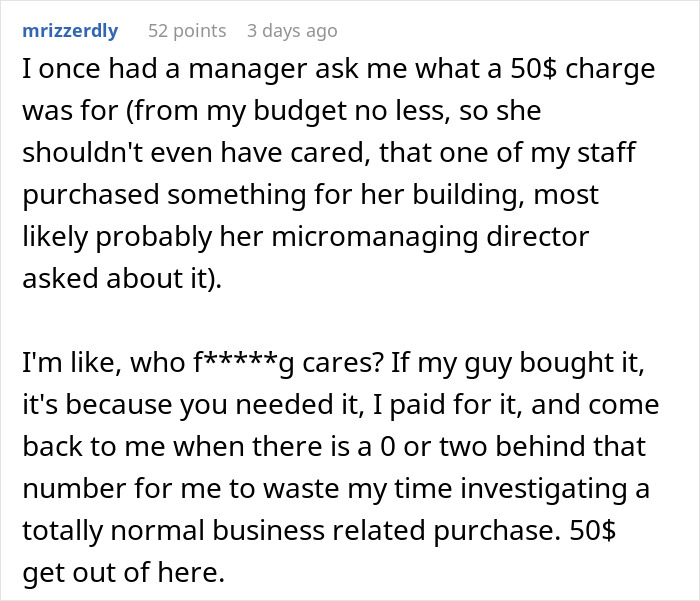
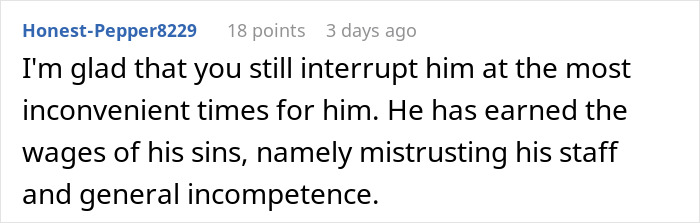
Netizens found the situation hilarious and felt the director fully deserved the consequences of his own policy. They also praised the CEO for forcing him to return to the office personally. Do you have a similar story? Have you ever worked somewhere where getting approval for tiny things became a nightmare? We would love to hear from you!







By entering your email and clicking Subscribe, you're agreeing to let us send you customized marketing messages about us and our advertising partners. You are also agreeing to our Privacy Policy.
Thank you! You've successfully subscribed to newsletters!

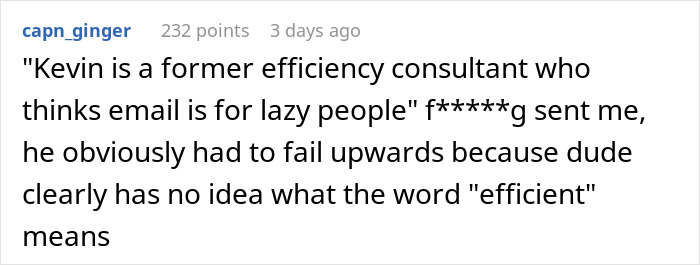
"Efficiency Expert" is a title given to someone who is useless at doing real work.

I am currently being called the "solutions expert" at work because I tend to find solutions for s**t that illogical people bring to the table that creates problems for everyone else...
Load More Replies...
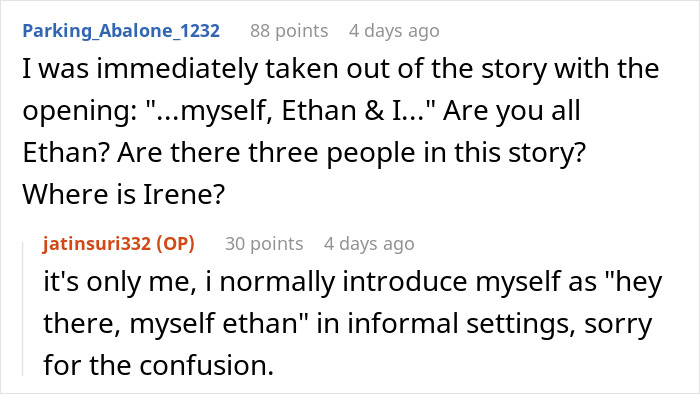
I myself Bink would like to know what kinda putz introduces himself “Myself Ethan.” I understand that personal pronouns are going the way of the woolly mammoth, but even himself Ethan hasta know that he sounds like a special needs child just learning to speak. The looks on the faces of people he introduces himself to should be a *terrific* clue that he’s doing it wrong.

Someone a little too full of himself who will ignore the reactions and is industrial work for a reason.
Load More Replies... "Efficiency Expert" is a title given to someone who is useless at doing real work.
I am currently being called the "solutions expert" at work because I tend to find solutions for s**t that illogical people bring to the table that creates problems for everyone else...
Load More Replies... I myself Bink would like to know what kinda putz introduces himself “Myself Ethan.” I understand that personal pronouns are going the way of the woolly mammoth, but even himself Ethan hasta know that he sounds like a special needs child just learning to speak. The looks on the faces of people he introduces himself to should be a *terrific* clue that he’s doing it wrong.
Someone a little too full of himself who will ignore the reactions and is industrial work for a reason.
Load More Replies...

































 No fees, cancel anytime












29
11