We and our trusted partners use technology such as cookies on our site to personalize content and ads, provide social media features, and analyze our traffic. You can read more about it and change your preferences here.
Working for someone does often mean “doing things their way,” which is all well and good until you end up working under someone who has more ego than common sense. So sometimes the only way to show them the error of their ways is to just do what they ask and let the consequences happen.
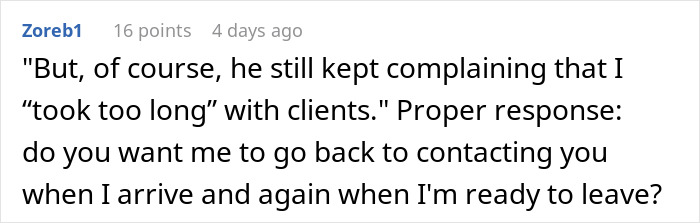
A worker shared their best example of malicious compliance after their boss made a new rule that he had to be informed after an employee was done with a client. The result? Way too much wasted time. We reached out to the person who made the post via private message and will update the article when they get back to us.
RELATED:
Some managers insist on rules that don’t make any sense
Person typing on a Dell laptop next to a MacBook, illustrating a boss told guy to message after every client situation.
Bosses and managers sometimes create rules that appear downright confused, or worse, self-defeating, when finally put into practice. These rules can originate from a benevolent place of intent to create order or avert problems, but the gap between intention and real effect can be wide. One of the reasons this happens is that leaders prefer to work at some distance from the day-to-day activity of their teams. They may make decisions based on incidents, meetings, or reports, rather than direct experience. As a result, a rule enacted to address a perceived issue may seem unnecessary, or even inhibiting, to the individuals actually performing the work.
Another driving factor is fear of risk. If one policy was ever misused, for example, taking long breaks or stretching out hours, a rule can be instituted so it can never occur again, even if it is inconvenient for the 99% of employees who were doing the right thing. This “worse-case scenario rule” can spiral out of control and morph into an excessive system where everyone is punished for the bad actions of a few. It’s an overcorrection in the form where trust is secondary to control.
And then, of course, there’s optics. Occasionally a manager introduces a new policy not because it will be helpful, but because it *looks* like they’re doing something. In environments where image and responsibility are important, like following a public gaffe or internal review, senior managers might feel forced to prove they’re “doing something.” All too frequently, the most visible and fastest form of “something” is the newly minted policy or regulation, even if it treats the symptom rather than the disease. Some leaders also feel they need to show just how much “power” they have, even when it’s detrimental to everyone.
Man in a suit looking frustrated at laptop, illustrating boss told guy to message after every client situation.
But rules without a tad of common sense end up making a job harder
Hierarchy only makes it worse. Lower-level workers might see the flagrant flaws in a policy, but top management doesn’t always get honest feedback. Often, even when people do try to complain, their concerns are stifled as recalcitrant or unhelpful. In organizations where communication travels upward badly, poorly conceived policies remain far too long.
And lastly, there is tradition. Certain rules stick around simply because they always have passed along from manager to manager with no thought. No one even recalls, eventually, why the rule was instituted to begin with, it just sort of disappears into the background noise of the job. To question it is to make waves. We can all see the benefits of clear rules that are applied equally. Without them, at best there is chaos, at worst, downright favoritism and arbitrary decisions. But rules for the sake of more rules is just a stepping stone towards making everyone unhappy.
None of this says managers are out to make things hard, most want their staff to succeed. But it takes work, listening, and humility to know when a well-meaning rule is doing more harm than good. Great leaders are those who are willing to admit when a rule needs to be re-written, or tossed entirely, and listen to the folks most impacted.
Readers thought the employee did exactly the right thing
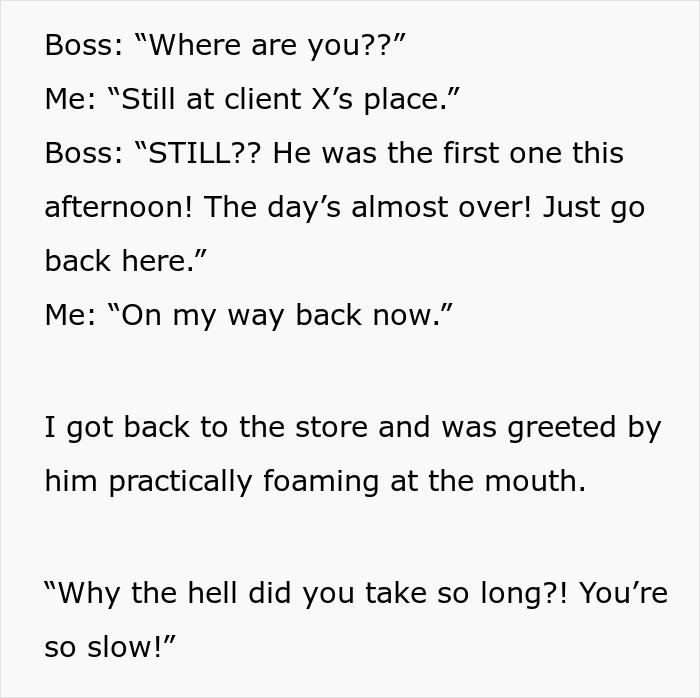
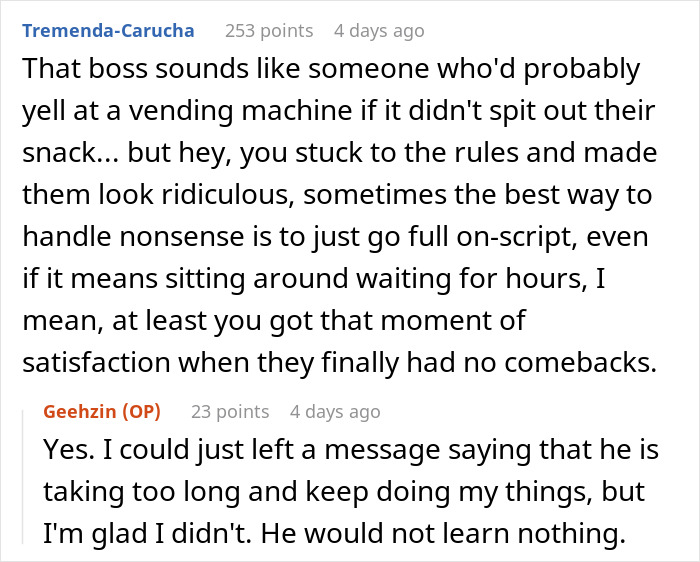
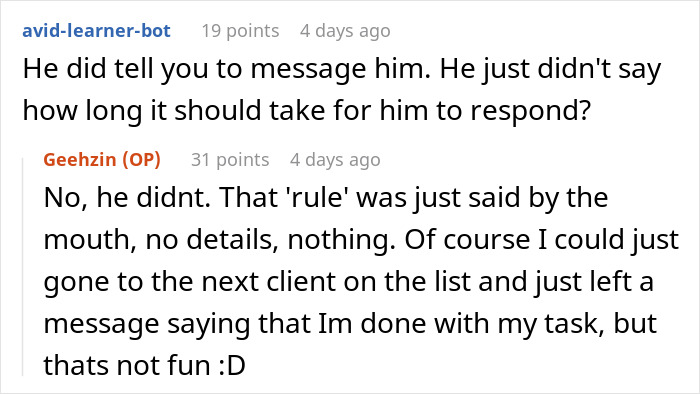
Text conversation about a guy told by boss to message after every client but ignored for three hours.
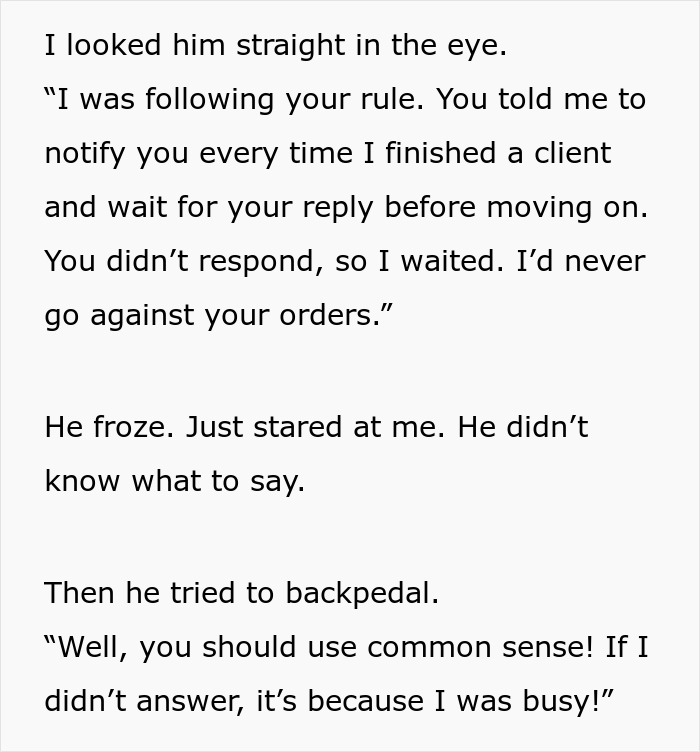
Screenshot of a Reddit conversation about a boss telling a guy to message after every client then ignoring him for hours.
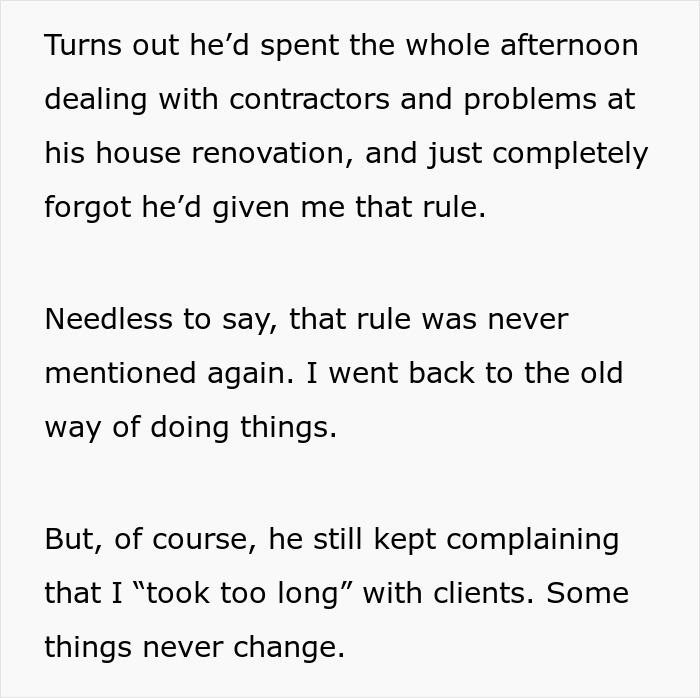
Screenshot of a conversation discussing messaging clients as instructed by boss and waiting hours without a response.
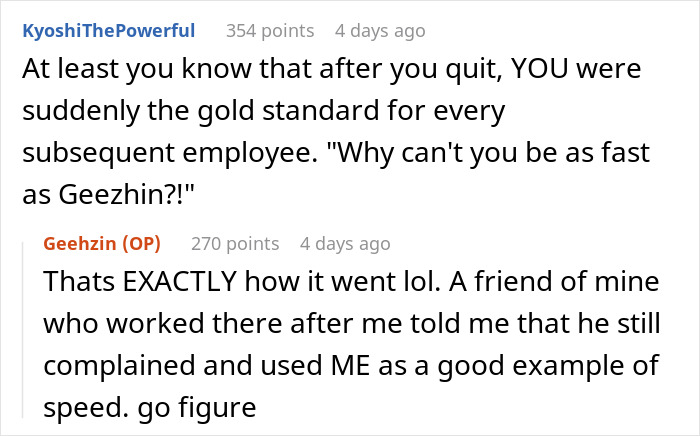
Reddit user discussing a boss telling a guy to message after every client, then ignoring him for three hours.
Screenshot of a forum post discussing frustration after boss told guy to message after every client then ignored him for hours.
Screenshot of a Reddit comment thread discussing a guy messaging after every client and being ignored for hours.
Comment on Reddit about someone used to work at a place and advice to ask why they left after every client message.
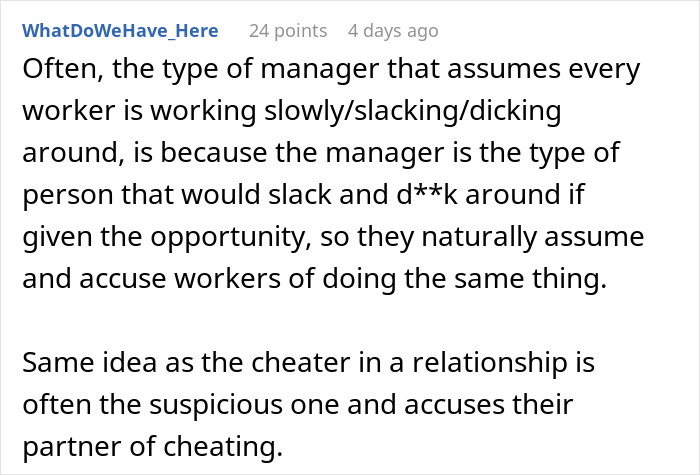
Screenshot of a Reddit comment discussing manager behavior and employee productivity related to boss told guy to message after every client.
Screenshot of a forum comment discussing being told to message after every client but then being ignored for hours.
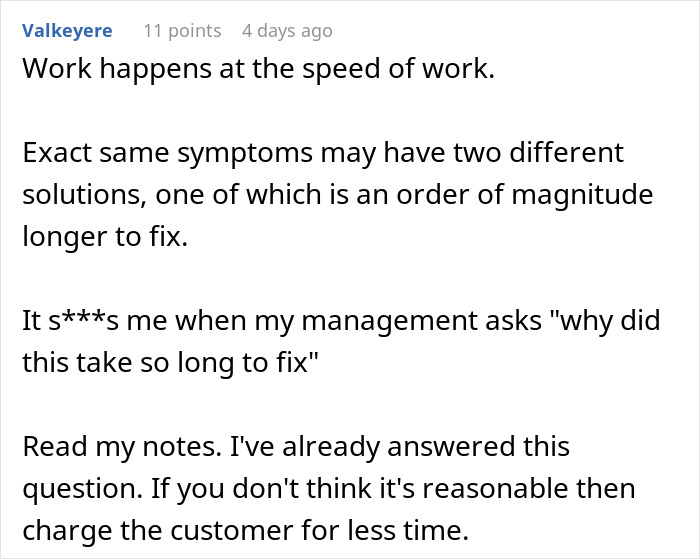
Text post discussing work speed issues and frustration with management ignoring messages after client updates.
Comment by tigerb47 expressing dislike for managers who make employees message after every client, calling it de-motivating.
Screenshot of a Reddit comment discussing a boss instructing messaging after every client and the ignored employee’s frustration.
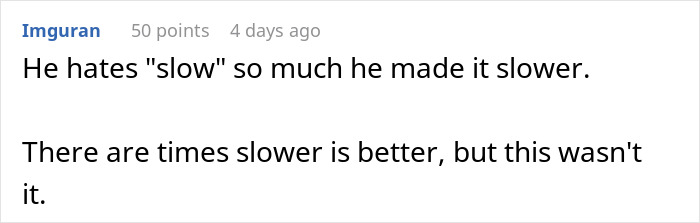
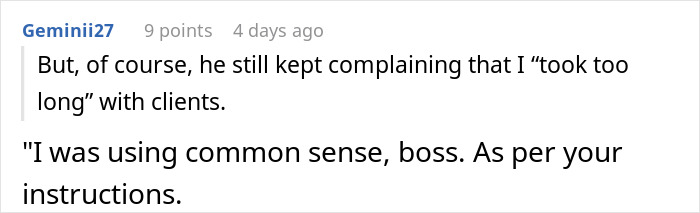
Comment saying my mantra about going slower, illustrating the aftermath of boss told guy to message after every client then ignored him for three hours.
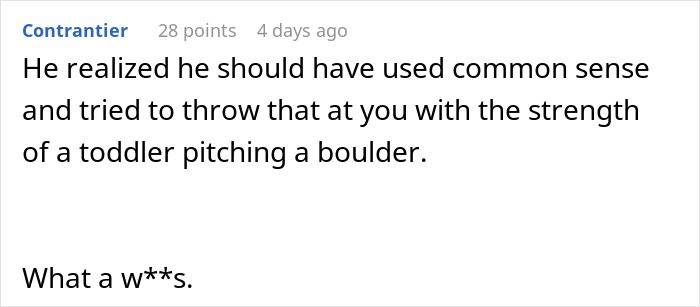
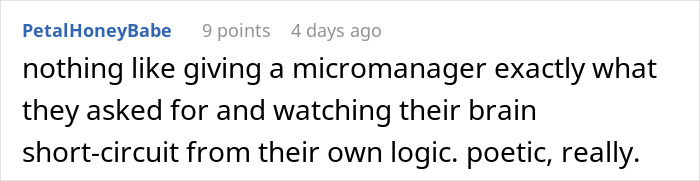
Comment about micromanager frustration after boss told guy to message after every client then ignored him for hours.
Screenshot of a user comment discussing how the boss told him to message after every client but then ignored him for hours.
Screenshot of an online comment discussing frustration with a boss ignoring messages after every client interaction.
Comment text from user 510Goodhands reacting to a boss ignoring messages after client communication in a casual online forum.
User comment on a social platform discussing messaging clients after each interaction and waiting without response for three hours.
Comment text about feeling like working for an extreme micro-manager after a boss told guy to message after every client.
Others shared similar stories
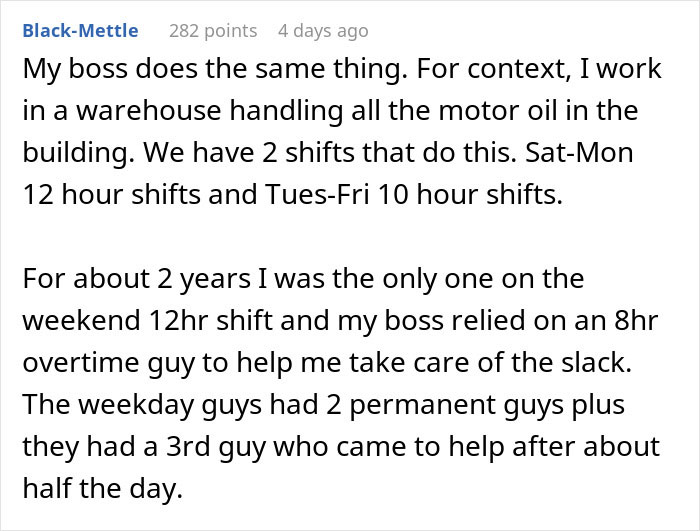
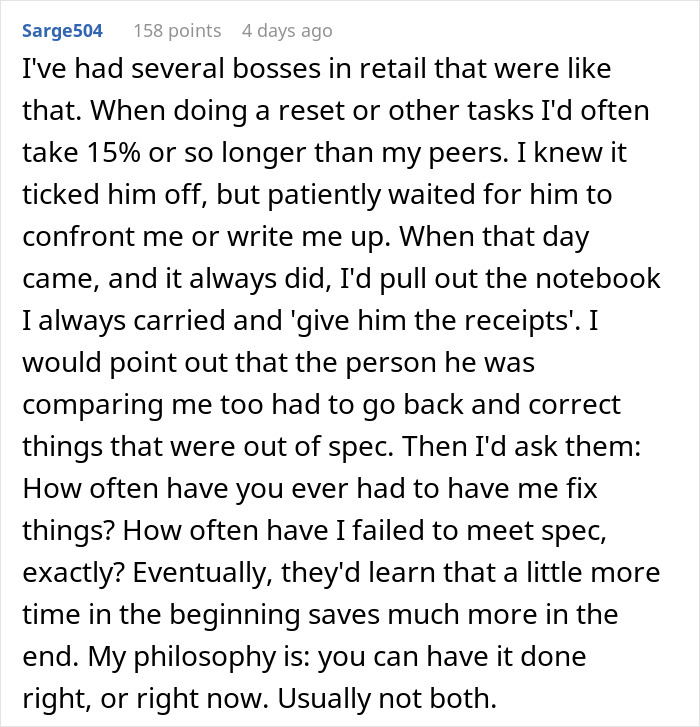
Worker shares experience of boss telling him to message after every client but ignoring him for hours.
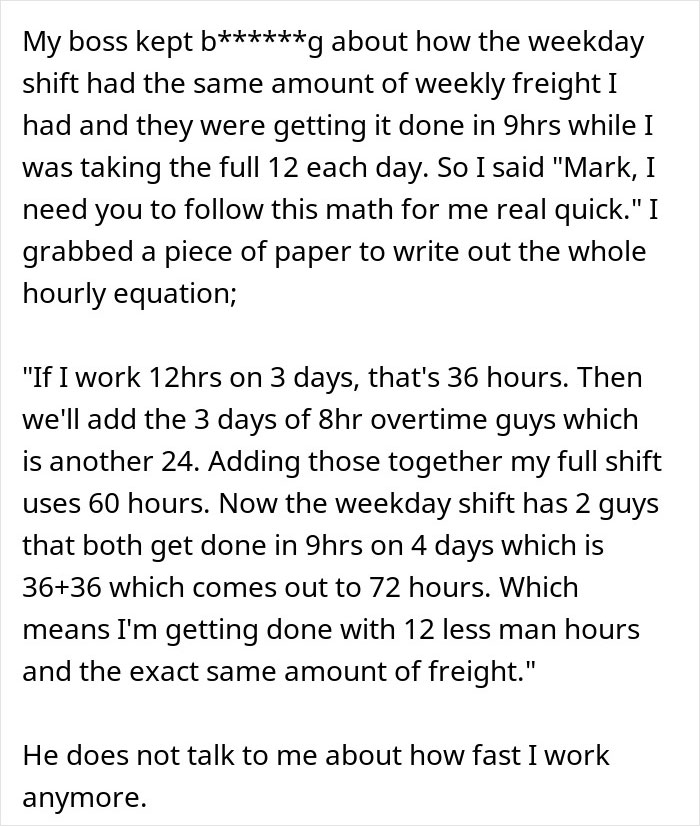
Text showing a worker explaining math to boss about weekly hours and workload, highlighting client message tasks ignored.
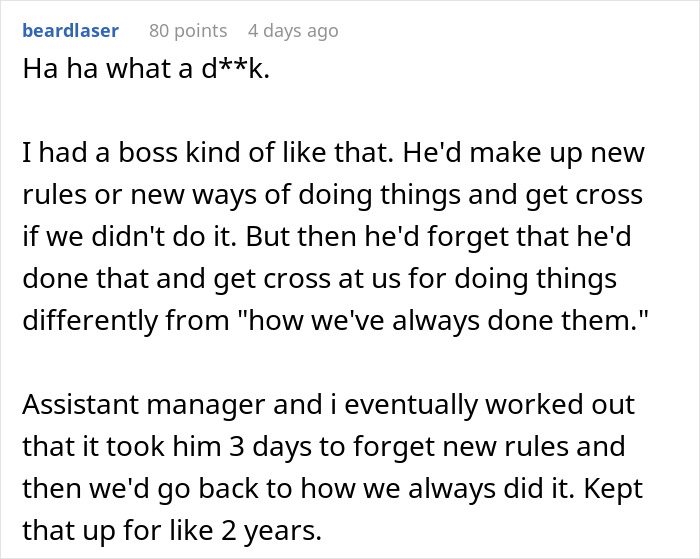
Reddit comment discussing bosses ignoring messages after every client and workplace task efficiency frustrations.
Work chat message from employee after every client ignored by boss for three hours, showing poor communication.
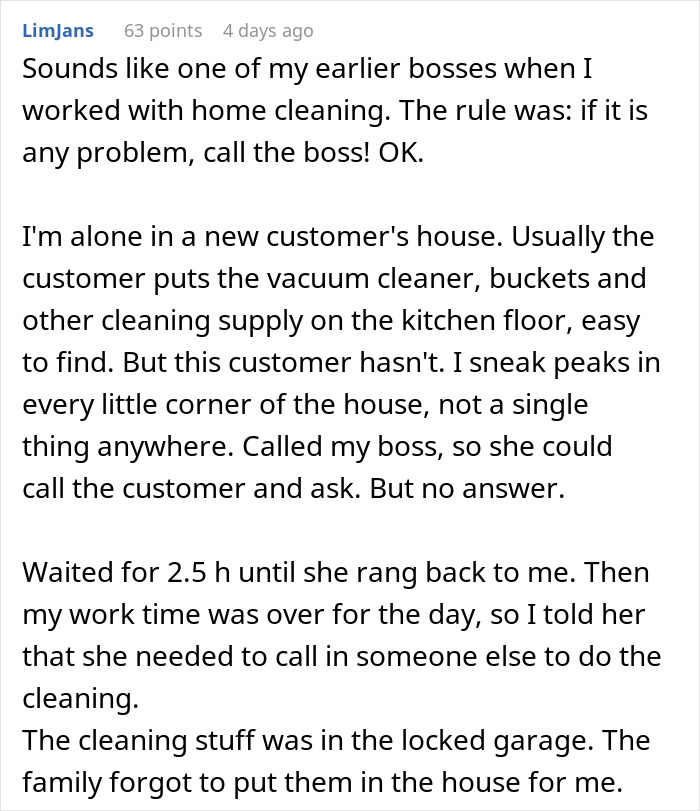
Text post from user LimJans sharing a story about a boss who ignored messages after clients, causing a long wait.
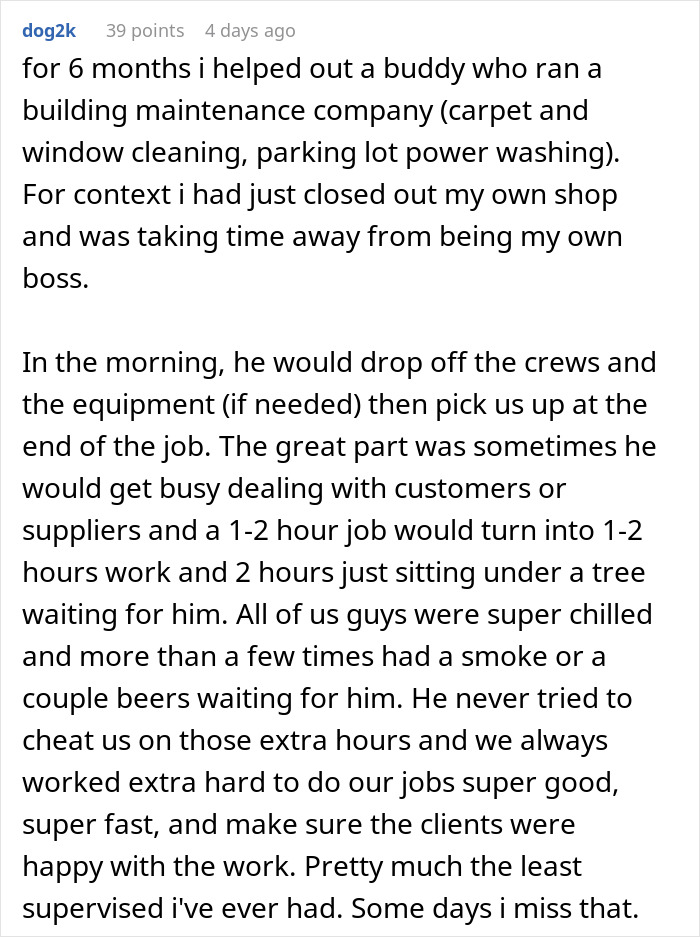
Text post describing a guy sharing his experience with a boss who told him to message after clients then ignored him for hours.
Poll Question
Total votes ·
Thanks! Check out the results:
Total votes ·
Newsletter
Subscribe to Access Exclusive Polls
By entering your email and clicking Subscribe, you're agreeing to let us send you customized marketing messages about us and our advertising partners. You are also agreeing to our Privacy Policy.
Thank you! You've successfully subscribed to newsletters!
I am a writer at Bored Panda. Despite being born in the US, I ended up spending most of my life in Europe, from Latvia, Austria, and Georgia to finally settling in Lithuania. At Bored Panda, you’ll find me covering topics ranging from the cat meme of the day to red flags in the workplace and really anything else. In my free time, I enjoy hiking, beating other people at board games, cooking, good books, and bad films.
I am a writer at Bored Panda. Despite being born in the US, I ended up spending most of my life in Europe, from Latvia, Austria, and Georgia to finally settling in Lithuania. At Bored Panda, you’ll find me covering topics ranging from the cat meme of the day to red flags in the workplace and really anything else. In my free time, I enjoy hiking, beating other people at board games, cooking, good books, and bad films.
As a Visual Editor at Bored Panda, I indulge in the joy of curating delightful content, from adorable pet photos to hilarious memes, all while nurturing my wanderlust and continuously seeking new adventures and interests—sometimes thrilling, sometimes daunting, but always exciting!
As a Visual Editor at Bored Panda, I indulge in the joy of curating delightful content, from adorable pet photos to hilarious memes, all while nurturing my wanderlust and continuously seeking new adventures and interests—sometimes thrilling, sometimes daunting, but always exciting!
I've been given the "from now on's" . They never stay put. I finally began just ignoring them as they're always said in anger or frustration...or more likely power trip.
I've been given the "from now on's" . They never stay put. I finally began just ignoring them as they're always said in anger or frustration...or more likely power trip.

 Dark Mode




























 No fees, cancel anytime






















37
1