Get Premium
Dark mode theme is available exclusively for premium users. Learn more about the benefits of subscribing.
No fees, cancel anytime.

 Dark Mode Ad-Free Browsing Unlimited Content
 Ad-Free Browsing Unlimited Content Dark Mode
Join 1.2 million Panda readers who get the best art, memes, and fun stories every week!
The power struggle between a mother-in-law and a daughter-in-law is an ancient feud, inspiring everything from Greek tragedies to modern sitcom jokes. This online story proves that even something as simple as an ice-cream cake can expose toxic family dynamics.
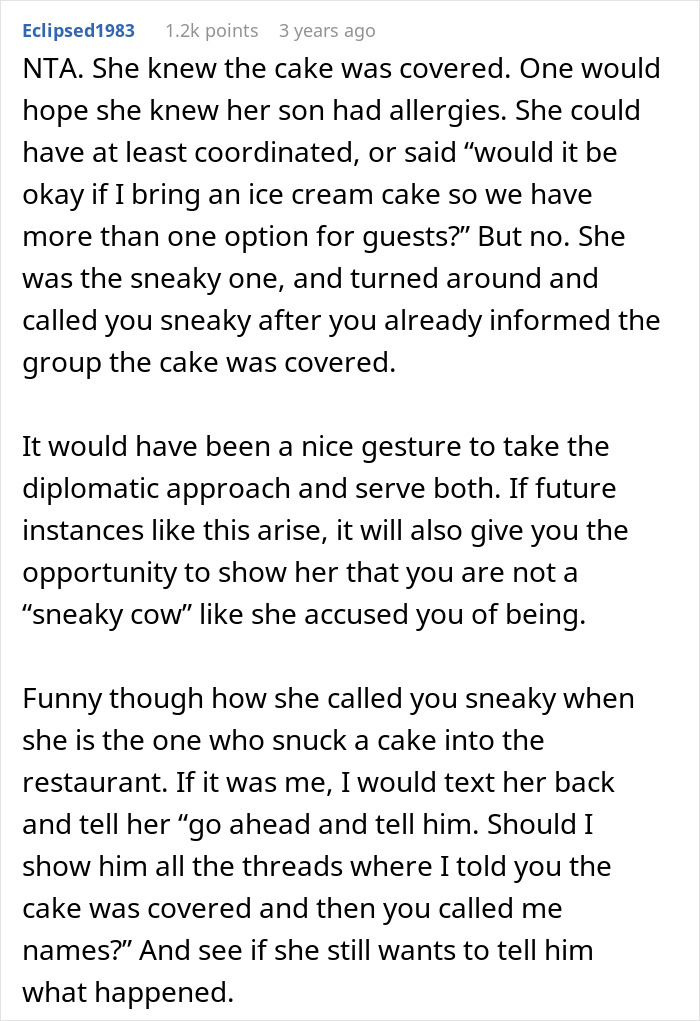
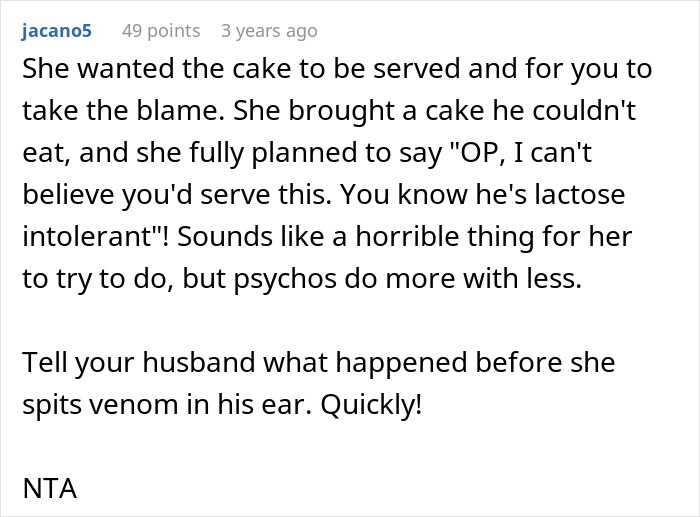
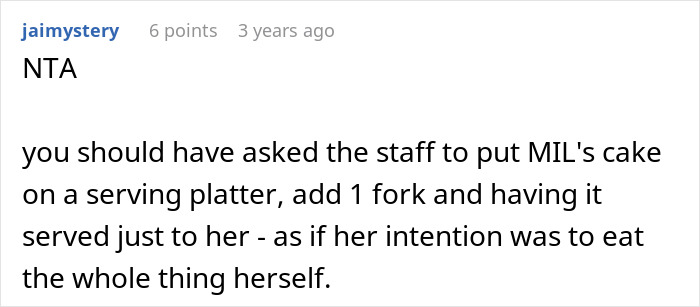
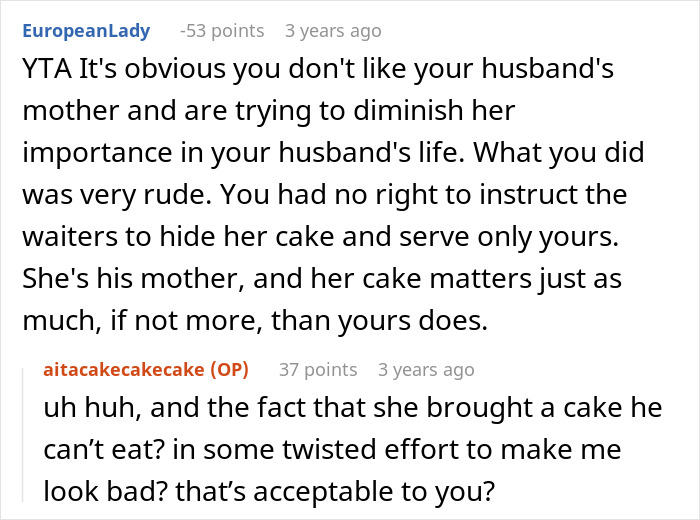
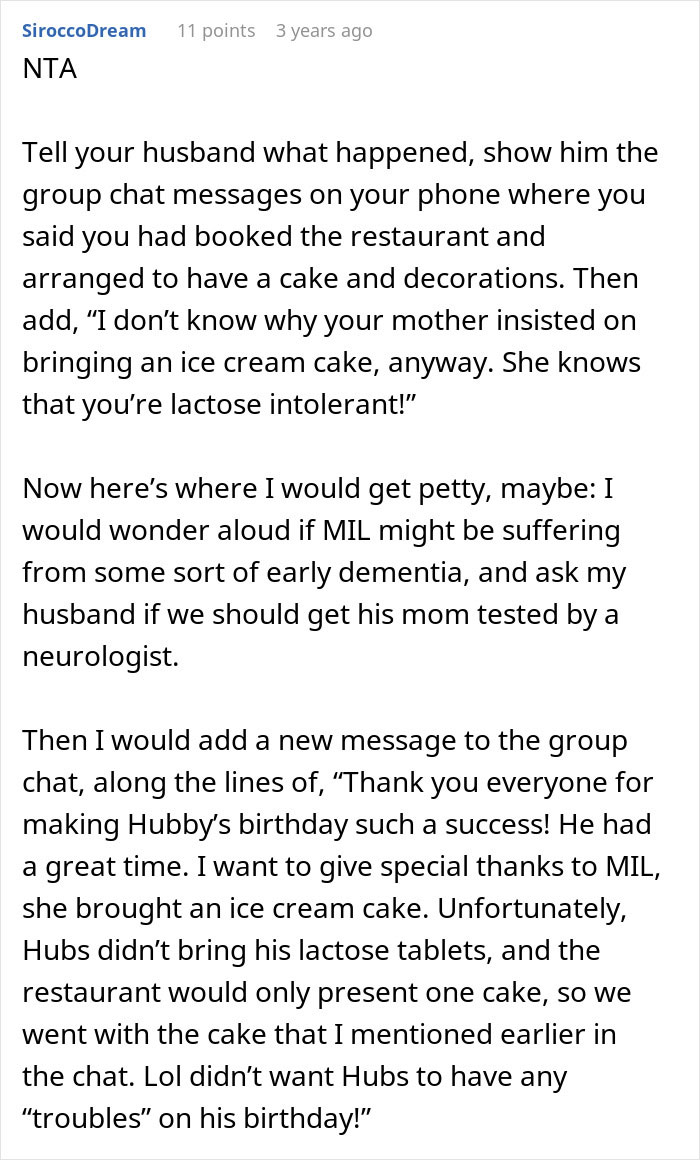
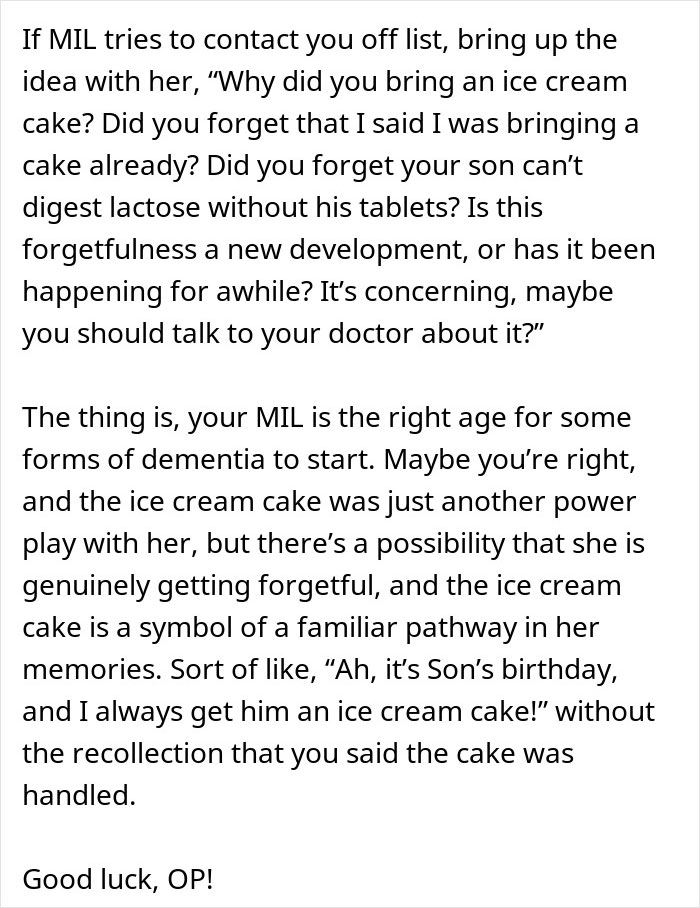
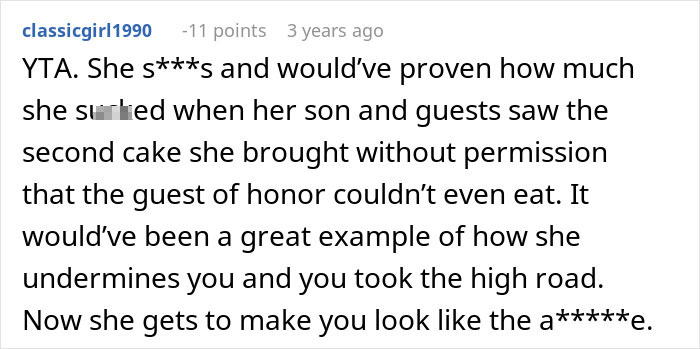
A woman shared that she had planned a surprise birthday dinner for her husband, only for her MIL to pull a major power move by bringing a second cake.
But the woman refused to serve it, prompting the MIL to send her nasty texts and threats.
Read on to see if the “monster-in-law” trope is just a stereotype or if there’s some psychological truth to it.
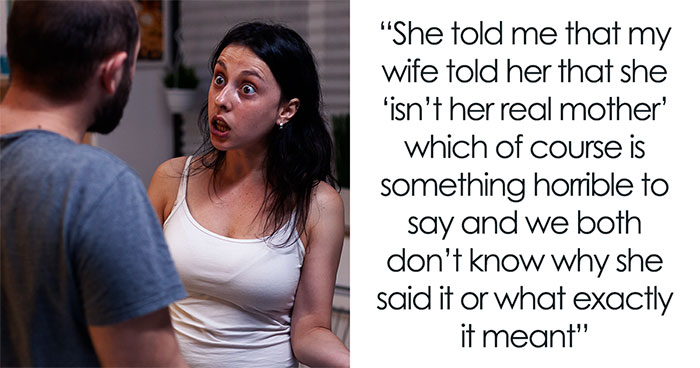
Image credits: Mikhail Nilov / Pexels (not the actual photo)
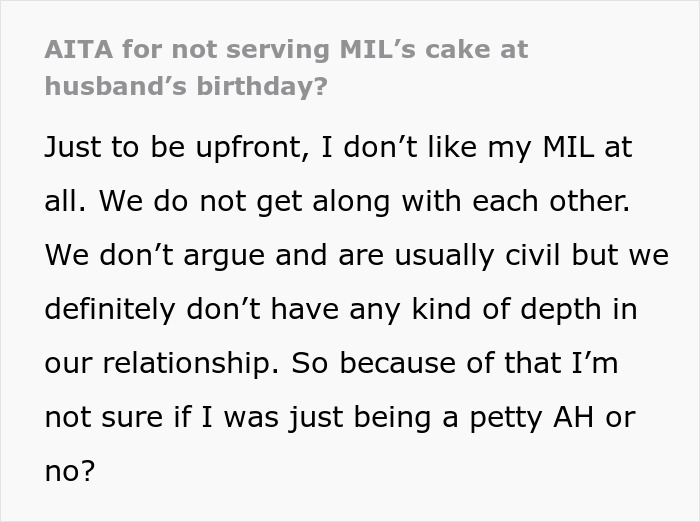
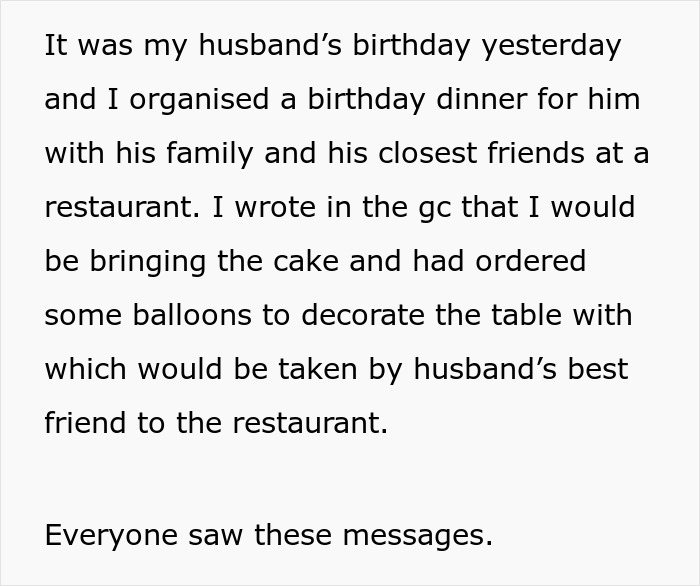
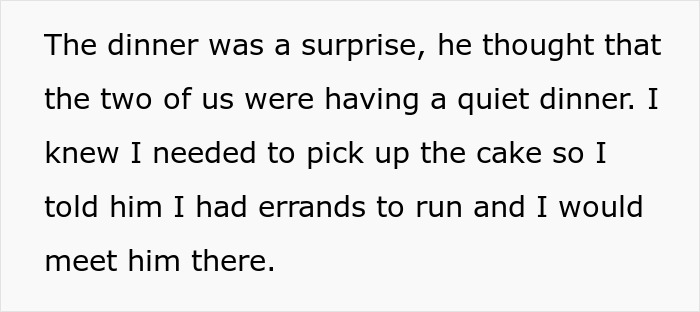
Image credits: Justin Agyarko / Pexels (not the actual photo)
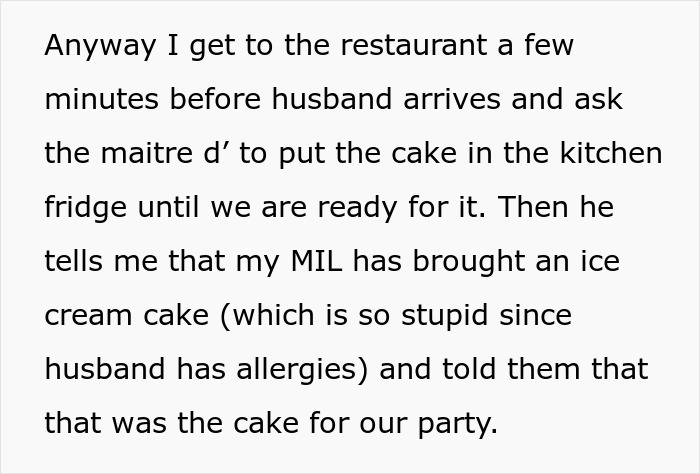


Image credits: Teona Swift / Pexels (not the actual photo)


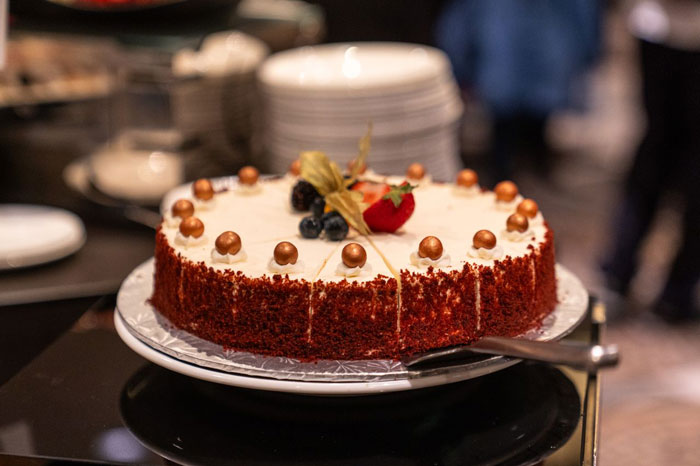
Image credits: aitacakecakecake
Even in the 14th century, writer Geoffrey Chaucer captured this toxic dynamic between a mother-in-law and a daughter-in-law. In The Man of Law’s Tale, he wrote about the fierce rivalry between a young wife and her husband’s utterly obsessed mother, who just couldn’t let her son go.
Centuries later, films like ‘Monster-in-Law’ and ‘Crazy Rich Asians’ continue to mirror this exact same battle for domestic dominance.
Science confirms this isn’t just a convenient plot device.
A 2022 study published in the journal Evolutionary Psychological Science found that both men and women consistently report way more friction with their mothers-in-law than their own moms.
Women, however, specifically reported having significantly higher levels of conflict with their daughters-in-law than with their own biological daughters.
According to the researchers, these family feuds might actually be “influenced by genetic conflict.” It turns out that instead of looking out for what’s best for everyone involved, each person “unconsciously acts in the interest of their genetic kin.”
“The conflict often arises from an assumption that each is criticizing or undermining the other woman. But this mutual unease may have less to do with actual attitudes and far more to do with persistent female stereotypes that few of us manage to shake off complete,” says Dr. Terri Apter, a psychologist from Cambridge University.
“Both the mother and the wife are struggling to achieve the same position in the family — primary woman. Each tries to establish or protect their status. Each feels threatened by the other,” she says.
Dr. Apter’s study shows that 75% of couples have problems with an in-law. But, just 15% of those involve a problem between husbands and their mothers-in-law.
“Men are better at avoidance strategies. Or they will use mother-in-law jokes to defuse the tension. But women can’t keep a low profile. Issues such as cooking, the children’s behavior and how a table is set and a meal presented all affect a woman’s sense of self-worth — and she is judged on them,” she explains.
Image credits: Darina Belonogova / Pexels (not the actual photo)
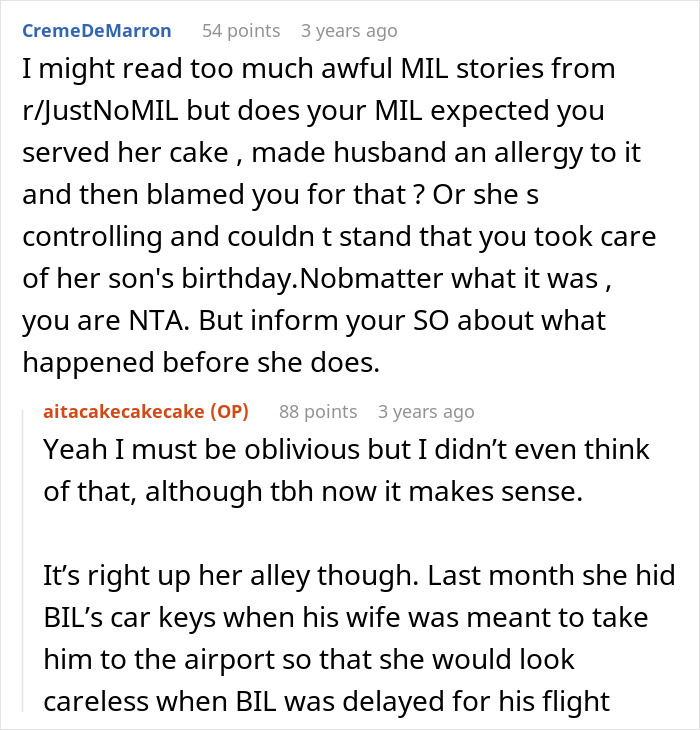
On the surface, bringing a birthday cake for your son might look like a generous act of love. In psychology, however, this can be an example of altruistic aggression or covert hostility. It means using socially praised behaviors — such as gift-giving — to undermine someone else’s authority.
It’s when someone uses a nice gesture as a Trojan horse to stomp all over your boundaries. They might do it because they know you can’t call them out without looking like the bad guy.
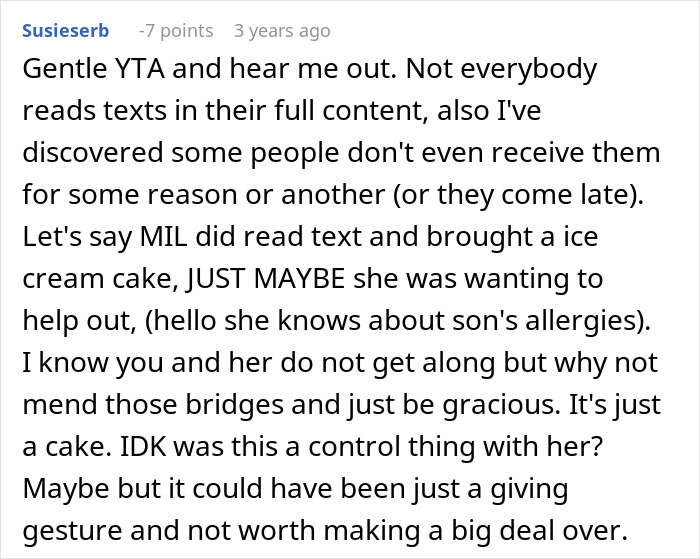
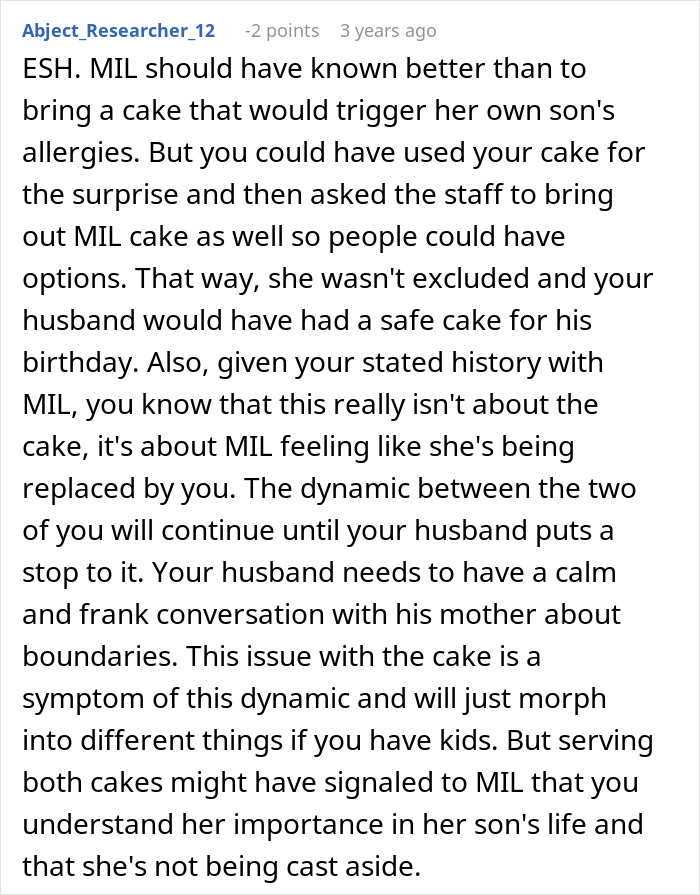
By bringing a cake after the wife explicitly stated she had handled it, the MIL attempted to rewrite the narrative of the evening.
Studies show that the vast majority of struggles between mothers-in-law and daughters-in-law revolve around domestic control.
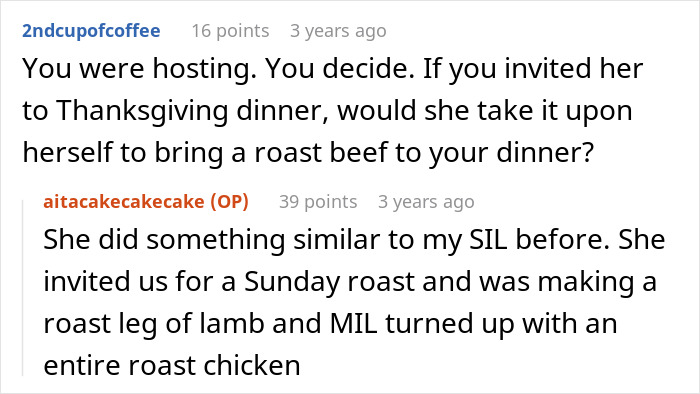
MILs often use food, clothing, and household advice as a battleground to prove they know the son’s needs better than the wife does, directly challenging the wife’s legitimacy as the primary caregiver.
In a study, women accused their mothers-in-law of showing unreasonably jealous love towards their sons. Meanwhile, mothers-in-law complained that they were excluded from their sons’ lives by their wives.
This friction is a painful tug-of-war where both women feel deeply insecure.
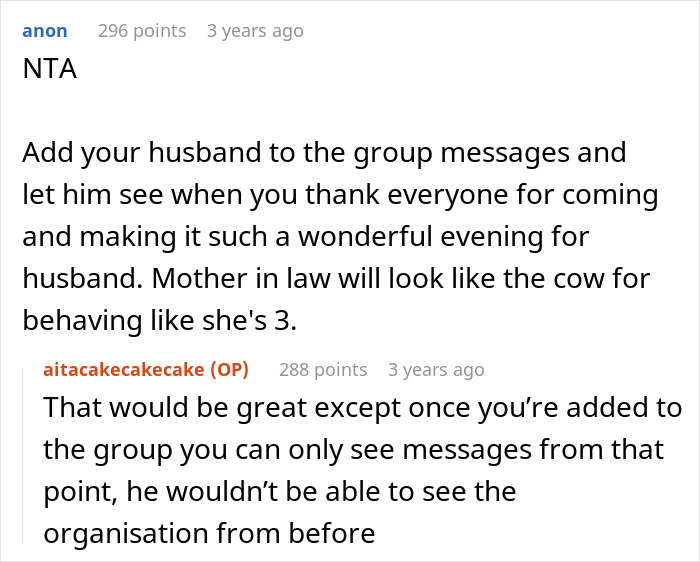
When the author’s MIL sent nasty texts threatening to tattle to her son, she used triangulation — forcing him to choose sides, which research shows directly spikes marital conflict.
To fix this, MILs must step back, respect explicit boundaries, and accept they are no longer the primary caregiver. Meanwhile, DILs should hold firm but calm boundaries without matching the hostility.
Experts also suggest acknowledging the gesture but keeping the boundaries clear.
“It’s a tragedy. This impasse divides women who should have so much in common, and who could benefit from each other’s friendship. It causes both sides terrible unhappiness and distress,” says Dr. Apter.
Ultimately, de-escalation happens when both women stop viewing each other as rivals and respect each other’s place.
























By entering your email and clicking Subscribe, you're agreeing to let us send you customized marketing messages about us and our advertising partners. You are also agreeing to our Privacy Policy.
Thank you! You've successfully subscribed to newsletters!































 No fees, cancel anytime










28
1