Get Premium
Dark mode theme is available exclusively for premium users. Learn more about the benefits of subscribing.
No fees, cancel anytime.

 Dark Mode Ad-Free Browsing Unlimited Content
 Ad-Free Browsing Unlimited Content Dark Mode
Join 1.2 million Panda readers who get the best art, memes, and fun stories every week!
If you suspect your cat has worms, it’s best to act quickly, as these parasites can cause serious harm if left untreated. Deworming is the best way to eliminate worms and prevent future infections. However, using the right dewormer for your cat or kitten is essential. 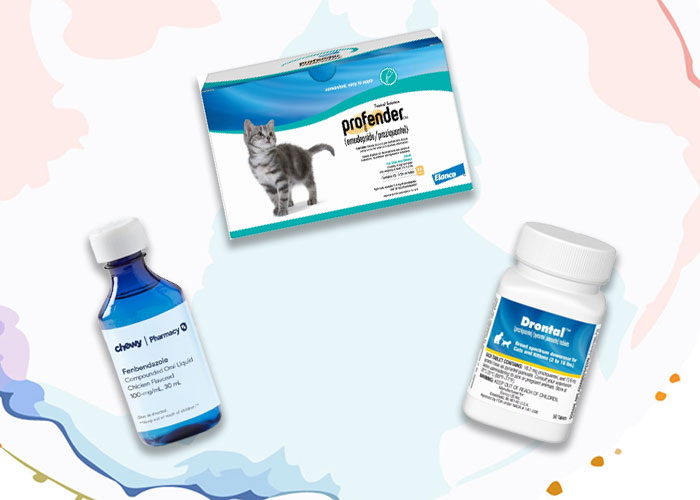
Luckily, you can usually purchase the dewormer needed to treat the most common intestinal worms (tapeworm and roundworm) over the counter without requiring a prescription or vet visit. If you need a more broad-spectrum dewormer, your best bet is to contact your vet for guidance.
To simplify things, Bored Panda compiled a list of top-performing dewormers that our vet expert, Dr. Linda Simon, has personally tested and recommended. You can trust these products to be effective and safe for your feline friend. But remember: There’s no one-size-fits-all solution, so spend enough time investigating the best solution for your pet.
The information provided herein is for informational purposes only. Please refer to our disclaimer for more details.
You’ll want to provide a broad-spectrum option for your kitten, and lots are available over the counter to treat the most common intestinal parasites. Make sure you choose one that is safe for kittens and appropriate for your kitty’s age and weight. Many have restrictions, such as only being suitable for those over two weeks old or those weighing over one kilogram.
This post may include affiliate links.
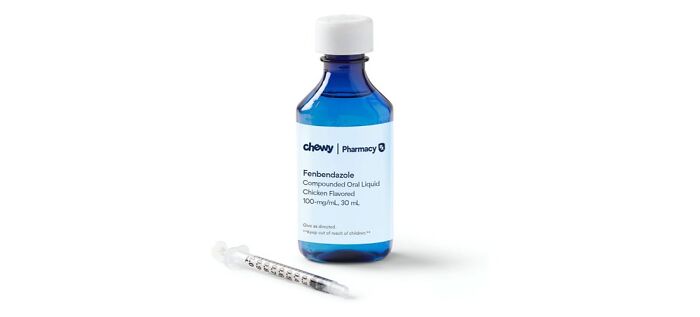
This wormer is the go-to choice for most kitten owners. You can find it in liquid, paste, or granule form, and it works wonders against both roundworms and tapeworms. Moreover, it’s also an effective dewormer for hookworm, whipworm, and some protozoal infections.
One of the best things about this wormer is that it can be tailored to the kitten’s size, making it an incredibly safe option. However, some owners might find it tricky to measure the doses correctly, mainly if they’re not used to it.
Tip: Since kittens must be dewormed every three weeks from birth, buying a large bottle of Fenbendazole liquid might be a good idea if you have a litter. This way, you can dose the litter until they’re ready for their new homes.
What we like:
• High safety index
• It can be used for very young kittens
• One of the broadest acting wormers available
• No prescription needed
What we don't like:
• Some owners find measuring doses tricky
• Not all kittens will like the taste
• Feeding can get a bit messy
Drontal is a medication containing praziquantel and pyrantel pamoate as active ingredients. These two work to eliminate hookworms, roundworms, whipworms, and tapeworms in adult cats. The tablets can be halved to accommodate a cat’s weight if necessary.
Please note that Drontal should not be given to pregnant cats as it has not been tested for safety in such cases. Also, it isn't recommended for kittens under six weeks of age. On the other hand, it is ideal for use by nursing queens.
What we like:
• Scored tablets for easy dosing
• Can be given whole or crumbled up
• Effective and broad-acting
What we don't like:
• Not every cat will eat tablets
• Can’t be used in kittens six weeks or under
• Not safe during a cat’s pregnancy
Droncit is highly effective against tapeworms, but unlike other wormers, it has a narrower range of action. It is commonly prescribed alongside another parasite-preventative medication. The active ingredient in Droncit is Praziquantel, a preferred drug for treating confirmed Echinococcus infections.
Cats are most commonly infected by tapeworms when they have fleas. Fleas serve as intermediate hosts, and when the cat grooms itself, it may eat the infected flea. The larva can then develop into an adult tapeworm within the feline host. To completely get rid of tapeworms, the fleas must be targeted separately.
What we like:
• Simple and affordable
• A small pill that can be crushed
What we don't like:
• Treats only tapeworms
• Not suitable for cats of all ages
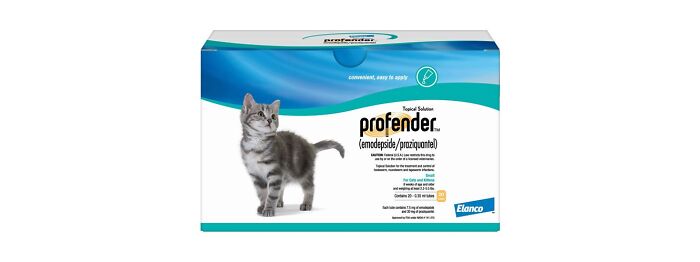
Profender is excellent for treating your furry friend’s parasites. It’s a topical therapy that comes in different doses—based on your cat’s weight—and is applied directly to the skin.
The active ingredients, emodepside, and praziquantel, are absorbed and transported through the bloodstream, effectively treating tapeworms, roundworms, hookworms, and lungworm infestations.
Note: This isn't an over-the-counter medication, so your cat must be personally assessed and weighed before administration.
What we like:
• Broad acting
• Easy to apply
• Adapted to your pet’s size
What we don't like:
• Requires a veterinary prescription
• Some cats dislike the smell and cold sensation
Hartz Ultraguard medication could be ideal if you’re searching for a prescription-free oral liquid solution to deworm your kitten. It contains Piperazine as the active ingredient, which is safe for use in kittens. You should repeat the dose every 2-3 weeks from the age of two weeks.
You can give the liquid directly into the kitten’s mouth using a syringe or add it to their food if they’re already weaned. It’s important to note that you shouldn’t use this medication along with Pyrantel as it can interfere with its effectiveness.
What we like:
• Safe to use from just a few weeks of age
• Side effects are uncommon
What we don't like:
• Treats roundworms only
• Larger doses can be tricky to administer





























 No fees, cancel anytime