Get Premium
Dark mode theme is available exclusively for premium users. Learn more about the benefits of subscribing.
No fees, cancel anytime.

 Dark Mode Ad-Free Browsing Unlimited Content
 Ad-Free Browsing Unlimited Content Dark Mode
Join 1.2 million Panda readers who get the best art, memes, and fun stories every week!

The last few years have demonstrated that even if you don’t care about economics, it finds its way into every facet of your life. Non-drivers still feel the rise of gas prices, tariffs can alter what’s available in your grocery store, so it can be helpful to actually get a frame of reference for the entire thing.
So we’ve gathered the best questions and answers from an internet community dedicated to helping people understand economics, money and the world around them. Get comfortable as you scroll through, upvote the most interesting posts and be sure to share your own thoughts in the comments down below.
This post may include affiliate links.
 "Someone needs to sit Trump down and teach him economics 101. Basic goods like aluminum and steel are low-value goods, producing them is low-wage jobs. What you want is high-wage jobs like turning aluminium and steel into cars. But, the price of cars made in America will go up if the price of aluminum and steel goes up, making them less competitive. Logically you would put tariffs on imported finished products, not basic goods, to encourage manufacturing. If you tax imported basic goods, you are actually HURTING manufacturing jobs. How can he not know this?
Like why wouldn't an American car manufacturing plant MOVE to Canada for access to cheaper steel and aluminum and then send the finished good here? That's the incentive Trump is creating.
Someone explain this to me. I think obviously no tariffs would be best, but if you MUST have tariffs to promote your American First ideology wouldn't you want to have tariffs that make logical sense to promote the thing you actually claim to want? Making steel and aluminum more expensive in the US will across the board hurt all manufacturing companies, forcing them to raise prices and cut jobs to stay competitive... just WHY?"
Your economic logic is sound. Trump has zero understanding of economics.
If you're asking why he's doing what he's doing, that's a psychoanalysis question, not an economics question.
 The answer to why people want factory jobs back is not rooted in any objective and factual reasoning about the actual potential factory jobs you could bring back.
It's a political fantasy, that's all.
 There are 4 core things you need in order to make a profitable EV business. Tesla got as big as it did with only 2 of them, BYD has got everything.
Firstly, you need good and cheap batteries, which can easily be 50% of the cost of the entire car. For a long time these two adjectives were at conflict. Nickel-Cobalt-Manganese batteries were good (long range, quick charge) but not cheap (price and limited global supply of metals). Lithium-Iron-Phosphate barriers were cheap, but not good. Two different philosophies hence emerged. Western, Japanese, and Korean manufacturers focussed on NCM batteries which give them very high profit margins and tried to make them cheaper. Chinese manufacturers focussed on LFP batteries which had very low profit margins and tried to make them better. The Chinese chose correctly. It was much easier to make LFP better and slightly more expensive, to the point where the performance difference is small. In the meantime, a key weakness in NCM batteries, namely the fact that they are super flammable emerged, making them even more expensive especially to ship. The West was originally better at making both battery types, but after 10 years of diverging specialisation, the Chinese completely dominate LFP technology and are getting progressively better at it too.
Secondly, you need to sell enough volume to have enough scale. This isn’t unique to EVs or even cars, and has been the secret to US success up to this point. The US has 300 million middle income consumers within a single integrated region. To be a successful company for anything just needs you to sell successfully in the US. China is the only other place in the world where this is true, and that is quite new and getting better each year. China right now has about 400 million middle class each with purchasing power about a quarter of the US, so equivalent to only about 100 million US consumers. This is more than enough. While American drivers already have established habits about the cars they own and drive, the Chinese consumer is a blank slate. There is no established product loyalty or brand loyalty, and car penetration to begin with is low. When you sell an EV to an American consumer you have to persuade him to first sell or scrap his current car, then to move to a completely different type of car, and then to pay up for features he has lived without up to now. Selling to a Chinese consumer is much easier, and means that the BYDs and Xiaomis of the world can very rapidly hit production volumes that are profitable.
Thirdly, you need to have some way to differentiate your product. ICE cars largely got by on brand loyalty, with consumers willing to pay different amounts for perceived differences in performance, feel, and look. The actual differences were relatively minuscule but the market structure was effective at making you pay more for a Ford than for pretty much the same Toyota. For better or for worse, the EV market has not operated like this especially in China, and brands are now differentiating on genuine innovations. Companies like Li Auto are specialising as family cars that are essentially small limos with all manner of amenities and features like massage chairs and beds; others like Huawei’s AITO are banking on self driving systems far more advanced than Tesla; BYD is just trying to do everything pretty well but really cheap. Only Tesla has really succeeded in the West in doing anything like this (and maybe the Porsche Taycan), while everyone else really can only sell a generic product at the same price.
Fourthly, you need good charging infrastructure. Here China, Japan, and Korea have the unique advantage of new power infrastructure combined with dense populations. The new infrastructure makes it cheap to expand, while the later urban population makes short range batteries viable and don’t need you to build charging infrastructure in the middle of nowhere. Europe has the first problem while the US has the second.
 You aren't missing anything here.
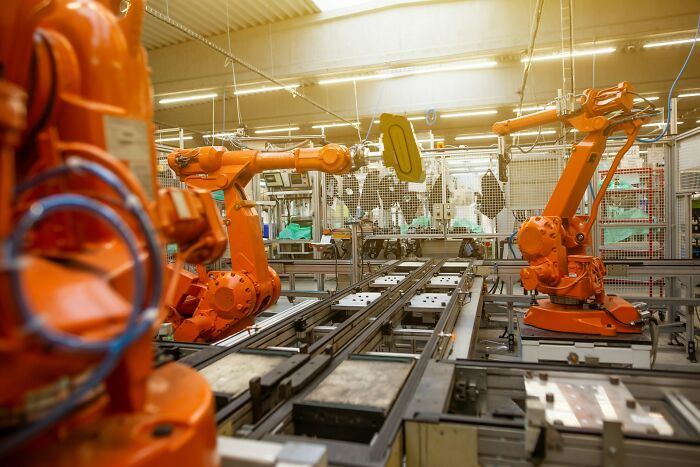
We manufacture stuff where I work.
Our steel comes from Philadelphia, Our aluminum comes from Canada, our gaskets come from Turkey, our nuts and bolts from China, our electronic panels from Taiwan..... There is NO way we'll build an aluminum foundry, a gasket shop, a chip foundry tomorrow to support our production needs.
There are NO plants in the US that can ramp production up to meet our aluminum, gasket , chip , nut and bolt needs.
We buy cheap stuff from all over the world, turn it into a higher value product, and sell it all over the world. Think like a Mack truck, John Deere tractor or KitchenAid mixer.
We sell, all over the world, because we have a quality product at a competitive price.
Now , put 10% tariff on aluminum we buy, 50% tariff on our nuts&bolts; then add another retaliation tariff from EU. I just have a product that cannot compete in any market.
 Yes. Jimmy Carter effectively forced a recession by promoting Paul Volcker as chairman of the Fed and telling him to do his job appropriately.
Volcker attacked the stagnation of the 70s by dramatically increasing interest rates to recenter the economy. This was not popular.
The resulting recession arguably cost Carter any real chance at a second term with many calling him a terrible economic president; however, one could make substantive arguments that he laid the foundation to economic growth we saw over the next two decades, if not longer.
Partly thanks to his targeted deregulations, but I think the credibility he gave to the USD is the most significant factor in the US' surge as an economic power beyond his term.
He bought USD credibility in the face of inflation by sacrificing the US economy over a short window.

... and now we're living the exact opposite Presidency (causing a recession AND inflation, for personal gain, even though he can't legally be re-elected, and damaging the US economy permanently)
 Oil sales are still happening to Asia.
India specifically took nearly all the slack created by the reductions of exports to the European Union.

Russia _is_ running out of money. They are printing more, creating inflation, forcing banks to make loans to military contractors, and they have restricted the ability of ordinary Russians to withdraw their savings from banks. Russia is a big country, it will take a while for it to be obvious that it is collapsing, more so because the government suppresses bad news. But very soon their economy will be back where it was in the early 90's, and this time the west won't help.
 I think it's very likely. China is definitely stepping forward as the world economic leader, but has also been focusing on investing in various countries' infrastructure for years. It's already built a network of soft power initiatives. I guarantee new trade treaties are being drafted.

Once upon a time, global trade revolved around Rome - Africa and even China got rich trading with the Romans. Well, that fell to bits long ago. Everything changes. In the here&now, it makes sense to reduce trade with a hostile and unstable nation such as the USA, because there's better money to be made trading with others. It's happening - it's official government policy in both China and Canada...
 The UK does not pay the most for water. The UK has one of the lowest subsidies per passenger mile for Rail and energy costs are heavily taxed.
Privatisation will mean more competition and lower prices. So how come I cannot change my water company? Maggie and the Tories stitched us over.
 Denmark has pretty high tax to gdp ratios; second in the OECD after france (43% vs 25% for the US). they're also really rich (ignoring tax havens and qatar, they're around the fifth richest country in the world in terms of GDP / capita, adjusted for PPP) and have a relatively low gini index. all of those are a recipe for the median denmarkian having a high standard of living. similarly, if the US was to increase its tax to GDP ratio it could also afford a much welfare state.
most of the concerns about the french welfare state's solvency have to do with its pension obligations. i've no idea what the denmark equivalent is.
as a last point, i have denamrk at ~1.5-2% military spending as a share of GDP vs 3.4-3.7 for the US.

Despite tax rates, Denmark is actually cheaper to live in than the US for anyone but child-free, student loan free, healthy Americans.
 If we had higher taxes based on size of company, this would force companies to split into a vast array of smaller companies. This would be very inefficient with no benefit at all.
Governments can force progressive taxes on personal income because humans cannot split into multiple other humans. A person who makes 100k cannot split into ten people who each make 10k.

It's because China:
- opened up their economy before India did (1978 vs 1991)
- attracted more foreign investment
- had a higher savings rate
- tackled corruption much better
- placed a higher priority on education
- invested more heavily in Research and Development
- industrialised far faster (built infrastructure, industry and electrified the country more rapidly)
- took on higher risk, higher reward loans in their credit sector to fuel infrastructure growth
- urbanised their rural population at a faster rate (increasing productivity and creating a larger worker pool for manufacturing)
- undervalued their currency to make their exports more competitive
- achieved higher gains in Total Factor Productivity, by more efficient resource allocation in their industrial sector
- has a system of government where officials future career prospects are contingent on their ability to deliver economic growth
These are just some that I can name off the top of my head. There are a lot more, but I think this list covers most of the important ones.
It goes to show how big of an impact governance has on economic growth. The current divergence between the two even more surprising considering India was slightly ahead of China in the mid 70s on a GDP per capita basis.
It's almost important to point out that China is a dictatorship, while India is a democracy. China can push through reforms, mandates, infrastructure building, industrial policy, and so on, much easier than can India (or the US, for that matter). For good or bad, dictatorship can often accomplish change faster than democracy.
 "Even if the US enjoys high GDP growth, are there major areas about the economy that could be improved?" is a question economics can answer.
The answers to "Why does the current administration want to 'fix' the economy?" are largely political and not economics. On many accounts, economics would heavily disagree with their notions about what "needs fixing" and/or their attempts to "fix" it.

Look at the growth of the GDP compared to the growth of national debt. That happens if corporations use every tax exemption the administration's are willing to give. And they were very willing since a long time, no matter if red or blue...
 Yes, but the caveat is that the accepted standing of living was way less than it is now. My grandparents on a single income had a house that was less than 1000 ft.² with one bathroom and only one car, and they had to work hard and save just to have that. The not working spouse also had substantial stuff to do at home because there weren’t nearly as many time-saving appliances.
Scroll back in the thread and I think there’s been more substantive discussion about it. The short version is that yes, housing was cheaper relative to incomes, but other things were way more expensive than they are now. Notably, food, clothing and electronics/appliances.
This is something that men who talk about wanting a "traditional wife" forget. If you want a traditional wife, then you need to be a traditional husband and pay for everything. If you can't afford to do that and you need your wife to work full-time, then you'd better get off your a**e and start doing your share of the cooking, cleaning and looking after your children.
 A few points I've made here before. We know that the interest rate (16%) and the inflation rate (8.4%) are fairly high. Russian government statistics tell us this. It could be that inflation rates are actually higher, but it seems unlikely that they are lower.
The sanctions are not as big a problem as people think. Russia can sell oil to China and India. Though this is limited by the rate of flow of the pipelines to those countries. Also, the Chinese and Indians are probably not giving the Russians favourable prices. This is one of the advantages of selling commodities.
Russian business can buy from many countries outside of the Western ones who have sanctioned it. Also, it is often possible to smuggle goods. In many cases simple trans-shipment is all that's needed. An agent in some African country buys a sanctioned good from a US company. Then that agent re-exports the goods to Russia. This is why Russia's many Boeing and Airbus aeroplanes are still flying. So, Russia doesn't even really need to fully decouple from Western imports, just reduce them to the level so that those which are needed can be brought in using these methods.
Russia's military spending as a share of GDP is also not that high (of course Russia may not be giving accurate numbers to the World Bank). This is not a war on the scale of WWII or anything like that.
All that said I'm not ruling out the possibility of sudden change in Russia.

I would rule that out. I think people underestimate how much the average russian is willing to suffer for mother russia. Those are proud people and most of them believe that putin is a strong leader. You see opposing people overly hyped in the media but if you ask russians about them, they are not really interrested in this person if they know them at all. Also, their hate for most western nations makes it mich easier for them to excuse certain problems their gouvernment caused
 In short, yes. Both of you have derived pleasure, presumably, from being each other getting slapped. Therefore you both produced something (entertainment) for each other.
As an aside, hopefully you both reported the income and paid taxes, so in actuality this wasn’t net zero for either of you but a net loss.. ;)

The US had a recent credit downgrade. This means that US debt is considered less safe than it was prior, and so the rate should be higher. This is due to the US having a large budget deficit and active discussion in Congress of unfunded tax cuts.
The credit downgrade was the trigger, not the cause. The cause is inflation expectations and monetary policy. US debt isn't really considered unsafe, at this point it's the unpredictability that is driving rates even higher.
 In the presence of inelastic supply caused by regulatory supply constraints any and all sources of demand can do nothing other than impact prices.
The impact of immigrants alone on home prices pales in comparison to the total impact of the regulatory supply constraints.
Farm work is the #1 occupation of undocumented immigrants, but #2 is construction. Getting rid of all undocumented immigrants would reduce demand for housing (as would getting rid of all citizens), but it would also reduce the supply of new housing - and increase the cost of repairs and maintenance of existing housing. The net effect is likely an increase in housing and rental prices.
 Black people* in America have higher poverty rates, lower incomes, lower wealth levels, higher unemployment rates and experience worse economic outcomes compared to White and Asian Americans. Incomes, wealth, and poverty are comparable to non-White Hispanic people and to Native Americans (along those metrics Black people generally do better**; on other outcomes, like eviction or incarceration rates, this is not true). There's some evidence that economic outcomes between Black and White people are converging, but, to the extent this convergence is happening, this convergence is very slow.
The "why do Black people have worse economic outcomes than White people" is a really long question****. The short answer -- a long a continuous history of racism in the United States -- is correct, although not maybe not the most helpful for spelling out how exactly this manifests itself. I'll write a brief series of events, with the understanding that nothing I write will be particularly comprehensive as there's vast amounts of scholarship on this and I'll be omitting lots of things. I'll be writing this through the lens of where Black-White economic convergence does and doesn't happen. I'm also going to be lumping Black women and Black men together, even though a more complete answer would talk seperately about the two groups, since their economic experiences are different in some important ways.
In the immediate aftermath of emancipation, Black wealth was rapidly converging towards White wealth (see figure 1 from the fourth link). To a large extent this was mechanical; Black wealth prior to the Civil War was, for obvious reasons, very close to zero, which meant that any increase in economic circumstances, would show up as rapid convergence. For context here, the convergence was per-capita White wealth 60 times than of per-capita Black wealth shrinking to about 20x. Relatively quick convergence through reconstruction until around ~1900, where it stalled out at ~12X. My read on why the convergence stalled out was that Reconstruction was kind of a failiure and Jim Crow era laws in the South were pretty explicit about being designed to perpetuate Black poverty.
Turning to the first Great Migration (I think historians quote it as begining in ~1910), in which a large number of Black Americans moved North to try and escape oppressive Southern laws, there's some evidence that early Black migrants saw better economic fortunes, however, mass Black migration lead to White Americans to self segregate; government spending was reallocated away from areas where Black people moved to, schools became segregated, crime increased, and poverty became much more concentrated. (see fourth link for a paper and some discussion on this). Making the Second Ghetto is also a good book that covers the back end of this phenomoem. Also happening concurrently was the rise of a lot of pretty explicitly discriminatory housing laws that prohibetd Black people from owning property in certain areas (racial covenents); these covenants would not be deemed illegal until 1948, and were often replaced with laws that, in practice, acted as racial covenants (see The Color of Law for more).
Racial wealth convergence continues post 1900 through around 1980, although at a much slower rate. Income convergene happens as well, which we can track with better ease after 1940 when the Census begins asking about it. Despite slow convergence, Black people were explicitly and implicitly locked out of many New Deal programs that allowed middle class White people better access to education, home ownership, and jobs. People usually think of "redlining" as the policy most synonomous with this; I think redlining should be thought of as a catch all term for housing discrimination that Black people faced, since the way the actual policy worked doesn't quite line up with how people think (It was more FHA loans than HOLC maps that are commonly cited). If you're thinking of why there's a very large Bla
I've heard it compared to a Monopoly game where you aren't allowed to participate for the first fifty rolls. Then you can roll but can't buy property for the next fifty rolls. Then you can buy property, but only on the first two sides of the board (and no Utilities). And the bank won't let you buy houses (if you even managed the circumstances) until roll 200. Years of shifting two tier rules have generational outcomes when you look at large population groups. Don't be fooled by anecdotal exceptions. See South Africa for a lot of parallels.

Because they can finance a lot of their assets to get roe to over 10%.
Also 3% margin is a % of revenue while a t bill would provide you a % of assets. I'd wager Walmart probably turns over between 2-3x it's assets in sales (I'm not going to look) so before you eliminate the leverage you need 2-3x the yield to get to the same profits based on asset value. T bills don't yield 6-9%, they yield 4.5%.

And the US government subsidizes them in the form of Medicaid and SNAP benefits due to employees hours/pay being what it is. Another example of Communist influence we allegedly despise.
I find a Hirschian model on this helpful. As more of our basic needs are met, we substitute more of our income towards positional goods - markers of power and social status. Unlike other goods, we cannot increase 'social status' in the aggregate - it acts as a conserved quantity.
This spills over into other product markets. Consider housing. Yes, a house is a place to live, but it is also a conspicuous marker of social status - your neighborhood selects you into a peer group and community. If you read arguments against housing expansion, many of them boil down to a desire to maintain exclusivity.
In the United States (and across the industrial world), an aspirational lifestyle from the middle of the 20th century is now widely available. If you want to own a small home and a car in a small city, that is broadly accessible on working class incomes. That just isn't an aspirational lifestyle anymore.
 There is a multitude of reasons, but crucially, working more hours does not mean producing more. German workers produce 90.9 USD per hour worked and work 1,353.89 hours for 123,069 USD of annual output, while Japanese workers produce 53.4 USD working 1,738.36 hours, for 92,828 USD of annual output.
There is a range of different deciding factors for lower labour productivity, some of which include training, capital inputs, and adoption of technology. But certainly, per hour productivity is also likely to diminish as hours increase.
The main reason is that Japanese work culture insists on overworking its workers, which reduces productivity. It's not 'if they overwork so much' but *because* they overwork so much. Germany doesn't overwork its workers, and so enjoys higher productivity. Simples!
 How do you define a bubble? How do you determine what a company is "legitimately" worth? The standard theoretical approach to the value of a company is the net present value of future earnings.
NVidia is valued at $4 trillion by the market and is expected to make $100 billion this year. If we expect it to make $100 billion every year, it is definitely not worth anywhere near $4 trillion. But investors have seen it grow incredibly fast and expect it to continue to grow as the AI boom transforms our economy. How fast? If its earnings grow at a little over 20% each year, that $4 trillion value is justified. If it averages 30% growth, which is far slower than it has grown the last couple of years, it is a bargain.
So is it a bubble? I don't know because I don't know how much higher earnings will grow and how quickly that growth will be. I used to think that Apple and Amazon were overpriced, but their earnings growth ended up making them look like they were bargains.
I don't spend any time worrying about it and just buy total market index funds. I'll own the best and worst performing stocks and get on with my life.
And why is it ok for the US government to have a 'vested interest' in Nvidia among others, which is the definition of Communism (government having the methods and means of production) by having an outsized influence in their companies?
 USD is the largest reserve currency, but not the only one, and it can be used as a reserve currency without active involvement of the US. Maybe there'd be a loss of seignorage but we're talking probably less than $30 billion/year. I don't think diplomacy alone (if it gets into tariffs that's another matter) will lead to lower valuation of the dollar, at least not through this mechanism.

Lived in the UK. They are quite proud of their lack of productivity and expect someone else to fix it. Yikes. I mean some governments, systems and cultures are more innovative. Culture is a hot button in economics and growth nor efficiency are always good. The people in the UK live a great life. So there are trade-offs.

I work in banking/finance field
They have models predicting this type of behavior and the companies don't easily give out 100k credit lines. And even if you get a 100k credit lines there are models predicting this behavior and when triggered will go down the line.
So you can try, but will take time to build history and would need to do it stealthily, but I would guess 95% of people could get at most 10-15k
Basically, the type of person who receives $100K in credit card limits is the type of person who would never declare bankruptcy for this reason - they have far more than $100K in assets, so most of their assets would be sold off to pay for the credit card debt.

Measuring by the seventh richest is a very arbitrary amount.
Also, Gates's wealth varies significantly depending on what source you read from. Forbes shows him currently at 108M, and at about 61M in 2012. So, he's done well over the past 13 years.
One must keep in mind that this period had a very long, healthy period for stocks. Literally anyone bought into the market for that period would have done very well, as the S&P 500 has increased about 486% since 2012. Everyone got richer, and the rich did too.
There is no guarantee that the current status quo will continue. In fact, we can guarantee that it will not last indefinitely. Another recession is always coming, and no bull run lasts forever.
And yes, the richest people are getting much richer.
 With the caveat that we're in uncharted territory here, I think the most likely outcome is that the quality of government data degrades and certain data series stop being released. note here that I mean official government numbers, not whatever trump has decided he thinks gas prices are today.
this is essentially what is being proposed with the monthly jobs report (proposed stoppage of the report) and what has happened to the CPI (data quality degradation, largely from budget cuts). I'm distinguishing here from "unreliable due to budget cuts" and "unreliable due to outright manipulation"
it is very hard to convincingly fabricate data, and the trump administration is unusually incompetent. for something like inflation statistics, you will have the might of the bond market pouring over whatever is produced because inflation protected bonds are a major piece of many portfolios and those are indexed to the CPI.
For something like GDP, all the various subcomponents have to add up in ways that are really, really challenging to fake convincingly (GDP by industry, by geography, by geography by industry, etc. -- all those have to agree and all those components get analyzed individually by third parties). Doing something like releasing a headline GDP number and no subcomponents would be tantamount to doctoring the data, but would also be very obvious.
I would also expect that if there were secret methodological changes, or data not being reported faithfully, that this would be exposed fairly quickly by whistleblowers. Edit: To further state this, the people at the assorted government statistical agencies are highly competent and ethical (for instance, see the across the political spectrum condemnation of trump's pick for the BLS). I fully expect the statistical agencies to continue to operate with the ethics they have demonstrated thus far. I will also trust the data released until given a reason to think otherwise. With that being said, I think there are large risks to data becoming less reliable, both from budget cuts, and outright political hackery (e.g., trying to only count citizens in the census, or certain data series not being released)
Between those two factors, I suspect that we will know if data have become untrustworthy, but as I said, I think the most likely outcome is that the data get higher variance and certain data series stop being released.
As a side note to people in the comments who are saying "the data are already untrustworthy/being altered" -- I have seen no evidence that this is true and parroting conspiracy theories will result in a ban. There's plenty of reason for concern and no reason to make things up.
 Answer: The situation in Telluride, Colorado, where there's a significant disparity between median home prices and median incomes, is not unique to this town but is a common phenomenon in many high-cost areas, particularly those with desirable real estate.
First, many homeowners in Telluride are very wealthy individuals, often from out-of-town, who own second homes or vacation properties. These individuals do not necessarily earn their income in Telluride, so their earnings are not reflected in the town’s median income. This means that a significant portion of the housing stock may be owned by people who live elsewhere most of the time, such as vacation homes or investment properties.
Also, many high-cost areas have programs to provide affordable housing for local workers. In Telluride, there are government sponsored housing initiatives to ensure that people working in essential services can afford to live locally.
So, essentially, a 'bedroom community ' or a 'vacation town.'. Not a place to establish a business unless you don't need much labour as that is hard to come by. So, you could be a self-employed landscaper there, but hesitate to open up a big Home &Garden center that would need a sustainable pool of low-wage, year round employees.
 As Paul Krugman said, productivity isn't everything, but in the long run, it is almost everything.
UK productivity growth has basically stalled since the early 2000s. Real output per hour worked in 2026 is only marginally higher than it was in 2007 before the recession, and the typical current-day UK worker is about 20% less productive than their German counterpart, and about 30-40% less compared to the U.S. depending on what metric you use.
The reason why the UK is unproductive is a much longer discussion. I would note that it was hit harder by the GFC than most countries due its relatively outsized financial sector, and Brexit was a huge shock right when most countries were pulling out of the aftermath of the recession.
The real reason UK productivity is low is down to hostile management which insists on abusing their workers whom they hold in contempt - and underpay, which means the workers have little motivation to do more than the bare minimum. This has been going on since at least the late 1960s, and the bosses mostly haven't figured out what they're doing wrong.
 It’s highly unlikely. Trump thinks (rightly or wrongly) the US consumer will weather his tariff strategy better than the consumers in our trade partners’ markets. Ultimately he believes the pressure from these tariffs will force other leaders to negotiate more US favorable trade terms.
He and his team believe other nations reliance upon exports to the US is a bigger piece of their overall economy. This can be backed up with data when you look at exports to the US as a percentage of GDP and vice versa. However, this does not mean the trade policy will work as planned.
I don’t know how this will play out, but much of the media discussion has been around how the US consumer will be impacted, but make no mistake it will severely impact our trade partners as well.
Once again before some of you warriors jump on me, I am not defending or criticizing the Trump admin, but simply explaining their strategy.
The problem is what Trump and his team think "favorable" trade terms mean. Favorable for him personally? (Fake peace awards, gifts of jets, billion dollar contracts for Jared Kushner's company and other Trump businesses)? Favorable only for those jurisdictions that vote for him? Trump's trade deals are often unsustainable. He hates if the other country benefits at all -- he's locked into win/lose thinking and can't understand win/win deals. He only allows the other country to benefit if he gets something out of it. Yet, he gets irrationally offended over the smallest things and will tear up deals and sabotage negotiations. Those countries that sign deals know that they are enforceable only as long as the grifts and the ego stroking keep flowing. It's factored into the cost. Meanwhile, both allies and enemies alike are diversifying with trade deals elsewhere. Even after Trump is gone and US has lost decades' worth of trust in trading.
Questions like these are what Adam Smith was pondering when he wrote "Wealth of Nations" about 250 years ago. Productive output is shaped not just by the education level of individuals but by the institutions that allow labor, capital, and resources to be efficiently allocated. The U.S. has highly developed financial markets, legal systems, property rights, and infrastructure that allow businesses and individuals to maximize their productivity. India, despite having educated people, is not as efficient in these areas, leading to underutilization of its labor force.
There's also capital accumulation. The U.S. has significantly higher levels of capital investment, including advanced technologies, machinery, and infrastructure, which dramatically boosts worker productivity. Even highly educated Indians may lack access to the same level of resources that Americans have, limiting their ability to generate comparable output.
'Money' is not 'output'. If you want to measure productivity in terms other than denoted by currency, the comparison would look very different.
The actual financing aside, it depends. UBI is ultimately not really a flat payment, because we tax as well. Usually it's financed via some kind of income tax, and since income taxes are progressive, the net benefit from UBI falls with income. So if you earn $0 you get the full $2000, if you earn $500 you might only get $1900, and so on. For high incomes, it's something more like -$4000.
So it's ultimately redistribution.
This can definitely change inflation, but it's a one time change, because it's a one time change to the income distribution.
The bigger problem is how to actually finance such an UBI because it would necessitate quite massive taxation.
 Taxation is partly an economic issue, however it is partly an ethical and political issue.
Who it is "best" to tax depends on your definition of "best". It depends on what your moral goals are. Some people believe that the rich should pay more. If that's your moral view, then why not advocate taxing the rich more?
There are plenty of ways to do it whomever is targeted. The rich could be targeted by higher Estate taxes or by eliminating the step-up basis. The rich could be targeted with a wealth tax. A wealth tax has various economic problems that we have discussed here before. Both would change incentives, of course, as any tax does.
Alternatively, a sales tax or VAT would provide a broad based way for the government to obtain more revenue. That does not target the wealthiest specifically. A permanent sales tax or VAT will hit all people fairly equally in percentage terms if it were charged on all goods and services. A time-limited sales tax or VAT is more complicate and the poor would pay at a larger percentage.
Then there are simple possibilities like increasing income tax or capital gains tax. Those systems are already designed to tax the wealthy more than the less wealthy. Despite what you may have heard, we have a lot of evidence that they do just that. Federal income tax revenue depend on relatively high income people (not on Billionaires, but on people in the top ~10% of income).
Then there's the possibility of reducing government spending. Just like taxation this comes down to morals and beliefs about people. Do you believe that people should be able to retire with state funding at age X? Well, that X could be higher than the current retirement age.
 Even if some publications want to suggest otherwise, productivity growth and income growth (for the average person) are generally well correlated.
Debates about if and when productivity and pay diverge aside, economic growth is a necessary but not necessarily in of itself sufficient condition for a higher standard of living. Plainly put, if your country only produces (the equivalent of) two bananas per person, you can't eat three.
Meaning that you need to produce what you want to consume, your consumption, and in turn standard of living, is limited by all the goods and services that are produced (including production so you can make goods other countries want and import the ones you want).
The distribution of productivity/economic growth gains is a bit of a different matter. Some of the increases in inequality are down to economic factors, like how automation acts differently on different jobs, some are a political matter. Countries can decide how much they want to redistribute, how much to tax the "top", how much to give to the "bottom" of the income distribution, in most countries this is down to how much political support there is for how much redistribution.
No because SNAP benefits don’t push labor supply upwards. If anything they might slightly lower labor supply since SNAP can allow for slightly more time to search for a new job when unemployed.
The way a subsidy works is that the payments would make it cheaper for employers to hire workers.
It is a subsidy for farmers and food sellers since it does boost demand for food. Hence why it is part of the farm bill
Just one example: If Walmart can pay workers too little to live on because of food stamps/SNAP, then Walmart is getting subsidized. Then those workers spend that money in Walmart. Link in hidden reply:
 This is one person’s view so welcome criticism. Like always the answer is yes, but.
Let’s talk about Starbucks specifically. For FY2025 (which ended in Sept) Starbucks generated about $4.75bn in operating cashflow (net of all expenses including salaries), invested about $2.5bn (new locations, equipment, etc), and paid dividends and some refinancing for about $2.23bn. So when it was all said and done, the company kept almost no money in the bank ($4.75-$2.5-$2.23 equals roughly $0).
So from a financial standpoint they can’t just give everyone raises without giving something up. If they want to pay their employees more money, they could either raise their prices, invest less money in the business, reduce their dividend, or take out more debt to pay the dividend and or salaries. Each one of these options will either hurt the consumer, the company, or the shareholders. At the end of the day these companies (Starbucks and others) are businesses and are run as business.
Now you could argue that the folks who run the company (CEO, CFO, etc) should be paid less and have their pay distributed to the rest of the employees which is an entirely fair argument to make. However, it would be helpful to put things into context. Starbucks’ general and admin cost for 2025 was $2.7bn (including executive compensation and everyone else’s salaries) and the total executive compensation for 2024 (2025 hasn’t been determined yet) was $139m (a lot of that was stock but let’s assume it’s all cash for discussion purposes) which means the executives got paid about 5-6% of the total company G&A. For a company that has 381,000 employees this isn’t much money in the grand scheme of things.
Edit: I should not have said kept almost no money in the bank as that’s not entirely correct. I meant to say kept no extra money in the bank aside from the cash they already have).
Edit 2: someone commented that they can just cut the dividend in half so I thought it would be helpful to provide some color here. The board would need to approve such drastic cut to the dividend, and that would never happen simply because the board’s job is to look after the shareholders’ best interests. Unfortunately there is no clear evidence that cutting the dividend in half to give the employees raises would be in the shareholders’ best interest.
The job market is healthy overall. Yes, there are pockets of weakness in some industries and physical regions. Yes, there are irritating trends for new hires. Yes there's a complicated relationship with wage growth vs. inflation. But truly the job market is strong in the US so far.
 I don't know what you mean by "so important" but,
1. the U.S. is not a net exporter of oil but instead a net exporter of "oil and oil products". We import oil and export diesel, gasoline, or etc.
2. It is a global market. Now that the Europeans aren't able to get arab and persian oil they are looking to buy oil that would normally come to the United States. Additionally the lengthening of global trade routes will increase the rates you have to pay for oil tankers increasing spreads and end costs for delivered oils.
This answer totally misses the point. US oil companies trade globally. When the global oil price goes up, US oil companies make more money per barrel because they charge the market rate. That's it.
Google "Big Beautiful Bill CBO Analysis". The CBO, or Congressional Budget Office, is a non-partisan government agency tasked with evaluating the budget and economic effects of major legislation. They're particularly well known for their rigor, accuracy and impartiality. You can do the same for any major piece of legislation. They'll even return to major legislation over the years and reevaluate their actual effects in the budget and economy.

One notable, clear cut result of that bill is that the ultra wealthy will enjoy more tax cuts. Not at all surprising to see that official White House websites tout the BBB as benefitting working class families the most. This is a lie. Nearly all other credible sources show that the bill absolutely skews in favor of the wealthy and corporations, to the tune over $4 trillion in tax savings. Tax the f*cking rich.
 Presidents don't have enough of an influence on the economy to cause recessions. Well, the vast majority of the time. Trump didn't cause the pandemic, Bush didn't cause the GFC, Bush didn't cause the dot-com bubble. Reagan didn't cause oil price shocks. You can't blame these presidents for happening to be president when those recessions happened.
 "When Bernie Sanders went on Joe Rogan the other week, he claimed that: "...one man, Mr Musk, own[s] more wealth than the bottom 52% of American families". However, when I did a little bit more digging, the bottom 50% of Americans own about $4 trillion in wealth (according to the Federal Reserve) whilst Elon Musk's personal net worth is in the vicinity of $400 billion (according to Forbes). At least from these numbers, that would indicate Bernie is off by a factor of ten so I'm wondering how he would have arrived at this statistic? Personally, I think this level of wealth inequality is extremely problematic whether its 50% or 5% of the population but I am curious if anyone knows how he arrived at this statistic. Perhaps it's only taking into account specific forms of debts and assets? He also used to mention that the three richest people in the United States owned more wealth than the bottom 50% but that would also run into some similar calculation issues so I feel like there is a hidden factor I'm not seeing here."
"I feel like there is a hidden factor I'm not seeing here."
Because Bernie draws on a rather questionable definition of net worth that excludes automobiles and durables. Even so, the original study finds that it takes ~25 individuals to match the combined wealth of the bottom 50%, and as others have pointed out, the bottom 30 percent are in net debt.
The bottom half by wealth is overwhelmingly young people in school or just entering the labor force (the SCF samples representatively through age 18). They're not supposed to have a lot of assets. It should be also pointed out that being in debt is also not necessarily a bad thing. 40% of U.S. college graduates take out student loans, the expected payoff of which is many times the cost.
"Personally, I think this level of wealth inequality is extremely problematic whether its 50% of 5% of the population"
Why? Musk and co's wealth are just numbers. it's locked in unrealized gains that due to collateralization he cannot possibly hope to liquidate at their prevailing valuation. If I own a million tokens in some weird cryptocurrency and someone paid $1000 for a token, that doesn't automatically make me a billionaire.
It's generally meaningless to measure wealth inequality because you can't really talk about asset values without talking about liquidity, and mostly all you're doing is measuring how little money young people have compared to old people. But people can't eat off of their house or borrow against their future social security checks or sell 5% of a public company without the stock collapsing immediately.

Even if assets aren't liquid, they can be used for leverage as if they are. So that argument is out the door.


Who the fûck is writing these replies? I gave up after half a dozen, but it's like some sort of echo-chamber where all the answers are trying to justify the wealth of those at the top with no regard for anyone else.
It's because Economics is a way of trying to Scientifically (Psychology and Math) describe a philosophy. A lot of the philosophical underpinnings (e.g. continuous growth vs. sustainable equilibriums, what deserves a monetary value, is it moral to generate wealth from speculation but no actual product) gets forgotten about. Me? I'm stuck in Richard Scarry Busytown. If I can't picture Lowly Worm or that Pig in a suit character doing a job, I struggle to view it as a real job.
Load More Replies...
My degree is in economics. It is common knowledge that if you ask a question of 4 economists, you will get 5 different answers. Economists so want their field to act like physics. Never gonna happen - people are idiots. Never listen to economists speak, unless they have a model to back it up - "Consider a spherical cow."
Who the fûck is writing these replies? I gave up after half a dozen, but it's like some sort of echo-chamber where all the answers are trying to justify the wealth of those at the top with no regard for anyone else.
It's because Economics is a way of trying to Scientifically (Psychology and Math) describe a philosophy. A lot of the philosophical underpinnings (e.g. continuous growth vs. sustainable equilibriums, what deserves a monetary value, is it moral to generate wealth from speculation but no actual product) gets forgotten about. Me? I'm stuck in Richard Scarry Busytown. If I can't picture Lowly Worm or that Pig in a suit character doing a job, I struggle to view it as a real job.
Load More Replies... My degree is in economics. It is common knowledge that if you ask a question of 4 economists, you will get 5 different answers. Economists so want their field to act like physics. Never gonna happen - people are idiots. Never listen to economists speak, unless they have a model to back it up - "Consider a spherical cow."







































 No fees, cancel anytime