We and our trusted partners use technology such as cookies on our site to personalize content and ads, provide social media features, and analyze our traffic. You can read more about it and change your preferences here.
Tourists are often unfamiliar with the place they’re visiting, its customs and local people, and need information and guidance to get around. And while most locals are willing to help them, some are interested only in taking advantage of these gullible foreigners, getting a hold of their cash and credit cards.
Most travel scams are very smart. The crooks have developed elaborate schemes on how to cheat those traveling abroad out of money and get away with it. Some of their methods are quite obvious once they have occurred, with the victim realizing they have been conned but only after it’s too late. Other tourist scams are more subtle, and the victim may never know that something went wrong. Tourist scammers also know how to take advantage of local laws and law enforcement, giving themselves an advantage against travelers and a get-out-of-jail-free card should their tricks go wrong.
To help people avoid trouble while on holiday, UK-based travel website Just The Flight created an infographic where they share some of the biggest scams and the locations they’re widespread in. Hopefully, these travel tips will help you once the pandemic is over and the borders open again.
RELATED:
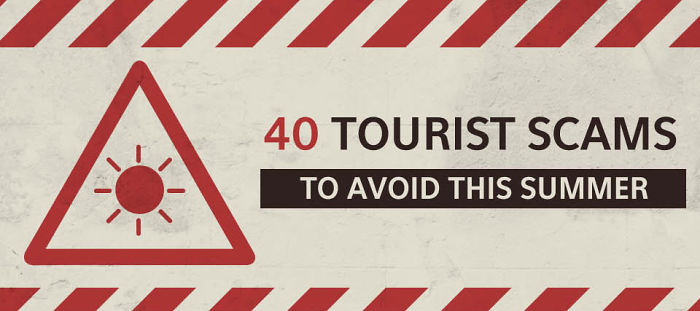
Graphic showing a warning sign with sun icon and text about 40 tourist scams to avoid this summer for traveler awareness.
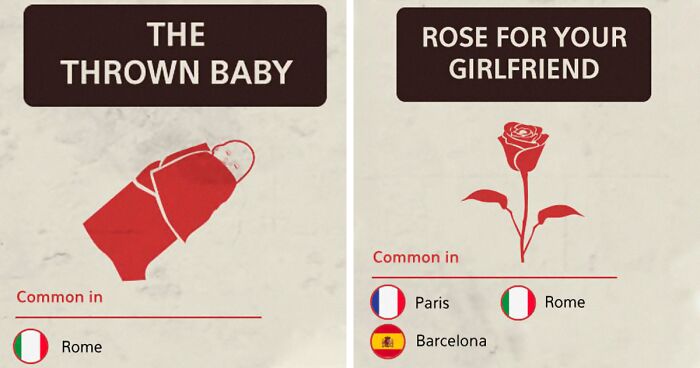
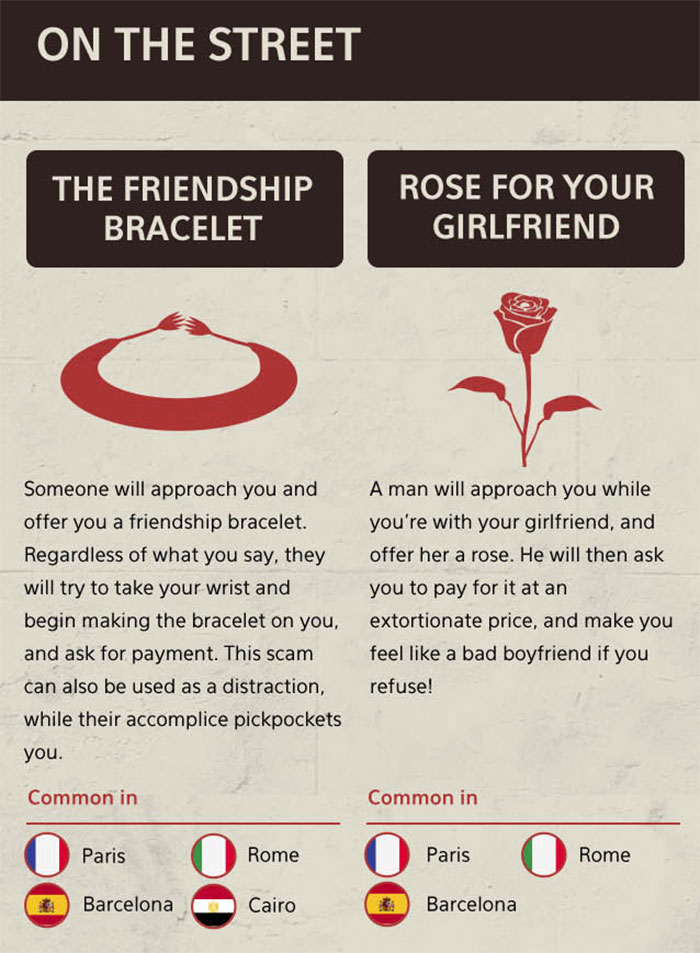
Illustration of common tourist scams on the street including the friendship bracelet and rose for your girlfriend cons.
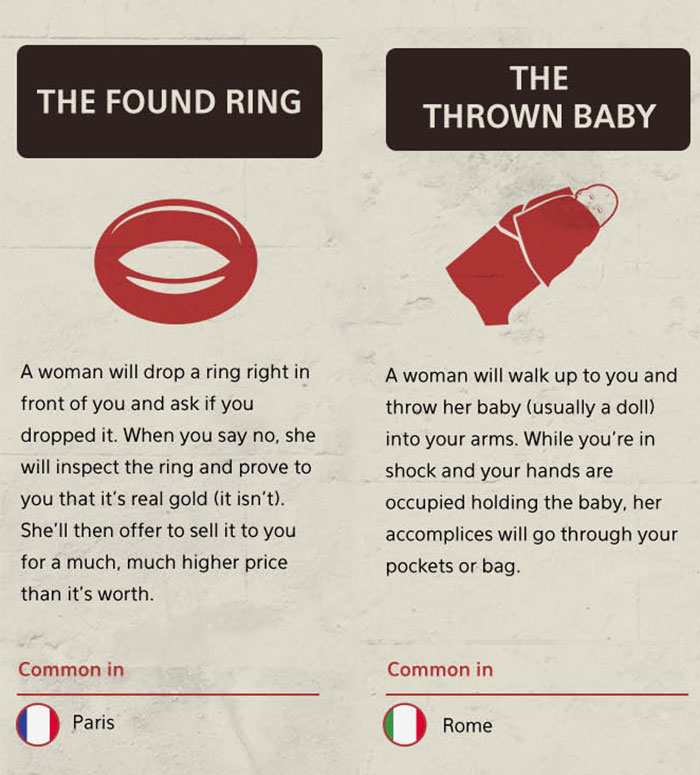
Illustrations of common tourist scams including the found ring scam in Paris and the thrown baby scam in Rome.
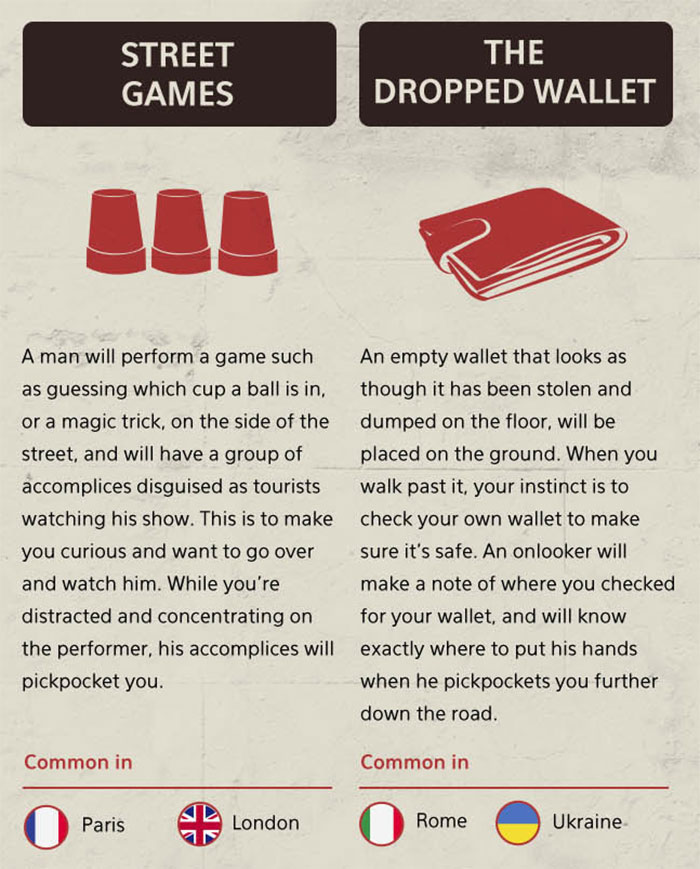
Illustration of common tourist scams including street games with cups and the dropped wallet pickpocket scam in popular cities.
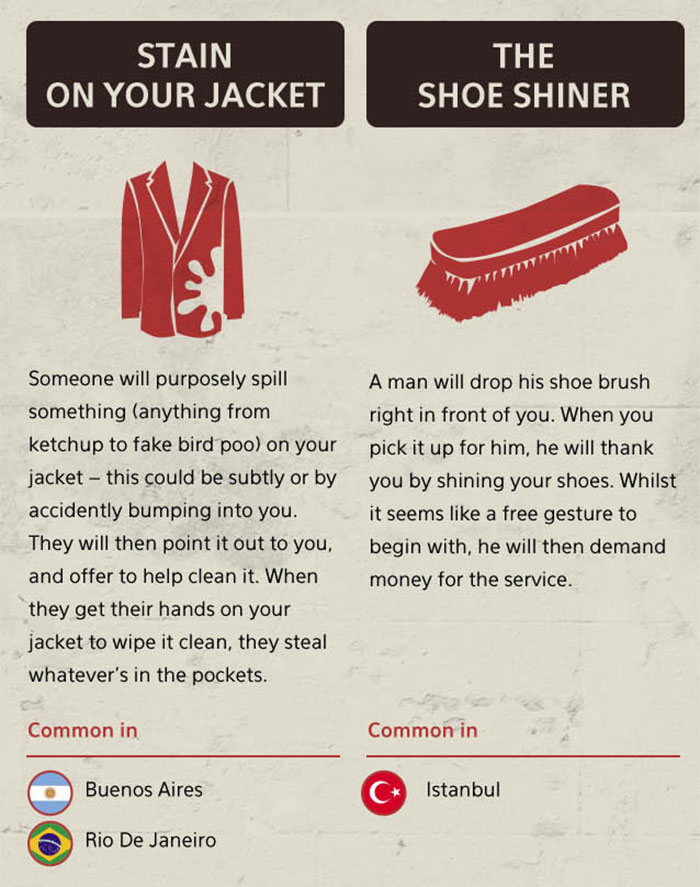
Stain on your jacket and shoe shiner scams commonly used by tourists in Buenos Aires, Rio De Janeiro, and Istanbul.
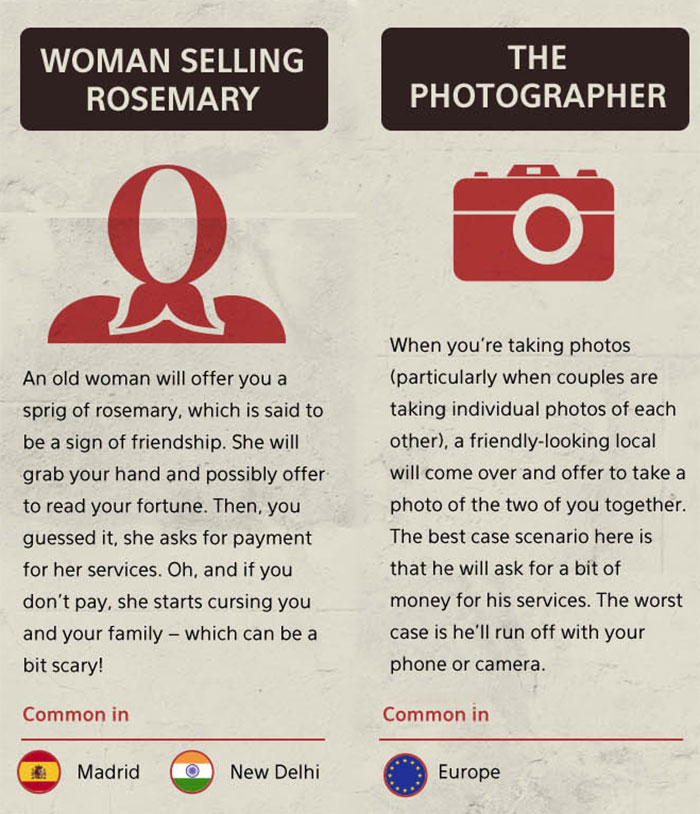
Woman selling rosemary and photographer scams targeting tourists in Madrid, New Delhi, and Europe explained.
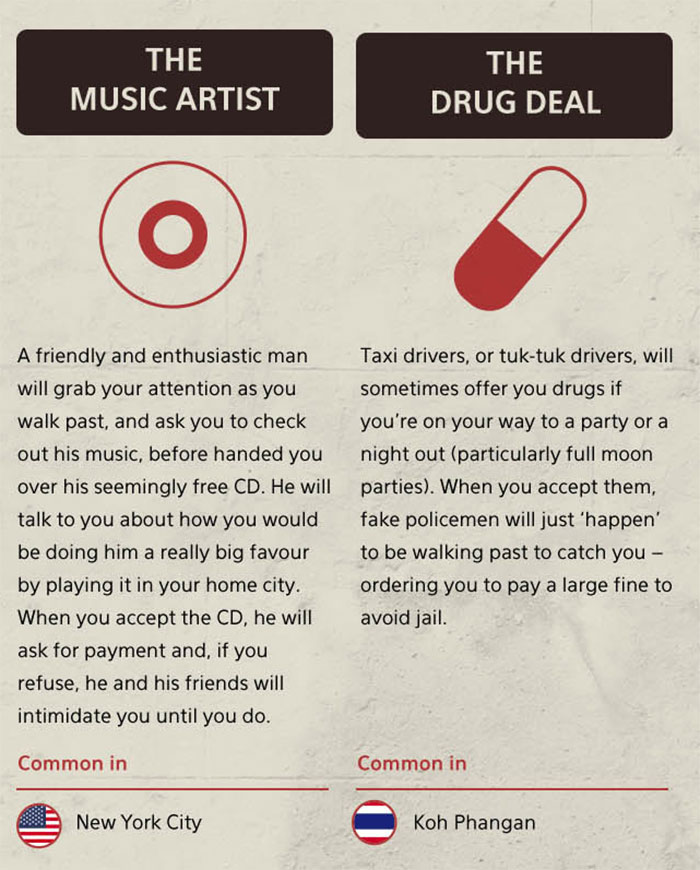
Two common tourist scams explained: the Music Artist scam in New York City and the D**g Deal scam in Koh Phangan.
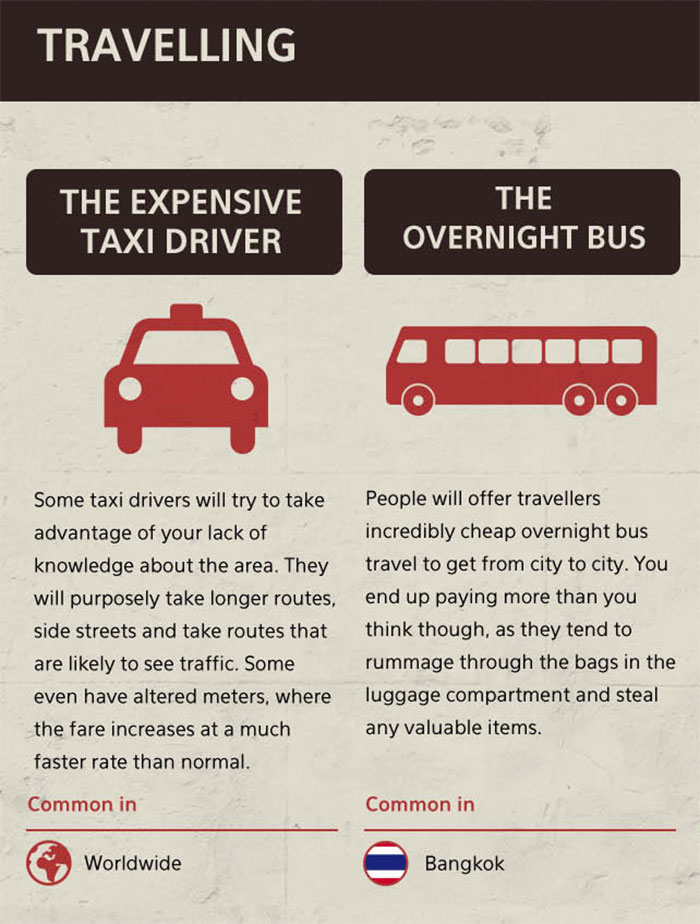
Icons of a taxi and overnight bus highlighting common tourist scams involving expensive fares and theft during travel.
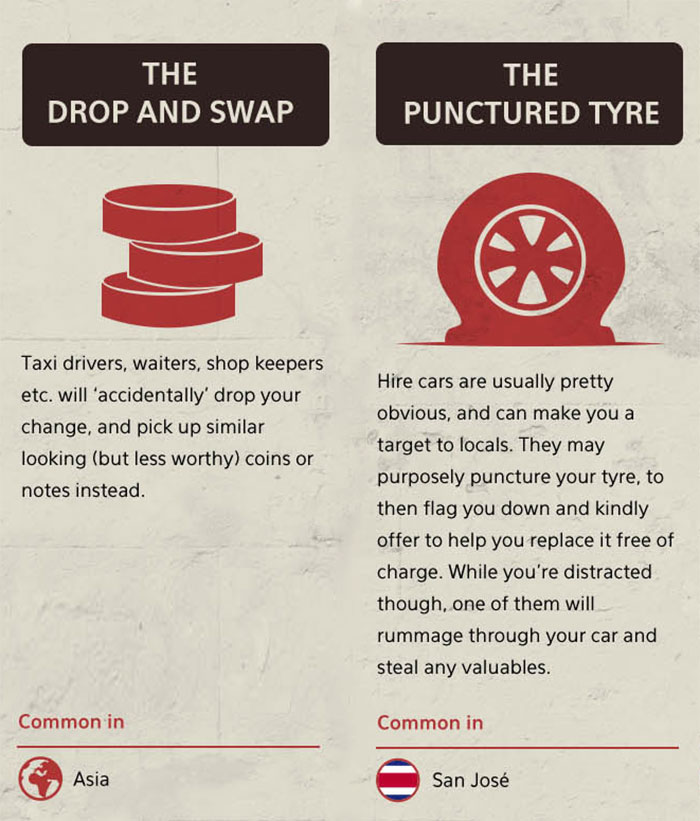
Illustration of common tourist scams: drop and swap coins by taxi drivers and punctured tyre scam targeting hire cars in San José.
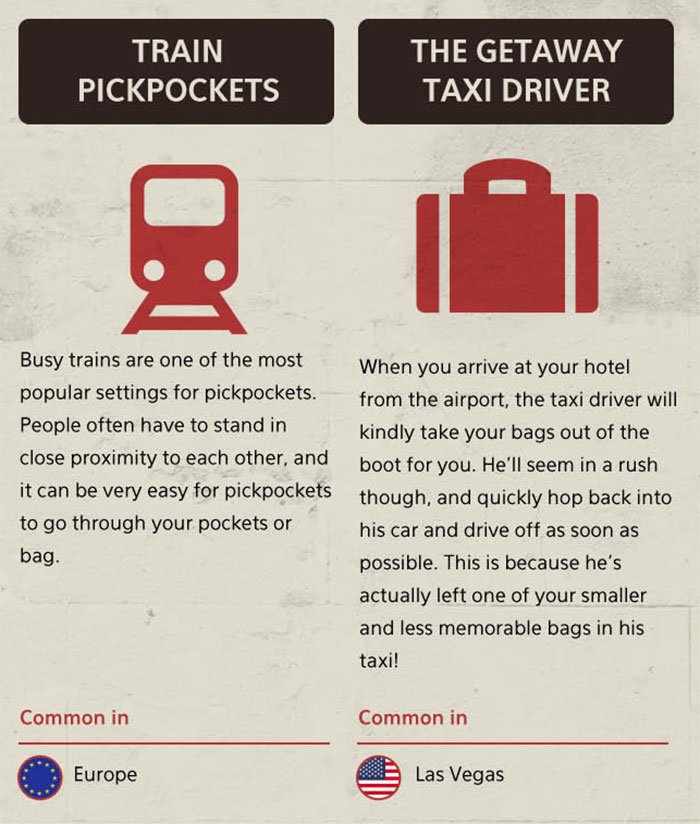
Graphic illustrating common tourist scams including train pickpockets in Europe and getaway taxi driver scam in Las Vegas.
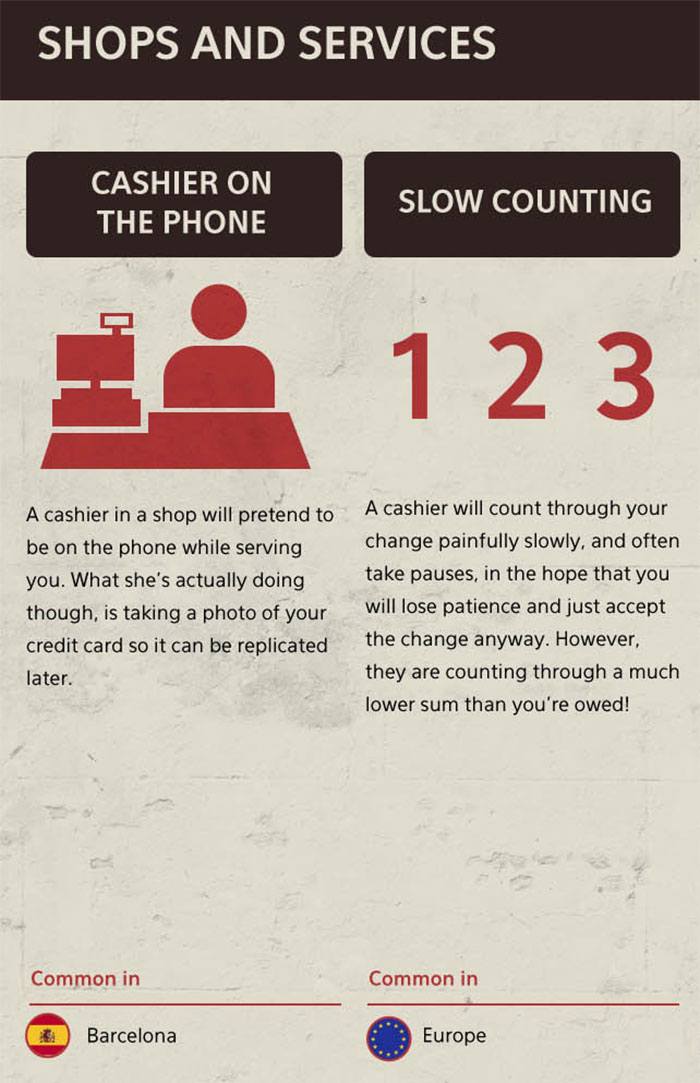
Infographic showing common tourist scams in shops like cashier on phone and slow counting of change in Europe and Barcelona.
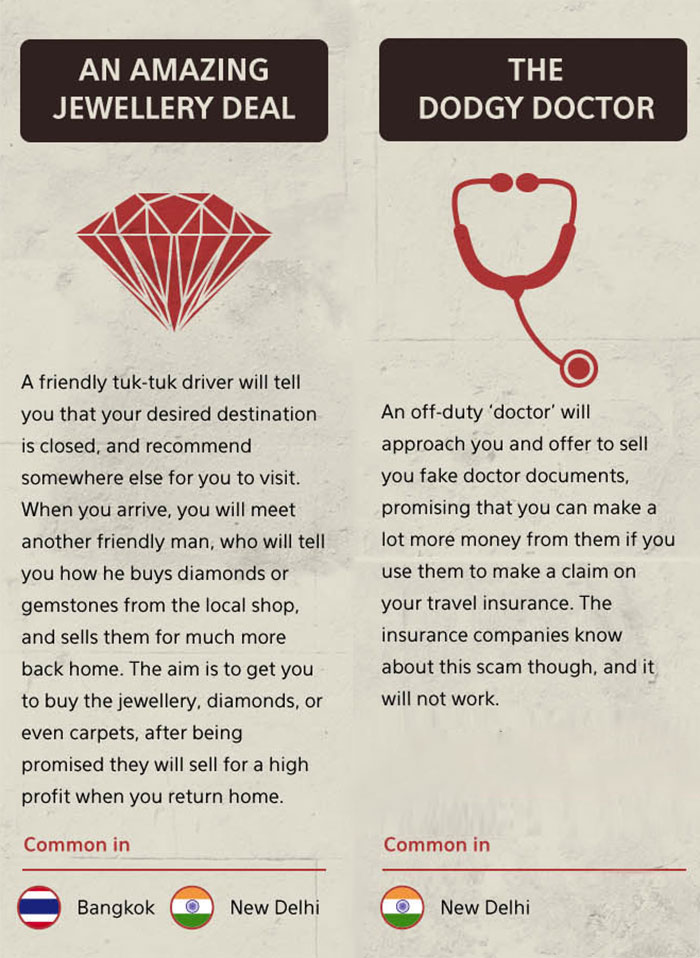
Illustration of common tourist scams involving jewellery deals and fake doctors targeting travelers in Bangkok and New Delhi.
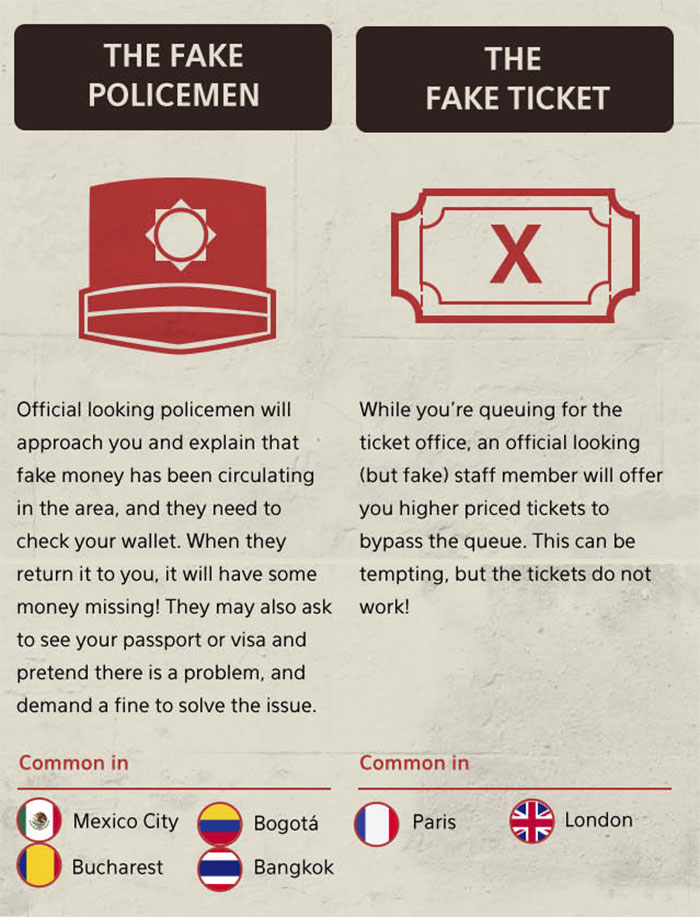
Infographic explaining common tourist scams: fake policemen in Mexico City and fake ticket sellers in Paris and London.
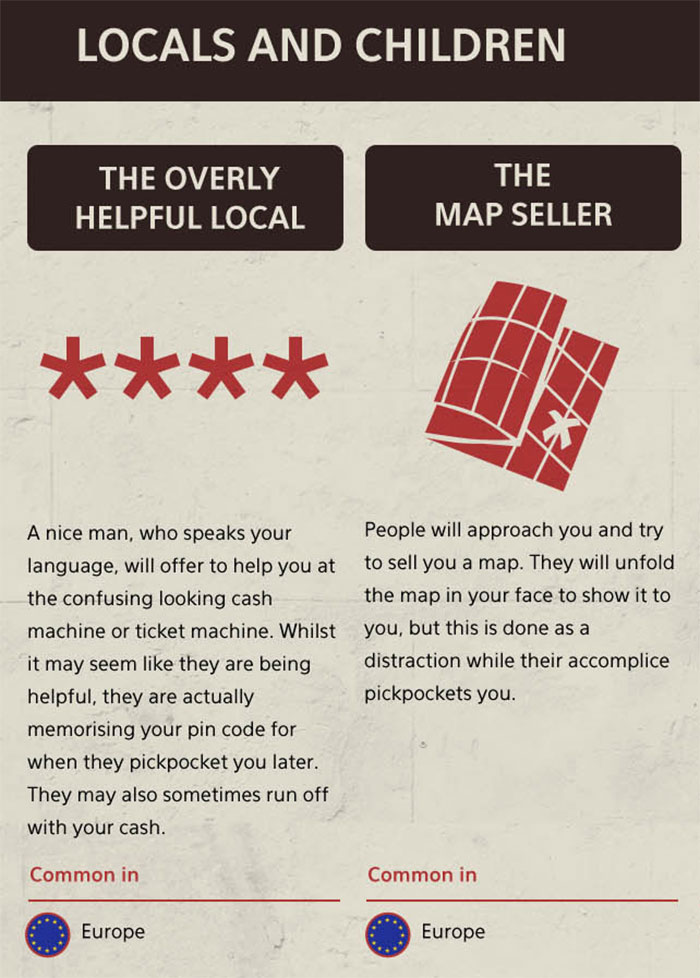
Infographic explaining tourist scams involving locals and children such as overly helpful locals and map sellers in Europe.
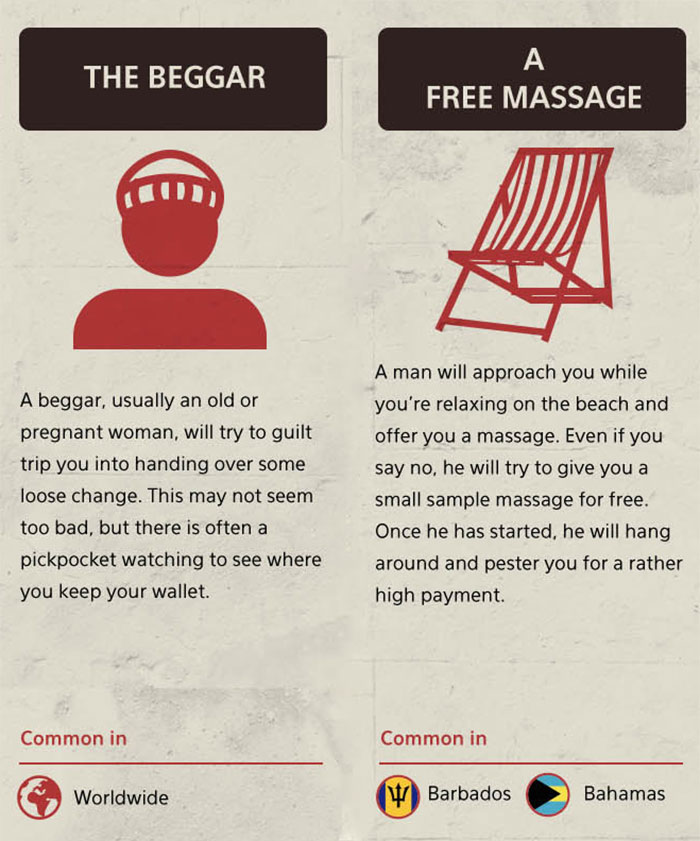
Illustrations of common tourist scams including beggars and free massages used to trick travelers and pickpocket wallets worldwide.
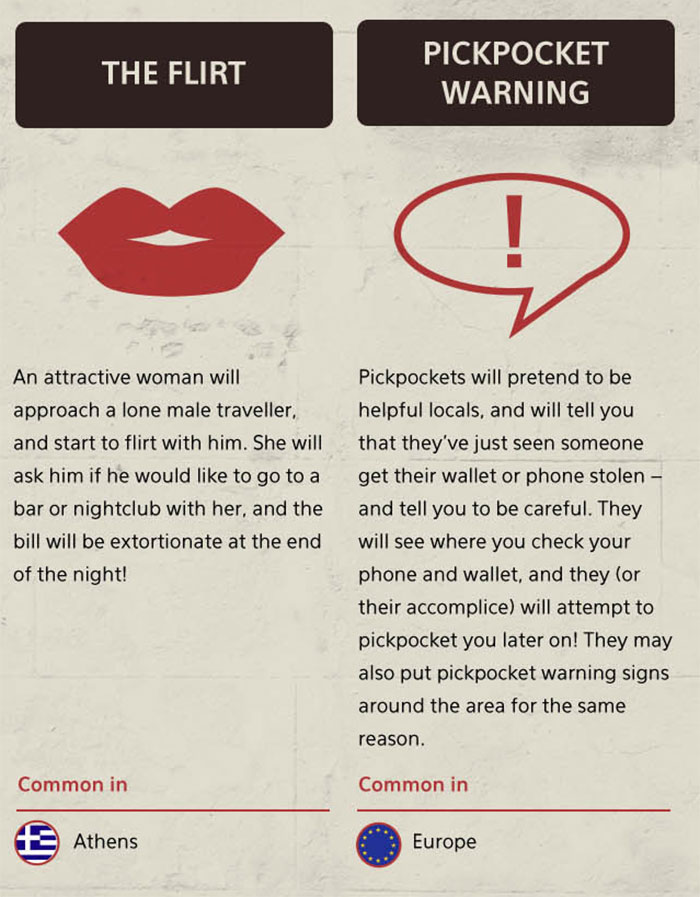
Illustration of tourist scams including flirt scams in Athens and pickpocket warnings common in Europe.
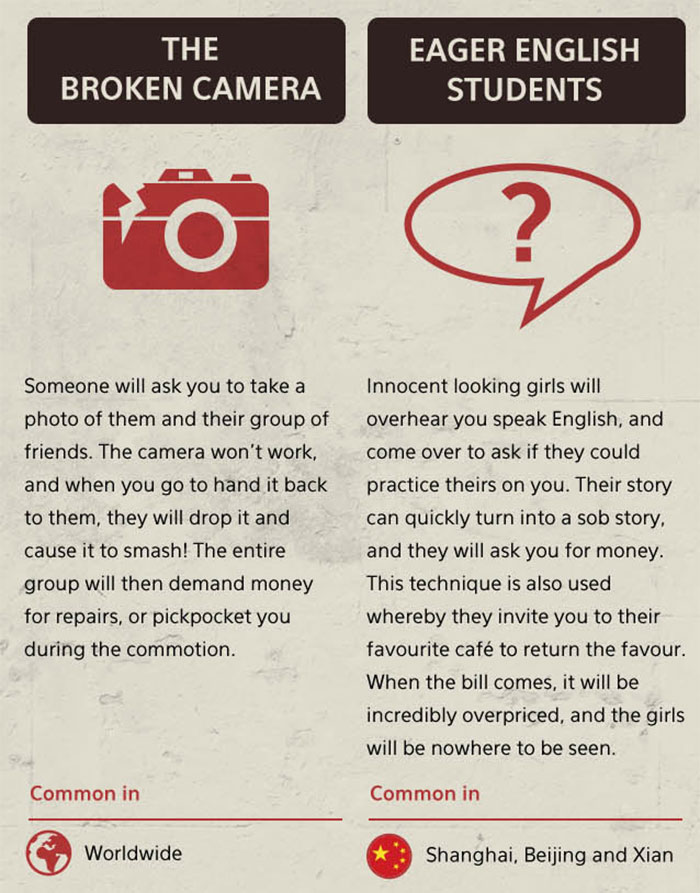
Illustration explaining common tourist scams including the broken camera trick and eager English students scam.
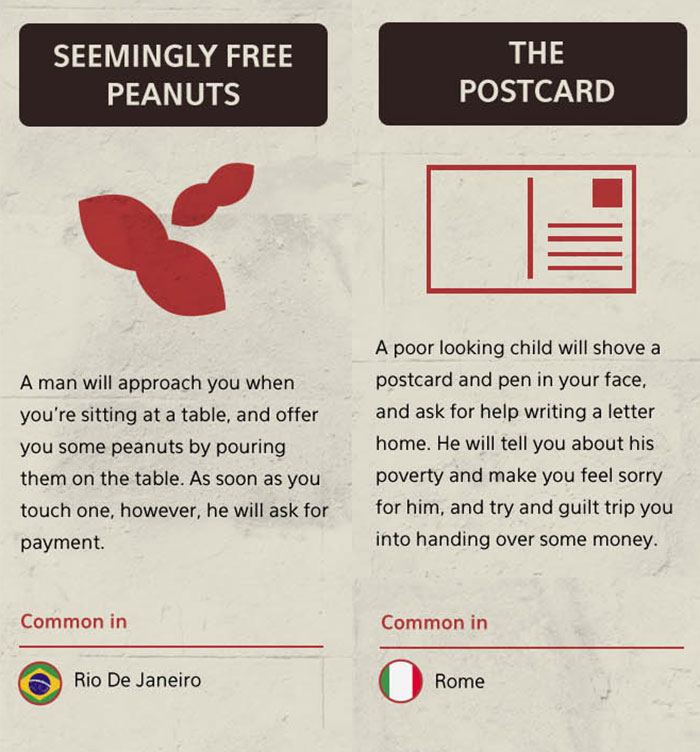
Illustrations and descriptions of common tourist scams involving seemingly free peanuts and postcard guilt trips in Rio and Rome.
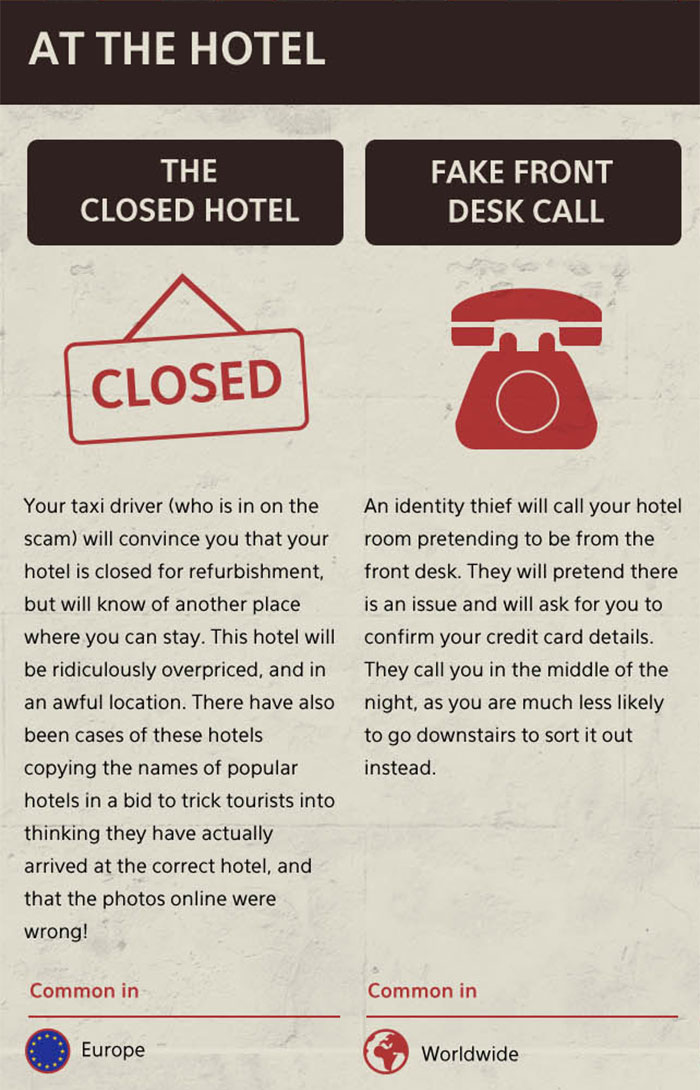
Illustration describing common tourist scams at hotels, including closed hotel and fake front desk call scams worldwide.
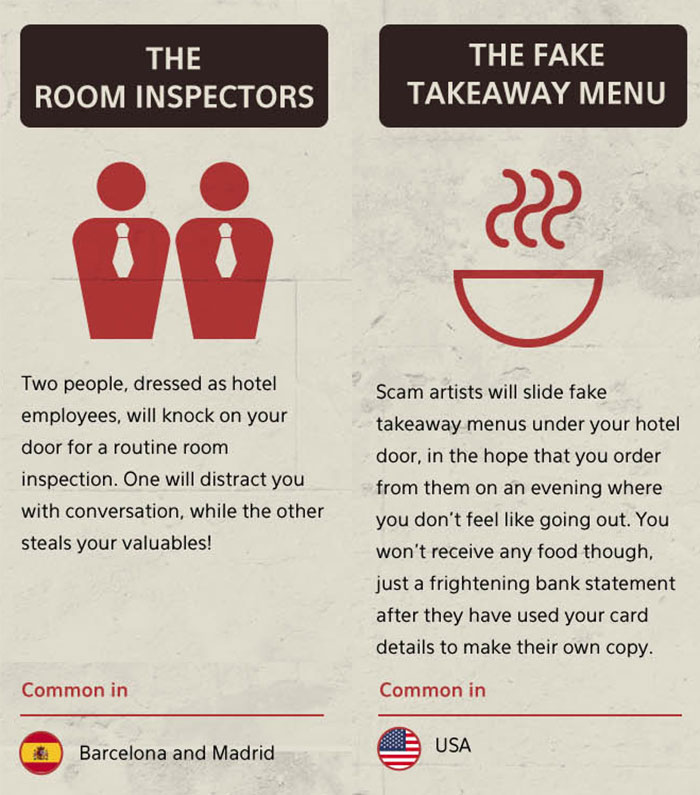
Graphic showing two common tourist scams: fake hotel room inspectors stealing valuables and fake takeaway menus used to steal card details.
“Many of the most successful gambits require a naive and trusting tourist. But don’t think it can’t happen to more sophisticated travelers, too,” American traveler Rick Steves wrote. “There are many subtle ways to be scammed — a cabbie pads your fare, a shop clerk suddenly inflates prices, a public Internet terminal records your password, or a waiter offers a special with a ‘special’ increased price. Be smart: Know what you are paying for before handing over money, and always count your change.”
If a bargain seems too good to be true, it’s too good to be true.
Here’s what people said about this
Screenshot of an online comment discussing advice for tourists to avoid common tourist scams during summer travel.
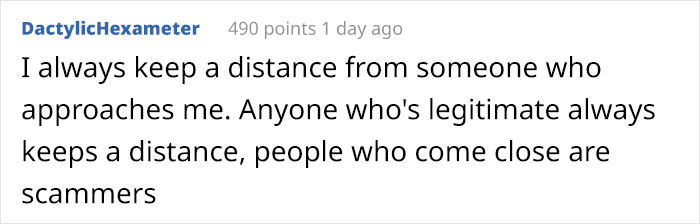
Screenshot of a Reddit comment explaining how maintaining distance helps identify tourist scams and avoid common scammers.
Screenshot of a Reddit comment sharing a personal experience related to common tourist scams that still work today.
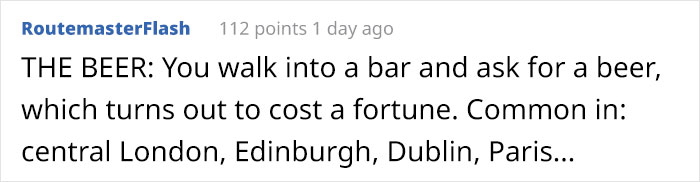
Text excerpt from a tourist scam example explaining a costly beer in popular cities, illustrating common tourist scams still active today.
At Bored Panda, I enjoy exploring the fascinating worlds of technology and home improvement, two areas that I love diving into. When I'm not immersed in my work, you'll often find me indulging in my hobbies: gaming and analog photography. I've built quite a charming collection of old cameras, each with its own story and charm. Whether I’m exploring the latest tech trends or capturing memories on vintage film, I enjoy bringing creativity and passion to everything I do.
At Bored Panda, I enjoy exploring the fascinating worlds of technology and home improvement, two areas that I love diving into. When I'm not immersed in my work, you'll often find me indulging in my hobbies: gaming and analog photography. I've built quite a charming collection of old cameras, each with its own story and charm. Whether I’m exploring the latest tech trends or capturing memories on vintage film, I enjoy bringing creativity and passion to everything I do.

 Dark Mode




































 No fees, cancel anytime
 then open in external browser


 and click "Open in External Browser"








0
0