Get Premium
Dark mode theme is available exclusively for premium users. Learn more about the benefits of subscribing.
No fees, cancel anytime.

 Dark Mode Ad-Free Browsing Unlimited Content
 Ad-Free Browsing Unlimited Content Dark Mode
Join 1.2 million Panda readers who get the best art, memes, and fun stories every week!

It starts off innocently.
You’re in a relationship, but there’s someone else you talk to online, or maybe at work. You don’t flirt because you have convinced yourself you’re just “being nice.” You may not meet, but you share things with them that you haven’t told your partner.
Is that cheating?
Once upon a time, cheating was easy to define: physical intimacy outside the relationship. Then came emotional affairs.
But in 2026, couples know that cheating isn’t always physical, emotional, or even intentional. Sometimes it’s micro-cheating, a term used to describe small, seemingly harmless behaviors that blur the boundaries of fidelity.
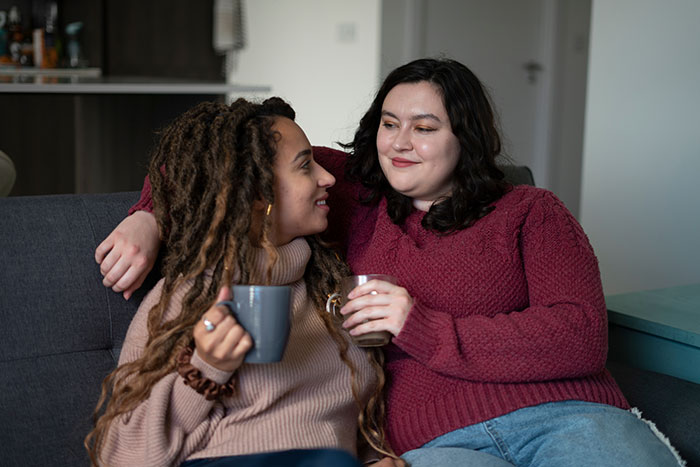
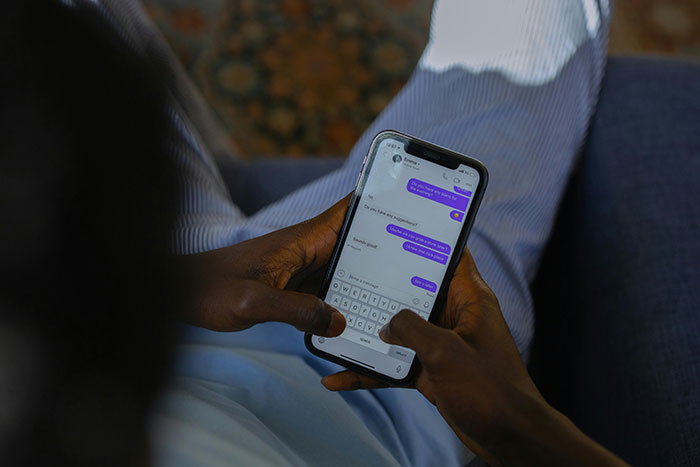
Image credits: Jonathan Borba/Unsplash (Not the actual photo)
Micro-cheating could include private messages, secret connections, or digital interactions that don’t quite cross the line, but they don’t fully respect it either.
It’s the kind of actions you swear “don’t mean anything.” Yet, you don’t talk to your partner about it.
“Micro-cheating is a series of seemingly small actions that indicate a person is emotionally or physically focused on someone outside their relationship,” dating expert Melanie Schilling, who popularized the term in 2017, told HuffPost Australia.
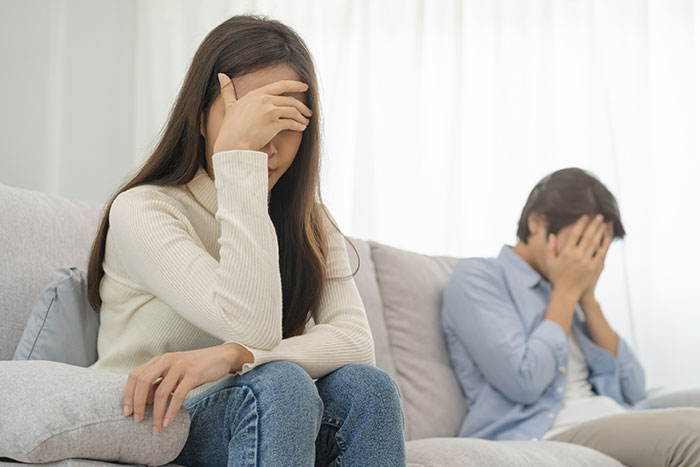
Image credits: Cultura Creative/Adobe Stock (Not the actual photo)
Micro-cheating often looks very different depending on which side of the relationship you’re standing on.
For the person engaging in it, the actions can feel harmless, even rational: regularly texting someone they find attractive, maintaining flirtatious banter that never quite crosses into the explicit, or building an online connection with someone they confide in but never actually meet.
It’s easy to frame it as “just talking” or “just being friendly,” especially when there’s no physical boundary being crossed. But they could be sharing things that they probably don’t share with their boyfriend or girlfriend, who would see the entire experience very differently.
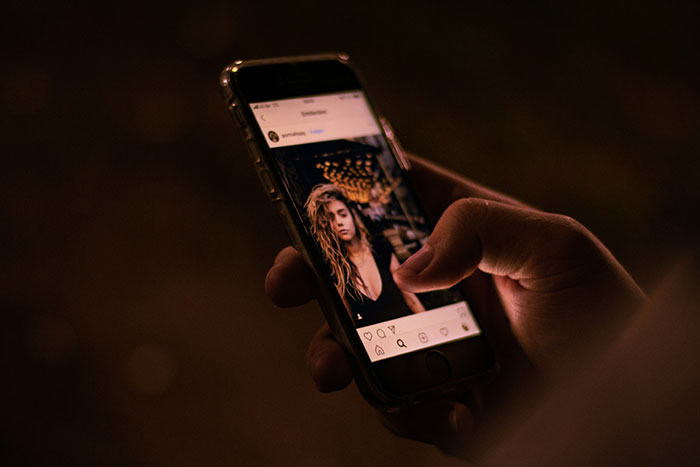
Image credits: Looker_Studio/Adobe Stock (Not the actual photo)
For the partner on the other side, these could be perceived as breaches of intimacy and trust, leading to feelings of betrayal and insecurity.
The partner could begin to lose trust when they sense that their boyfriend or girlfriend is investing emotional energy elsewhere or showing a vulnerable side of themselves to someone outside the relationship.
Micro-cheating can quietly show availability to the third party as well. It might look like slipping off a wedding ring before a night out or even changing how you present yourself online to appear single and available.
While talking to someone new, you might deliberately omit the fact that you’re in a relationship. Or you might even keep certain conversations private or hidden from your partner, or you might delete messages, even though you’re “just friends” but know the texts have a flirtatious undertone.
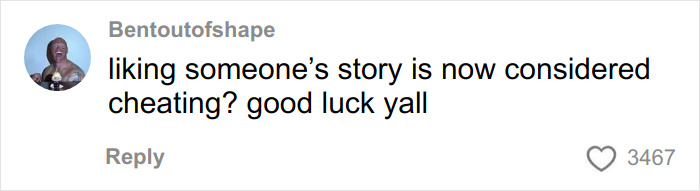
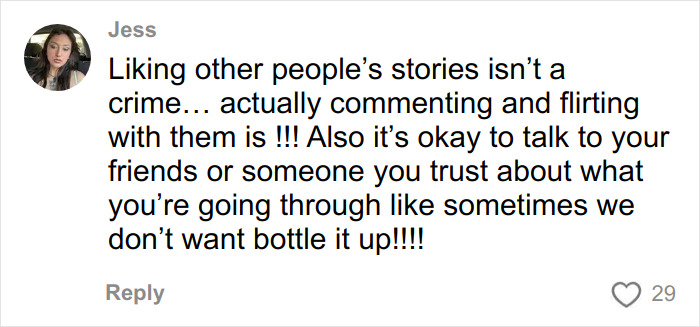
Even things like consistently liking or commenting on one specific person’s photos, sharing inside jokes, or curating a separate version of yourself for someone outside the relationship can fall into this space.
On their own, these actions may seem trivial. But when piled up together, and when deliberately kept hidden from your partner, they can point to a subtle shift in boundaries.
@sabrina.zohar I’m gonna say what no one else will. Some of you use therapy language to avoid accountability. “That’s my trauma response” can explain the pattern, but it doesn’t excuse the impact. Awareness is the starting point, not the permission slip. Healing is when you can see your behavior clearly and still choose to take responsibility for how it lands on someone else. #datingadvice#selfawareness#healingjourney#relationships#emotionalintelligence♬ original sound – Sabrina Zohar
Experts noted that when you feel like you have to hide something from your partner, it’s important to ask yourself why.
“Secrecy is the tell-tale sign,” Schilling told HuffPost Australia. “Micro-cheating is a subtle betrayal and it needs secrecy to fuel its fire.”
“If your partner is having private conversations or online chats that he/she quickly shuts down when you enter the room; if they are reaching out to an ex to mark an anniversary or other significant shared, intimate event; perhaps they are offering compliments to other guys/girls that they don’t say to you; or maybe they meet up with someone of the opposite s*x under the guise of a business meeting, when you discover no business was actually done… these are all signs to look out for,” she explained.
Image credits: KMPZZZ/Adobe Stock (Not the actual photo)
Digital connections may have made it easier for people to fall into this gray area. But experts note that micro-cheating is not a new behavior.
“Even as far back as the 18th century, people were flirting via inappropriate letters or revealing inappropriate thoughts in their diaries,” Nichi Hodgson, author of Curious History of Dating, told BBC.
“What has changed is that we now have tools which make it far easier to commit micro-cheating than ever before,” she added.
This ease is exactly what has pushed the concept of “micro-cheating” into the spotlight, especially among Gen Z, who are fluent in therapy-speak and have psychological terms as part of their everyday vocabulary.
Image credits: Nik/Unsplash (Not the actual photo)
On platforms like TikTok, the niche term “micro-cheating” has become a viral talking point.
Young users are constantly dissecting everyday behaviors and asking the same question: where does friendliness end and betrayal begin?
Terms like “boundaries,” “emotional availability,” “validation,” and “betrayal” are no longer only mentioned by a therapist when their client is sprawled on their couch.
These words are used to describe everyday relationship behavior. And the result is a generation that is both more self-aware and more scrutinizing.
Image credits: Getty Images/Unsplash (Not the actual photo)
A 2024 survey by DatingAdvice.com analyzed responses from 1,000 people in a relationship. And 83 percent of them said they had been involved in a cheating relationship.
What is most notable is that Gen Z, forming 93 percent of that number, admitted to cheating, in comparison to millennials standing at 80 percent.
“Gen Z is growing up in an era where tech and social media dominate every aspect of life, including dating,” generation expert Bryan Driscoll told Newsweek.
“The ubiquity of dating apps creates an illusion of infinite options, making relationships appear disposable. Unlike prior generations who had to invest time and effort to meet new people, Gen Z and any generation with a smartphone can find potential partners with a simple swipe,” he added.
Image credits: Leon Seibert/Unsplash (Not the actual photo)
The survey also found that Gen Zers were more likely to avoid confronting their partner if they had suspicions of being cheated on. Only 22 percent said they would mention their suspicions to their partner, in comparison to 34 percent of millennials.
The older generation was also more likely to confess their infidelities to their partner, with 26 percent of millennials saying they would confess, as opposed to just 18 percent of Gen Z cheaters.
20 percent of Gen Zers also said it was their “carelessness” that got them busted.
@whoissskay You have to be okay with micro cheating in this generation… #relationships#genz#relatable#whoiskay#freegame♬ dark snowy night – daniel.mp3
In an always-online world, one factor that could be contributing to micro-cheating could be social media addiction itself.
The more time we spend online, the messier the rules seem to get. And this can quietly increase the likelihood of engaging in boundary-blurring behaviors.
A key takeaway from a 2019 paper, written by Irum Saeed Abbasi from San Jose State University, California, is that social media addiction can make people more vulnerable to engaging in infidelity-related behaviors. The paper also noted that this can be experienced differently by different age groups.
For his study, he included 365 participants ranging in age from 18 to 73, and around one-third of them reported being married, half said they were casually dating, and the rest said they were in a committed relationship.
Image credits: Thirdman/Pexels (Not the actual photo)
“I sometimes like to chat or message old romantic partners online or on social networking sites” and similar items were included in the questionnaire to understand infidelity-related behavior online.
The study found that younger users, who are typically more immersed in digital communication, may be more likely to form boundary-blurring connections on social media.
A few years after the study, Abbasi and Jayson L. Dibble conducted another study that found that social media is no longer just a backdrop to modern relationships. It actively shapes how people behave within them.
As part of their 2025 study, which surveyed 765 adults in romantic relationships, the researchers found that people who are more “addicted” to social networking sites tend to report lower relationship satisfaction and are more likely to engage in what are called infidelity-related behaviors, like flirting online, staying in touch with an ex, or forming intimate connections online with someone outside the relationship.
Image credits: cottonbro studio/Pexels (Not the actual photo)
The researchers also found a strange twist: people who increasingly engaged in infidelity-related behaviors sometimes reported feeling more satisfied in their relationships. But that doesn’t necessarily mean their relationships were healthier.
Instead, researchers believe this may be because those outside interactions provide an ego boost, distraction, or emotional escape from the underlying issues of their own relationship. Hence, micro-cheating behaviors could make someone feel good in the moment, but they don’t actually fix what’s missing in their relationship.
A 2021 review by Abbasi and Dibble also highlights that people don’t experience online infidelity in the same way, and women tend to perceive online infidelity as more distressing than men do.
@jakecaringerMicrocheating men do that ruin everything♬ original sound – JakeCaringer
Another 2016 study explored the impact of online infidelity-related behaviors on marital satisfaction, using responses from 338 married or cohabiting individuals from 176 families.
The findings revealed that only a small percentage of them engaged in infidelity-related behaviors on social media.
The researchers also concluded that a higher engagement in such behaviors was significantly related to lower relationship satisfaction, higher relationship ambivalence (having two opposing feelings at the same time), and greater attachment avoidance and anxiety in both women and men.
Image credits: Getty Images/Unsplash (Not the actual photo)
When it comes to catching a partner engaging in infidelity-related behavior on social media, it is more of a process rather than a single moment, according to Jaclyn Cravens, Kaitlin R Leckie, and Jason Whiting, who shared their findings in a 2012 paper.
In most cases, the process typically begins with subtle warning signs, like a gut feeling that something is off, noticeable changes in behavior, or increasingly secretive actions such as hiding screens, deleting messages, or becoming overly protective of devices.
This suspicion often leads to discovery, sometimes accidental, and then to active investigation, where partners seek proof by checking messages, accounts, or online activity. But the most difficult stage comes after: assessing the damage.
Image credits: Jelena/Adobe Stock (Not the actual photo)
Even when no physical cheating has occurred, partners struggle to decide whether emotional or online behaviors, like intimate chats or flirtation, cross their personal boundaries. For many, the betrayal lies less in what happened and more in the secrecy and emotional shift, forcing them to question trust, redefine their limits, and ultimately decide whether the relationship can survive.
In cases of micro-cheating, the smallest contextual details can shape whether a behavior is seen as harmless or crossing a line.
Messages sent late at night were consistently viewed as more unfaithful than those during the day, likely because they carry a sense of secrecy or intentional privacy, according to chartered psychologist Martin Graff.
Likewise, conversations that involved deeper emotional disclosure, sharing personal thoughts or feelings rather than just factual information, were more likely to be interpreted as a breach of boundaries.
Image credits: cottonbro studio/Pexels (Not the actual photo)
Defining micro-cheating style behaviors is only half the story. The real challenge lies in how couples interpret and respond to them.
Researchers found that a partner’s feelings can be affected by how you present your relationship on social media.
For their 2013 study, researchers Nicole L Muscanell, Rosanna E Guadagno, Lindsay Rice, and Shannon Murphy asked participants to picture looking at their partner’s Facebook page, factors like privacy settings and whether the couple had visible photos together.
When there were fewer public signs of the relationship or when interactions with others were more visible, people reported stronger negative emotions like jealousy, anger, and hurt.
The effect was even more pronounced for women, who tended to feel more intense emotional reactions, especially when potential signs of infidelity were visible to others.
Image credits: Getty Images/Unsplash (Not the actual photo)
Furthermore, experts believe most couples enter the world of social media without clearly defined rules, often assuming their partner shares the same understanding of what is acceptable.
In reality, most boundaries around online behavior remain implicit rather than openly discussed, leading to misunderstandings when issues arise. This ultimately means couples are often forced to confront problems only after a perceived violation has occurred.
These conversations are frequently marked by poor communication, including defensiveness or attempts to justify questionable behavior, sometimes as a way to avoid guilt. At the same time, many partners resort to monitoring each other’s online activity, checking accounts or messages, which can both reflect and deepen trust issues.
@suzanneroxanne And these “little things” always lead to physical cheating. It really is that deep, I promise! #redflags#datingadvice#toxicrelationship#cheaters#couples#boyfriends#relationship#marriedlife#marriage#husbandandwife#relationshipadvice♬ original sound – SuzanneRoxanne💓Marriage•Love
Ultimately, research highlights that a lack of clear communication, combined with differing perceptions of what counts as inappropriate, can create a cycle of conflict that is difficult to break.
Research by Ellen J. Helsper and Monica T. Whitty on “netiquette” within married couples found that partners with similar views about what types of behaviors are acceptable and unacceptable had higher relationship satisfaction.
It also found that behaviors like falling in love online and engaging in cybers*x topped the list of being unacceptable.
The study also found that a significant number of partners engaged in some form of online surveillance, like checking emails or social media accounts, reflecting underlying trust issues.
Image credits: Rerisson Hofniel/Pexels (Not the actual photo)
While Gen Z may be driving the conversation around micro-cheating nowadays, research suggests that these blurred boundaries aren’t limited to any one group.
A 2022 study examining infidelity-related behaviors on social media among both gay or lesbian and heterosexual individuals found that there were no significant differences in how they saw actions like online flirting and private messaging.
In other words, the impulse to engage in these gray-area behaviors appears to cut across sexual orientations.
Image credits: Syda Productions/Adobe Stock (Not the actual photo)
But sexual orientation is only one piece of the puzzle. An individual’s cultural context can also shape these behaviors in more subtle, but equally important ways.
A study focusing specifically on Hispanic women adds another layer to how micro-cheating develops within relationships.
Surveying 341 women in Puerto Rico, researchers found that infidelity-related behaviors on social media were closely tied to the overall health of the relationship itself.
Women who reported engaging in these behaviors tended to experience lower sexual satisfaction, reduced emotional intimacy, and weaker relationship satisfaction, along with a greater sense of ambivalence toward their partner.

By entering your email and clicking Subscribe, you're agreeing to let us send you customized marketing messages about us and our advertising partners. You are also agreeing to our Privacy Policy.
Thank you! You've successfully subscribed to newsletters!
1k+views
Share on Facebook
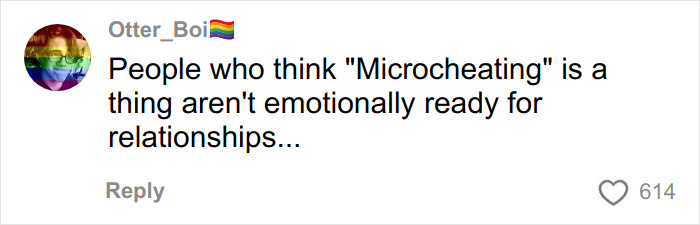
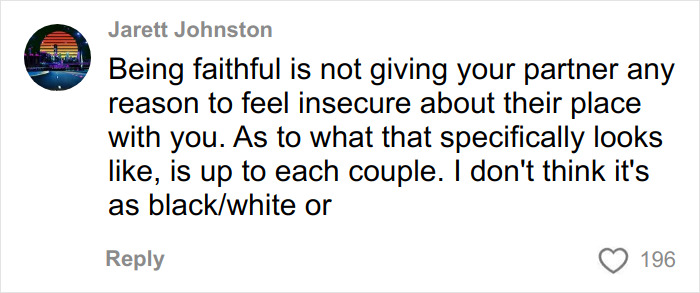
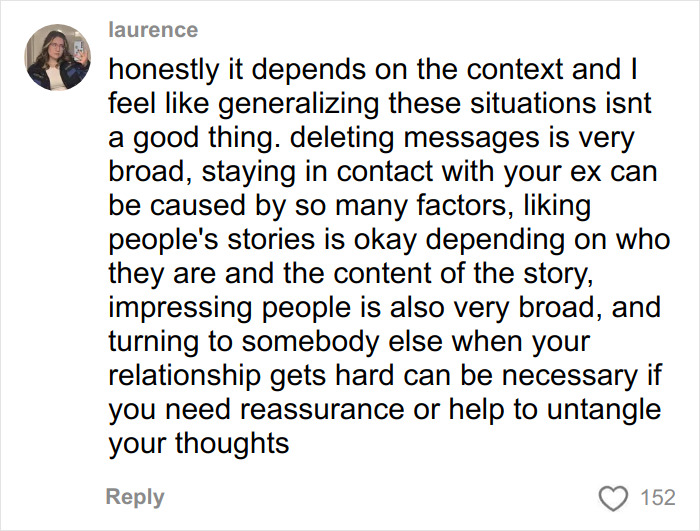
I hate these types of "discussion" where things are talked about in a way that the group being discussed is a "monolith". 'Cheating' is whatever you and the person you're committed to define it as. THE END. Trying to make this some generational thing is asinine. It's not generational, it's individual literally like it has always been.

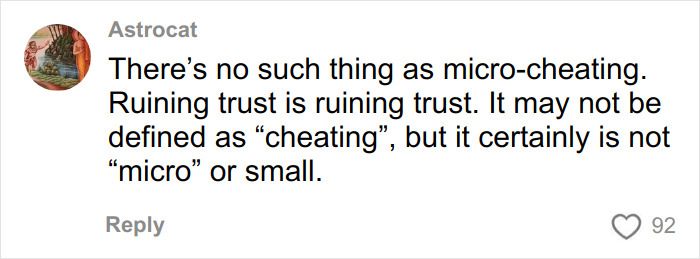
This whole concept of "micro cheating" is asinine. What is "cheating" varies because of like you said different people have different opinions of what that is, but once you have crossed the agreed upon definition, then there isn't anything "micro" about it.
Load More Replies...
This is why monogamy makes zero sense. Having a best friend you share things with is now cheating. People shouldn't have to rely on one person for everything in life. It isn't fair to either person.
Monogamy is fine. Defining that it means that you can't have a life outside that relationship is the problem.
Load More Replies... I hate these types of "discussion" where things are talked about in a way that the group being discussed is a "monolith". 'Cheating' is whatever you and the person you're committed to define it as. THE END. Trying to make this some generational thing is asinine. It's not generational, it's individual literally like it has always been.
This whole concept of "micro cheating" is asinine. What is "cheating" varies because of like you said different people have different opinions of what that is, but once you have crossed the agreed upon definition, then there isn't anything "micro" about it.
Load More Replies... This is why monogamy makes zero sense. Having a best friend you share things with is now cheating. People shouldn't have to rely on one person for everything in life. It isn't fair to either person.
Monogamy is fine. Defining that it means that you can't have a life outside that relationship is the problem.
Load More Replies... 































 No fees, cancel anytime
















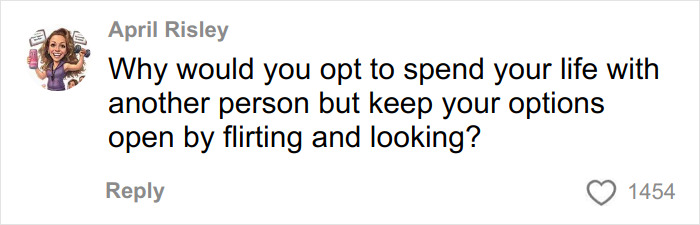
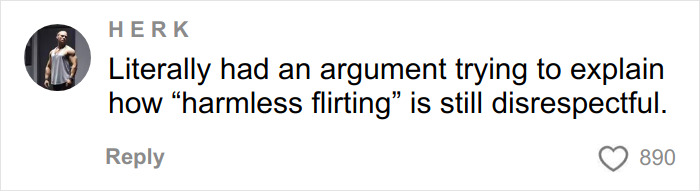
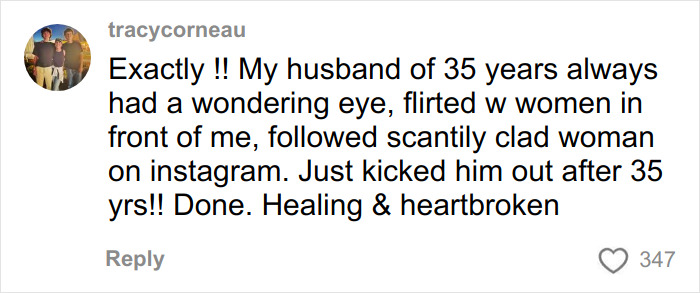
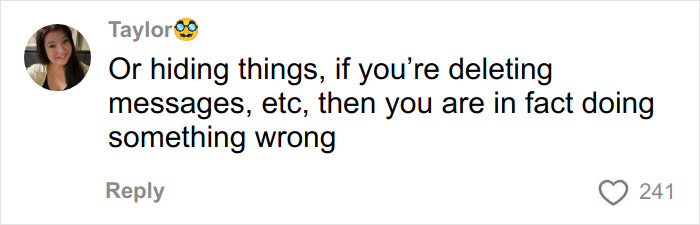














12
10