Get Premium
Dark mode theme is available exclusively for premium users. Learn more about the benefits of subscribing.
No fees, cancel anytime.

 Dark Mode Ad-Free Browsing Unlimited Content

 Ad-Free Browsing Unlimited Content Dark Mode
Join 1.2 million Panda readers who get the best art, memes, and fun stories every week!
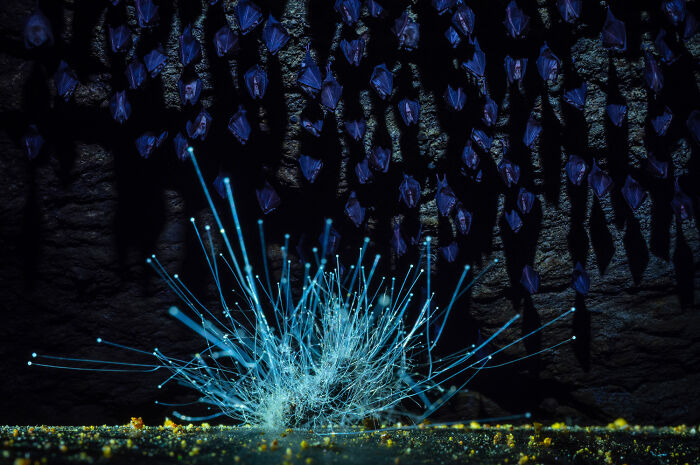
The GDT's European Wildlife Photographer of the Year competition has announced its 2026 winners, celebrating some of Europe's best nature photography. This year, Hungarian photographer Imre Potyó took home the top prize with his image “Hidden Worlds,” featuring mould growing on bat guano, with hibernating bats in the background.
Selected from more than 26,000 submissions from 46 countries, the winning image marks the first time in the competition's 26-year history that the overall title has gone to a photo from the Plants and Fungi category. The jury also selected 107 winning images across nine categories and two special categories, showcasing the incredible variety of today's nature photography.
Here are some of this year's winning shots, so scroll down to check them out.
More info: gdtfoto.de | Instagram | Facebook
This post may include affiliate links.
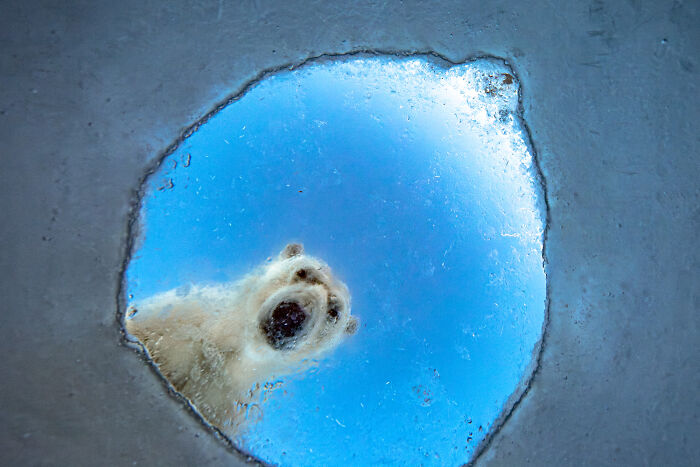
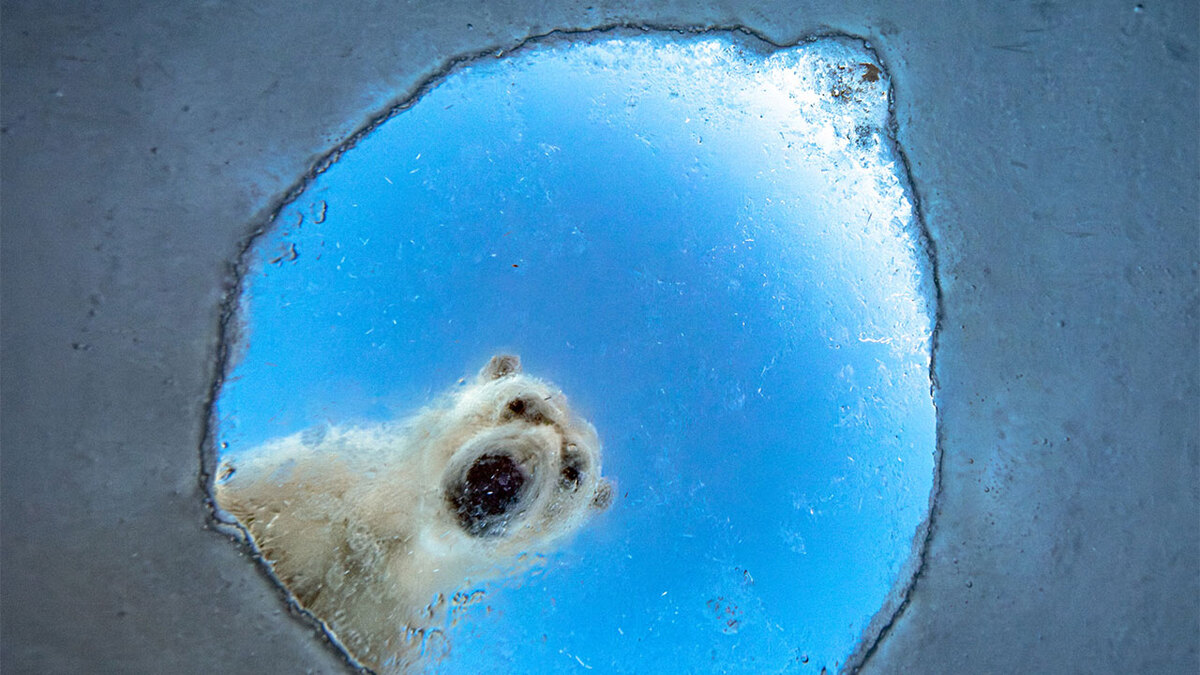
For many years, I had been planning to photograph the most common hunting technique of polar bears (Ursus maritimus) from a seal’s perspective. In the dense pack ice at 83° N, I drilled a hole next to a seal’s breathing hole, installed my camera beneath it, and positioned a motion sensor on the ice above. Eight hours later, I spotted a polar bear in the distance heading straight for the breathing hole. By then, a thin layer of ice had formed on the water. The bear pushed its head through the ice to see what was going on below and looked straight into the camera. The bear then lay down and slept for nine hours, leaving me unable to retrieve my camera. When the animal finally moved on, I rushed over and was over thrilled to discover that I had captured my dream photo of a polar bear.
Canon EOS 6D, 2,8/14 mm, ISO 800, underwater housing, special made camera rig and motion sensor
I have been photographing hibernating bats for 13 years in restricted-access mine tunnels in the Börzsöny Mountains of Hungary, and yet this particular composition was novel for me. A key characteristic of the lesser horseshoe bat (Rhinolophus hipposideros) is that, during hibernating it occasionally wakes and leaves its roost to hunt flying insects. In doing so, the bat leaves behind droppings that gradually accumulate into a continuous dark layer. And this is where the real wonder begins: in the beam of a torch, a whitish coating can be seen on the guano—a small pin mould thriving in this unusual habitat. Using a macro lens, I captured the mould in the foreground with the hibernating bats visible in the background. The photograph—a long exposure incorporating a focus shift—was taken during a controlled bat count and without disturbing the animals.
Nikon D7200, Tamron 2,0/60 mm, ISO 320, tripod, LED lamp
What an oddly beautiful image, considering it is of mould growing on guano!
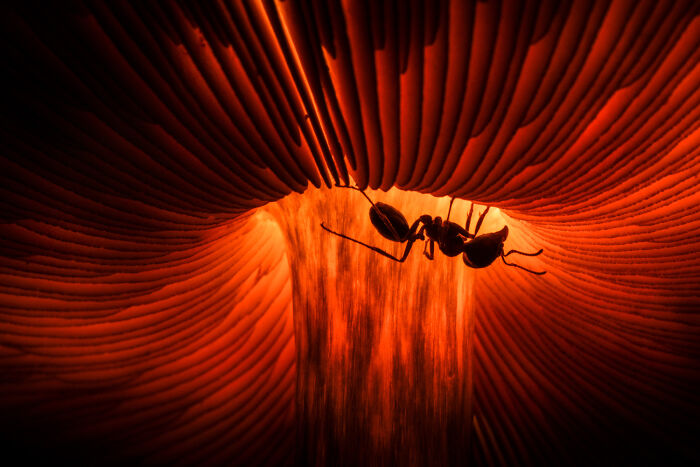
Sunlight transforms the underside of a fungus (Pluteus atrotomentosus) into an architectural masterpiece – a tiny illuminated cathedral. Photographed from an extremely low point of view on the forest floor of Mount Olympus in Greece, the scene takes on an unexpected sense of scale and drama. Beneath the glowing gills, an ant makes its way across the fungus, a subtle reminder of the microfauna that inhabits these miniature worlds. Within just a few square centimetres, an entire ecosystem unfolds at our feet, unnoticed by most people – a tiny forest microcosm with a cinematic flair.
Nikon D810, 2,8/105 mm, ISO 500
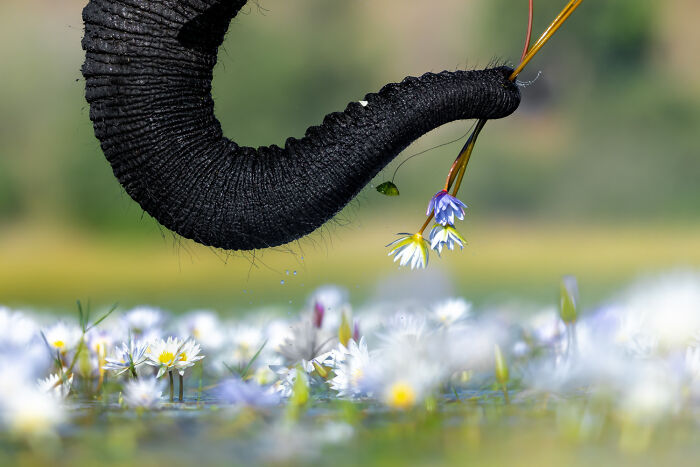
Every year between April and May, vast amounts of water from Angola inundate the floodplains of the Chobe River in Botswana, creating ideal conditions for numerous water lilies to flourish. In spring 2023, a combination of early flooding and unusually high water levels resulted in a truly spectacular display of white and purple flowers. I spent each day out on a boat, hoping to photograph wildlife feeding on the nutrient-rich floating vegetation. One afternoon, in perfect light, everything came together: an African elephant (Loxodonta africana) strolled leisurely through the shallow water, plucking flower after flower. Lying flat in the boat, I managed to capture this unique scene.
Canon EOS R6 Mark II, 2,8/400 mm, ISO 125
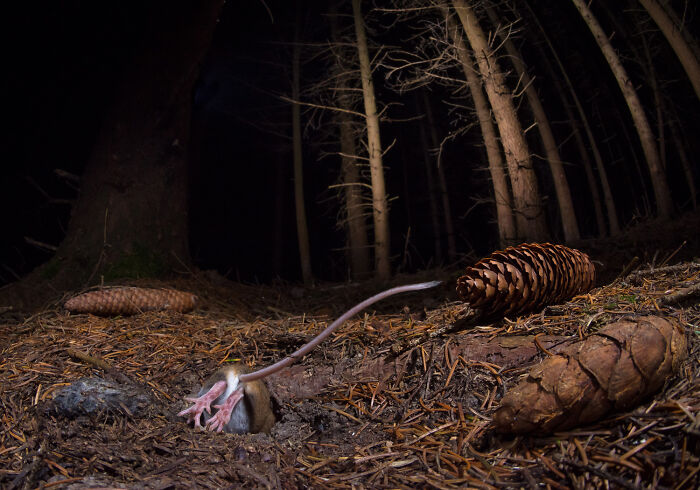
My favourite time for photography is the evening when a special atmosphere sets in and animals that hide away during the day become active. Here, a yellow-necked mouse (Apodemus flavicollis) disappears into its burrow in a pine forest in the Börzsöny Mountains in Hungary. These nimble little rodents become active at dusk and begin their nightly foraging. Over the course of several weeks, I revisited this spot and was able to capture a number of fascinating moments with the mice: carrying acorns, running through the snow, and leaping from branch to branch. Of all the scenes, this was perhaps the most striking. To take the photograph, I used a carefully positioned motion detector, several flashes, and a fisheye lens which allowed me to include the mouse’s habitat in the frame.
Nikon D7200, 2,8/ 10.5 mm, ISO 1000, tripod, 3 flash units, camera trigger
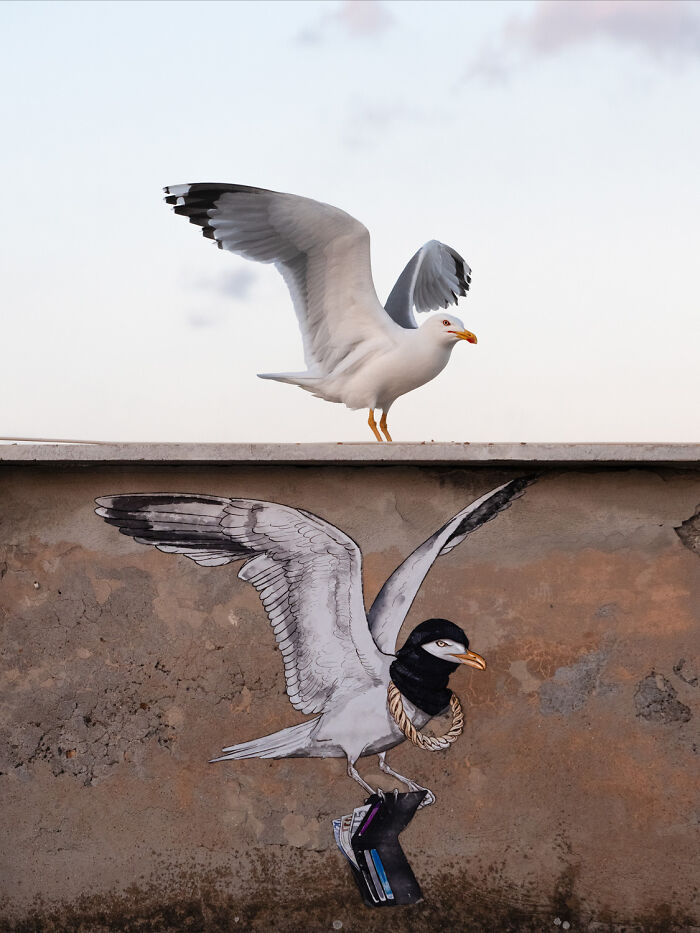
To yellow-legged gulls (Larus michahellis), Rome’s rooftops are the new sea cliffs—providing nesting sites and lofty perches from which they have adapted remarkably well to life in the urban environment. This individual was photographed on a roof with a small colony. Especially since the COVID-19 pandemic, many residents have taken to feeding feral pigeons and other urban birds. For this image I put out no food at all – only a removable sticker, briefly stuck to the wall, without touching existing resources or affecting the birds' behaviour in any way. As a scientist studying urban birds for my doctorate, I want to draw attention to why feeding wild birds without thinking is best avoided. The photograph captures the gulls' confident, assertive character – exactly what allows them to thrive alongside us.
Nikon Z9, 2,8/70-200 mm, ISO 2200
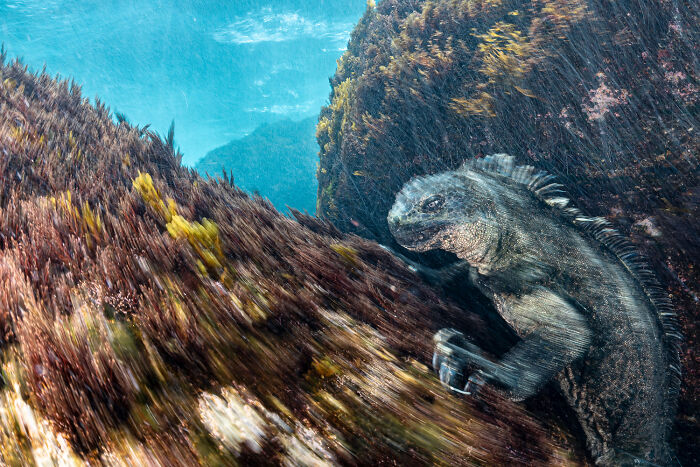
Marine iguanas (Amblyrhynchus cristatus) are endemic to the Galápagos Archipelago, Ecuador. They are most often seen basking in the sun, their dark bodies perfectly camouflaged against the black lava rocks. As ectothermic reptiles, they rely on external heat to regulate their body temperature. This is particularly important as they dive into the cold waters surrounding the archipelago to forage, primarily on marine algae. I followed this individual into the water and watched with fascination as it propelled itself swiftly and purposefully through the powerful surf with the aid of its muscular tail. While I was tossed about by the waves, the marine iguana clung firmly to a rock with its sharp claws and began methodically grazing on algae. Despite its dragon-like appearance, the marine iguana is remarkably placid: a herbivore that shows no aggression, even when approached closely on land or underwater.
Nikon D850, 1,4/13 mm, ISO 64, Nauticam UW housing, Retra Pro X UW flashes
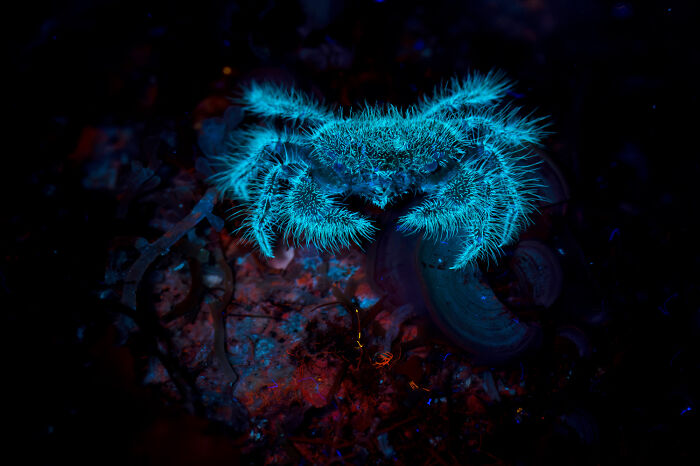
During a night-time photography expedition along the coast of Sardinia, I discovered this fluorescent hairy crab (Pilumnus sp.) in a rock pool, glowing in the beam of my UV torch like a shaggy ghost in the darkness. My recent extensive work with ultraviolet light has revealed a remarkable variety of hidden colours and patterns in certain animals and plants. Fluorescence is known to play a role in mate attraction, camouflage and prey luring, yet very little scientific research has been carried out on its occurrence in crabs. The phenomenon is most likely caused by specific proteins within the chitinous structures of the crab's exoskeleton. Using a specialised photographic technique that I have refined over time, and thanks to a calm sea and the absence of wind, I was able to capture this scene. Incidentally, several of the algae visible in the image also display a striking red fluorescence.
Nikon D850, 2,8/105 mm, ISO 3200, UV lamp
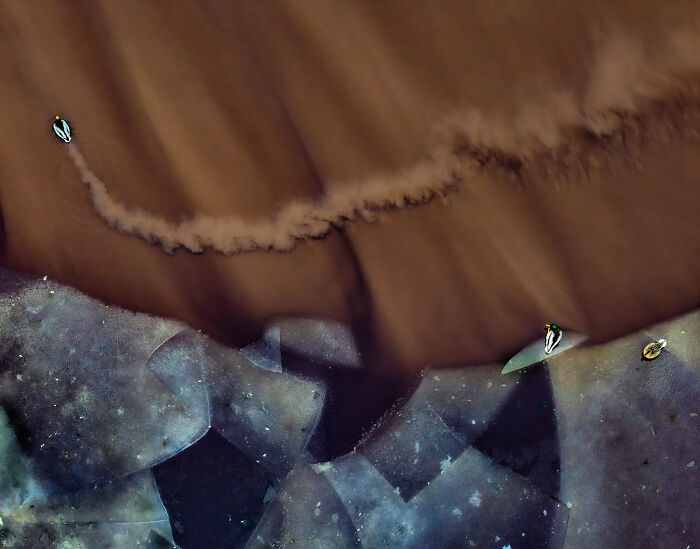
This photograph was taken in January at the Kiskunság Lakes in Hungary. As these salt lakes are very shallow, they freeze over every winter and dry out completely in summer. They serve as important breeding and resting habitats for numerous bird species. Because of the mild winter, the ice on the lakes started melting in January. Waterbirds appeared almost immediately — mainly ducks and geese. The drone perspective offered an interesting sight as the birds churned up the mud, creating striking shapes and patterns. In some places, yellow and red ice floes had also formed, but unfortunately no birds were to be found there. Much to my regret, this phenomenon lasted only a few days, as the remaining ice melted very quickly.
FC4370 DJI Mavic 3 Pro, 3,4/166.0 mm, ISO 200
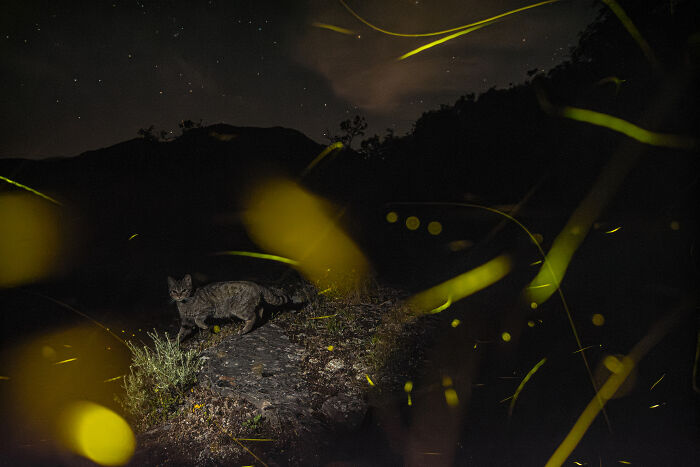
In the wild, romantic mountain landscape of Alto Mugello, Italy, a European wildcat (Felis silvestris) moves silently through the night, framed by the ethereal dance of countless fireflies. Capturing this fleeting encounter required months of preparation and an almost invisible photographic setup: a DSLR camera trap installed with meticulous care to ensure that the wildlife remained entirely undisturbed. European wildcats lead exceptionally secretive and elusive lives and are regarded as indicators of healthy, species-rich ecosystems. Among the greatest threats to the species is hybridisation with feral domestic cats. Despite ongoing environmental pressures, the Alto Mugello region remains a vital ecological corridor linking the Appennino Tosco-Emiliano and Foreste Casentinesi national parks. This corridor is of crucial importance for wolves and for the return of sensitive species such as the European polecat.
Nikon D7200, Laowa 5,6/12-24 mm, ISO 1600, Camtraptions Wireless PIR Motion Sensor V3, 2 Camtraptions Z-PRO flashes
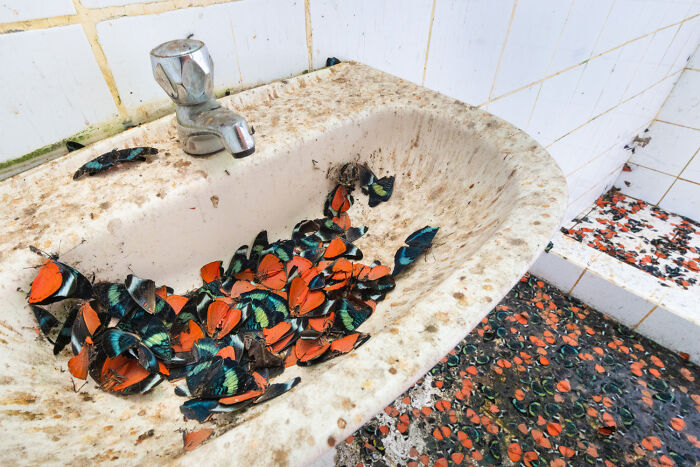
Countless male Panacea prola butterflies met their end in an outdoor toilet in Peru's Manu National Park. Seeking relief from the scorching tropical heat, they had slipped in through a gap above the door – drawn, most likely, by the scent of urine and the salts it offers. Unable to find their way back out, they died in their hundreds, scattering the floor like confetti in a scene of macabre beauty. The photograph was taken towards the end of the Amazon dry season, when this species appears in spectacular numbers across parts of Peru. The butterflies normally live high in the canopy; but at this time of year the males descend to riverbanks and clearings to bask and to draw minerals from the damp ground.
Canon EOS R5, 4,0/16-35 mm, ISO 3200
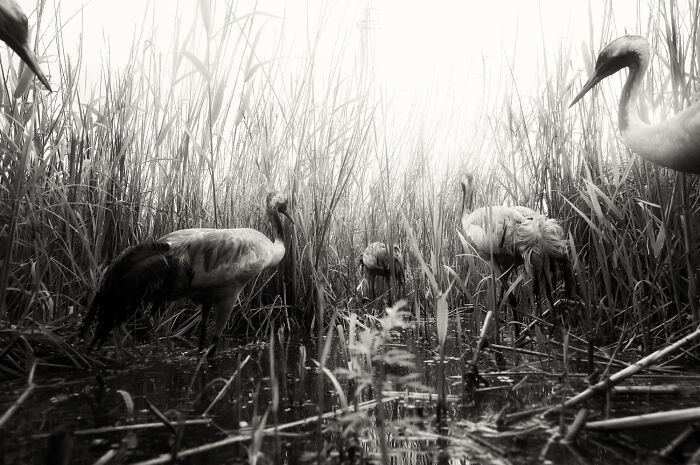
During moult, common cranes (Grus grus) lose all their flight feathers at once, rendering them earthbound for several weeks. During this period, they remain extremely vigilant and usually hide in wet forests where they can find food. At dawn, the cranes walk from their roosting sites via secret paths through reed beds to their feeding grounds and typically return via the same route. The photograph was taken near Olsztyn, in the Warmia region of Poland. Scientific studies conducted over the past six years have shown that, on average, 10–20% of cranes fall victim to predators - mainly foxes and raccoon dogs - during moult.
ILCE-7RM3, Carl Zeiss/Sony 4,0/16-35 mm, ISO 5000, tripod, infrared sensor
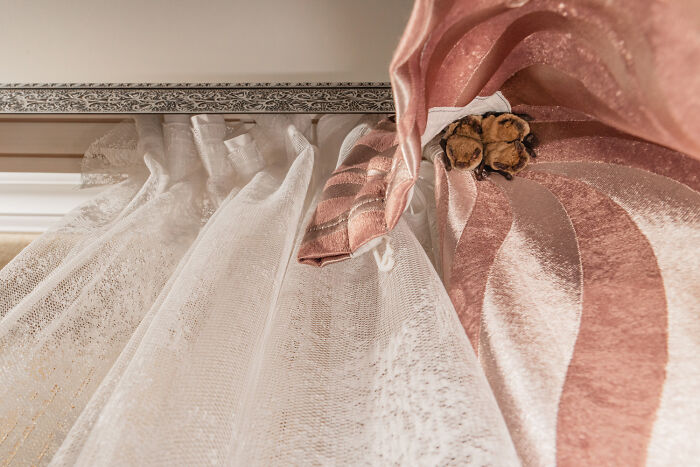
In bats, so-called invasion behaviour describes the search for new roosts once the maternity season ends – and it can lead them astray into buildings, drawn in by the promise of an open window. In this case, a group of pipistrelle bats chose the curtains of a hotel room in Kazakhstan as a trial roost. The room belonged to our tour guide, who was more bemused than bothered by the nocturnal visitors. The bats, naturally, weren't charged for their night at this so-called luxury hotel – though they probably aren't welcome back either.
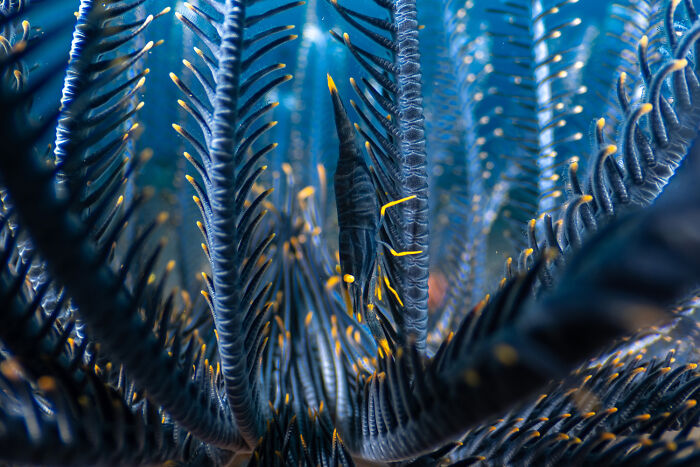
I have always been fascinated by the smallest inhabitants of the reef – those that are overlooked by most divers. During a dive near the Balinese fishing village of Tulamben, I was exploring several feather stars (Crinoidea) when I discovered this crinoid shrimp (Laomenes amboinensis). Perfectly adapted to its host — in both colour and pattern — it clung tightly to the feather star, remaining motionless for much of the time, sheltered by its host and nourished by food particles drifting past on the current. Using a specialised lens attachment, I was able to get extremely close to the shrimp while still capturing a larger portion of the feather star in sharp focus. This allowed me to create an intimate glimpse into the hidden world of this tiny crustacean.
Nikon Z7, 2,8/105 mm, Nauticam eMWL 160°, ISO 200, Nauticam UW housing, 2 Scubalamp D-Pro UW flashes
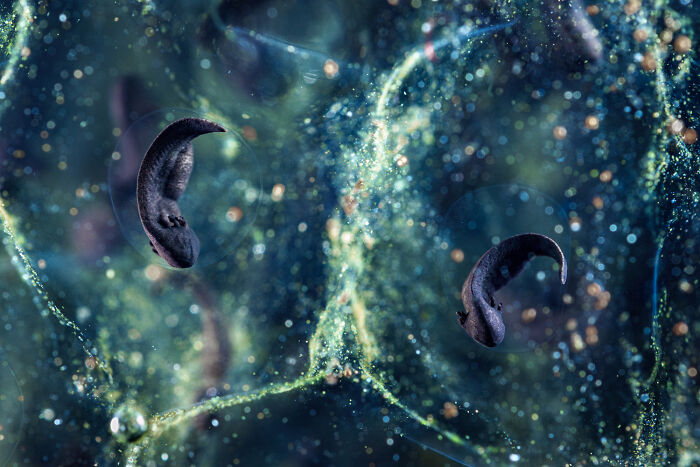
I never cease to be amazed by the discoveries that can be made and the surprises nature has in store for us – often right on our doorstep. A perfect example is this image, taken in spring 2024 in our garden pond in Siegen, Germany.
The metamorphosis of frogs and toads is a fascinating natural spectacle that unfolds every year. These two common frog (Rana temporaria) larvae are about to leave their protective egg capsules and enter the next stage of their development as tadpoles. In this tiny underwater world, pollen and dust become entire galaxies – brought to life with the help of two submerged external flash units (protected in plastic bags) and photographed from above through the water’s surface.
Canon EOS R5, 2,8/100 mm Macro, ISO 200, 2 flashes
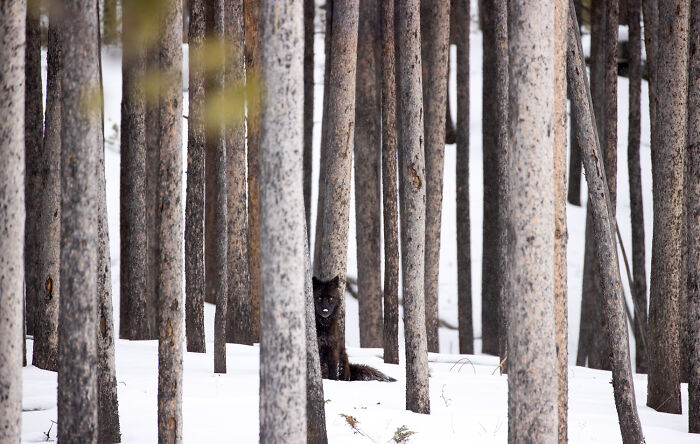
This image was taken in Yellowstone National Park in the United States, a place I have visited regularly for many years. One of the main reasons for my repeated visits is that there are few better places to observe and photograph wolves (Canis lupus). Even so, these animals are elusive and encounters are a matter of luck. Around 50% of the wolves in Yellowstone are black, and, although I have seen and photographed them many times before, I always felt that I had not yet captured a truly compelling image. During this particular visit, I encountered the Wapiti Pack which had taken down a bison along Firehole River and consists mostly of black individuals. It was an extraordinary experience, given that wolf sightings in Yellowstone typically last only a few minutes. This time, however, I was able to spend almost an entire day observing these remarkable animals.
Canon 1Dx Mark III, 5,6/100-400 mm, ISO 1600, tripod
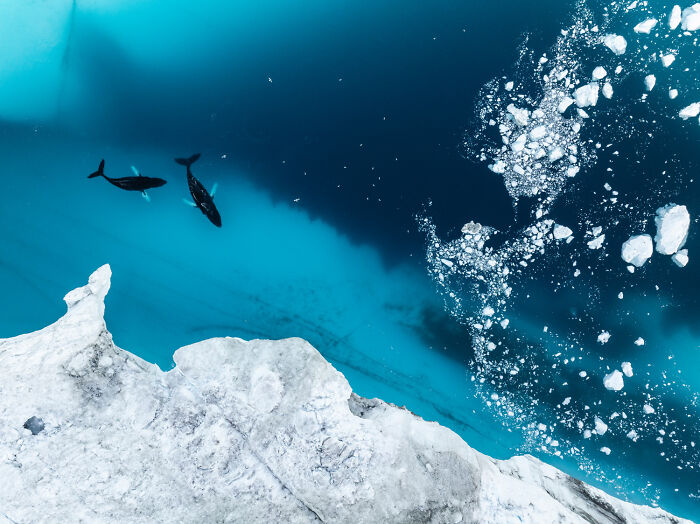
This photograph was taken using a drone near the Ilulissat Icefjord on the west coast of Greenland. It shows two humpback whales (Megaptera novaeangliae) swimming among drifting ice floes and towering icebergs. The drone was deliberately flown at a higher altitude to place the whales in the context of the wider landscape and to convey the immense scale of their Arctic habitat. The bird’s-eye view highlights the striking contrast between the two whales, the deep blue water, and the gleaming white icebergs. During the summer months, humpback whales feed in the nutrient-rich waters of the Arctic before migrating to tropical waters in autumn to breed.
DJI Mavic 3 Pro, Hasselblad L2D-20c, 2,8/24 mm, ISO 200
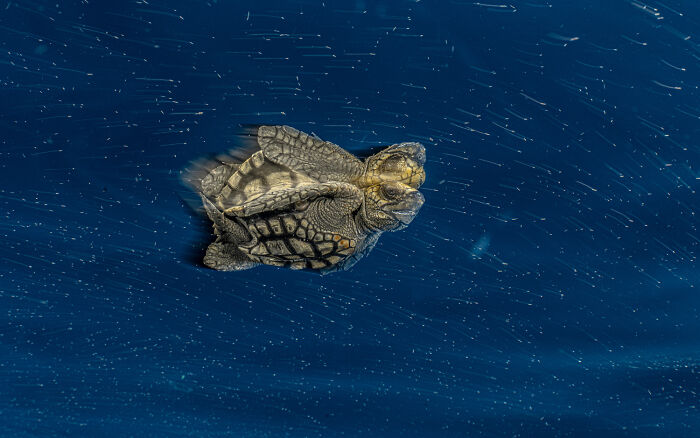
In the open ocean off Baja California Sur, Mexico, a newly hatched olive Ridley sea turtle (Lepidochelys olivacea) drifts at the surface. Encounters with sea turtle hatchlings on the high seas are exceptionally rare. To this day, little is known about their lives after they leave the beach where they hatched and before they return to the same coastal waters years later – a mysterious stage of life known as the “lost years”. After more than 30 years of diving experience and countless hours spent in the open ocean, this is only the second hatchling I have ever encountered in the “blue desert”. Statistically, only about one in a thousand sea turtle hatchlings survives to adulthood. Olive Ridley sea turtle populations are believed to be in decline, and the species is listed as Vulnerable on the IUCN Red List.
Sony Alpha 7R V, 4,0-5,6/28-60 mm, Nauticam WACP-C, ISO 80, Nauticam UW housing, Marelux Apollo III 2.0 UW flashes
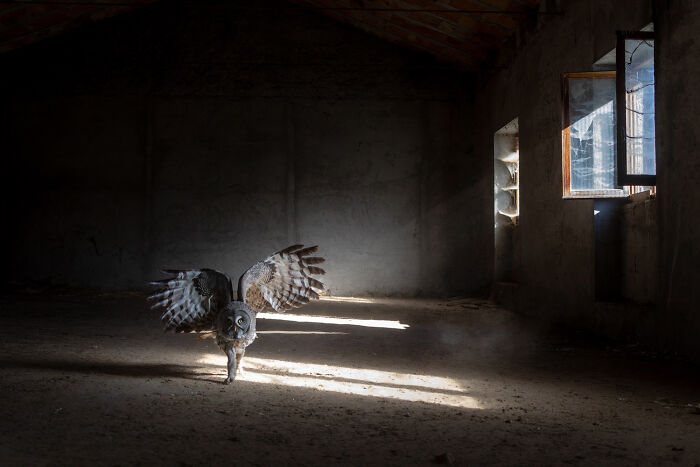
Travelling through the Abruzzo region of Italy, I passed through a village that was all but deserted. From the upper floor of an old barn came a loud flapping sound that caught my attention. Looking up, I was astonished to find a great grey owl (Strix nebulosa) watching me through a dusty windowpane. The owner, a local man, came out to explain: he had rescued the bird, injured, from a circus some years earlier, and it had lived in his barn loft ever since – fed, but confined. He allowed me to go up for a few minutes. The owl showed no fear, only curiosity at my presence. I left with an image that was beautiful and sad in equal measure – a bitter reminder of having left behind a living creature shut off from the world.
Canon EOS 7D Mark II, 2,8/24 mm, ISO 4000















 No fees, cancel anytime