Get Premium
Dark mode theme is available exclusively for premium users. Learn more about the benefits of subscribing.
No fees, cancel anytime.

 Dark Mode Ad-Free Browsing Unlimited Content
 Ad-Free Browsing Unlimited Content Dark Mode
Join 1.2 million Panda readers who get the best art, memes, and fun stories every week!
35submissions
1week left
While it's easy to think that gender bias against girls and women exists only in classrooms and workplaces ("After all, it's the 21st century!"), in reality, you don't need institutions to find examples of the discrimination they face. It's way more widespread.
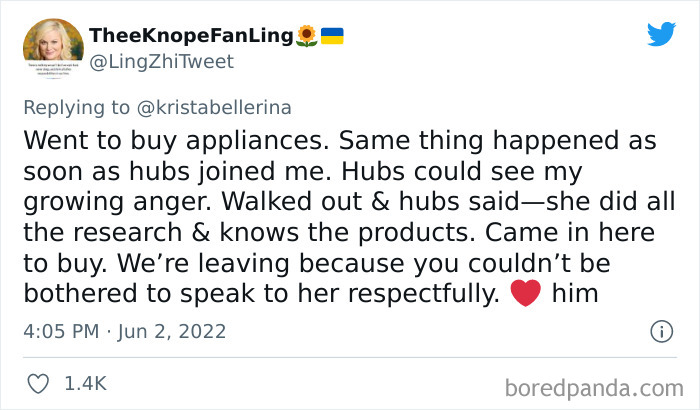
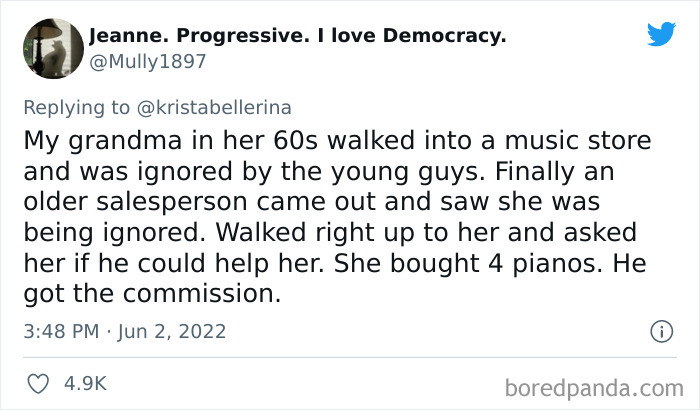
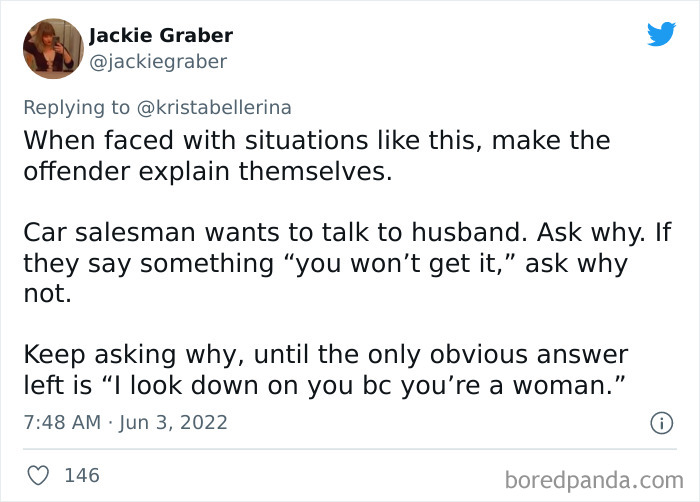
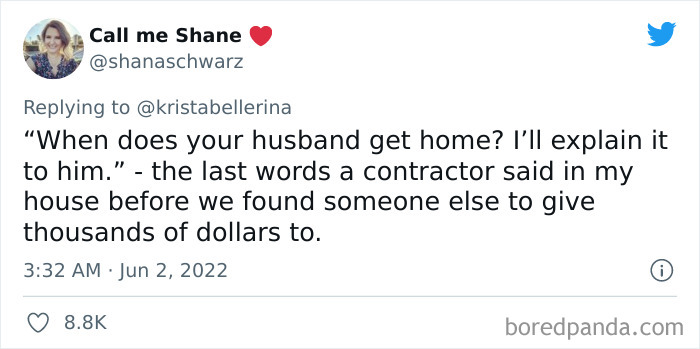
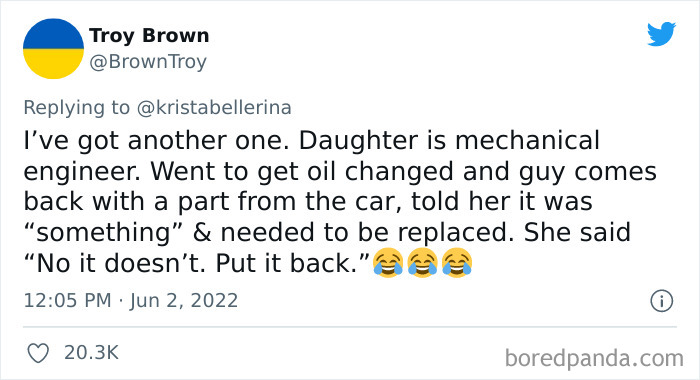
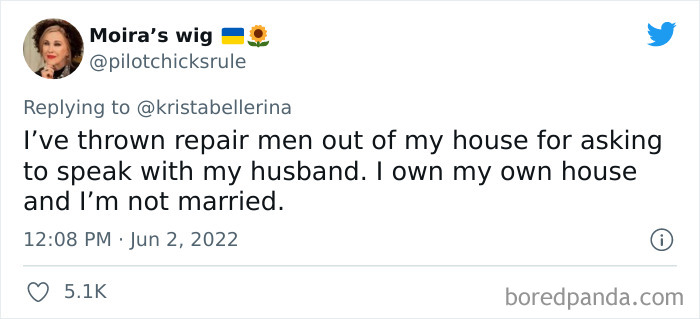
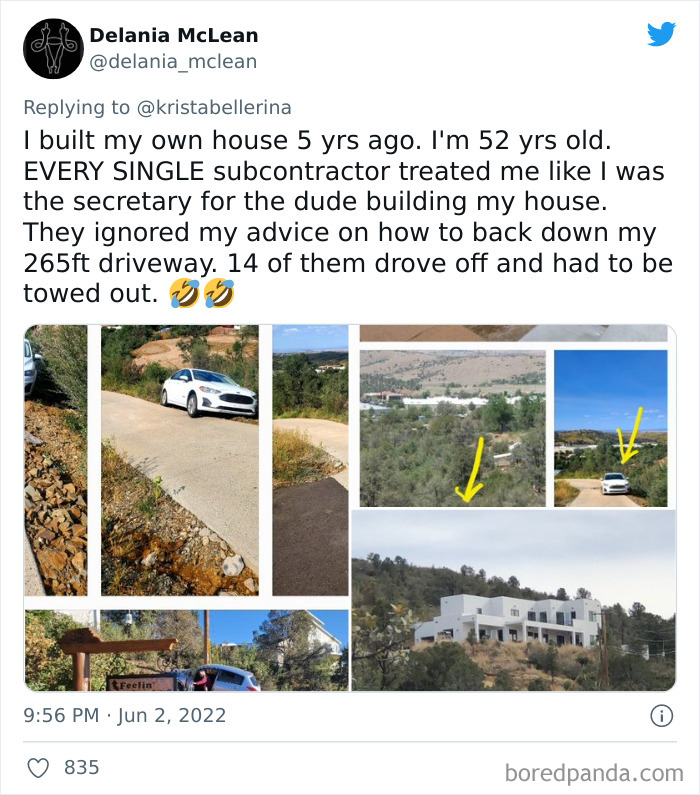
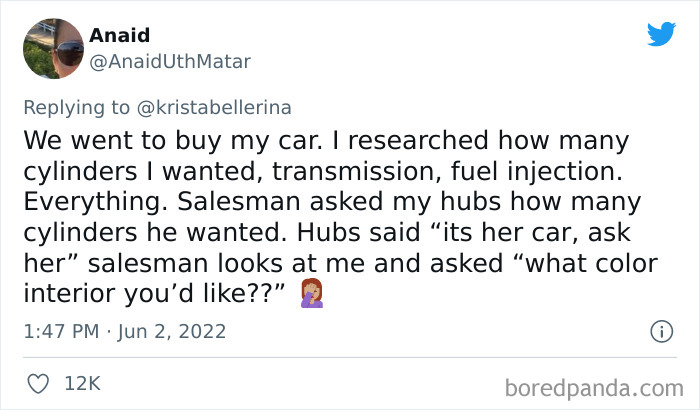
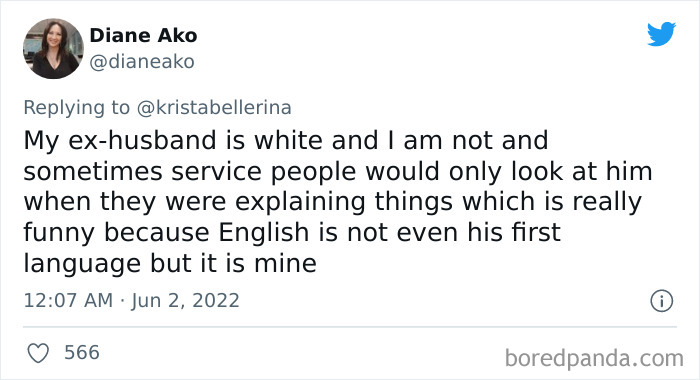
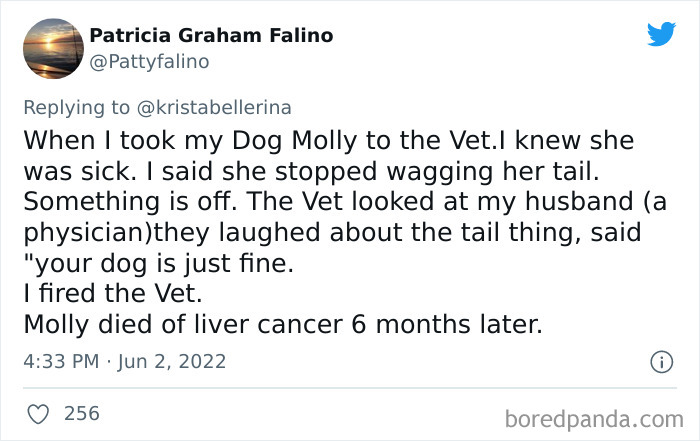
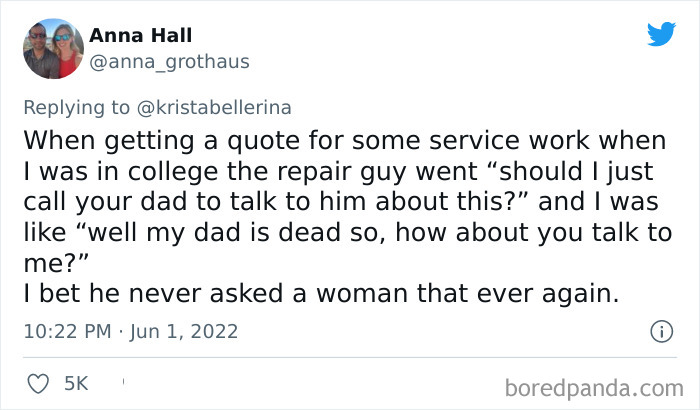
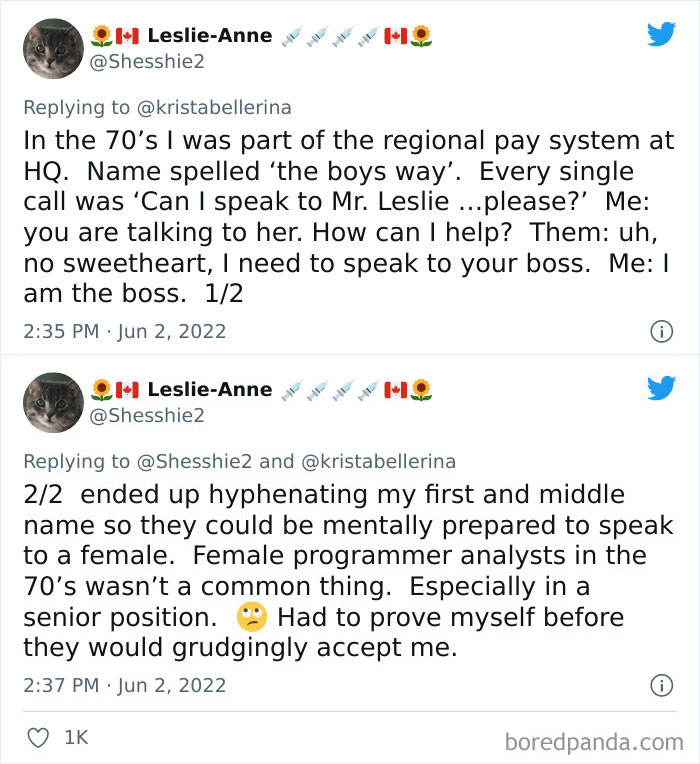
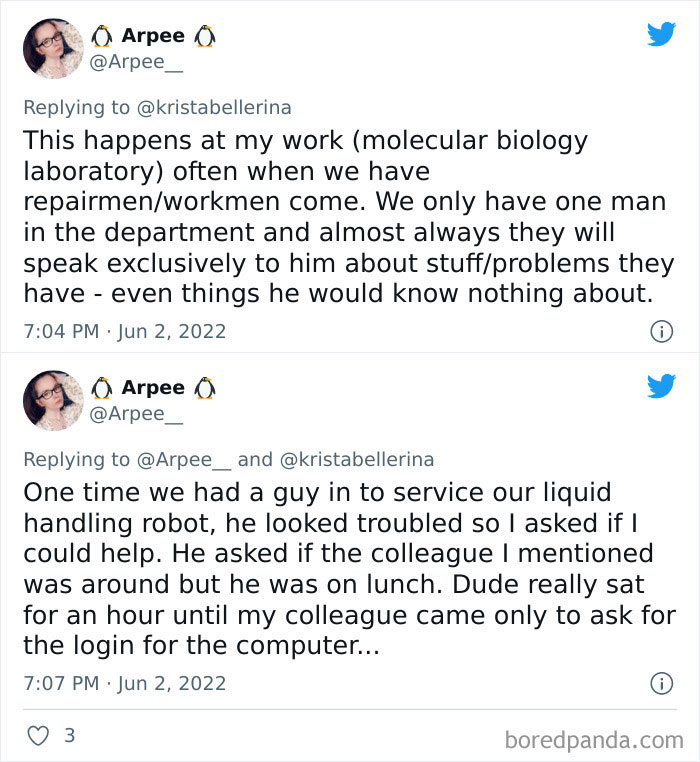
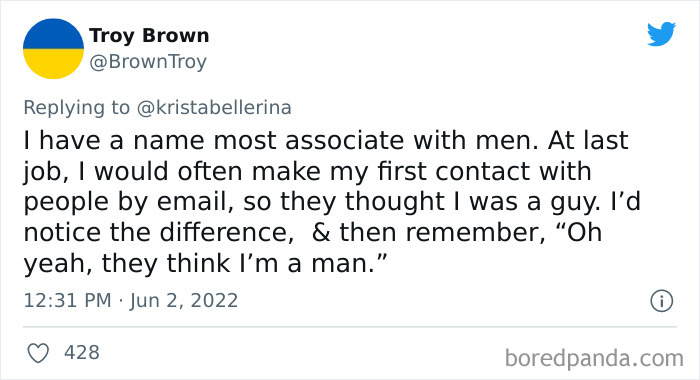
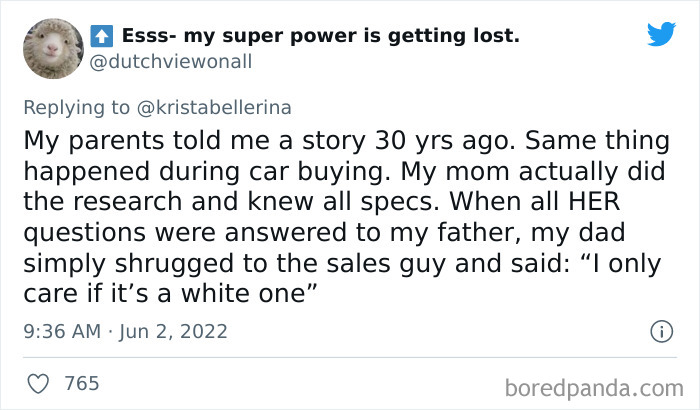
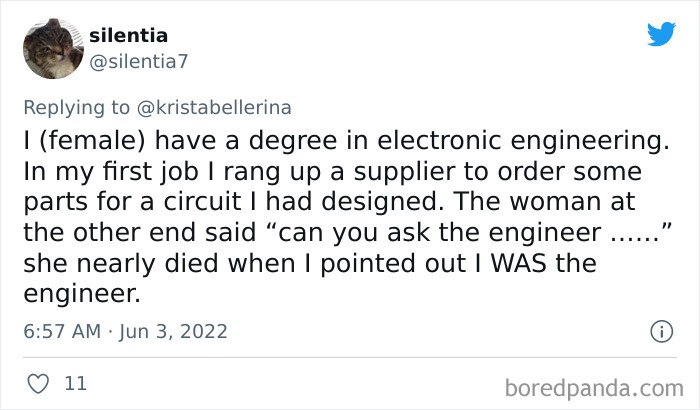
Recently, writer, politico, and mom Krista Pacion from Arizona, USA, tweeted about an experience she had with a repairman who started ignoring her the second her husband walked into the room, and it inspired other women to share all the similar situations they've had the displeasure of being in themselves.
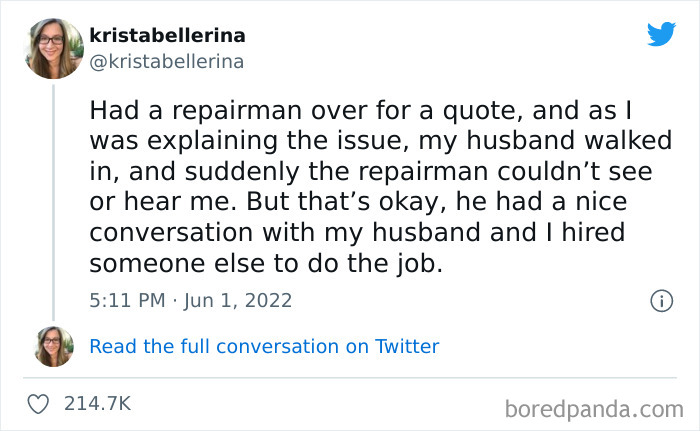
The discussion under Pacion's tweet eventually evolved into a thread that serves as the perfect reminder to be the change you want to see. We can all do better, people.
Click here & follow us for more lists, facts, and stories.
This post may include affiliate links.
We managed to get in touch with Pacion, and the writer said she's very happy about the way her tweet was received.
"I tweeted about an ordinary encounter that resonates with women because it is such a relatable situation, and the comments read like a live action women's studies class, with women sharing specific examples of their own encounters across a wide range of fields," Pacion told Bored Panda.
"The follow-up comments range from those of support that build women up to criticism from people who simply don't see or understand the issue. My biggest takeaway is that women want their stories to be heard, and there is a great opportunity to elevate these powerful and real-world stories through other mediums, like an article, a book, or a podcast."
Pacion believes the large number of replies to her original tweet indicates that gender bias is pervasive. "I think the most blatant forms of gender bias I currently see are with my girls (ages 9 and 13) and what they experience at school, from learning 'pink is a girl color and blue is a boy color' to being admonished to 'sit like a lady' to being told girls can't be spies, not even as a Halloween costume."
"There are far more qualified people who can talk about the areas in which women suffer the most sexism, but an area I see it in a lot is in politics, where coverage for women candidates is often more about what they wear and how they look as opposed to their positions," the writer added.
Interestingly, there's a way we can calculate just how different societies treat men and women. Since 2006, the Global Gender Gap Index has been measuring the extent of gender-based gaps among four key dimensions: economic participation and opportunity, educational attainment, health and survival, and political empowerment. Tracking the progress towards closing these gaps over time, it reports benchmarks and provides country rankings that allow for effective comparisons across and within regional peers. According to its 2020 data, there is still a 31.4% gender gap that remains to be closed globally.
Across the four characteristics, on average, the largest gender disparity lies within political empowerment. Despite being the most improved dimension that year, the gap on this subindex has only been closed by 25%, meaning there are still not enough women occupying seats in government across the world.
However, it's important to note that the political empowerment subindex fails to measure the legal rights of women and girls in comparison to those of men, which plays a significant role in determining the extent to which a society is equal.
"Although progress [has been] made in advancing women’s rights, it has been slow and inconsistent, and many [intimacy]-discriminatory laws remain entrenched,” Romina Canessa, a human rights lawyer at Equality Now, told Global Citizen. “When governments deny women and girls the same rights as men and boys, this legitimizes discrimination and abuse, and means they have no formal recourse if their rights are violated.”
The economic and labor market gender gap has been closed by 58%. This is due to the fact that, on average, only 55% of women are participating in the global workforce, and their presence in higher-yielding positions is even lower.
Plus, this disparity is exacerbated by the global wage gap, which affects women across all industries and backgrounds, and has remained relatively stagnant throughout the last five years or so. These components highlight the challenges women face to escape poverty and become financially and economically independent.
At least 35 of the 153 surveyed countries have closed the education gender gap by 96.1%. However, this number varies across education levels.
Globally, girls are less likely to receive an education due to gender-based discrimination, child marriage, and the burden of fulfilling domestic chores, all of which prevent young girls and teens from attending school.
While more young girls and women are attending primary and secondary school, less than half are going on to attend college.
Although the global gender gap for health care and survival has been closed by 95.7%, millions of women worldwide still do not have equal access to health care, especially reproductive health care.
Jennifer Weiss-Wolf, vice-president for development at the Brennan Center for Justice, thinks that period poverty and menstrual stigma play significant roles in holding society back from achieving gender equality, noting that these barriers can also hold them back from participating in politics, the workforce, and education.
“If menstruation inhibits anybody from any one of those things, it inhibits them from all four, which places it squarely in the heart of what it means to achieve full gender equality,” Weiss-Wolf explained. “If we don’t have policies in place to ensure a safe and open, and accurate discussion around menstruation, treatment of menstruation, in all of these ways, we are leaving off the table a considerable component.”
In order to achieve gender equality and make all of these pictures a thing of the past, countries across the globe must increase the number of women in government, ensure education is accessible to all women and girls, create free or affordable child care so that more women can participate in the labor market, and provide access to safe reproductive health care.
Across 34 countries surveyed by Pew Research Center, a median of 94% think it is important for women in their country to have the same rights as men, with 74% saying this is very important.
Men, however, tend to be more optimistic than women about prospects for gender equality, with differences of at least 10 percentage points in 10 countries and smaller but significant differences in 11 others. For example, 77% of men in Japan – compared with 58% of women – say it’s likely that women in their country will eventually attain or already have the same rights as men. Nigeria and the Philippines are the only countries surveyed where a larger share of women than men are optimistic about gender equality.
Krista Pacion thinks that it's not enough to simply want a better future for women. We have to work for it too.
"One of my daughters wants to be president of the United States and my other daughter wants to be an astronaut. It's my job to pave the way for them and other girls and women to achieve their goals," she said. "Whether that's by making a joke about a personal experience on Twitter or by teaching them that colors are colors, I'm operating from a position where I know my personal actions impact their future, and there is always room for improvement."
You might also like: Perfect online, different offline: 34 photos that tell another story












 No fees, cancel anytime