Get Premium
Dark mode theme is available exclusively for premium users. Learn more about the benefits of subscribing.
No fees, cancel anytime.

 Dark Mode Ad-Free Browsing Unlimited Content
 Ad-Free Browsing Unlimited Content Dark Mode
Join 1.2 million Panda readers who get the best art, memes, and fun stories every week!

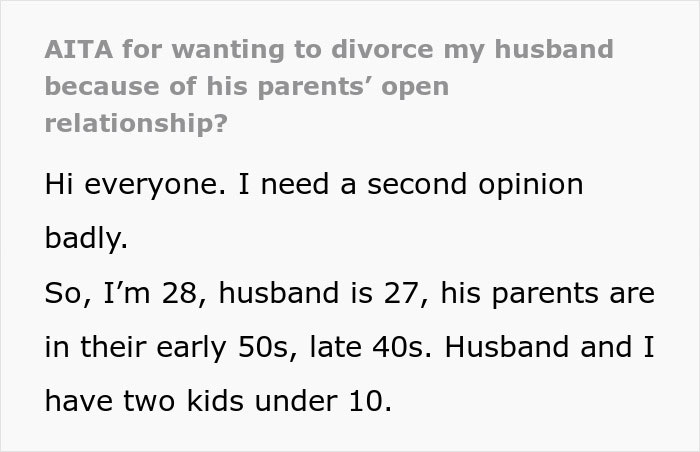
Everyone’s entitled to keep certain things to themselves and decide how much of their life they want to shield from others. However, there’s a difference between privacy and secrecy, and one woman believes her in-laws crossed that line.
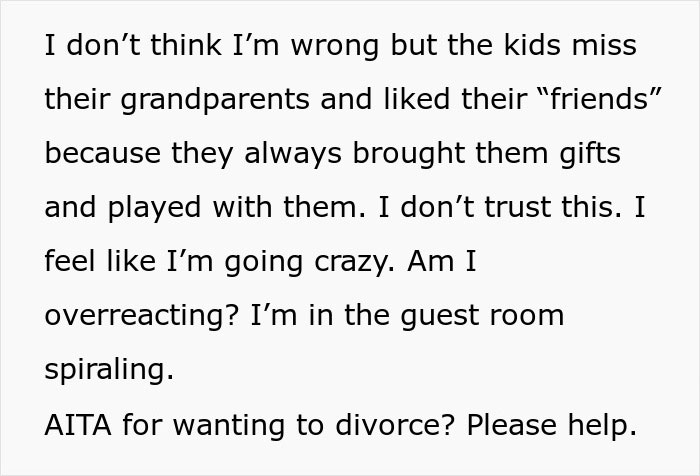
She learned that her husband’s parents were in an open relationship. This probably wouldn’t have been a problem for her if it hadn’t been for the fact that their other partners were also spending time with her children. And the worst part? It turns out her husband may have known more about it than he admitted.
Image credits: The Yuri Arcurs Collection / Magnific (not the actual photo)
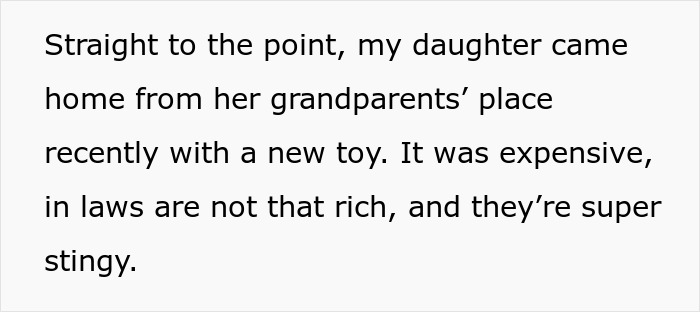
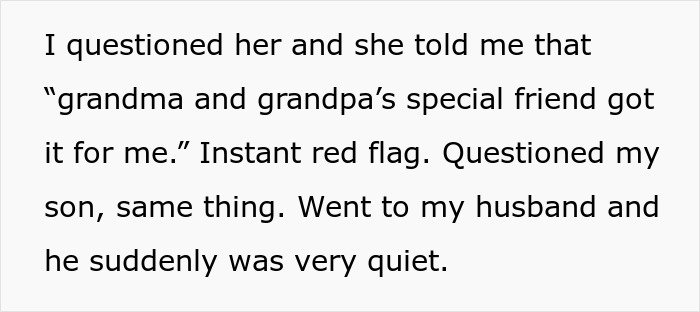
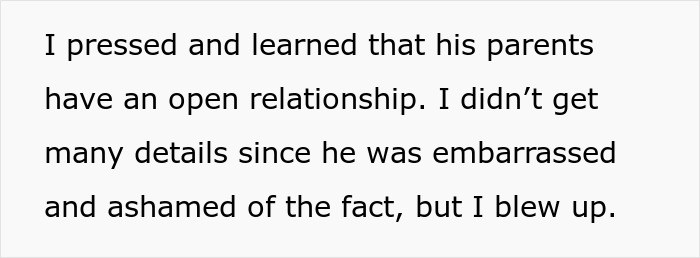
Image credits: Getty Images / Unsplash (not the actual photo)
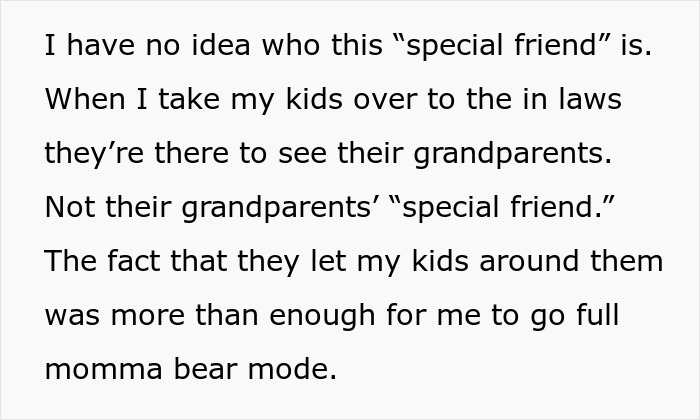
Image credits: sodawhiskey / Magnific (not the actual photo)
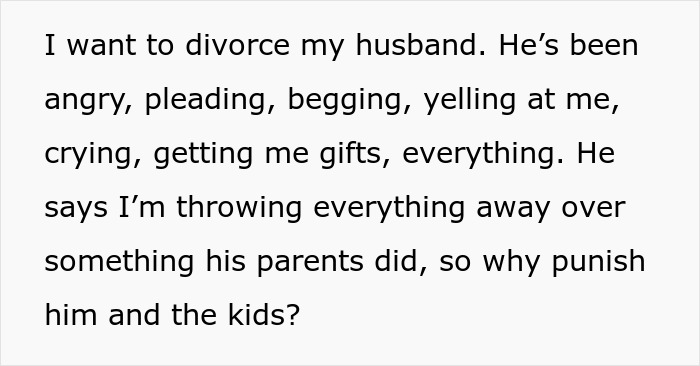
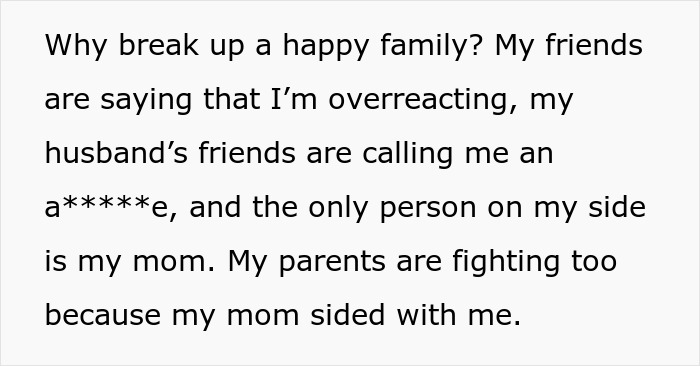
Image credits: simonapilolla / Magnific (not the actual photo)
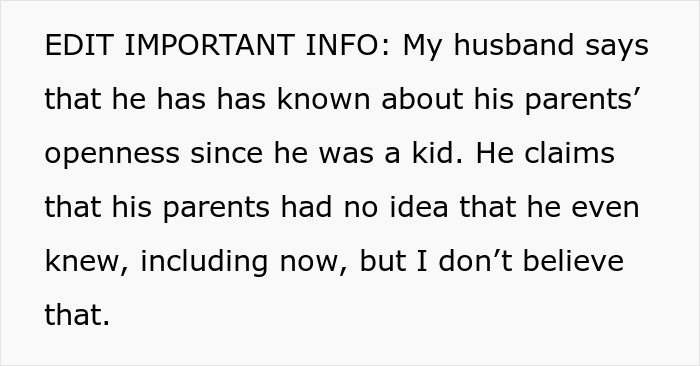
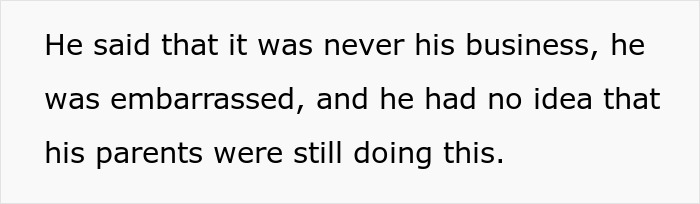
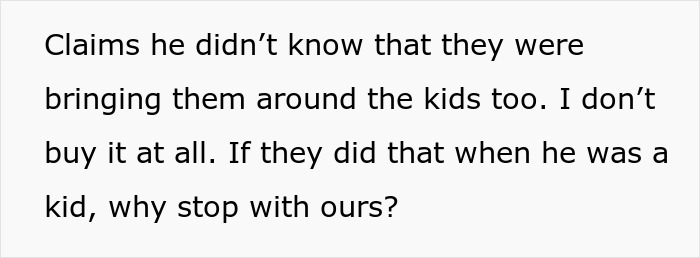
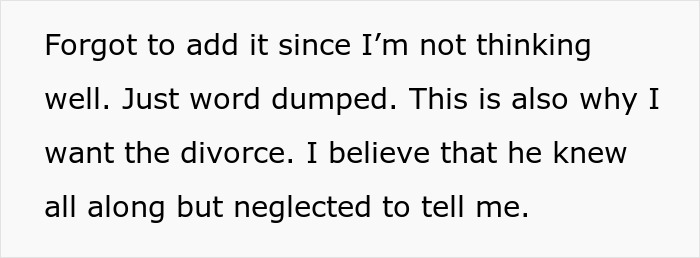
Image credits: ThrowRA_RightCanary
Image credits: MART PRODUCTION / Pexels (not the actual photo)
Grandparents play a special role in the lives of many children, but sometimes they have different ideas from the child’s parents about the best way to raise the little one. The C.S. Mott Children’s Hospital National Poll on Children’s Health asked American parents of children ages 0-18 about disagreements with grandparents around their parenting choices.
Most parents (89%) report that their child sees at least one grandparent often or occasionally. Among these parents, only 6% report major disagreements, and 37% say there are minor disagreements with one or more grandparents about their parenting choices. Fifteen percent of parents say that disagreements have a negative effect on their child’s relationship with grandparents.
Forty percent of parents say disagreements occur because grandparents are too soft on the child, while 14% say grandparents are too tough; 46% say disagreements arise from both. The most common areas of disagreement are discipline (57%), meals/snacks (44%), and TV/screen time (36%). Other disagreements pertain to manners (27%), health/safety (25%), treating some grandchildren differently than others (22%), bedtime (21%), and sharing photos/information on social media (10%).
Four in ten parents (43%) have asked a grandparent to change their behavior to be consistent with the parent’s choices or rules. In response to such a request, 47% of parents report that the grandparent changed their behavior; 36% say the grandparent agreed to the request but did not change their behavior; and 17% say the grandparent refused the request to change. Among parents who say grandparents changed their behavior, only 4% report major disagreements. In comparison, among parents who say grandparents agreed to change but did not change their behavior, 15% report major disagreements; when grandparents refused to change, 25% of parents report major disagreements.
Overall, few people get to the point of no return, with 15% of parents limiting the amount of time their child sees some grandparents. Not surprisingly, these limitations are more common when grandparents do not respect parenting choices: 32% of parents limit the amount of time children see grandparents who agreed to change but did not, and 42% limit the amount of time children see grandparents who refused to change. In comparison, among parents who did not ask a grandparent to change their behavior, only 6% limit the amount of time their child sees grandparents.
Image credits: Getty Images / Unsplash (not the actual photo)
Amy Morin is a licensed clinical social worker, psychotherapist, and author of 13 Things Mentally Strong Couples Don’t Do: Fix What’s Broken, Develop Healthier Patterns, and Grow Stronger Together.
When she conducted research for her book, Morin surveyed 1,000 married and divorced individuals and found that 40 percent of respondents believed their partner was keeping at least one secret from them.
“While some secrets may seem harmless on the surface (like how much you really spent on that watch), dishonesty erodes trust,” Morin writes. “If your partner can’t trust that you’ll be honest about the small things, how do they know you aren’t hiding much bigger, more destructive secrets?”
As a therapist, she has witnessed firsthand how secrets destroy even healthy relationships. According to her, the three main reasons that people justify keeping secrets in their relationships are:
They’re trying to protect themselves. “One of the primary reasons for keeping secrets in a relationship is self-protection,” Morin explains. “There may be times when those fears are founded—like you’d think less of your partner if they revealed they made a huge mistake that led to them getting fired (as opposed to saying they were falsely accused).”
“At other times, their concerns might be exaggerated. Perhaps you’d understand why they spent so much money on a gift for their mother if they were upfront with you about it. But secrets are often a strategy to preserve one’s reputation.”
They’re trying to their partner. “Your partner might convince themselves that revealing a secret would hurt you. So, they might tell themselves that hiding something is actually an act of kindness,” Morin says.
They’re trying to protect the relationship. “Your partner might assume the best way to continue the relationship is to keep their secrets from you,” the therapist adds. “Whether they know you wouldn’t trust them again or they worry that you just wouldn’t understand their friendship with someone else, they may do everything they can to keep the harmony.”
“They may know that you’d end the relationship if you knew they were having an affair or if you discovered they were doing drugs. Consequently, they might decide that keeping a secret is their best course of action.”
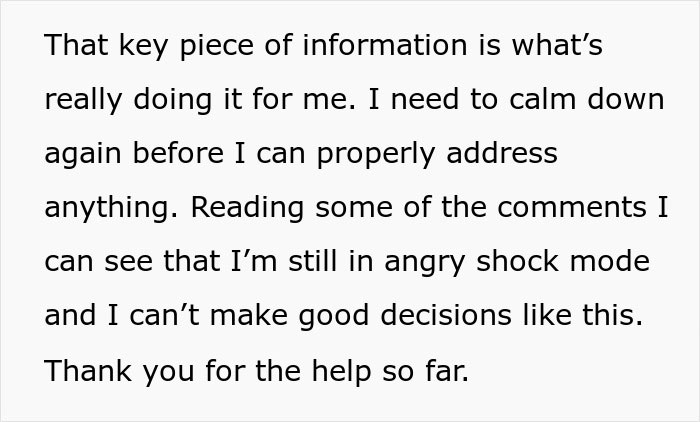
It might very well be that the woman’s husband actually didn’t think his parents’ love life mattered. He might’ve believed the secret was small, but since he kept it for so long, he might’ve feared his wife would be upset that he hadn’t been forthcoming sooner.
“While your partner might justify their secret-keeping as for the best, the truth is, secrets can take a serious toll on the health of a relationship,” Morin says. “They usually come to light at some point, and when they do, trust is shattered.” Whether or not this particular couple will be able to work through it depends on them.
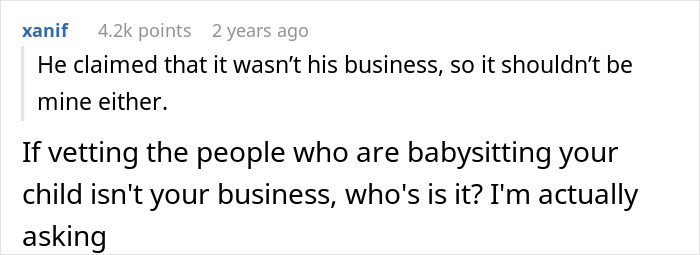

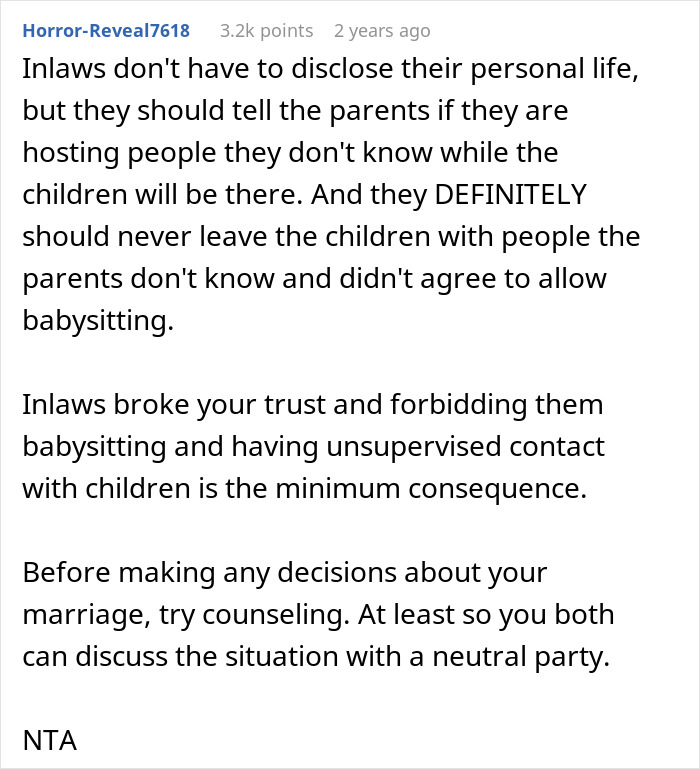
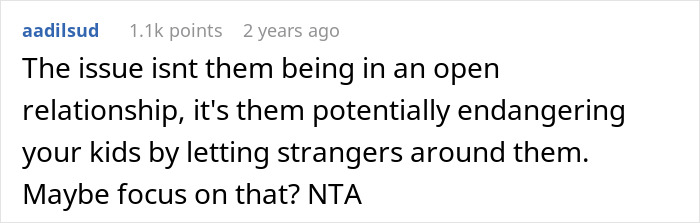
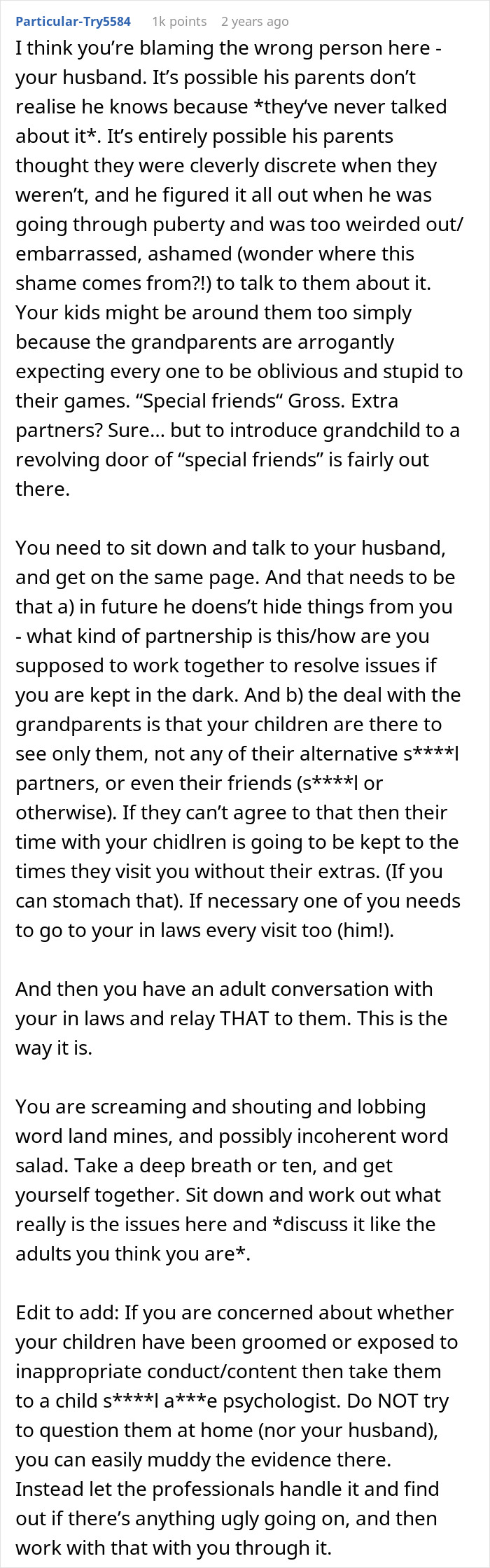
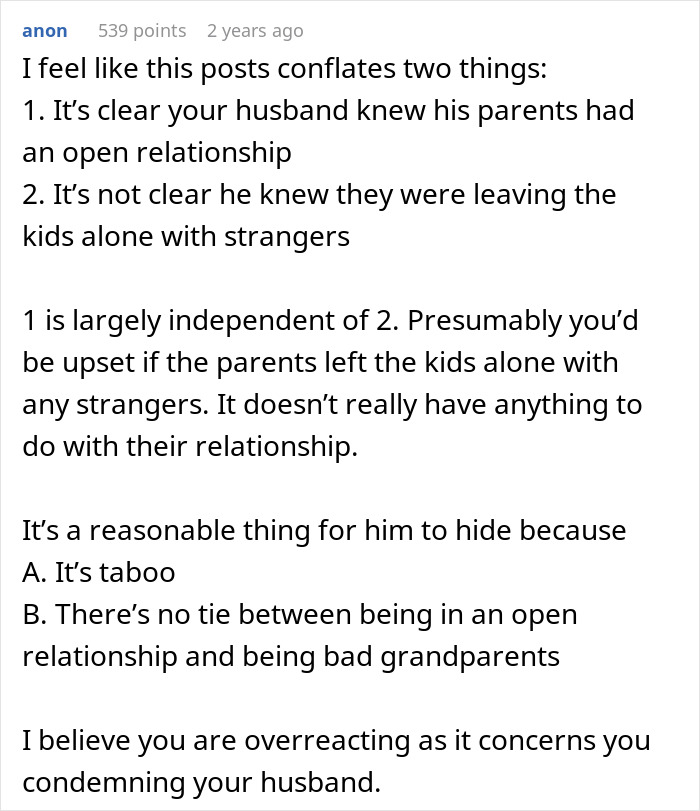
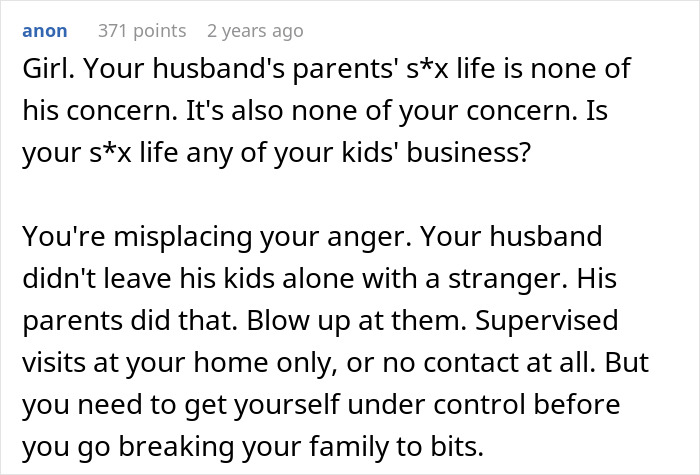

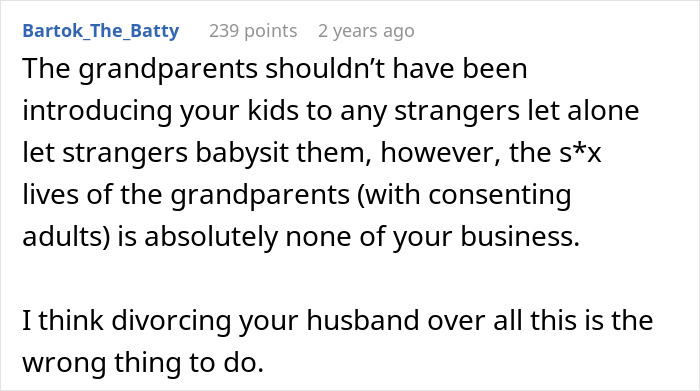
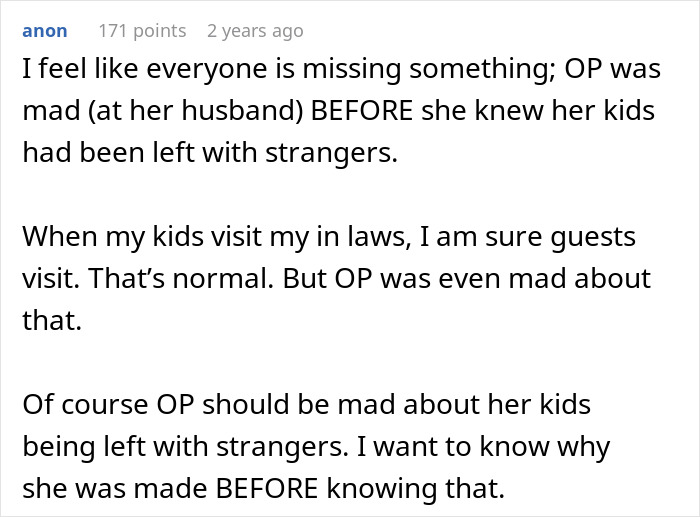
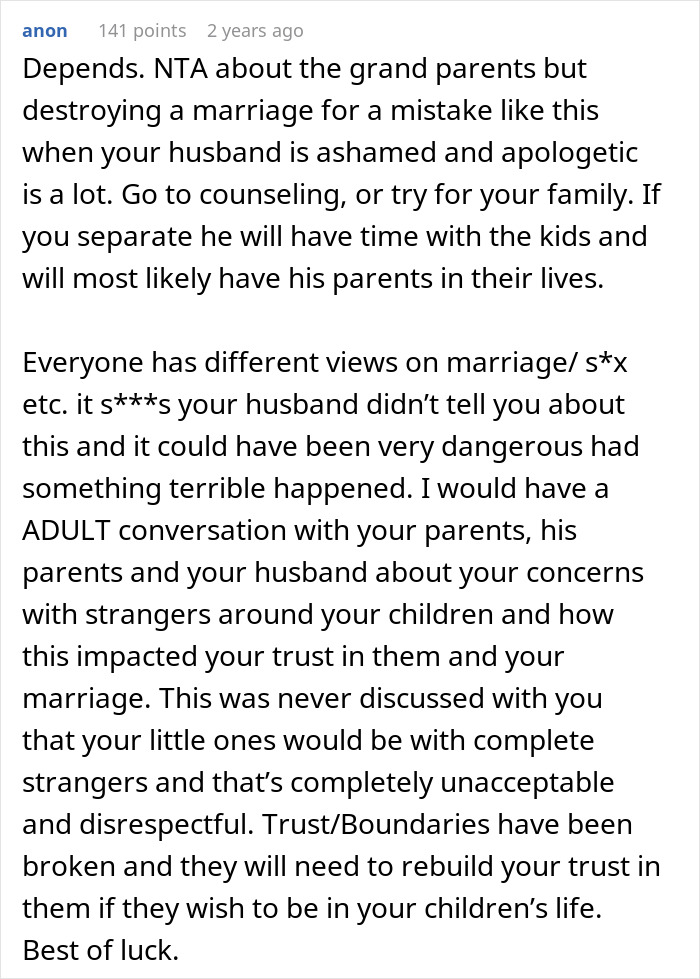
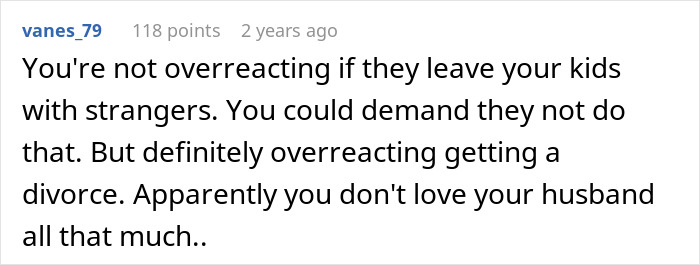
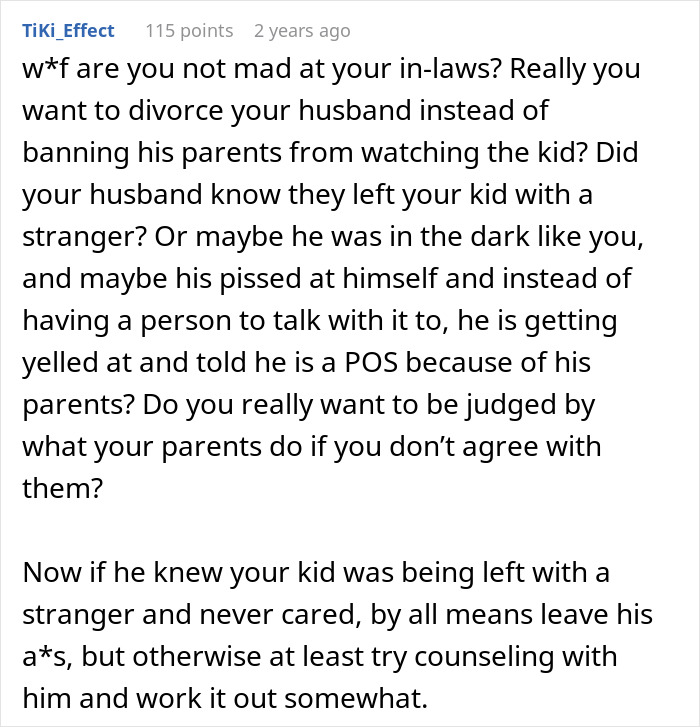
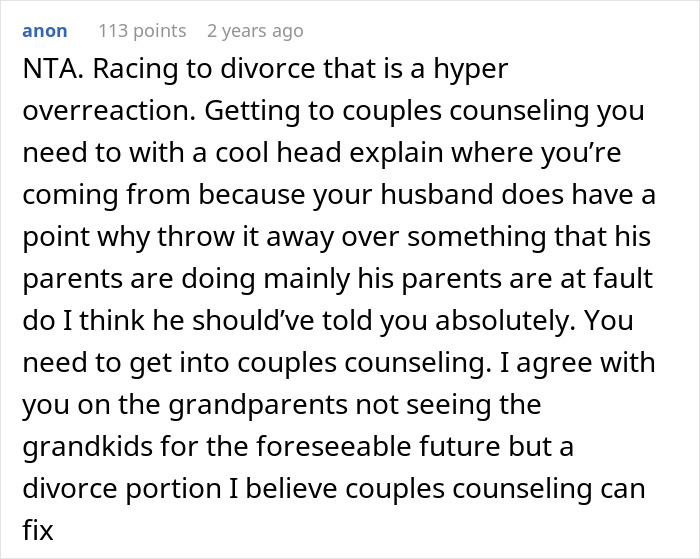
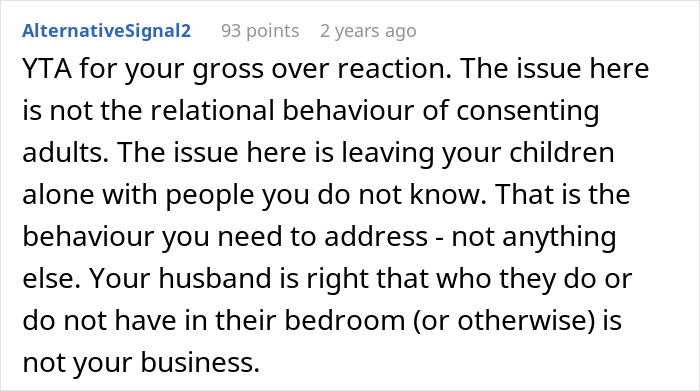
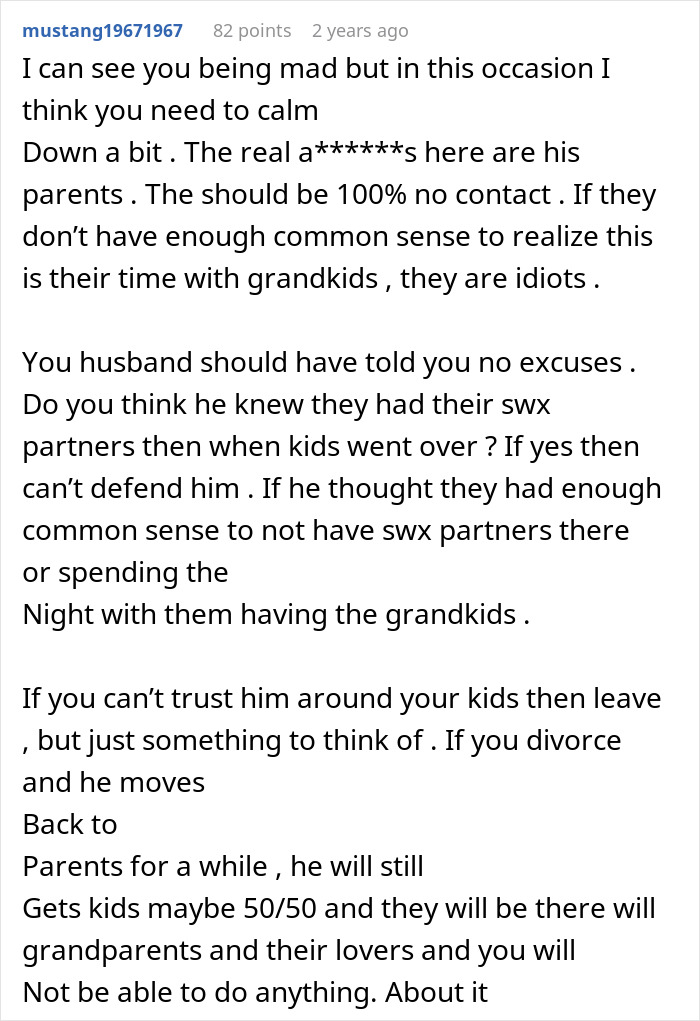

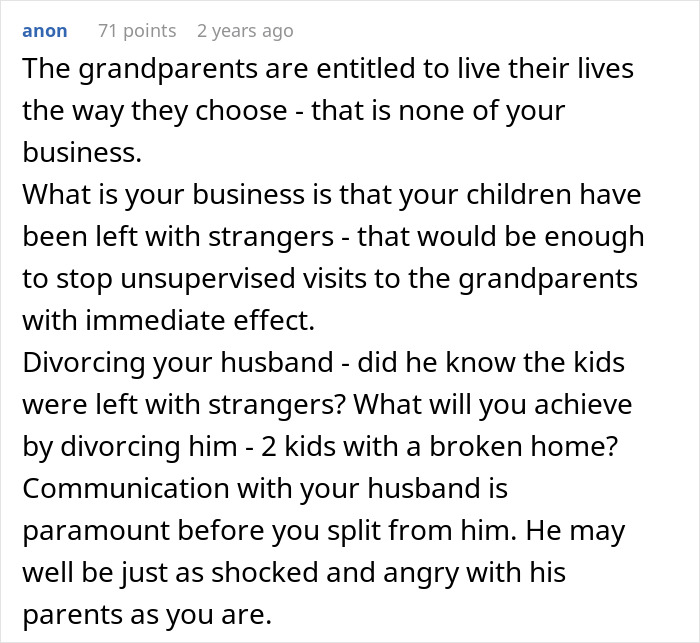

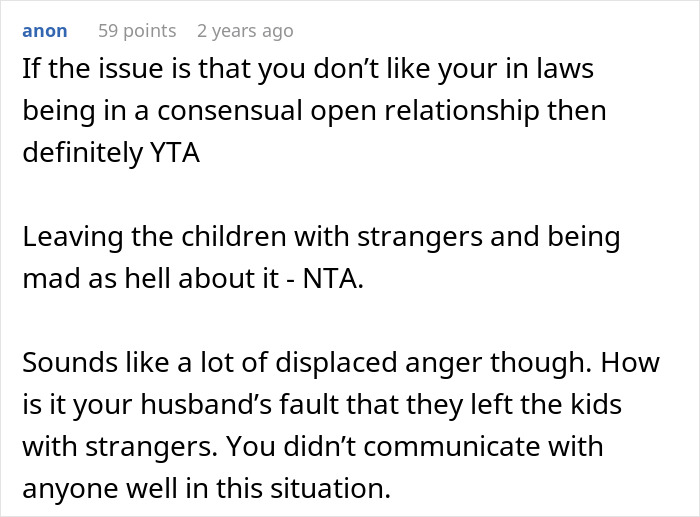
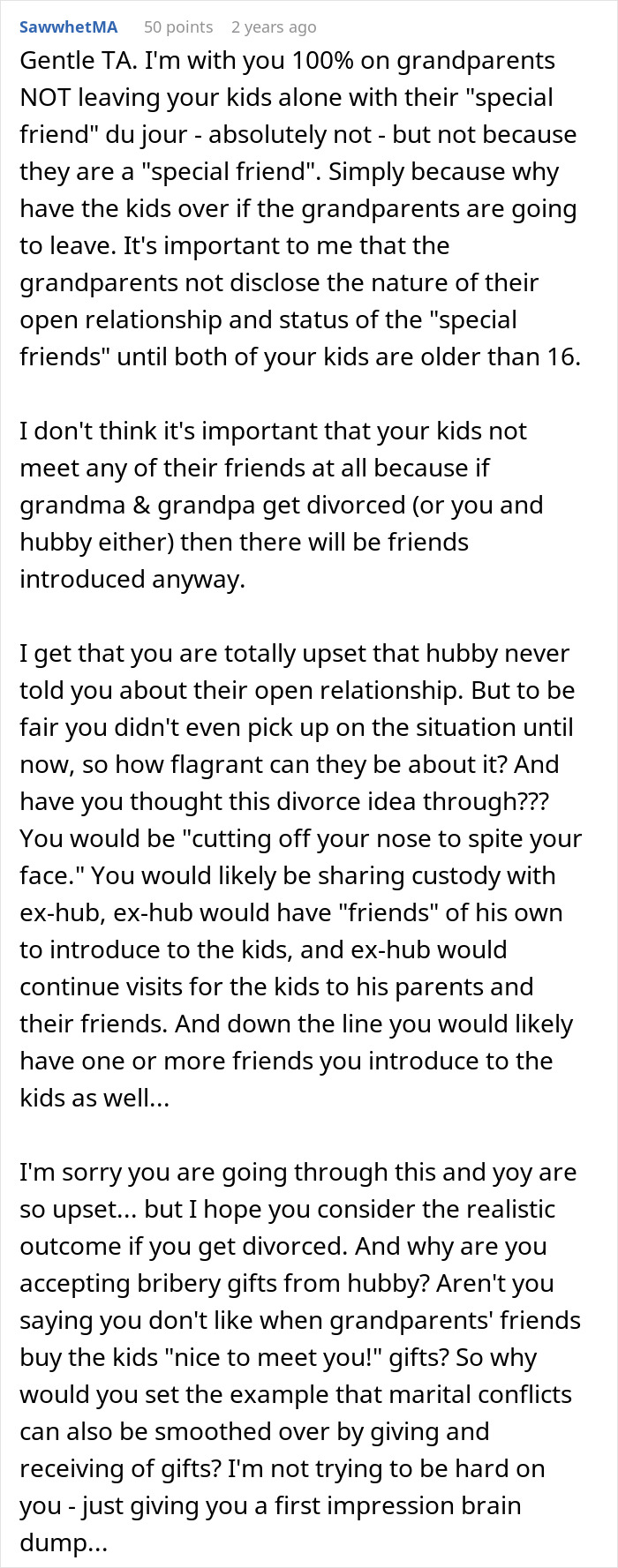
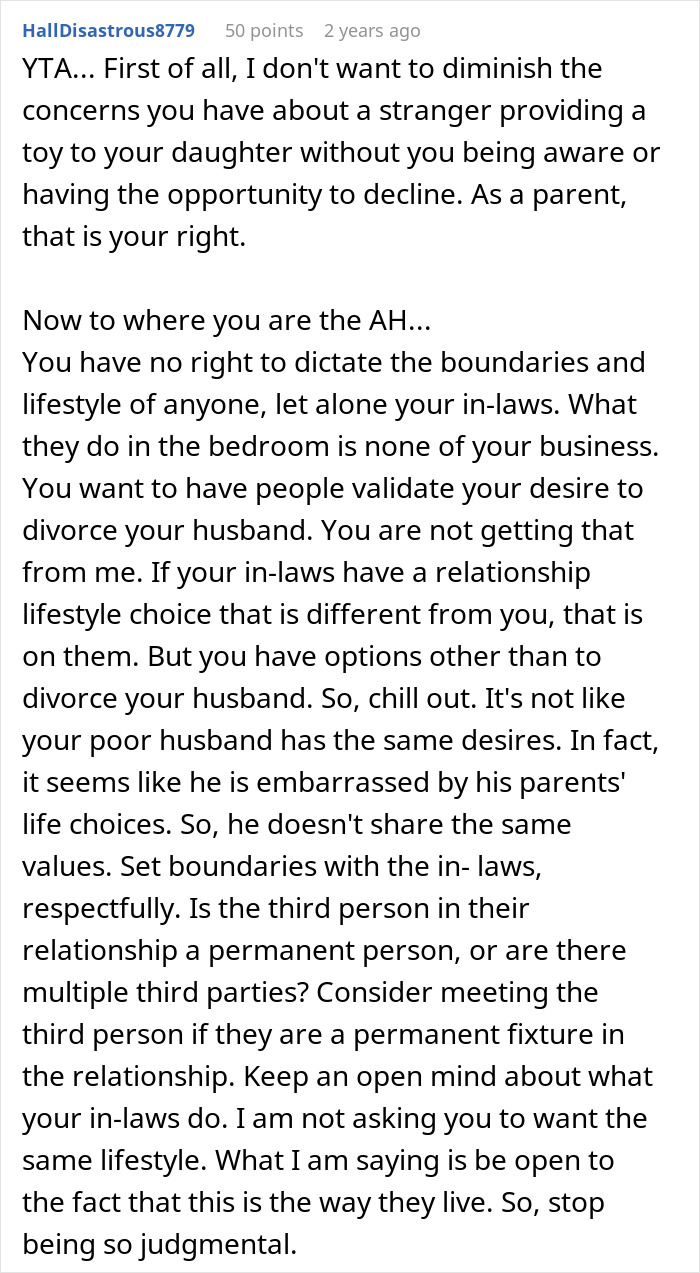




What the grandparents do with their marriage is really none of her business. But I would absolutely freak at complete strangers (to me) babysitting my kids. I don't care if they are there, but not leave them alone. And yes the husband is to blame if he knew that and deliberately kept it from her.

Yes, this could be somebody they just picked up the night before. The grandparents don’t really know these people or how safe they are. They are very naive. I would be absolutely furious.
Load More Replies...
What the grandparents do with their marriage is really none of her business. But I would absolutely freak at complete strangers (to me) babysitting my kids. I don't care if they are there, but not leave them alone. And yes the husband is to blame if he knew that and deliberately kept it from her.
Yes, this could be somebody they just picked up the night before. The grandparents don’t really know these people or how safe they are. They are very naive. I would be absolutely furious.
Load More Replies... 



























 No fees, cancel anytime










35
13