Get Premium
Dark mode theme is available exclusively for premium users. Learn more about the benefits of subscribing.
No fees, cancel anytime.

 Dark Mode Ad-Free Browsing Unlimited Content
 Ad-Free Browsing Unlimited Content Dark Mode
Join 1.2 million Panda readers who get the best art, memes, and fun stories every week!

Many companies use assessment tasks during their hiring process. Most of the time, these assignments seem fair, as the company needs to evaluate the candidate and feel confident in their abilities. However, some recruiters give tasks to job seekers just to take advantage of their work and ideas without having to pay them or give credit.
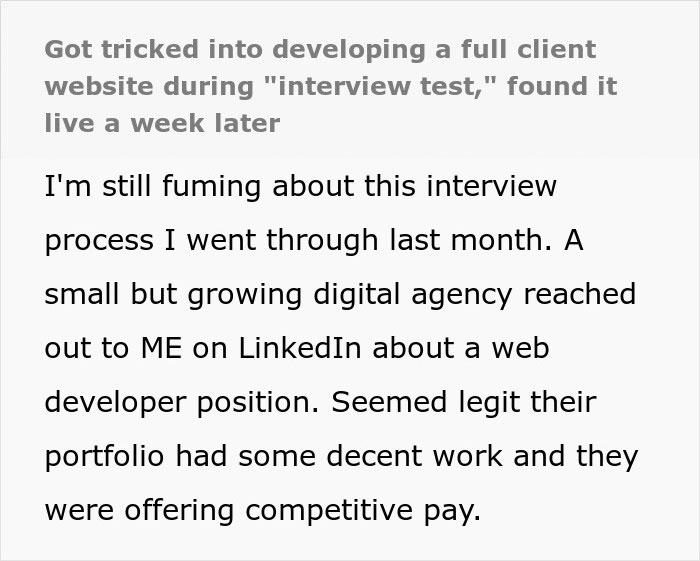
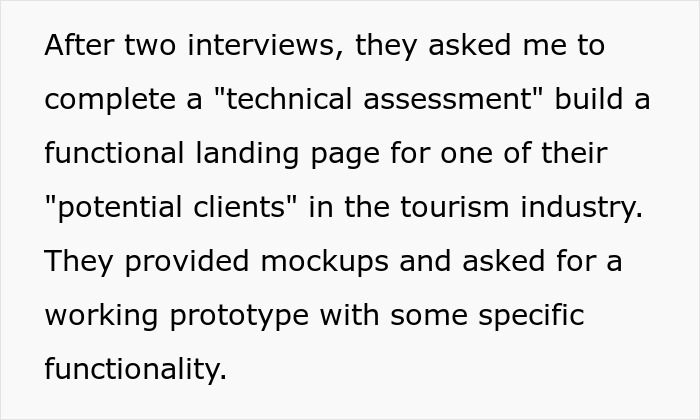
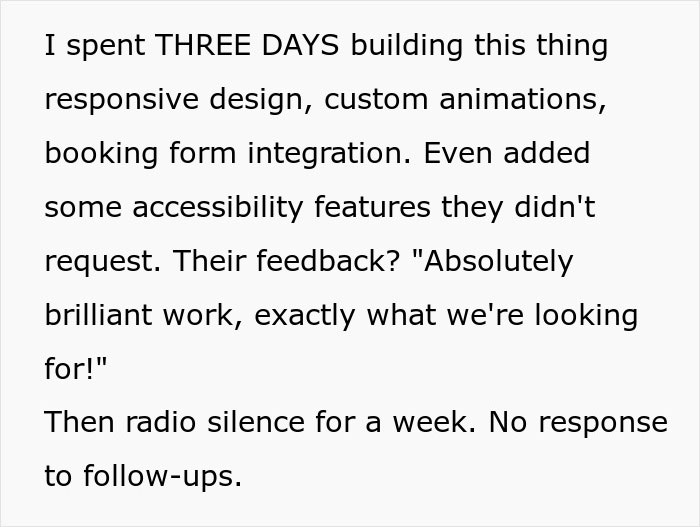
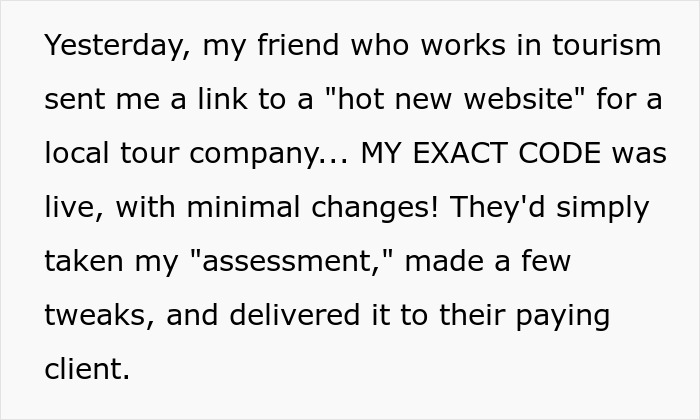
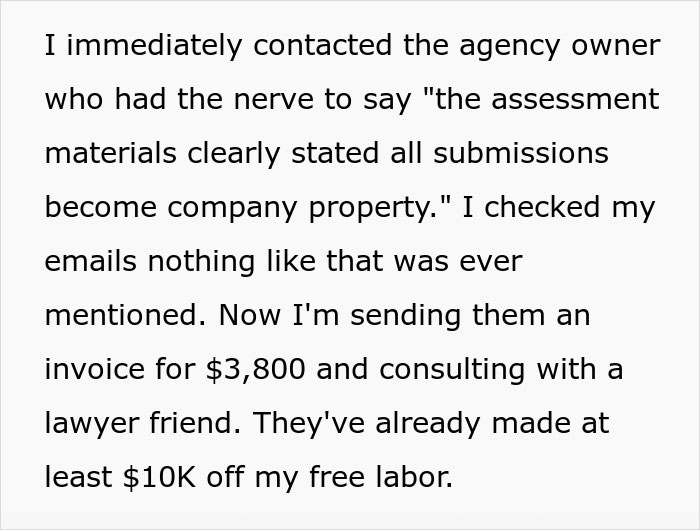
This is exactly what happened to this redditor, who had to build a full website after two rounds of interviews. When they submitted the task, they got strangely ghosted by the company. Only later did they realize that they had been scammed and taken advantage of.
Image credits: Mizuno K / Pexels (not the actual photo)
Image credits: Pavel Danilyuk / Pexels (not the actual photo)
Image credits: Resident-Bottle-9960
Image credits: Diva Plavalaguna / Pexels (not the actual photo)
Many job seekers are tasked with doing certain assignments by recruiters before getting hired. They commonly include writing assignments, business plans, social media posts, etc. However, some unassuming candidates might be doing all this work for nothing, just for the company to appropriate their work and ideas without having to pay or credit them.
This is a real possibility that job applicants nowadays need to consider, as this and similar types of recruitment scams are getting more common. The rise in interview fraud can be attributed to remote work getting more popular thanks to the COVID-19 pandemic.
Since then, around 60-80% of companies have incorporated some form of online interviewing, which not only brings positive changes but also increases the chances of deception. When employees apply for remote positions, they often don’t even meet the employer, which heightens the likelihood of fraud.
Many people might be unaware of interview scams, as the excitement of a new job opportunity can blind them, especially if the company has a strong presence or identity or offers substantial pay. So scammers take advantage of it, knowing that the more desperate job applicants would feel too eager for a job opportunity to notice the red flags.
Image credits: Vlada Karpovich / Pexels (not the actual photo)
The question is, how should candidates approach interviews and assignment tasks without getting misled, all while giving themselves the best chance of getting hired? If a person is nervous about the possibility of getting taken advantage of, they first should search around to see if there’s any evidence that the company has been accused of stealing work in the past.
“This feedback is readily available on websites and through a few networking calls,” explains career coach Roy Cohen. “Companies that abuse candidates establish a reputation that precedes them for not following through and for appropriating candidate’s good ideas.”
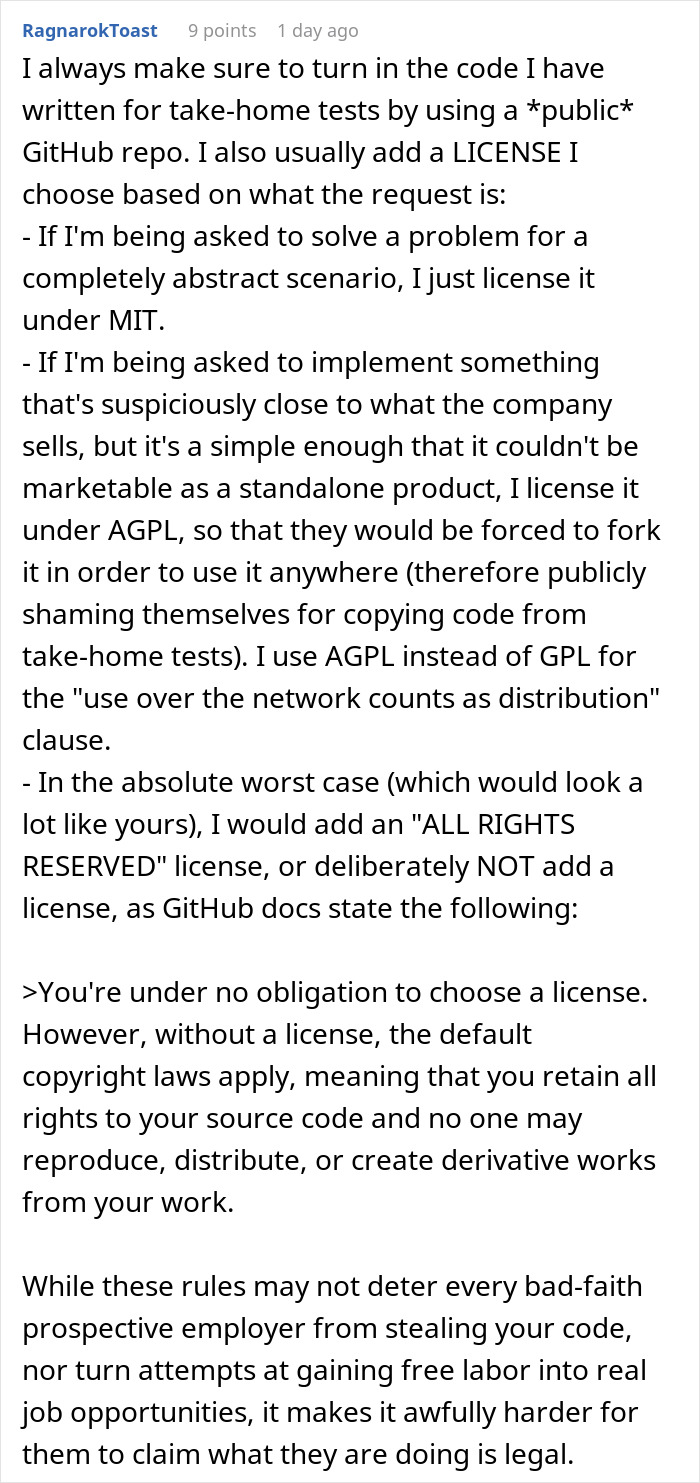
There’s also the possibility of protecting your work with a contract that prohibits the company from using your work if you don’t get hired. “As a candidate, you can protect yourself and show your professionalism at the same time,” says executive coach and business consultant Debora McLaughlin.
“Say, ‘I’m excited to take on this challenge. I’m also happy to contribute innovative ideas as an employee. For now, I’d like to address the challenge and draw up a non-disclosure (or other protection agreement) should we not move forward.’”
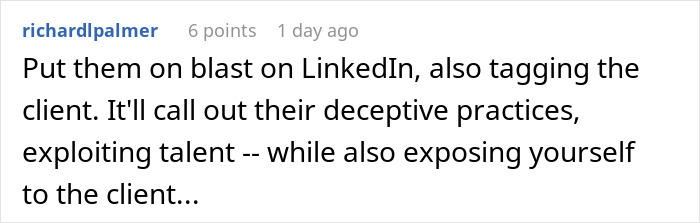
In case the worst happens and the company ghosts the candidate and uses their work without consent, Cohen says they should call them out by contacting their boss. “Should you discover that your ideas have been borrowed by a person who has interviewed you and who requested work from you, send a detailed email to that person’s boss,” he said.
“Explain that you are writing for two reasons,” says Cohen. “You are flattered that the individual was so impressed by your work to claim it as his or her own. Also, you felt it was important to let the boss know that one of his/her trusted employees lacks integrity and is also ill-equipped to handle their responsibilities.”

By entering your email and clicking Subscribe, you're agreeing to let us send you customized marketing messages about us and our advertising partners. You are also agreeing to our Privacy Policy.
Thank you! You've successfully subscribed to newsletters!

Had 2 interviews where they asked to make a whole project or job without any pay or guarantee of a job. I stopped the interview both times. My sister was naive and fell for it once tho

I've done technical tests, but they were the one hour tops and the same test applied to all candidates. Sadly, I did fall for scams (work on spec) when I was starting out.
Load More Replies...

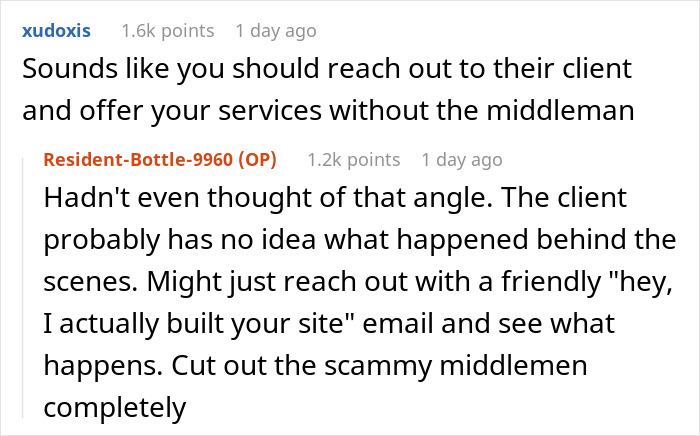
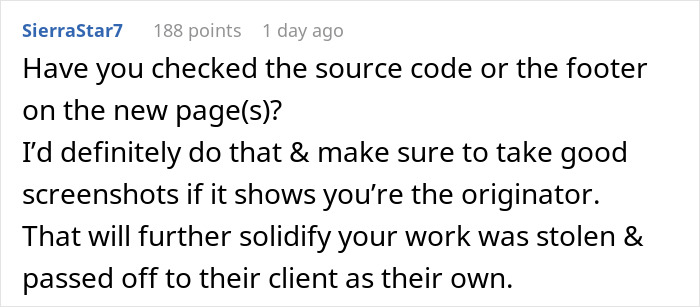
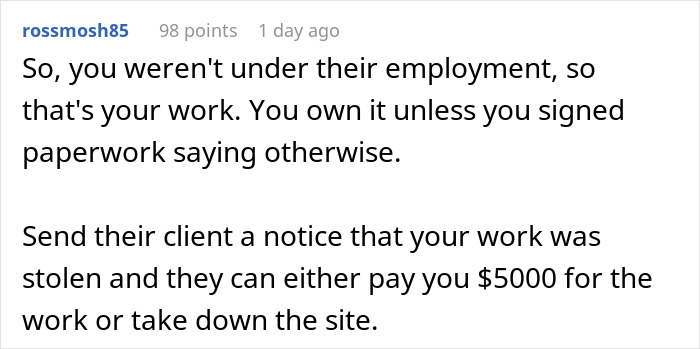
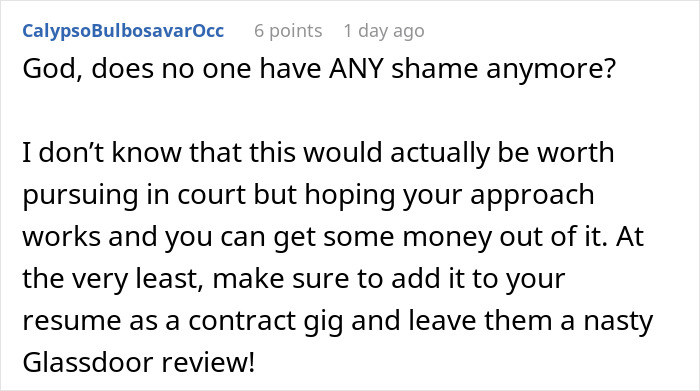
It’s the client that is currently infringing on OP’s code, as they have it live on their severs. I’d have a lawyer cite legalese (particularly inherent copyright laws regarding code & assuming USA, SCOTUS’ ruling on that protection) in a cease & desist letter. Whether OP wants to pursue legal remedies with either the client or potential employer would be a tough call, but having the client know that the company they contracted with stole the code should be enough for them to remove it & sever business with them.

Yup, skip the middleman who will try to bluster, just drop some legalese directly onto the client. It's not their fault, sure enough, but it has become their problem. Also liable to be a lot more effective than dealing with the company that lacks morals.
Load More Replies... Had 2 interviews where they asked to make a whole project or job without any pay or guarantee of a job. I stopped the interview both times. My sister was naive and fell for it once tho
I've done technical tests, but they were the one hour tops and the same test applied to all candidates. Sadly, I did fall for scams (work on spec) when I was starting out.
Load More Replies... It’s the client that is currently infringing on OP’s code, as they have it live on their severs. I’d have a lawyer cite legalese (particularly inherent copyright laws regarding code & assuming USA, SCOTUS’ ruling on that protection) in a cease & desist letter. Whether OP wants to pursue legal remedies with either the client or potential employer would be a tough call, but having the client know that the company they contracted with stole the code should be enough for them to remove it & sever business with them.
Yup, skip the middleman who will try to bluster, just drop some legalese directly onto the client. It's not their fault, sure enough, but it has become their problem. Also liable to be a lot more effective than dealing with the company that lacks morals.
Load More Replies...



























 No fees, cancel anytime














33
8