Get Premium
Dark mode theme is available exclusively for premium users. Learn more about the benefits of subscribing.
No fees, cancel anytime.

 Dark Mode Ad-Free Browsing Unlimited Content
 Ad-Free Browsing Unlimited Content Dark Mode
Join 1.2 million Panda readers who get the best art, memes, and fun stories every week!

There seems to be a common misconception among certain quarters that those who work remotely don’t work “as hard” as those who are office based. Throw in some unconventional working hours, thanks to international time zone differences, and suddenly it’s as if the remote worker doesn’t have a “real job” at all.
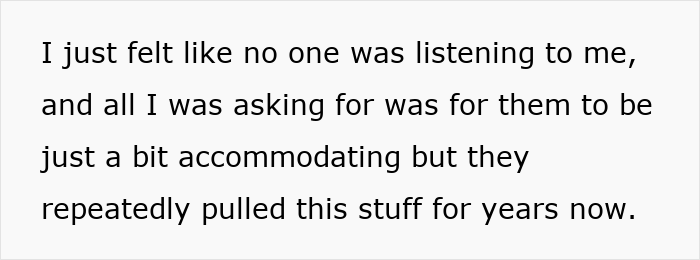
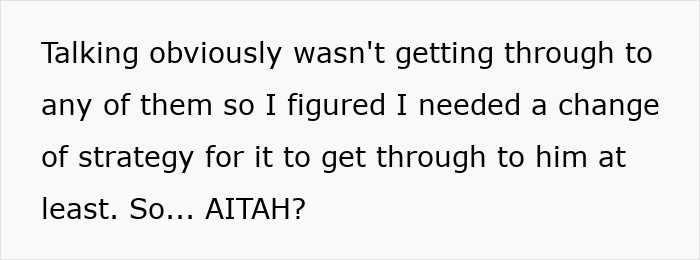
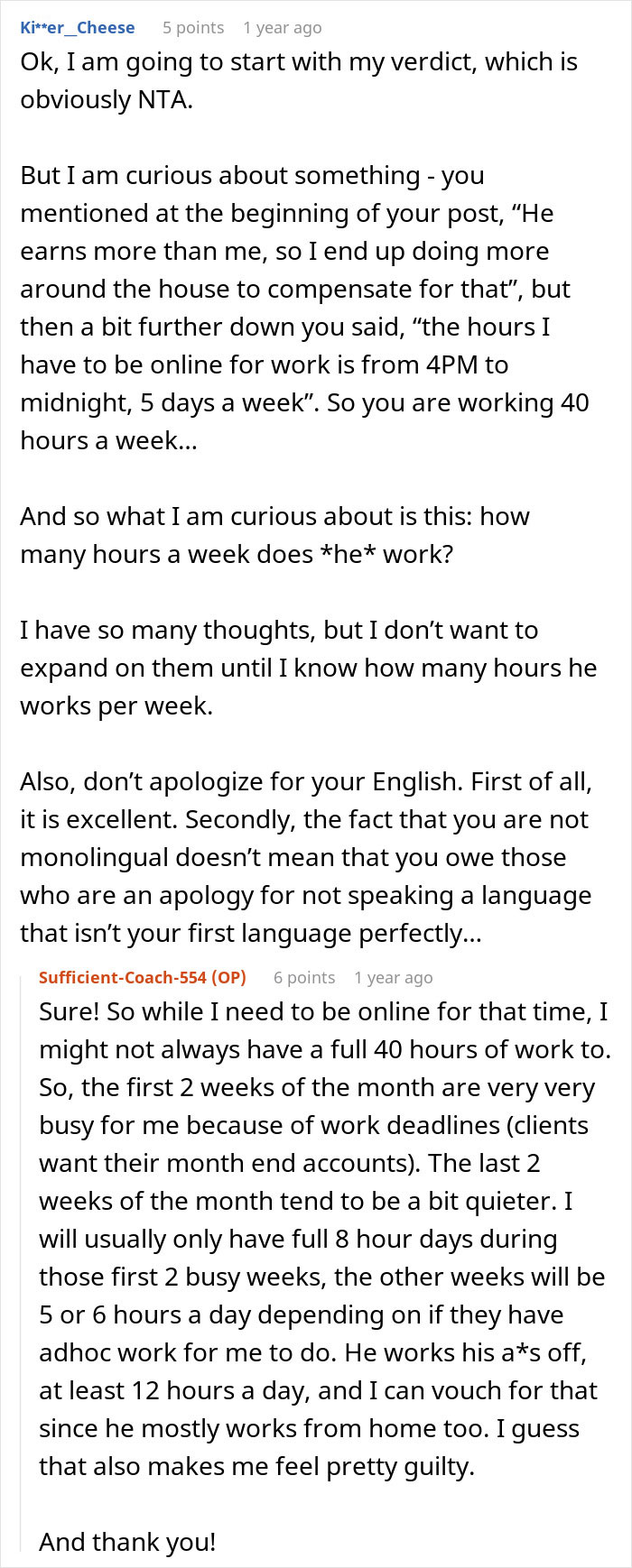
This is exactly what one woman says she’s been dealing with since taking up a finance position with a foreign company. She works from 4pm until midnight, 5 days a week. But for some reason, her husband just doesn’t get it. He keeps making plans for the couple during her working hours, and has gone as far as calling her job “not important.” She decided to show him whose boss, by “quitting” on the spot.
Image credits: Brock Wegner (not the actual photo)

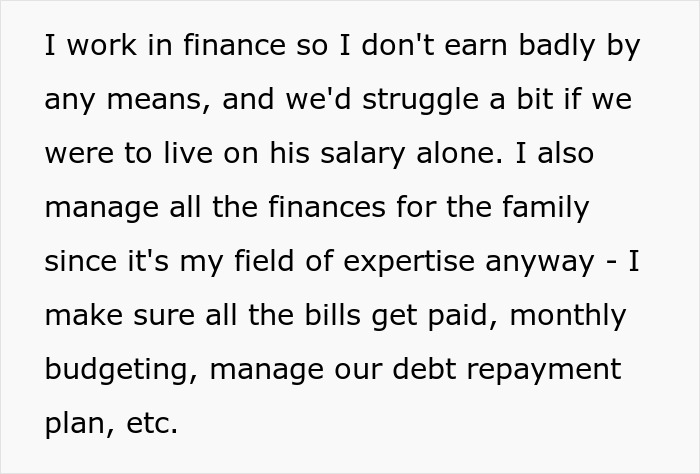
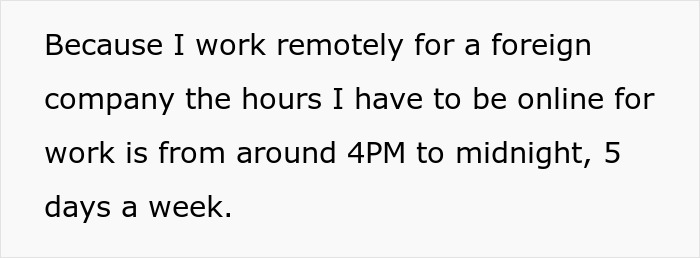
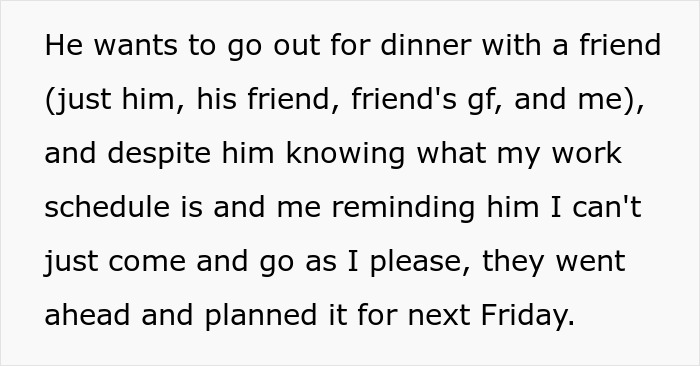
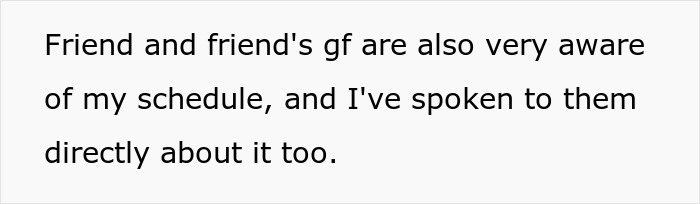
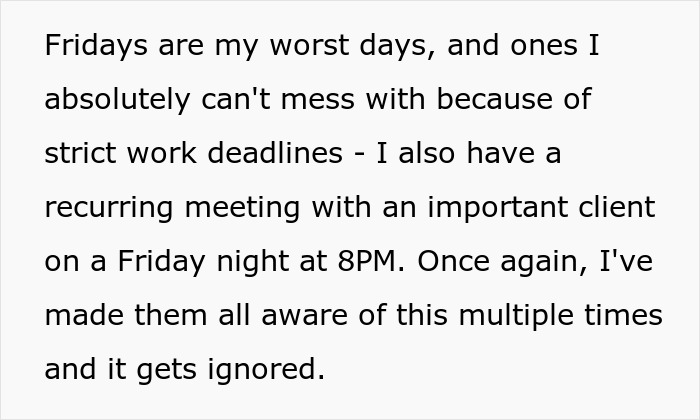
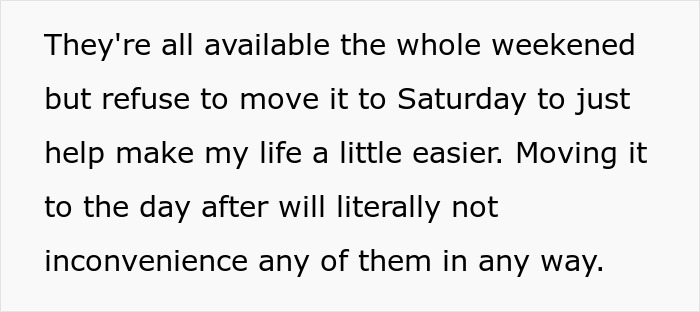
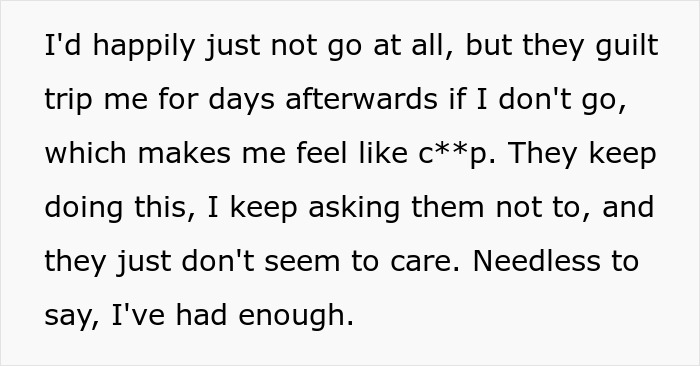
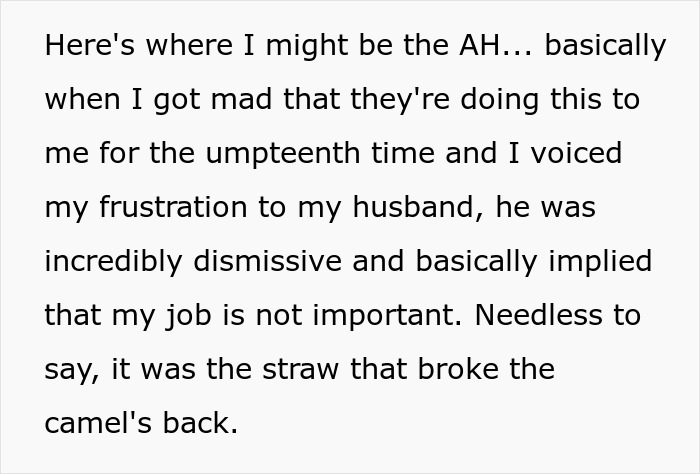
Image credits: Look Studio (not the actual photo)
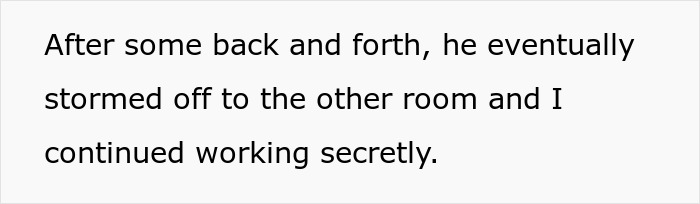
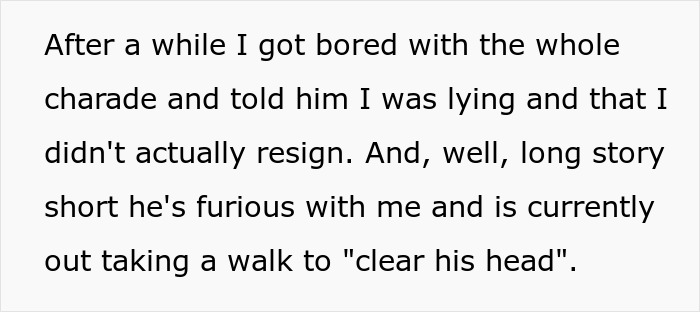

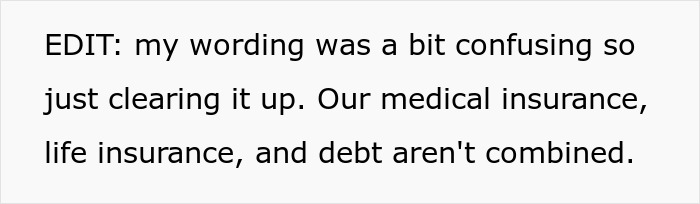

Image source: Sufficient-Coach-554
Image credits: Steven Cordes (not the actual photo)

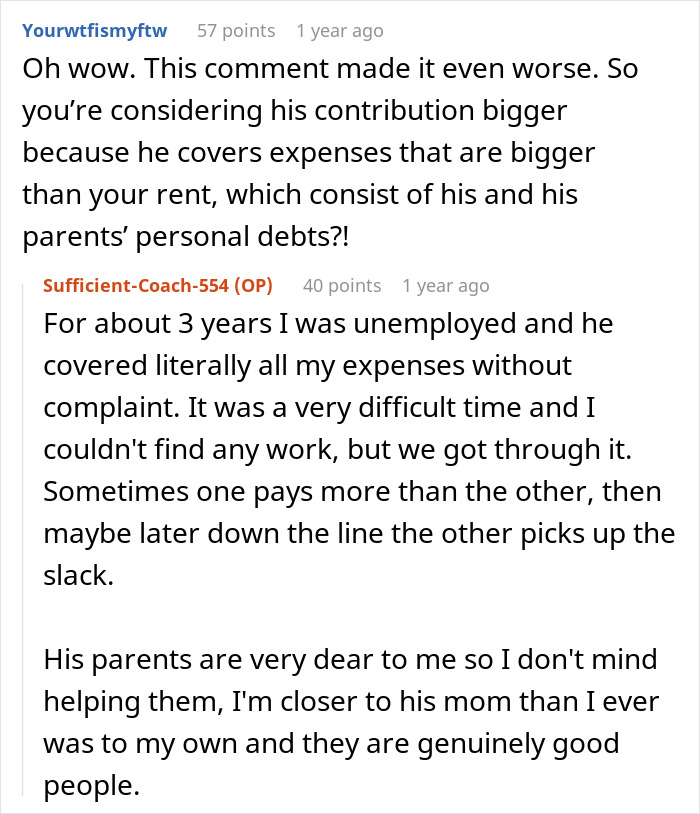

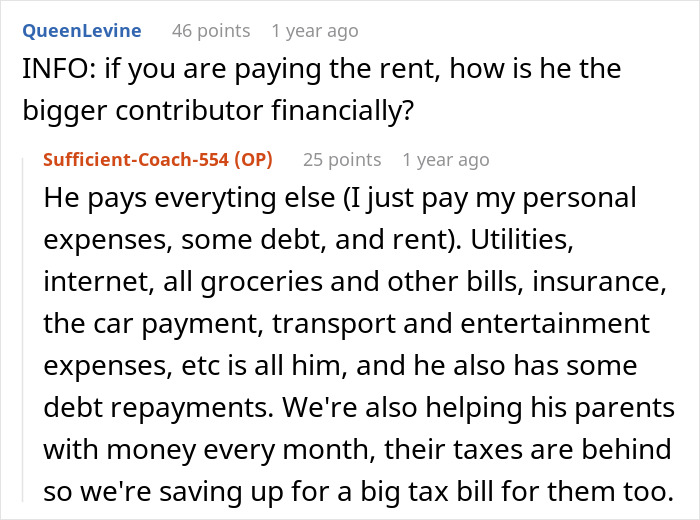


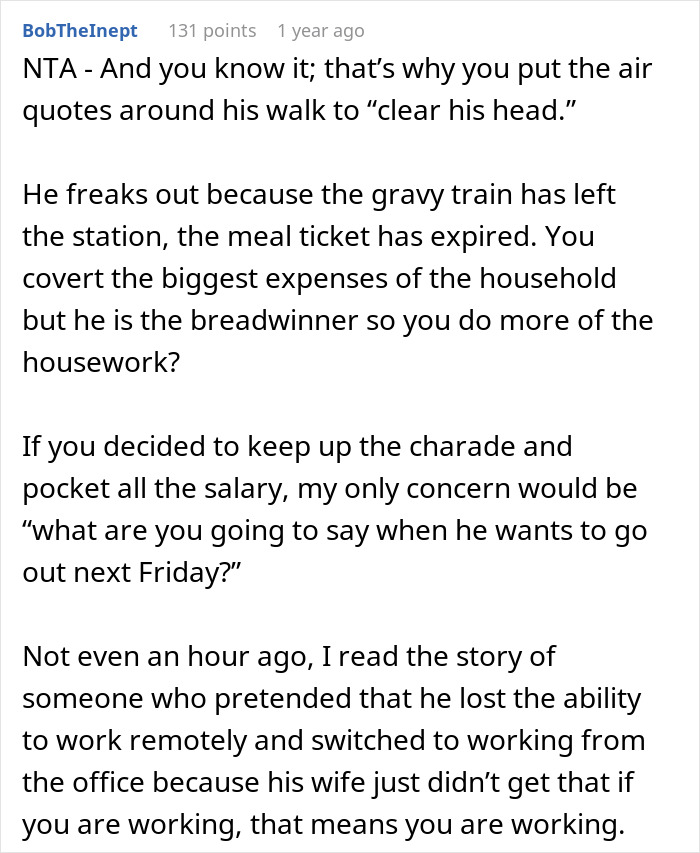

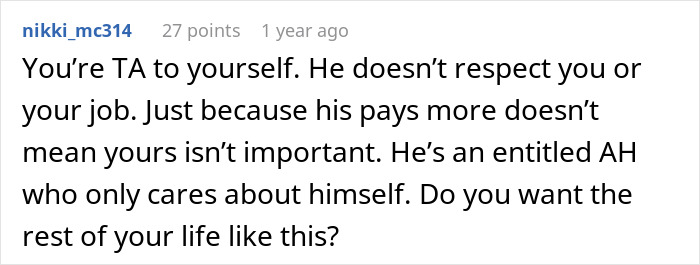



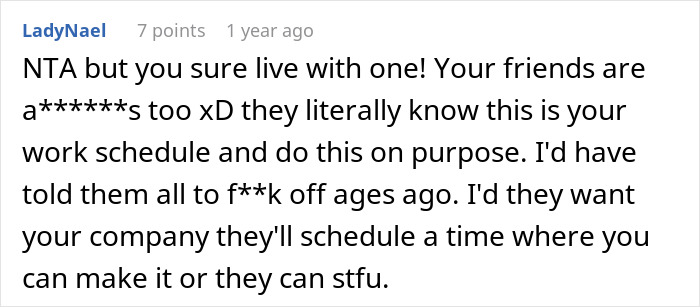

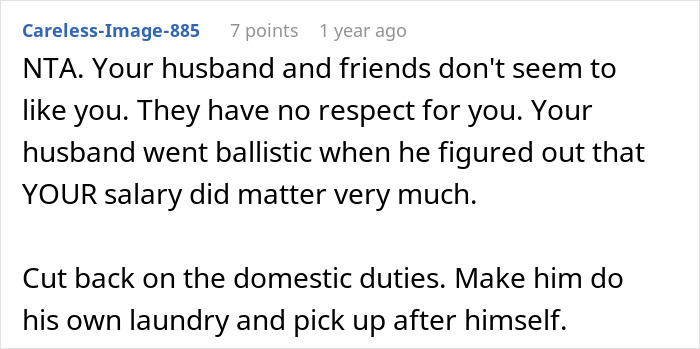
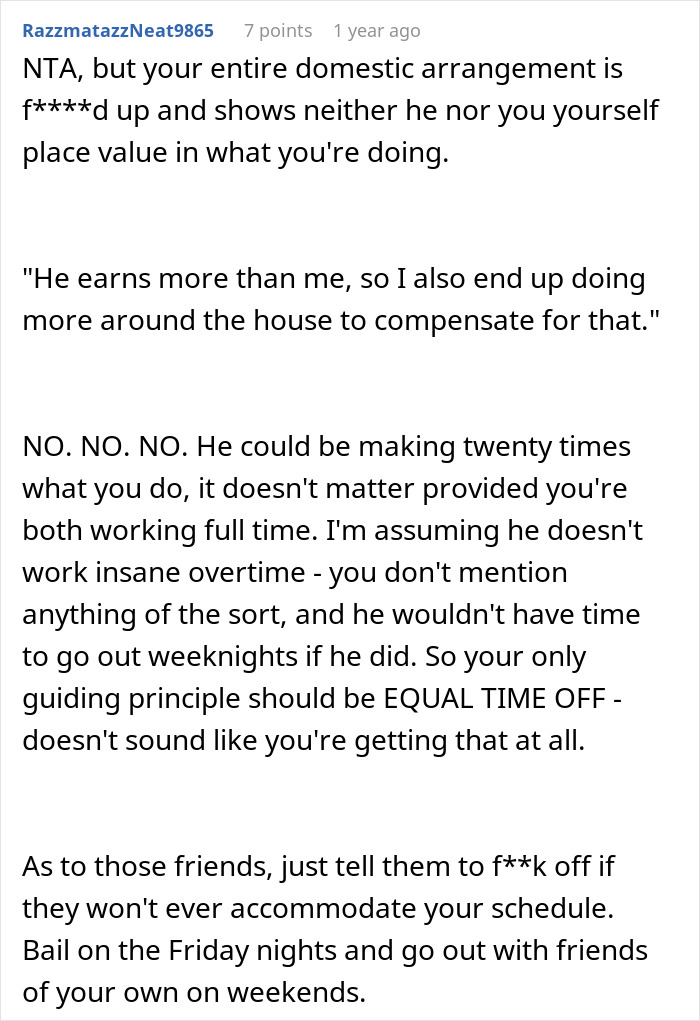

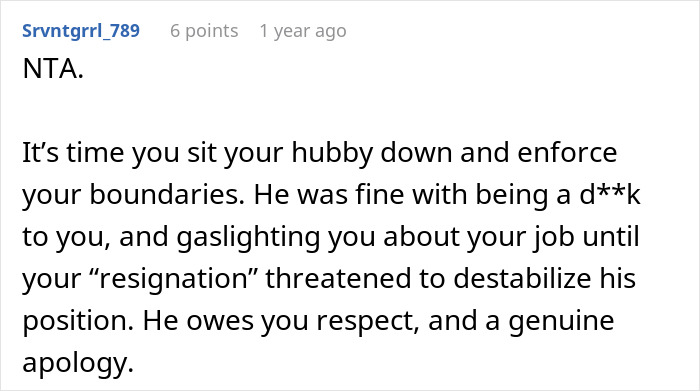

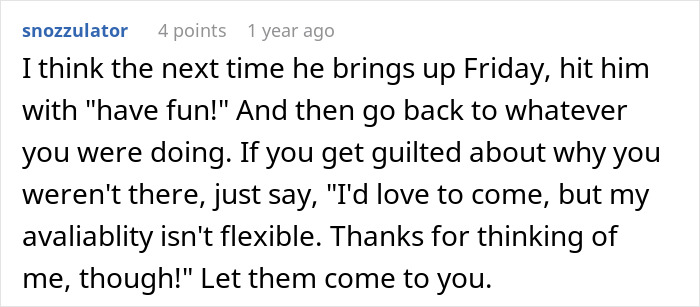
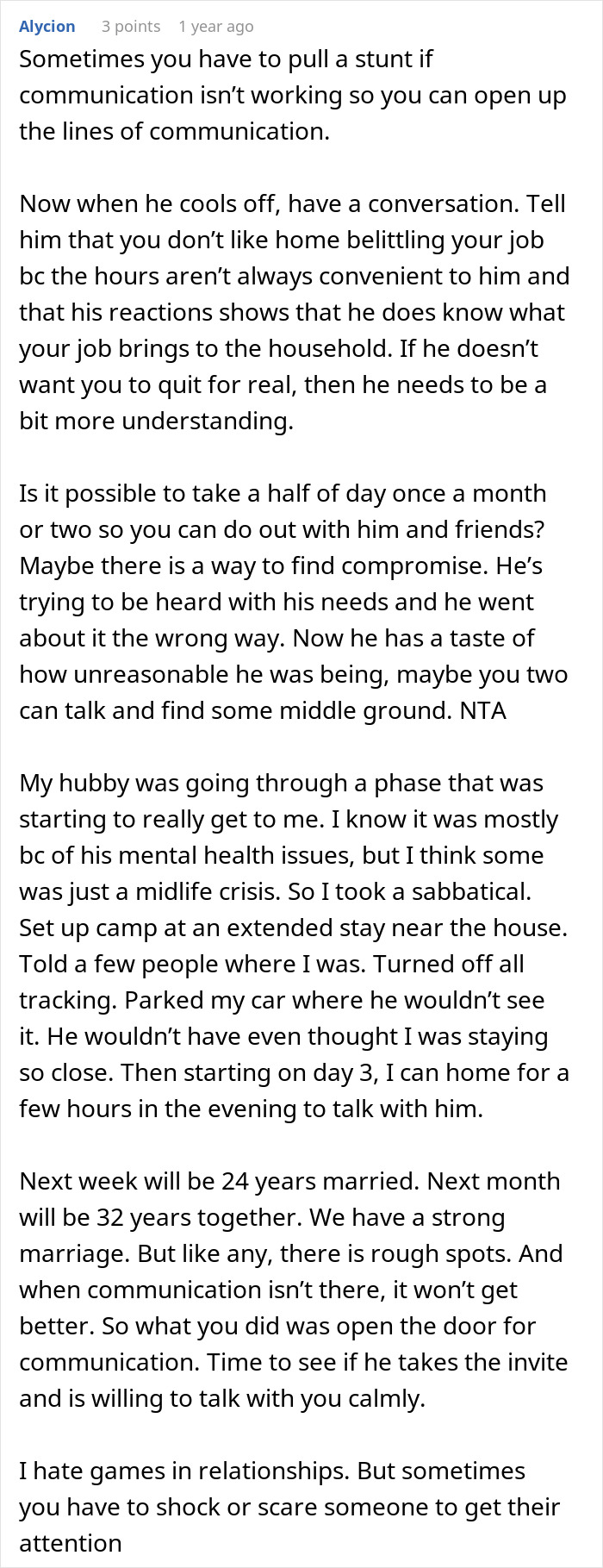

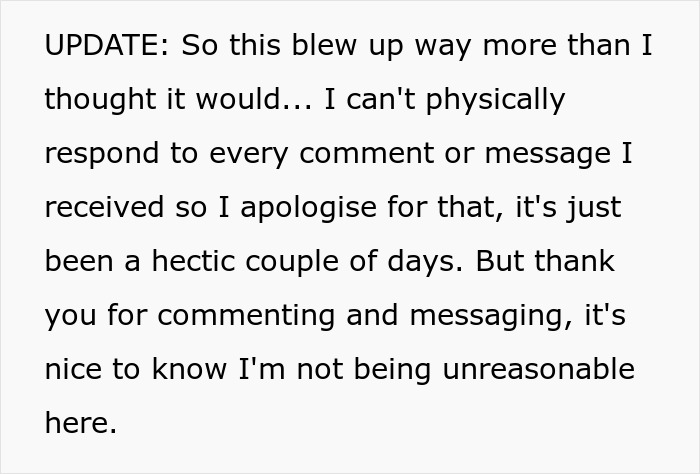
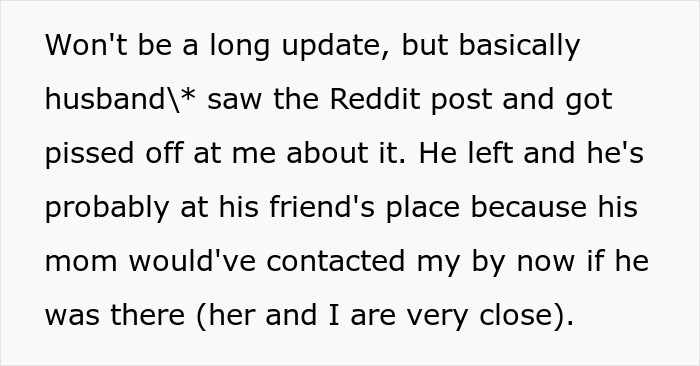
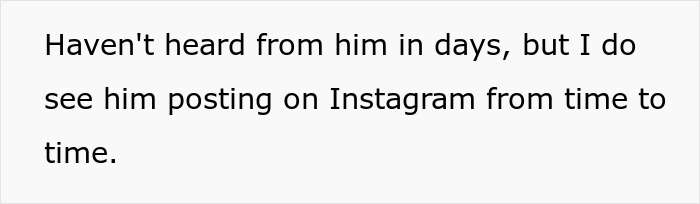
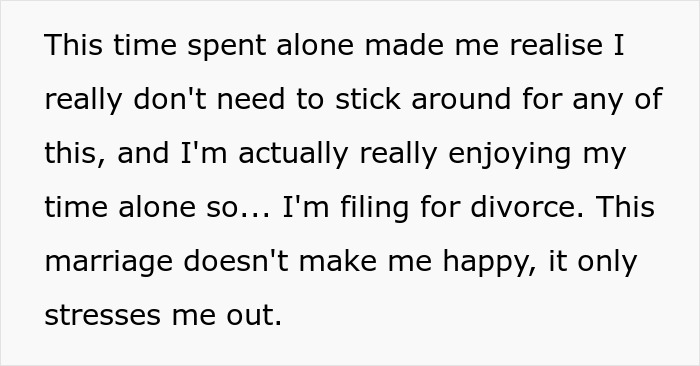
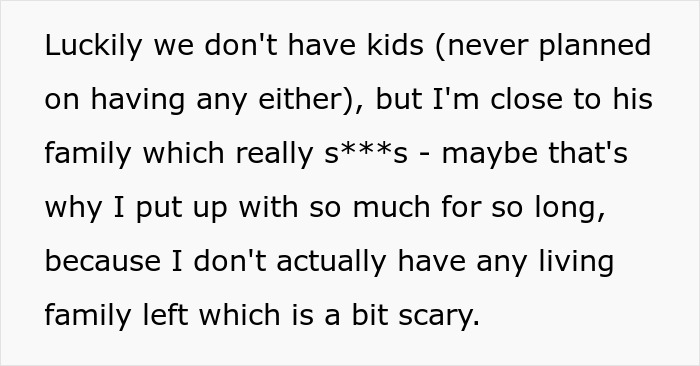
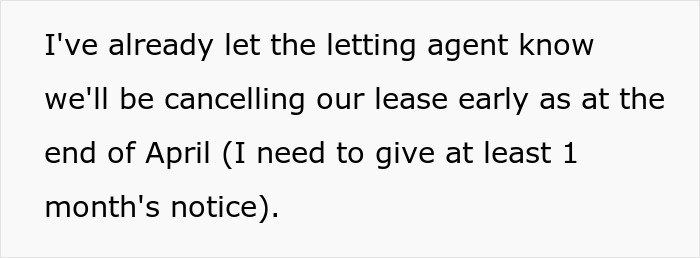
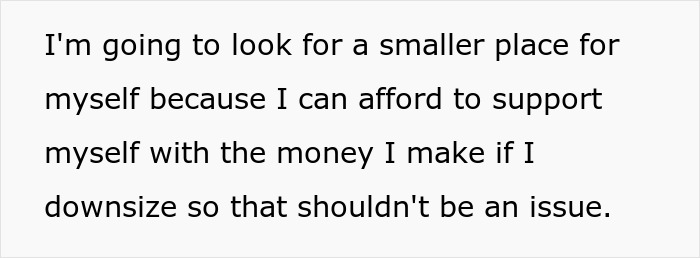
Image credits: Joshua Mayo (not the actual photo)
The Covid pandemic changed a lot of things for us. One of them was the rise in remote work. Before lockdown, it was the norm for most people to commute to and from the office. But nowadays, nearly one-fifth of the workforce in America does their job from home, or perhaps even from a coffee shop on a tropical island.
Quite a few studies have shown that remote workers are more productive than those who sit in their company’s building. For example, ActivTrak, a work intelligence platform that monitors employee productivity, has revealed that remote workers are 35-40% more productive than employees who work in a traditional office. It also found that work conducted remotely includes 40% fewer mistakes than work done at the office.
“Work-from-home employees save an average of 72 minutes a day that would otherwise go to commuting — and give 40% of that time back to their employers,” notes ActivTrak’s site, adding that companies with flexible work arrangements, including part-time remote schedules, are 21% more profitable than fully in-person companies.
Additionally, 77% of employees who work remotely at least a few times per month show increased productivity, with 30% doing more work in less time and 24% doing more work in the same time.
On the flip side, a separate study has revealed that employees clock in 2.65 fewer hours on the job while working from home, compared to their in-office counterparts. “It’s been found that staffers can be less productive, fake work and watch movies on the job while in the comfort of their abode,” reported Fortune in 2025.
But Gallup adds that less time spent working does not automatically mean lower output. “If anything, the shift to hybrid and remote models has helped many organizations make better use of each employee’s talents,” notes the site.
A 2023 paper titled, The Allocation of Time and Remote Work, found that full-time employees in remote-capable jobs are spending less time on work and more on personal activities. The researchers used data from the American Time Use Survey (ATUS) from 2019 to 2023.
“By 2022, people in heavily remote roles were working about an hour less per day than in 2019, on average. Of that time, they were redirecting 30 to 60 minutes to leisure, a trend consistent with broader remote work productivity statistics,” Gallup noted when referencing the paper. “This decrease goes beyond reduced commute time, with the drop in commuting time accounting for only a small fraction of the reduction in work hours.”
The researchers found that certain groups reported working even less. “In jobs open to telework, men, unmarried adults, and those without children showed the steepest declines in hours worked and the greatest gains in leisure time,” they said.









By entering your email and clicking Subscribe, you're agreeing to let us send you customized marketing messages about us and our advertising partners. You are also agreeing to our Privacy Policy.
Thank you! You've successfully subscribed to newsletters!
38Kviews
Share on Facebook



Having a partner belittle your job is frustrating. When I met my ex I was working 2 jobs to make ends meet. I was a teacher full time and worked in retail at night. He used to "joke" about my "little part time job" even though I routinely worked 60+ hours per week. He kept trying to tell me he worked harder then me, usually while sitting his recliner watching sports on TV. I eventually was able to quit the part time job. I left the marriage, too. Both felt great.

My ex said once he didn't understand why I was tired after work because all I did was sit at a desk all day. I had an administrative position. I countered with I didn't understand why he was so tired after work since all he did was sit on a forklift all day. That made him mad. Anyway, one of the reasons he's my ex.
Load More Replies... Having a partner belittle your job is frustrating. When I met my ex I was working 2 jobs to make ends meet. I was a teacher full time and worked in retail at night. He used to "joke" about my "little part time job" even though I routinely worked 60+ hours per week. He kept trying to tell me he worked harder then me, usually while sitting his recliner watching sports on TV. I eventually was able to quit the part time job. I left the marriage, too. Both felt great.
My ex said once he didn't understand why I was tired after work because all I did was sit at a desk all day. I had an administrative position. I countered with I didn't understand why he was so tired after work since all he did was sit on a forklift all day. That made him mad. Anyway, one of the reasons he's my ex.
Load More Replies...





































 No fees, cancel anytime











45
16