Get Premium
Dark mode theme is available exclusively for premium users. Learn more about the benefits of subscribing.
No fees, cancel anytime.

 Dark Mode Ad-Free Browsing Unlimited Content
 Ad-Free Browsing Unlimited Content Dark Mode
Join 1.2 million Panda readers who get the best art, memes, and fun stories every week!

Every parent reserves the right to parent their own children. Of course, in a world where in-laws have strong opinions, this gets tossed out, which just goes to show why strong boundaries are a lot more than just a good idea.
A mom wanted a second opinion after getting into conflict with her mother-in-law over her daughter’s punishment. The daughter had been caught shoplifting so the mom grounded her, among other restrictions. Then she learned that her MIL had a plan to publicly humiliate her, so she had to threaten her with no more visitation.
Image credits: Gustavo Fring / Pexels (not the actual photo)
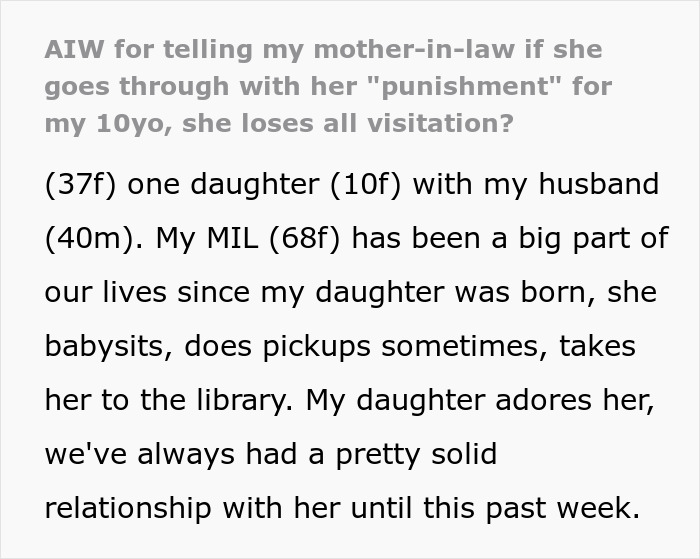
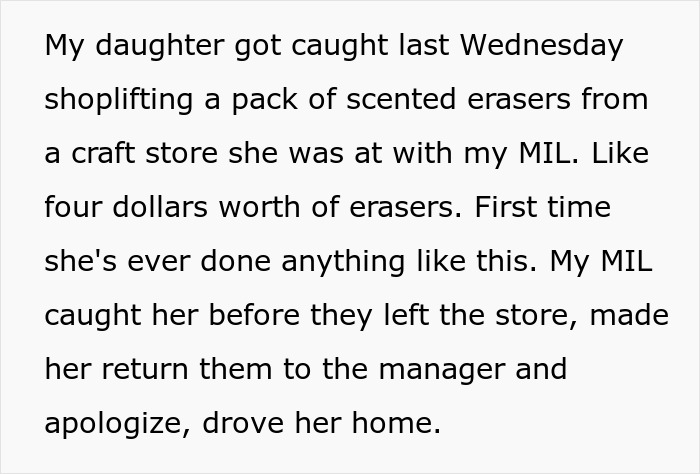
Image credits: Pavel Danilyuk / Pexels (not the actual photo)
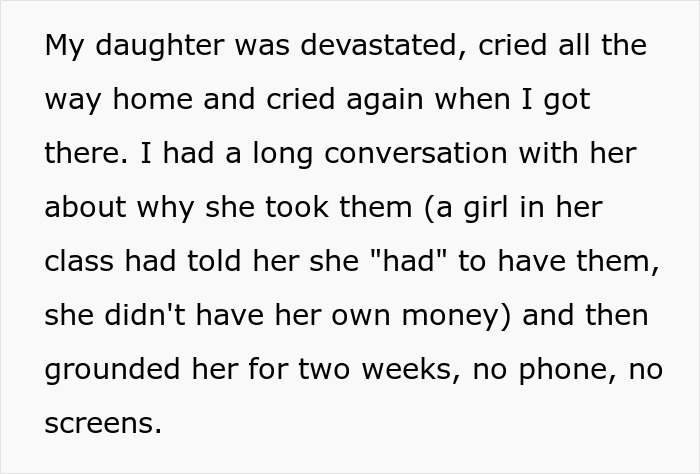
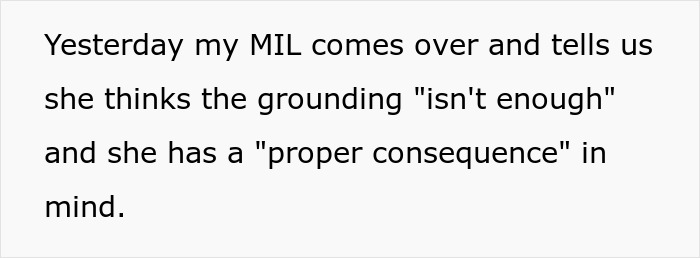
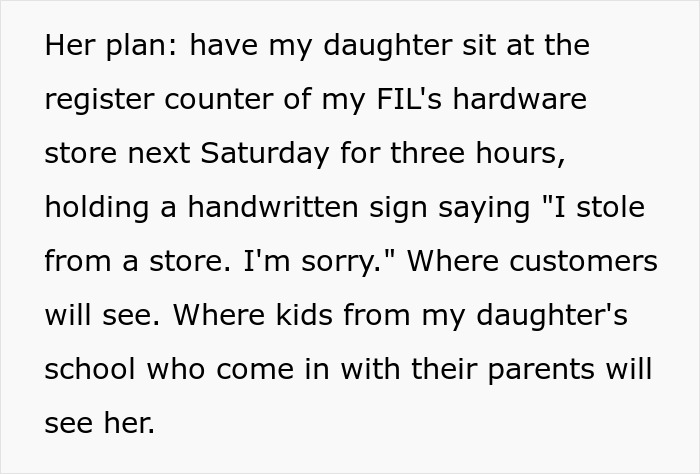
Image credits: SHVETS production / Pexels (not the actual photo)
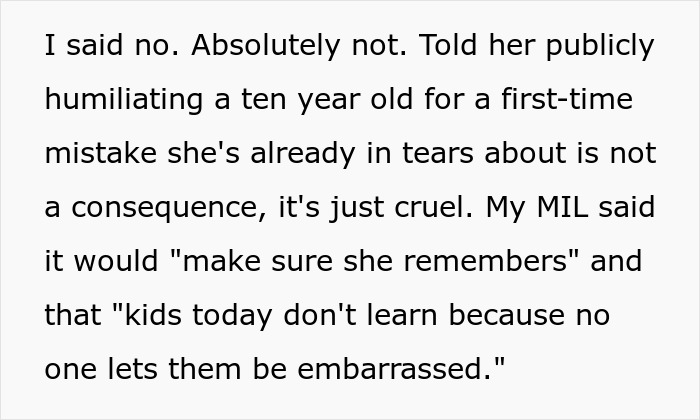
Image credits: sugar-sparklezzz
Image credits: Getty Images / Unsplash (not the actual photo)
The reason many mothers in law struggle with boundaries usually boils down to a complicated mix of nostalgia and a lingering sense of authority. When they were raising their own kids, they were the ones in charge of every single detail from what was for dinner to how a major mistake was handled. Transitioning into a grandparent role requires a massive shift in perspective that some people just never quite master. They often feel like their years of experience give them a permanent seat at the table where the big parenting decisions are made. In their minds, they are not overstepping because they think they are helping the next generation avoid massive mistakes. This creates a power struggle where the grandmother is essentially trying to parent her adult child and the grandchild at the same time. It is a messy situation because it ignores the fact that the family structure has fundamentally changed. The grandmother is no longer the captain of the ship, but she still wants to grab the wheel whenever she thinks the water is getting a little choppy. This behavior often comes from a place of love, but it is frequently fueled by a lack of respect for the parents as competent adults.
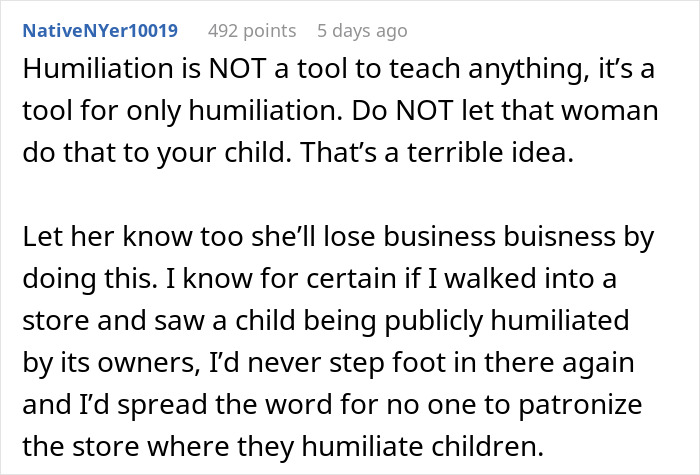
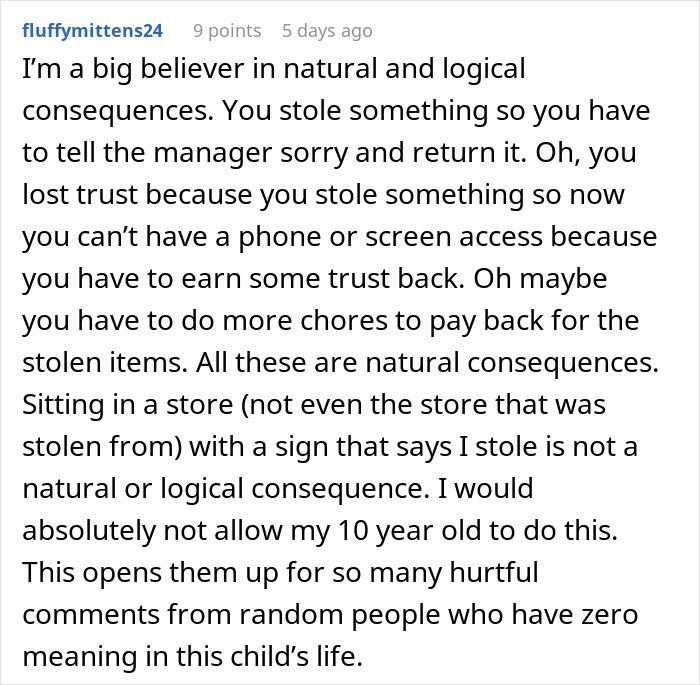
Then you have the actual punishment itself which is where things really went off the rails. Public shaming is a very old school tactic that focuses much more on humiliation than it does on actual growth or learning. When you try to make a ten year old girl stand in front of a store with a sign that labels her a thief, you are not teaching her about the value of property or the legal consequences of her actions. Instead, you are teaching her that her own family is willing to put her on display for the entire world to mock. At that age, children are just starting to form their social identities and their sense of self.
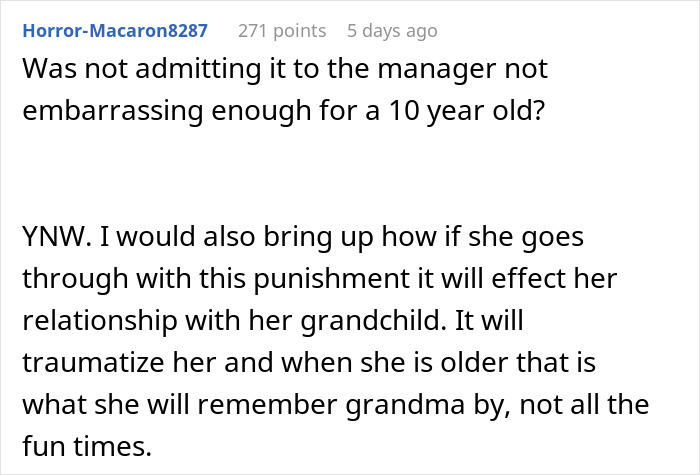
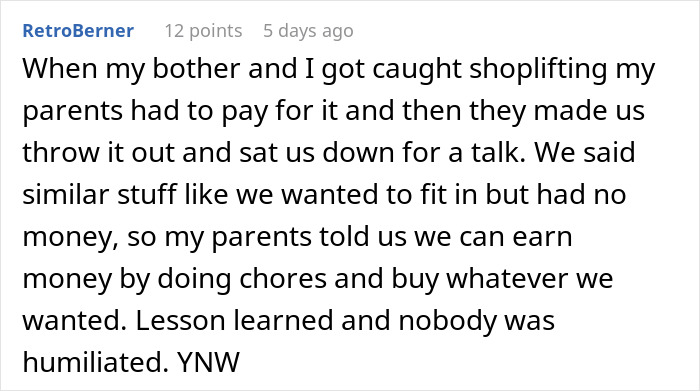
A stunt like that can lead to deep feelings of resentment and shame that do not just go away once the sign is put down. It is an incredibly excessive reaction to a mistake that many kids make when they are testing boundaries for the first time. Grounding is a much more effective way to handle this because it allows the child to reflect on what they did in a safe environment without the added weight of public ridicule. Shame is a destructive emotion that can cause a child to shut down, whereas guilt over a specific action can actually lead to a change in behavior.
Image credits: Getty Images / Unsplash (not the actual photo)
Parents have to be the ones to call the shots because they are the people who have to live with the long term results of those choices. When a grandmother steps in and tries to override a parent, it creates a huge amount of confusion for the child. The daughter needs to know that her mother is the ultimate authority in her life. If the grandmother can just come in and invent new and more embarrassing punishments, the mother’s authority is completely eroded. It also makes the child feel like she is being ganged up on by the people who are supposed to protect her. A united front is essential in parenting, and that front starts and ends with the actual parents. Grandparents are there to provide love and wisdom and perhaps a few extra treats, but they have to respect the rules that have already been set. If they cannot do that, they are actually causing more harm than good to the family unit.
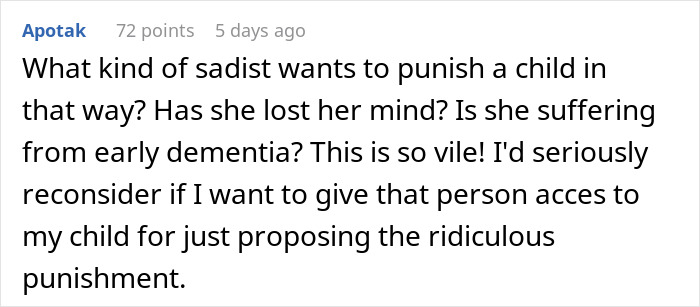
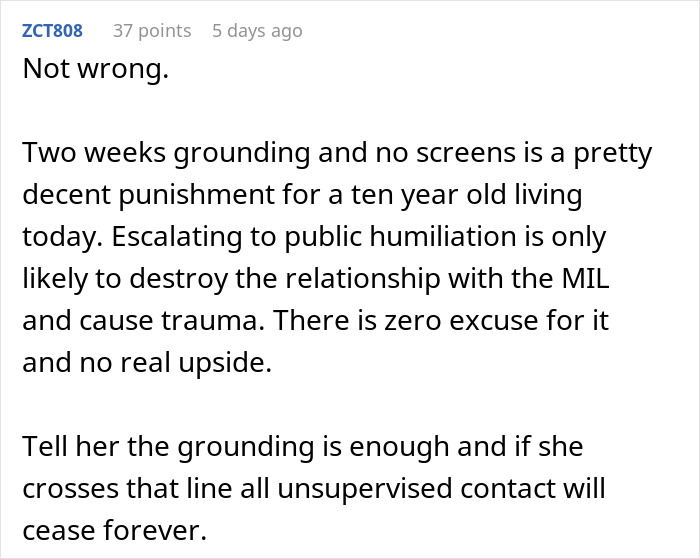
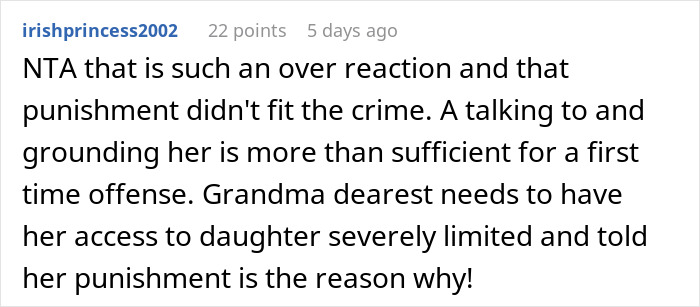
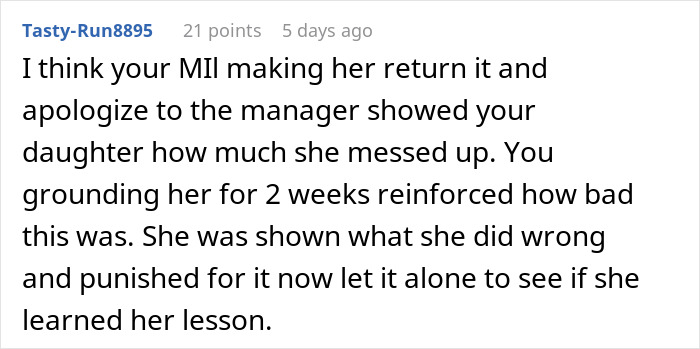
The mother was already handling the situation with a standard and appropriate punishment. By grounding her daughter, she was showing that there are consequences for breaking the law and family rules. When the mother in law tried to escalate that into a public spectacle, she was essentially saying that the mother’s discipline was not good enough. That is a massive insult to any parent. It suggests that the parent is being too soft or does not understand the severity of the situation. In reality, the mother was the one being the adult by choosing a measured response. Threatening to take away visitation rights might feel like an extreme move to some, but it is often the only way to get someone to listen when they have stopped respecting your role as a parent.
If a grandmother is willing to ignore a mother’s direct wishes and try to humiliate a child, she is showing that she does not respect the family dynamic at all. Boundaries are not just suggestions for how to behave. They are the essential rules of engagement for healthy relationships. When someone crosses a line as serious as this, there have to be real consequences to ensure it never happens again. The mother is not being mean or dramatic by protecting her daughter from an archaic and cruel punishment. She is simply doing her job. Parenting is about finding the balance between discipline and support, and in this case, the mother was the only one who actually had her daughter’s long term well being in mind.


















By entering your email and clicking Subscribe, you're agreeing to let us send you customized marketing messages about us and our advertising partners. You are also agreeing to our Privacy Policy.
Thank you! You've successfully subscribed to newsletters!


We totally should do that with rapists, but NOT with a 10 year old that committed a comparatively minor misdemeanor. Making her apologising to the manager was the best response IMHO, and apparently enough, given her reaction.

Is the MIL trying to get the girl have life long trauma? That's a good way to make her all the way screwed till Sunday 😤

Yes. She is trying to make the child feel the humiliation she, the grandmother felt realizing that the child stole something on her watch. Grandma is only thinking about herself. She wants to hurt the child, not teach her.
Load More Replies... thats what my parents did to me. had no friends, no social life until I was 17/18 then I left home and Im 31 now. from 9 years old to young adulthood. and look now xD I have a lot of social problems and have no idea how to act with people
We totally should do that with rapists, but NOT with a 10 year old that committed a comparatively minor misdemeanor. Making her apologising to the manager was the best response IMHO, and apparently enough, given her reaction.
Is the MIL trying to get the girl have life long trauma? That's a good way to make her all the way screwed till Sunday 😤
Yes. She is trying to make the child feel the humiliation she, the grandmother felt realizing that the child stole something on her watch. Grandma is only thinking about herself. She wants to hurt the child, not teach her.
Load More Replies... thats what my parents did to me. had no friends, no social life until I was 17/18 then I left home and Im 31 now. from 9 years old to young adulthood. and look now xD I have a lot of social problems and have no idea how to act with people




































 No fees, cancel anytime












43
33