Get Premium
Dark mode theme is available exclusively for premium users. Learn more about the benefits of subscribing.
No fees, cancel anytime.

 Dark Mode Ad-Free Browsing Unlimited Content
 Ad-Free Browsing Unlimited Content Dark Mode
Join 1.2 million Panda readers who get the best art, memes, and fun stories every week!
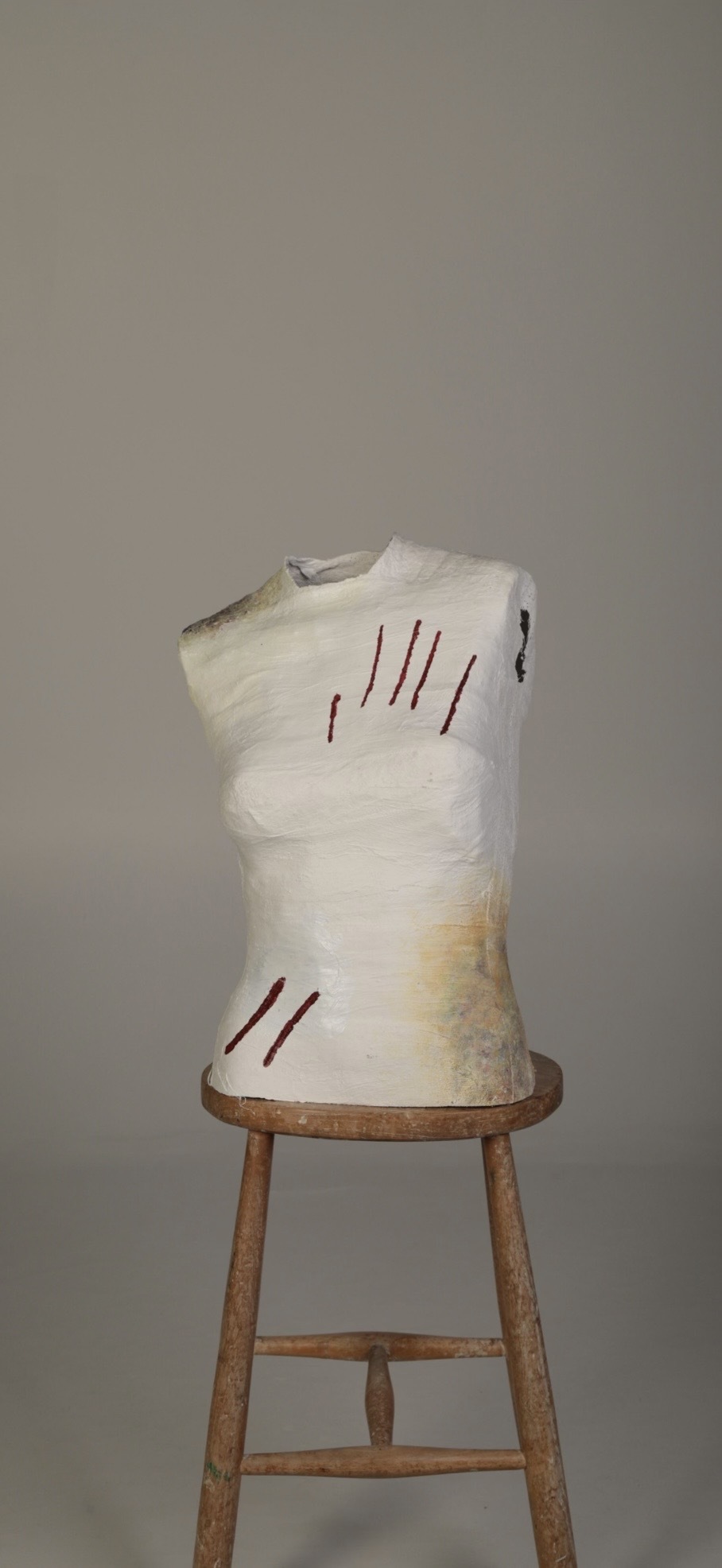
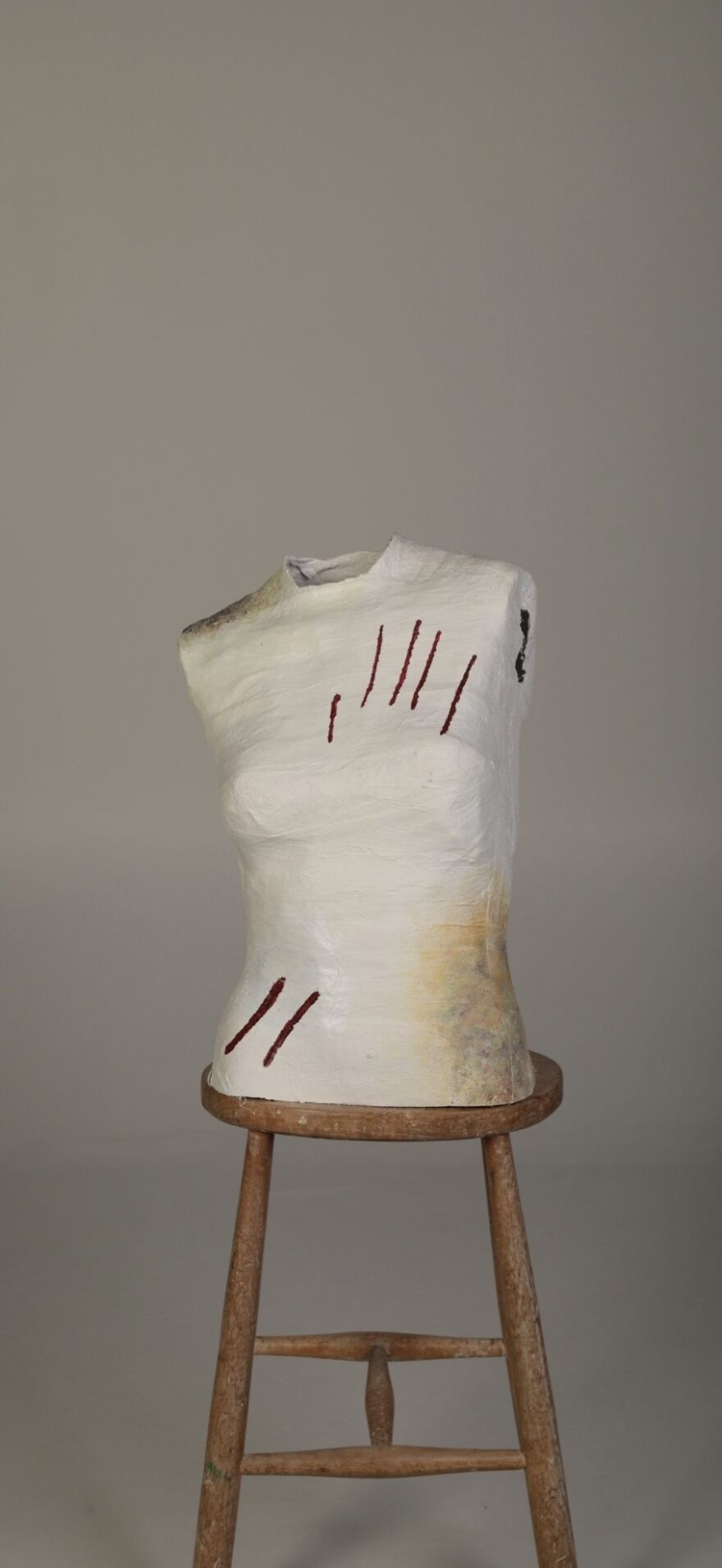
This sculptural work presents a fragmented plaster cast of a human torso, positioned upright on a wooden stool, evoking both vulnerability and clinical detachment. The absence of limbs and head removes identity, allowing the body to function as a universal site of experience rather than an individual portrait. The surface is deliberately imperfect—rough, uneven, and stained—suggesting wear, time, and the residue of lived trauma.
Red linear marks cut across the torso like wounds or tally marks, referencing both physical injury and psychological harm. These marks are not graphic but restrained, forcing the viewer to confront discomfort through implication rather than spectacle. The cracks and abrasions in the plaster act as metaphors for emotional fractures—damage that may appear repaired yet remains permanently embedded in the structure.
The use of plaster, a material associated with healing and immobilisation, creates a tension between care and confinement. The body is “held together,” but at the cost of rigidity and silence. The stool elevates the form while also recalling medical examination or display, positioning the viewer as a witness rather than a participant.
Overall, the piece explores how trauma is stored in the body, how pain can be hidden beneath surfaces, and how survival often involves endurance rather than resolution. It invites viewers to reflect on the quiet, persistent nature of wounds that are unseen yet deeply felt.



















 No fees, cancel anytime





1
0