Get Premium
Dark mode theme is available exclusively for premium users. Learn more about the benefits of subscribing.
No fees, cancel anytime.

 Dark Mode Ad-Free Browsing Unlimited Content
 Ad-Free Browsing Unlimited Content Dark Mode
Join 1.2 million Panda readers who get the best art, memes, and fun stories every week!

Long-buried secrets can stay hidden for years, but the past has a way of reminding us of itself even when we think it’s been left behind. Often with heartbreaking consequences, too.
One guy recently wanted to get something off his chest and went online to share how his engagement turned upside down.
During an ordinary dinner with his future in-laws, his bride’s father recognized his mother in a photograph, told the couple the wedding was off, and stormed out instead of offering an explanation, leaving them to figure things out on their own.
Image credits: christopher lemercier / unsplash (not the actual photo)
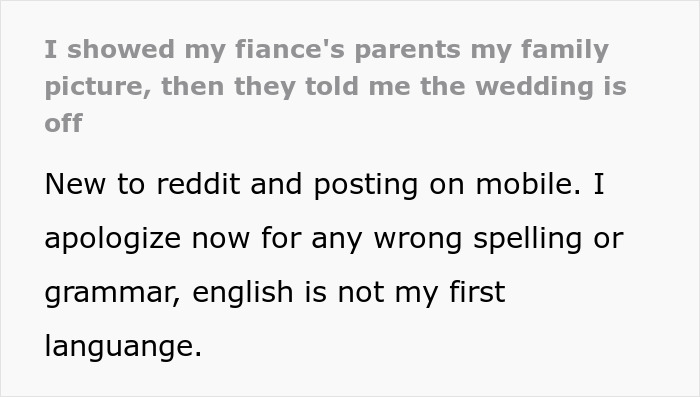

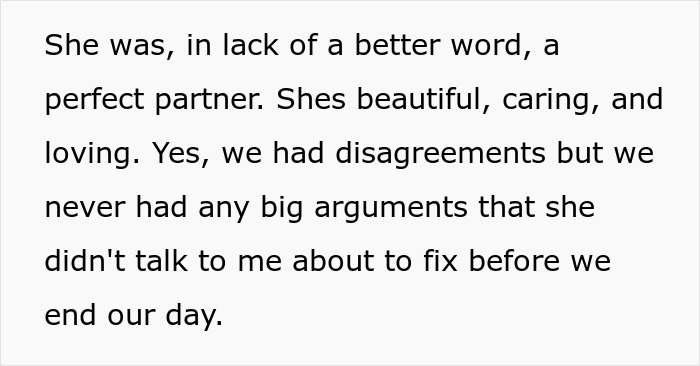
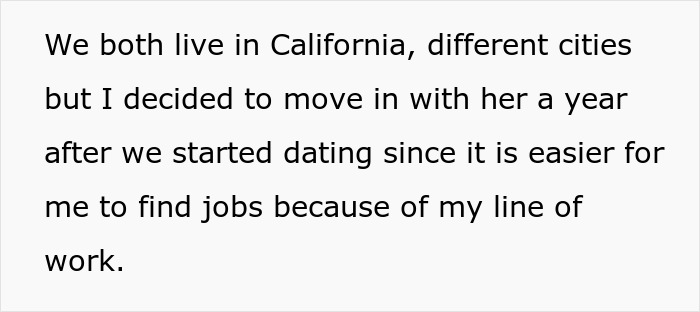
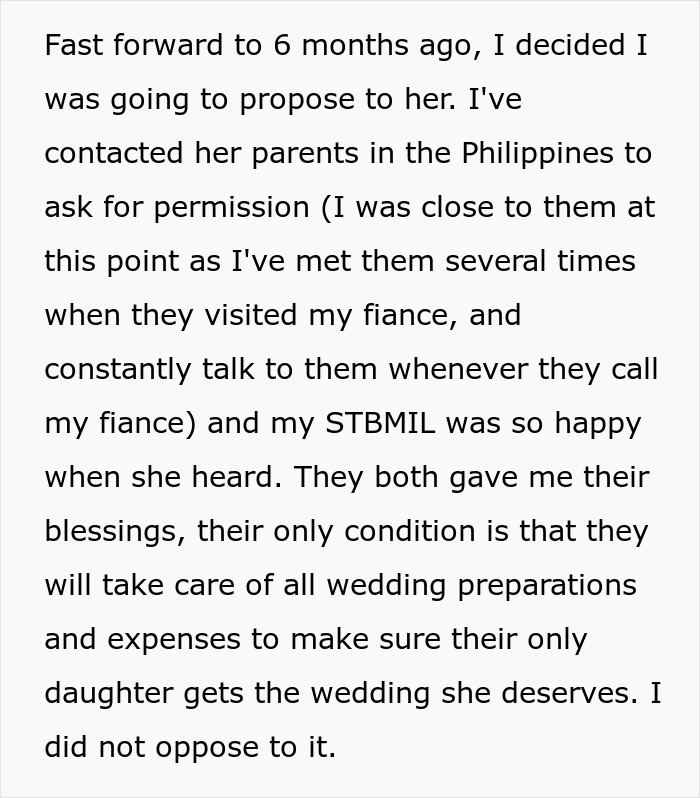
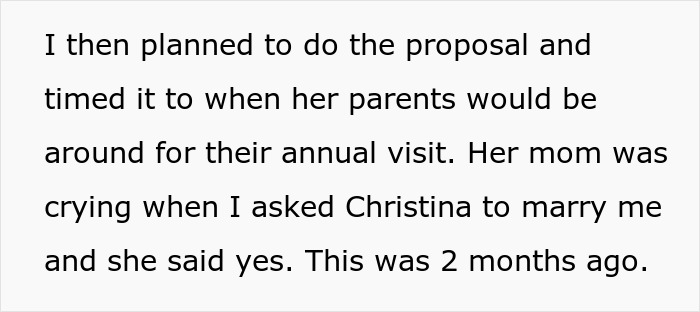
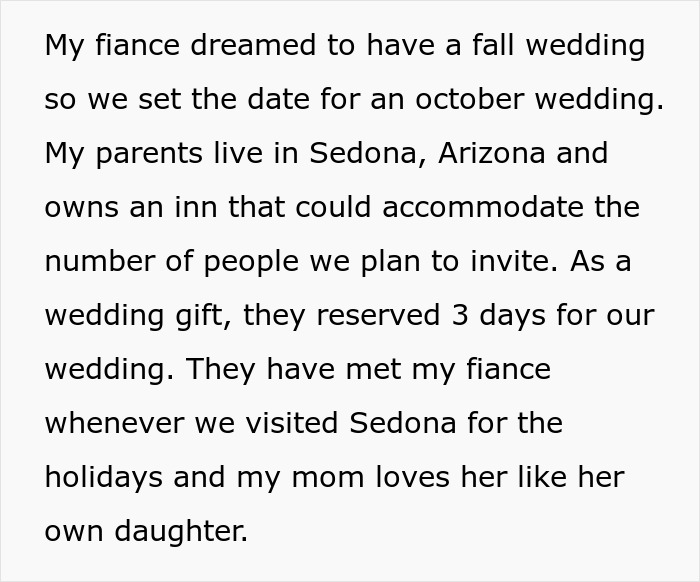
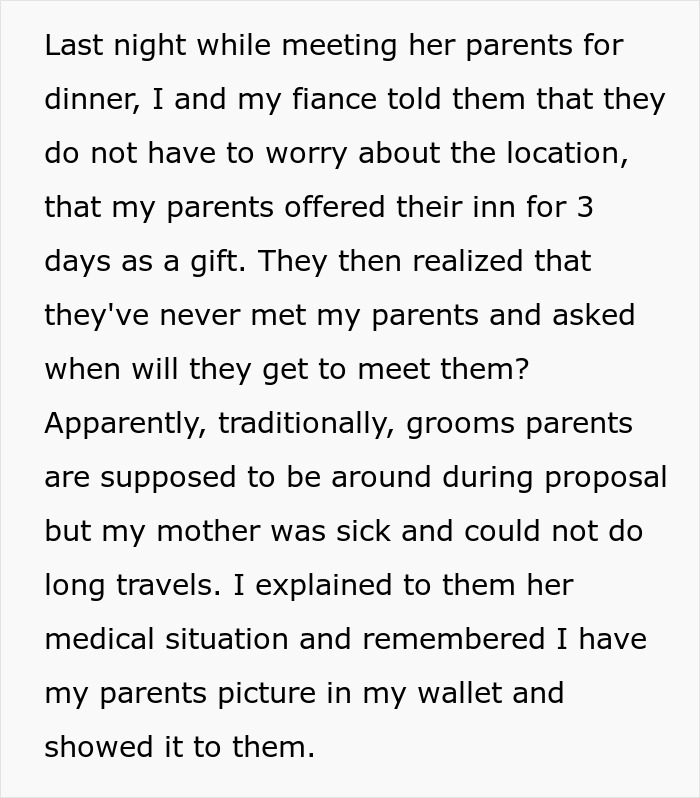

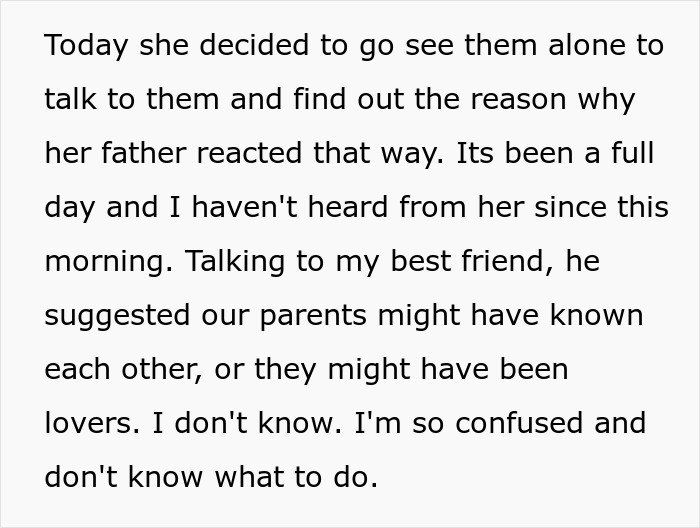
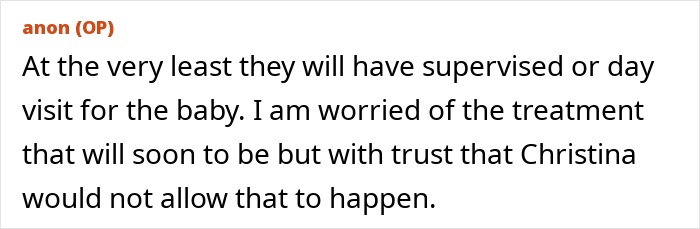
Image credits: anon
Image credits: thidada6242 / unsplash (not the actual photo)
According to a study of hundreds of families over two decades, many of them have problems with their in-laws.
Psychologist Dr. Terri Apter carried out the research for her book What Do You Want From Me? and found that around 75% of couples reported having difficulties with at least one in-law.
Her data suggest these conflicts often stem from unresolved family dynamics, competing expectations, or emotional baggage that predates the relationship itself.
Now, it’s important for the couple to stick together. “Life is full of difficult decisions in which no solution leaves everyone happy,” says Karl Pillemer, Ph.D., a professor of Human Development at Cornell University who studies marriage and families. “Unfortunately, that’s exactly what a difficult in-law situation creates—a classic example of ambivalence that in a worst-case scenario may persist over years or even a lifetime.”
After coming through hundreds of reports on in-law relations from elders, Pillemer says they’re unequivocal: it is your duty to support your partner and manage your family in a way that consistently conveys this fact.
“You must both present a united front to your families, making it clear from the beginning that your [soon-to-be] spouse comes first,” he says.
“In couples where this allegiance does not happen, marital problems swiftly follow. In fact, some of the bitterest disputes occur over a spouse’s failure to support his or her partner,” Pillemer adds.
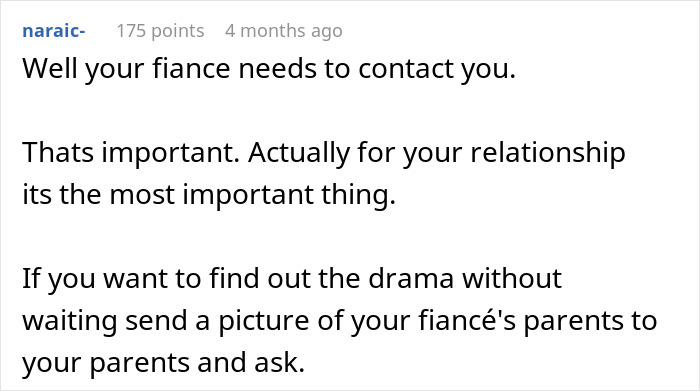
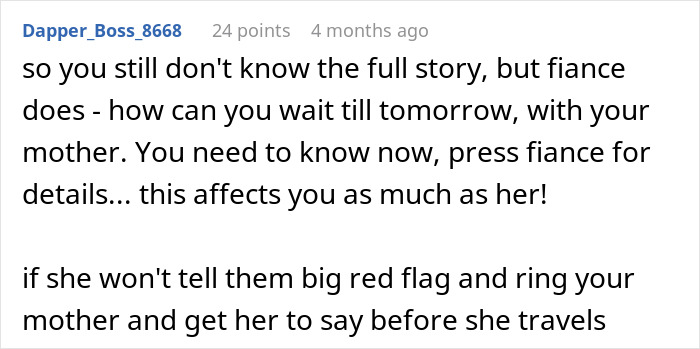







Image credits: freepik (not the actual photo)

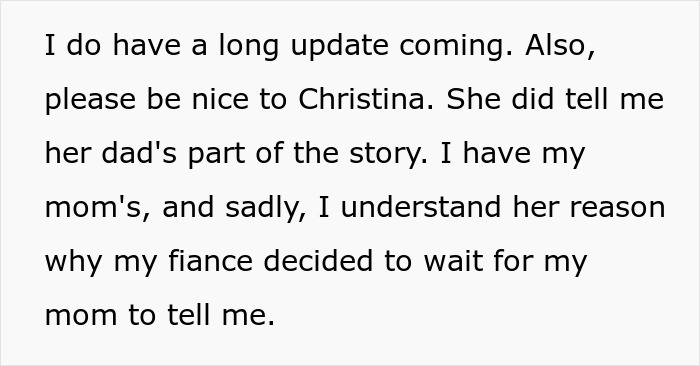


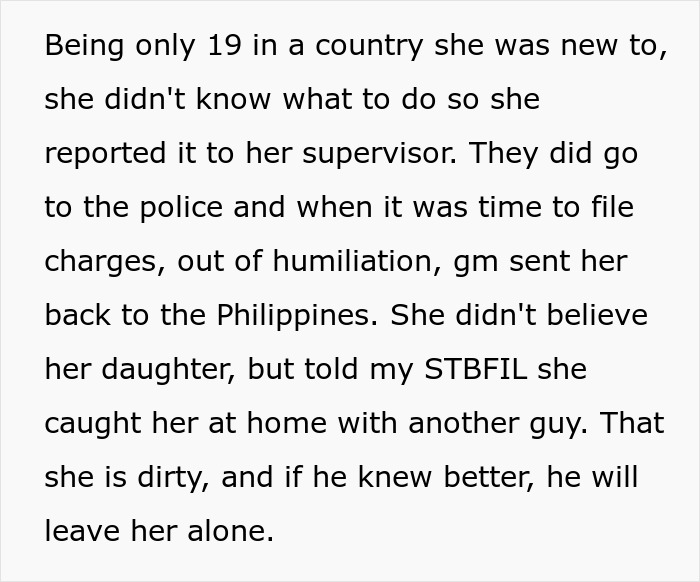
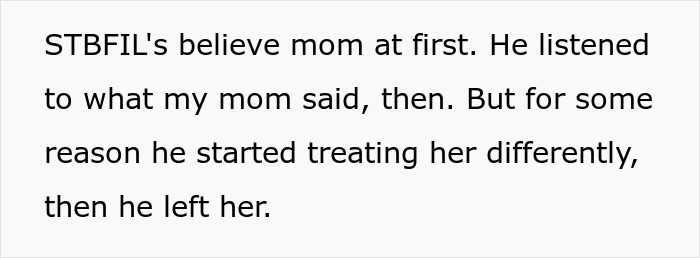

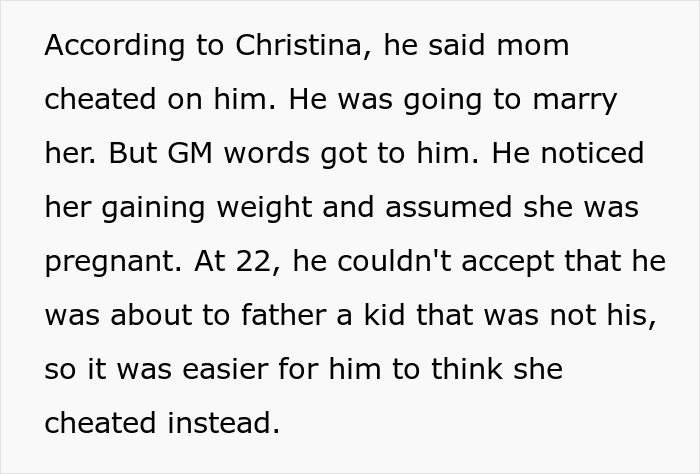


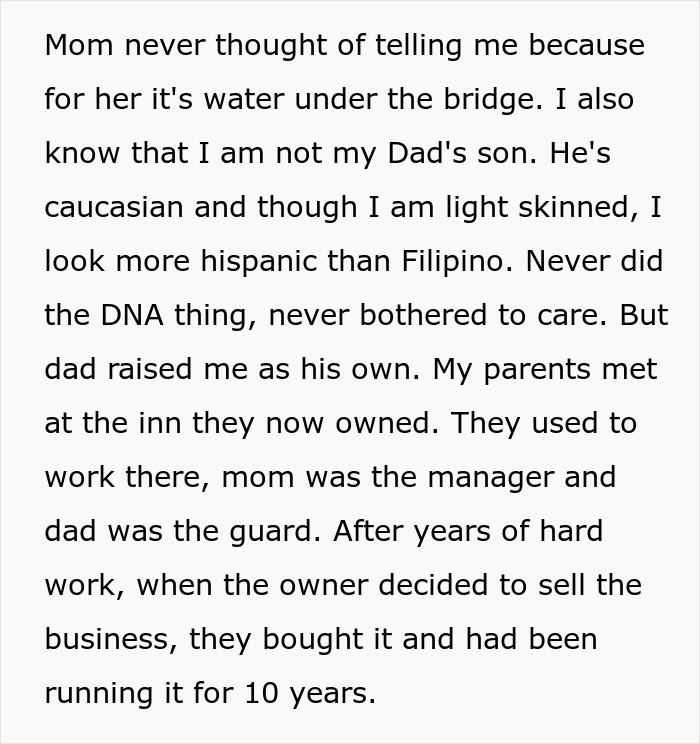
Image credits: anon
All things considered, it’s probably best that the truth got out sooner rather than later. “Internal family secrets involve at least two people keeping a secret from one or many other family members. Examples include parents who hide birthday presents from a child, and a father telling his teenage daughter that he plans to file for divorce, without telling his spouse,” says Sarah Epstein, a licensed marriage and family therapist, seeing patients in Maryland, DC, Texas, and Pennsylvania.
“The internal secret, known by some and not others, creates sub-groupings, drawing lines between those who know and those left unaware,” Epstein adds.
In some situations, that line may be appropriate. For example, if parents keep their presents a secret to create a surprise for their young kids on their birthday, the secret is temporary, motivated by a desire to bring joy, and does not undermine the family.
But this case is different. Navigating the fallout together as a united front prevents a toxic divide. If the bride had faced her father alone while the groom dealt separately with his mother, they would have been forced into isolation. Unpacking their families’ histories individually could have easily made them feel—whether justified or not—as if they were betraying one another.
“This position is called a split loyalty, and it can eat away at a secret holder caught between somebody in the know and somebody left unaware,” Epstein says.
“Every family has a right to privacy and determining the question of privacy versus secrecy will look different in every family … Family secrets that center on rule violations and taboo subjects, however, tend to create strife,” the therapist explains.






TL;DR His mum used to go out with his future FiL, she was r***d by someone else while in the US and abandoned by her then boyfriend and family. They're all AHs.

Who are you including in "They're all AHs"? If it's just both of OP's prospective in-laws, I agree, but I don't see where the other people did anything wrong.
Load More Replies...
I'm a bit confused so have to ask - was mom SA'ed by fiancee's father or were they together when it happened to her by someone else and they decided to shun her for it?

It's hard to follow, but I think it's mean to be that the mother grew up in the Philippines, and began dating the father in law. She moved to the US but they continued the relationship. The SA incident occurred in the US, and initially they continued the relationship. However, after the grandmother kept saying she was unclean etc because of it, and he found doubt about the pregnancy, they broke up. Future MIL was a friend of FIL at the time and encouraged the break up so she could have him instead.
Load More Replies... TL;DR His mum used to go out with his future FiL, she was r***d by someone else while in the US and abandoned by her then boyfriend and family. They're all AHs.
Who are you including in "They're all AHs"? If it's just both of OP's prospective in-laws, I agree, but I don't see where the other people did anything wrong.
Load More Replies... I'm a bit confused so have to ask - was mom SA'ed by fiancee's father or were they together when it happened to her by someone else and they decided to shun her for it?
It's hard to follow, but I think it's mean to be that the mother grew up in the Philippines, and began dating the father in law. She moved to the US but they continued the relationship. The SA incident occurred in the US, and initially they continued the relationship. However, after the grandmother kept saying she was unclean etc because of it, and he found doubt about the pregnancy, they broke up. Future MIL was a friend of FIL at the time and encouraged the break up so she could have him instead.
Load More Replies...

































 No fees, cancel anytime

















28
9