Get Premium
Dark mode theme is available exclusively for premium users. Learn more about the benefits of subscribing.
No fees, cancel anytime.

 Dark Mode Ad-Free Browsing Unlimited Content

 Ad-Free Browsing Unlimited Content Dark Mode

Join 1.2 million Panda readers who get the best art, memes, and fun stories every week!
Long before supermodels and celebrity photo shoots, Vogue sold its vision of style with a paintbrush. When Arthur Baldwin Turnure published the first issue on December 17, 1892, as a weekly journal of New York high society, its cover was a black-and-white drawing of a debutante by illustrator A. B. Wenzel. For the next several decades, artists, not photographers, decided how the world’s most famous fashion magazine would look.
Enigma Elysium, an art community on Facebook, has gathered some of the most striking illustrated covers from Vogue’s history, from women riding crowned peacocks to Salvador Dalí’s surreal dreamscapes. Each one is a reminder of how imaginative fashion publishing could be before the camera took center stage. Scroll down to explore the collection.
This post may include affiliate links.
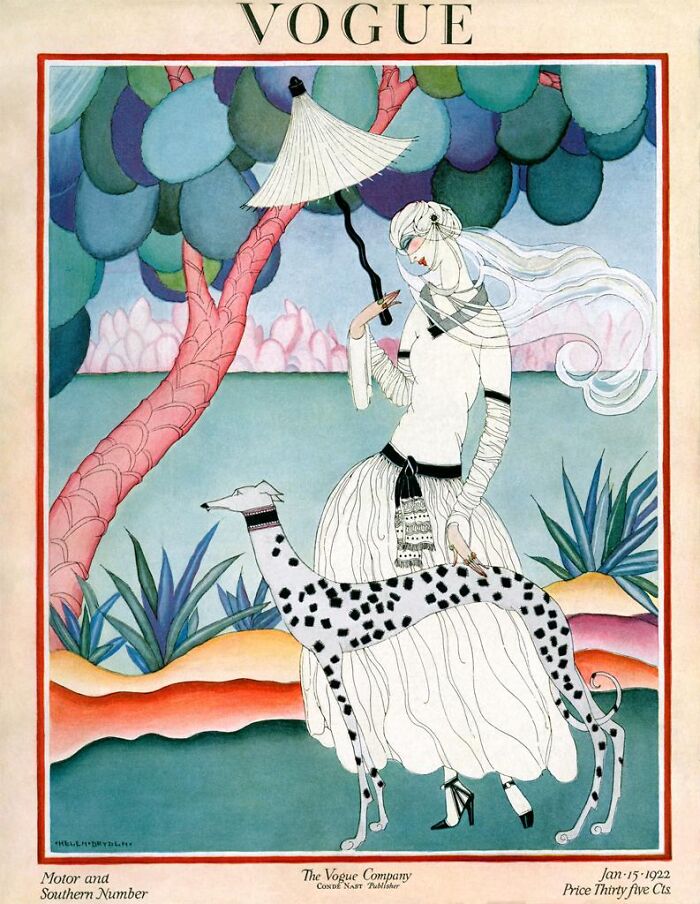
An elegant woman in a flowing white gown and veil strolls beneath stylized pink palm trees with a parasol and a spotted greyhound at her side. The cover is attributed to Helen Dryden, once described as the highest-paid female commercial artist in the United States, whose style helped bridge Art Nouveau and Art Deco. Fittingly for a “Motor Number,” Dryden later designed car interiors for Studebaker.
After Condé Nast bought Vogue in 1909 and turned its focus to women and fashion, the covers became small works of art. Illustrators like Helen Dryden, Georges Lepape, George Wolfe Plank and Eduardo García Benito filled them with elongated figures, bold color and fantastical scenes: women riding peacocks, strolling with greyhounds beneath pink palm trees or posing against bold Art Deco zigzags. Later, the magazine turned to the art world itself, inviting the Surrealist Salvador Dalí and the French artist Christian Bérard to reimagine its pages.
The shift began in July 1932, when Edward Steichen’s photograph of a swimmer holding a beach ball became Vogue’s first color photographic cover. Illustrations didn’t disappear overnight, but by the end of the 1950s, the camera had taken over for good.
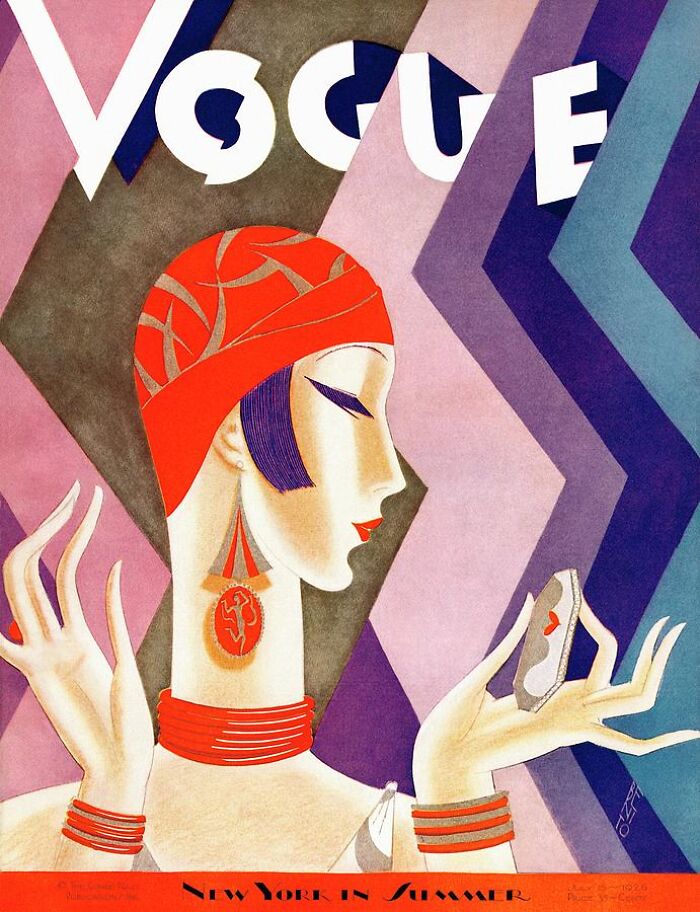
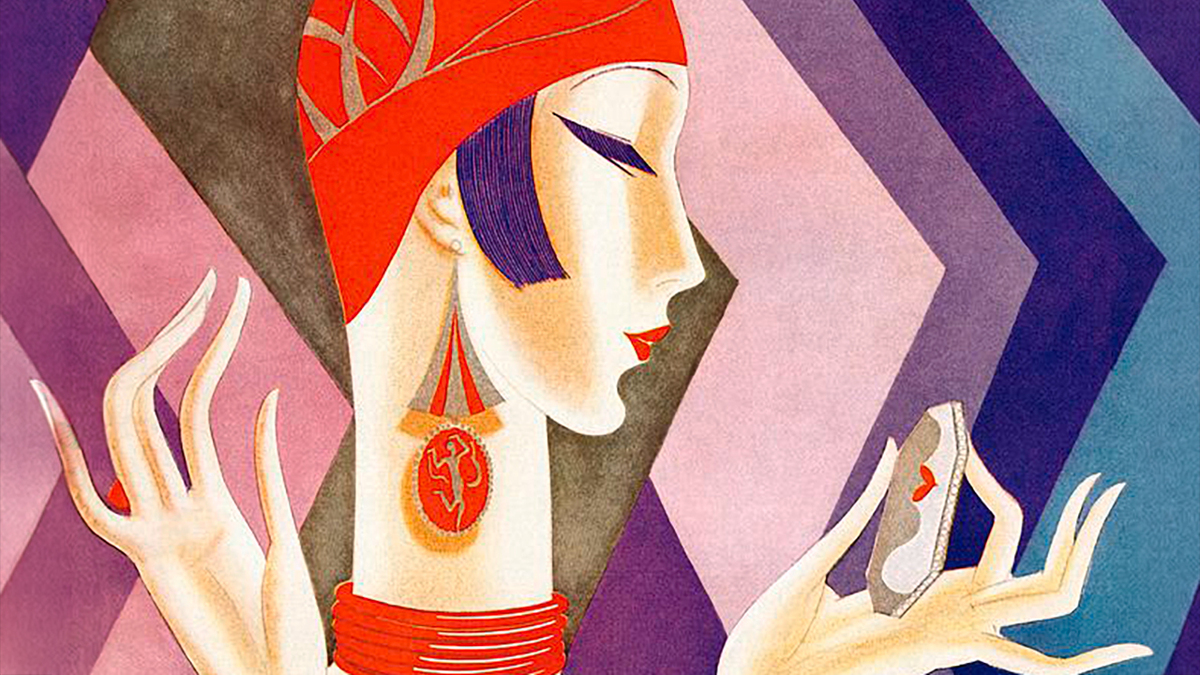
Spanish illustrator Eduardo García Benito, who spent 15 years painting Vogue covers, captures the height of the Roaring Twenties here. A sleek woman in a red cloche hat, with a sharp bob and stacked bangles, checks her compact against a bold zigzag background. It’s Art Deco at its most stylish.
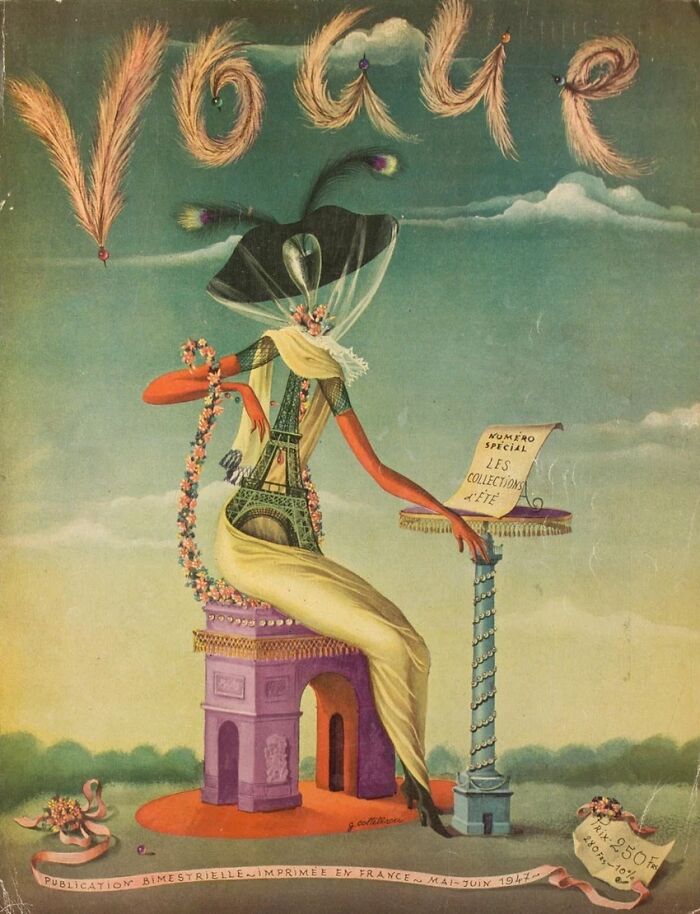
For its special summer collections issue, Vogue Paris turned the city itself into a fashionable woman. Italian costume designer Giulio Coltellacci gave her an Eiffel Tower bodice, sat her on the Arc de Triomphe and rested her arm on the Vendôme Column, while the masthead floats above in feathers. The issue came out just months after Christian Dior launched his famous New Look in February 1947, as Paris was reclaiming its place as the world’s fashion capital.
The era never quite faded, though. Illustrated covers are now among the most valuable issues for collectors, and Vogue still revives the tradition from time to time, from Andy Warhol’s pop-art portrait of Princess Caroline of Monaco for Vogue Paris in 1983 and David Hockney’s painted cover two years later to the hand-painted landscapes on British Vogue in 2020.
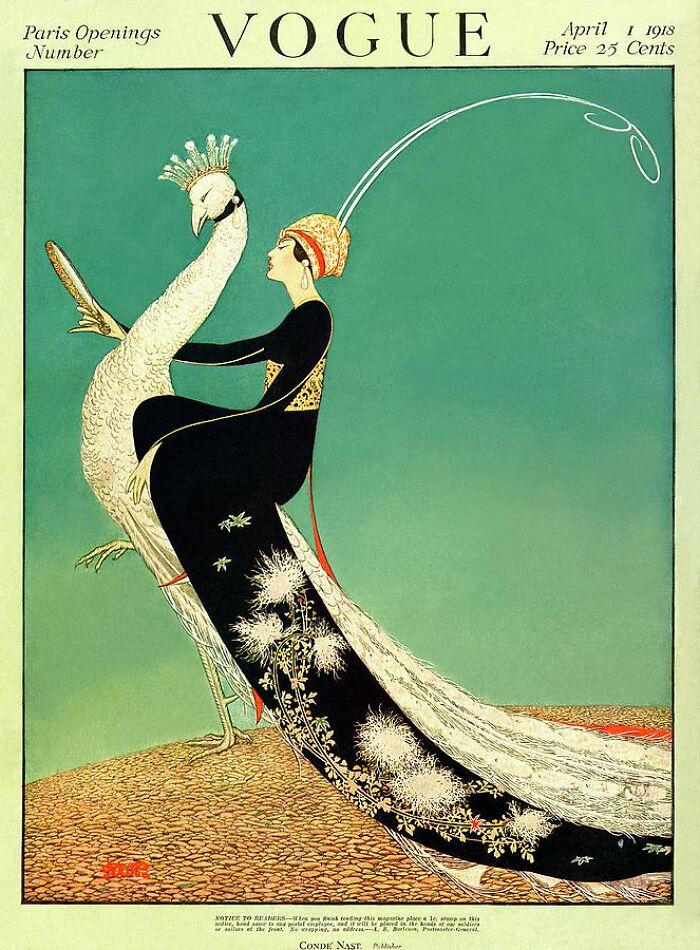
A woman in a black gown embroidered with white blossoms sits astride a crowned white peacock, whose long tail flows into her train. The cover is attributed to George Wolfe Plank, a self-taught artist who created more than 60 Vogue covers. Published during World War I, it carries a notice at the bottom asking readers to put a one-cent stamp on the magazine after reading, so it could be sent to soldiers and sailors at the front.
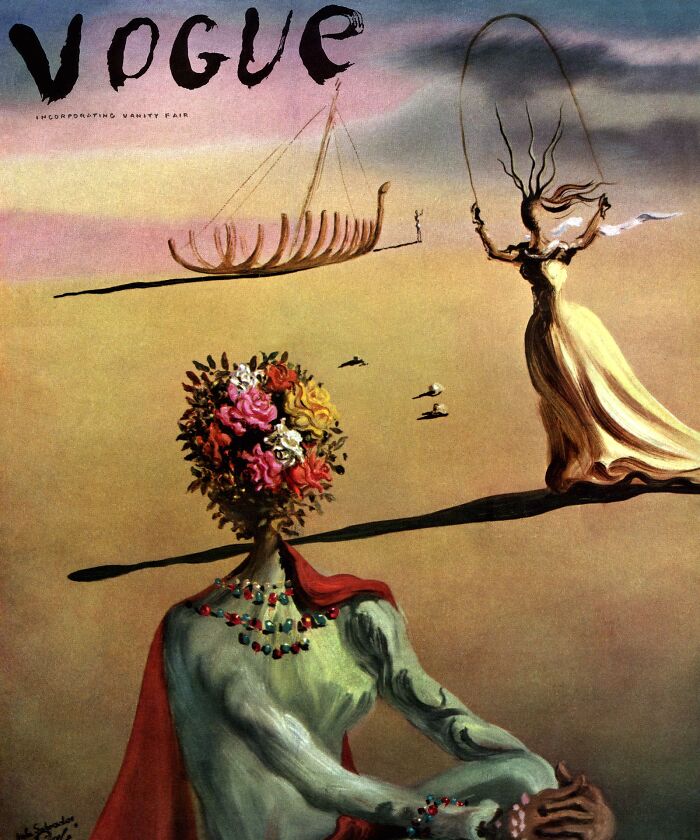
One of Dalí’s most recognizable Vogue covers shows a woman whose head is a bouquet of roses, an image he first explored in his 1935 painting Woman with a Head of Roses. In the distance, a girl skips rope, a motif that appears again and again in his work, while a ghostly ship floats against a pink and gold sky.
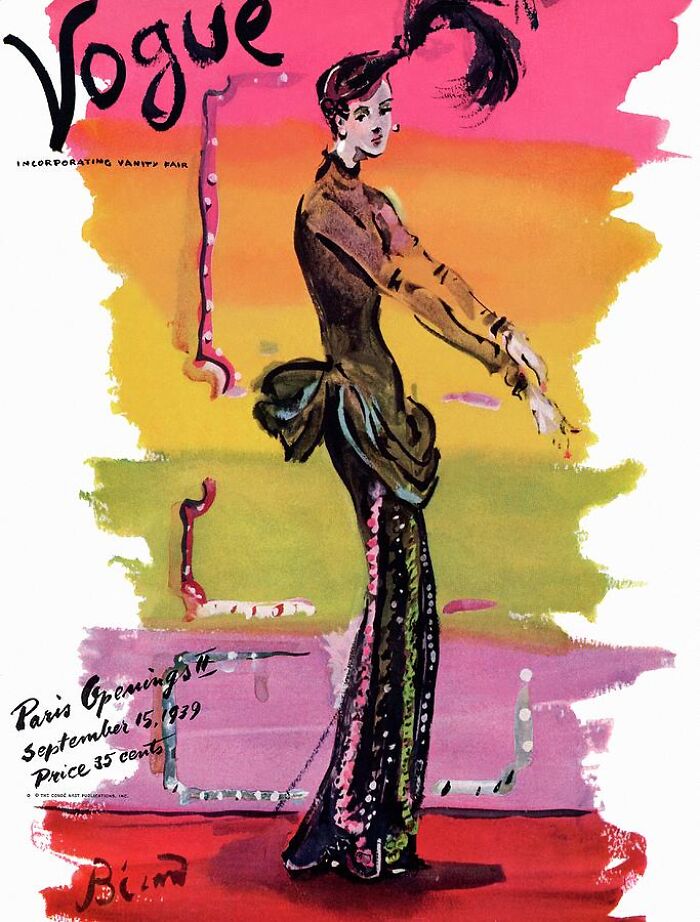
French artist Christian Bérard, who joined Vogue in 1935 and later designed the look of Jean Cocteau’s film Beauty and the Beast, painted this cover in loose, expressive brushstrokes. A model in a dark gown with a dramatic bustle poses against bands of pink, orange, yellow and violet. The issue came out just two weeks after World War II began, making it one of the last Paris collection reports before the war changed fashion for years.
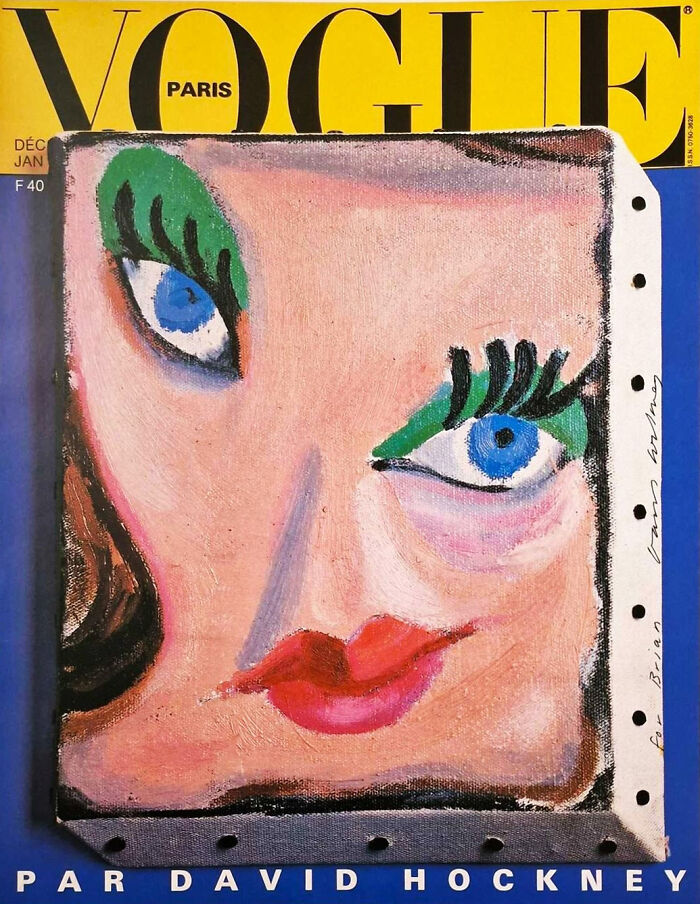
Each year, Vogue Paris invited a famous guest to edit its holiday issue, and in 1985 it was David Hockney’s turn. He designed the cover himself, painting a bold, Picasso-inspired face on a small canvas, with one eye shown head-on and the other in profile, set against a vivid yellow and blue background. The cover line reads simply “Par David Hockney.”
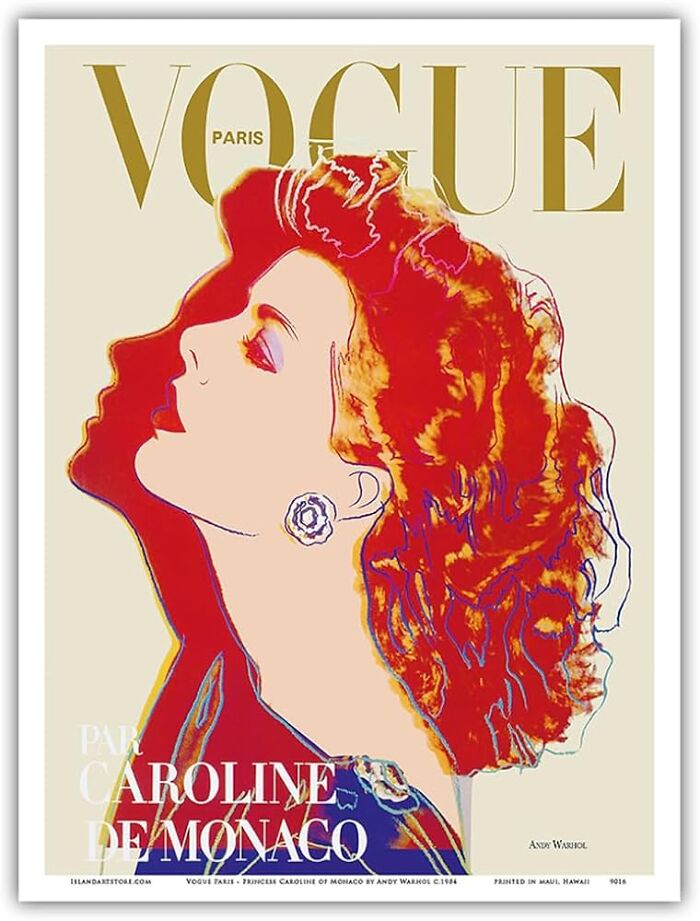
Princess Caroline of Monaco guest-edited this holiday issue, and Andy Warhol created its cover portrait of her. Rendered in his signature pop-art style, the image shows the princess in profile with her head tilted back, framed by flaming red hair and loose hand-drawn lines.
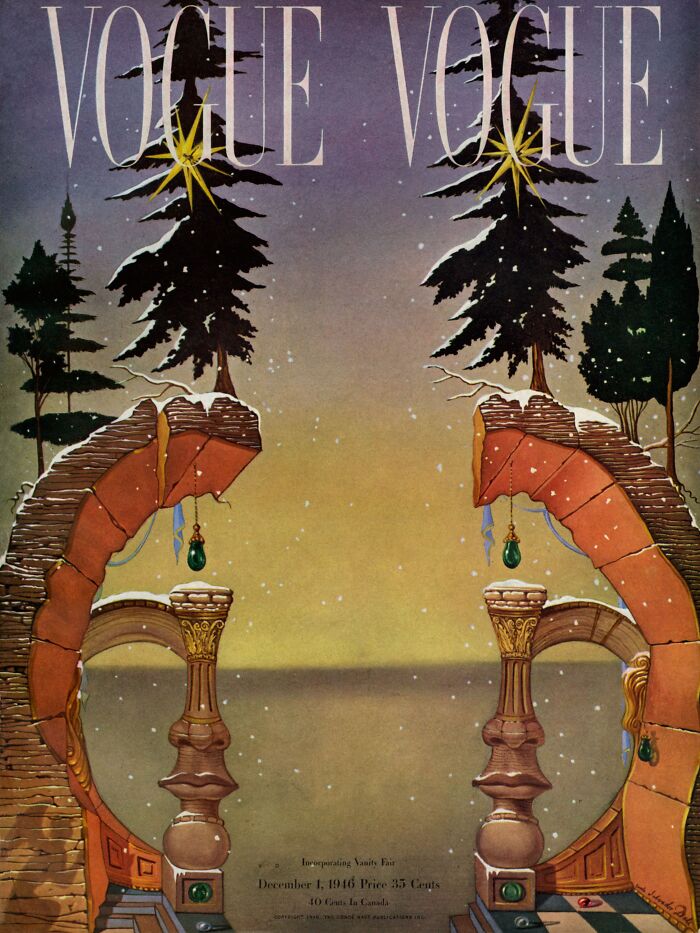
For this Christmas issue, Dalí painted a mirrored, dreamlike scene: two snow-dusted fir trees topped with golden stars, crumbling stone arches and ornate columns hung with emerald drops. In true Surrealist fashion, the architecture doubles as something else. Look closely, and lips appear on the balusters while the arches and pillars form faces in profile. Dalí even repeated the masthead, splitting “VOGUE VOGUE” across the top.
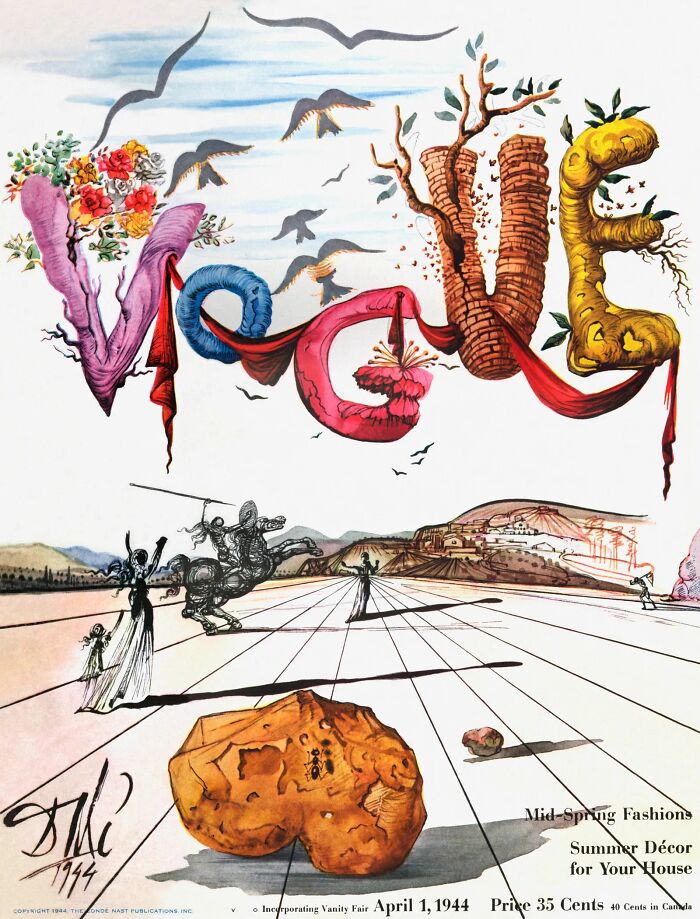
For this “Mid-Spring Fashions” issue, Dalí made the masthead the star. Each letter of “VOGUE” is built from something different, including draped fabric, brickwork, a sprouting tree trunk and bunches of roses, all tied together with red ribbon. Below, a knight on horseback and elongated figures cast long shadows across a vast, empty plain, one of Dalí’s favorite Surrealist settings.
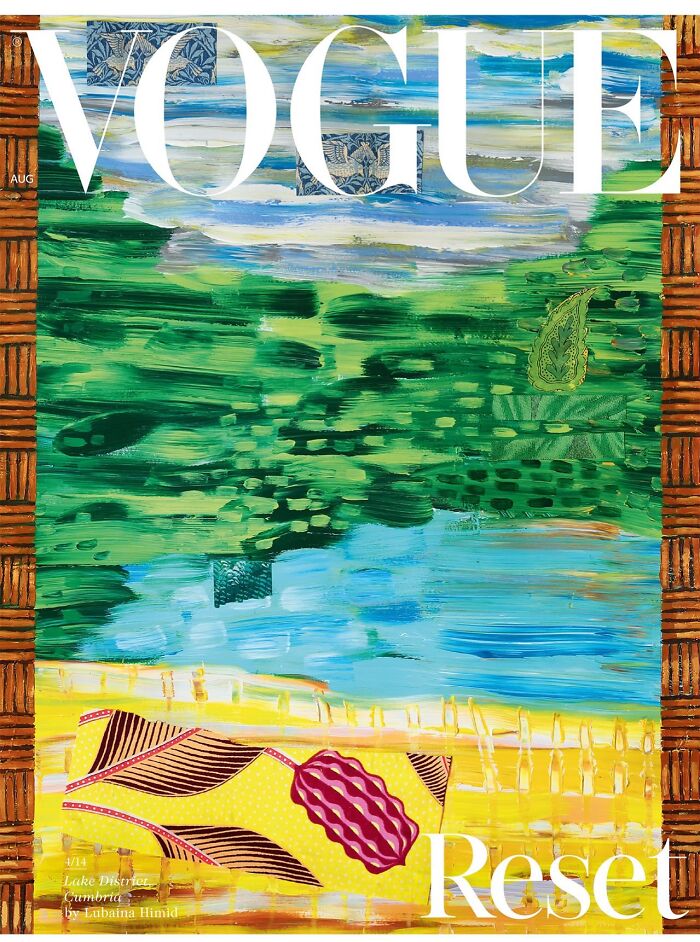
After the first COVID-19 lockdowns, British Vogue put no models or celebrities on its August 2020 issue. Instead, it released 14 covers showing landscapes from across the UK, created by artists and photographers including David Hockney, Tim Walker and Nick Knight. This one, cover 4 of 14, shows the Lake District in Cumbria, painted by Turner Prize winner Lubaina Himid with her signature collage-like patterns. The original artworks were auctioned to raise money for COVID-19 relief.




















 No fees, cancel anytime