Get Premium
Dark mode theme is available exclusively for premium users. Learn more about the benefits of subscribing.
No fees, cancel anytime.

 Dark Mode Ad-Free Browsing Unlimited Content
 Ad-Free Browsing Unlimited Content Dark Mode
Join 1.2 million Panda readers who get the best art, memes, and fun stories every week!

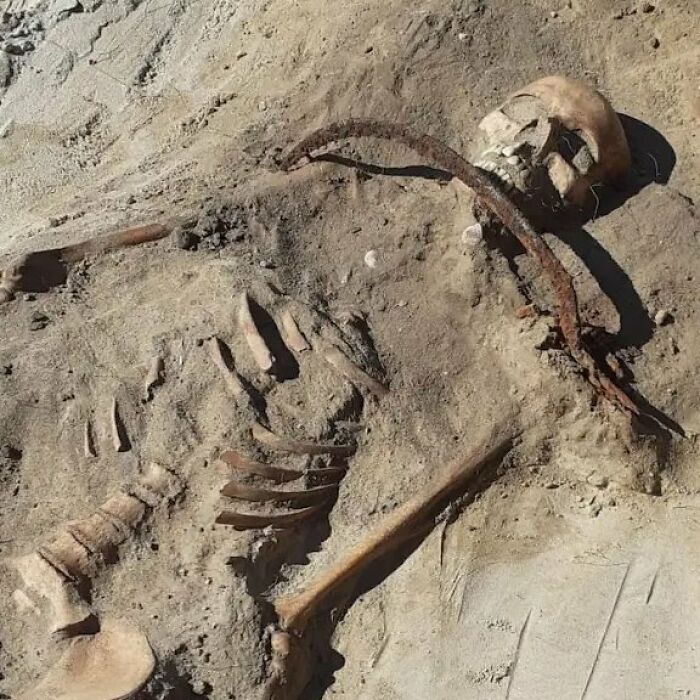
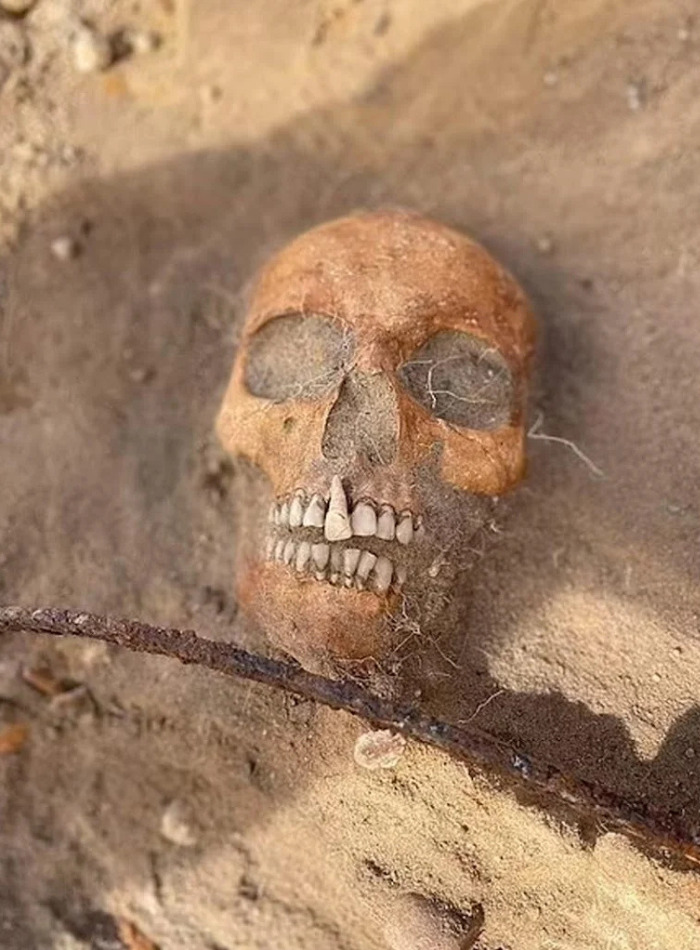
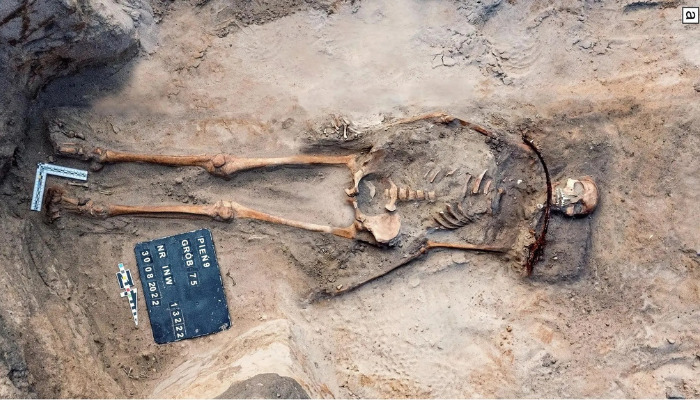
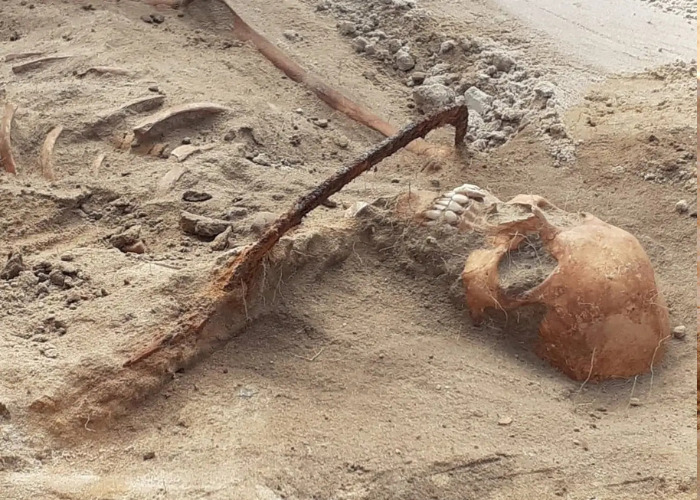
For more than three centuries, a young woman now known as Zosia lay beneath an unmarked cemetery in northern Poland with a padlock attached to her toe and the blade of an iron sickle positioned against her throat.
Whoever buried her was afraid she would rise from the grave and take revenge.
When Professor Dariusz Poliński uncovered the grave in Pień in 2022, the arrangement immediately suggested one of the most extreme forms of anti-demonic burial known from post-medieval Europe.
If the young woman attempted to rise, the sickle was positioned to injure or potentially decapitate her. The padlock symbolically closed her connection with the living.
Four years of research have since transformed the story.
The person was actually a girl of around 17 years old from a wealthy family who met her end after she was accused of being a vampire.
Her community needed something, or someone, to fear.
Almost nothing survives about Zosia as a person.
Even her name is not known, as “Zosia” is the nickname researchers gave her after discovering her remains.
Radiocarbon analysis places her burial most plausibly in the mid-17th century, with the strongest calibrated range falling between 1620 and 1674.
Skeletal development and the condition of her teeth places her art between 17 and 19 when she passed away. She stood at roughly 5-foot-4 to 5-foot-6.
Zosia was not buried like an impoverished outcast.
Researchers believe she was originally placed inside a coffin, possibly with a pillow beneath her head. Around her skull and jaw they found remnants of a decorative silk band that had likely trimmed a cap.
Analysis showed that its threads incorporated silver and gilded silver, materials associated with expensive 17th-century clothing. Such decorations were luxury products available mainly to aristocrats and noble families.
Her genetics added another intriguing detail.
Zosia’s maternal lineage with strong historical connections to northern Europe and Scandinavia. She likely descended from migrants who had arrived generations earlier, something entirely plausible in a region that included Polish, German and Dutch communities.
Fear of the und*ad had existed in Eastern and Central European folklore centuries before the polished Dracula mythology familiar today.
The term “vampire” itself did not become widespread across Europe until the 18th century. Earlier Slavic communities used several different names, including upiór and strzyga.
The rituals varied, but the objective was similar. The lifeless had to be prevented from returning.
“Ways to protect against the return of the d*ad include cutting off the head or legs, placing the deceased face down to bite into the ground, burning them and smashing them with a stone,” Poliński explained while discussing Zosia’s burial.
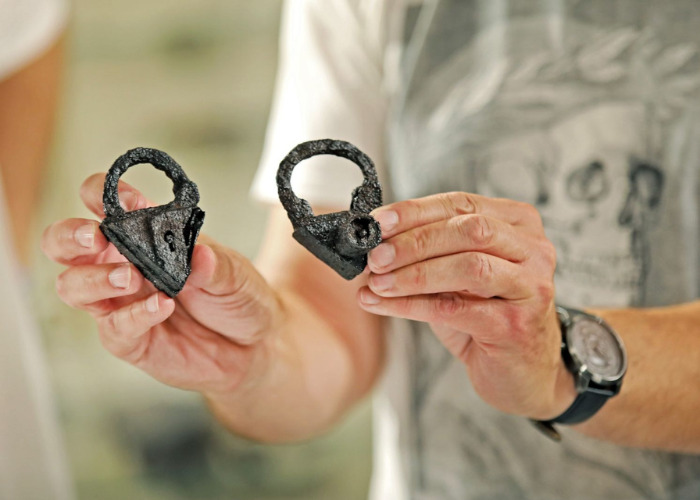
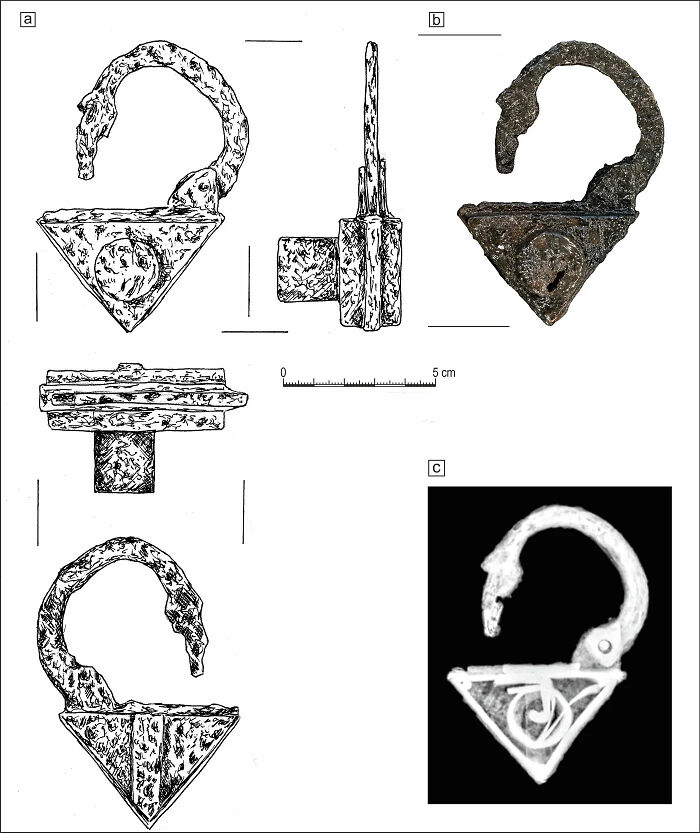
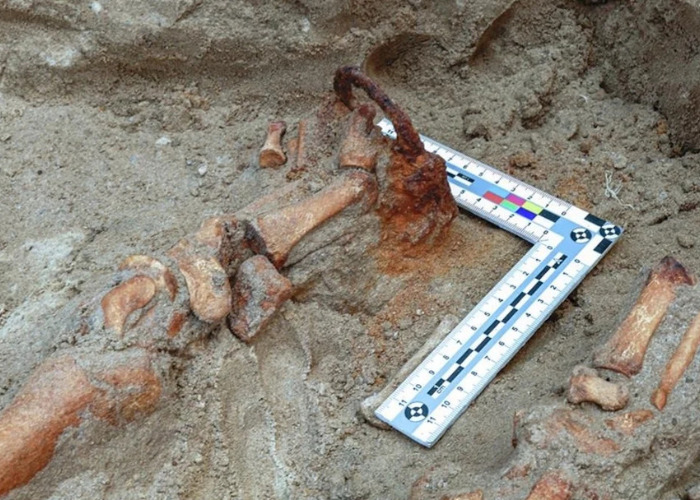
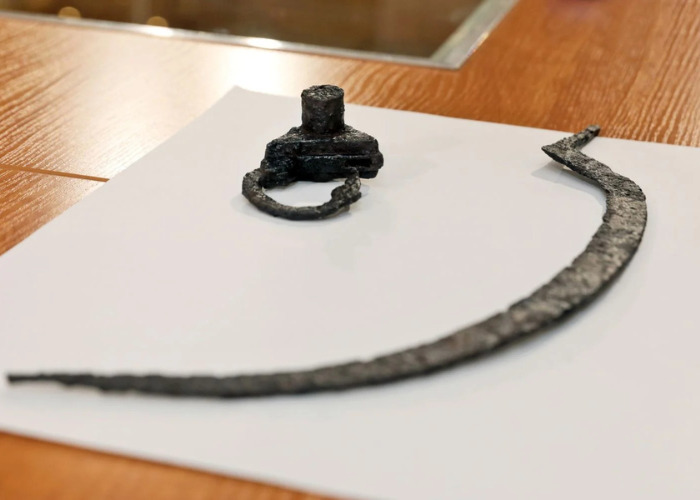
In Zosia’s case, the first precaution was comparatively symbolic. A triangular iron padlock was attached to the big toe of her left foot.
According to Poliński, the padlock represented the final closing of earthly life, but could also serve another purpose.
It could “symbolically prevent contact between the living and the d*ad,” he said, and in some traditions could end a run of bad fortune or stop an epidemic.
The most striking conclusion of the 2026 study came from the soil surrounding Zosia.
The layers above and around her skeleton were disturbed in ways inconsistent with a grave that had simply been filled and forgotten. Researchers found mixed deposits and disruption on one side of the burial while the skeleton itself remained largely articulated.
That suggests the grave was probably reopened before the corpse had fully decomposed, while tissue and ligaments were still holding the bones together.
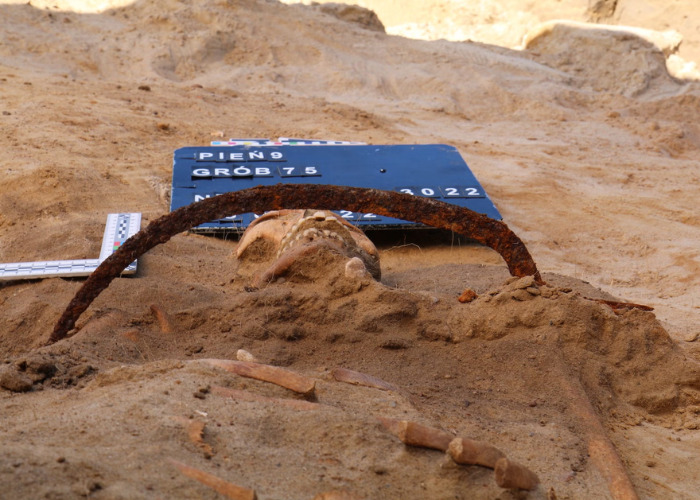
Researchers believe this was when a large iron blade, measuring roughly 36 centimeters, was placed across Zosia’s neck with its cutting edge directed toward her throat.
“The sickle was not laid flat but placed on the neck in such a way that if the deceased had tried to get up, most likely the head would have been cut off or injured,” Poliński explained.
“It was unusual that there were two precautions, two methods of showing that this skeleton should be kept in the grave,” Poliński said.
“So the fear of the body coming back to life was greater.”
The authors suggest that Zosia was blamed for some subsequent misfortune affecting the community, perhaps an epidemic, disease outbreak or famine.
Seventeenth-century Poland endured war, disease, deteriorating climate conditions and periodic food shortages, circumstances in which unexplained disaster could easily acquire a supernatural explanation.
The sickle and padlock may not tell the whole story.
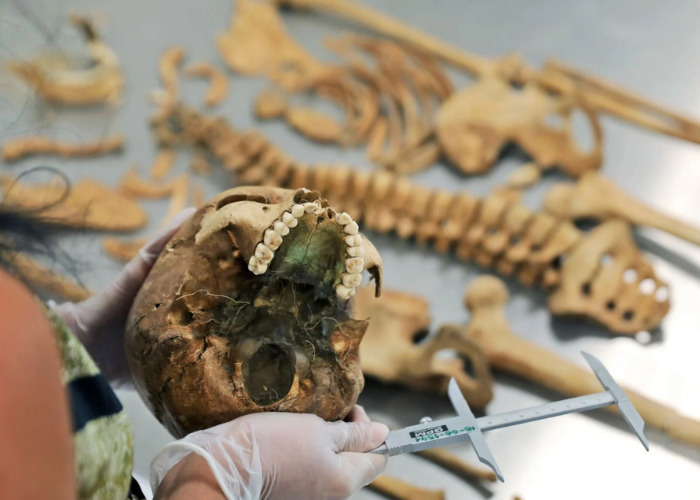
Researchers discovered extensive green discoloration across Zosia’s palate and into areas near her throat, nasal cavity, skull base and upper vertebrae.
Chemical testing identified copper among the unusual elements.
The pattern was too extensive to match the staining usually left behind by a small coin, leading the researchers to rule that explanation out. Instead, they believe a larger copper-containing object may have been inserted into her mouth, although whatever it was has disappeared.
Putting objects into the mouths of supposedly dangerous corpses has parallels elsewhere in Europe. Archaeologists have documented stones, bricks and other objects used in burials interpreted as attempts to stop corpses from returning or feeding on the living.
Together, Zosia’s padlock, sickle and possible copper object confirm her community wanted her to remain where she had been placed.
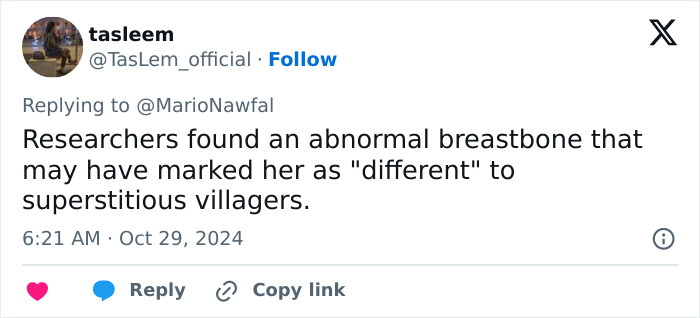
Earlier investigations into Zosia’s skeleton raised speculation that a physical abnormality around her chest or breastbone might have caused chronic discomfort and made her appear different to people around her.
The latest scientific study is more cautious.
Researchers identified a lesion around the attachment of the costoclavicular ligament, possibly related to repeated rotational movement of the upper arm, but found no major pathological condition that could explain her passing.
There is therefore no evidence supporting the idea that Zosia visibly suffered from some extraordinary disease that obviously led neighbors to brand her supernatural.
Zosia remained underground until archaeologists returned to Pień in August 2022.
The cemetery itself had no surviving written record and does not appear on historical maps. Located away from the main settlement and far from a church or chapel, it may have been Protestant, but researchers have also considered whether parts of it were used for people rejected by society.
Dozens of unusual burials have since been uncovered there.
Poliński’s team initially heard stories from the locals about skulls appearing on the hillside and began investigating.
“The first thing that we found was something with the sound of iron or metal,” Poliński recalled.
After brushing away the soil, “it turned out to be convex and, after a while, we knew it was a sickle.”
Then came the padlock.
“Such a discovery, especially here in Poland, is astonishing,” he said. “Pure astonishment.”
Zosia became the first documented case combining both “anti-vampire” measures within a single grave.
Over the following years, researchers tried to reconstruct more than the circumstances of Zosia’s burial.
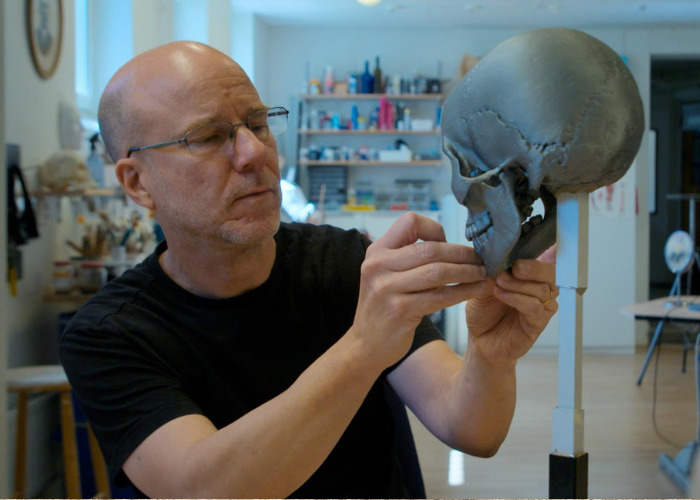
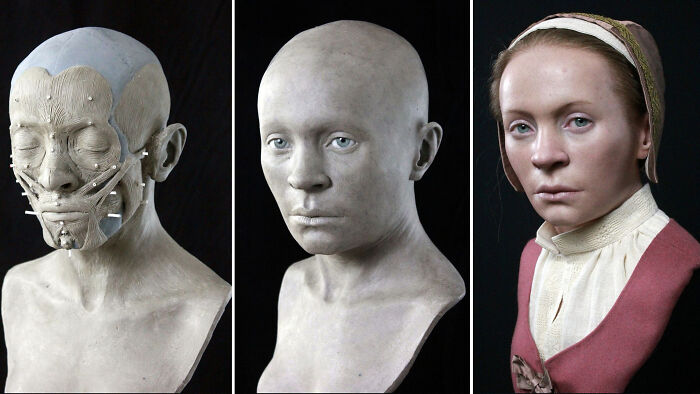
Swedish forensic artist Oscar Nilsson used a replica created from her skull, along with information about her age and physical characteristics, to reconstruct her face using 3D technology..
“When I first heard about this woman being buried as a vampire, I thought perhaps it was a bit exaggerated,” he said. “But then I saw the photos… It’s shocking to see the sickle over her neck.”
Nilsson confessed feeling something similar to pity when learning about Zosia. Supernatural or not, he was trying to reconstruct the face of a girl whose tomb had been repeatedly profaned.
He described the reconstruction as an opportunity to reverse some of what had been done to her memory.
“I’m looking forward to giving her some human dignity back,” he said.
The finished reconstruction showed not a monster, but an innocent young woman.
On July 30, 2026, Poliński and an international team published their multidisciplinary analysis in the Journal of Archaeological Science: Reports.

By entering your email and clicking Subscribe, you're agreeing to let us send you customized marketing messages about us and our advertising partners. You are also agreeing to our Privacy Policy.
Thank you! You've successfully subscribed to newsletters!


Maybe she was feisty or outspoken. Well behaved women rarely make history.

You could have a crooked nose or a weird mole, have better harvest than your neighbour, pick herbs in the forest and suddenly there would be a drought or disease spreading through a village and you would be called a witch. They didn't need much. Have you noticed what the vampires have in common? Tuberculosis.
Load More Replies...
I am surprised the centuries old teen girl has not "broken her silence" like everyone else does according to BP writers.
Maybe she was feisty or outspoken. Well behaved women rarely make history.
You could have a crooked nose or a weird mole, have better harvest than your neighbour, pick herbs in the forest and suddenly there would be a drought or disease spreading through a village and you would be called a witch. They didn't need much. Have you noticed what the vampires have in common? Tuberculosis.
Load More Replies... I am surprised the centuries old teen girl has not "broken her silence" like everyone else does according to BP writers.































 No fees, cancel anytime
















41
10