ADVERTISEMENT

Ever since AI entered our lives, many people have been concerned about it eventually taking our jobs. Others see it as just another tool, arguing that human judgment still needs to stay in the loop to check the results and make sure everything actually makes sense.

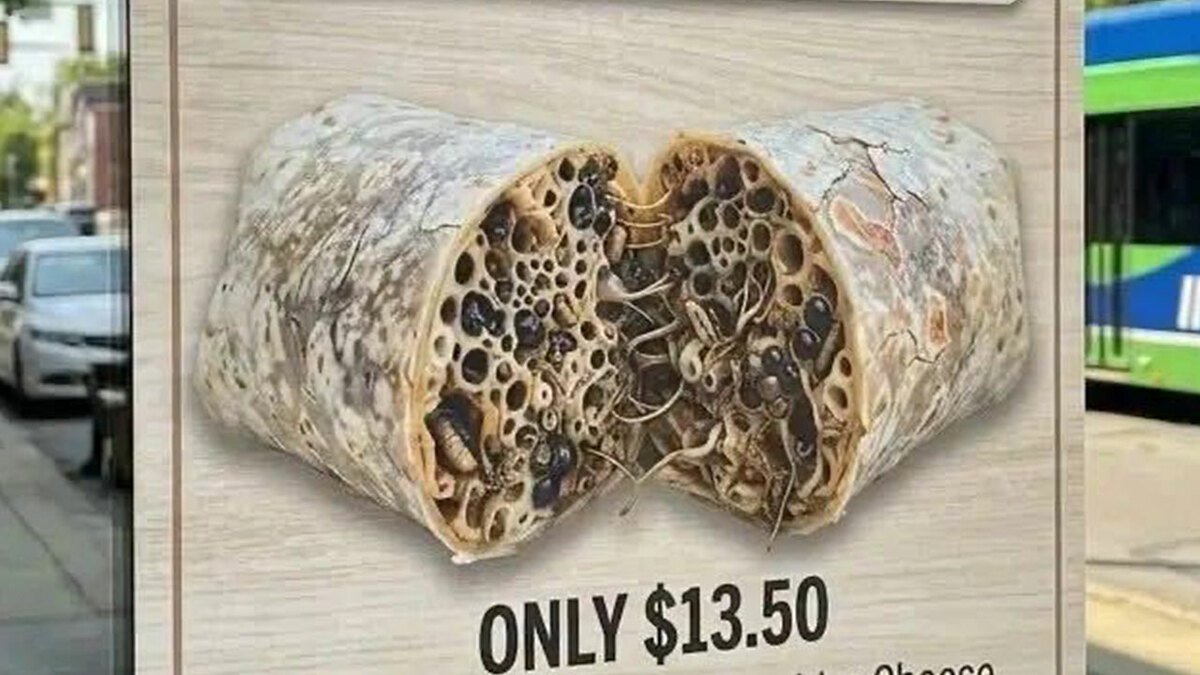
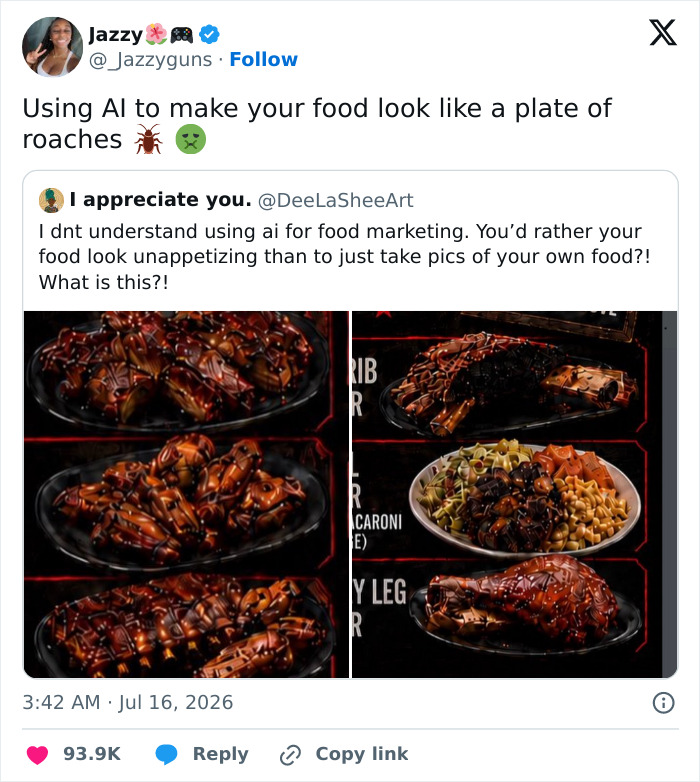
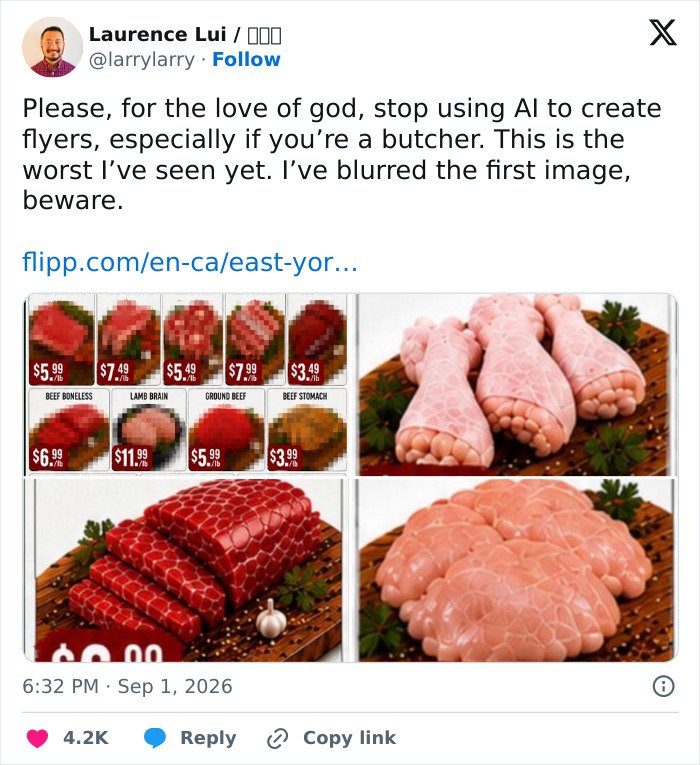
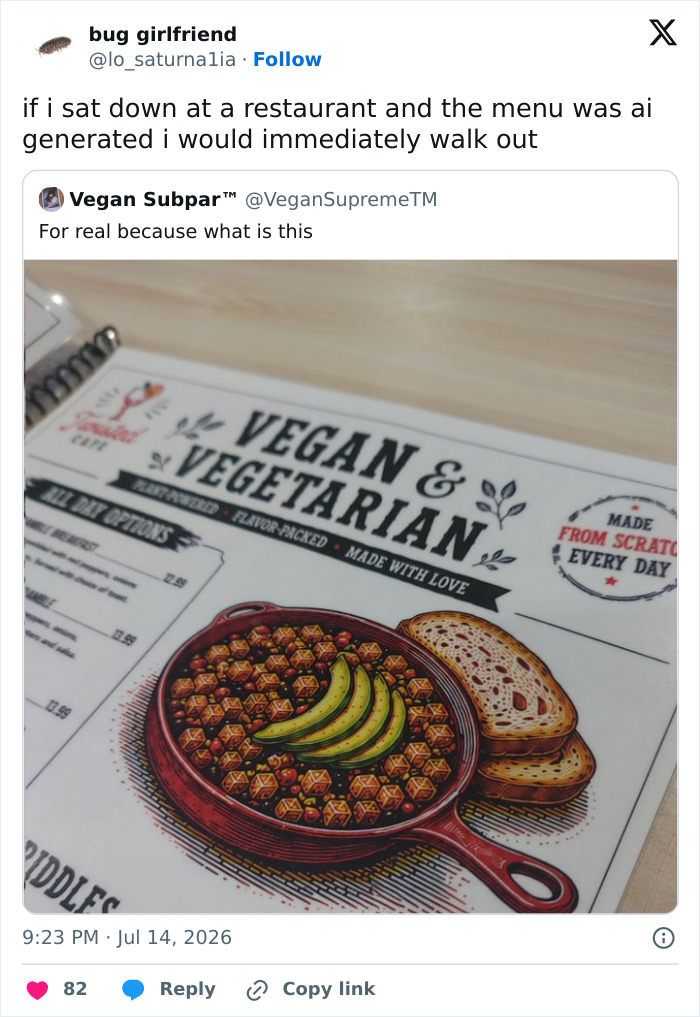
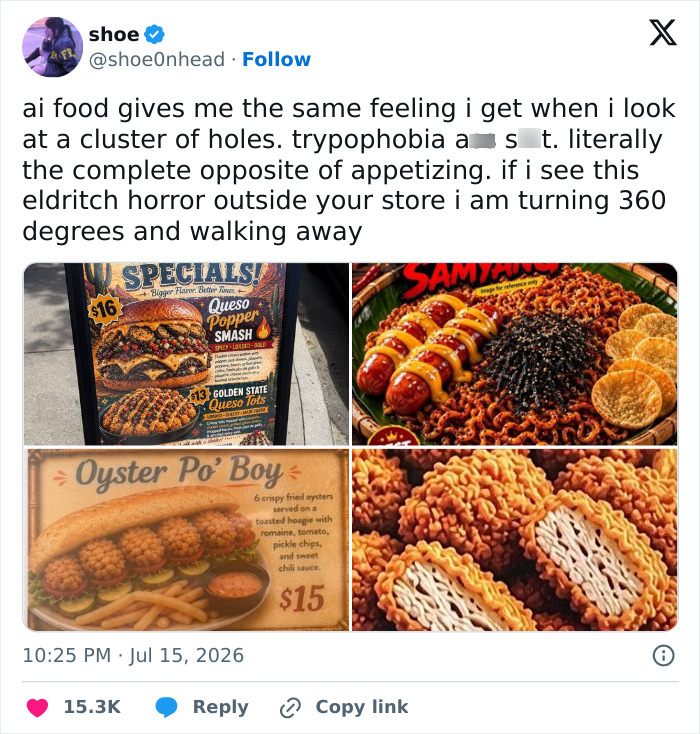
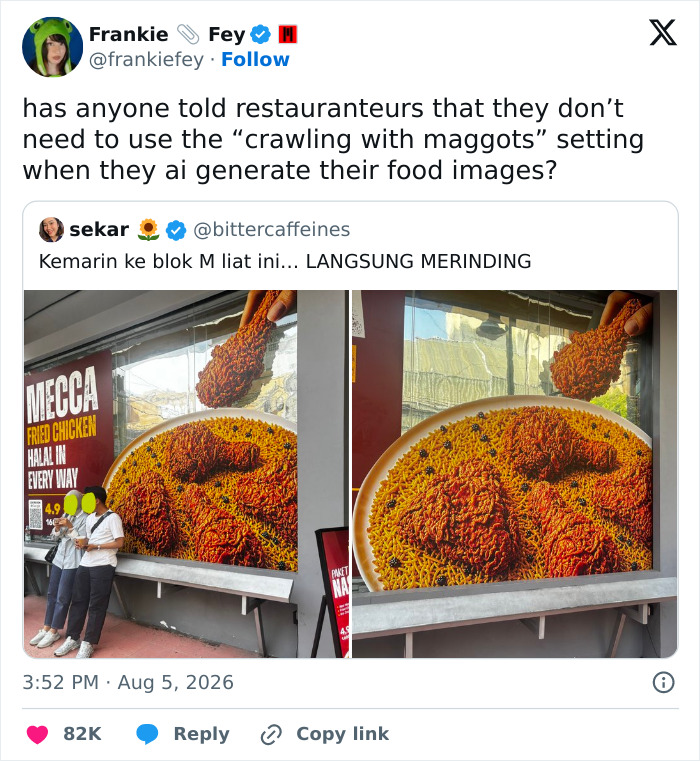
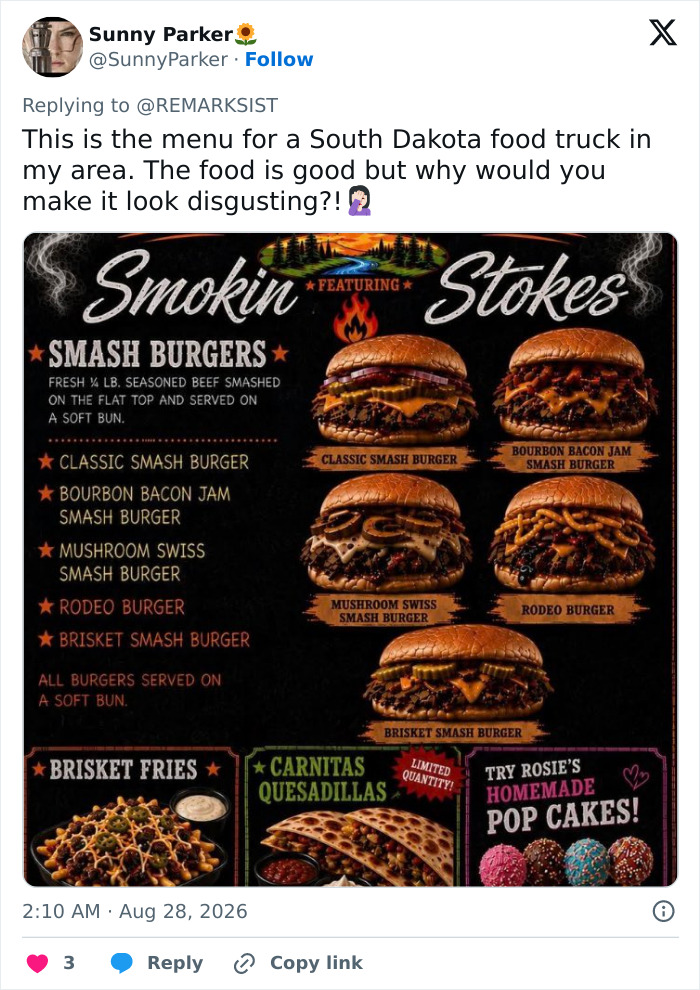
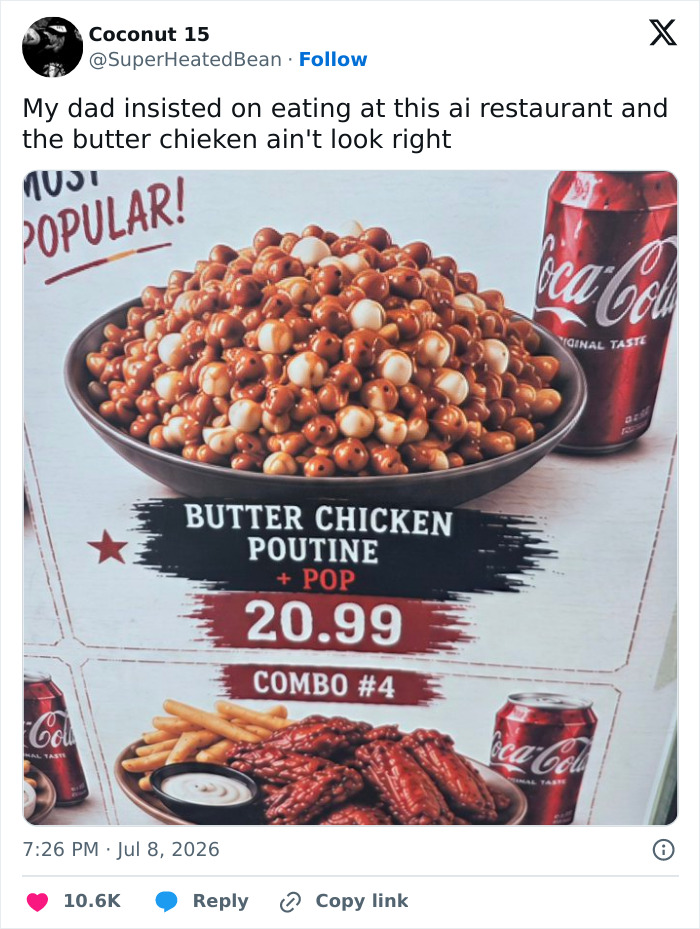
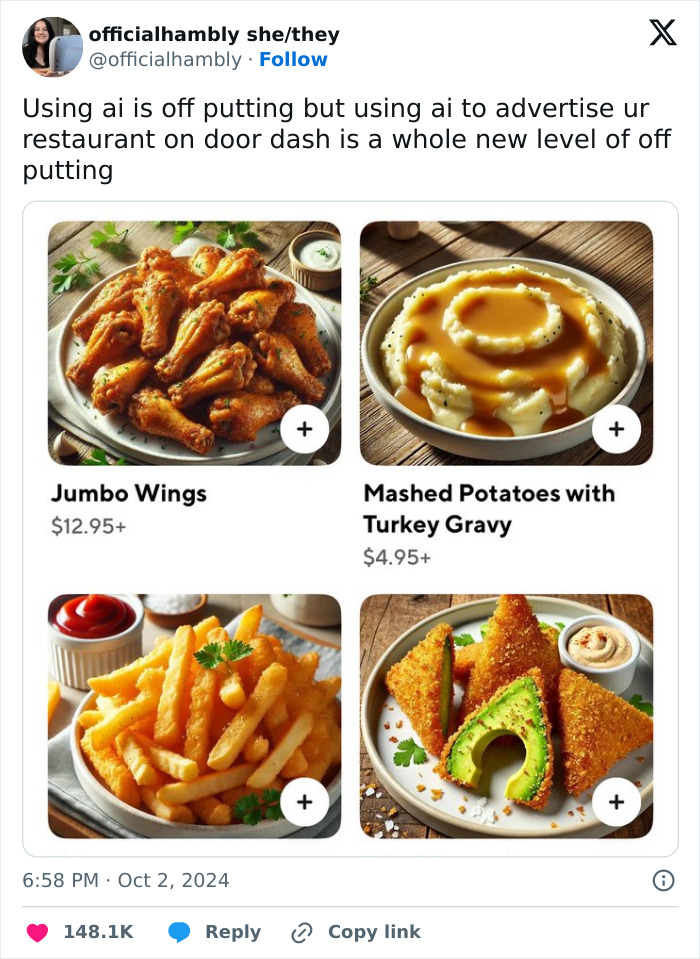
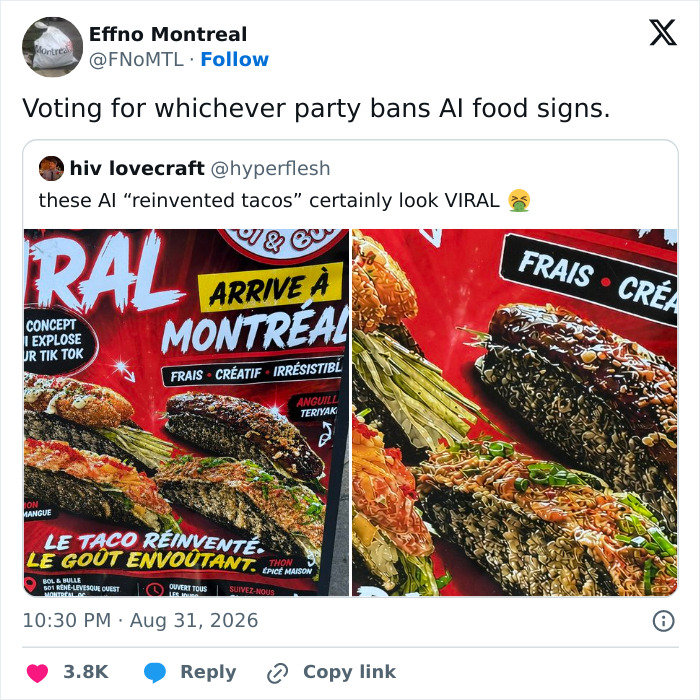
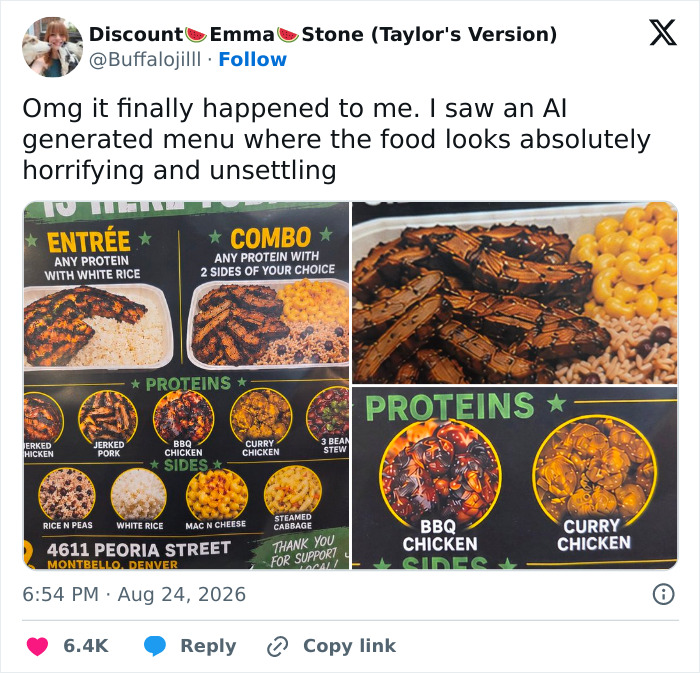
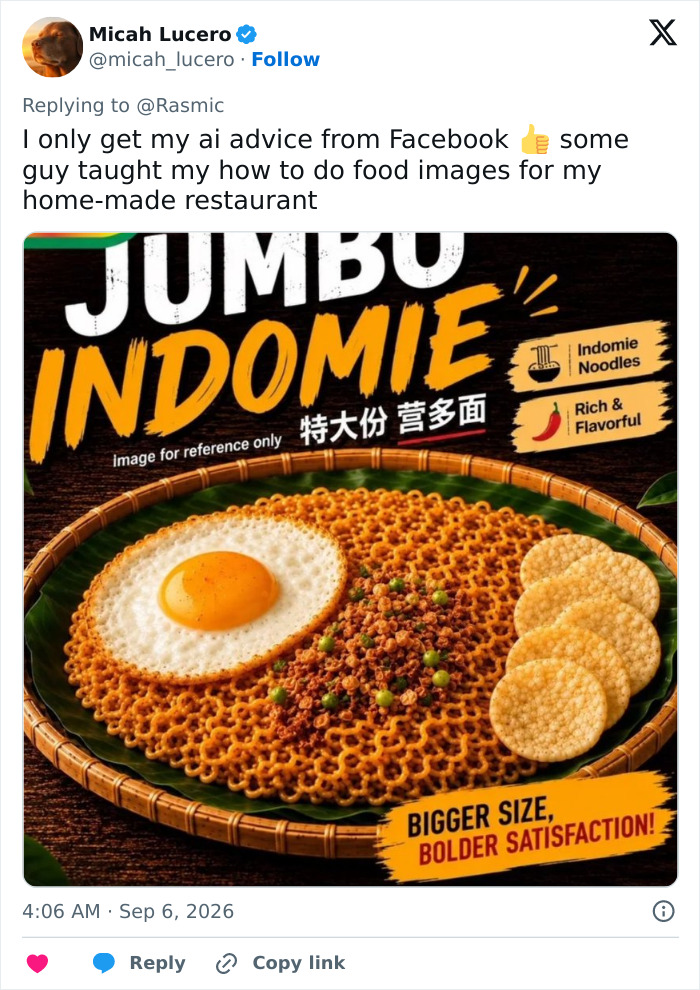
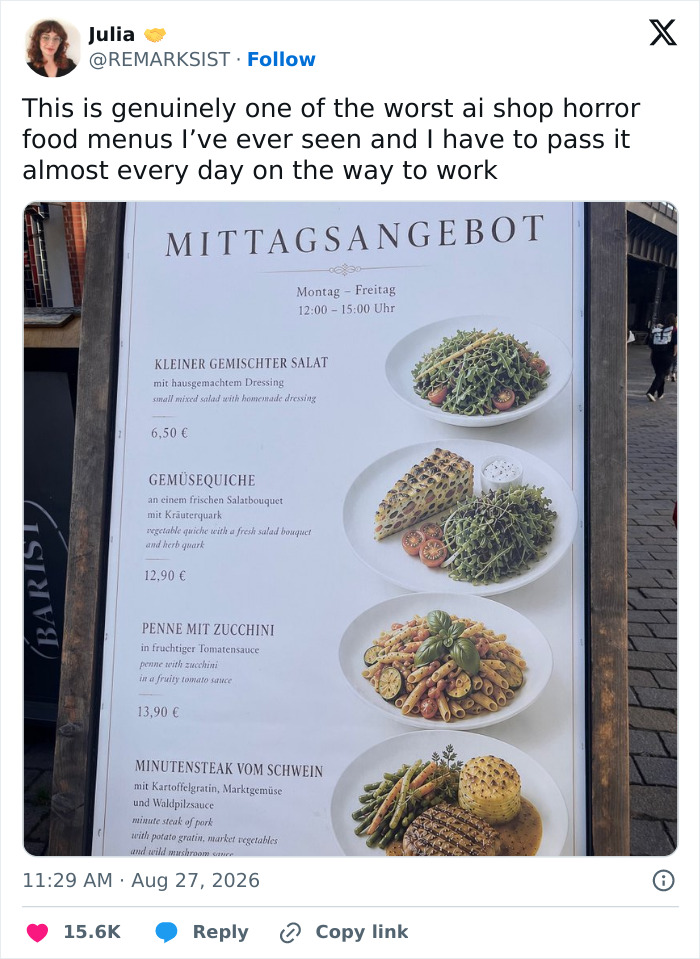
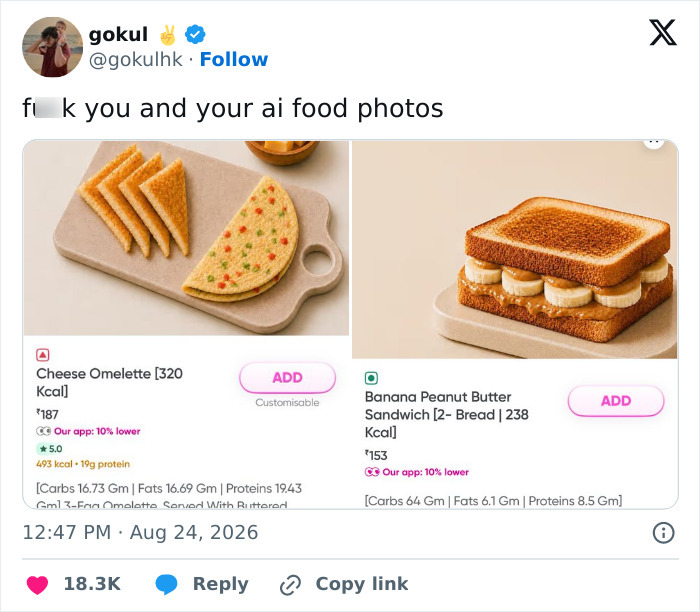
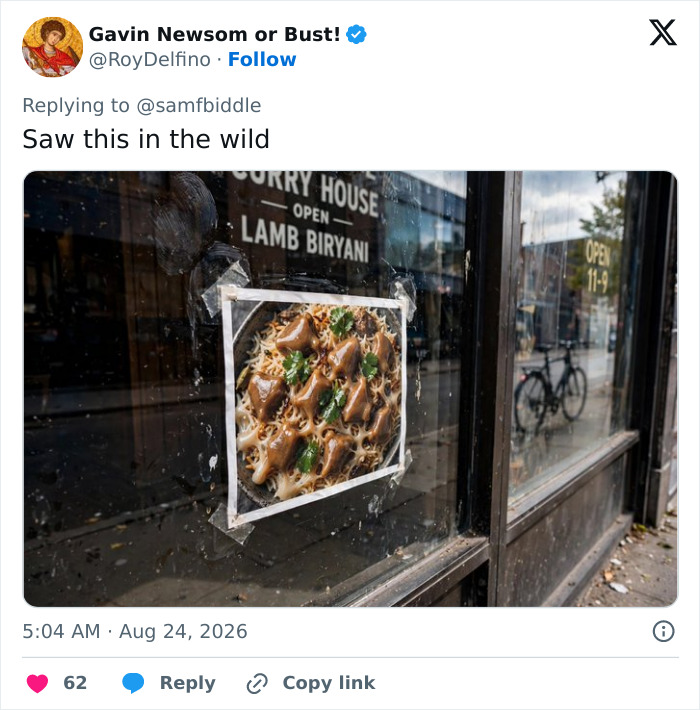
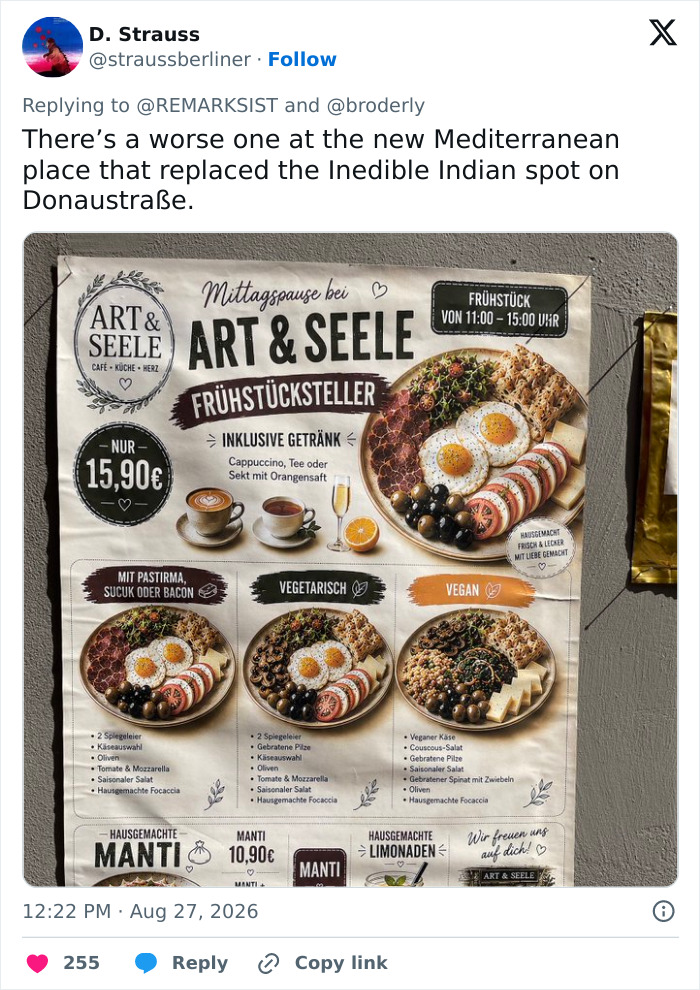
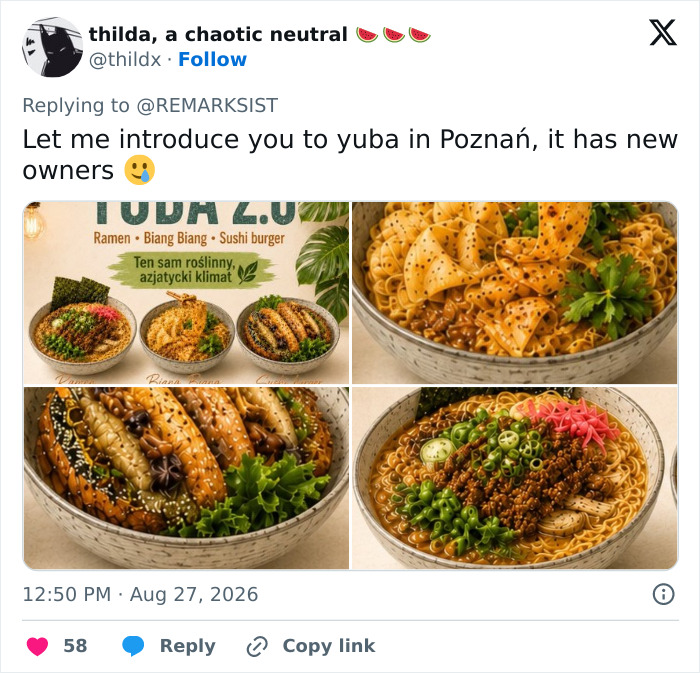
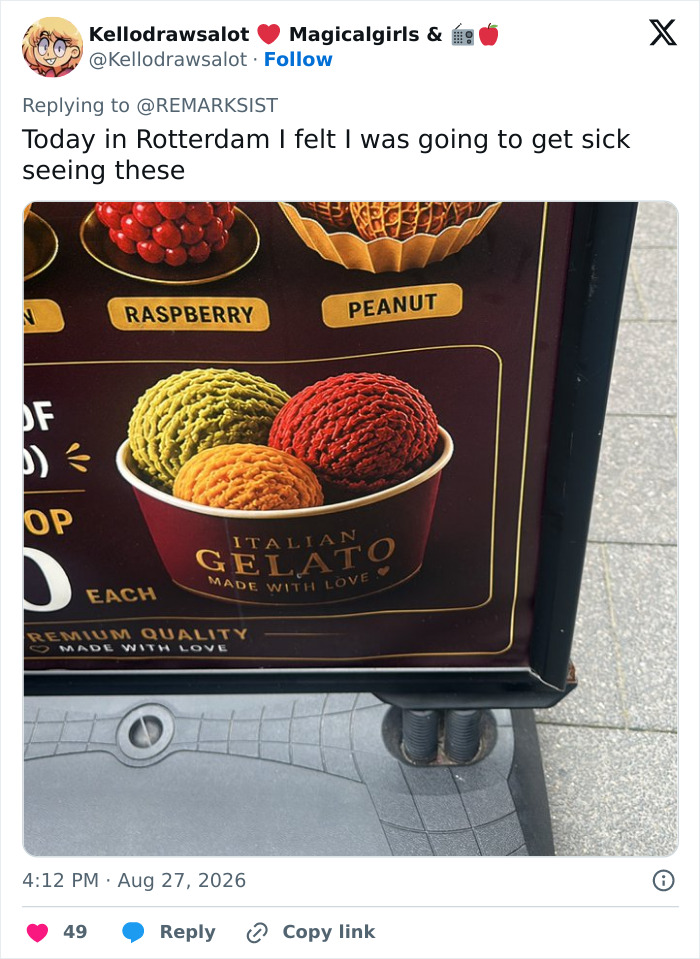
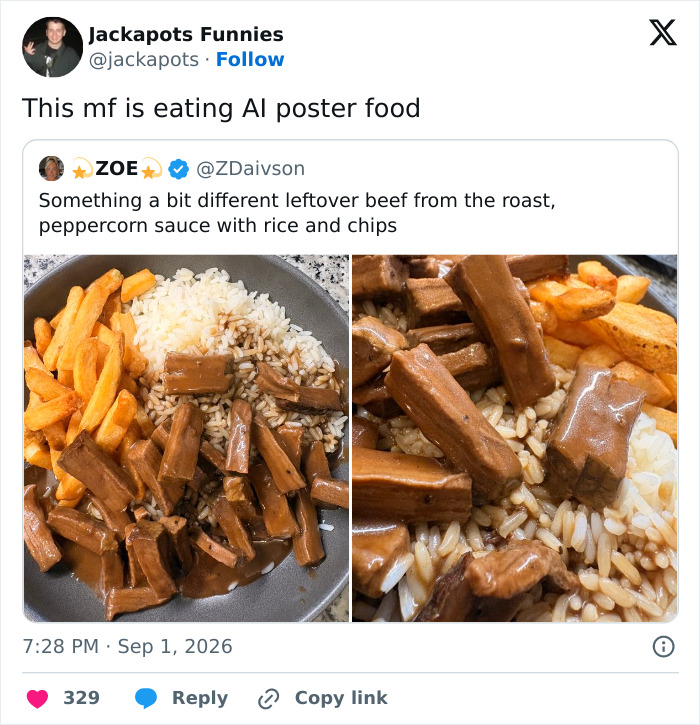
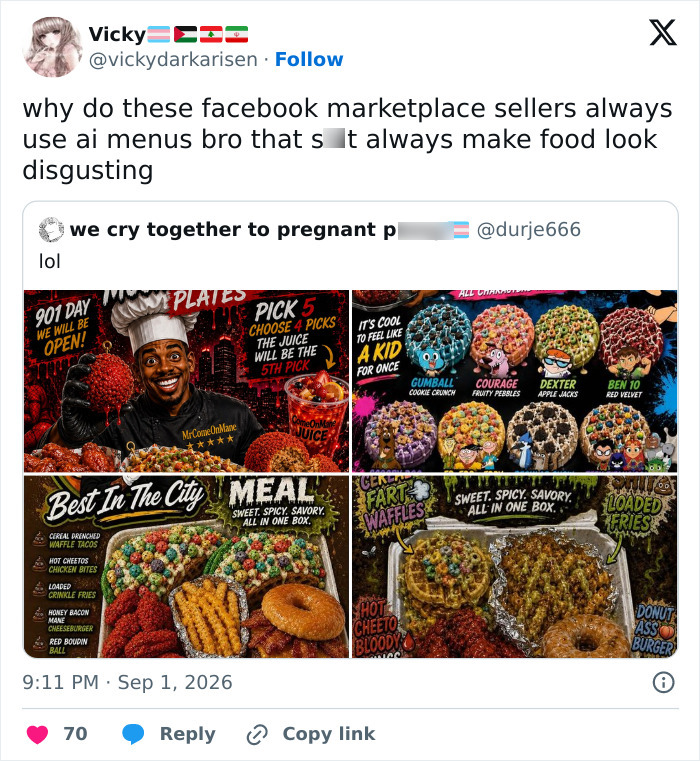
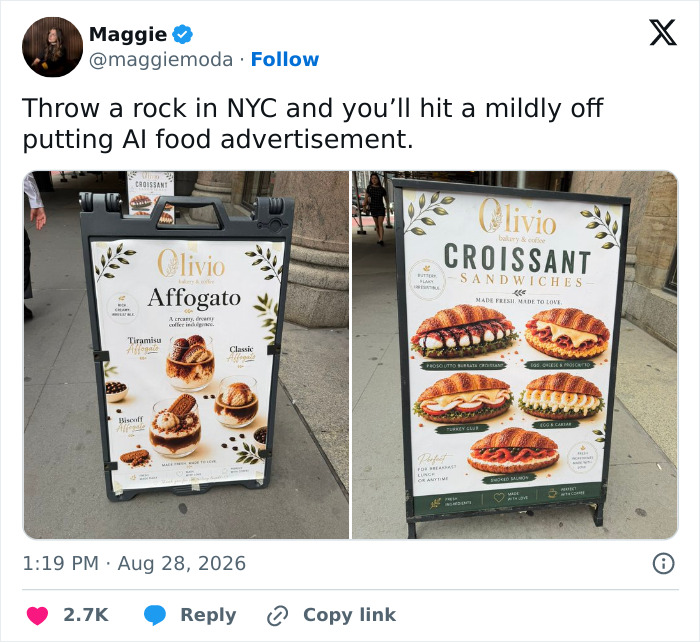
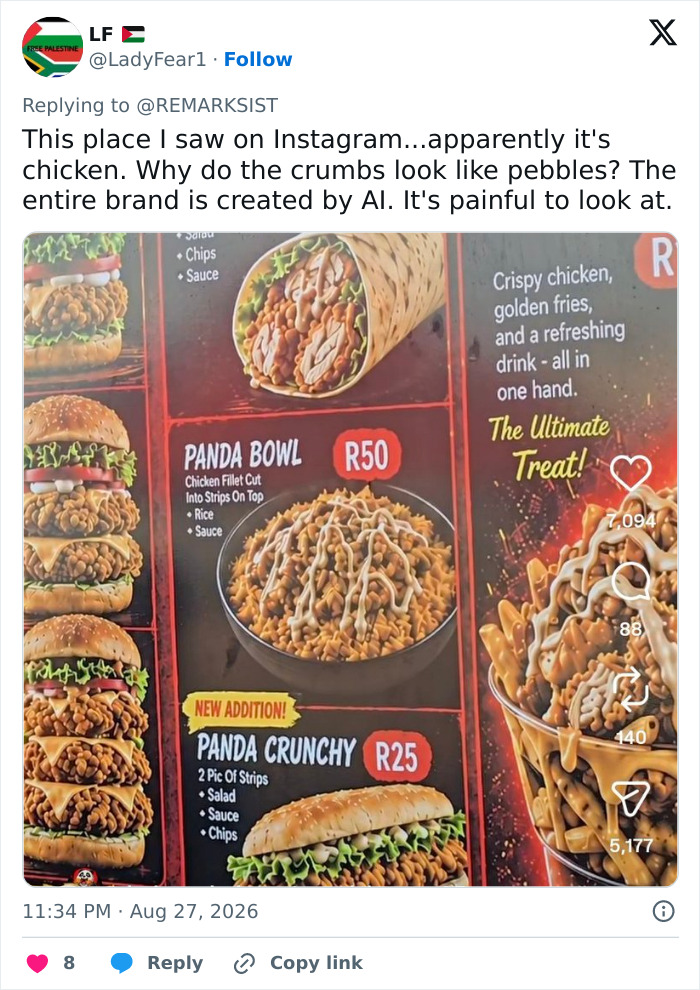
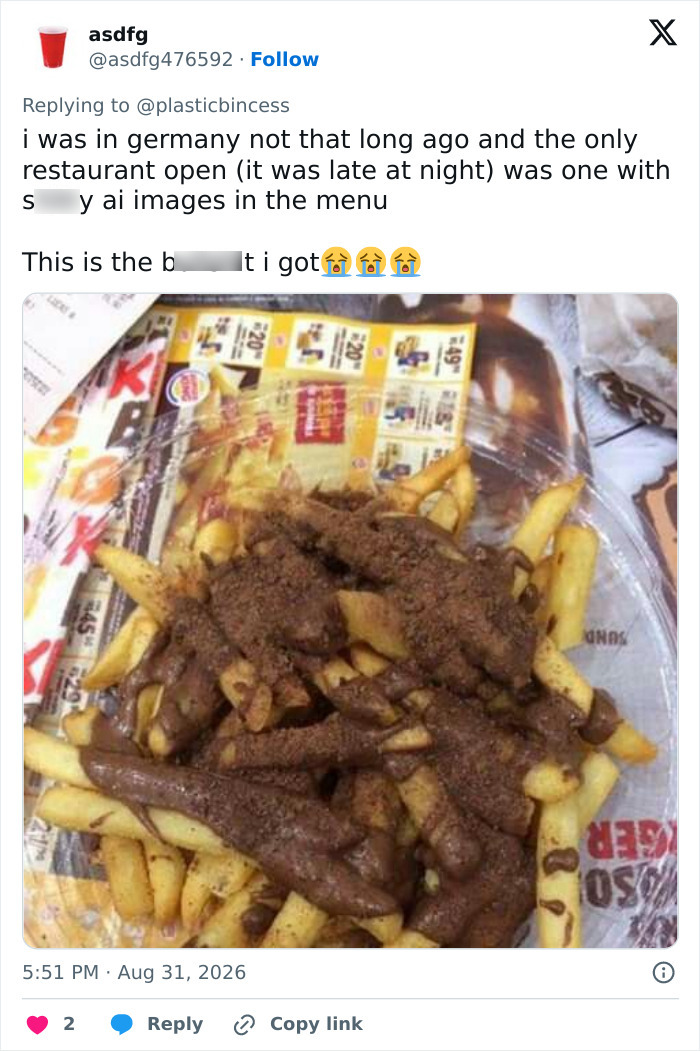
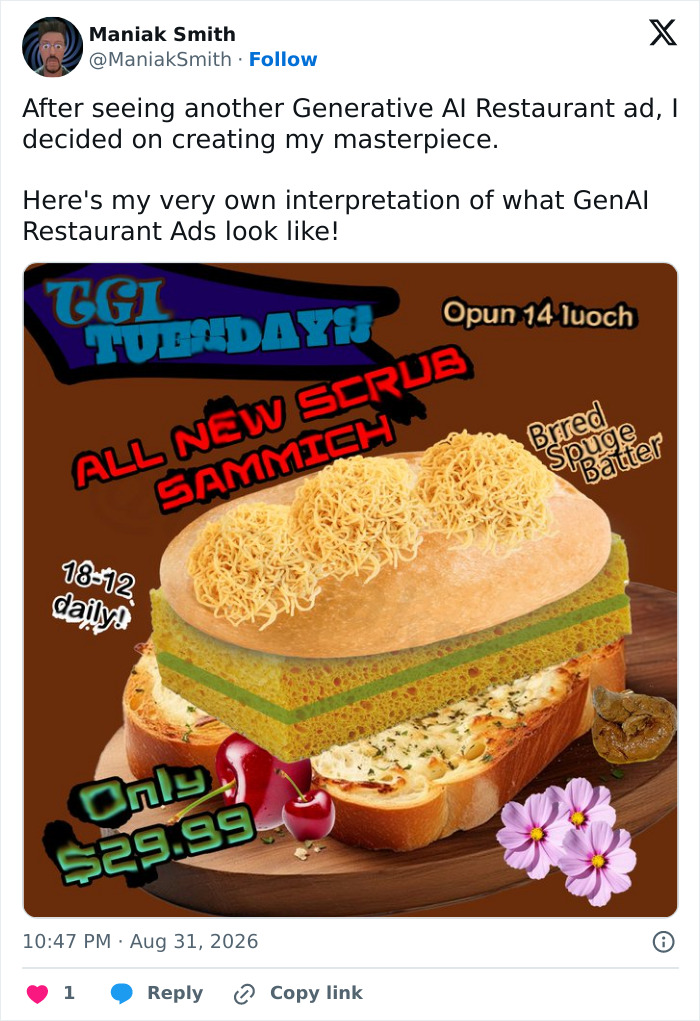
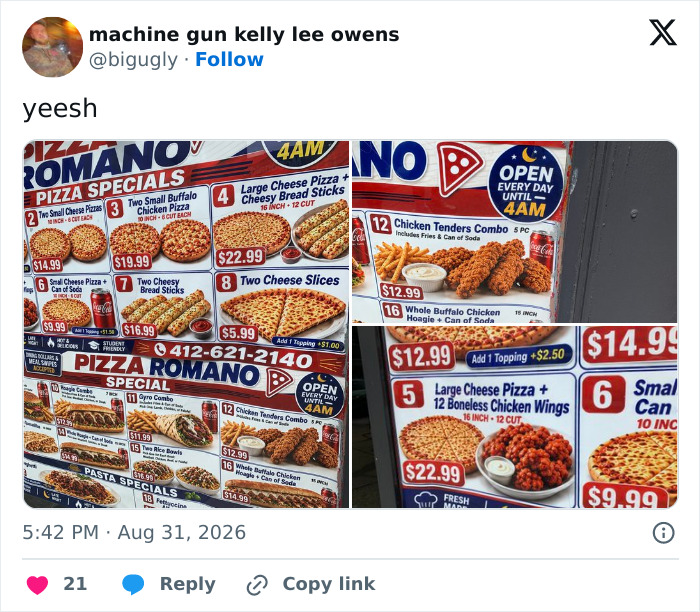
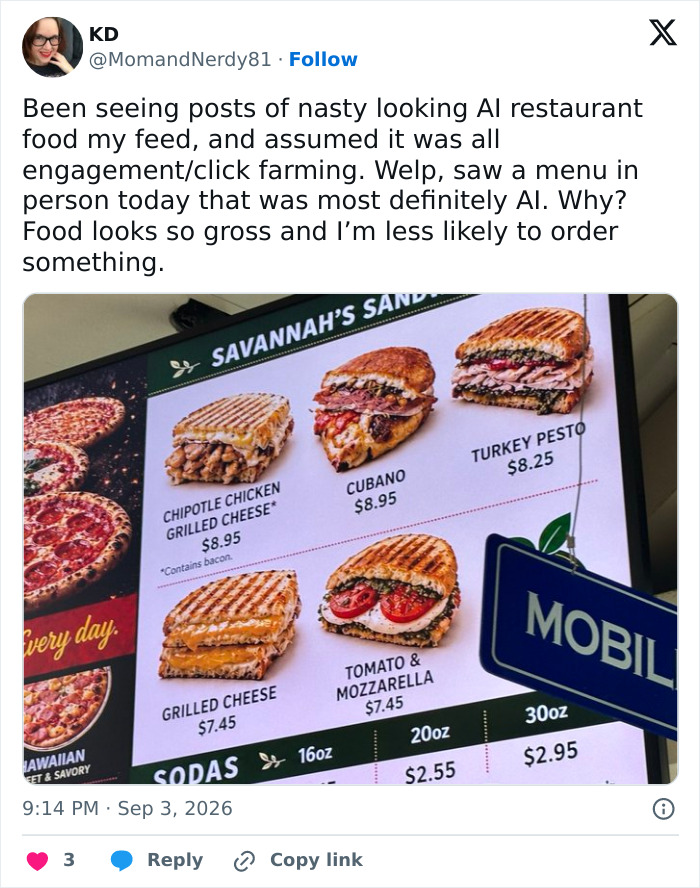
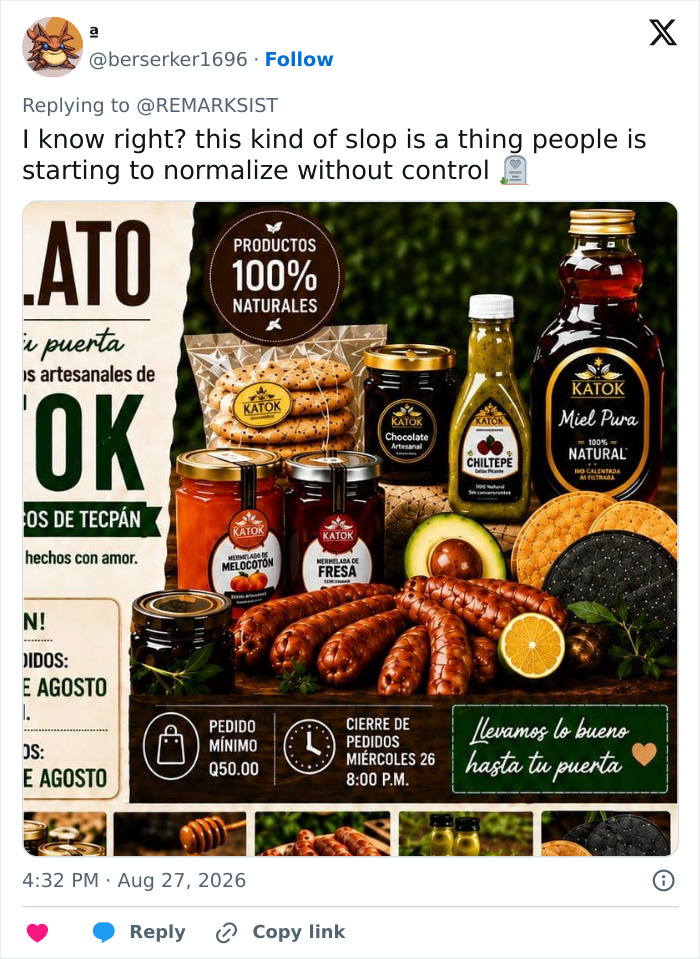
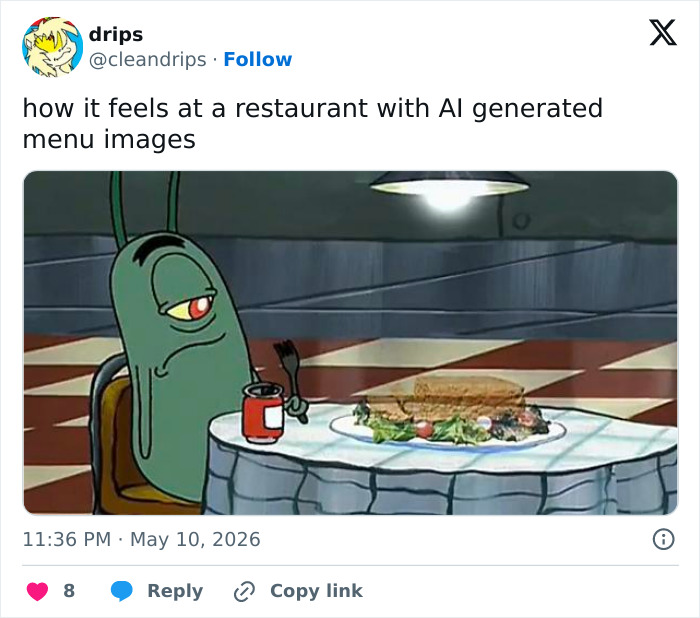
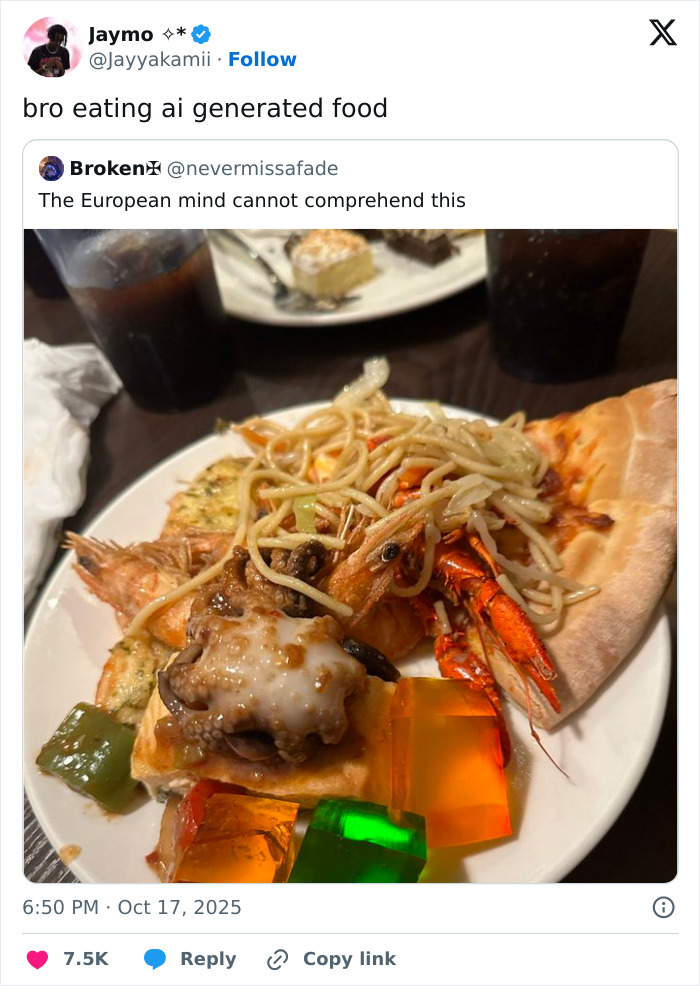
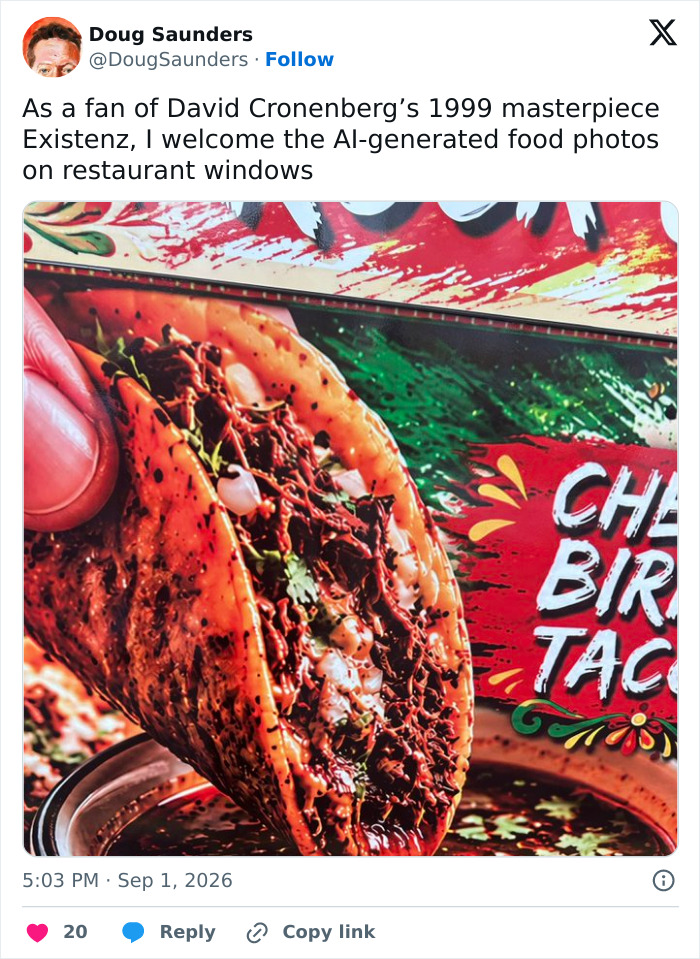
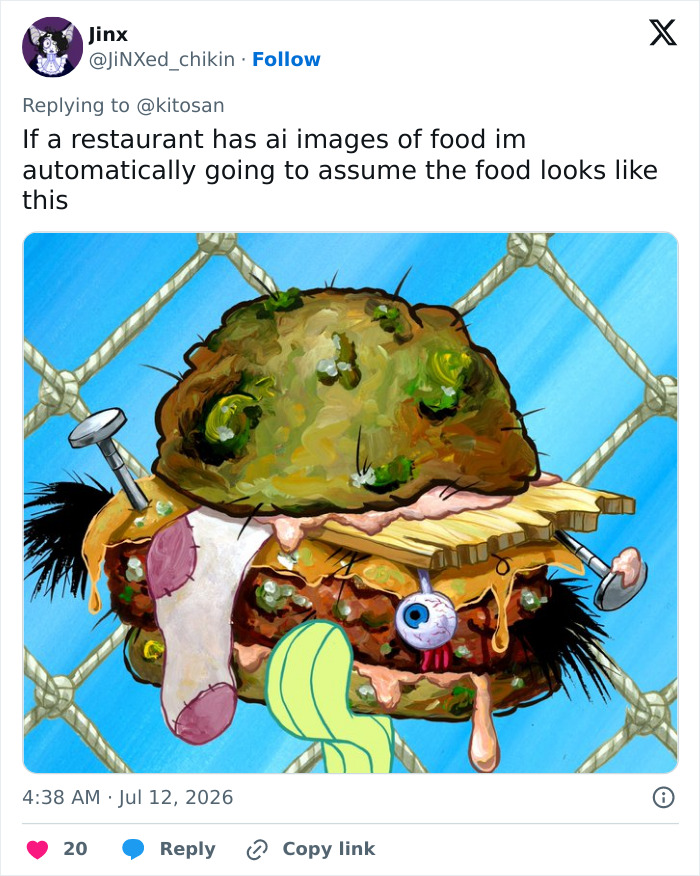
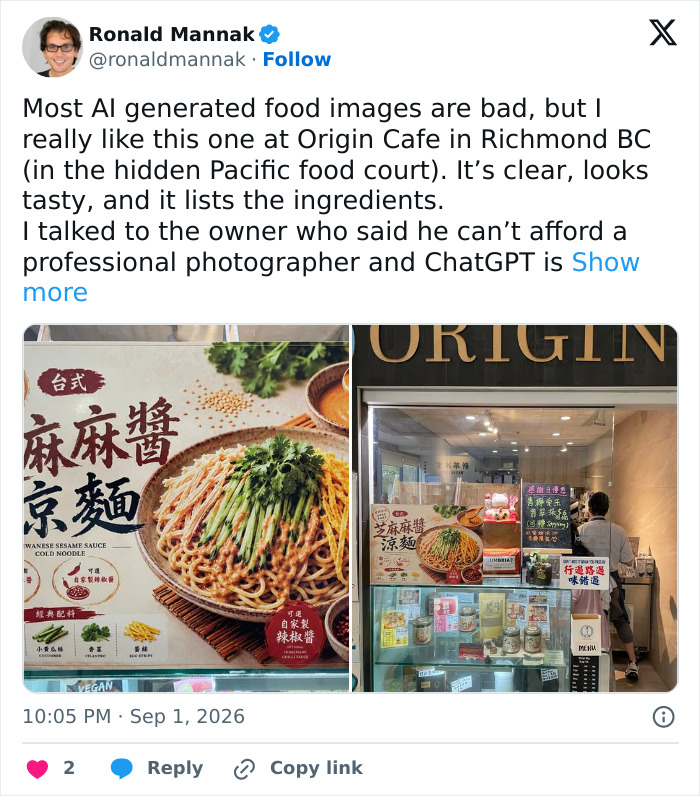
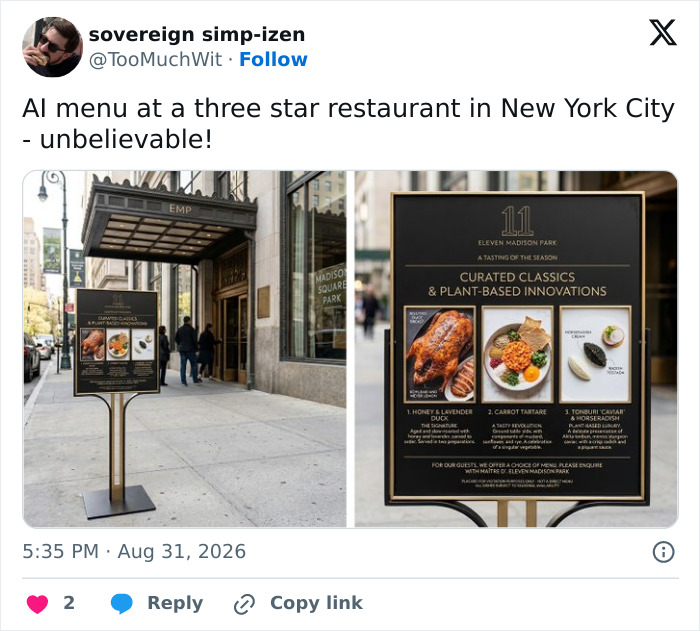
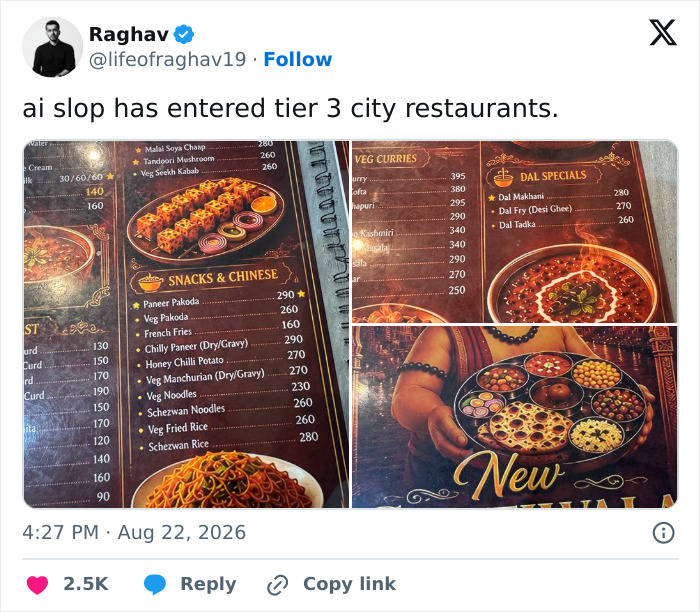
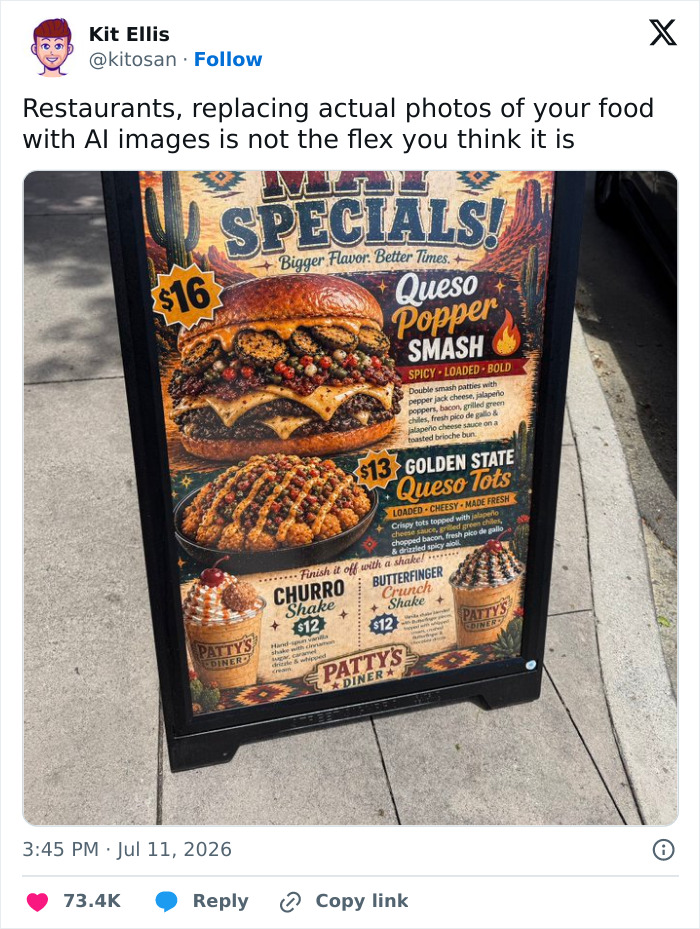
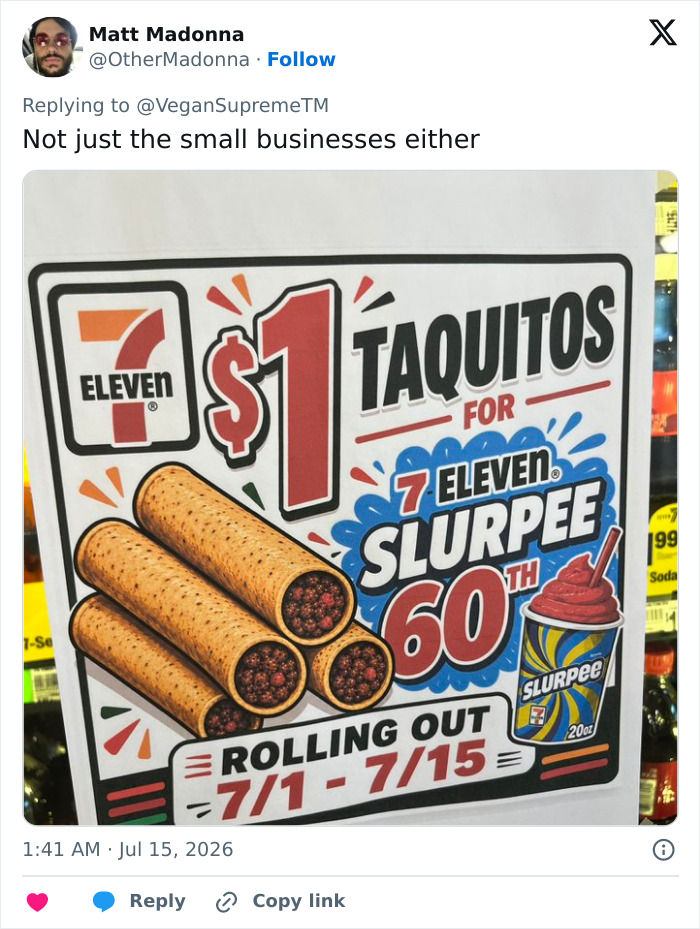
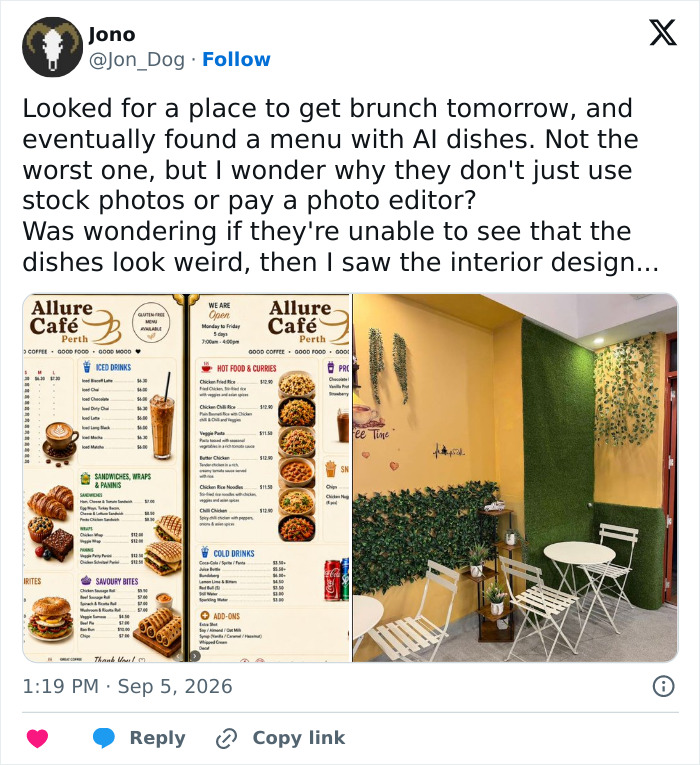
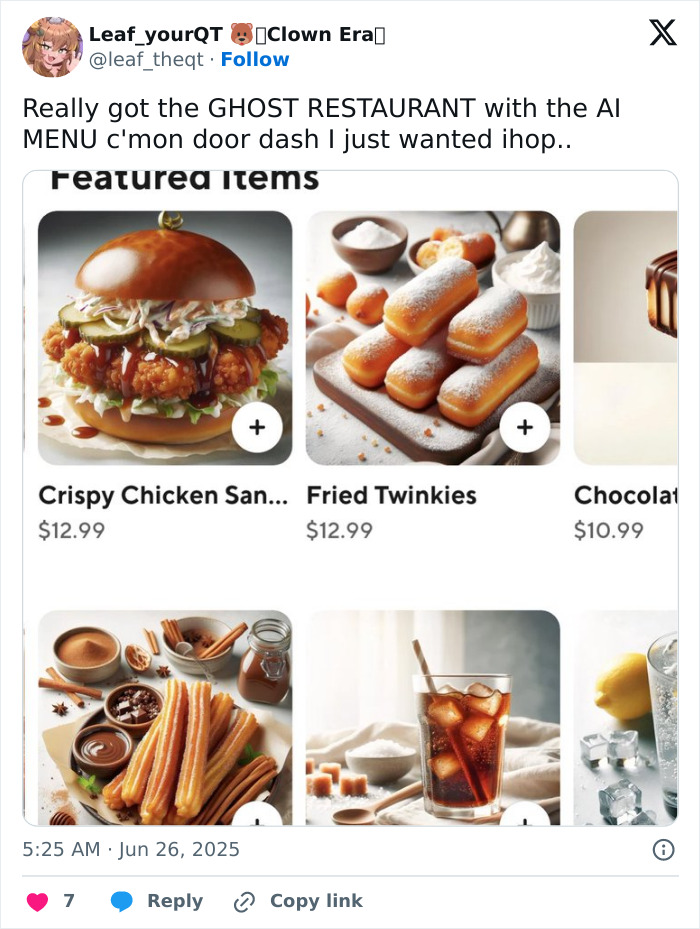
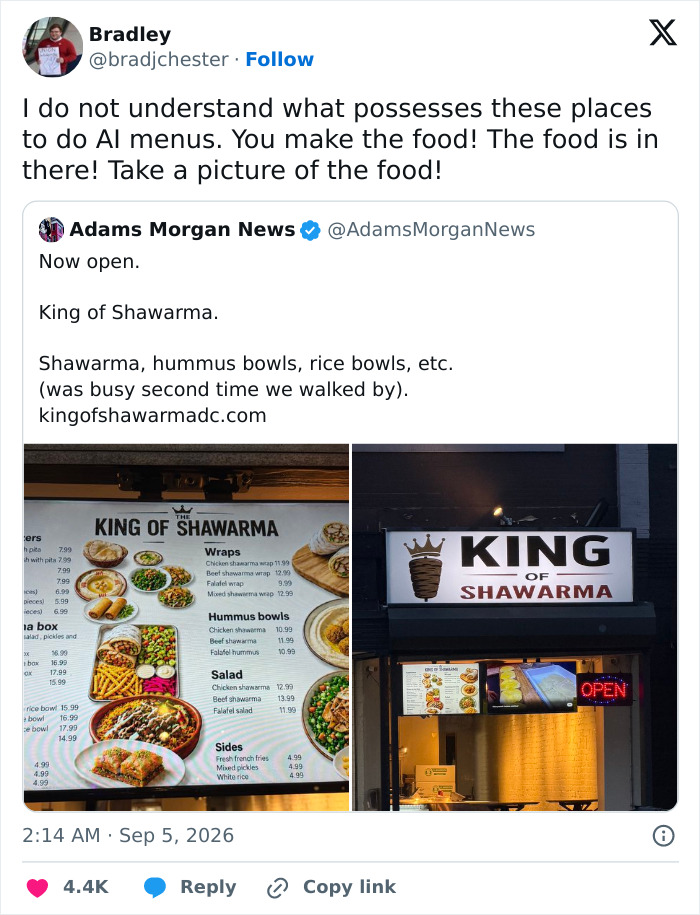
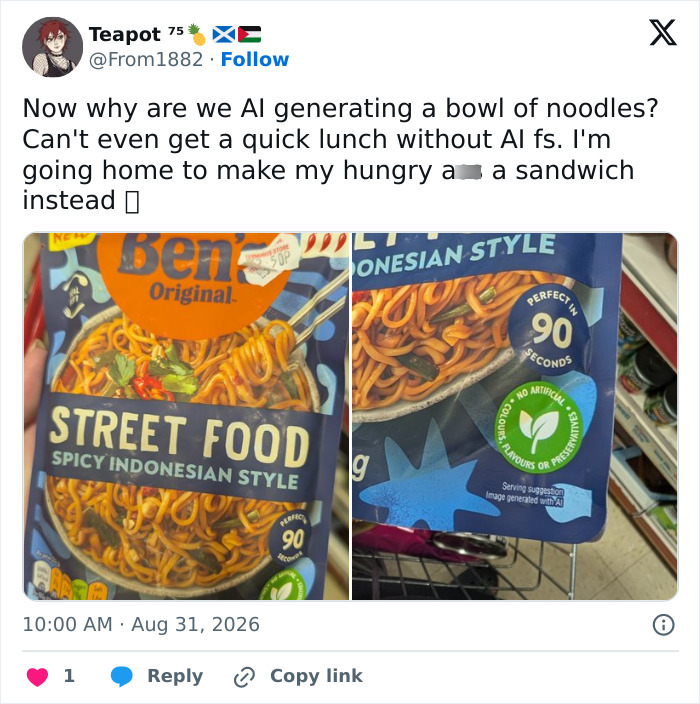
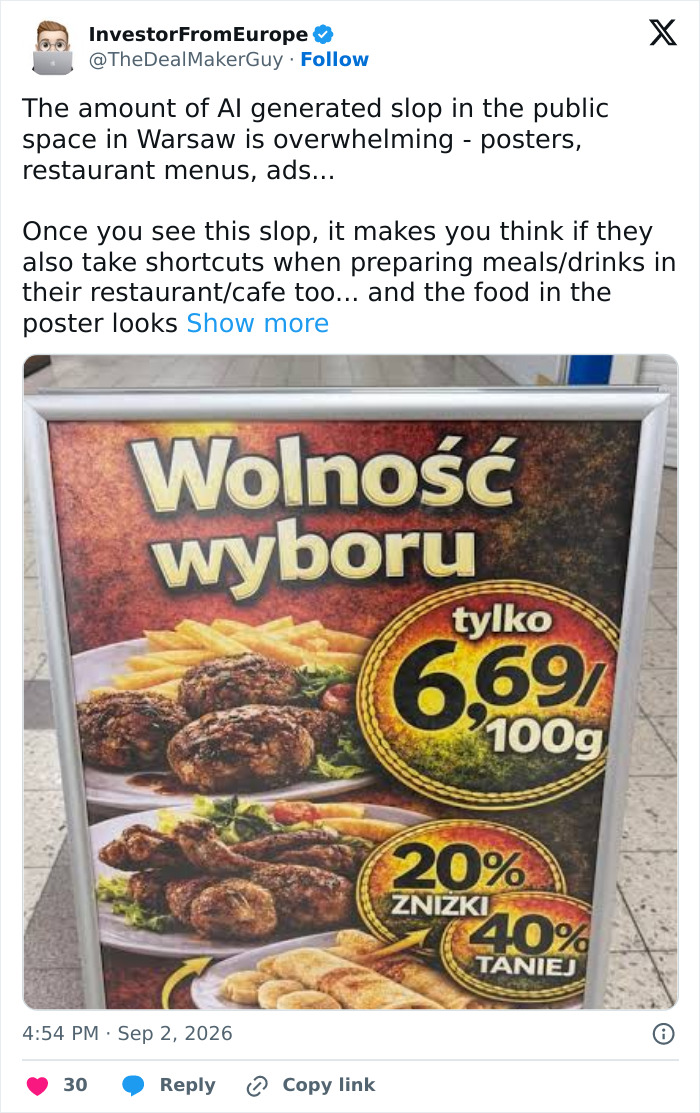
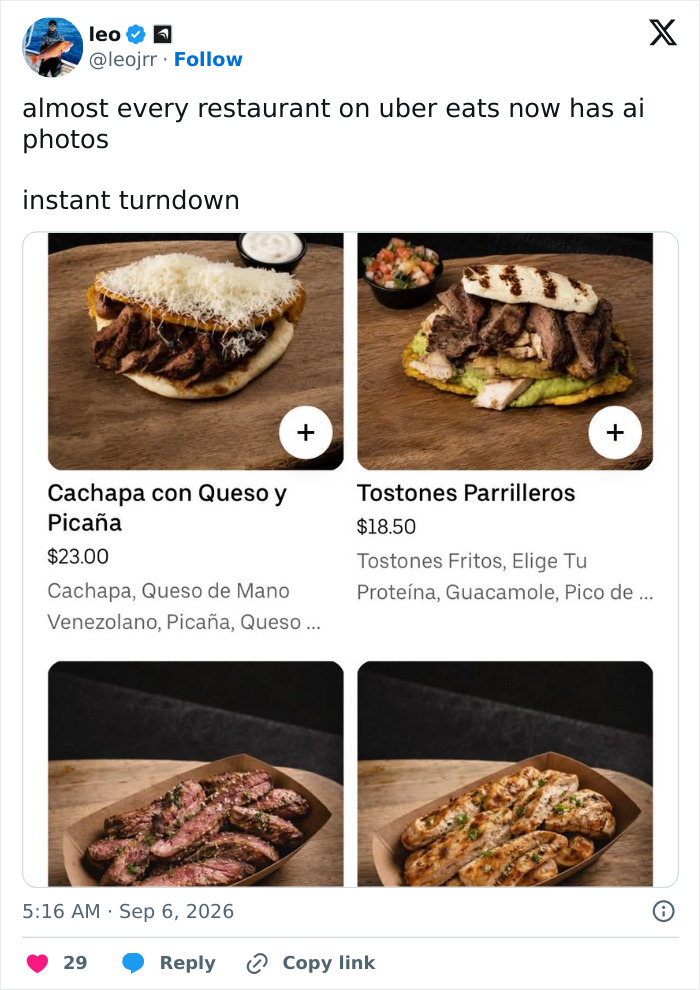
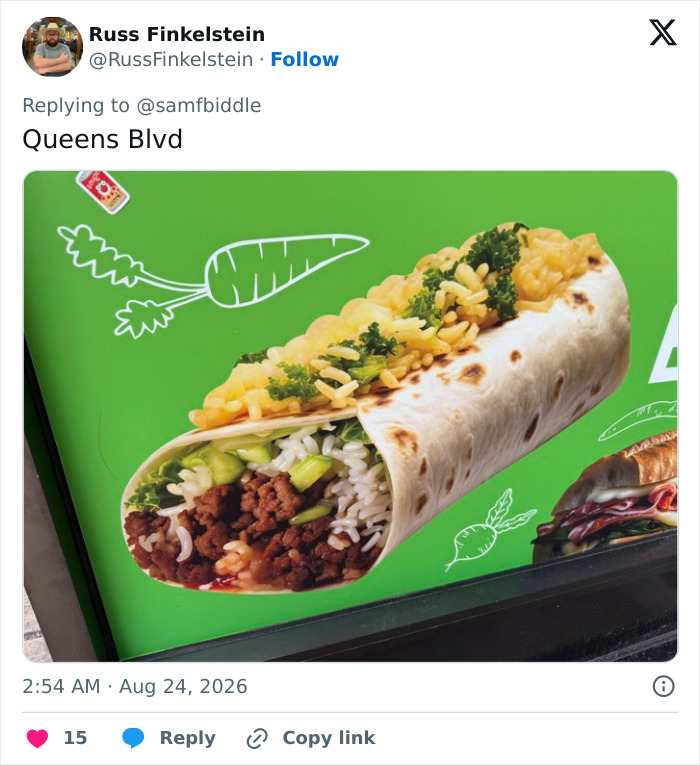
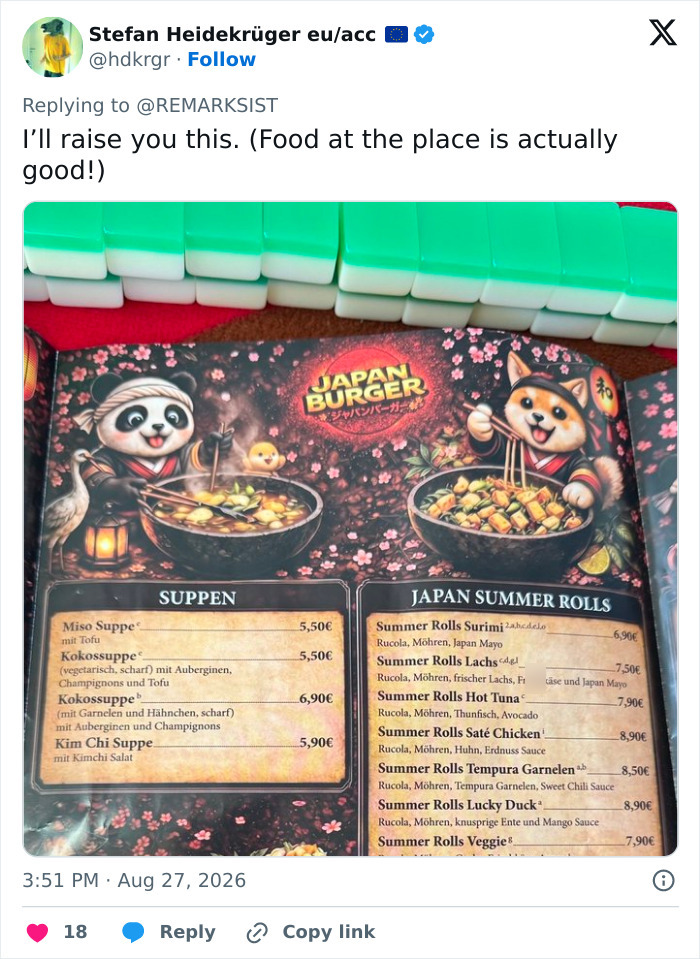
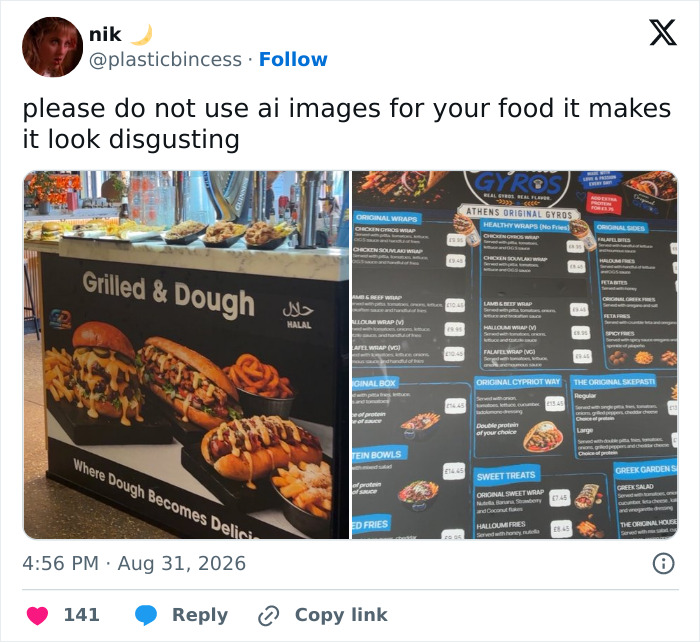
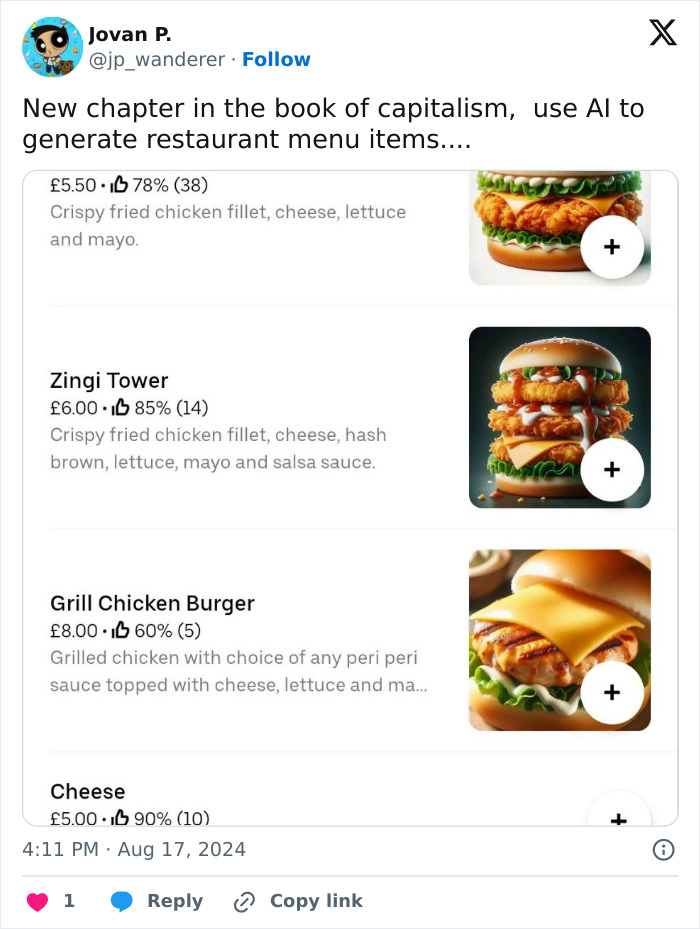
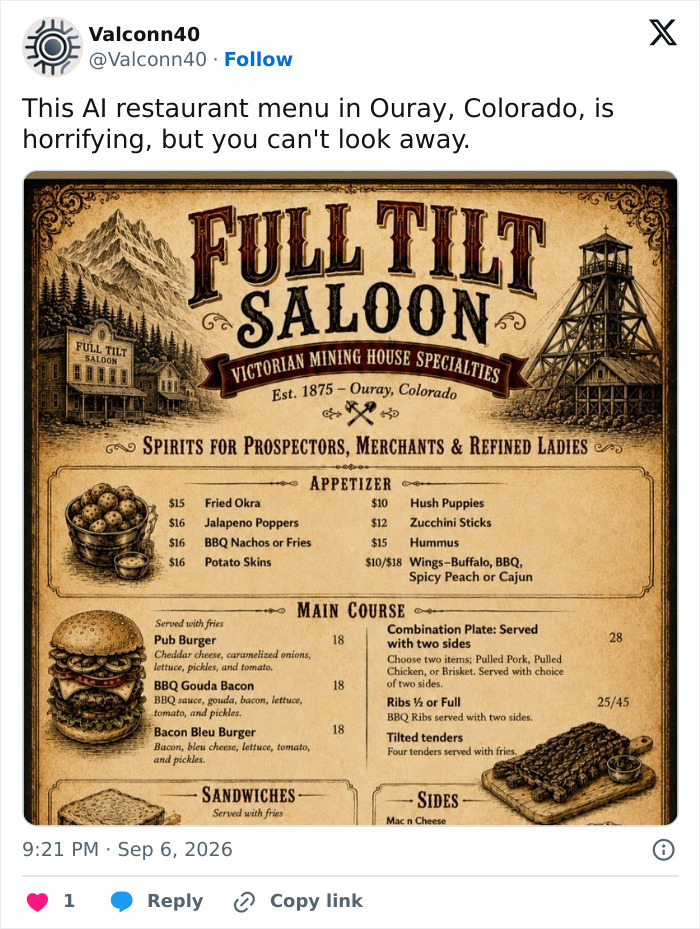
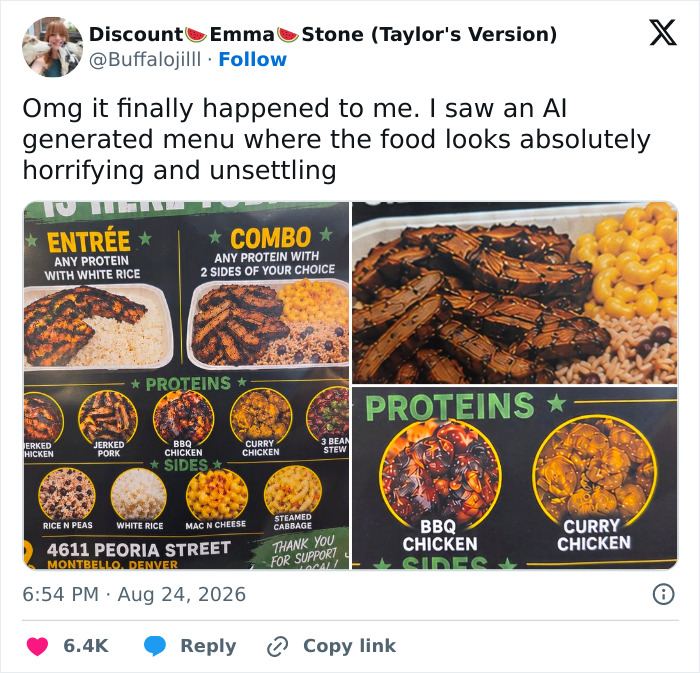
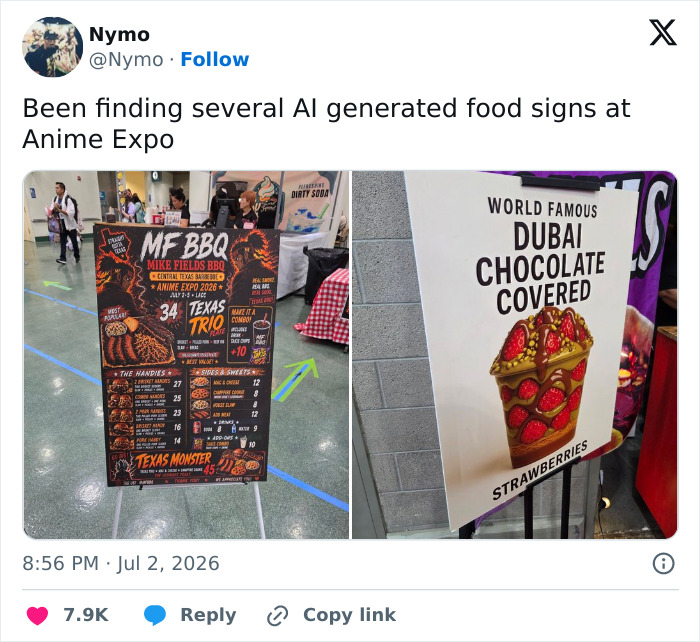
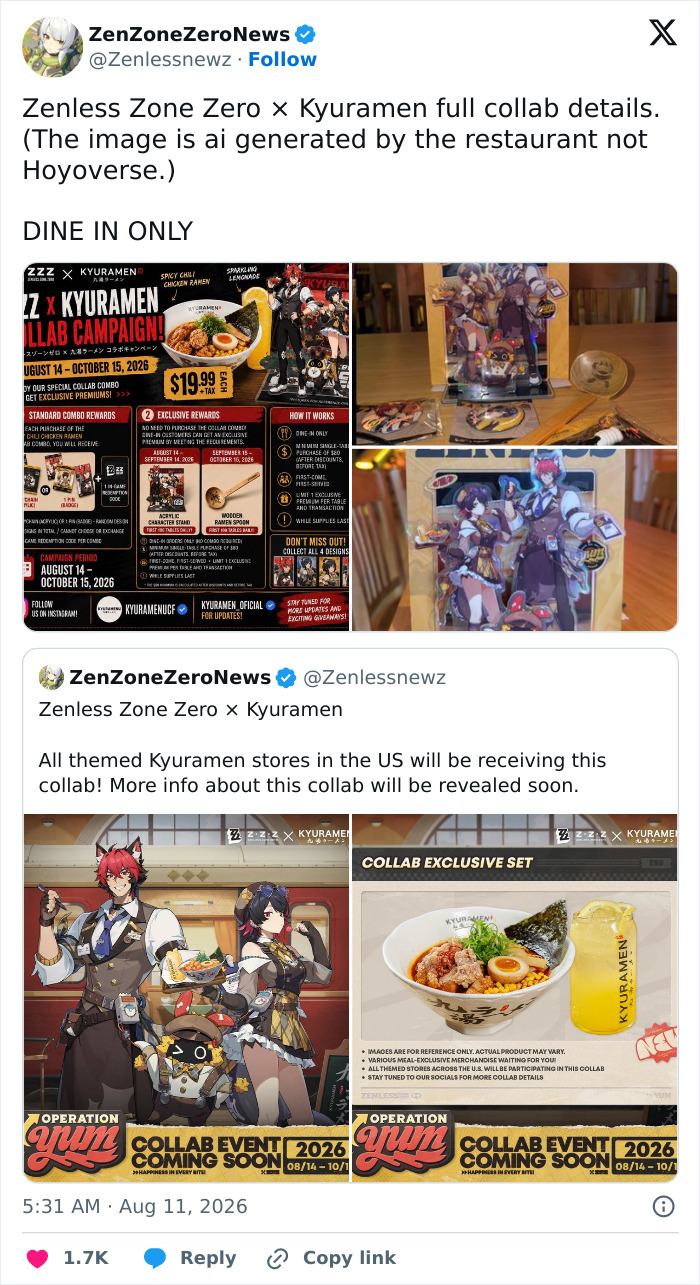
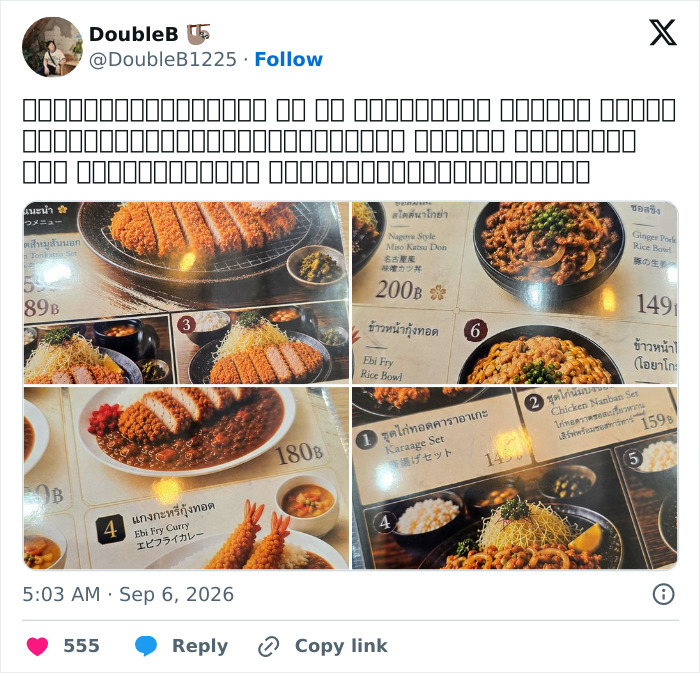
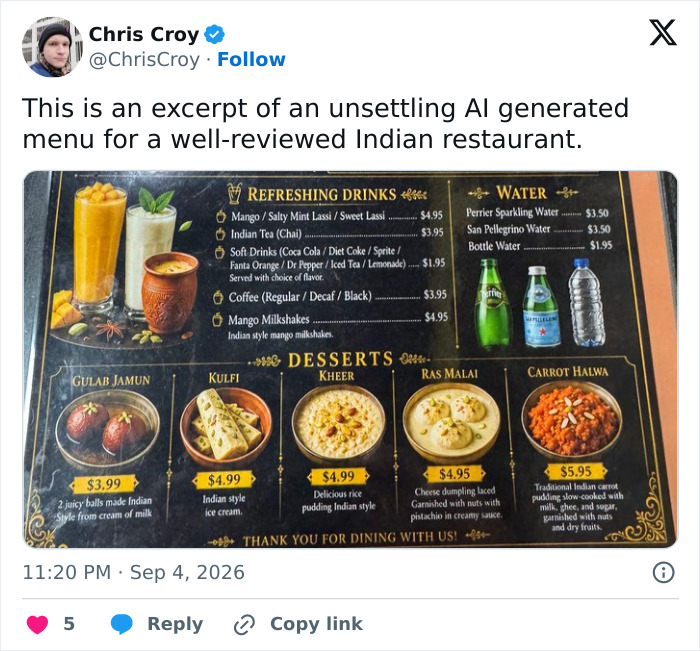
Whatever the future might bring, people and businesses already use AI for all kinds of everyday tasks, and they do not always use it well. People across the internet are sharing bizarre restaurant food ads that appear to rely heavily on AI-generated images. And in most cases, the results are so grotesque they belong in horror movies.

These examples are a pretty good reminder that AI can generate an image, but it still can’t replace the human touch.

RELATED:
    #2

    Unappetizing-AI-Food-Ads-Used-Restaurants

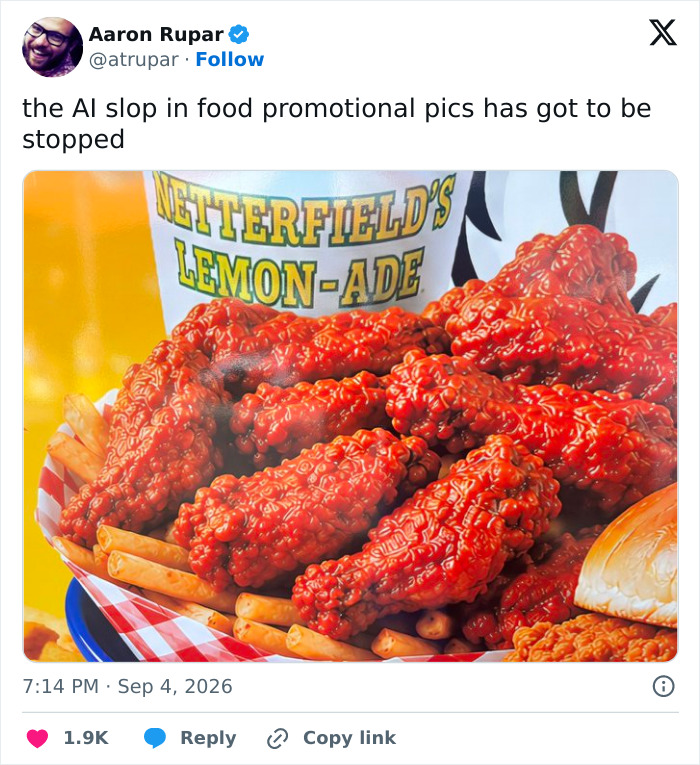
    dotmariusz Report

    Starbug
    Community Member
    1 hour ago Created by potrace 1.15, written by Peter Selinger 2001-2017

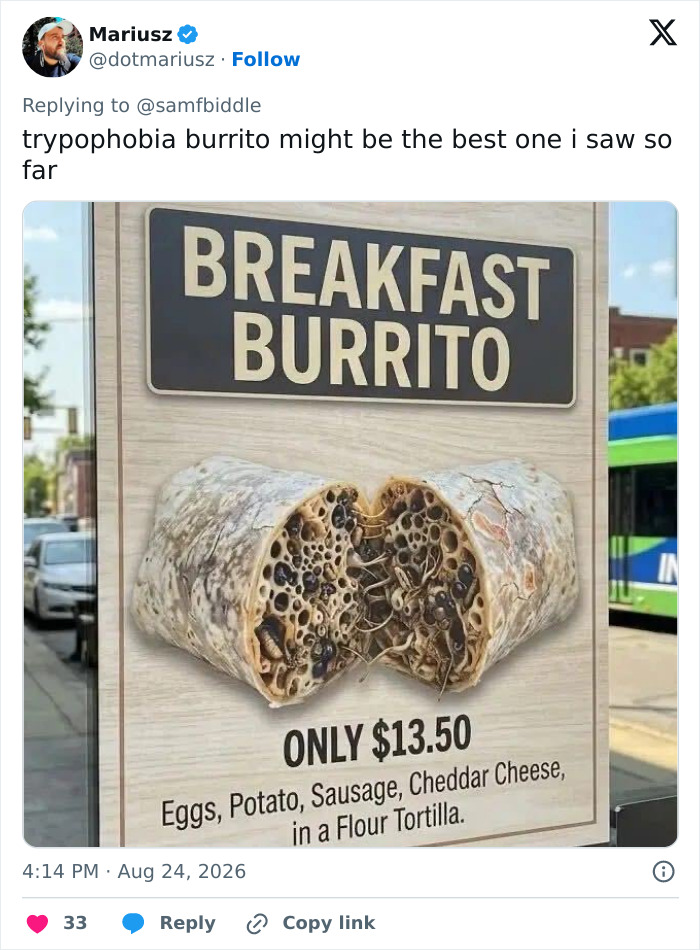
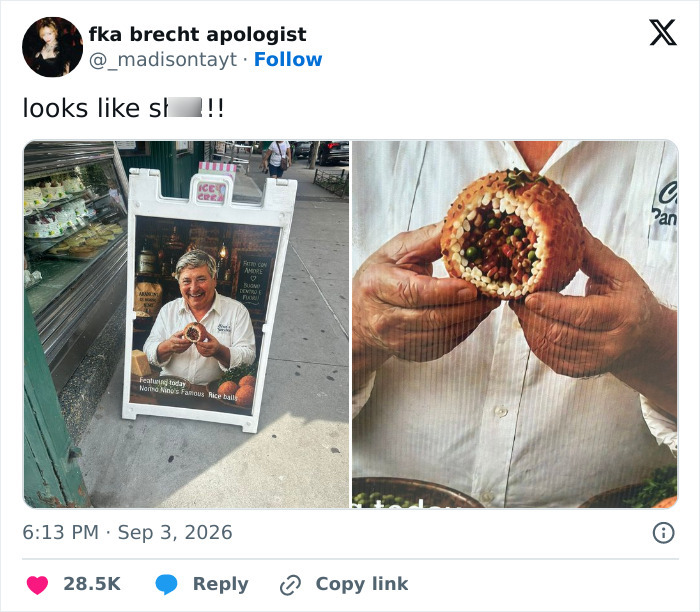
    I don't suffer from trypophobia, but this looks like a diseased bone 🤮

    View more comments

    There’s a growing ethical debate around the world about how people use technology to create and distribute information. UNESCO highlights cases where AI raises questions about responsibility, transparency, human oversight, and potential harm. These concerns make sense especially when AI-generated images present something as ordinary as a restaurant meal.

    The main issue here is that this technology has moved far beyond its original niche. A UK Government survey found that 79% of adults had used at least one AI tool, while 34% had used generative AI tools. Those figures show how quickly the tech has entered everyday life, from work tasks to creating images and other content.

    ADVERTISEMENT
    #3

    Unappetizing-AI-Food-Ads-Used-Restaurants

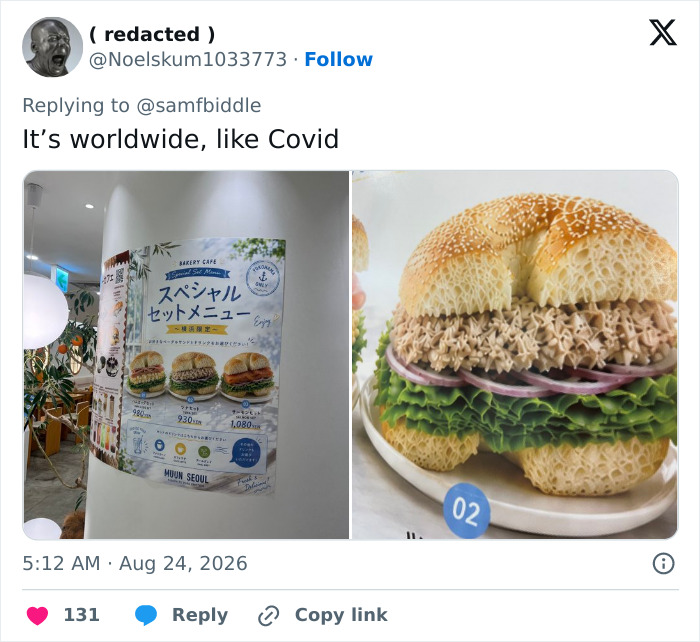
    shoe0nhead Report

    Sara Frazer
    Community Member
    10 minutes ago Created by potrace 1.15, written by Peter Selinger 2001-2017

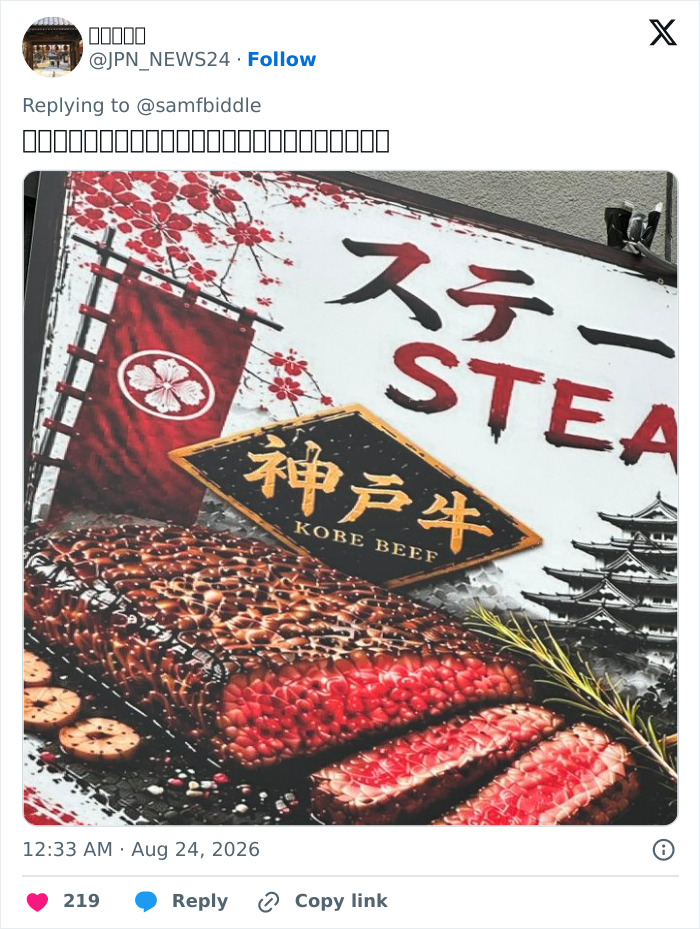
    360° would take you back to the store 🤣 sorry, I had to...

    That rapid adoption could soon make AI-generated material difficult to distinguish from human-created content online. The prediction is that 90% of online content could become AI-generated by 2026. If this comes true, people will encounter synthetic images and text constantly, including when they browse restaurant menus, websites, delivery apps, and social media.

    ADVERTISEMENT
    #5

    Unappetizing-AI-Food-Ads-Used-Restaurants

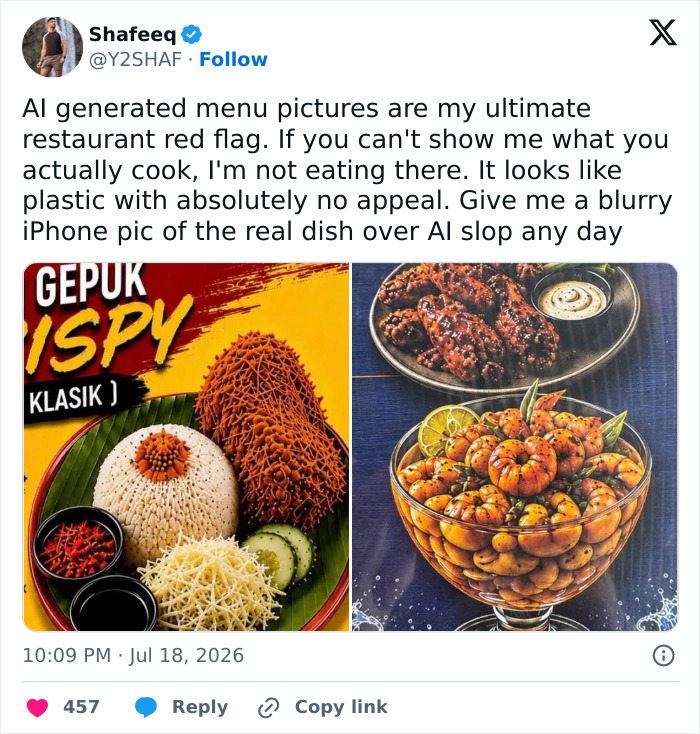
    Y2SHAF Report

    Spidercat
    Community Member
    1 minute ago Created by potrace 1.15, written by Peter Selinger 2001-2017

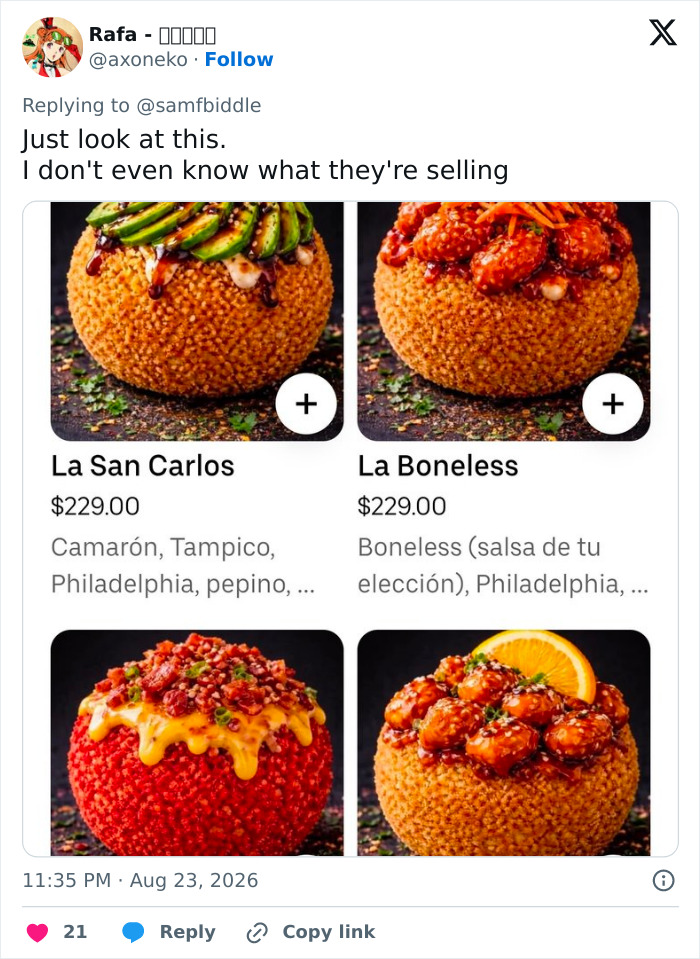
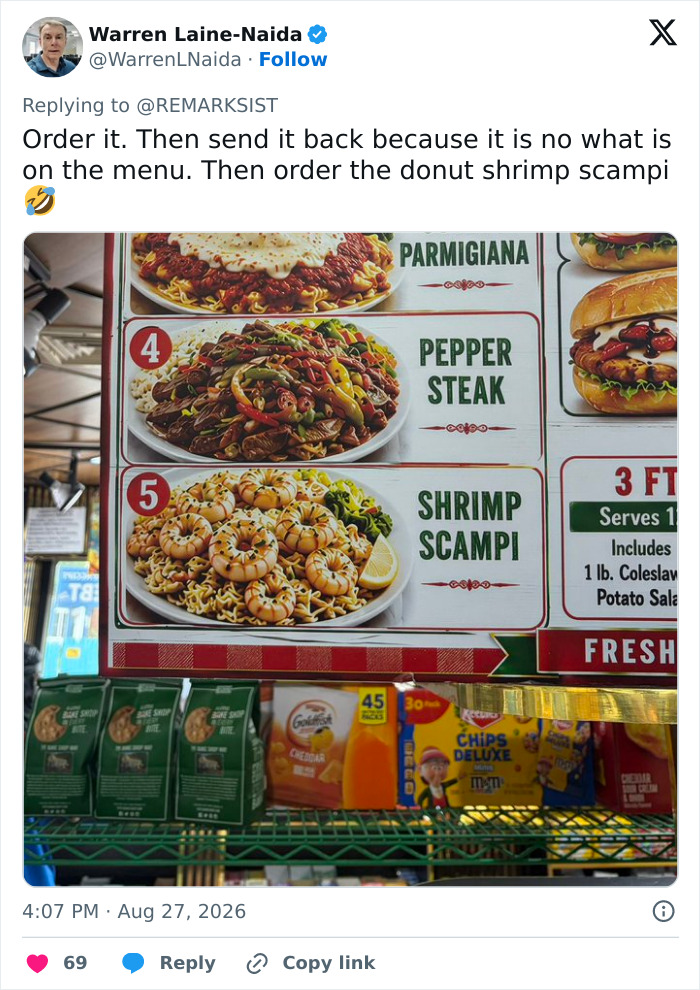
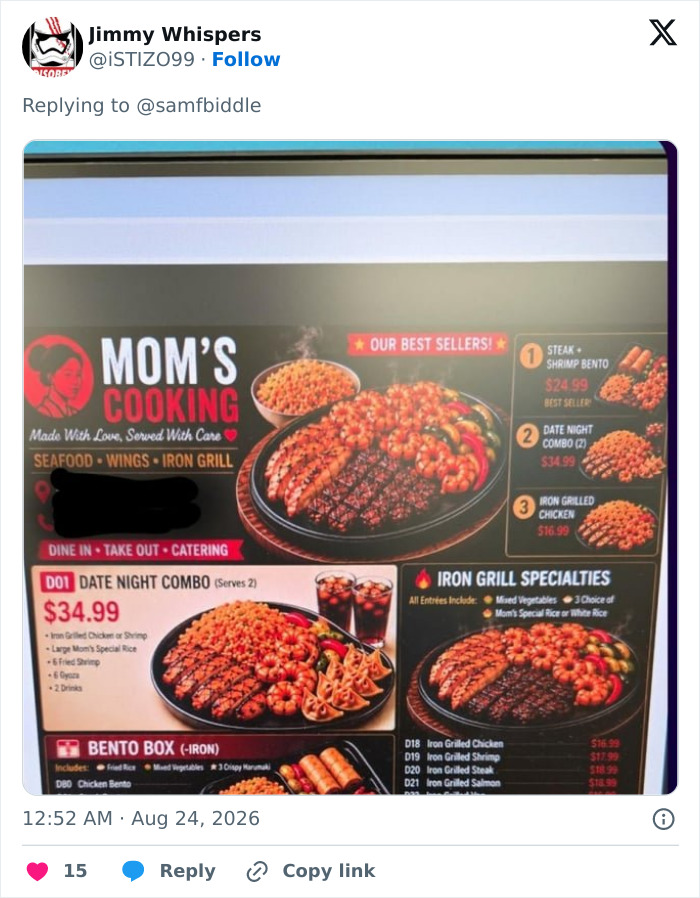
    Those shrimp look like witchetty grubs, which taste ok ish. Can confirm...

    ADVERTISEMENT

    Ever heard of the "Dead Internet Theory"? It claims that much of what we see online no longer comes from real people, but from bots and AI-generated content. The theory emerged on fringe forums in the late 2010s and argued that the internet is gone forever as automated content began taking over search results and social feeds.

    While the theory’s literal claim remains speculative, the European Consortium for Political Research notes that its central idea has become harder to dismiss: the digital world increasingly contains automated content that looks human. The issue is that machine generated content is moving from the digital to the real world.

    ADVERTISEMENT
    ADVERTISEMENT

    However, AI has also created new jobs and roles. Businesses have built entire workflows around the technology, spawning more than 1.3 million new AI-related jobs. AI engineers, data annotators, AI trainers, ethics specialists, all these show how quickly the industry is adapting.

    Some of those emerging roles exist because businesses need people who can understand artificial intelligence. Meanwhile, companies increasingly rely on AI for marketing and visual content, creating another everyday use for these tools.

    ADVERTISEMENT

    At the same time, AI can do more than create an image of a meal. Researchers have also used generative AI to design actual burger recipes, training a model on 2,216 human-created recipes before generating and testing new combinations. Some of those burgers performed as well as or better than a Big Mac in blind sensory tests.

    The goal was also to develop burgers with specific nutritional and environmental goals. A mushroom-based recipe achieved a much lower environmental impact, while a bean-based burger scored substantially higher for nutrition. In this case, AI did not simply make food look appealing, but it helped create food that humans could actually taste and evaluate.

    Personally, what I find really weird about these food ads is that they seem completely deceitful. The European Union rules require food information to avoid misleading consumers, including information about a food’s characteristics, composition, quantity, and presentation. 

    A restaurant could face an even stricter situation in Japan, where food labeling and presentation rules place significant emphasis on accurate information about products. An AI image that dramatically changes what a customer should expect would raise serious compliance concerns.

    Never miss a story that brings joy to the world. Add us on Google

    The situation looks way less specific in the United States, where most of the images posted online come from. The Federal Trade Commission suggests truth-in-advertising principles, but there doesn’t appear to be a federal rule that simply says a restaurant’s advertised food pic must exactly match the meal served to customers.

    However, it seems like a growing trend in the food industry. A 2026 report from the National Restaurant Association found that 26% of restaurant operators already use AI-related tools. Marketing leads the way, with 19% of full-service operators and 15% of limited-service operators using AI to assist with it.

    Businesses already use AI tech to handle marketing, administrative work, and other tasks, while many users plan to invest even more in technology. Food images may simply represent another step in that growing adoption.

    This leaves restaurants with a very simple question: does an AI image really help customers understand what they will receive? If a food image looks immediately grotesque and unrealistic, doesn’t it interfere with the consumer’s choice? At least in my case, these AI-generated images make me feel uncomfortable rather than hungry.

    Do you think restaurants should be allowed to use AI-generated pics of their food in ads? Would you find them misleading? Share your thoughts in the comments!
    #32

    Unappetizing-AI-Food-Ads-Used-Restaurants

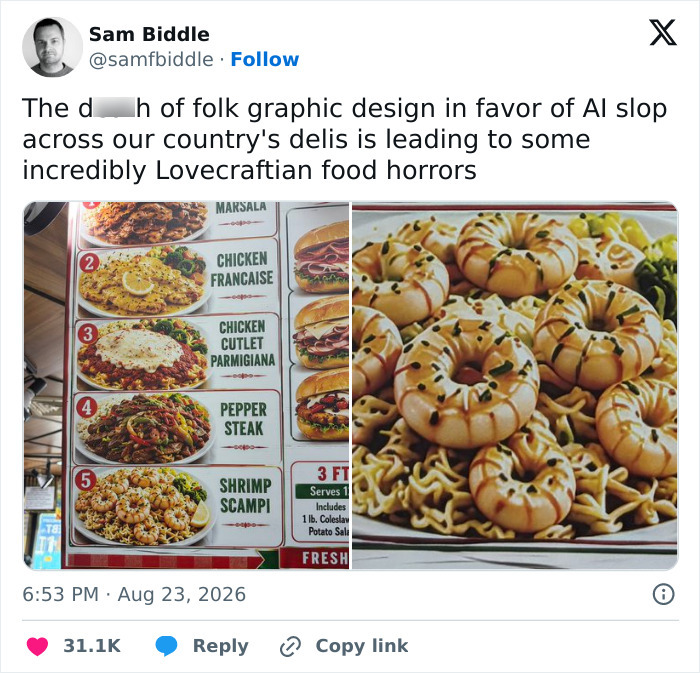
    iSTIZO99 Report

    Sara Frazer
    Community Member
    2 minutes ago Created by potrace 1.15, written by Peter Selinger 2001-2017

    AAAAAH, AGAIN WITH THE DONUT SHRIMP! 💀

    #61

    Unappetizing-AI-Food-Ads-Used-Restaurants

    Nymo Report