Get Premium
Dark mode theme is available exclusively for premium users. Learn more about the benefits of subscribing.
No fees, cancel anytime.

 Dark Mode Ad-Free Browsing Unlimited Content
 Ad-Free Browsing Unlimited Content Dark Mode
Join 1.2 million Panda readers who get the best art, memes, and fun stories every week!

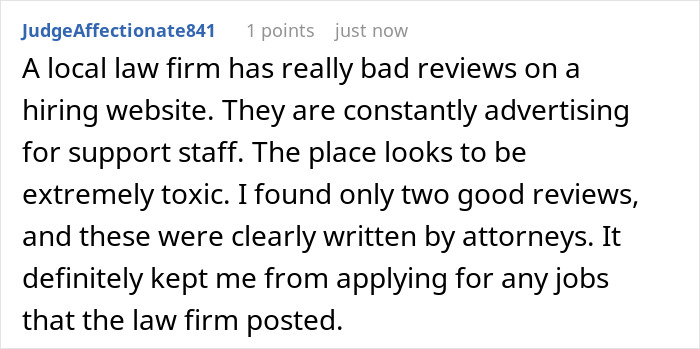
While some toxic bosses know that they run an office like a tyrant, some really do not at all understand the effect they have on their workplace. The result is that when employees finally crack and push back, or just quit, they are often utterly blindsided by their own incompetence.
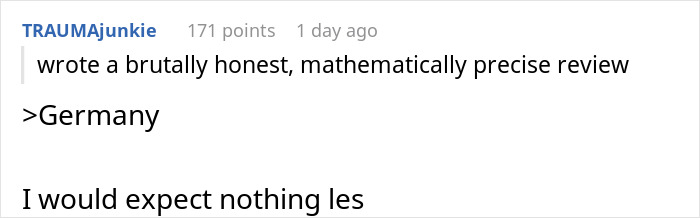
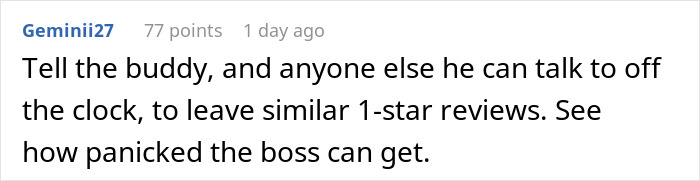
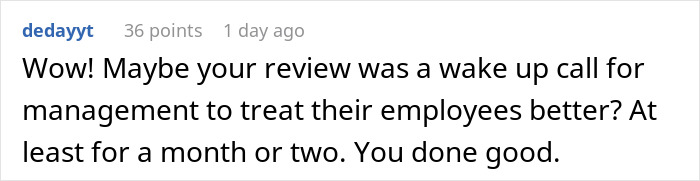
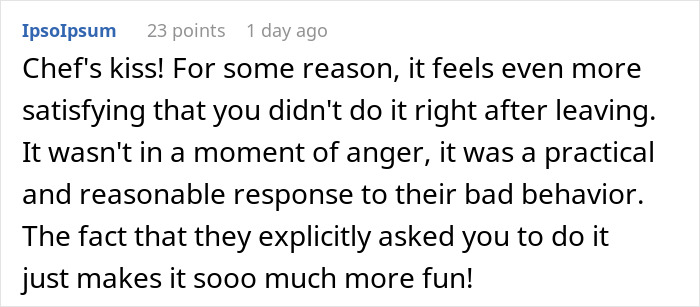
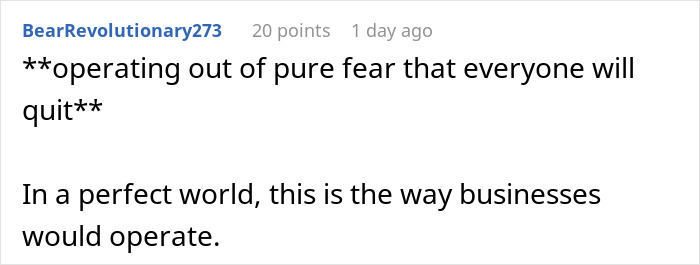
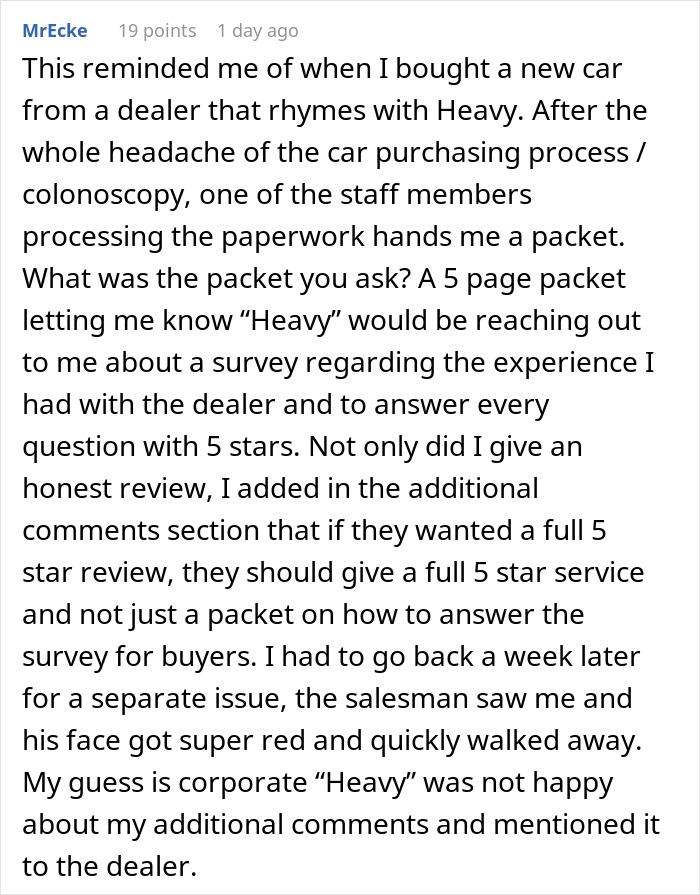
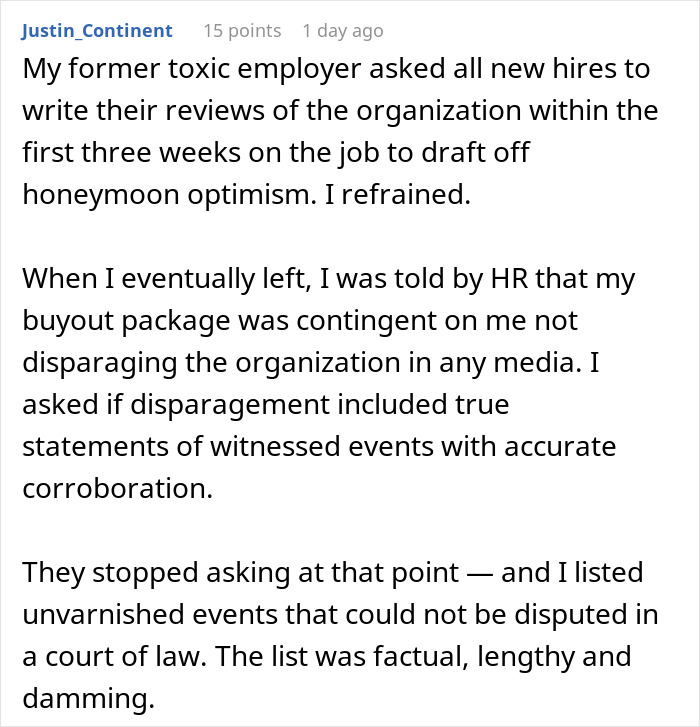
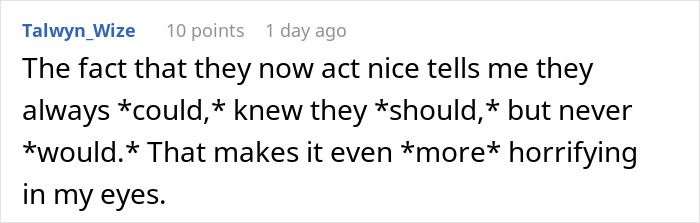
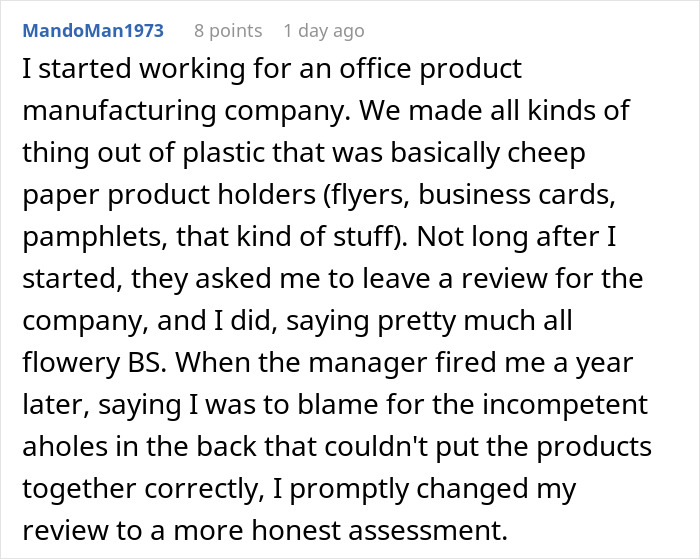
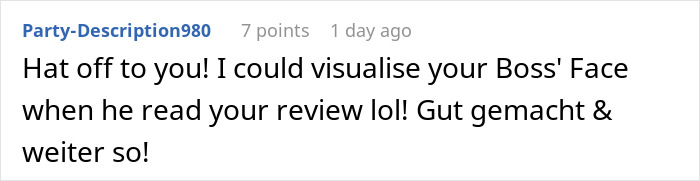
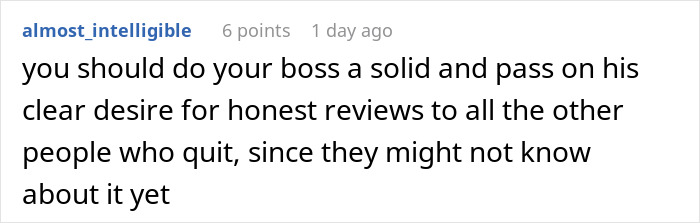
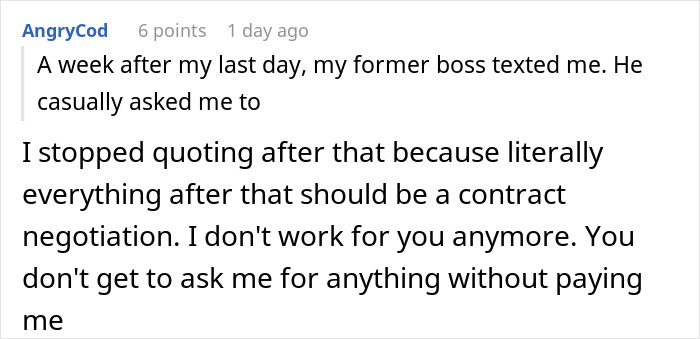
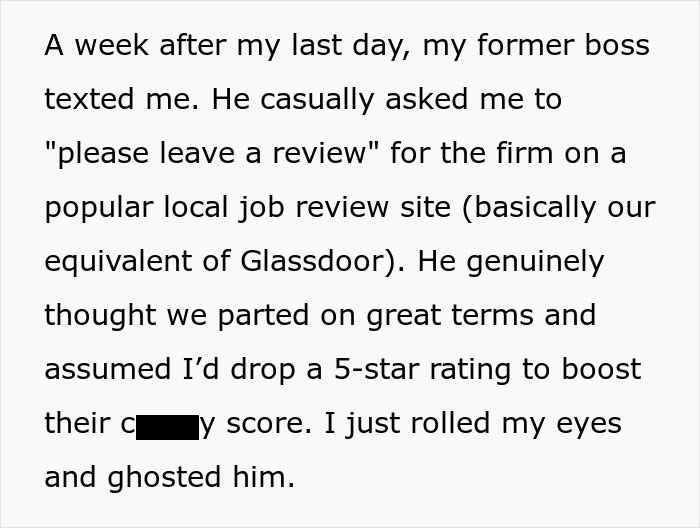
A man went online to share his tale of malicious compliance after quitting a toxic workplace and then, unexpectedly, getting a text from his ex-boss begging for a good review. So naturally he did leave a review, but not at all what the boss wanted. Readers shared their thoughts and some added their own stories to the comments.
Image credits: Drazen Zigic (not the actual photo)
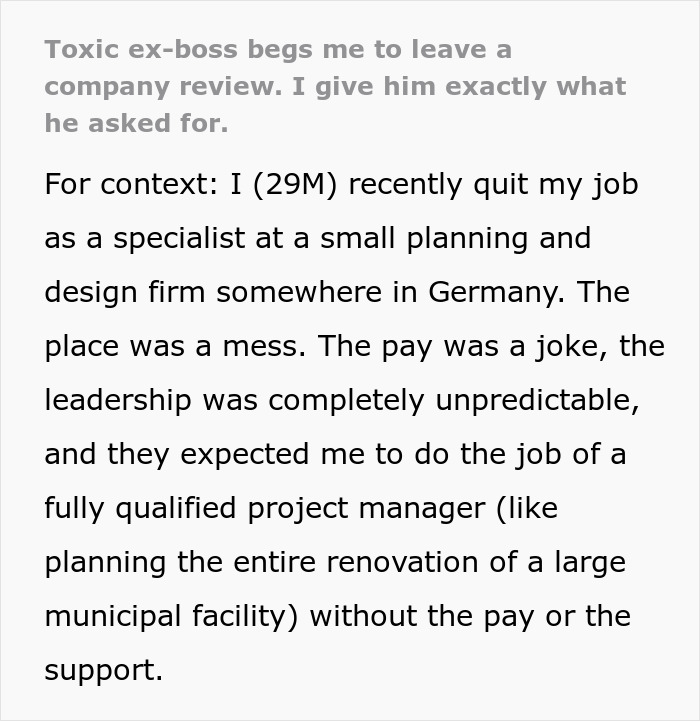
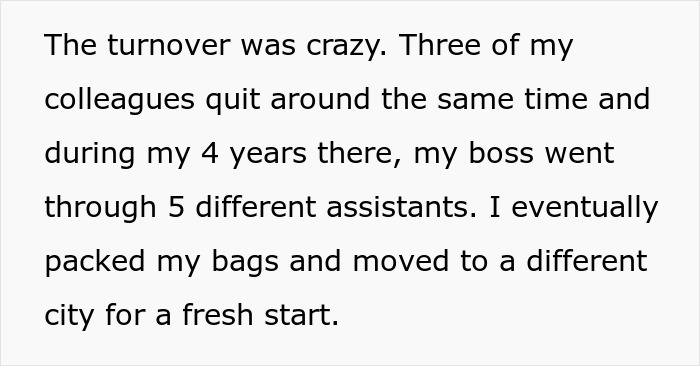
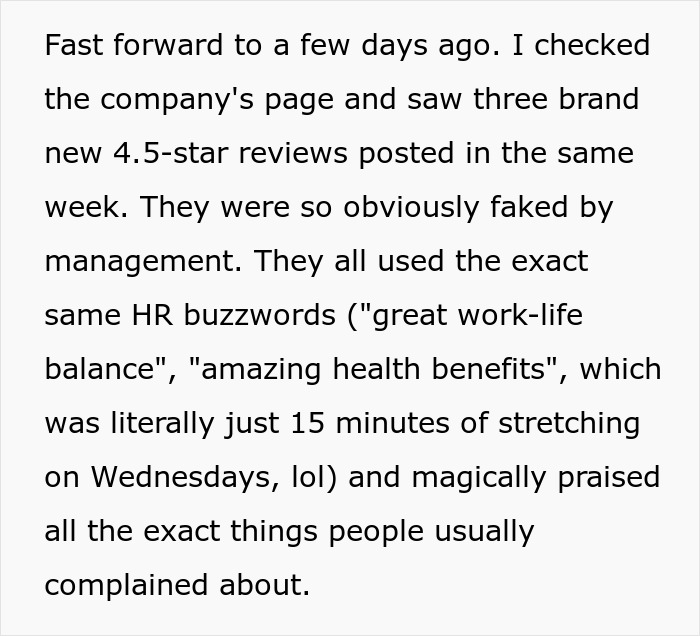
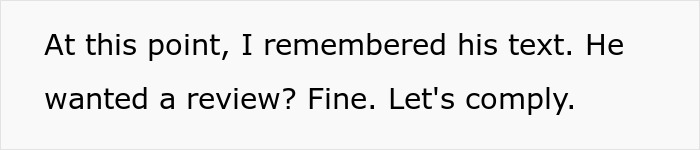
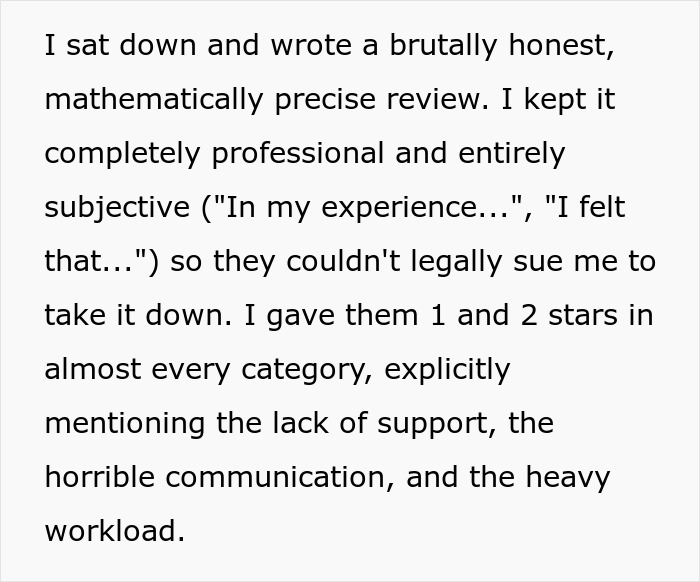
Image credits: gpointstudio (not the actual photo)
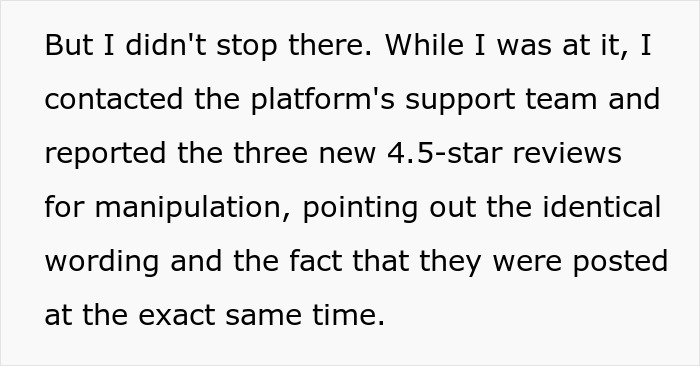
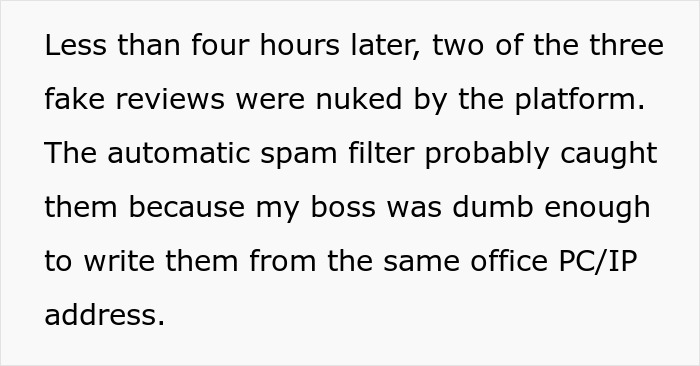
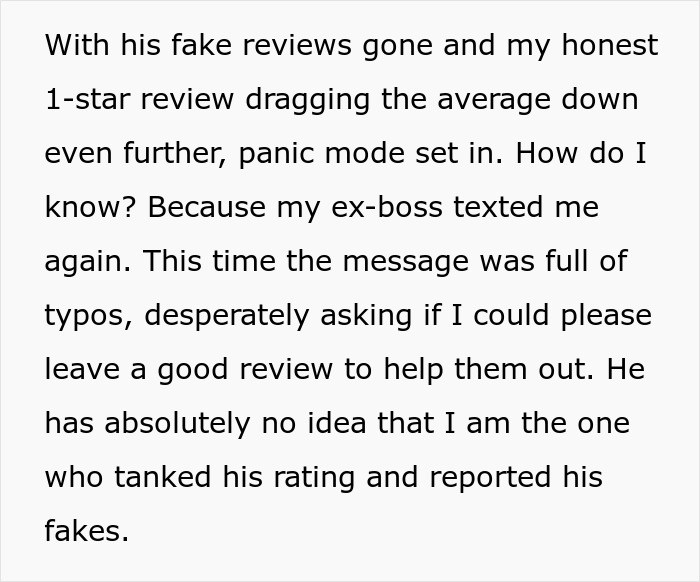

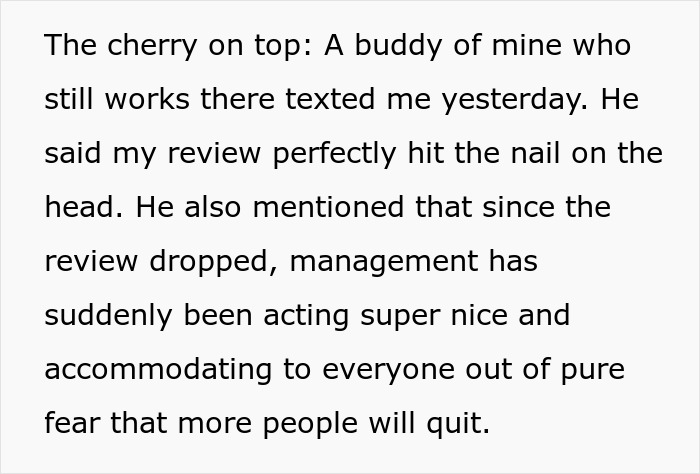
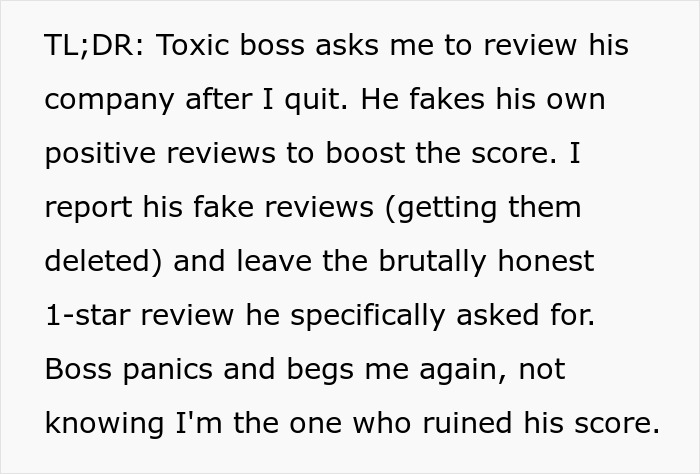
Image credits: Hopplafish
Bosses like this one aren’t unusual, and the reason they never see it coming has a name. It’s called the Dunning-Kruger effect, first described by psychologists David Dunning and Justin Kruger back in 1999. The central cause is a lack of metacognition, meaning people with little skill in a certain area are often unable to recognize their own incompetence, which leads them to overestimate their abilities. The unsettling part is that the same lack of skill that makes someone bad at managing people is exactly what stops them from noticing they’re bad at it. You need a baseline level of competence just to judge competence at all, your own included.
There’s also a structural reason these managers stay in the dark. Kruger and Dunning themselves noted that incompetent people rarely learn they’re unskilled because they seldom receive honest negative feedback from the people around them in everyday life. Employees don’t usually walk into their boss’s office and say the quiet part out loud. They complain to each other, they vent to friends, and eventually they just leave. The manager never gets the memo, so from where he’s sitting, the resignations are somebody else’s bad luck rather than evidence pointing straight back at him.
This is also why the fake reviews felt like such an obvious move to him and such an obvious giveaway to everyone else. When someone genuinely believes the workplace is fine, faking a few glowing reviews doesn’t feel like fraud. It feels like course correction, like nudging a number that just seems unfairly low. That mindset is a big part of why turnover keeps spiraling instead of prompting any real change. Research on leadership effectiveness backs this up too. A review of leadership studies found that self-ratings tell managers almost nothing about how effective they actually are, and that a certain kind of manager routinely overrates their own performance, which itself correlates with poor leadership. In other words, confidence and competence are two completely separate things, and the gap between them is where all the damage happens.
Image credits: kaboompics (not the actual photo)
The risks here go well beyond one bad Google-style rating. Turnover this constant is expensive in ways owners rarely calculate honestly. Research across dozens of case studies puts the typical cost of replacing a worker at around a fifth of their annual salary, and for skilled, specialized roles the number climbs a lot higher. Some estimates put replacing leaders and managers at close to double their salary, with skilled professional roles averaging well over their annual pay. Five assistants in four years and multiple specialists walking out the door at once isn’t a run of bad luck. It’s a line item eating into profits that a spreadsheet somewhere is quietly absorbing.
Faking reviews carries its own separate risk, and it’s growing sharper by the year. Plenty of countries now treat this as straightforward consumer deception rather than a harmless marketing shortcut. In the United States, for example, the FTC has a rule specifically banning fake reviews and testimonials, giving the agency the power to pursue civil penalties against companies that knowingly violate it. That rule also covers reviews written by a company’s own officers and managers, requiring them to clearly disclose their connection to the business if they post one themselves. Review platforms are getting sharper about catching this too, which is exactly how those three suspiciously glowing reviews got wiped out in a matter of hours once someone flagged the pattern.
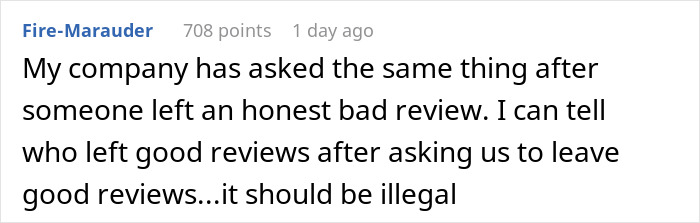
None of this fixes itself with a panicked text message to a former employee. A manager who can’t see his own failures isn’t going to be talked into decency by one good review, because the review was never the actual problem. The turnover, the burnout, the workload dumped on people without support or pay to match, that’s the problem, and it keeps existing whether the star rating says 4.5 or 1.2. The fear that’s currently making management act nicer might buy some short-term goodwill, but fear-based niceness tends to evaporate the moment the immediate threat does. Real change would mean actually sitting with the feedback instead of trying to bury it, and that’s usually the one step people like this are least equipped to take.
Image credits: Nataliya Vaitkevich (not the actual photo)




By entering your email and clicking Subscribe, you're agreeing to let us send you customized marketing messages about us and our advertising partners. You are also agreeing to our Privacy Policy.
Thank you! You've successfully subscribed to newsletters!

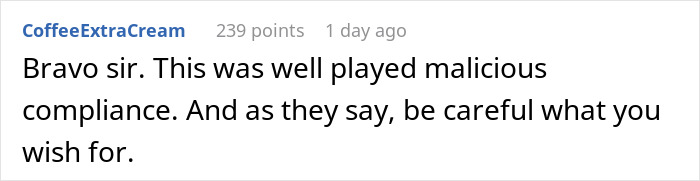
While my employer is not completely toxic, I have been making notes (at home, on paper) for my exit interview for several years now - adding things that crop up and erasing things that get fixed. I suspect HR will be surprised at how low they score with me......but they won't find out until my retirement is signed, sealed and delivered.
While my employer is not completely toxic, I have been making notes (at home, on paper) for my exit interview for several years now - adding things that crop up and erasing things that get fixed. I suspect HR will be surprised at how low they score with me......but they won't find out until my retirement is signed, sealed and delivered.



























 No fees, cancel anytime









34
1