Get Premium
Dark mode theme is available exclusively for premium users. Learn more about the benefits of subscribing.
No fees, cancel anytime.

 Dark Mode Ad-Free Browsing Unlimited Content
 Ad-Free Browsing Unlimited Content Dark Mode
Join 1.2 million Panda readers who get the best art, memes, and fun stories every week!
30submissions
1week left
Have you ever learned something that blew your mind but simultaneously made you regret all of the time you spent not doing it? Like meal prepping on Sunday evening, watching your favorite Netflix show while walking on the treadmill, or working remotely instead of commuting. We are always on the lookout for ways to improve the quality of our lives, so why not hear some tips from others online too?
2 weeks ago, Reddit user Kxrll reached out asking others to share the things that improved their lives so much they wish they had started doing them sooner. The comments were flooded with time-saving tips and habits people developed that increased their happiness. So we hope you enjoy reading the responses below, and maybe you’ll even be inspired to start reading every evening or eating healthier as well. Be sure to upvote the replies that resonate with you, and then if you’re interested in finding out more small habits that can have an impact on your daily life, check out this Bored Panda piece next.
Click here & follow us for more lists, facts, and stories.
This post may include affiliate links.
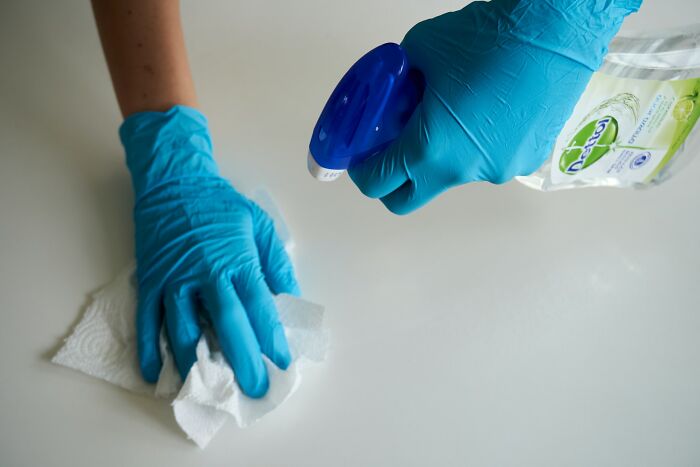 Doing at least one chore a day. You would be amazed at how well getting *something* done, even if you hate it, can fight back against certain depressive mentalities, particularly the ones that convince you you're useless or are a burden.
We all know that certain things on this list are good for us: exercising daily, eating healthy, taking walks, avoiding conflicts with strangers on the internet, etc. But as with anything else in life, developing healthy habits is easier said than done. We can decide that we want to cook more meals at home to save money, but executing that plan does not happen overnight. Humans are creatures of habit, and to develop a new routine, we usually have to disrupt our current one.
There is a widely held belief that it takes about 21 days to break a habit, as Dr. Maxwell Maltz claimed that most people need about three weeks to get accustomed to a new home, new facial features from a plastic surgery operation, or losing a limb due to amputation. This three-week rule does not always apply though, as getting used to something new is not necessarily the same as kicking a habit you have had for years, like smoking cigarettes or eating processed sugar every day.
 Moved away from the state I grew up in. I didn't know how unhappy I was. I had gotten used to being miserable and now that I'm in a better area I'm a completely different person.
If you are really interested in breaking a habit to make room for a new one, there is unfortunately no perfect timeline to follow. There are various factors coming into play like how long you have had the habit for, how often you do it, what rewards you receive from it, whether other behaviors or those around you enable the habit, and what your motivation is for stopping. For example, quitting drinking will be a lot harder if your partner has a glass of wine every evening, and your plans with friends always involve alcohol.
Some research from the University College London even suggests that a more realistic gauge of how long breaking a habit will take is about 10 weeks. Don’t let that discourage you though; sustainable changes take time. Be patient with yourself and implement small changes first. If you want to reduce your sugar intake, for example, do not go cold-turkey. Begin by banning sugary drinks and/or candy from your household. Then slowly work up to cutting out baked goods and frozen desserts as well. If you are torturing yourself, your changes are not likely to stick.
 I stopped living my life just waiting for the weekend. When you work 5 days a week and have just 2 off, it's not good to be always waiting for those 2 days. You can plan something meaningful or fun every day, even if it's just a small thing.
On the bright side, it is typically much easier to develop a new habit than to break an old one. So after you finish this list and are feeling inspired, start making arrangements to do at least one chore every day or find a therapist that suits your needs. While all changes take time to get used to, picking up a new hobby or healthy habit that improves your life will always be worth it. For tips on how to get started, I consulted James Clear’s blog post “How to Build a New Habit: This is Your Strategy Guide”.
His first recommendation is to “start with an incredibly small habit”. He notes that often we assume that we lack the willpower to achieve a goal, but willpower is just a muscle that we need to strengthen. If you have a goal of doing 50 pushups per day, for example, remember that is your goal. You can start out doing 5 a day. Then maybe 10 the next week. There is no reason to rush when it makes a small habit seem unattainable.
Once a very small habit has been developed, James recommends increasing it by 1% every day. “Rather than trying to do something amazing from the beginning, start small and gradually improve,” he writes. “Along the way, your willpower and motivation will increase, which will make it easier to stick to your habit for good.” Once you have built up a habit, James notes that it is important to keep your goals reasonable to maintain momentum. Don’t be afraid to break up your 20 minutes a day of meditation into two 10 minute chunks or your 50 pushups into 5 sets of 10. It is much better to have manageable goals then to become overwhelmed and throw in the towel altogether.
 I started viewing things as potential experiences rather than just opportunities for achievement. Before that, for example, if I took a class then I was only focused on the grade. If I couldn't get a good grade, I didn't like the class. Heck, I wouldn't even start a book if I thought it might be too hard or too long and I might not finish it. Then I realized the purpose of classes (and books and other things) was to learn and that hard ones were likely the ones I learned the most from, even if I didn't get the best grade. I started doing all sorts of stuff with the idea that I just wanted the experience. Even if I was the worst one out there, who cares? I wasn't there for the achievement, I wanted to learn things. This works socially as well and I started taking way more risks, telling myself that, at the very least, it would be a learning experience. I saw a saying once: "It's only a failure if you stop trying, otherwise, it's an experiment." I love it.
Inevitably, there will be a few moments where you slip up or fall out of your routine. Life just gets in the way sometimes, with things like injuries, family emergencies, and holidays disrupting our plans. James writes, “Rather than trying to be perfect, abandon your all-or-nothing mentality.” Nobody is perfect, so your aim should be consistency. Don’t beat yourself up for falling off track on occasion, just continue along as normal. Lastly, James says to be patient and “stick to a pace you can sustain”. Long-lasting changes do not happen overnight, so don’t give into the temptation of letting impatience discourage you. If you really want to develop a sustainable habit, there are no shortcuts, but the effort will be worth the reward.
Stopped going to church. Not going to church is such a big part of my life now. I wish I had not gone sooner.
Quitting drinking is the best thing I’ve ever done for my mental and physical health and it’s done nothing but improve my relationships. The last year and a half have been the best I’ve ever had
While reading this list, you might be realizing that your life could stand to have some improvements too. It is important to appreciate what you have and find a way to be content wherever you are, but there is nothing wrong with a little self-reflection. Maybe you’re realizing that a healthy habit you once had disappeared somewhere along the line over the past few years. Somehow that 6am daily workout got phased out of your life after taking on a new job or moving farther away from your gym. It is easy to slip into a routine on autopilot and forget that we have the power to make changes, however, making an effort to set and work towards goals is a great way to bring motivation and excitement to our lives.
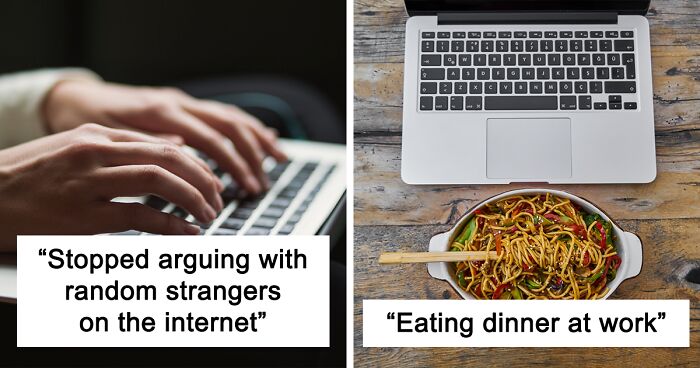
 Eating dinner or a late snack at work. Too often I would leave work hungry, and the temptation driving past Chick-fil-A or the corner taco shop was too much. I've kept my weight under control for a couple of years now, having dropped from the 220s to the 170s.
 Got a proper diagnosis. I think a lot of people that for years questioned themselves “what’s wrong with me?” when they finally got diagnosed it’s a big relief and changes a lot in a better way
 Bachelor degree at 47 years old. Master degree at 50 years old. Doubled my salary in 4 years, from just getting by to on track for retiring at 60.
Professor of Psychology Leslie Riopel wrote a piece for Positive Psychology titled “The Importance, Benefits, and Value of Goal Setting” that breaks down the reasons why we should all have aspirations. She notes that it is normal for our goals to change over time as we get older and develop our priorities, but they are still important to have so that our lives don’t become stagnant. It’s easy to feel aimless or meaningless when we don’t have anything to look forward to. But when we set goals, particularly very specific ones, we have something driving us. According to research in goal-setting theory by Edward Locke, “Over 90% of the time, goals that were specific and challenging, but not overly challenging, led to higher performance when compared to easy goals or goals that were too generic such as a goal to do your best.” It is assumed that we all want to be happy, do our best, etc, but not everyone wants to run a marathon in the next year or get a promotion at work before their next birthday. Set your sights on goals specific to you.
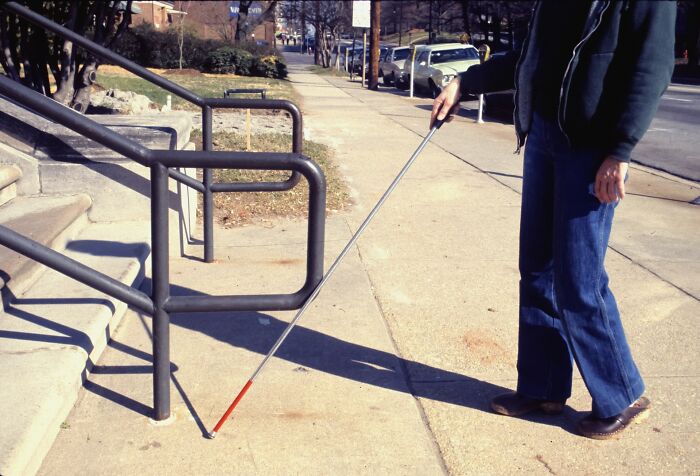 When I was told that I would lose my eyesight it made me pay more attention to how beautiful the sky was. I can still see and I enjoy watching the clouds on a level I can't even explain.
 Meeting my wife. That woman fills my heart in ways words can't describe. It just can't be too much sooner because then I wouldn't have my awesome step-sons.
 Learning how to do everything myself. Car issue? Look it up. Fix my fence? Look it up. Just do it all myself. Replace valves? Look it up. If they don't find you handsome, they should at least find you handy.
Goal-setting can also be an important factor in taking care of our mental health. Riopel writes that, “Goal setting has been shown to help improve the outcome in treatment, amongst studies done in adults with depression.” Battling depression can take a huge toll on an individual, but by setting goals in treatment, like slowly implementing routines including taking a daily walk or cleaning their apartment, patients can feel proud of what they accomplish and more motivated to keep fighting. Their goals can be reminders that their lives can get better, slowly but surely. One study even found that patients who participated in goal-setting exercises were more willing to accept a mental health referral, which can be crucial to improving their health.
 Not everyone can afford this but: moving closer to work. My commute went from 45 miserable minutes in traffic glaring in hatred at the tail lights in front of me to a pleasant 15 minute bike ride. I got an hour of free time every day and better health.
Setting concrete goals can also yield more success than working towards vague aspirations. Dr. Gail Matthews, a clinical psychologist from Dominican University of California, found that individuals who write down their goals, share them with a friend and send weekly updates on their progress are on average 33% more successful than their peers whose goals are simply floating around their minds. Though it seems so simple, there is power to putting our goals on paper or speaking them out loud. Making a firm commitment to a task may seem scary, but it also makes us much more likely to be successful.
Has this list inspired you to take up a new hobby or adopt a new healthy habit? It has certainly reminded me to stop slacking off on some of my "routines" that used to be daily but are now falling into the "weekly occurrence" category... Whether you aim to learn a new language, cut toxic individuals out of your life or quit smoking cigarettes, write that goal down and say it out loud. Once you have developed the habit, you'll probably be wishing you had done it sooner. Remember to upvote all of your favorite responses, and then let us know in the comments what improved your life so much that you wish you had been doing it all along.
 Finding the right therapist. Been in since I was 9, and found the right one at 23. It’s only been maybe 6 months but I’ve already unpacked so much more trauma in that small time than I did all the other YEARS wasted in therapy.
 Exercise every day. Anxiety and depression are much easier to manage, and I got some confidence I haven't had in years
You might also like: 49 funny photos of people just trying to survive the summer heat




























 No fees, cancel anytime