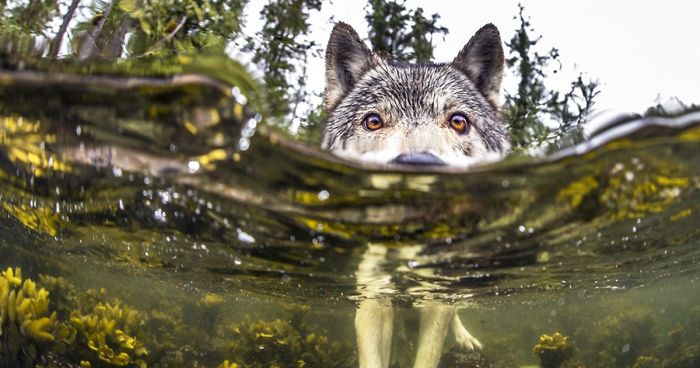
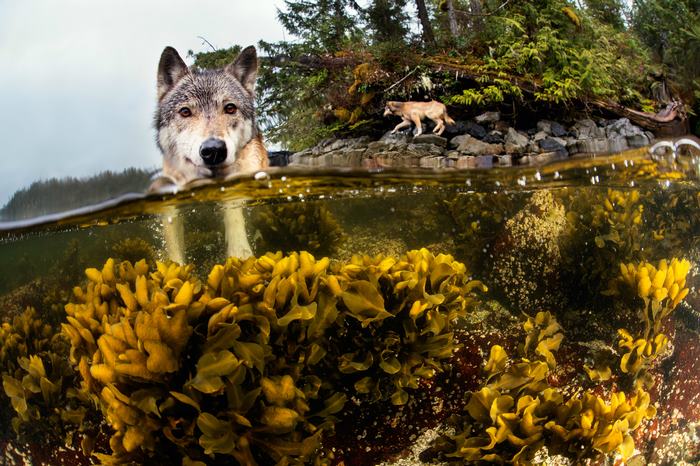
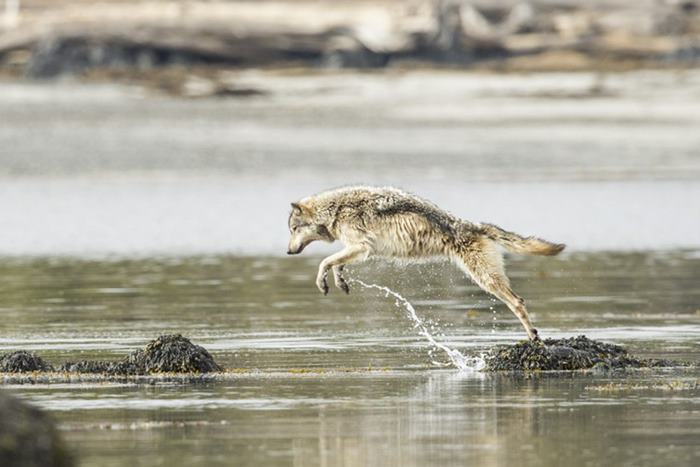
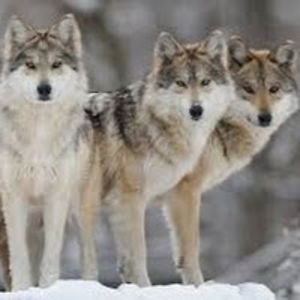
Along the wild Pacific coast of British Columbia, there lives a population of the sea wolves. “We know from exhaustive DNA studies that these wolves are genetically distinct from their continental kin,” says McAllister. “They are behaviourally distinct, swimming from island to island and preying on sea animals. They are also morphologically distinct — they are smaller in size and physically different from their mainland counterparts,” says Ian McAllister, an award-winning photographer who has been studying these animals for almost two decades.
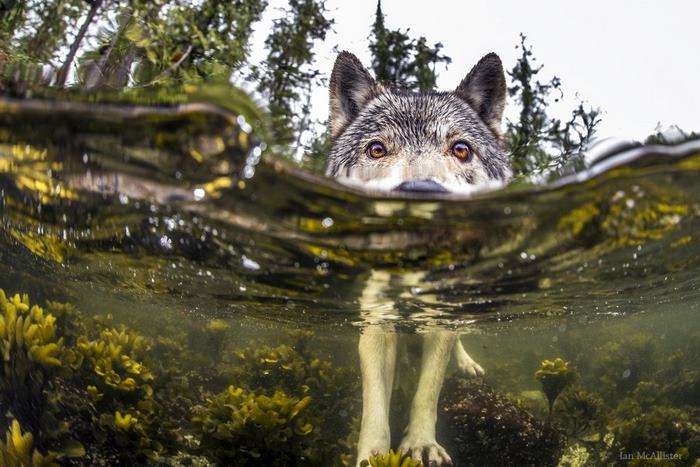
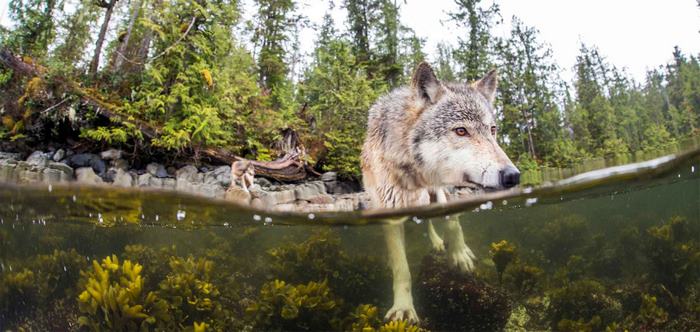
McAllister captured the magic of these wolves in breath-taking pictures. As he swam towards them, “the curious canines approached him so closely that he could hear them grunting into his snorkel. He took several frames, then pushed back into deeper water without daring to look up,” writes the bioGraphic.
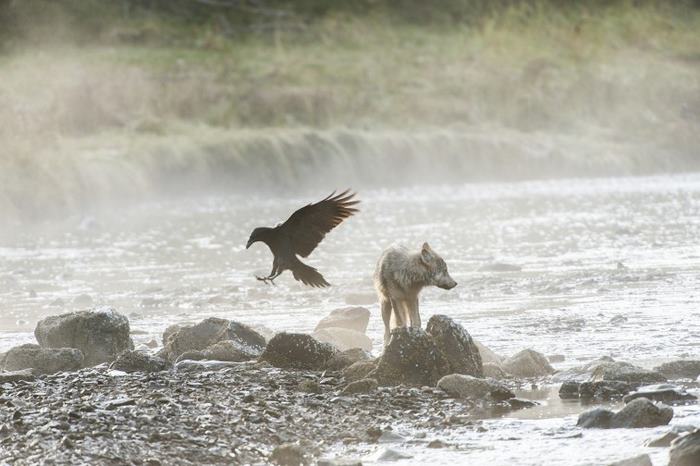
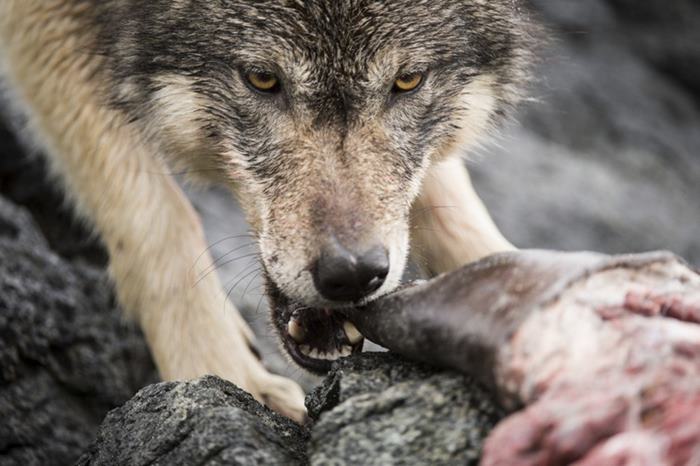
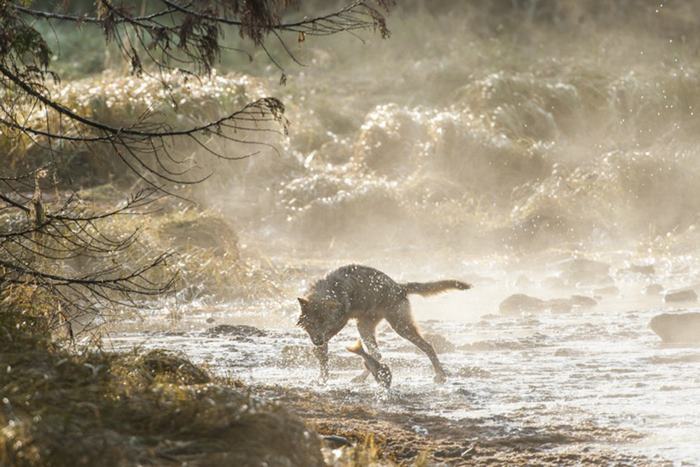
One could almost call these sea wolves pescatarians – 90 percent of their food comes directly from the ocean, with a fourth of it coming from eating salmon. On top of having distinctive food patterns, sea wolves are also excellent swimmers, with their farthest record being swimming to an archipelago 7.5 miles from the nearest landmass.
(h/t: nationalgeographic)
Along the wild Pacific coast of British Columbia, there lives a population of the sea wolves
“We know from… DNA studies that these wolves are genetically distinct from their continental kin”
“They are behaviourally distinct, swimming from island to island and preying on sea animals”
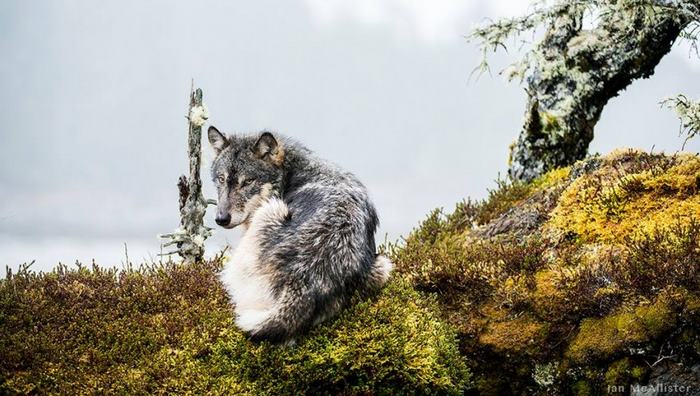
The wolves “are smaller in size and physically different from their mainland counterparts”
They are excellent swimmers that can do 7.5 miles in a go
90 percent of their diet is seafood as these creatures live off an ocean
Thanks to photographer Ian McAllister, who captured the magnificence of this species…
We can take a better look into their lives in fairy-tale like natural surroundings
982Kviews
Share on FacebookYup, this is probably similar to how seals and dolphins (and whales) evolved.
Load More Replies...I live in southwestern British Columbia and always wondered why our local swim team was called the Sea Wolves. I never knew they actually existed.
So with the book called "The Sea Wolf", apparently Jack London based his book on a real thing, eh? Whodathunk?
Except it's actually nothing to do with wolves unlike "call of the wild" and "white fang" which are easily his best-known stories, it's actually about human beings with the "Sea Wolf" being a seaman called Wolf Larsen.
Load More Replies...Amazing work done by McAllister and Pacific Wild. Sadly, there are still pathetic people who want to kill these creatures for fun and bragging rights. Some conservation organizations and photographers are reluctant to publish exactly where they study these animals lest it tips off trophy hunters.
The similarity of Orcas/Killer Whales and Wolves in terms of being social (pack/pod) animals and predators gave rise to the term 'Sea Wolves' which is a simile/figurative. The use of Sea Wolves to describe these populations of wolves is a literal term.
These look like the wolves they film on the the series alone on Vancouver island BC but yet they have never mentioned they're sea wolves thanks for the info!
This is some cool information and great photography, especially that last pic! And I learned about sea wolves which I never knew existed until now.
Yup, this is probably similar to how seals and dolphins (and whales) evolved.
Load More Replies...I live in southwestern British Columbia and always wondered why our local swim team was called the Sea Wolves. I never knew they actually existed.


So with the book called "The Sea Wolf", apparently Jack London based his book on a real thing, eh? Whodathunk?
Except it's actually nothing to do with wolves unlike "call of the wild" and "white fang" which are easily his best-known stories, it's actually about human beings with the "Sea Wolf" being a seaman called Wolf Larsen.
Load More Replies...Amazing work done by McAllister and Pacific Wild. Sadly, there are still pathetic people who want to kill these creatures for fun and bragging rights. Some conservation organizations and photographers are reluctant to publish exactly where they study these animals lest it tips off trophy hunters.
The similarity of Orcas/Killer Whales and Wolves in terms of being social (pack/pod) animals and predators gave rise to the term 'Sea Wolves' which is a simile/figurative. The use of Sea Wolves to describe these populations of wolves is a literal term.
These look like the wolves they film on the the series alone on Vancouver island BC but yet they have never mentioned they're sea wolves thanks for the info!
This is some cool information and great photography, especially that last pic! And I learned about sea wolves which I never knew existed until now.


676
76