Get Premium
Dark mode theme is available exclusively for premium users. Learn more about the benefits of subscribing.
No fees, cancel anytime.

 Dark Mode Ad-Free Browsing Unlimited Content
 Ad-Free Browsing Unlimited Content Dark Mode
Join 1.2 million Panda readers who get the best art, memes, and fun stories every week!
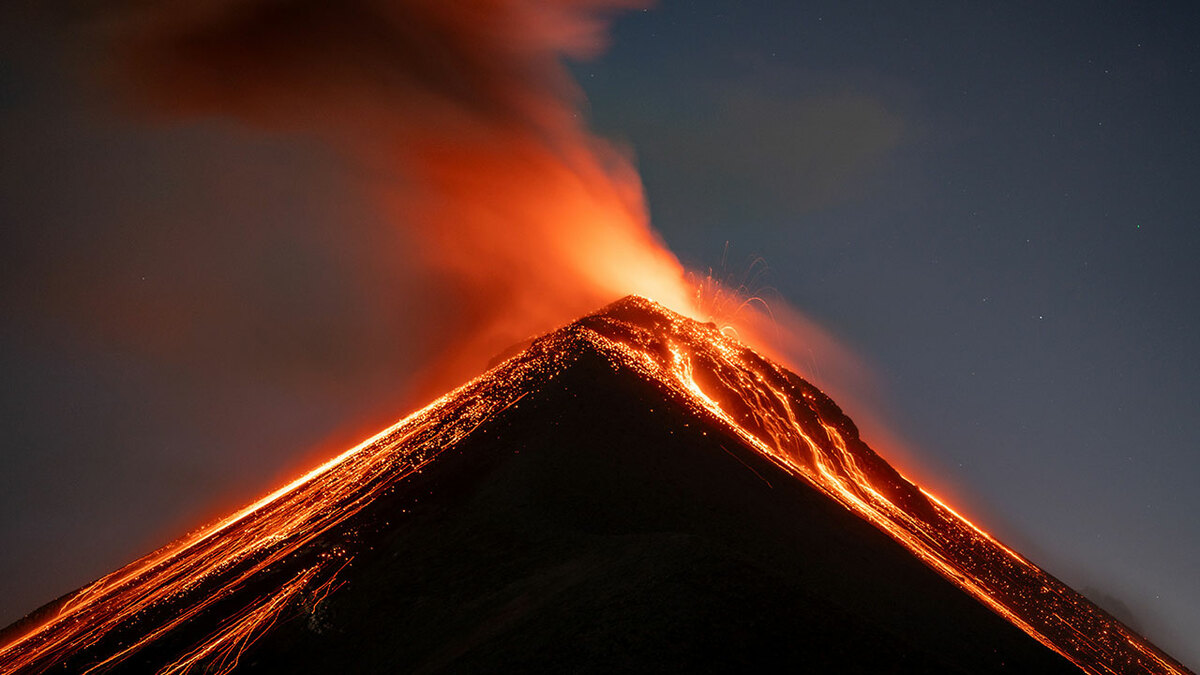
As a kid, I was fascinated by prehistory. I still am, but back then, I could spend hours going through books about ancient life and how the Earth was formed. I blame it on my love for dinosaurs, but that fascination with our world’s distant past never really went away.
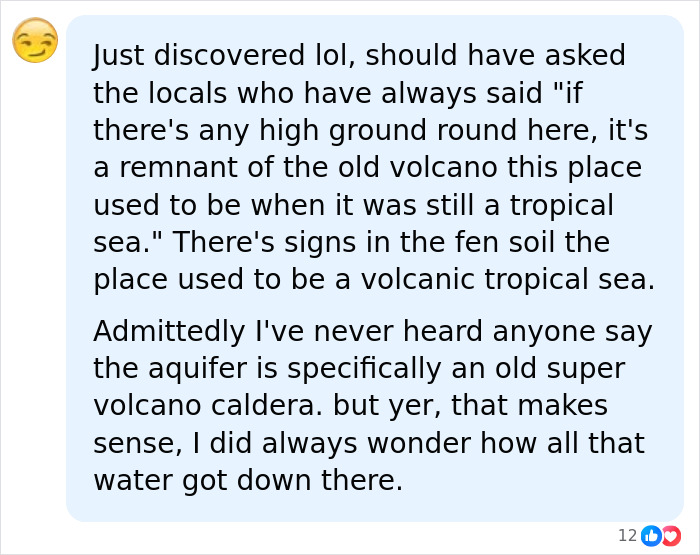
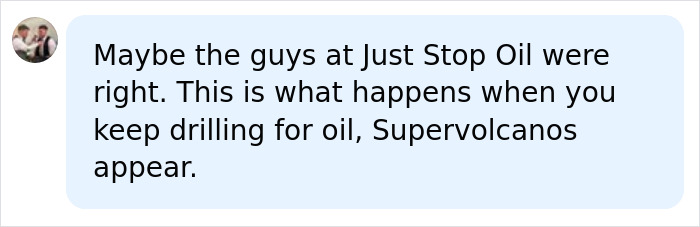
So when scientists uncovered how a layer of Earth’s crust formed more than 450 million years ago, I was over the moon. Researchers at the British Geological Survey reexamined rock samples collected decades ago and discovered they came from a massive supervolcano beneath The Wash.
Today, we’ll explore not only the amazing discovery of the Wash supervolcano, but also the fascinating world of supervolcanoes, and what they can tell us about Earth’s past.
The volcano centered beneath The Wash and stretched into Norfolk and Lincolnshire, covering at least 65 kilometers (around 40 miles). It erupted around 454 million years ago to be precise, long before dinosaurs appeared, and left volcanic ash across large parts of Northern Europe.
British Geological Survey scientists made the discovery by reexamining rock samples collected from deep boreholes in Norfolk and Lincolnshire about 80 years ago. Using newer equipment, they studied tiny zircon crystals inside the rocks and found that both samples formed at almost exactly the same time, linking them to one volcano.
Although The Wash supervolcano was active long ago and it held the power of thousands of nukes, it’s now extinct. The volcano lies beneath The Wash and parts of England’s flat eastern landscape, with no visible trace on the surface. According to BGS scientist Tim Pharaoh, it cannot erupt again because, since unlike faults, extinct volcanoes do not reactivate.
A supervolcano can produce an eruption far larger than those of ordinary volcanoes. Scientists use the term for volcanoes that have erupted more than 1,000 cubic kilometers (240 cubic miles) of material in a single event. For comparison, the ancient volcano beneath The Wash erupted with the force of several thousand hydrogen explosions.
Scientists measure the explosiveness of volcanic eruptions with the Volcanic Explosivity Index, or VEI. The scale runs from 0 to 8 and considers the amount of material an eruption releases as well as how often eruptions occur. Hawaiian eruptions sit near the lower end, while the most powerful explosive events reach the highest levels.
A super-eruption reaches magnitude 8 on the VEI and releases more than 1,000 cubic kilometers (240 cubic miles) of material. No living person has witnessed one. Yellowstone’s largest eruption, about 2.1 million years ago, released roughly 2,450 cubic kilometers (587 cubic miles) of material, and the resulting pyroclastic flows could travel hundreds of kilometers.
Large explosive eruptions can alter the climate by sending sulfur dioxide into the stratosphere. The gas reacts with water vapor and forms sulfate aerosols that reflect sunlight back into space, cooling the atmosphere. The 1991 Mount Pinatubo eruption, for example, released around three megatonnes of sulfur and lowered global temperatures by about 0.5°C (0,9°F).
Scientists have identified around 20 supervolcanoes around the world, including Yellowstone, Toba in Indonesia, Taupō in New Zealand, Campi Flegrei in Italy and Aira in Japan. These systems differ greatly in their activity and eruption histories, but each has produced eruptions large enough to reshape the surrounding landscape on an enormous scale.
It’s very hard to put a date on the next super-eruption because volcanoes do not follow a fixed schedule. However, the chances of one occurring during our lifetime remain extremely low. Super-eruptions generally happen tens of thousands of years apart, and scientists can monitor warning signs such as earthquakes, volcanic gases and ground deformation.
Once again, Yellowstone provides one of the clearest examples of what a supervolcano can do. The system has produced three major eruptions in the past 2 million years. Its most recent major eruption happened roughly 630,000 years ago and created the caldera that dominates the park today.
If Yellowstone produced another super-eruption, the immediate danger would extend far beyond the volcano itself. Pyroclastic flows could race through parts of Wyoming, Idaho and Montana, while ash could cover much of North America. The effects would also reach beyond the continent, because a major eruption could disrupt the atmosphere and climate worldwide.
Besides Yellowstone, the most recent known super-eruption occurred at New Zealand’s Taupō Volcano about 26,500 years ago. Known as the Ōruanui eruption, it released roughly 1,000 cubic kilometers (240 cubic miles) of material and caused the ground to collapse. That collapse created the enormous depression that later filled with water to form Lake Taupō.
Despite the headlines about Yellowstone being “overdue,” volcanoes do not work like clocks. The fact that its last eruption happened hundreds of thousands years ago doesn’t mean another one should happen soon. Scientists see no reason to expect a super-eruption in the near future, so we can feel safe for the time being.
What do you think about the discovery of this ancient supervolcano? Would you like to know more about them? Share your thoughts in the comments!

By entering your email and clicking Subscribe, you're agreeing to let us send you customized marketing messages about us and our advertising partners. You are also agreeing to our Privacy Policy.
Thank you! You've successfully subscribed to newsletters!







































 No fees, cancel anytime



















34
1