Get Premium
Dark mode theme is available exclusively for premium users. Learn more about the benefits of subscribing.
No fees, cancel anytime.

 Dark Mode Ad-Free Browsing Unlimited Content
 Ad-Free Browsing Unlimited Content Dark Mode
Join 1.2 million Panda readers who get the best art, memes, and fun stories every week!
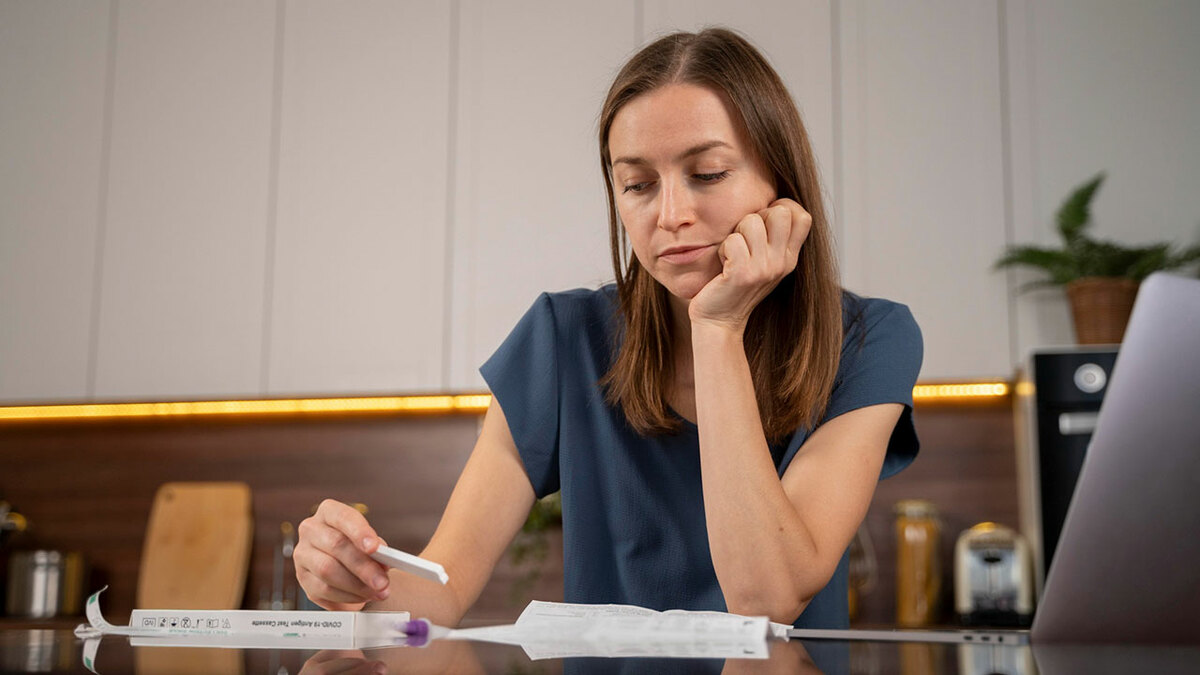
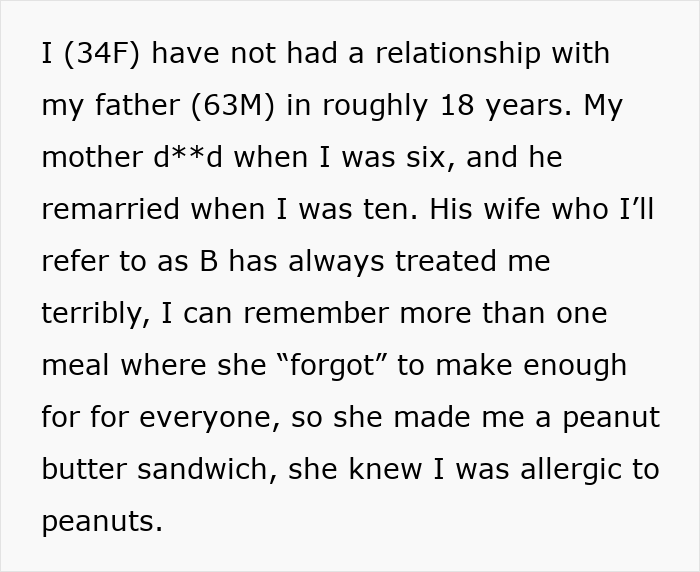
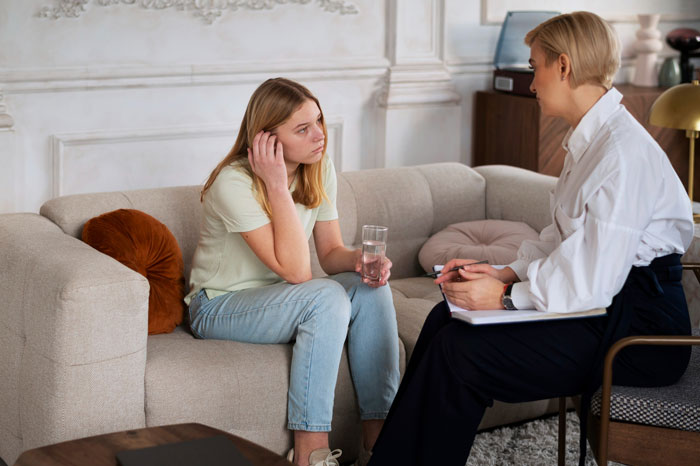
Family is everything, as we’ve grown up hearing. We don’t get to choose them, yet they are the ones who are supposed to remain in every season of your life. But what happens when family is the reason you needed therapy in the first place? Estrangement can turn family from a source of comfort into something much more complicated.
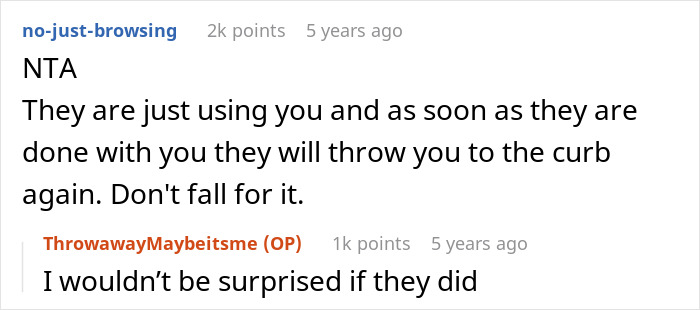
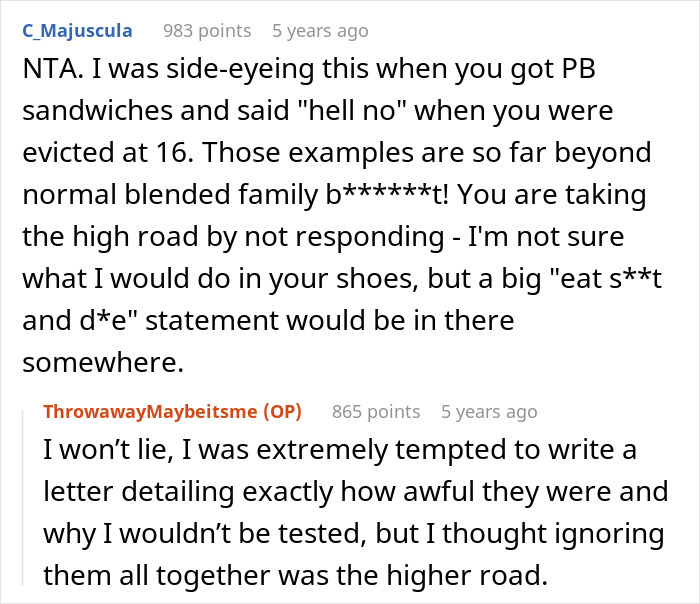
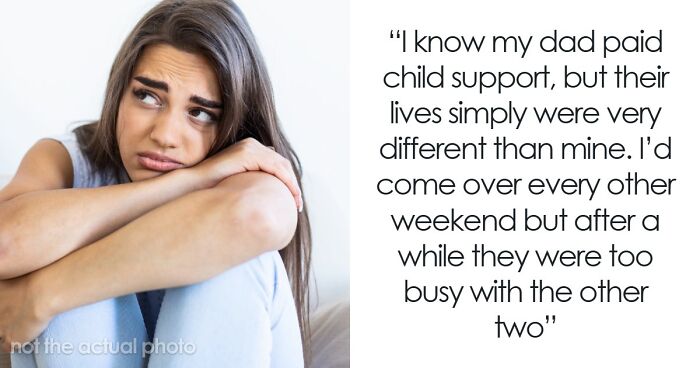
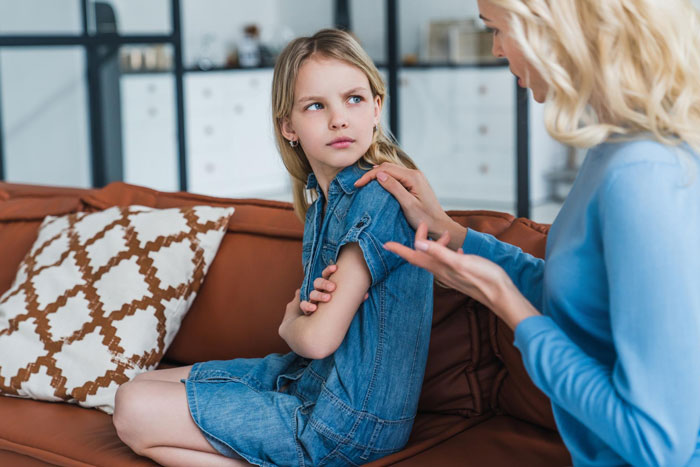
That is what makes this woman’s situation so difficult. After years of feeling rejected by her father and mistreated by her stepmother, she had built a life away from them. Then, nearly two decades after their relationship ended, her father resurfaced with a request that carried enormous emotional and medical stakes.
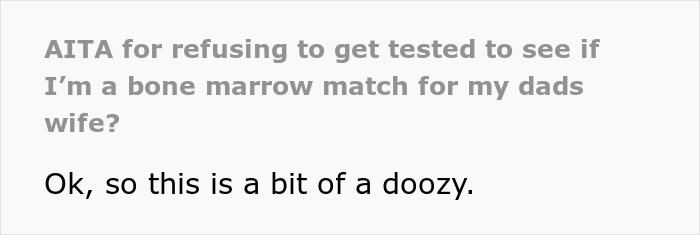
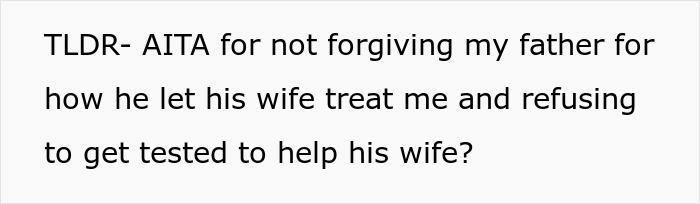
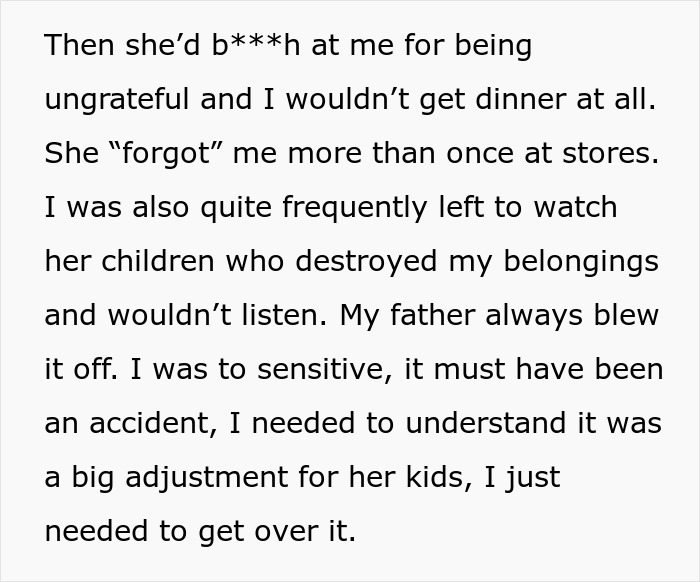
Estrangement between parents and adult children is more common and complicated than the stereotype of a child simply “cutting off” their family suggests. Research on intergenerational estrangement links these relationships with conflict, negative interactions and complicated family dynamics, with the quality of the relationship itself playing an important role in well-being.
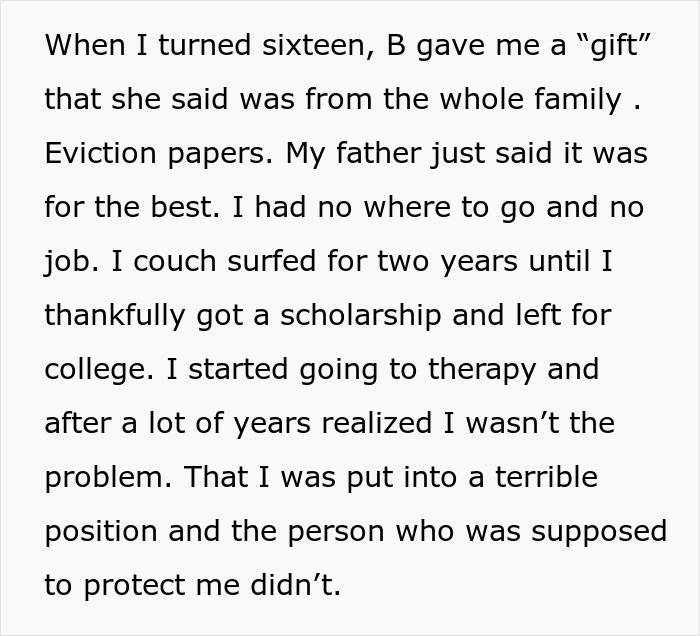
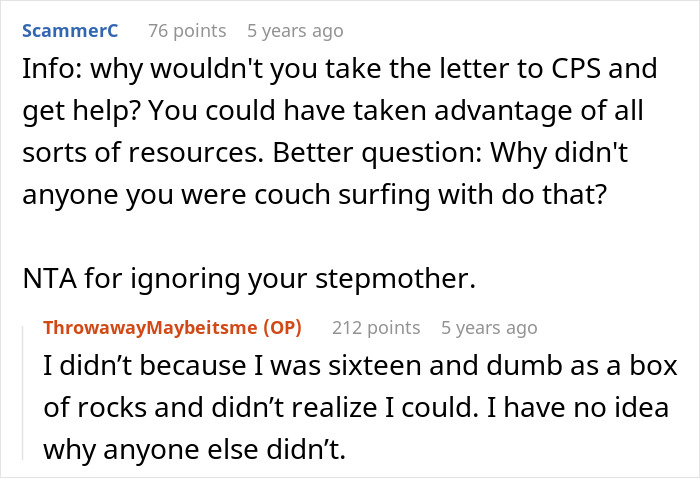
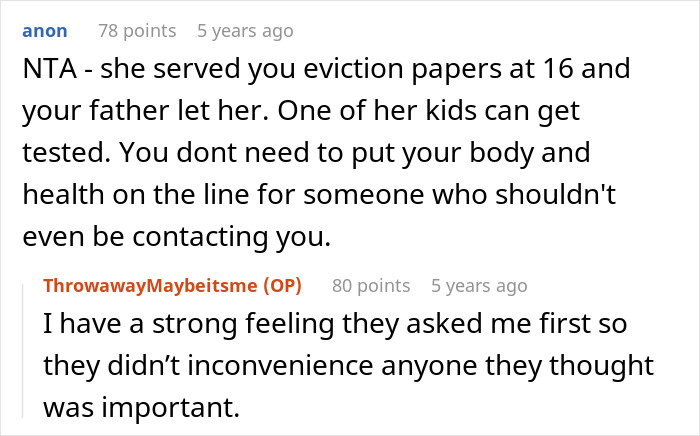
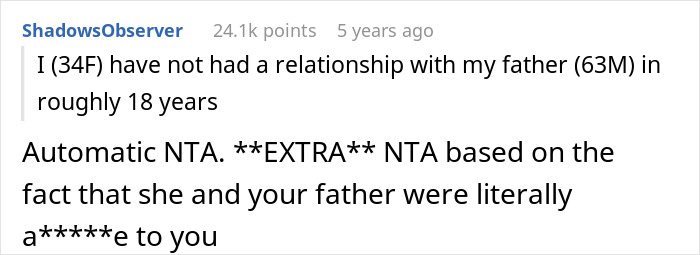
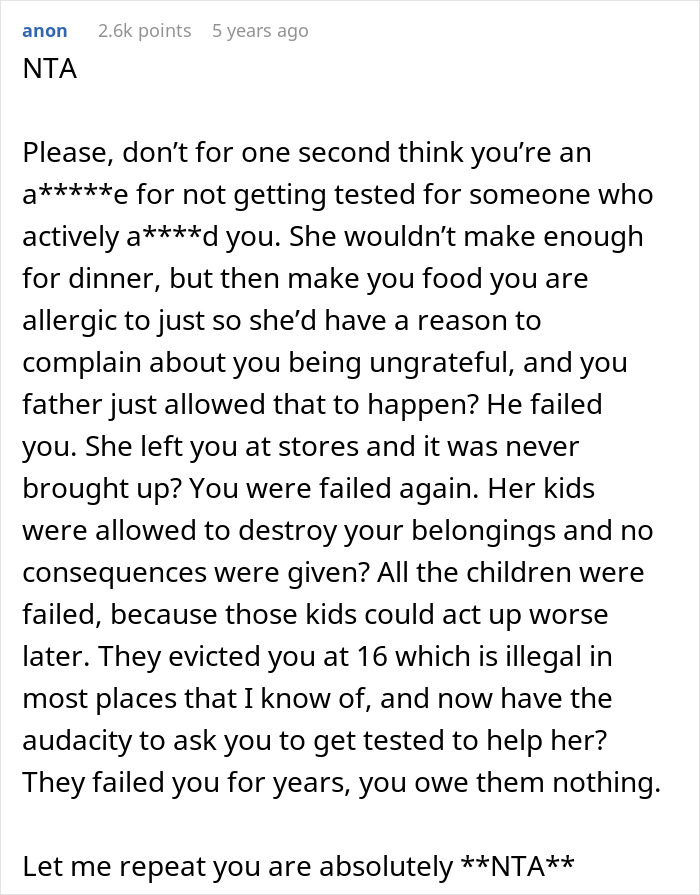
The woman noted that she had to deal with years of feeling unwanted and unsupported, followed by an abrupt separation from her father during adolescence. Whether every detail is viewed the same way by other members of the family, the emotional reality for her appears to be that the relationship was already broken long before the request for help arrived.
Losing a parent during childhood can also make the remaining family relationships particularly significant. Another study into childhood parental loss has examined how disruption to the parent-child bond can affect feelings of security and attachment later in life. In this case, the woman lost her mother when she was only six, meaning her father’s role became especially important during her childhood.
That doesn’t mean every difficult family relationship automatically creates lifelong psychological damage, nor does it determine how an adult must respond years later. However, it does help explain why being rejected or unsupported by a remaining parent can carry more emotional weight than an ordinary family disagreement.
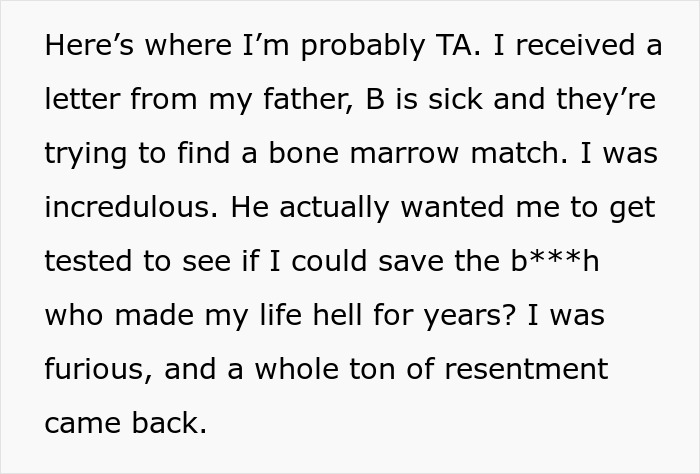
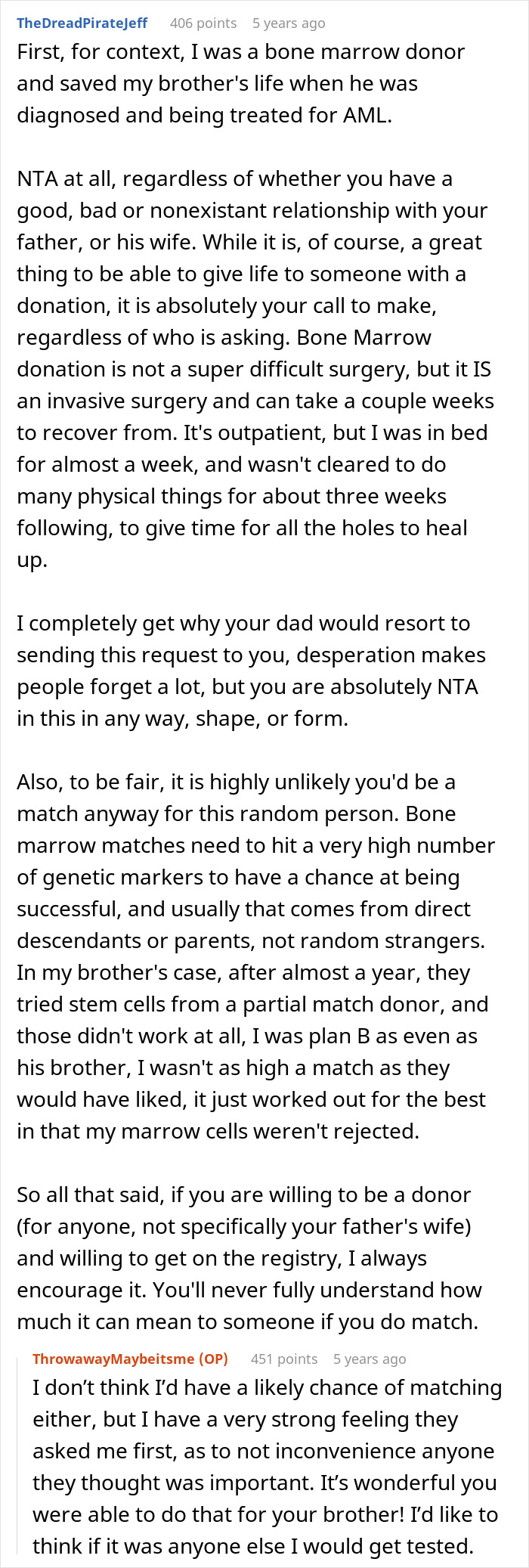
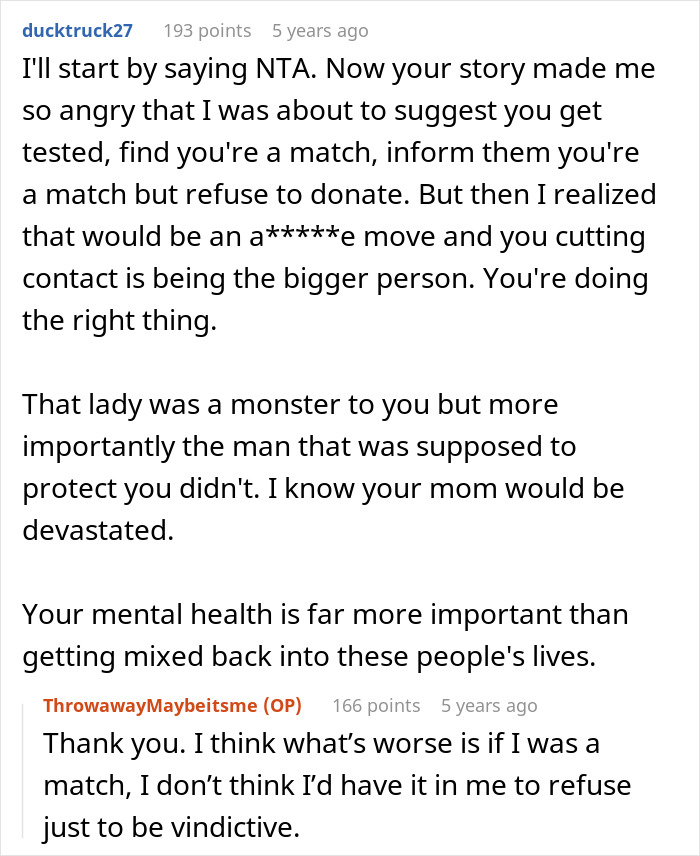
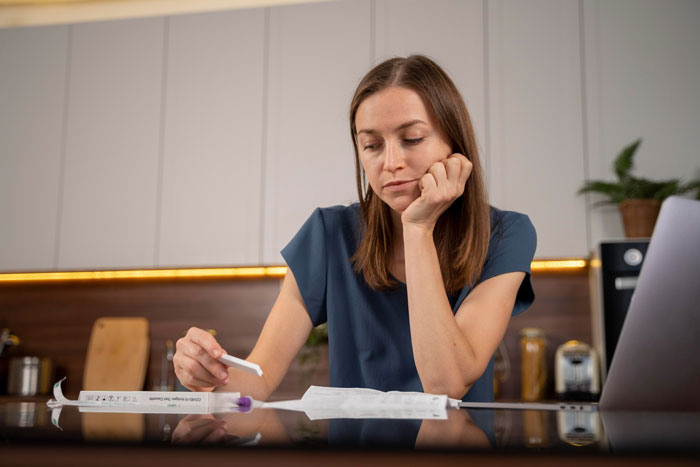
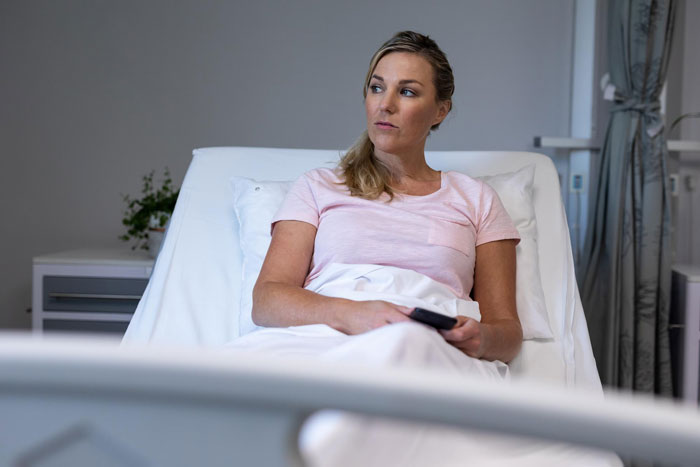
When someone spends years trying to establish distance from that history, an unexpected request from the same family can bring old feelings straight back to the surface. In this case, the woman was merely asked to get tested to see if she would be a match. Liv Hospital affirms that this is often followed by health screening and further discussions before an actual donation takes place.
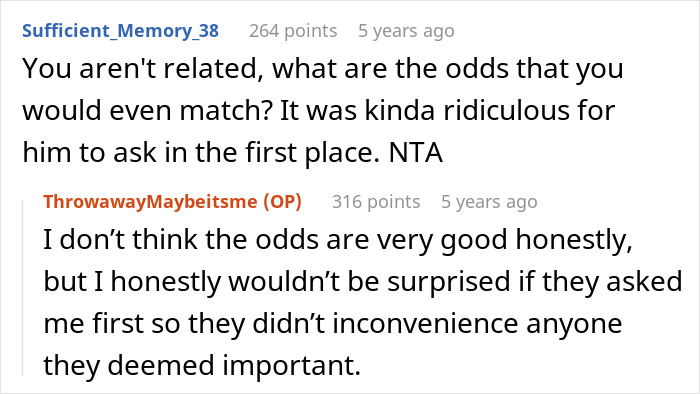
In other words, the first step would be finding out whether she could even help. Matching is medically complicated, and being biologically related doesn’t automatically guarantee compatibility. If someone is identified as a potential donor, they still receive information about the procedure, its risks and what would be expected of them before making a final decision.
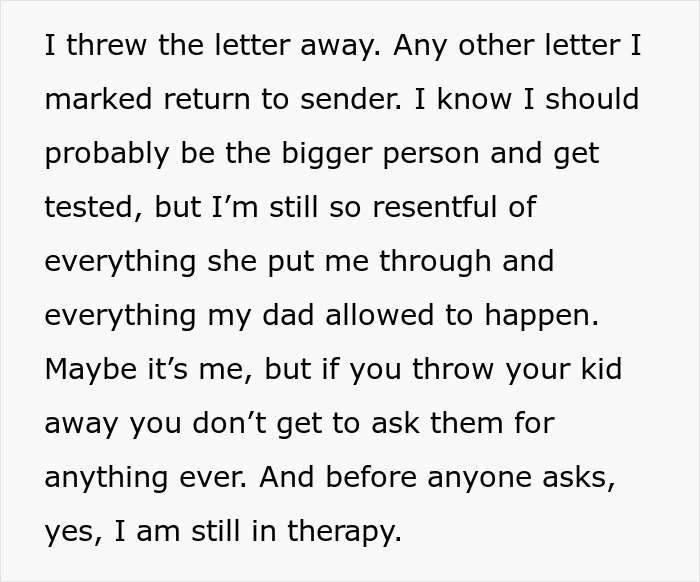
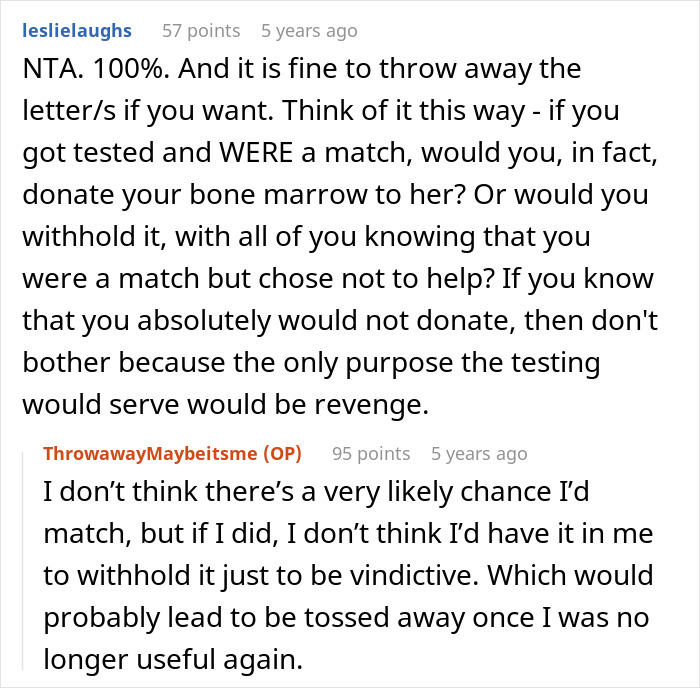
Ultimately, she would have to choose, but the emotional question is probably messier. People often talk about forgiveness as though it automatically means reopening the door to someone who hurt them, but those are two different decisions. A person can work through resentment without necessarily wanting a close relationship with the person who caused it.
For someone who has spent years establishing boundaries, an unexpected medical crisis can force an uncomfortable question: does compassion require reopening a relationship you’ve deliberately closed? There isn’t a medical guideline that can answer that. Nor can science determine how much unresolved resentment is enough to justify saying no.
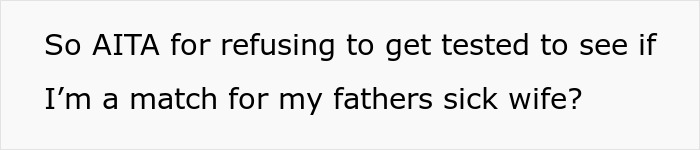
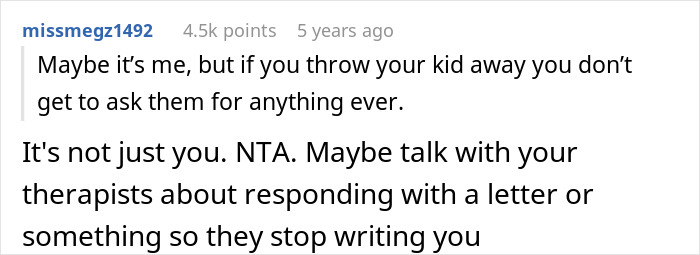
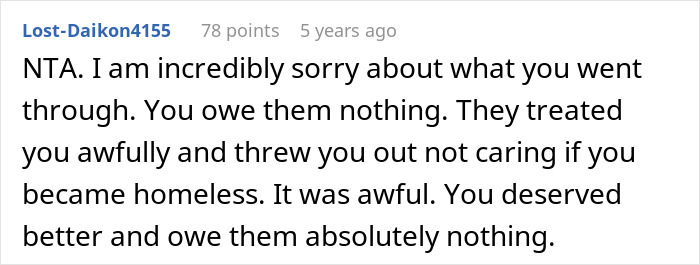
However, Psychology Today acknowledges that estrangement has real emotional complexity and that stem-cell donation is a voluntary medical process requiring informed consent. What do you think about this? If you were in her position, would you at least agree to take the compatibility test, or would you refuse outright? We would love to hear from you!


By entering your email and clicking Subscribe, you're agreeing to let us send you customized marketing messages about us and our advertising partners. You are also agreeing to our Privacy Policy.
Thank you! You've successfully subscribed to newsletters!


She's nicer than me. I would have sent a note saying "Oh good, I hope you d*e"

No need to be rude when you can hurt them worse being polite: 'I received your letter with surprise at your audacity. Of course I will not be getting tested, you know the reasons why and you know that they are all your fault. Please do not contact me again under any circumstances.'

Yep, k*****g with kindness makes it so much more impossible for the recipient not to appear ungracious.
Load More Replies...
She's nicer than me. I would have sent a note saying "Oh good, I hope you d*e"
No need to be rude when you can hurt them worse being polite: 'I received your letter with surprise at your audacity. Of course I will not be getting tested, you know the reasons why and you know that they are all your fault. Please do not contact me again under any circumstances.'
Yep, k*****g with kindness makes it so much more impossible for the recipient not to appear ungracious.
Load More Replies... 








 No fees, cancel anytime










49
36