Get Premium
Dark mode theme is available exclusively for premium users. Learn more about the benefits of subscribing.
No fees, cancel anytime.

 Dark Mode Ad-Free Browsing Unlimited Content

 Ad-Free Browsing Unlimited Content Dark Mode
Join 1.2 million Panda readers who get the best art, memes, and fun stories every week!

Whether you’re a kid, a teenager, or an adult, there’s probably been a time when you didn’t want to share something with a sibling. Sometimes it’s just playful bickering, sometimes you’re deliberately trying to annoy each other, and other times there’s a genuine reason behind it. After all, sharing feels very different when you’re incredibly close to someone compared with when you barely know them.
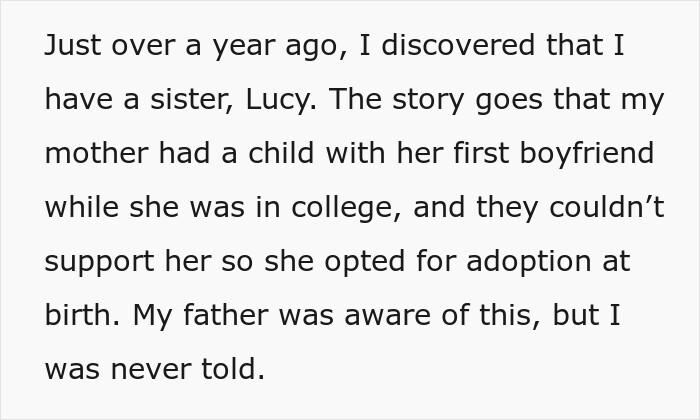
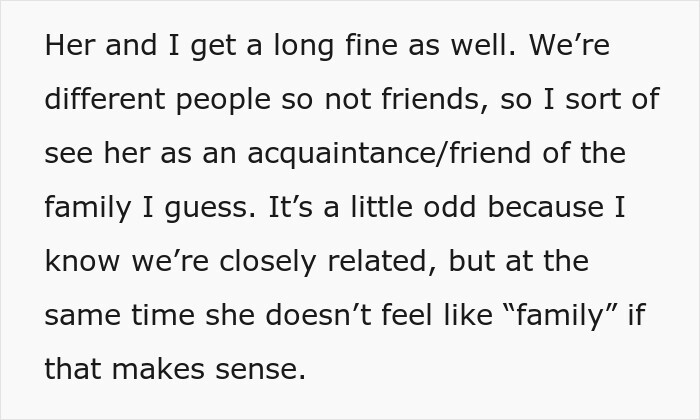
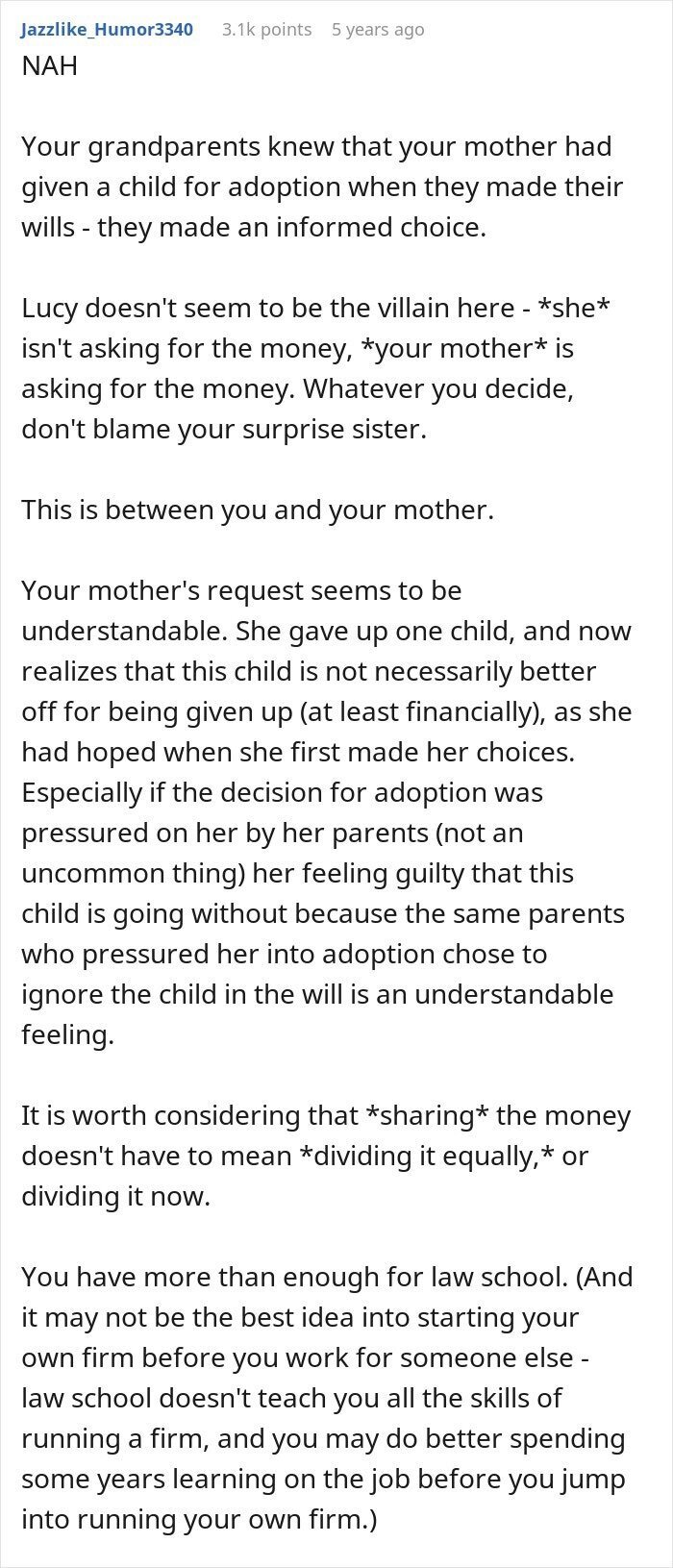
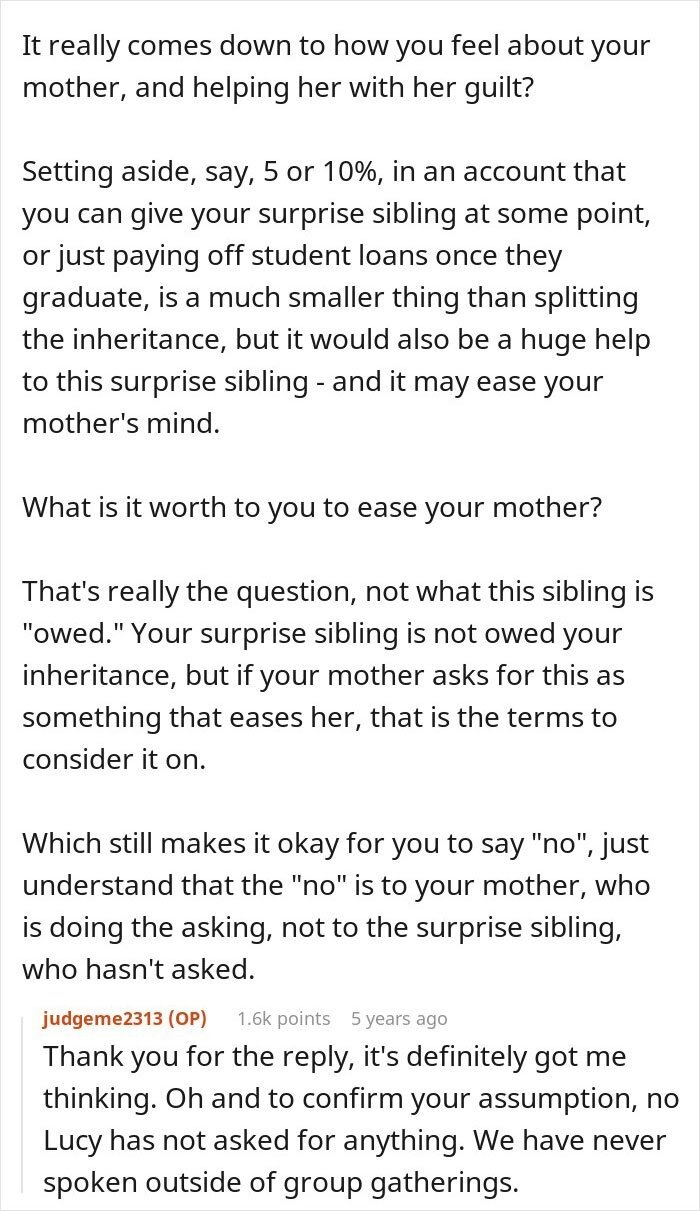
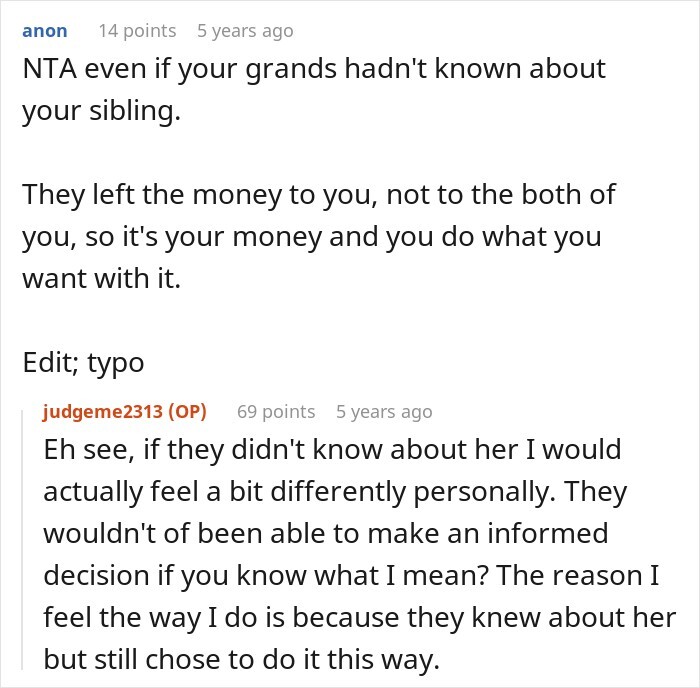
That’s where today’s story gets a little complicated. A 20-year-old man shared how he recently discovered that he had a half-sister he never knew about. The two have gotten along since reconnecting, but he doesn’t feel they have the kind of close sibling relationship that would make him want to share his money with her. So when his mother asked him to split his inheritance, he refused. Keep reading to see why he made that decision—and whether people thought he was being selfish or simply protecting what was left to him.
“Sharing is caring.” If you grew up hearing that phrase, you probably also remember how difficult it was to actually follow it sometimes. Ask a toddler to hand over their favorite toy, snack, or even a book, and there’s a good chance you’ll be met with a very dramatic “No!” followed by tears. But as frustrating as this behavior can be, there’s actually more going on than simple stubbornness. Research suggests that even very young children can experience jealousy when they feel someone else is getting the attention, affection, or things they want. For a toddler, something as simple as another child touching their favorite toy can feel like a much bigger deal than it seems to an adult.
Researchers have even observed signs of jealousy in infants as young as four months old. In one study, babies watched as their mothers appeared to give attention to lifelike dolls wrapped in blankets while recordings of baby sounds played nearby. The researchers found that the infants showed signs of distress and negative emotions when their mothers interacted with the dolls instead of them. While babies obviously can’t explain what they’re feeling, their reactions suggest that sensitivity to where a caregiver’s attention is directed develops remarkably early. It also helps explain why a young child can become upset simply because Mom or Dad is focused on someone else.
The reactions became even more interesting as the babies got older. Infants between six and 13 months showed facial expressions associated with sadness and what researchers described as “interest,” which may reflect their desire to regain their mother’s attention. Older, crawling babies sometimes became more physically expressive, reaching toward their mothers or protesting when their attention was elsewhere. Brain recordings from nine-month-old babies also showed activity in the left frontal region associated with emotions such as anger and approach-related behavior. In other words, that instinctive feeling of “Hey, pay attention to me!” seems to appear surprisingly early in life. These reactions don’t mean babies are deliberately being possessive or difficult; they’re still learning how relationships work and how to respond when their needs aren’t immediately being met. Over time, children develop better ways of expressing those feelings instead of simply crying, grabbing, or protesting.
This can become especially noticeable when a new sibling enters the picture. As The Times of India explains, younger children don’t yet have the cognitive ability to fully understand long-term family relationships. They tend to focus much more on what is happening right now. So when a new baby arrives and suddenly everyone is fussing over them, a young child may not think, “My parents still love me just as much.” They may simply notice, “Mom is holding the baby again, Dad is busy with the baby, and nobody is paying attention to me.” That can lead to clinginess, insecurity, jealousy, or attempts to reclaim their parents’ attention. Even if parents are making an effort to reassure their older child, the sudden change in routine can still feel enormous from the child’s perspective. A little extra attention, reassurance, and involvement can help them feel that they haven’t lost their place in the family.
There’s also a developmental reason toddlers can become fiercely protective of their belongings. At this age, children are still figuring out who they are as individuals, and a sense of ownership can actually play a role in that process. When a toddler grabs their favorite teddy bear and refuses to let anyone else touch it, they aren’t necessarily plotting to become the world’s tiniest hoarder. They are learning the difference between “me” and “not me,” and saying, “That’s mine!” can be one way of asserting that growing sense of independence. That is why asking a toddler to hand over a favorite toy can sometimes trigger a reaction that seems wildly out of proportion to the situation. From their point of view, they aren’t just giving up an object; they’re practicing control over something they believe belongs to them.
So, how do you actually teach a toddler to share without turning every playdate into a negotiation? Carol Zeavin and Rhona Silverbush, authors of Terrific Toddlers, recommend first acknowledging and validating what the child is feeling. Instead of immediately saying, “Stop crying and share!”, a parent might say, “You didn’t like it when Roy took your toy. You were still playing with it.” That simple acknowledgment can help a child feel understood and make it easier for them to calm down before learning how to handle the situation. Once the child feels heard, a parent can then introduce the idea of taking turns or finding another toy to play with. It teaches an important lesson: feeling angry or upset is okay, but those feelings don’t mean we get to ignore everyone else’s needs.
Another useful approach is to model sharing rather than simply demanding it. Toddlers learn a huge amount by watching the adults around them. If they see you offering someone the last cookie, sharing your snacks, taking turns, or happily lending someone something, they gradually begin to understand that sharing doesn’t always mean losing something. Even something as simple as saying, “I’m giving Dad some of my popcorn because I have enough to share,” can turn an everyday moment into a tiny lesson. The goal isn’t to force a toddler to become perfectly generous overnight, but to help them slowly understand that taking turns and considering other people’s feelings are part of getting along with others. Parents can also make sharing feel less threatening by giving children some control, such as letting them choose which toy they are ready to share. That way, they’re practicing generosity without feeling as though every possession is suddenly up for grabs.
Of course, sibling relationships don’t always become easier just because children grow up. Once siblings become adults, the reasons for keeping their distance can become much more complicated. They no longer share the same home, schedule, school, or parents’ attention, and the everyday closeness of childhood can gradually disappear. Two people who once saw each other every day can eventually live in different cities, have completely separate social circles, and speak only occasionally. Sometimes that distance happens naturally rather than because of any major disagreement.
Childhood rivalry and perceived favoritism can also leave lasting marks. If one sibling always felt that the other was the favorite, those old feelings can resurface years later—even when both siblings are adults with families and lives of their own. Sometimes, what looks like a small disagreement in the present is actually connected to years of unresolved resentment. A comment about money, careers, relationships, or family responsibilities can therefore bring old frustrations back to the surface surprisingly quickly. Even siblings who haven’t argued in years may find themselves slipping into familiar roles when an old sensitive topic comes up.
Growing into completely different people can create distance, too. Siblings may develop very different lifestyles, financial priorities, beliefs, or ideas about relationships. The things they once had in common as children may no longer be enough to keep them close. And if they grew up teasing, criticizing, or constantly competing with each other, one sibling may hesitate to open up about something personal because they already know exactly how the other might react. For some people, keeping conversations relatively surface-level becomes a way of avoiding unnecessary conflict. They may still care deeply about their sibling while deciding that certain subjects—such as finances, politics, careers, or relationships—are better left private.
Then there’s the simple desire for privacy. As adults build their own relationships, homes, careers, and families, they may decide that not every part of their life needs to be shared with their siblings. Keeping certain boundaries doesn’t necessarily mean there is resentment or a lack of love—it can simply mean that two people have learned to live independently. Healthy sibling relationships don’t necessarily require complete access to each other’s lives. In some cases, respecting those boundaries can actually make the relationship more comfortable because neither person feels pressured to share information they’re not ready to discuss.
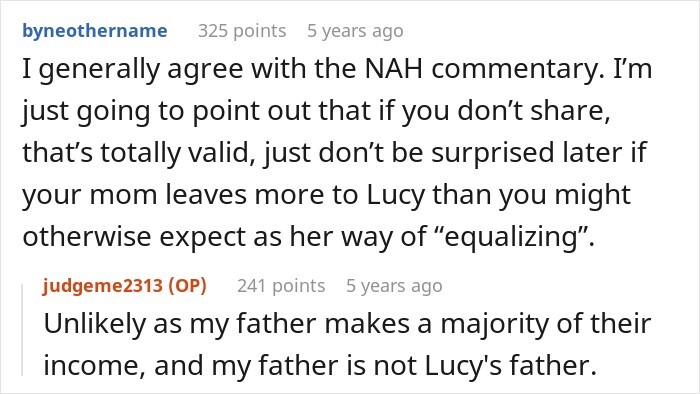
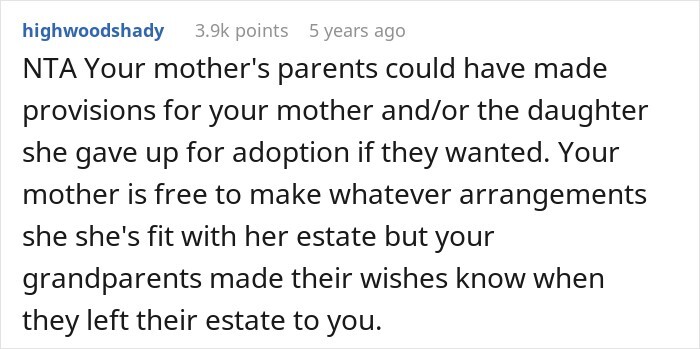
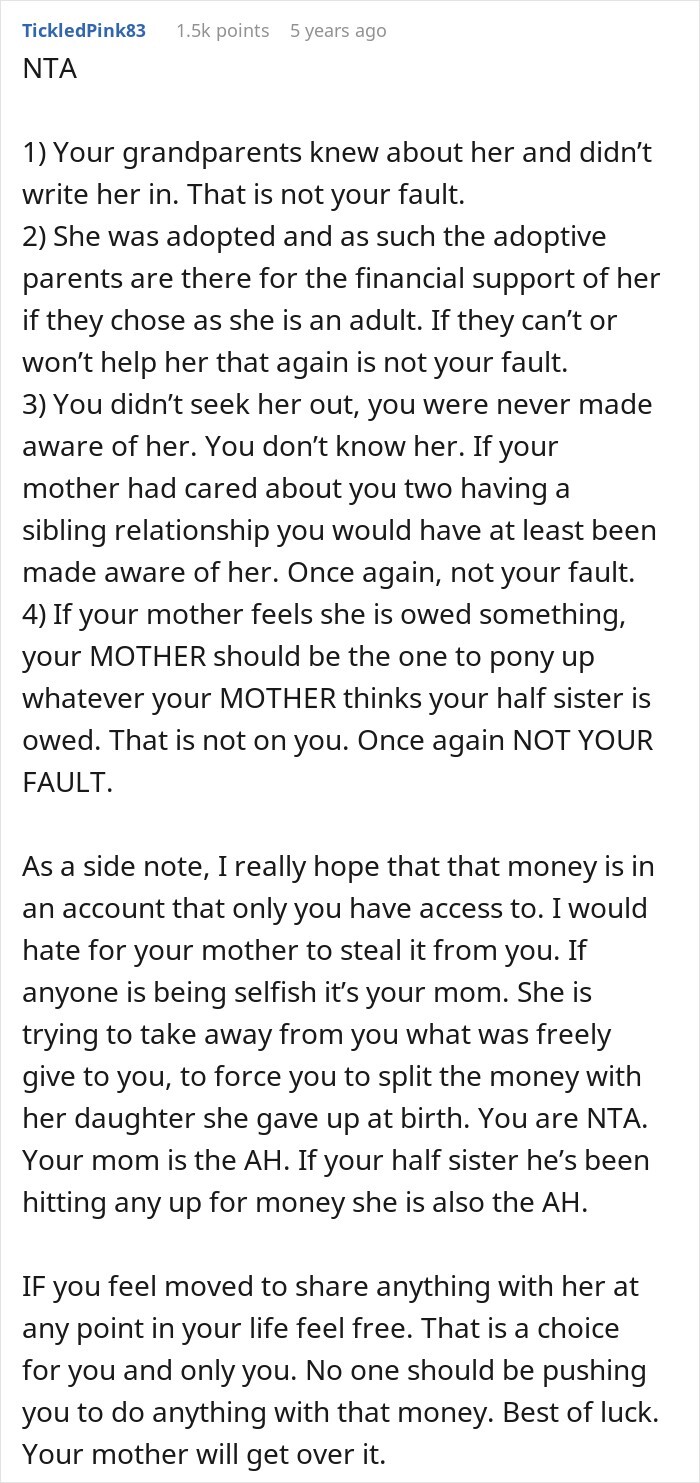
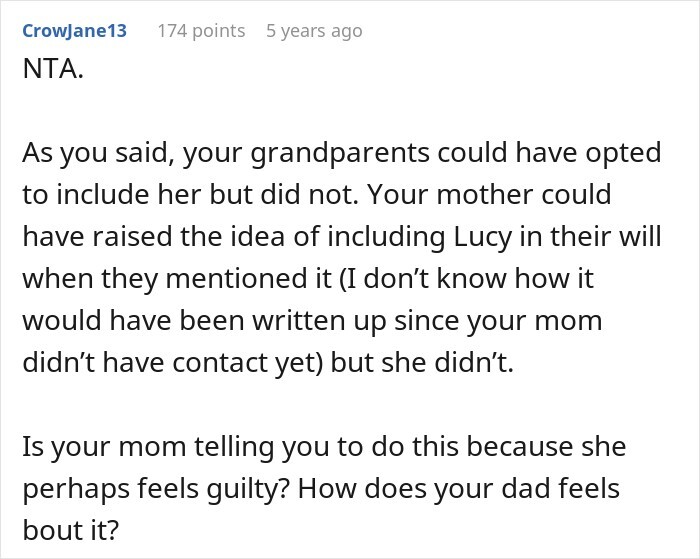
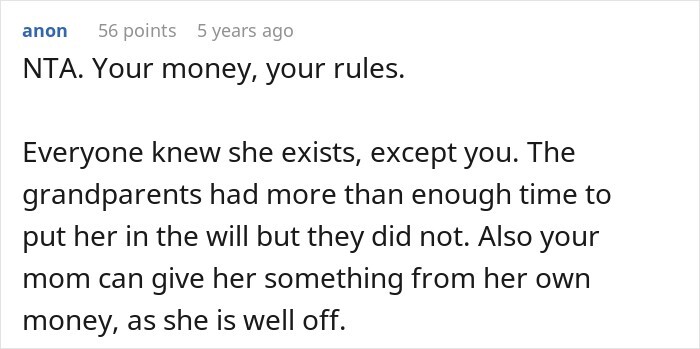
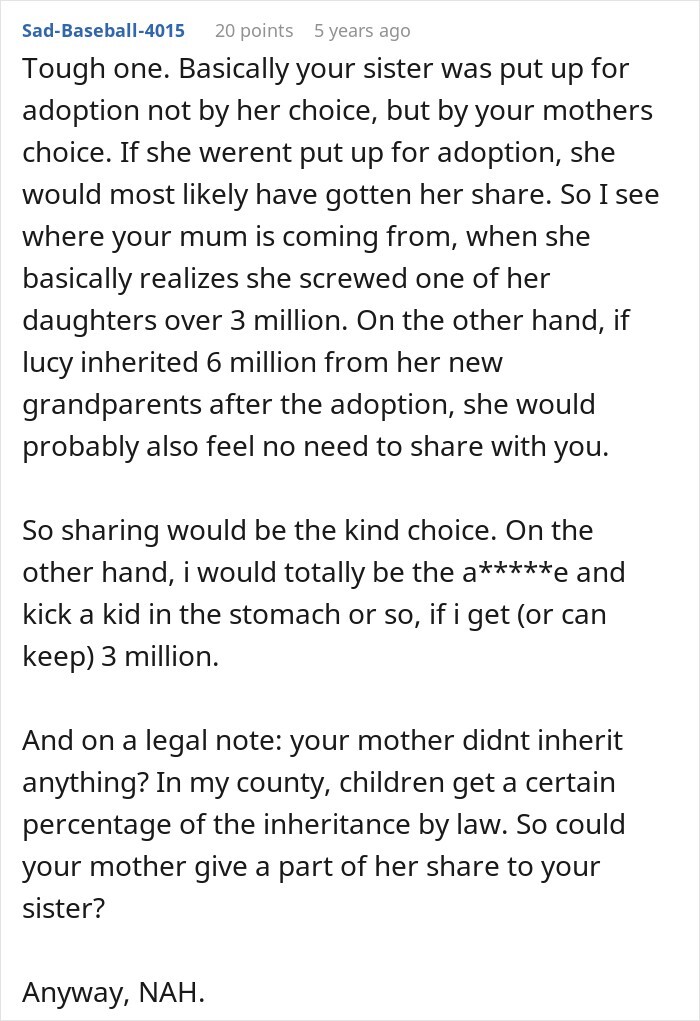
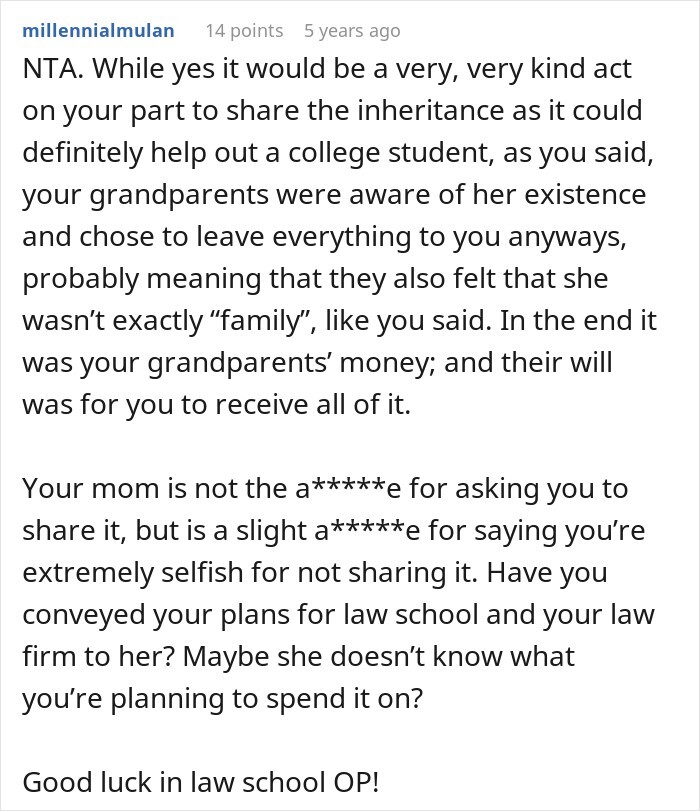
Coming back to today’s story, this is where things get a little complicated. The man knows his half-sister, and the two of them have gotten along since reconnecting, but he doesn’t feel like they have the kind of close sibling relationship that would make him want to hand over part of his inheritance. His mother, however, clearly sees things differently. To her, his half-sister is family, and that alone seems like a good enough reason for her to believe that she deserves a share, especially since she’s in college and struggling with debt.
But the story also brings up a much bigger question: what actually makes someone family? Is sharing the same blood enough to create a sense of responsibility toward someone, or does the bond you build with a person matter more? There probably isn’t one answer that works for everyone, which is exactly why his decision might have sparked such a debate. What are your thoughts on this, Pandas?

By entering your email and clicking Subscribe, you're agreeing to let us send you customized marketing messages about us and our advertising partners. You are also agreeing to our Privacy Policy.
Thank you! You've successfully subscribed to newsletters!




























 No fees, cancel anytime






























30
0