Get Premium
Dark mode theme is available exclusively for premium users. Learn more about the benefits of subscribing.
No fees, cancel anytime.

 Dark Mode Ad-Free Browsing Unlimited Content
 Ad-Free Browsing Unlimited Content Dark Mode
Join 1.2 million Panda readers who get the best art, memes, and fun stories every week!

Having a child who’s healthy can be a challenge, but caring for one who has a disability can become a whole family affair. In the U.S., about one in five households is caring for a child with special needs. Years of care take a toll on the parents, but siblings are just as affected, as they are often expected to help.
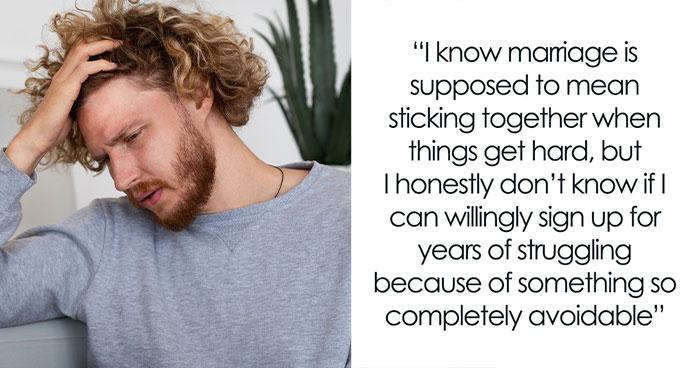
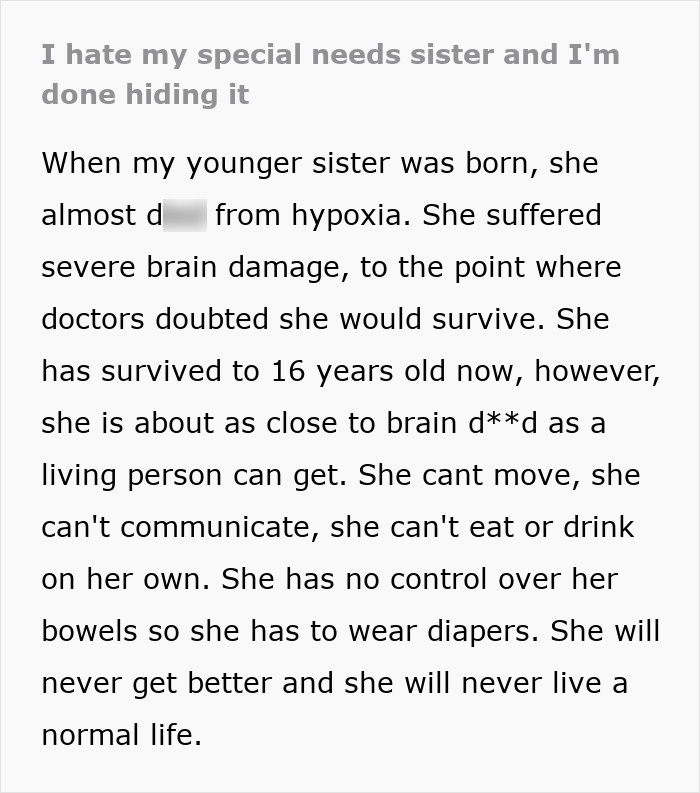
In a startlingly honest post, one guy opened up about how resentful he has become of his special needs sister. He claimed to virtually have no life, have lost all his friends, and prospects at romantic relationships because of his mother pressuring him to be his sister’s caretaker. However, one day he had had enough and confronted her, and that’s when things took a tragic turn.
Image credits: RDNE Stock project/Pexels (not the actual photo)
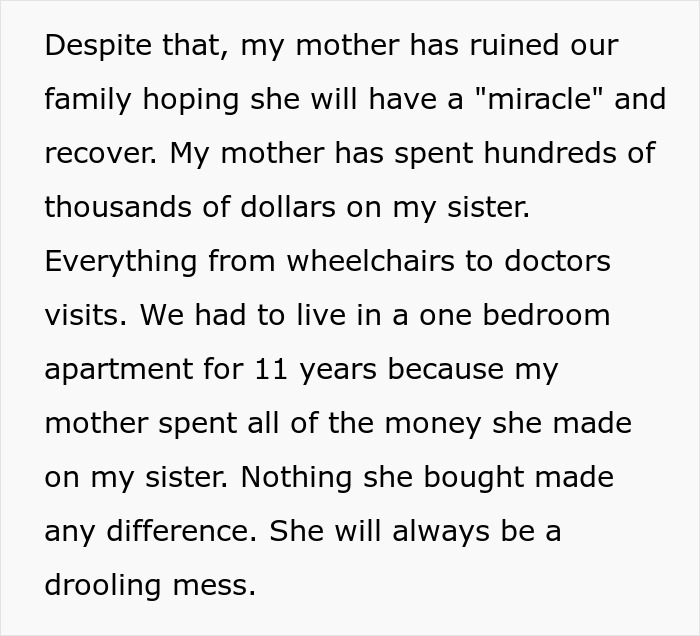
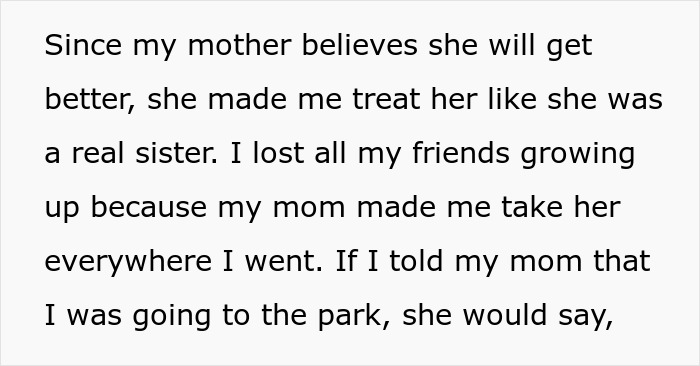

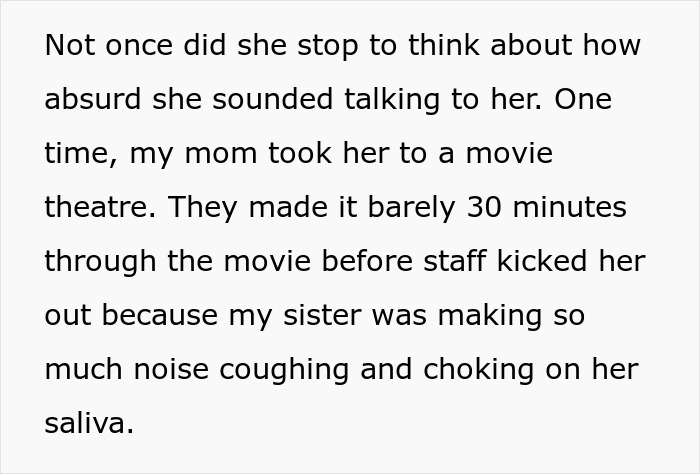
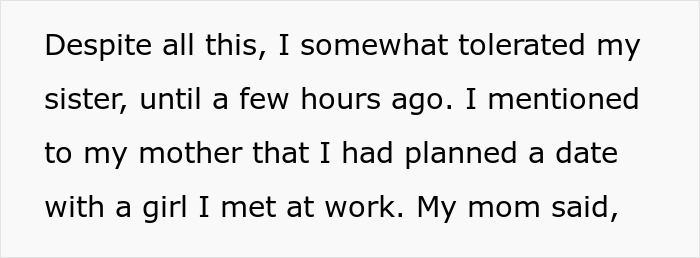
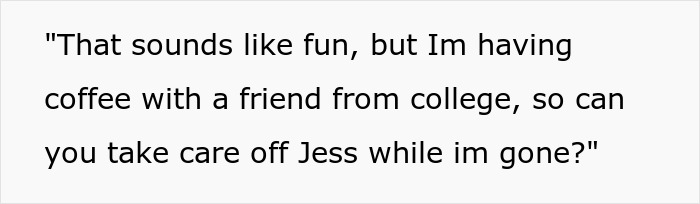
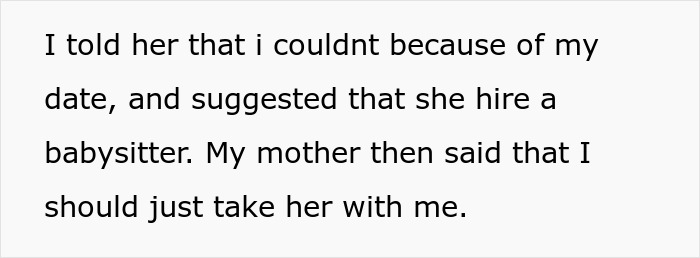
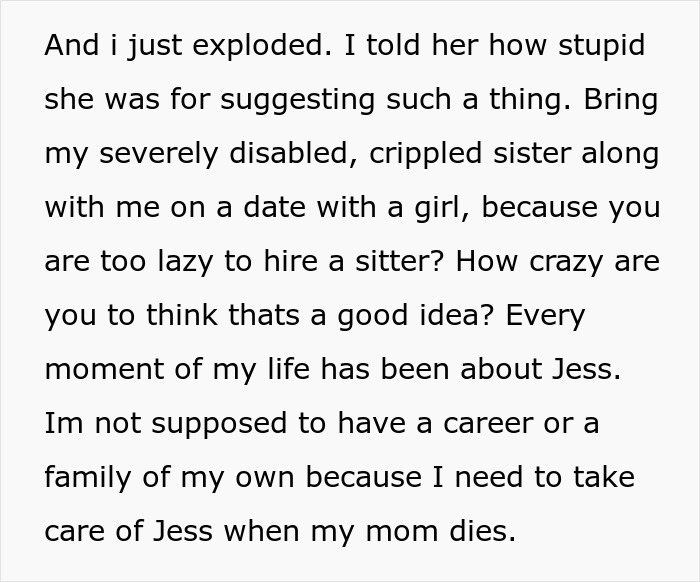
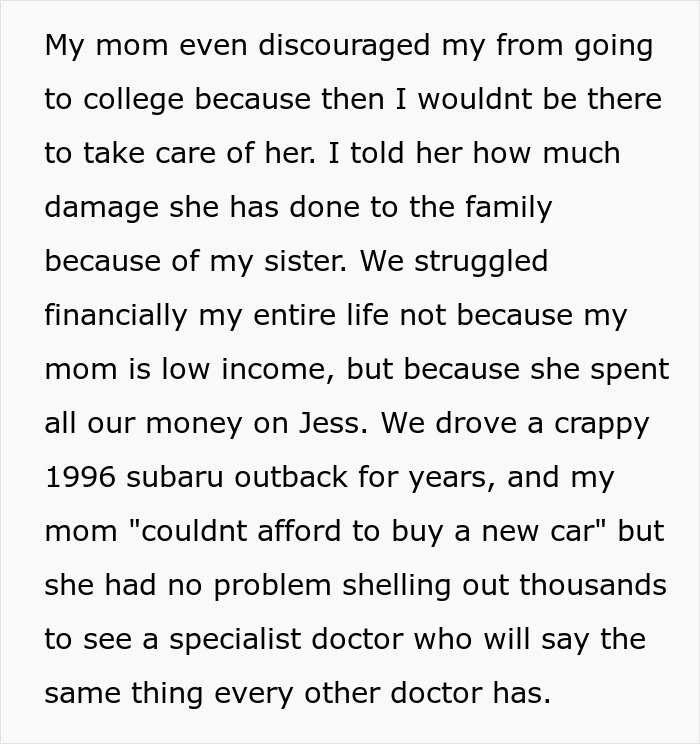
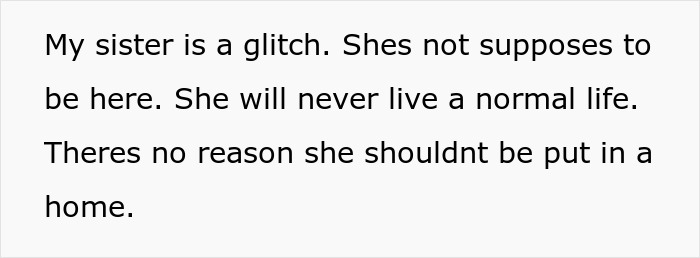
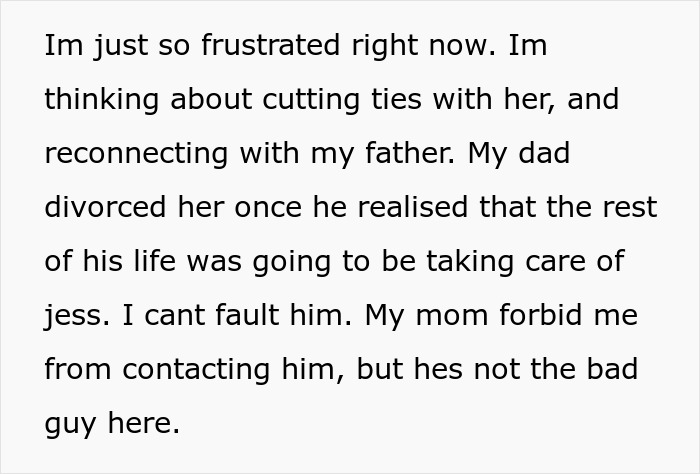
Image credits: SHVETS production/Pexels (not the actual photo)
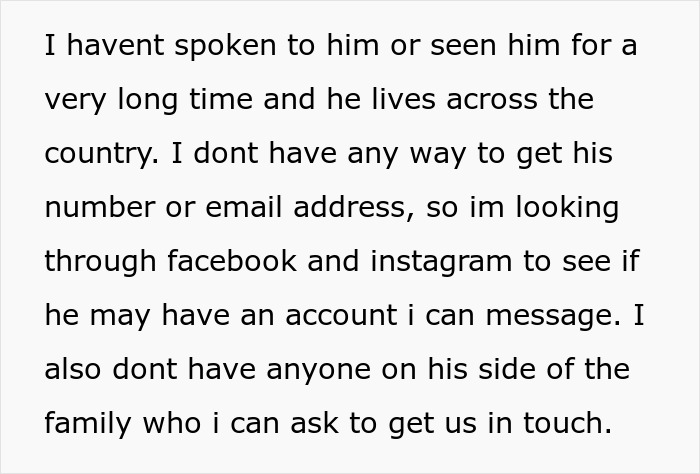
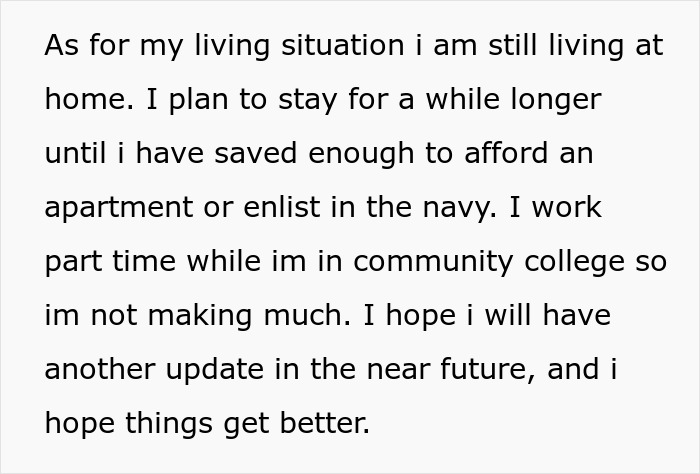
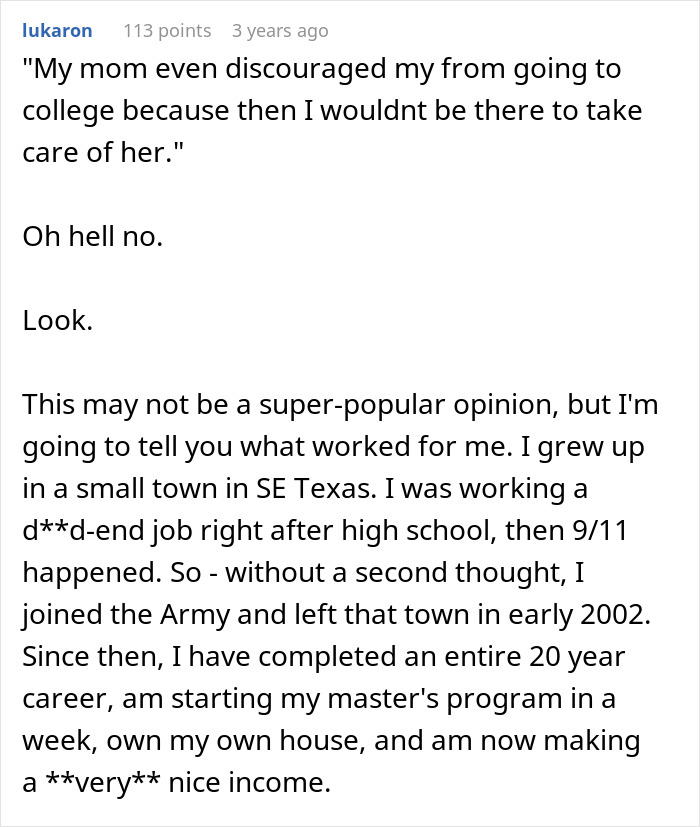
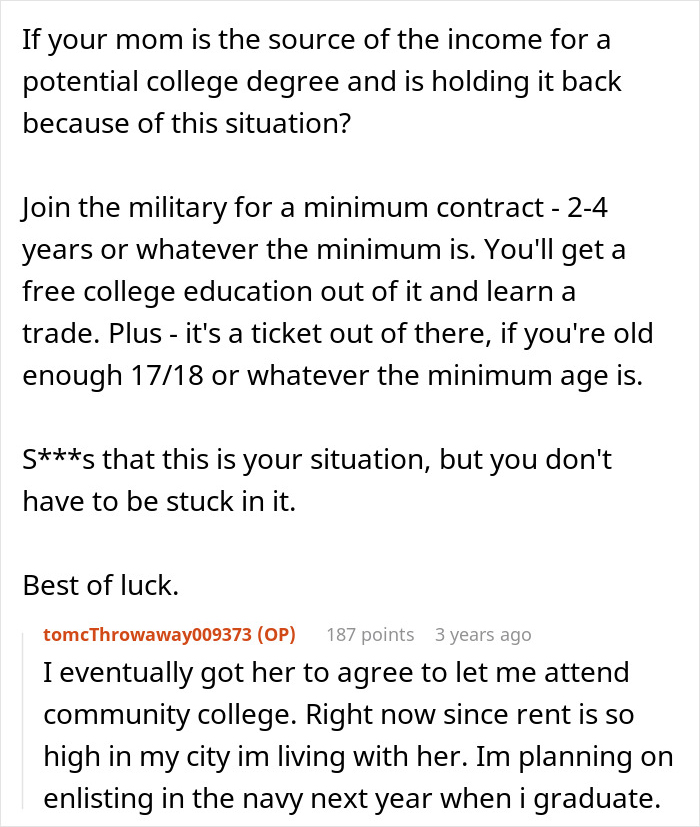
Image credits: u/tomcThrowaway009373
If there’s one thing every child needs, it’s attention. Unfortunately, those who have siblings with disabilities are often overlooked, even by their parents. One UK study estimates that around 7-17% of children are siblings of a child with a disability or a chronic illness, making this a pretty prevalent and common issue.
Siblings who get overlooked in favor of their disabled siblings are often referred to as “the glass child.” While that’s not a medical term, it’s used widely by people and experts alike.
Counselor, health educator, and author of Being the Other One: Growing Up with a Brother or Sister Who Has Special Needs, Kate Strohm, writes that neglected siblings often deal with low self-worth, anxiety, depression, and start to resent their family members. “Without support, siblings can feel isolated and alone, with no-one to talk to. They can feel less important than other family members.”
On one hand, it’s understandable why parents do this: there’s only so much of themselves they can give. According to pediatric psychologist Kate Eshleman, PsyD, caring for a child with special needs is exhausting. “Parents often spend more time with caregiving tasks for these kids, ushering them to appointments and navigating the system. All of this can take parents’ attention and resources away from their other children.”
On the other hand, siblings also need attention and care, but many are instead parentified. Just like the son in this story, they are expected to assume the role of caregiver before they’re even adults, and to continue caring for the disabled sibling once the parent is no longer alive.
Life empowerment coach Angela Pei Wu, LMFT, explains that parentified siblings of a special needs child start minimizing their own needs and develop resentment towards their sibling and parents over time. “Glass children learn that to be ‘good’ is to put their siblings before themselves,” she says. “These caretaking siblings develop people-pleasing tendencies which may affect them into adulthood.”
As many children with siblings who have special needs develop people-pleasing tendencies, it can be hard to say “no” when parents expect them to step into the caregiver role. Whether they’re still at home or already adults, guilt and family bonds can deter them from speaking their minds and making the decisions they really want.
The UK charity that supports brothers and sisters of disabled children, Sibs UK, reminds that there is no law obligating siblings to take care of their disabled brothers or sisters. “It is your choice as a sibling how much or little you want to be involved with supporting your brother or sister,” they claim.
Even if a child has expressed a wish to be a caregiver, they can change their mind. If a parent feels overwhelmed and doesn’t think they’ll be able to care for a disabled child on their own, they can seek help from care institutions or social workers. Emotional blackmail and manipulation of their other child is a red flag.
Experts say that parents shouldn’t force their children to become caregivers, but should let them participate in caregiving to the extent they want to. According to Amoy Gordon, a social worker and director of the Caregiving Youth Project at the American Association of Caregiving Youth, “The most important thing is to create an environment where the sibling’s participation is always a choice.”
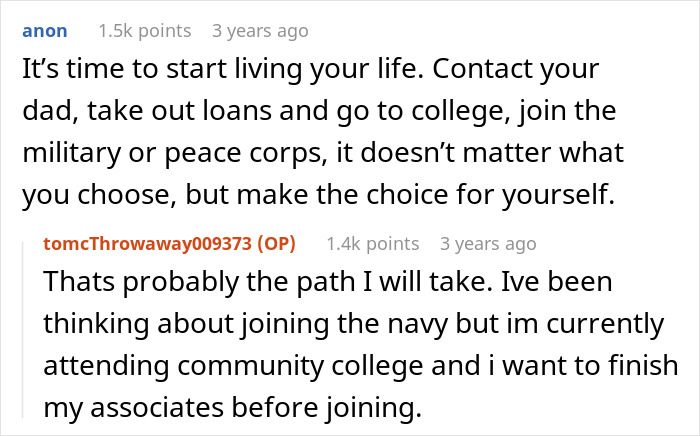
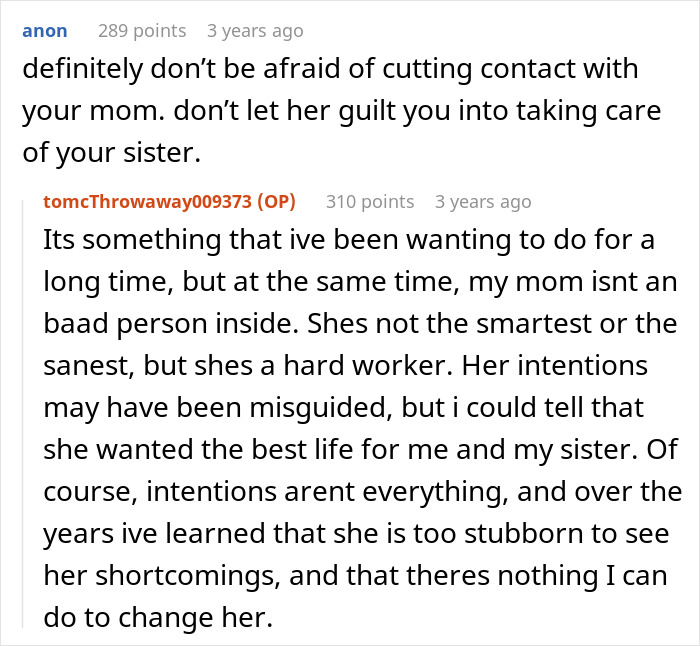

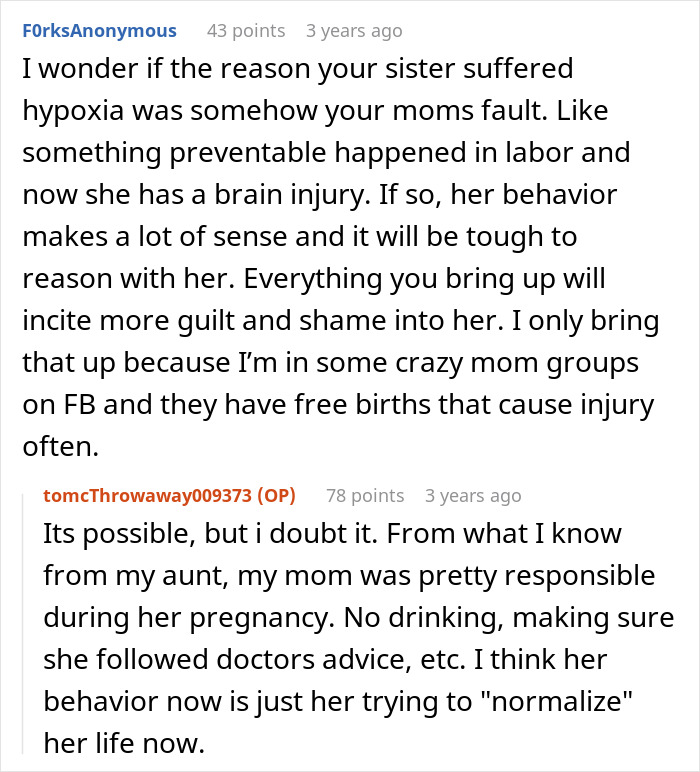
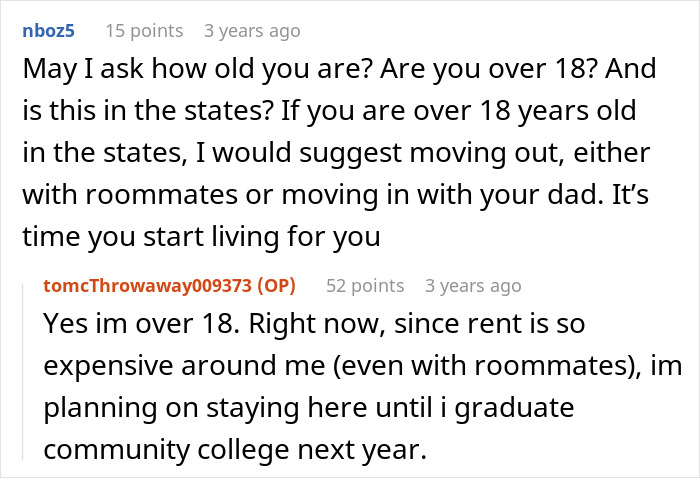


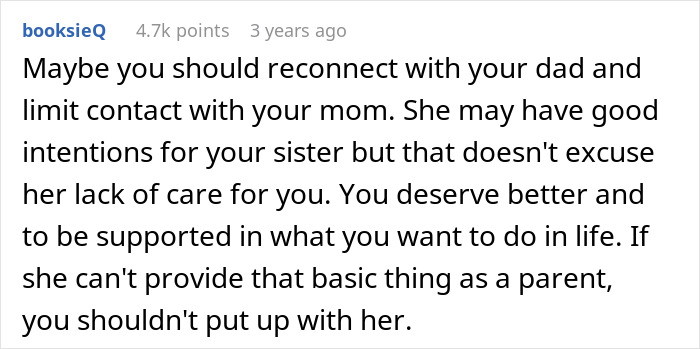
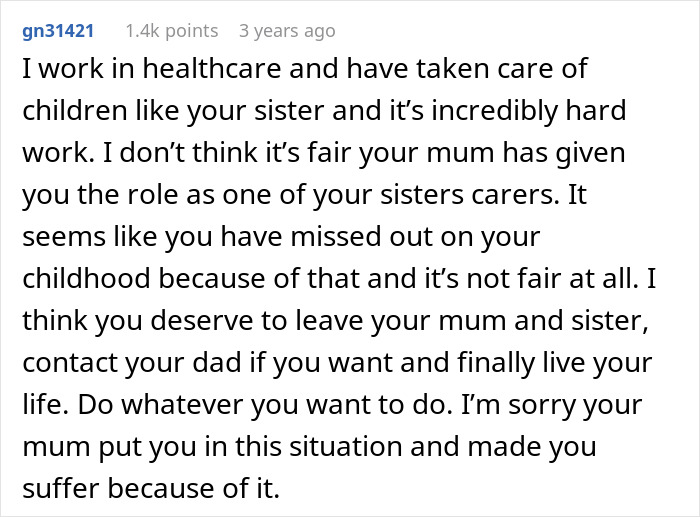


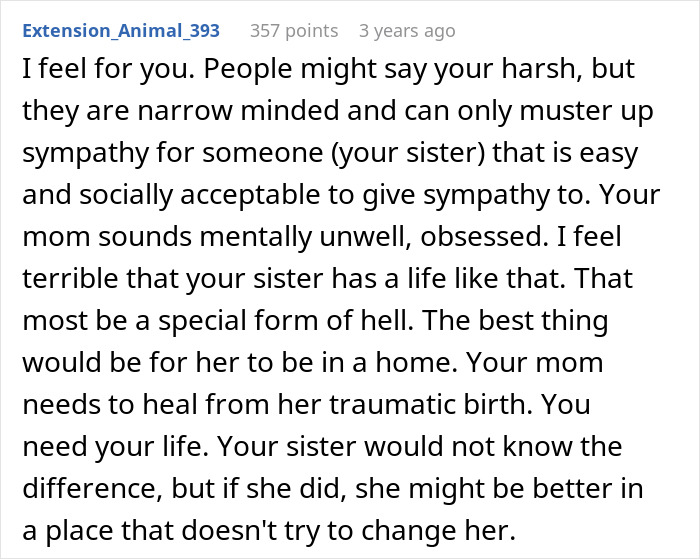
Image credits: cottonbro studio/Pexels (not the actual photo)
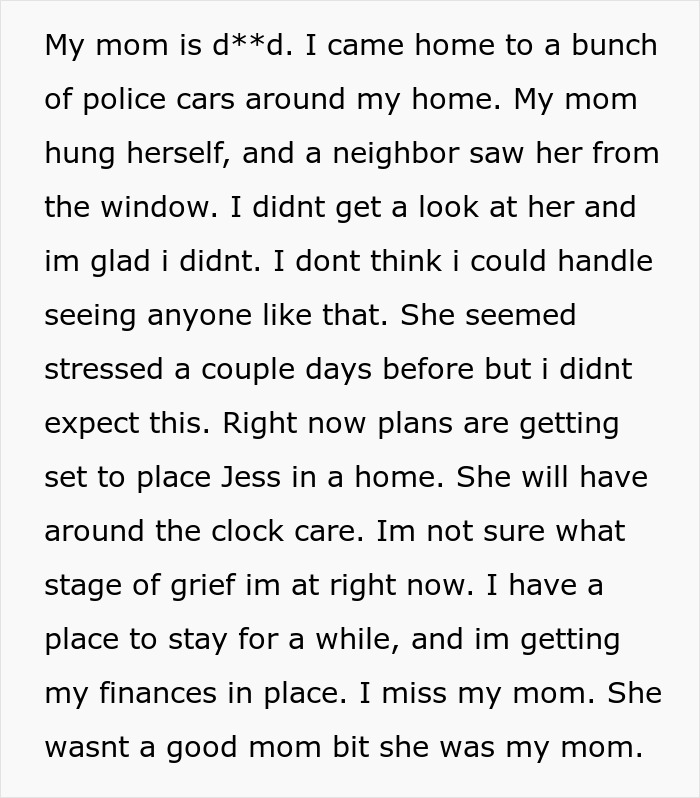
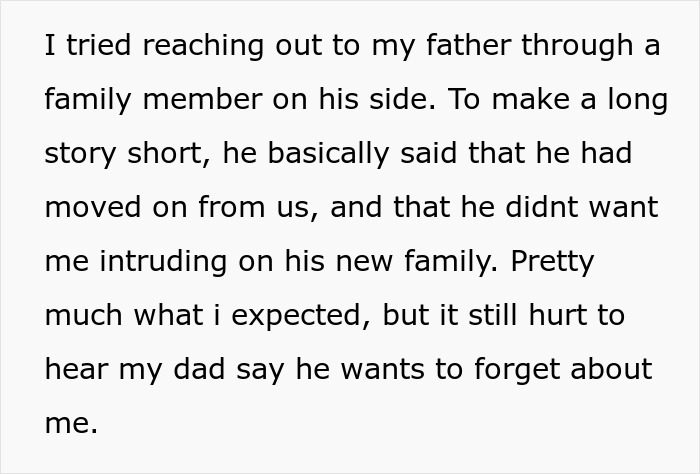
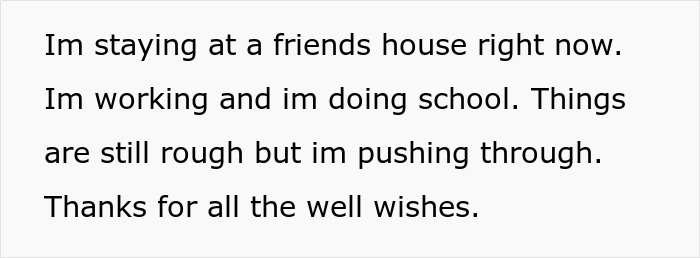
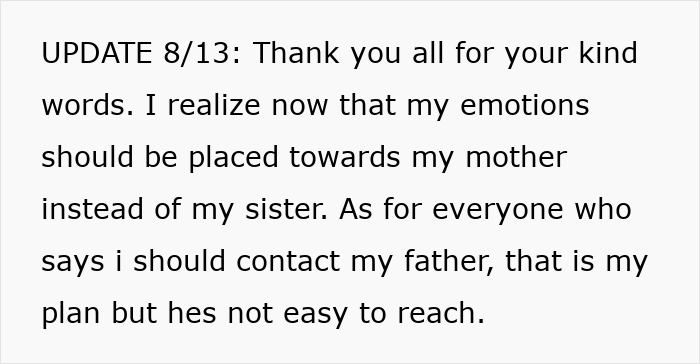
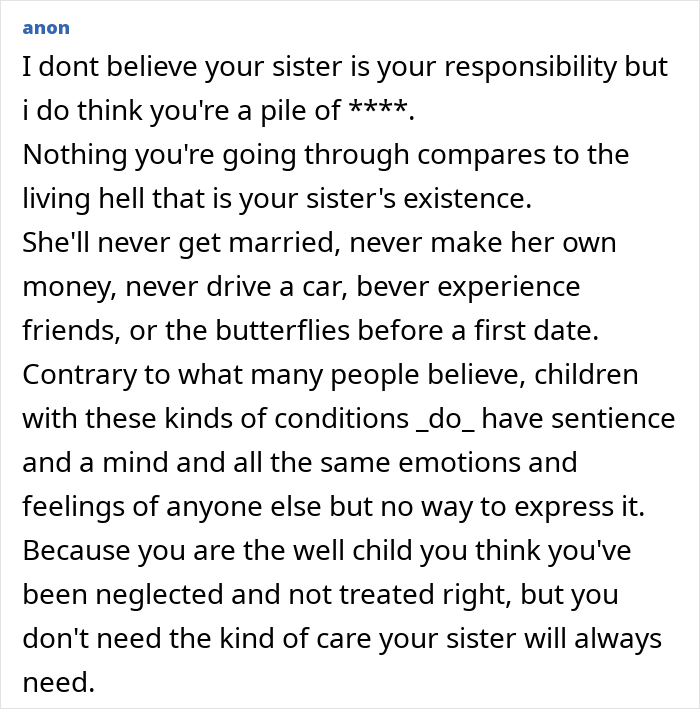
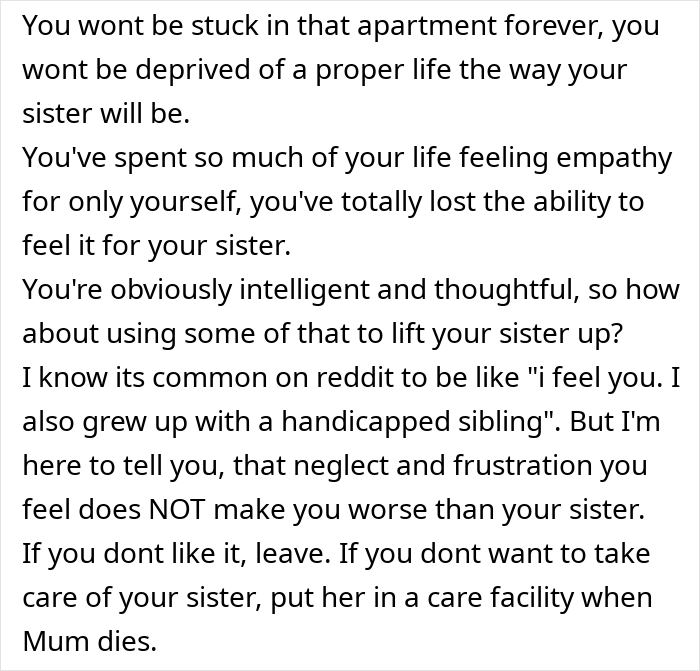
Image credits: u/tomcThrowaway009373

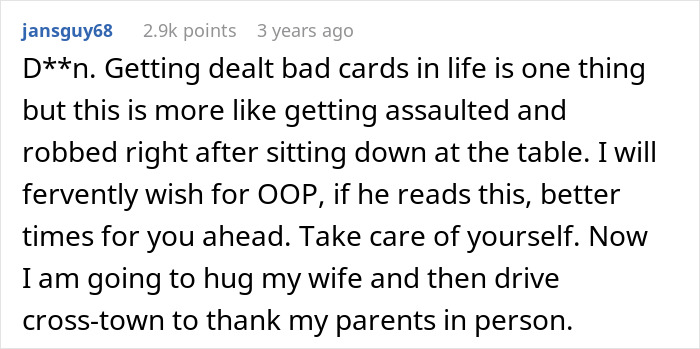

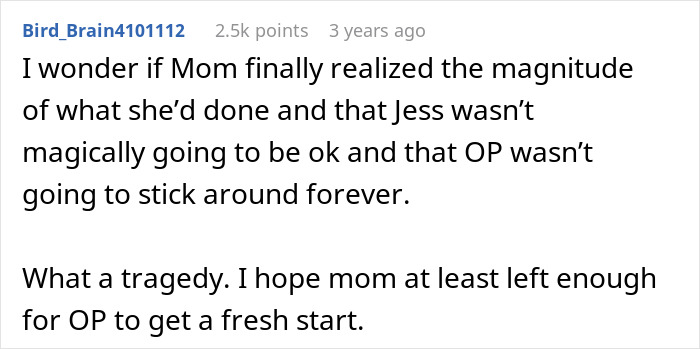
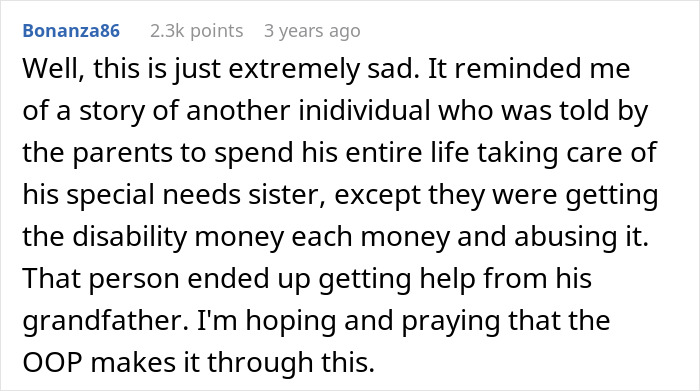

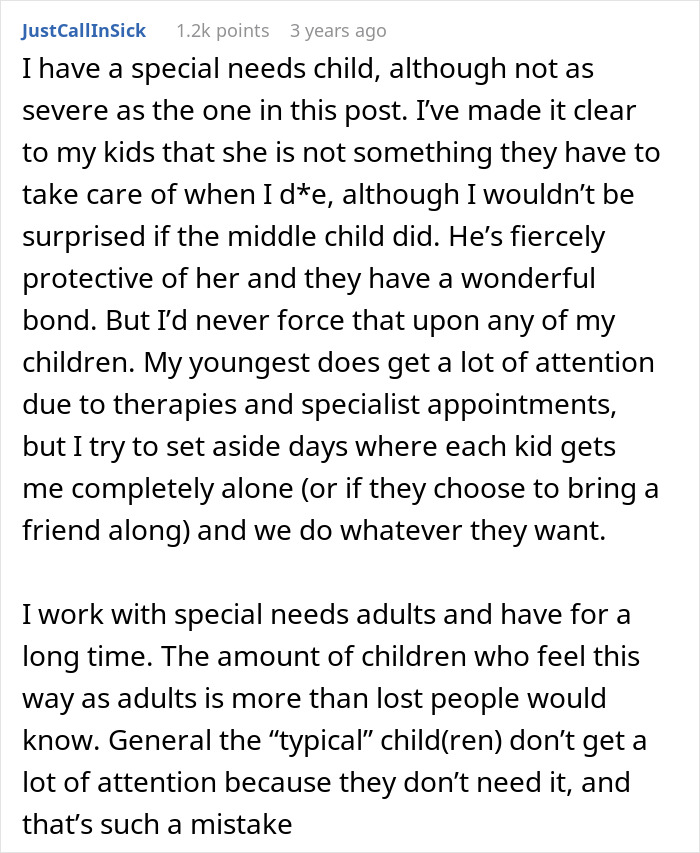
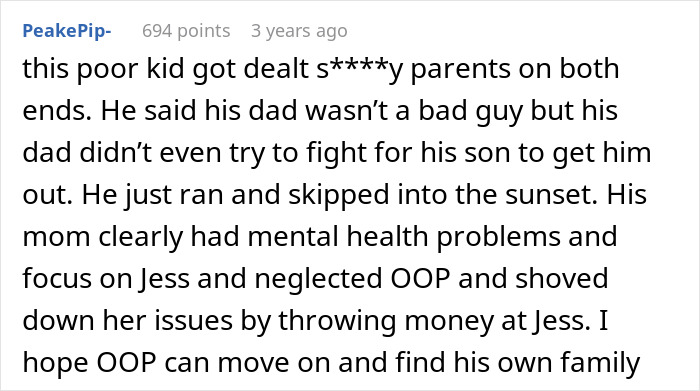
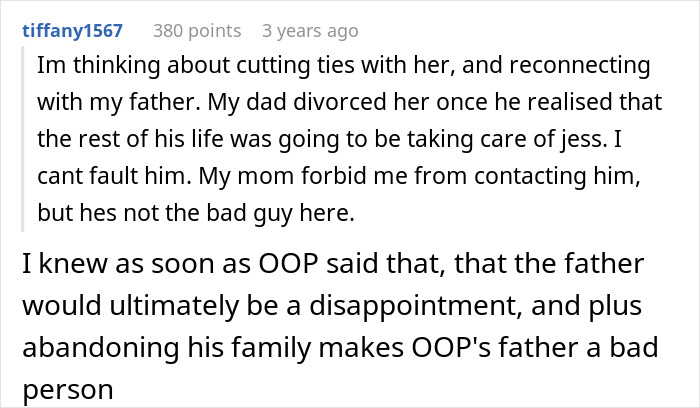





My dad had an accident when I was 18 and I spent the next 21 years as a caregiver (we took care of him at home.) It was a nightmare. My life was destroyed and so was my sister's, all because my mom was similarly selfishly delusional like OP's mom. I've struggled with depression and have seriously attempted suícide twice, so I'm not one to normally berate someone for committing suícide because I know how hard it can be... but OP's mom was absolutely selfish to commit suícide like that. She knew d****d well that OP would get custody of his sister, since OP is legally an adult. I'm sure the mom was suffering tremendously, but she destroyed her son's life because she was unwilling to deal with the mess of a situation that their family was in. Now OP will think, for the rest of his life, that his mother kílled herself because he was pushing to leave/not take care of Jess. He will blame himself. That is so abhorrently wrong.
My dad had an accident when I was 18 and I spent the next 21 years as a caregiver (we took care of him at home.) It was a nightmare. My life was destroyed and so was my sister's, all because my mom was similarly selfishly delusional like OP's mom. I've struggled with depression and have seriously attempted suícide twice, so I'm not one to normally berate someone for committing suícide because I know how hard it can be... but OP's mom was absolutely selfish to commit suícide like that. She knew d****d well that OP would get custody of his sister, since OP is legally an adult. I'm sure the mom was suffering tremendously, but she destroyed her son's life because she was unwilling to deal with the mess of a situation that their family was in. Now OP will think, for the rest of his life, that his mother kílled herself because he was pushing to leave/not take care of Jess. He will blame himself. That is so abhorrently wrong.




















 No fees, cancel anytime









33
1