Get Premium
Dark mode theme is available exclusively for premium users. Learn more about the benefits of subscribing.
No fees, cancel anytime.

 Dark Mode Ad-Free Browsing Unlimited Content
 Ad-Free Browsing Unlimited Content Dark Mode
Join 1.2 million Panda readers who get the best art, memes, and fun stories every week!

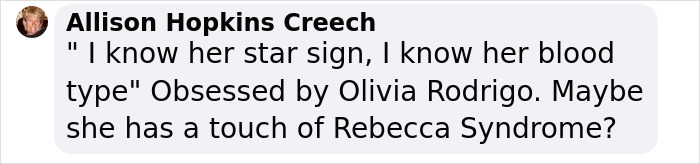
Have you ever felt an intense, inexplicable jealousy towards a partner’s previous relationship? You might just be suffering from “Rebecca Syndrome,” a condition that can create significant emotional distress with the potential to ruin a couple’s life.
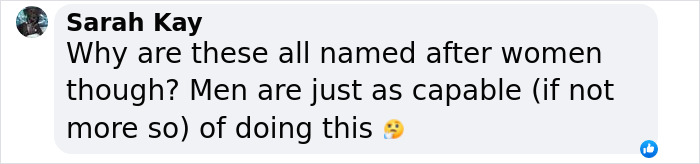
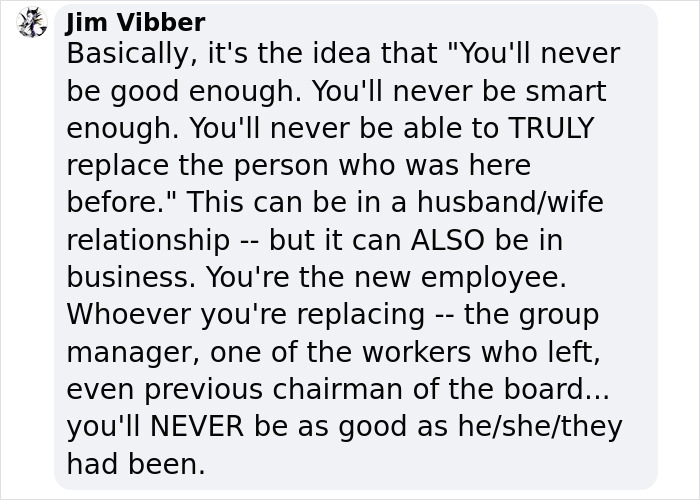
The phenomenon received its name from the 1938 novel Rebecca, which tells the story of the second spouse of a widower and her belief that she will never be able to compete with the eponymous first wife, who everyone claims to be beautiful and perfect.
The always-online nature of modern life has made people’s pasts more accessible than ever, with some studies revealing that more than half of those in relationships have looked up their partner’s ex at some point.
“Some individuals become obsessively preoccupied with their partner’s past relationships, even if there is no rational basis for their jealousy,” psychologist Dr. Louise Goddard-Crawley told Newsweek.
Image credits: Volodymyr/stock.adobe.com (Not the actual photo)
While the syndrome has not officially been recognized as a psychological disorder, it has nevertheless ingrained itself into pop culture, having been adapted for media productions by the likes of Alfred Hitchcock and Orson Welles.
For Goddard-Crawley, however, the phenomenon has become increasingly relevant in recent years due to the ease with which the internet allows people to compare themselves to others’ often unrealistic standards.
“It’s irrational,” she explained. “One common sign is an obsessive preoccupation where the affected individual constantly thinks about their partner’s previous relationships.”
As the unpleasant feeling evolves, it can often translate into controlling and intrusive behavior from the one experiencing it as they try and fail to manage their jealousy on their own.
“They may harbor suspicion or paranoia regarding their partner’s past, believing that the ex-partner remains a threat to the current relationship,” Goddard-Crawley added.
Image credits: terovesalainen/stock.adobe.com (Not the actual photo)
A 2022 study conducted by the University of Bern, Switzerland, explored how early childhood experiences shape jealousy patterns in adult relationships.
Researchers found that individuals who experienced emotional neglect or inconsistent affection from caregivers were more likely to exhibit heightened levels of romantic jealousy later in life.
Unreliable caregiving was associated with the development of feelings of inevitable abandonment, leading those affected to not only expect this outcome but strive to create it.
Image credits: Jelena/stock.adobe.com (Not the actual photo)
The paper explained how anxious behavior such as Rebecca Syndrome is ultimately an effort to recreate the conditions within which the person first experienced affection as a child. If a person feels that love is conditional, scarce, or associated with negative emotions such as fear, then they will look for relationships that support this belief.
Conversely, the study explained how those with secure attachments tend to display lower levels of jealousy, allow themselves higher levels of trust in their partners, and reduce the emotional impact of perceived threats like exes.
Image credits: Netflix
The study also established a link between the Big Five personality traits in modern psychology and the degrees to which a person is likely to experience jealousy.
The model, first proposed in 1958 by the Texas Air Force researchers Ernest Tupes and Raymond Christal, establishes neuroticism, openness, conscientiousness, agreeableness, and extraversion as the five factors that combine to create personalities.
Of these factors, neuroticism—characterized by anxiety and emotional instability—was found to be the strongest predictor of jealousy, as these individuals are more likely to react negatively to perceived threats and display the critical factor in Rebecca Syndrome: obsessive behavior towards a partner’s past.
Image credits: DC Studio/stock.adobe.com (Not the actual photo)
On the other hand, traits like agreeableness and openness were associated with lower levels of jealousy, as these individuals tend to trust their partners more and are less likely to view an ex as a rival.
Another interesting finding was that these personality-driven tendencies did not significantly differ between genders, relationship statuses, or past experiences with infidelity, although childhood trauma was ultimately the root cause of the phenomenon.
Image credits: Netflix
“What about the ex-baby mama obsessively jealous of the new gf? What’s that one called? I had to live through their nonsense for years,” a reader wrote.
“There’s a difference between being jealous and being territorial. Jealousy is wanting something that isn’t yours; being territorial is protecting what’s yours,” another argued.
“This happened to me a lot in the past! Constantly being accused of what I never did! It’ll drive you insane!” a user shared.
“My ex-husband’s wife experiences this so heavily that it led to parental alienation and severe damage done to my children, not only myself,” another recalled.

By entering your email and clicking Subscribe, you're agreeing to let us send you customized marketing messages about us and our advertising partners. You are also agreeing to our Privacy Policy.
Thank you! You've successfully subscribed to newsletters!
47Kviews
Share on Facebook
This is pretty ridiculous in my opinion. The new wife wasn't just merely compared to the former Mrs. Rebecca DeWinter, she was constantly made to feel that everything she did was wrong because she did it differently than her predecessor. Then when she tried to be the same, everyone was "How dare you be like Rebecca!" If that happened to anyone else, they would be right to be upset by the comparison. In modern times, we would call that a red flag and advise the subject to walk away fast. (Of course, by the end of the story, we learn that Rebecca wasn't nearly as perfect as everyone made her out to be.)

This is pretty ridiculous in my opinion. The new wife wasn't just merely compared to the former Mrs. Rebecca DeWinter, she was constantly made to feel that everything she did was wrong because she did it differently than her predecessor. Then when she tried to be the same, everyone was "How dare you be like Rebecca!" If that happened to anyone else, they would be right to be upset by the comparison. In modern times, we would call that a red flag and advise the subject to walk away fast. (Of course, by the end of the story, we learn that Rebecca wasn't nearly as perfect as everyone made her out to be.)























 No fees, cancel anytime





















10
20