Get Premium
Dark mode theme is available exclusively for premium users. Learn more about the benefits of subscribing.
No fees, cancel anytime.

 Dark Mode Ad-Free Browsing Unlimited Content
 Ad-Free Browsing Unlimited Content Dark Mode
Join 1.2 million Panda readers who get the best art, memes, and fun stories every week!
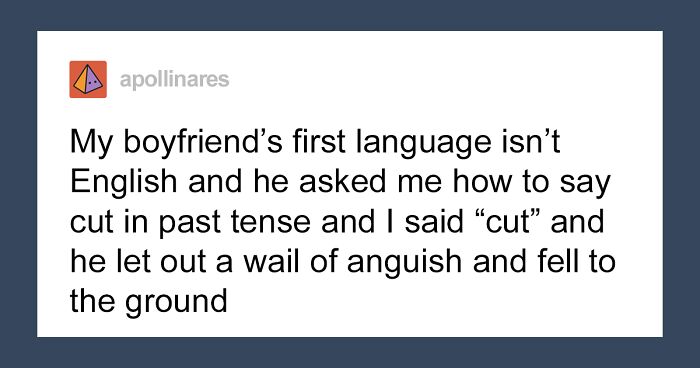
I absolutely adore the English language with all of its ups and downs, twists and turns, astounding hyperboles and alliterative inclinations. And let's not forget the puns! However, it's no secret that the language can be a tad… discombobulating for new students, anyone who's learning English as a second language, and native speakers alike.
To show you what we mean, the literature-loving philology fans here at Bored Panda have collected the most hilarious and honest examples of people showing how frustrating the English language can be for them. Have a read below, upvote your fave posts, and remember to share your own experience with the exciting journey that is learning English.
This post may include affiliate links.

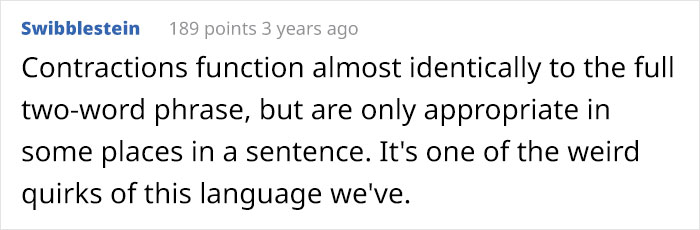
Yeah but that's true for every language. You rarely have "full" synonyms that are completely interchangeable in every context (non-native speakers are generally detectable by breaking unspoken context rules) . Apart from minute differences in meaning, most words also have meanings beyond the thing they describe, such as opinion.


I was taking a TEFL (Teaching English as a foreign Language) qualification in Japan, and one of the exercises I had to do was read to a class of students. The one word that stuck in my mind was black bird versus blackbird. The difference is so subtle, but I hadn't given it any thought until you had to explain the difference.

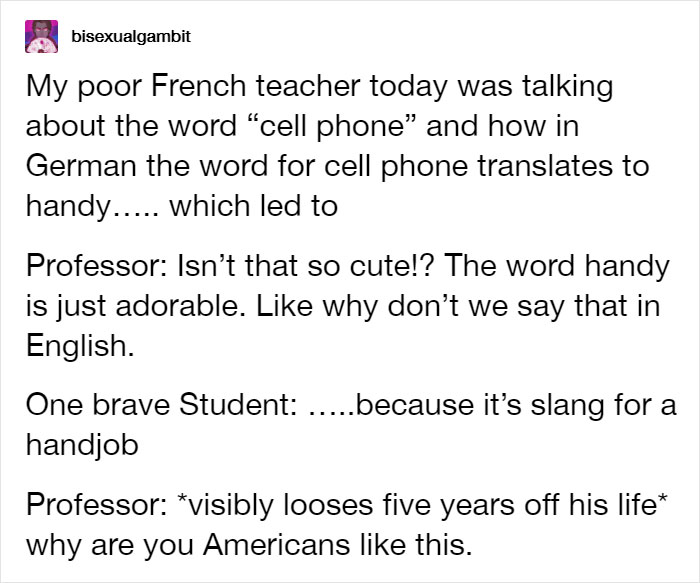
My English teacher taught me not to use "handy" in English because it would be a derogatory term for handicapped people. Is that true?
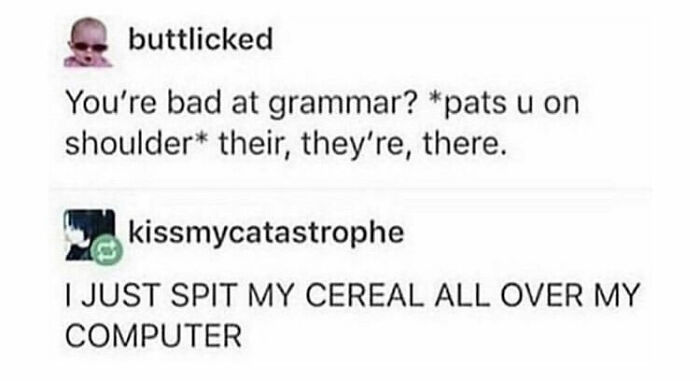
And here is another strange "Americdnism" I spit my cereal, I would say I spat my cereal...

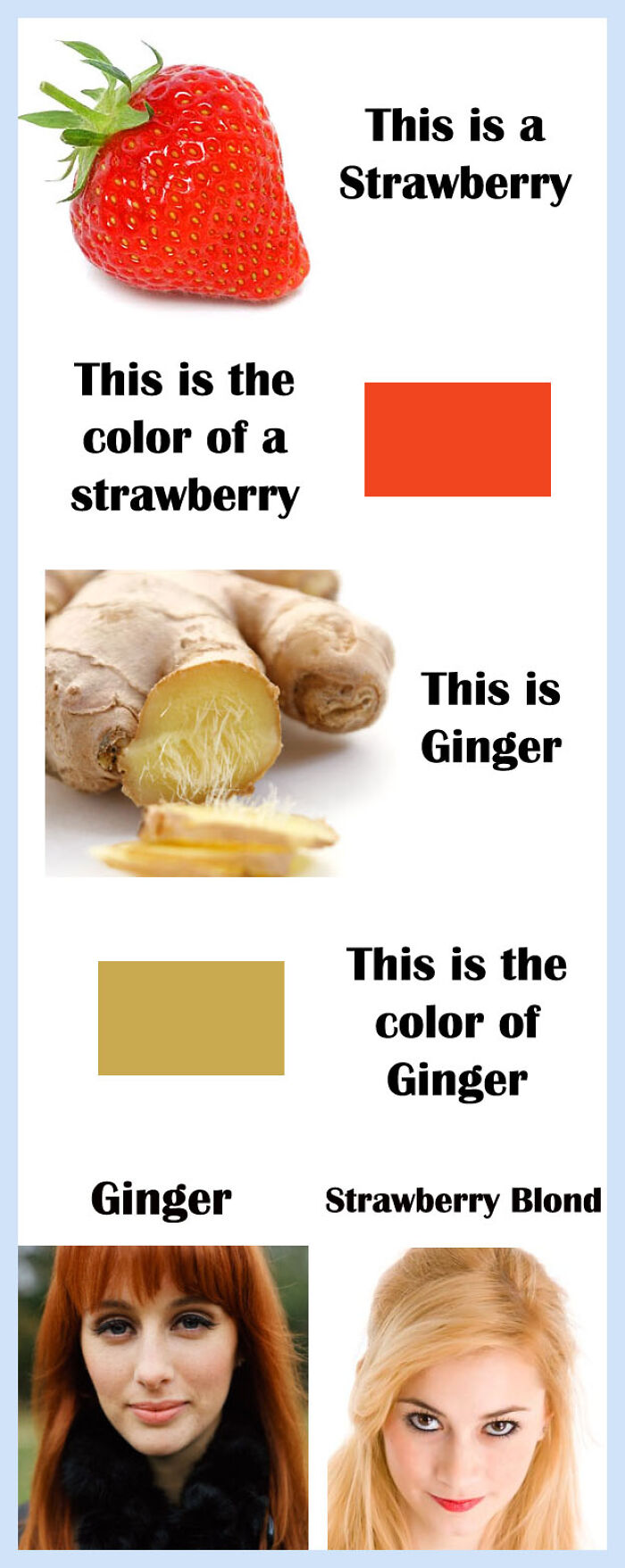
Whoever came up with those names for the hair colors were color blind

I have a medical condition which resulting in tearing of the cornea. When I write that, people sometime get confused. My cornea doesn't produce liquid, it rips apart and is excruciatingly painful, but tearing can make it feel a little better because the liquid lubricates and protects the tear.

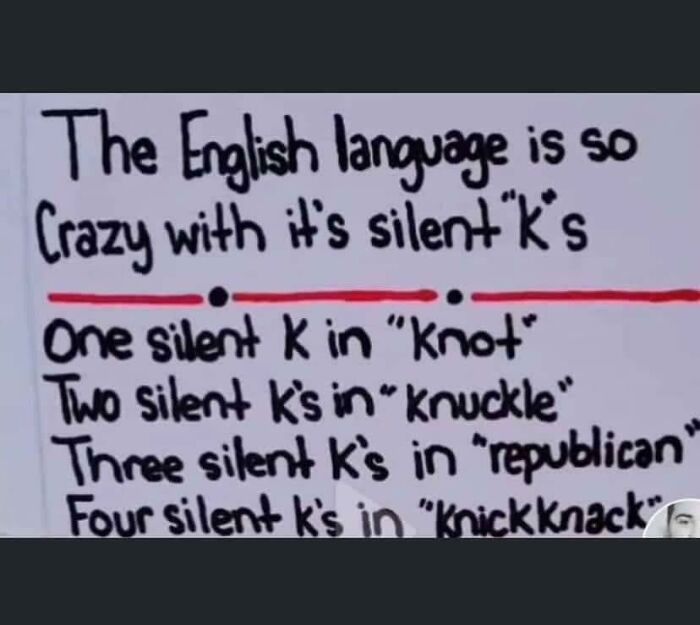
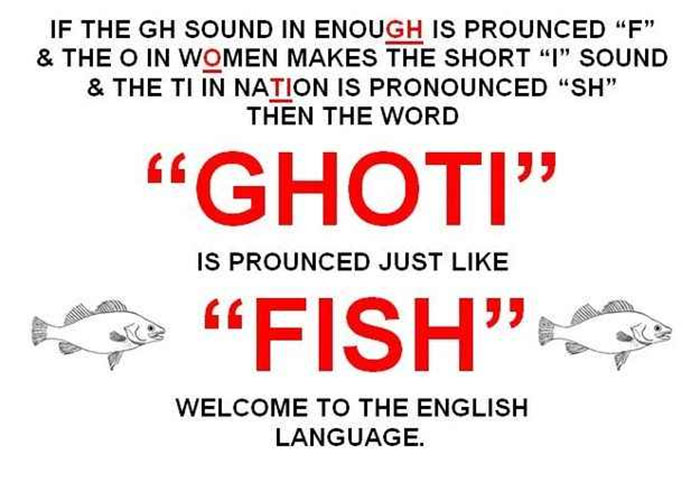
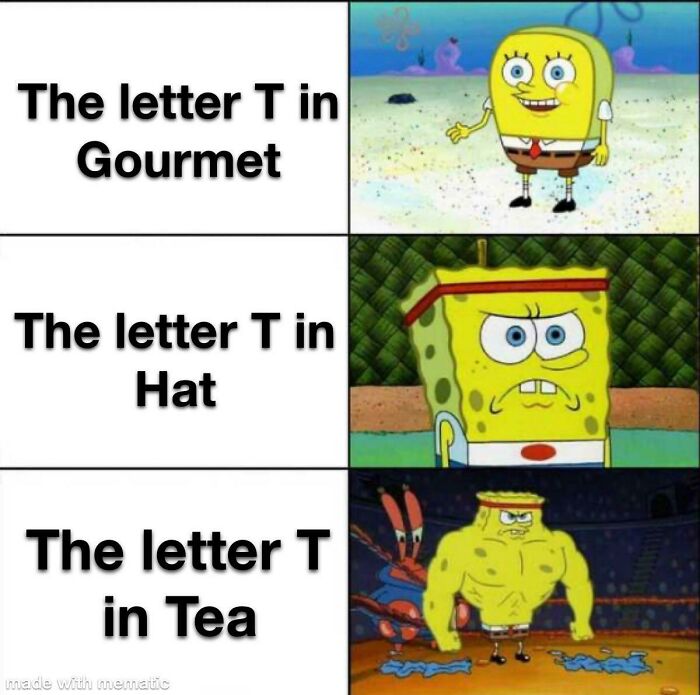
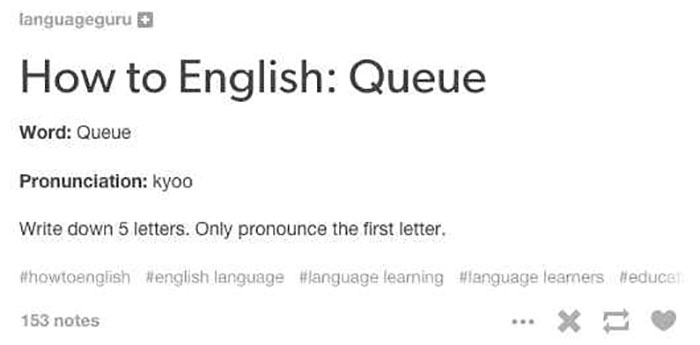
And the B in tomb is silent, and the E in time is silent, and the T in often is silent, and the H in honor is silent, how do you pronounce BETH? It's all silent letters!

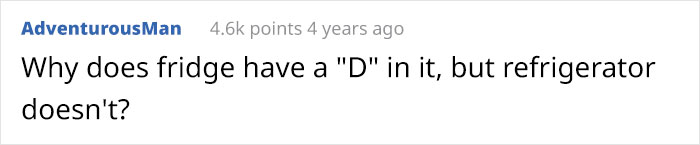
Because the Frigidaire brand became so popular that “fridge” was used as the term for all refrigerators.
Why do Americans say dove instead of dived? He dived into the pool, not he dove into the pool. That is what I was taught at school anyway. Also hanged and hung He was hanged from the tree, not he was hung from the tree. Is this a specifically American thing. No offence, just genuinely would like to know.

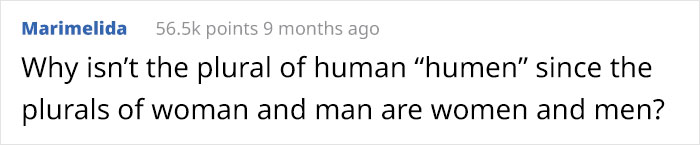
Human was first recorded in the mid 13th century, and owes its existence to the Middle French humain “of or belonging to man.” That word, in turn, comes from the Latin humanus, thought to be a hybrid relative of homo, meaning “man,” and humus, meaning “earth.” Thus, a human, unlike birds, planes, or even divine spirits up above, is a man firmly rooted to the earth
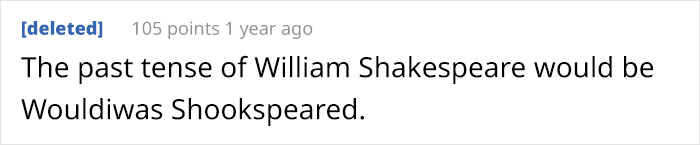
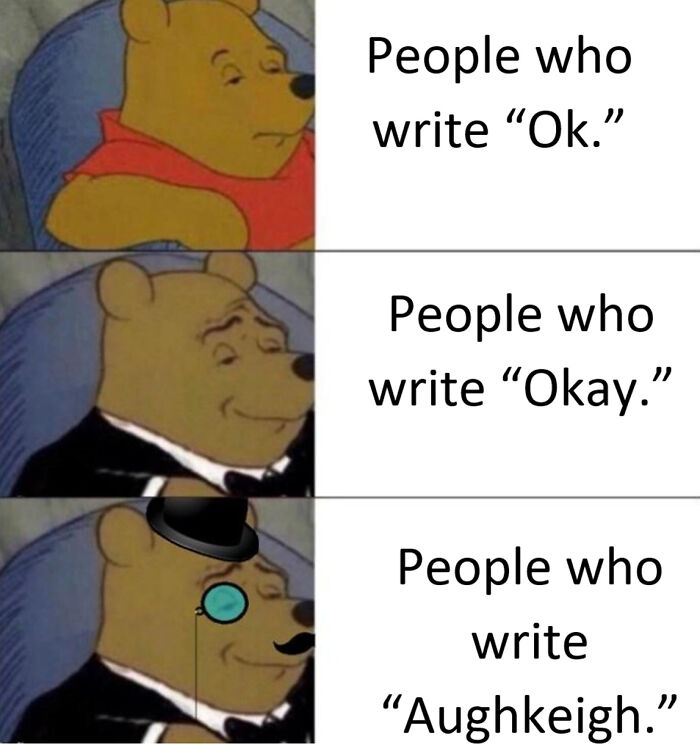
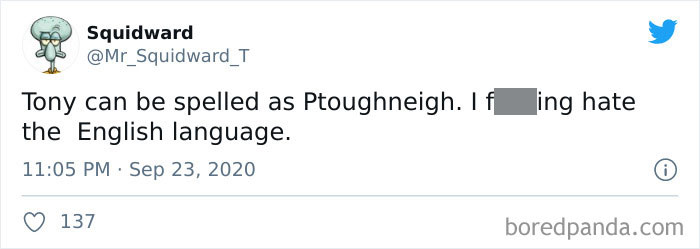
I have never before seen someone write Aughkeigh, But Aughkeigh.

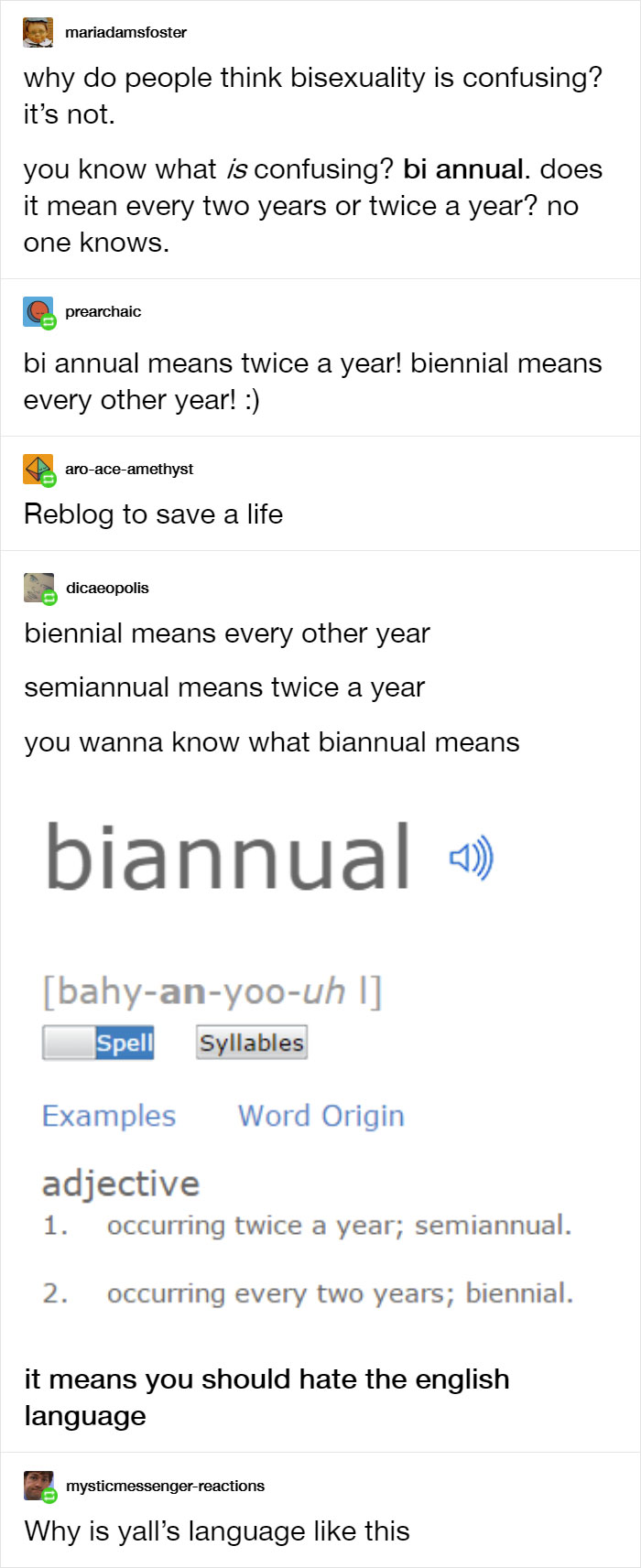
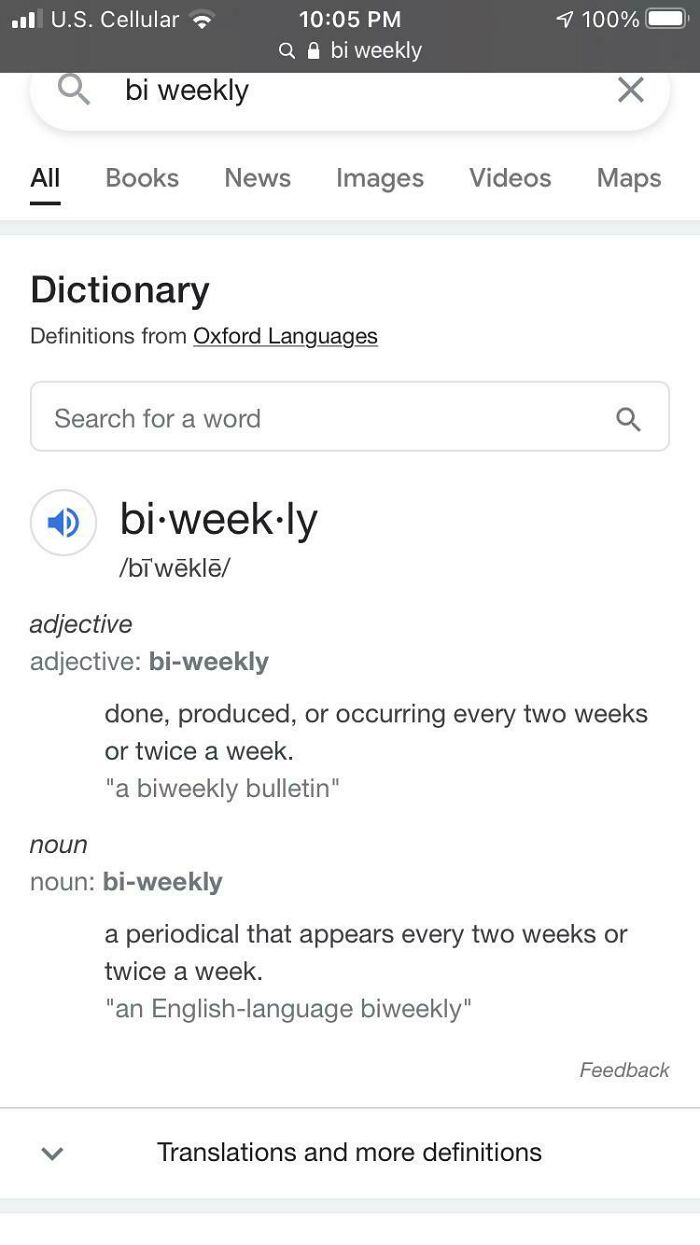
Twice a years or every other year: it still describes a lot of our sex lives.

😎 Yup, I’ll definitely spend too much time trying to learn it.

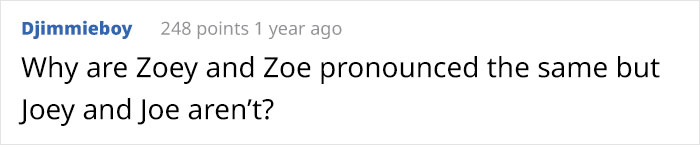
Zoe is sometimes pronounced like Joe. It's the individual's preference.
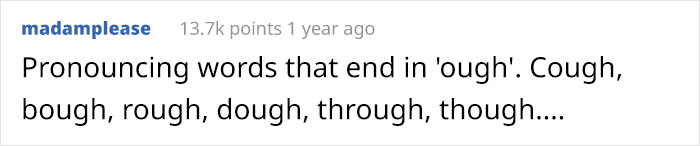
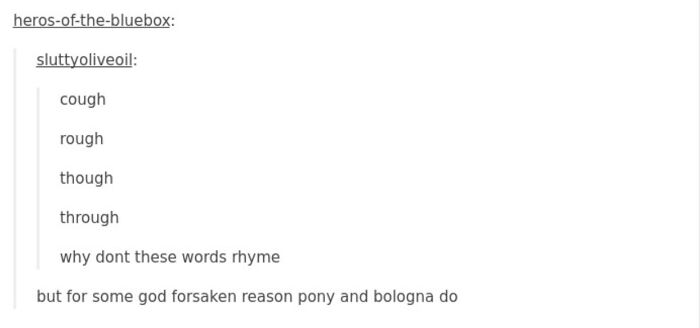
This day and age, I'm surprised there aren't more Ptoughneighs and Ptearees (Terry) considering we have kids named Le-a pronounced as Ledasha: DAT DASH DON'T BE SILENT

Ok. I know I said mic drop,however I must share. My daughter is getting married soon to a very nice gentleman who received his english degree from a local state university famed for it's agricultural programs of study. In a text , I gently teased him about getting an English degree from the "Ag," and asked what was that about? He shut me down and I love him for it. He replied, " Someone has to teach the country boys how to spell 'plough a furrow' when they are sexting!'" I love it....

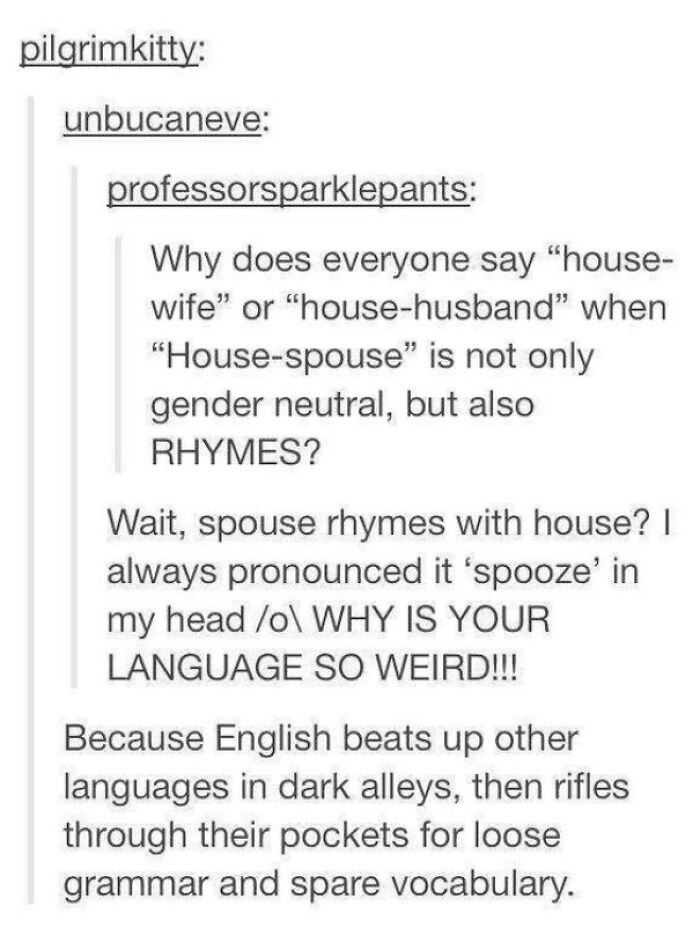
We blame the French for a lot of our spellings and other people for others!
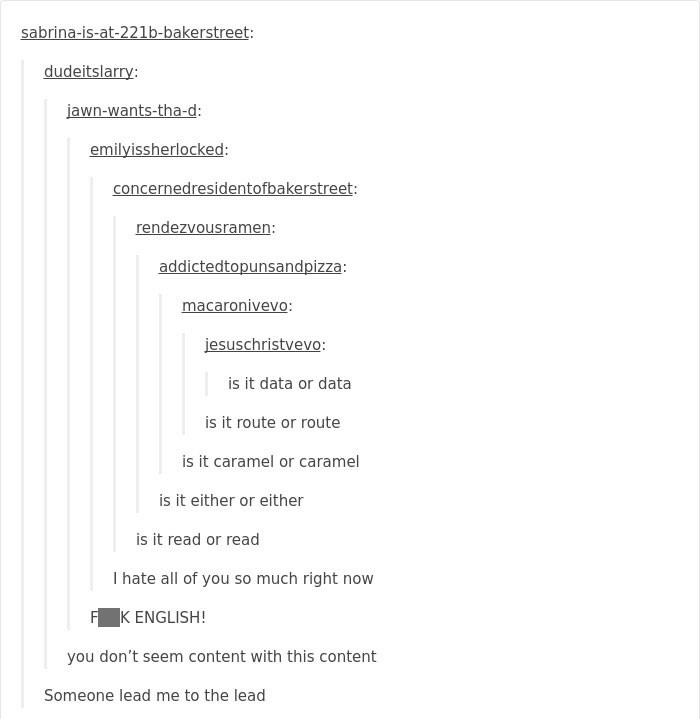
Depends whether you use British or American English. I would say 'deita', 'root', 'care-a-mel', 'eether', etc.

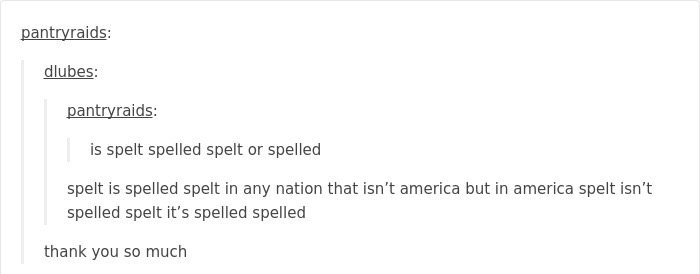
What is Spelt, and is it Good For You? - Healthline https://www.healthline.com › nutrition › what-is-spelt Mar 15, 2016 — Spelt is a type of grain that is strongly related to wheat. Its scientific name is Triticum spelta (1). In fact, spelt is considered a distinct type of wheat. Other types of wheat include einkorn wheat, khorasan wheat and modern semi-dwarf wheat.
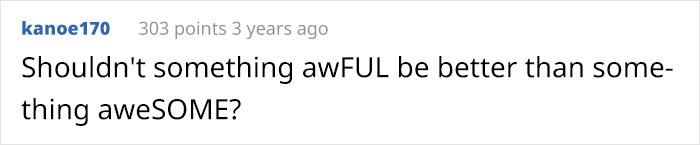
"Awful" was the original meaning of something filling us with awe, not dread. It shifted.

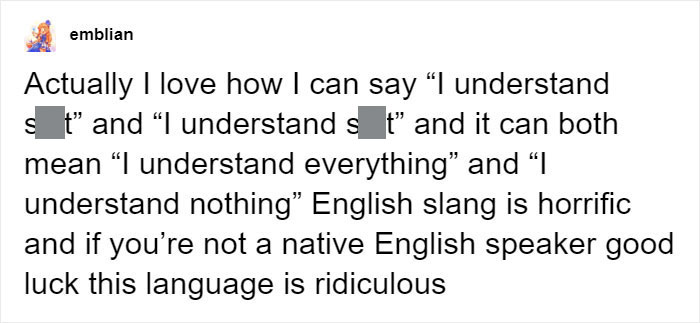
I am constantly amazed by native speakers of English who are complaining how complicated other languages are.

I'm a native German speaker and currently trying to learn French, and honestly, English is a lot easier. The basic grammar rules aren't difficult, and you can pick everything else up from reading and listening.
Load More Replies...

To me, "next Monday" means the very next Monday on the calendar. To my wife that is "this Monday" and "next Monday" is the Monday after "this Monday." But if you ask her when the "Monday after next" is, she'll tell you the same date as "next Monday".

How about "lets move that appointment forward one week". Does it get moved to a later date or an earlier date? Depends on who you ask.
Load More Replies... I am constantly amazed by native speakers of English who are complaining how complicated other languages are.
I'm a native German speaker and currently trying to learn French, and honestly, English is a lot easier. The basic grammar rules aren't difficult, and you can pick everything else up from reading and listening.
Load More Replies... To me, "next Monday" means the very next Monday on the calendar. To my wife that is "this Monday" and "next Monday" is the Monday after "this Monday." But if you ask her when the "Monday after next" is, she'll tell you the same date as "next Monday".
How about "lets move that appointment forward one week". Does it get moved to a later date or an earlier date? Depends on who you ask.
Load More Replies...
























 No fees, cancel anytime