Get Premium
Dark mode theme is available exclusively for premium users. Learn more about the benefits of subscribing.
No fees, cancel anytime.

 Dark Mode Ad-Free Browsing Unlimited Content
 Ad-Free Browsing Unlimited Content Dark Mode
Join 1.2 million Panda readers who get the best art, memes, and fun stories every week!

Going to the doctor's doesn't always turn out what we think it will be. Misdiagnosing, gaslighting, and poor communication are just some problems patients have to deal with. In fact, in 2022, 60% of Americans said they had recently had a bad experience with a healthcare provider.
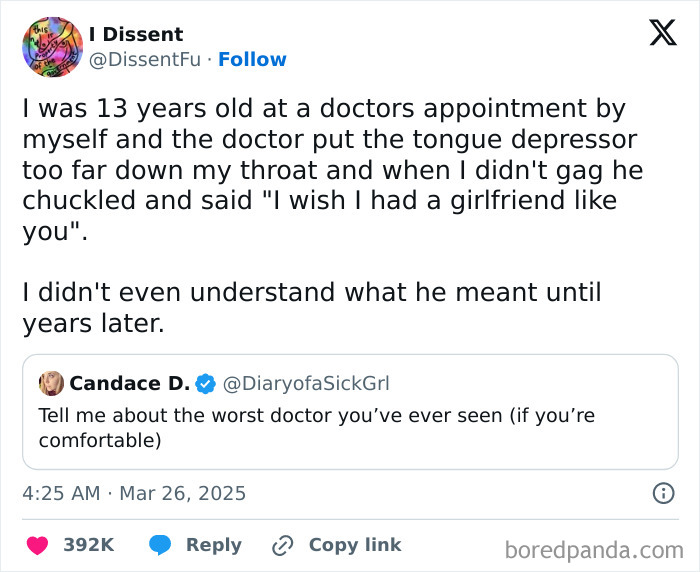
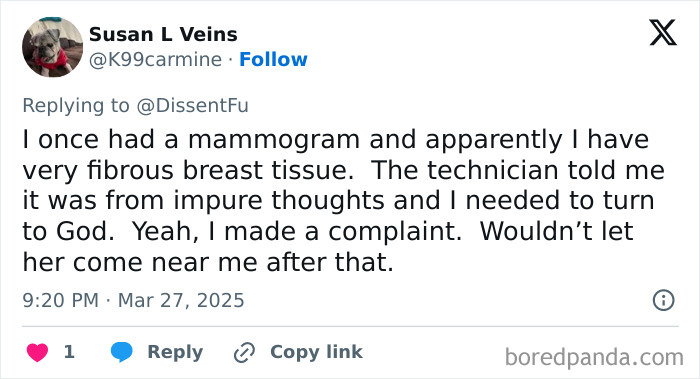
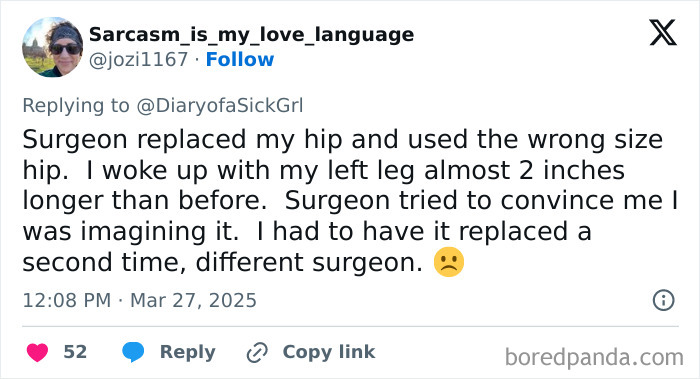
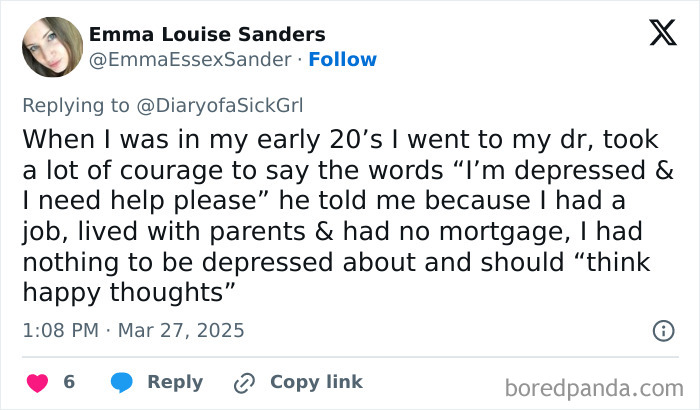
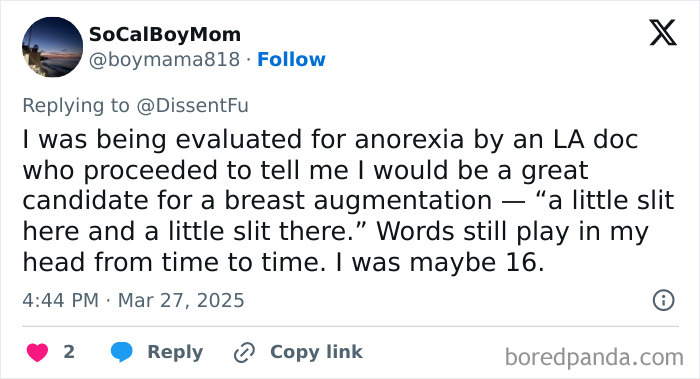
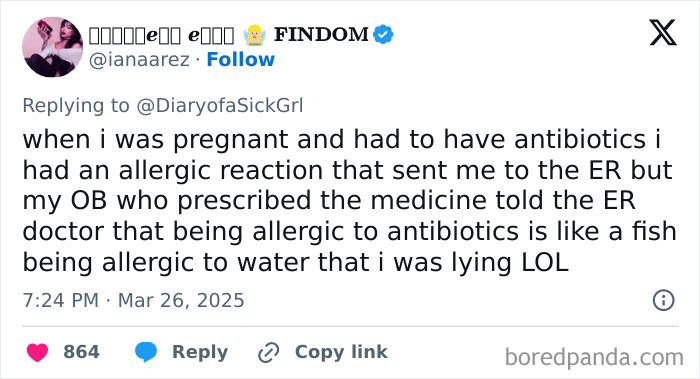
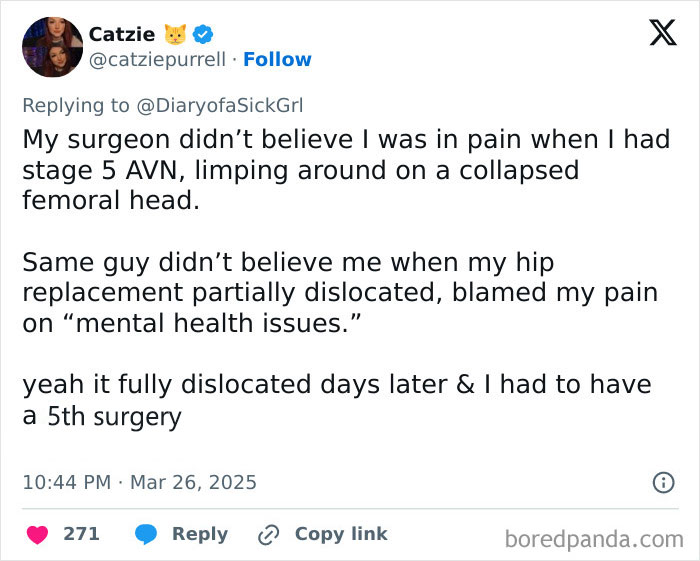
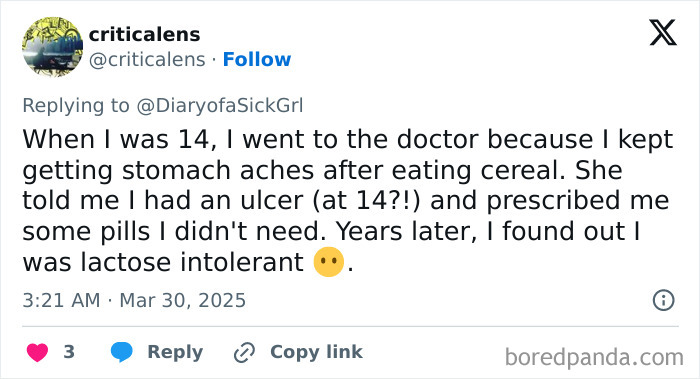
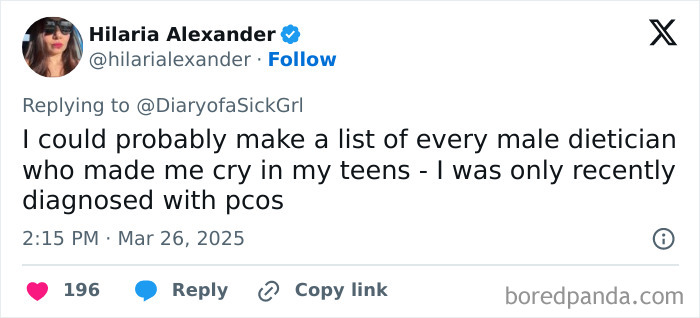
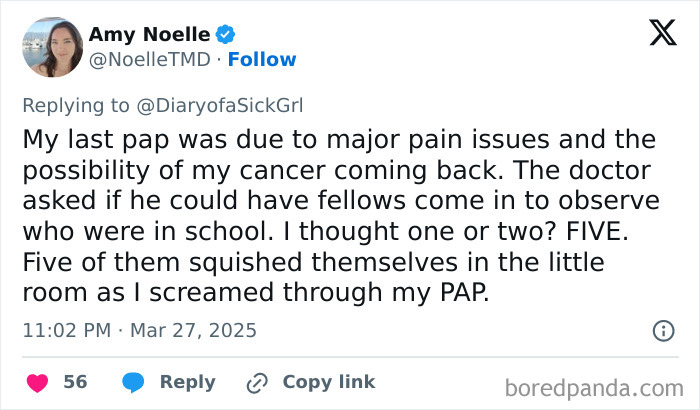
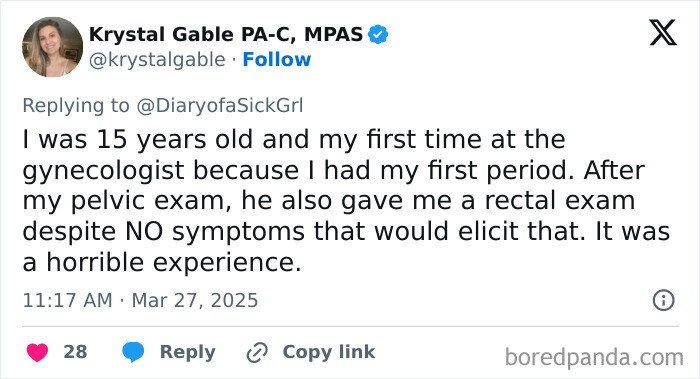
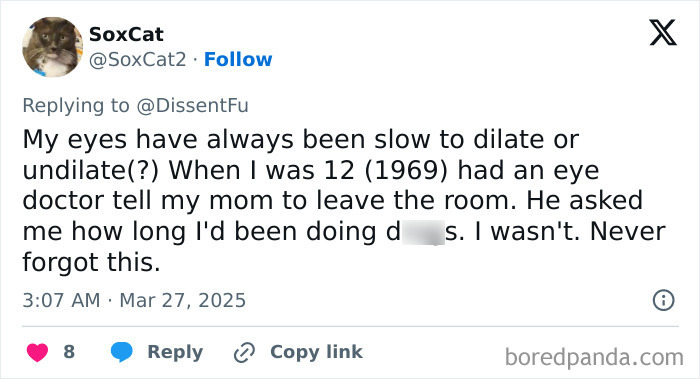
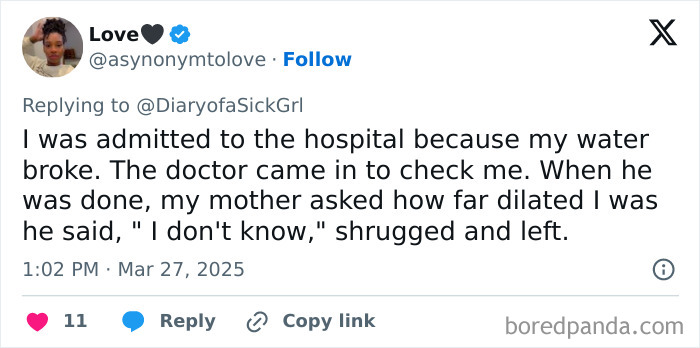
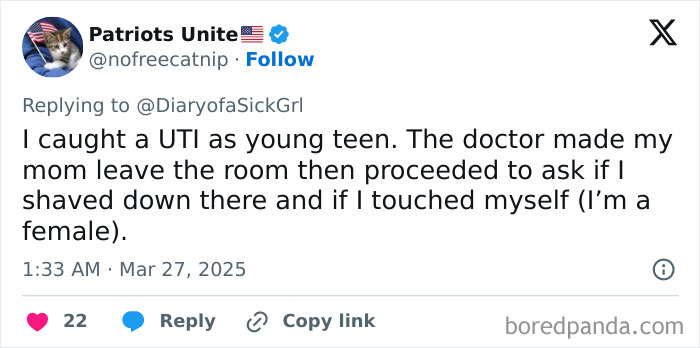
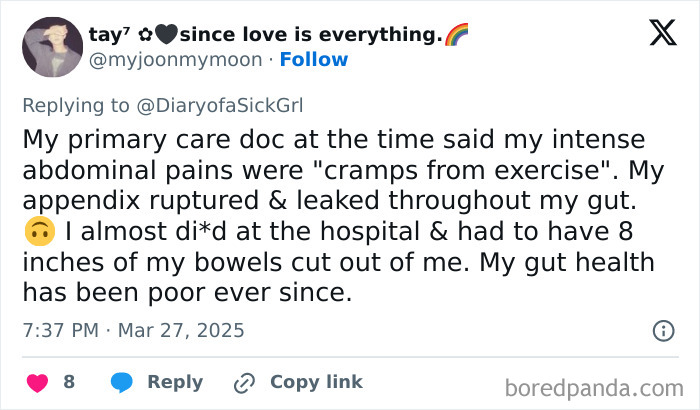
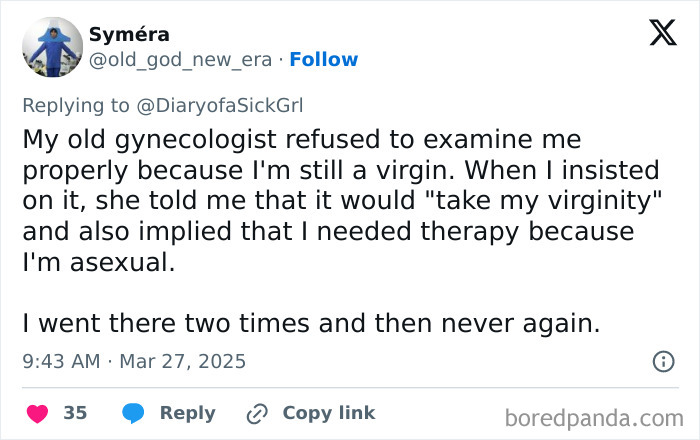
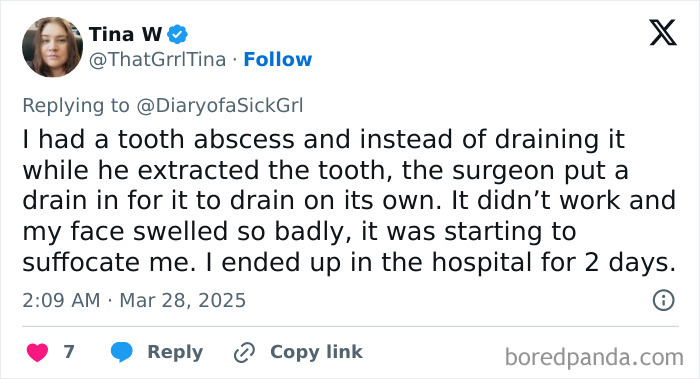
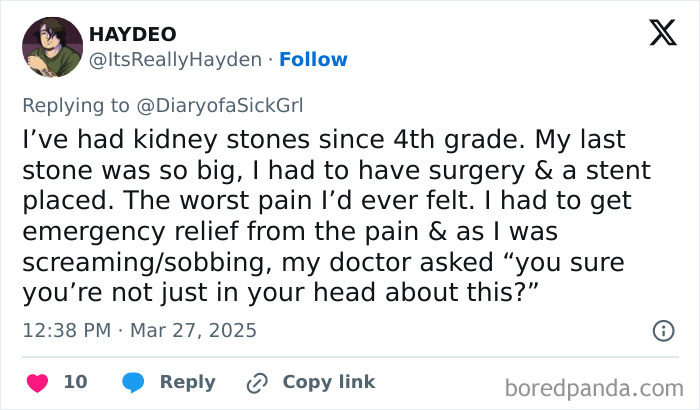
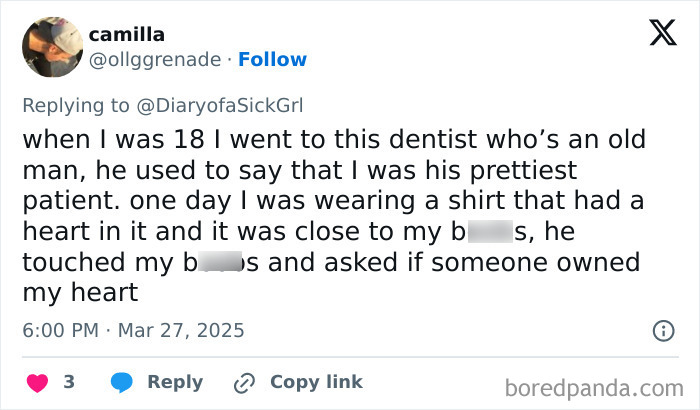
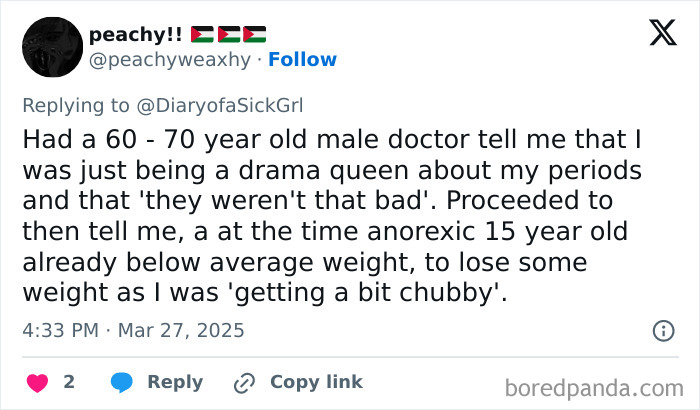
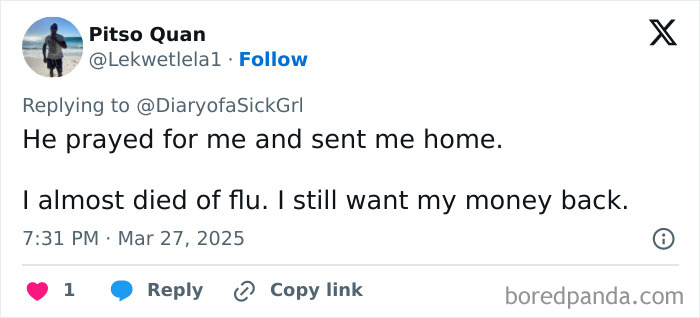
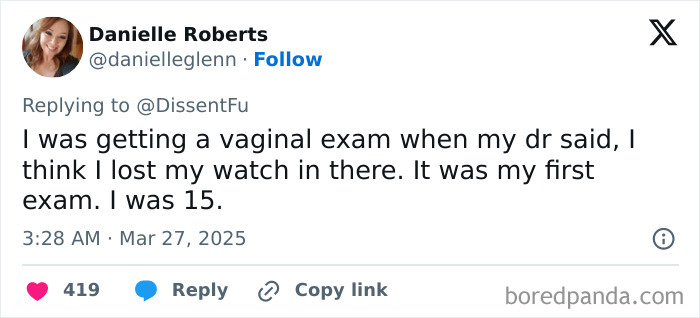
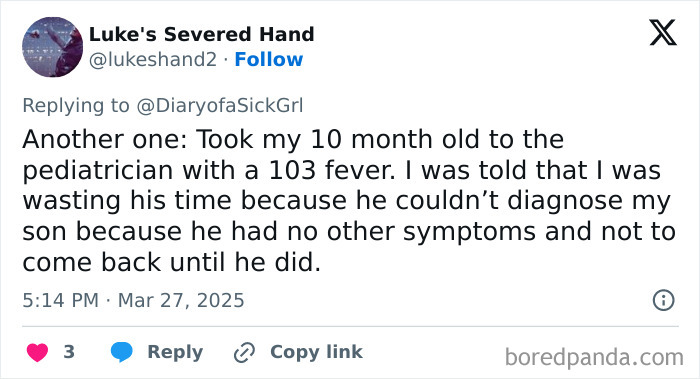
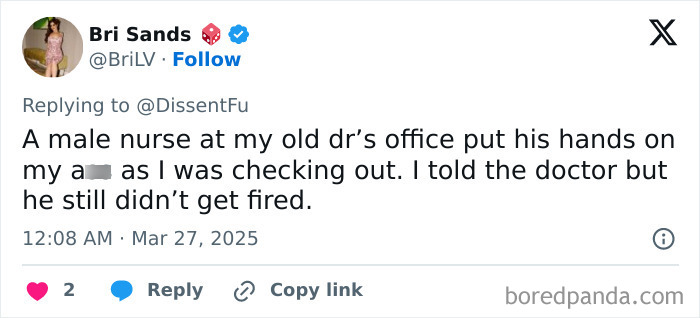
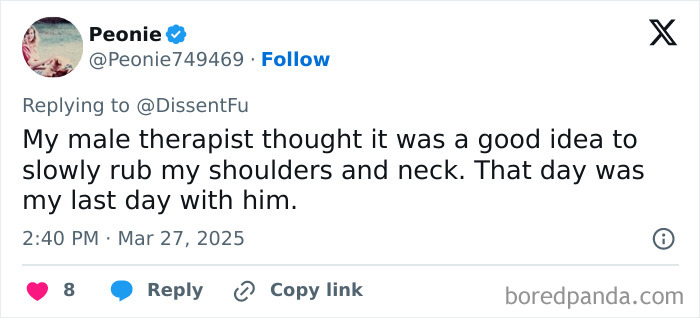
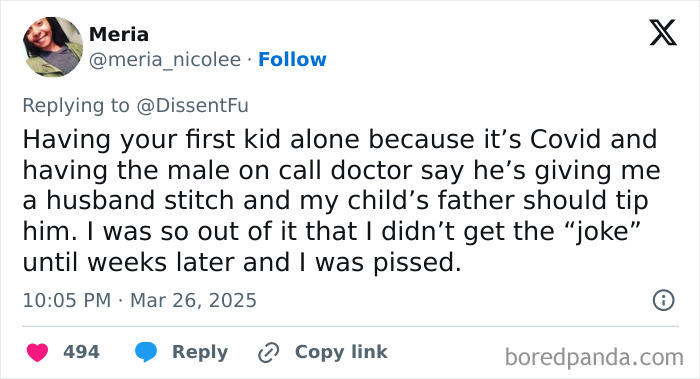
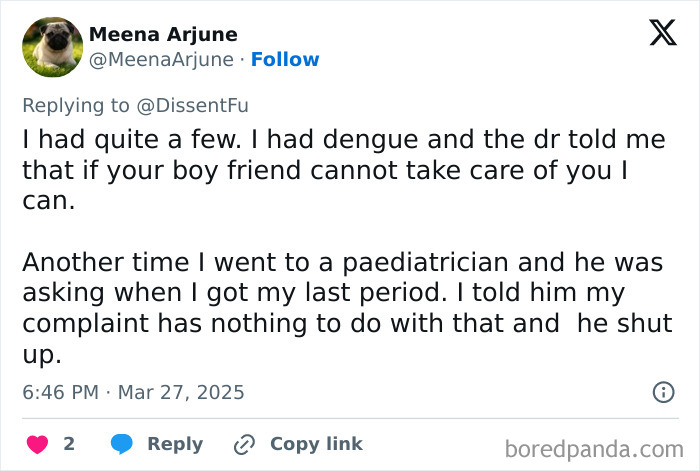
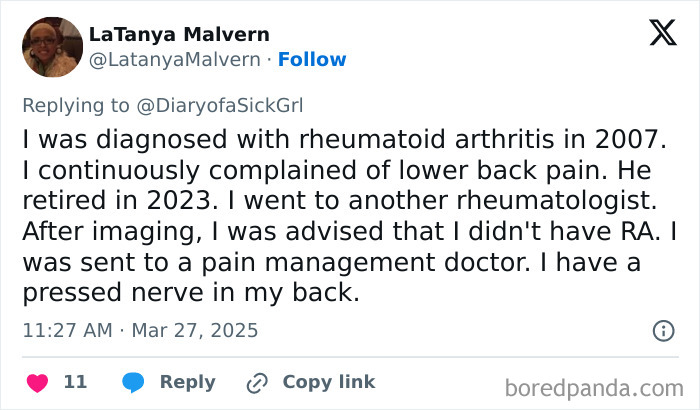
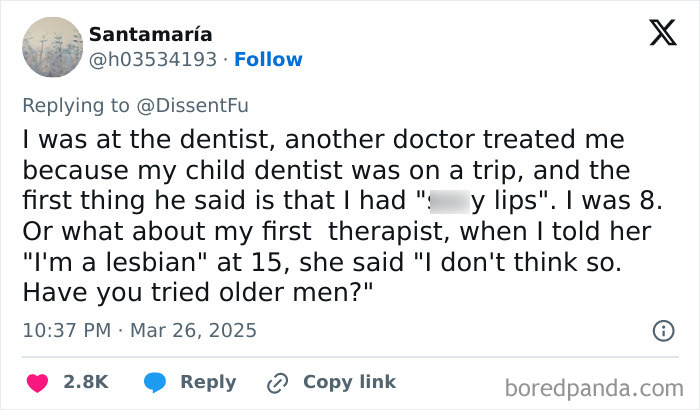
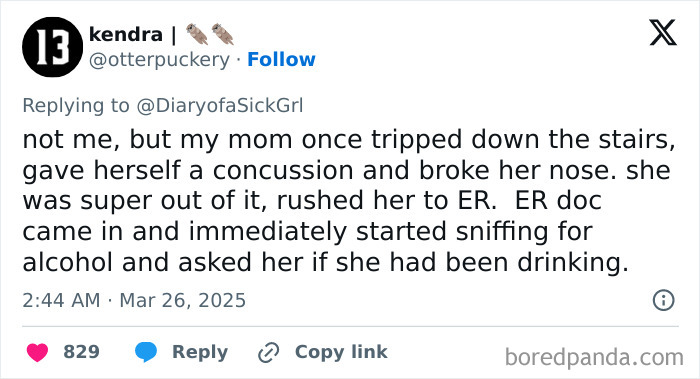
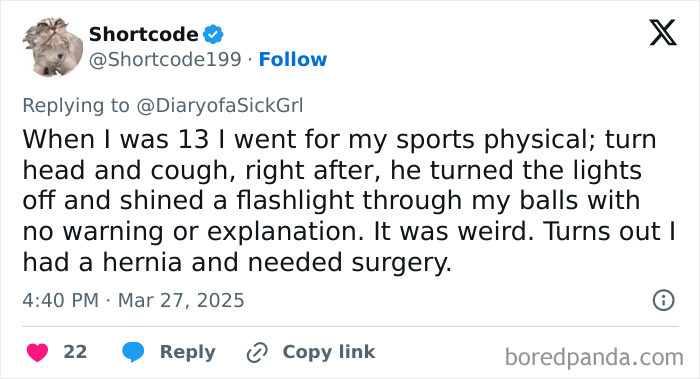
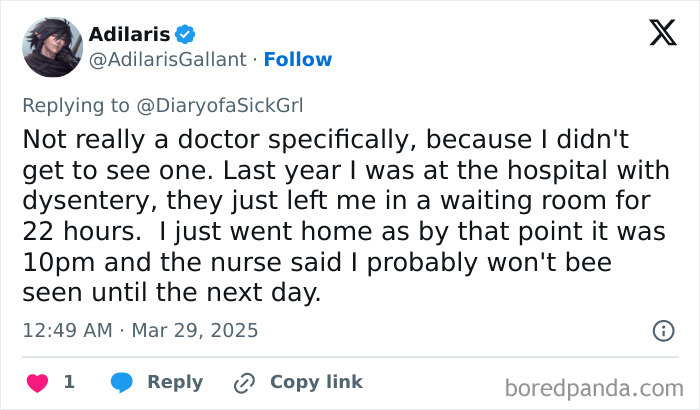
Just a few days ago, a woman on Twitter (X) asked other people to share their worst encounters with a doctor. The thread quickly filled up with stories from the doctor's office featuring some questionable medical professionals. We know doctors are people too, but some of these docs truly deserve to be shamed.
Bored Panda reached out to the woman who started this thread, Candace D., and she kindly agreed to tell us more about what prompted her to ask others to share their worst doctor experiences. Read our short conversation with her below!
More info: X (Twitter)
This post may include affiliate links.

Candace D., who started this thread on X (Twitter), is a chronic illness advocate who shares her own health journey online. "As a chronically ill person, I've had a lot of bad experiences with medical professionals and I know a lot of other people have too, chronically ill or not," Candace told Bored Panda.
"So it's an interesting topic. I wasn't prepared for just how sad and deep the topic would be though. It was honestly really hard to read all those responses."
Still, Candace has had her fair share of negative experiences with the medical community. "Medical gaslighting and dismissive treatment delayed me being properly diagnosed with EDS, MCAS, POTS, etc., which also delayed treatment, and I know there are so many others like me," she shares.
"If I could change one thing about how the medical system treats chronically ill patients, I would just say—PLEASE BELIEVE US. An amazing start is just listening to us and having compassion for us. No one wants to be sick," the woman reiterates.
After reading this list, you might think that everyone in the U.S. hates their doctor. But that isn't the truth. In fact, 70% of Americans are satisfied with their primary care doctor. But few feel that American healthcare is personalized: 53% say they believe that the system treats them more like a number than a person.
Many people also expect doctors to have a holistic approach. That's why 70% of American adults who come in for a checkup want their doctor to ask them about their mental health. This signals a shift from our understanding that a primary care doctor can only help with physical ailments.
Doctors make mistakes; they are human, after all. But the costs of their mistakes can often have catastrophic consequences. In the U.S., 250k people pass away each year because ER doctors misdiagnose them. Researchers estimate that a whopping 7.4 million people might get a wrong diagnosis at the emergency room.
But experts don't put the blame on the doctors. One of the study's authors explains that we have to take a look at the medical training, technology, and support that could help doctors avoid these mistakes.
Dr. Susan M. Peterson, another author of the study, explained that pointing out mistakes helps doctors improve. Like what happened with detecting heart attacks: public health campaigns, better diagnostic testing, and cardiologists and ER doctors working together resulted in more diagnoses.
Like with many of the examples you'll read on this list, many patients don't think their doctors listen to them. Their concerns get dismissed or entirely overlooked. A 2021 UK survey found that one in four patients felt like they weren't treated with respect by their physician. Another one in four claimed not being listened to.
For women and people of color, misdiagnoses and medical gaslighting are even more frequent occurrences. Research shows that women and racial and ethnic minorities are 20%-30% more likely than a white man to receive an incorrect diagnosis. In a 2024 survey, 65.3% of women expressed concern about receiving unsatisfactory or poor-quality care.
Women experience neglect in the ER, too. One study showed how women who had severe stomach pain had to spend 33% more time in the waiting room than men did. And even if women do manage to get into the doctor's office, their heart disease often gets diagnosed as anxiety, ovarian cysts as regular period pain, and autoimmune diseases get interpreted as depression.
A lot of it goes back to the history of medicine, where any major health complaint from a woman was chalked up to be hysteria. Even today, there's still a bias in the medical community where doctors may think that it's a hormonal imbalance or the woman is just making things up.
"Female hysteria was once a common medical diagnosis for women, applied whenever women displayed 'inappropriate' emotions such as anxiety, anger and even sexual desire," Stephanie Trentacoste McNally, MD, explained.
Until 1993, women and minorities weren't allowed to participate in clinical trials in the U.S. That resulted in the medical community not knowing whether the studied variables affected them the same way they affected white men. And we see the consequences of that today: we have a limited understanding of how women, especially women of color, experience disease and what treatments they need.
And women do tend to have different experiences. With medications, for example, women are twice as likely to have adverse effects because the meds have only been tested on men. Women who receive hip implants are also 29% more likely to experience implant failure because of differences in anatomy and inadequate testing. Until 1999, we even didn't know that women present different symptoms of a heart attack than men.
Experts say there are certain steps we need to take to rectify the problem. For starters, having more women in leadership positions for medical and clinical research. Changes need to be made in medical education: students should learn how sex differences affect medical care. And, of course, more inclusive research that includes women of low socioeconomic status, older women, and those living in rural areas.
What about you, Pandas? Have you ever had a doctor's visit turn into a nightmare? Share your unpleasant stories with us in the comments! And while you're thinking of one, be sure to check out our other posts about doctors saying inappropriate things and the worst advice patients have ever been given by a doctor.

Brought my teenage daughter in for a checkup. Asked the young female doctor about getting my daughter the HPV vaccine, which can prevent a type of STD and cervical cancer. She refused to give it because "It encourages girls to have pre-marital s*x." WTF??

I had a reaction to penicillin several years back and my kidneys shut down. I was in the hospital for more than two weeks, with a shunt in my neck so they could do dialysis to keep me alive. My nephrologist (kidney expert) has since given me a clean bill of health, said my kidneys are fully healed up, but 1) I shouldn't take any kind of medication that's hard on the kidneys if I can help it, so lots of over-the-counter stuff for migraines etc is off-limits for me, and 2) I need to avoid the entire class of "beta lactam" antibiotics because they might k**l me. Twice, TWICE now I have had a doctor prescribe me an antibiotic and then swear that it wasn't a beta lactam antibiotic, only for the pharmacist to tell me that it was. One was probably an honest (but terrifyingly stupid) mistake; the other had had the gall to ask me what I knew about beta lactams and then apparently decided that my answer was lacking and he could completely disregard my concerns.

Men get weird stuff, too. Twenty-five years ago, I had a male doctor ask me why I wasn’t married. Not wanting to do the whole coming-out to my Christian GP thing at the time, I just shrugged and waited for my gastric reflux prescription. He winked at me and said, “ought not to have any trouble gettin’ a girl with the size of those feet.” True story—he’s an old man in jail now for overprescribing certain meds.
Brought my teenage daughter in for a checkup. Asked the young female doctor about getting my daughter the HPV vaccine, which can prevent a type of STD and cervical cancer. She refused to give it because "It encourages girls to have pre-marital s*x." WTF??
I had a reaction to penicillin several years back and my kidneys shut down. I was in the hospital for more than two weeks, with a shunt in my neck so they could do dialysis to keep me alive. My nephrologist (kidney expert) has since given me a clean bill of health, said my kidneys are fully healed up, but 1) I shouldn't take any kind of medication that's hard on the kidneys if I can help it, so lots of over-the-counter stuff for migraines etc is off-limits for me, and 2) I need to avoid the entire class of "beta lactam" antibiotics because they might k**l me. Twice, TWICE now I have had a doctor prescribe me an antibiotic and then swear that it wasn't a beta lactam antibiotic, only for the pharmacist to tell me that it was. One was probably an honest (but terrifyingly stupid) mistake; the other had had the gall to ask me what I knew about beta lactams and then apparently decided that my answer was lacking and he could completely disregard my concerns.
Men get weird stuff, too. Twenty-five years ago, I had a male doctor ask me why I wasn’t married. Not wanting to do the whole coming-out to my Christian GP thing at the time, I just shrugged and waited for my gastric reflux prescription. He winked at me and said, “ought not to have any trouble gettin’ a girl with the size of those feet.” True story—he’s an old man in jail now for overprescribing certain meds.





























 No fees, cancel anytime