Get Premium
Dark mode theme is available exclusively for premium users. Learn more about the benefits of subscribing.
No fees, cancel anytime.

 Dark Mode Ad-Free Browsing Unlimited Content
 Ad-Free Browsing Unlimited Content Dark Mode
Join 1.2 million Panda readers who get the best art, memes, and fun stories every week!

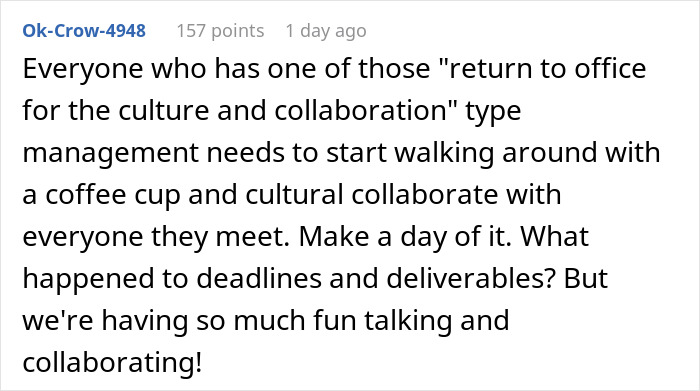
Getting told to return to the office after six years of successfully working from home is one thing. Getting told to drive three hours each way when your actual work has apparently been getting done just fine is another. Suddenly, the commute becomes part of the job description, whether your job actually requires you to be physically there or not.
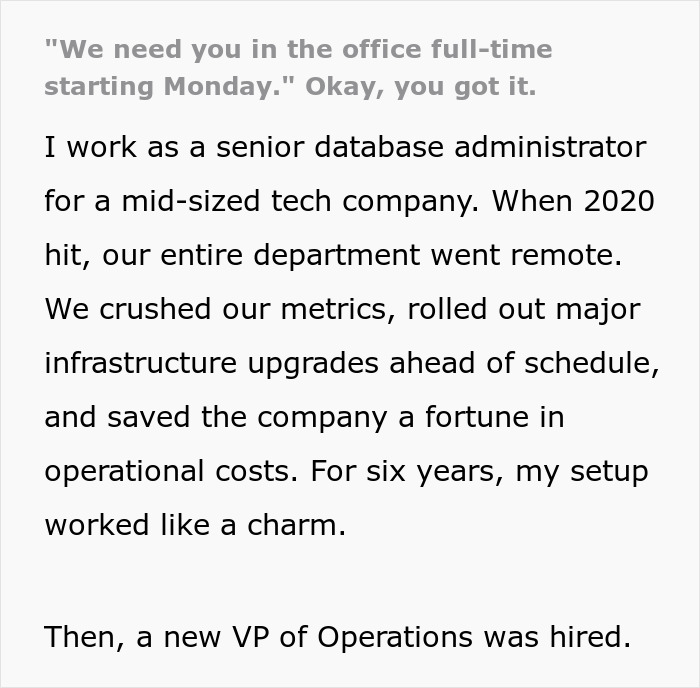
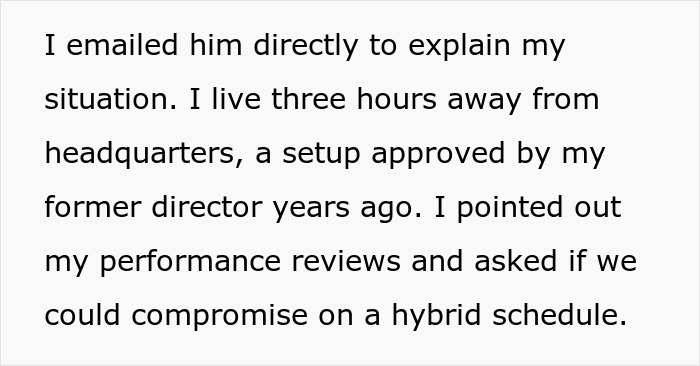
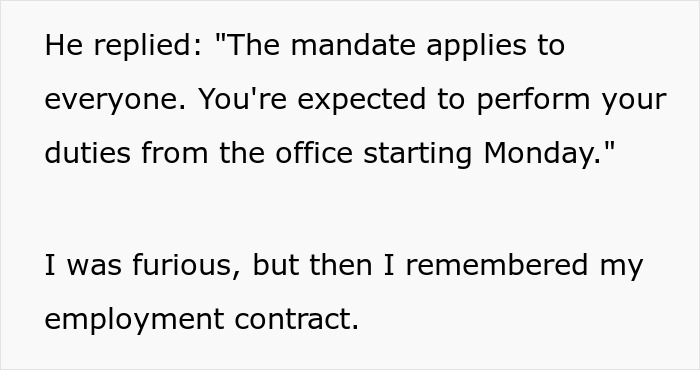
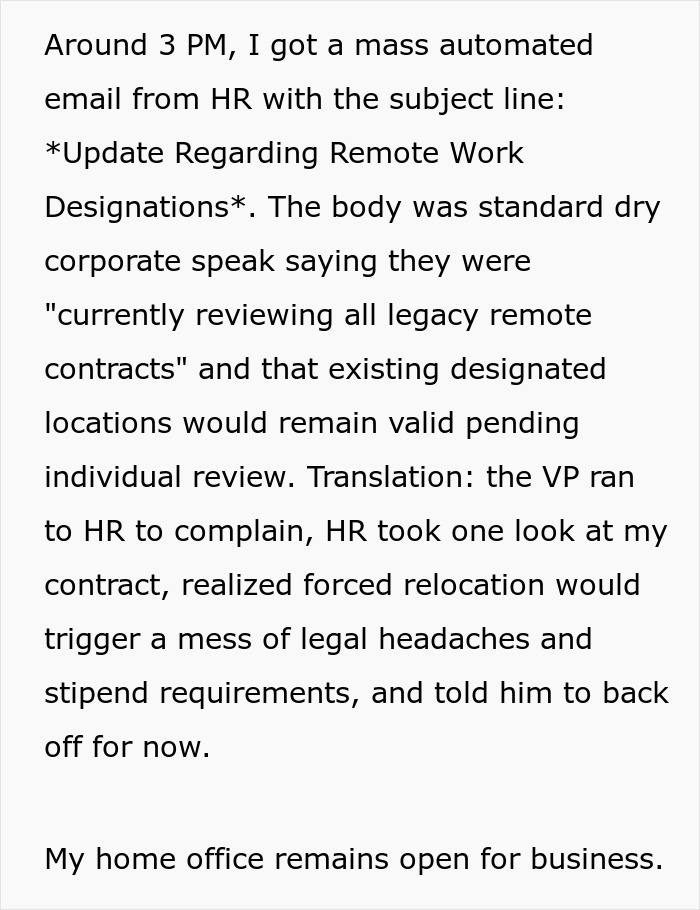
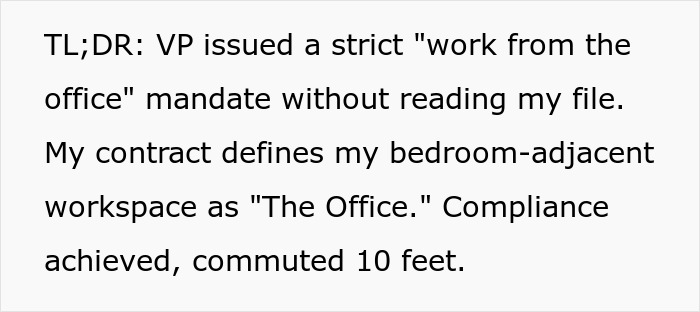
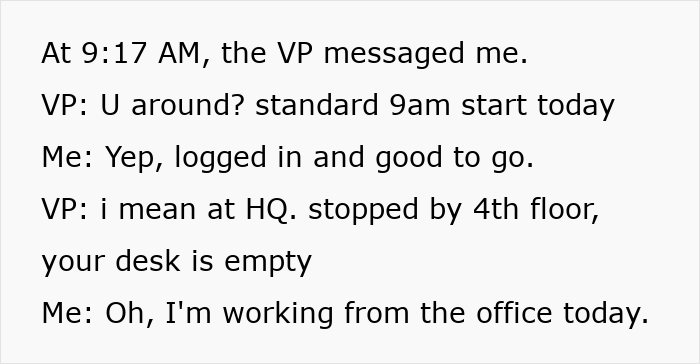
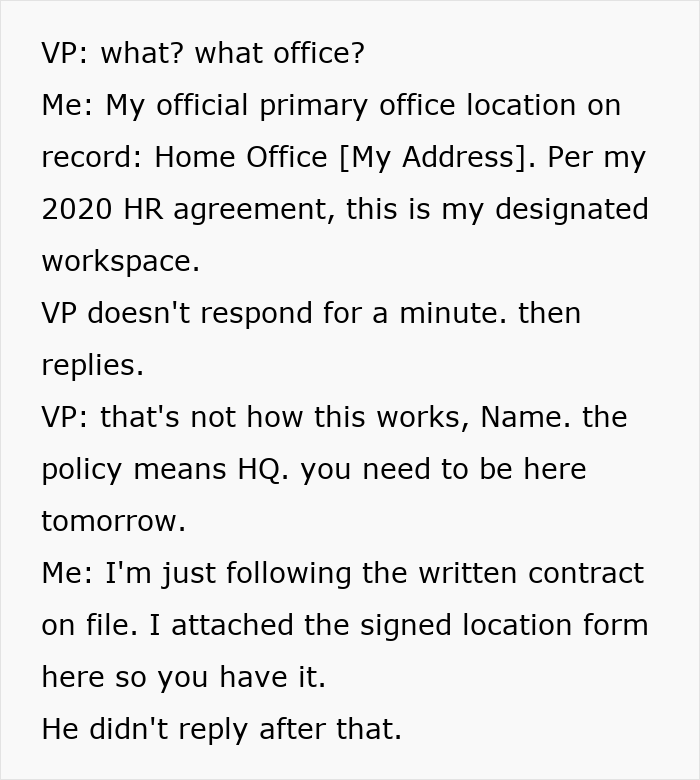
That is what makes this workplace story so amusing. A senior database administrator was ordered back to headquarters by a new VP who wanted everyone in the same building, but instead of immediately starting the long commute, the employee went digging through an old remote-work agreement.

Return-to-office policies have become one of the biggest sources of friction between employees and employers since remote work became widespread during the pandemic. Upscend reported in 2025 that hybrid work had evolved from a temporary pandemic arrangement into a permanent feature of many organizations, although companies continue to differ dramatically in how they structure it.
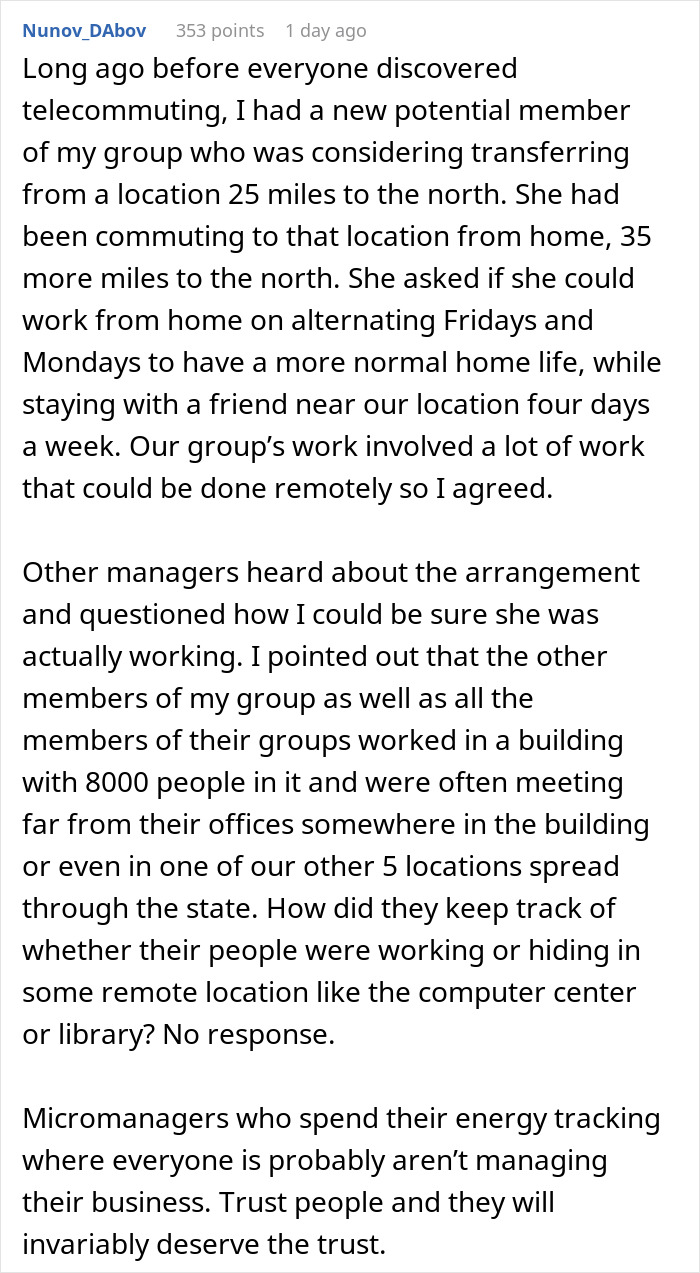
They also note that hybrid models can have important implications for working conditions and employee performance, meaning there is no single approach that works equally well for every workplace. The argument for bringing employees back often centers on productivity, collaboration and company culture, but the evidence is more complicated than just thinking that the office is a better environment.
A 2026 meta-analysis published in the Industrial and Labor Relations Review examined 3,574 estimates from 82 studies and found a small positive average effect of working from home on productivity, although the results varied depending on the circumstances and type of work. It similarly found that hybrid work did not reduce performance ratings in a large technology-company experiment.
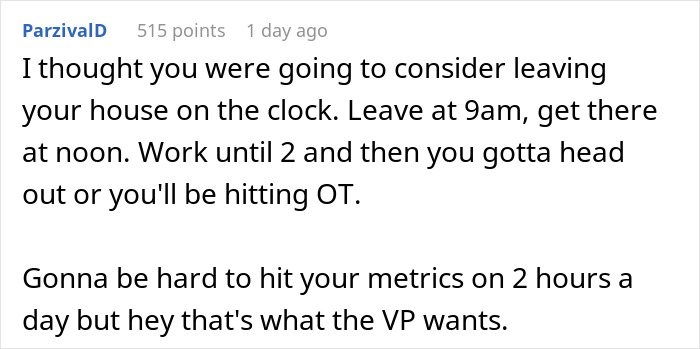
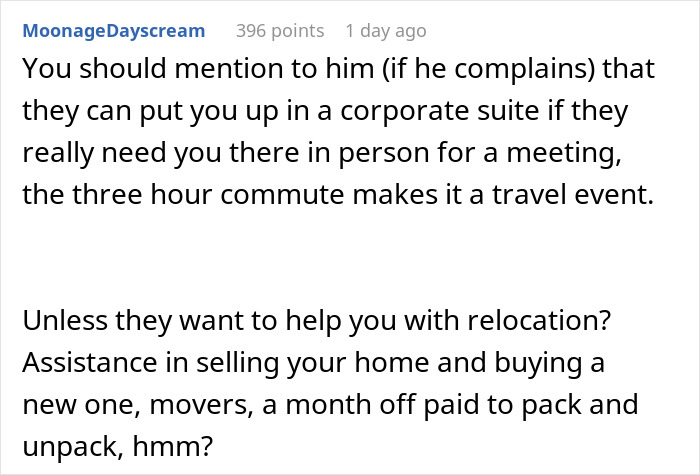
One particularly important consideration is what happens when employees are forced to give up flexibility they have become accustomed to. For workers who live far from their employer’s headquarters, returning to the office is not simply a change of scenery. It can mean several additional hours of commuting every day, higher transportation costs and significantly less time outside work.
Therefore, employees with long commutes benefit most from hybrid arrangements in terms of reduced turnover. In fact, Smart Keys highlights that distance is an important factor when companies decide whether a blanket office policy actually makes sense for every employee.
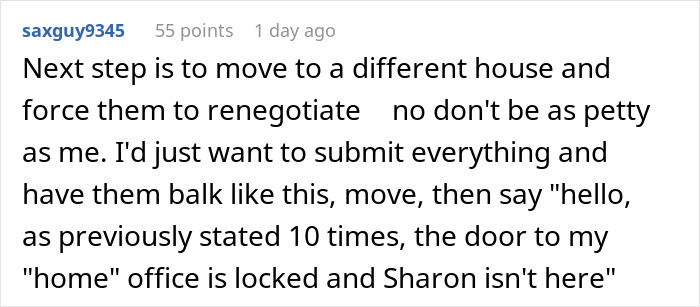
The contract angle is perhaps the most interesting part of the situation because workplace policies and individual employment agreements are not necessarily the same thing. Sprintlaw explains that changes to employment arrangements can require consultation and that flexible-working arrangements can cover working from home or splitting time between home and the usual workplace.
The exact legal effect of a particular agreement depends on the jurisdiction and wording, but the broader lesson is that employees should know what their contracts and formally approved arrangements actually say before assuming a new workplace announcement automatically overrides them.
Besides, companies also have a practical business reason to be careful with sweeping mandates, as employees may simply decide that the new arrangement is not worth it. Ultimately, the biggest question raised by stories like this is whether where someone works should matter more than what they accomplish.
What do you think about this situation? Do you think being physically present actually makes employees more productive, or is it mostly about management having control? We would love to hear from you!









By entering your email and clicking Subscribe, you're agreeing to let us send you customized marketing messages about us and our advertising partners. You are also agreeing to our Privacy Policy.
Thank you! You've successfully subscribed to newsletters!

When my company was taken over a few years ago, the new owner wanted everyone back in 5 days a week. The pushback was so extreme that they agreed 2 days a week. There is also the practicalities of it as there are not enough desks in the office for everyone. We downsized buildings during Covid. Some of us got permanent exceptions, some temporary. The temp ones expired a little while ago and the staff that had them were allowed to re-apply. I have a permanent exemption but have to go in 2 days a month.
When my company was taken over a few years ago, the new owner wanted everyone back in 5 days a week. The pushback was so extreme that they agreed 2 days a week. There is also the practicalities of it as there are not enough desks in the office for everyone. We downsized buildings during Covid. Some of us got permanent exceptions, some temporary. The temp ones expired a little while ago and the staff that had them were allowed to re-apply. I have a permanent exemption but have to go in 2 days a month.






































 No fees, cancel anytime










31
1