Get Premium
Dark mode theme is available exclusively for premium users. Learn more about the benefits of subscribing.
No fees, cancel anytime.

 Dark Mode Ad-Free Browsing Unlimited Content
 Ad-Free Browsing Unlimited Content Dark Mode
Join 1.2 million Panda readers who get the best art, memes, and fun stories every week!
48submissions
Finished
The Ocean Photographer of the Year 2025 has once again brought together some of the world’s most powerful and inspiring ocean imagery. Hosted by Oceanographic Magazine, the competition celebrates the beauty of the sea while also shining a light on the challenges it faces. Each photograph shows the beauty of ocean life and the challenges it faces.
This year’s winners and finalists have been recognised across a range of categories, including Fine Art, Wildlife, Adventure, Conservation (Impact), Conservation (Hope), the Human Connection Award, and Young. Together, these images capture moments of awe, urgency, and hope, reminding us of the vital connection we share with the ocean.
More info: oceanographicmagazine.com | Instagram | x.com | Facebook
This post may include affiliate links.
Dominica
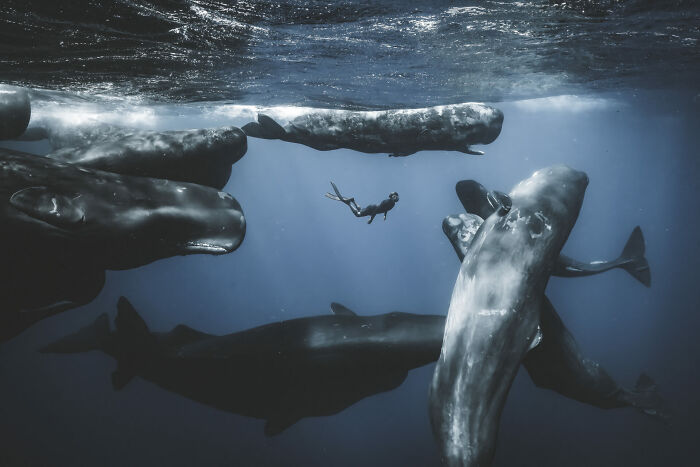
"I've been fond of whales since my childhood, so I was really excited to get the opportunity to swim with sperm whales for the first time in my life," says Barats. "I was extremely lucky on my first day at sea. We saw 15 whales socialising for 45 minutes or so. The sea was rough but when you get to see something like that you quickly forget the conditions. There were three of us in the water, spread out due to the action. The whales began to move out when I suddenly saw my buddy freediving from afar. I managed to get a shot of him surrounded by whales."
Indonesia
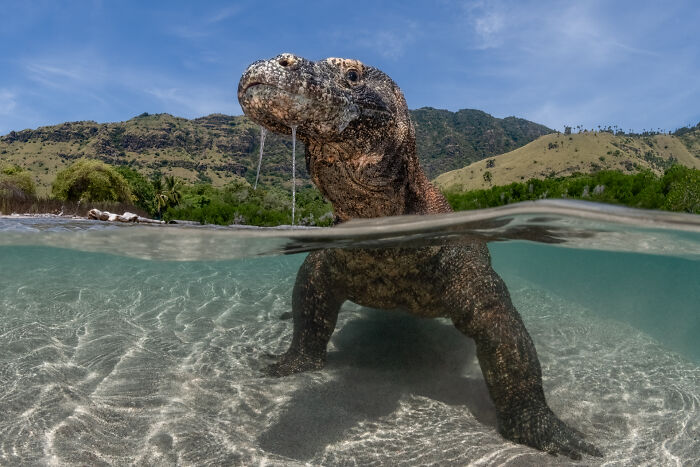
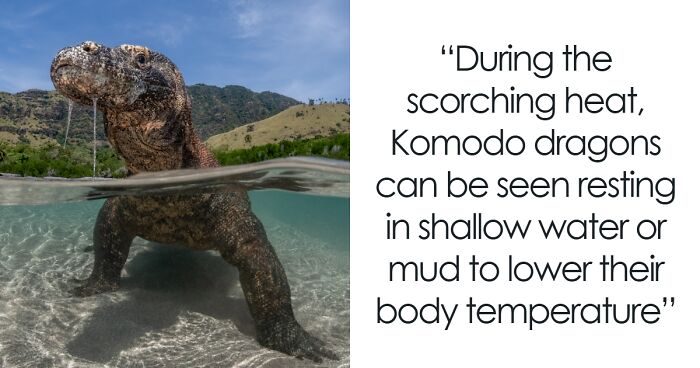
"This photo was captured after extensive fieldwork with the support of local rangers," says Alatiqi. "Our focus was to shed light on the Komodo dragon’s interaction with one of its main - yet commonly overlooked - habitats: coastal shorelines. As cold-blooded animals, Komodo dragons rely on external sources to regulate their body temperature. During the scorching heat, they can be seen resting in shallow water or mud to lower their body temperature. As adept swimmers, they will also swim or walk across the seabed to expand their territorial search for food or mates."
Japan
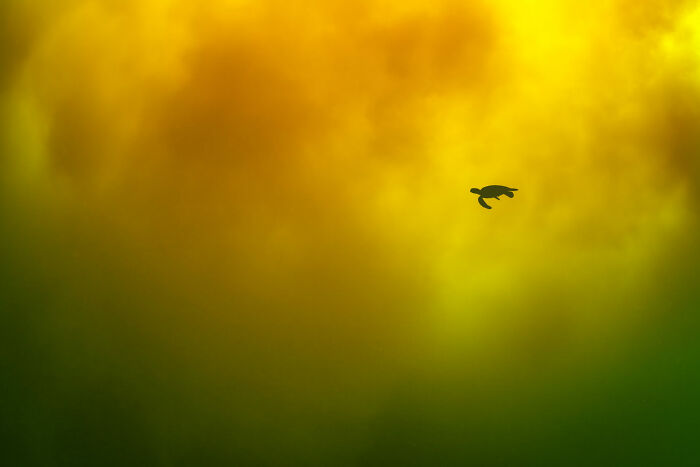
"This image was taken near Mount Iwo on Satsuma-Iojima Island, where the underwater aurora can be seen," says Tsuchiya. "The volcano spews out iron-rich substances not only from above ground but also from the ocean floor, creating these rich colours. I hope this images pushes people to think about the connection between global warming and marine conservation. We must preserve these mysterious and fantastical landscapes, created by land and sea, for future generations."
Australia
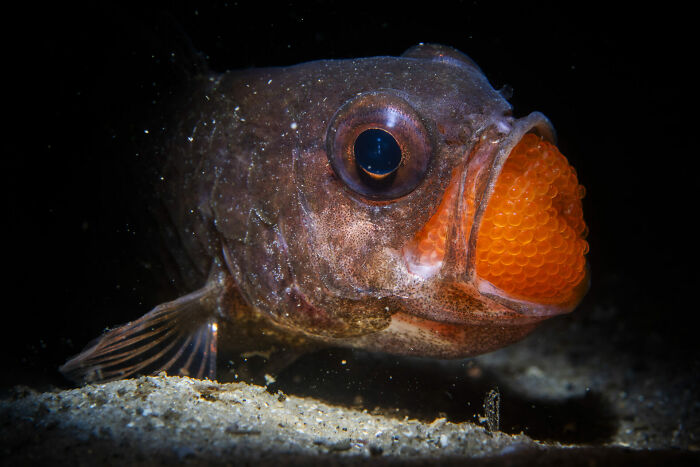
"Each summer, male eastern gobbleguts carry their eggs in their mouths throughout the brooding season," says Sly. "Typically active at night, they remain shy and quick to hide, darting into crevices or kelp at the first sign of disturbance. This portrait was captured during a night dive beneath a busy fishing and ferry wharf in Sydney Harbour. After a long, patient wait, the gobbleguts finally emerged from the shadows. I used a narrow beam of light from above to softly illuminate the fish and its egg clutch helping it stand out from the cluttered background."
Galapagos
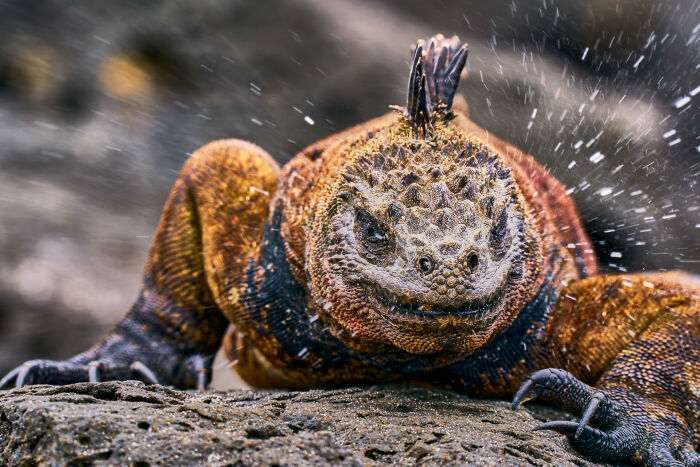
"Marine iguanas, endemic to the Galapagos, are one of the most iconic species in the archipelago," says de Frias. "They are like miniature dragons, especially in low-angle eye-to-eye portraits like this one. This individual was resting on the black rocks of Santa Cruz Island, sunbathing after a foraging dive. By sheer luck, I photographed the split-second in which it was sneezing the excess salt it had absorbed during its dive. Sneezing is not a discomfort signal; it is a perfectly natural behaviour. I made sure not to disturb the animal, shooting from a very safe distance, using a 600mm lens."
Bali, Indonesia
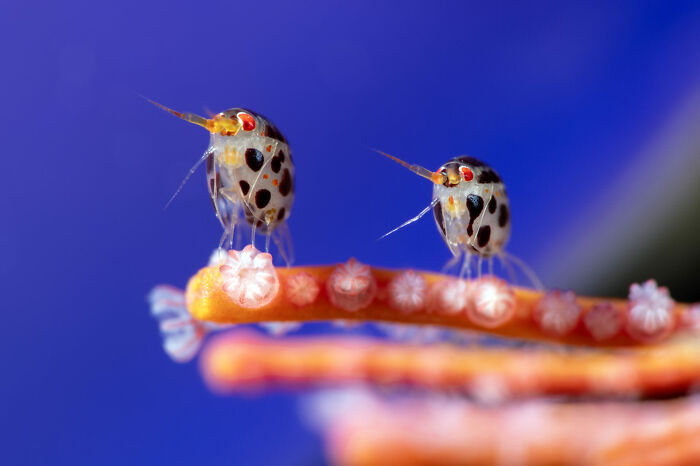
Two amphipods from the Cyproideidae family, each only measuring around 3mm in body length, rest on a coral. Commonly called "ladybugs of the sea", these tiny creatures display striking colouration and symmetry. "It required a lot of patience and precision to compose and light the shot properly," says Ivanov. "It was taken at a depth of 19 metres, during a sunny day with calm sea conditions. In total, it took me six dives to get the shot I wanted. The result reveals an intimate glimpse of underwater life that is often overlooked."
Spain
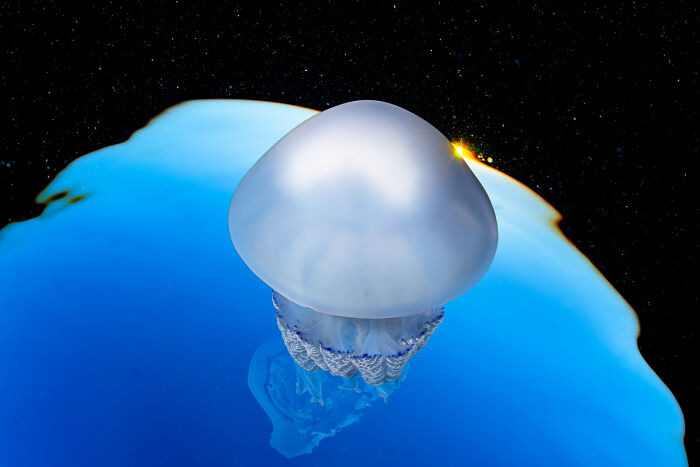
"I've always been fascinated by the resemblance between jellyfish and space rockets," says Bertran Regàs. "I was looking for a photograph that conveyed that connection: a rocket leaving Earth. To do this, I used a fisheye lens and took the photo just as the sun was rising. Snell's Window helped me create the Earth, the particles were the stars, and the sun luckily appeared behind it. I don't think I'll ever be as close to space as I was that day."
Hawai'i
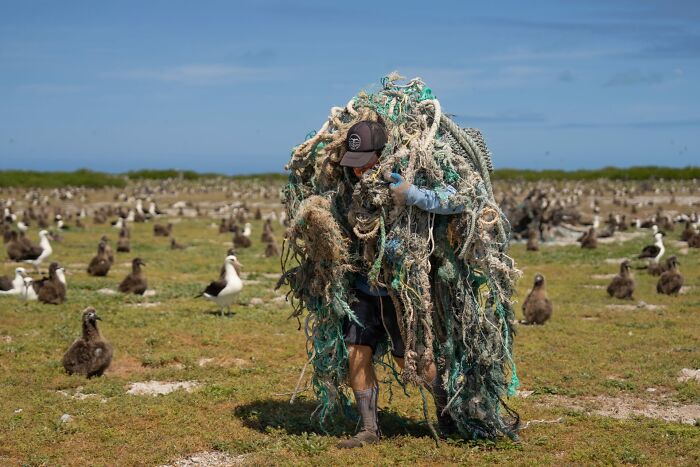
"Inside the world’s largest albatross colony at one of the most remote locations on the planet, a specially trained technician from the Papahānaumokuākea Marine Debris Project (PMDP) carefully weaves their way through thousands of albatross chicks while carrying a large ghost net," says Sullivan-Haskins. "During their gruelling nineteen-day mission, the team removed more than 70,000 pounds of marine debris from this critically important wildlife habitat ensuring that these young albatross chicks will have a better chance at survival. Over the past four years PMDP has removed more than one million pounds of marine debris from Papahānaumokuākea. This is action-based conservation at its finest."
Antarctica
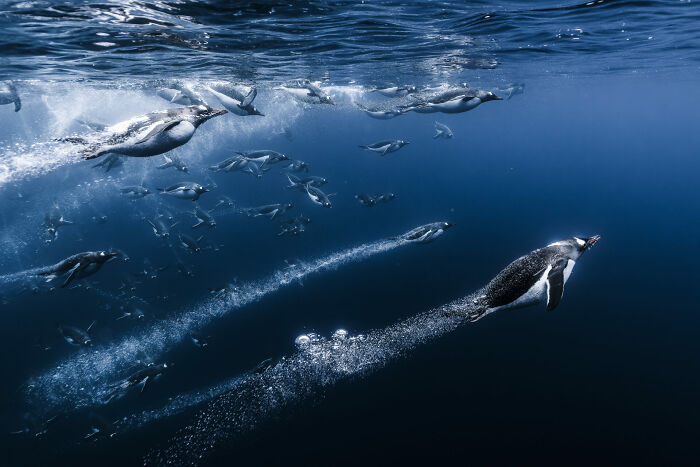
"It’s amazing how fast gentoo penguins are able to build a colony during the austral summer in the Antarctic peninsula," says Barats. "Port Charcot is usually a good place for this. This sheltered bay surrounded by mountains and icebergs is a perfect base for gentoos. We anchored our sailboat in this bay for three days, near the colony. We got in the water every day to enjoy the spectacle of these highly curious birds, who came to check on us so many times. Clumsy on land, these birds are fast and agile in the water."
USA
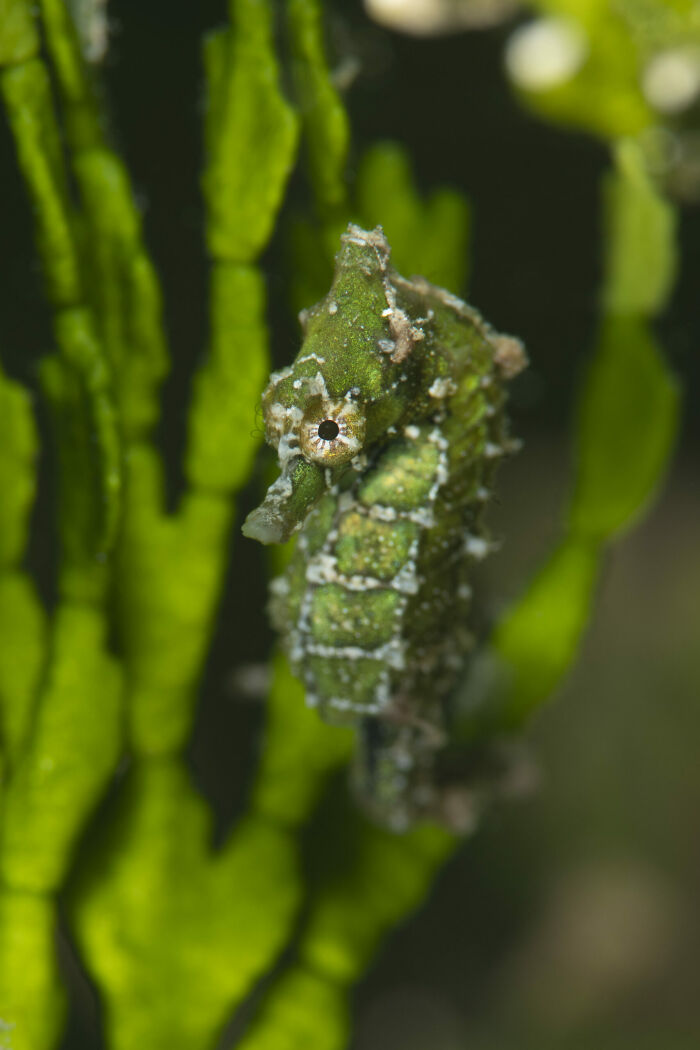
"After years of studying the true pygmy seahorses, I finally encountered this dwarf seahorse during some downtime at a Florida conference," says Smith. "Although their conservation status is ‘Least Concern’, few people see them in the wild due to their incredible camouflage. The true pygmies have several adaptations for life in miniature, and although Hippocampus zosterae is equally small, it doesn’t share these extreme specialisations. Endemic to Florida and Gulf of Mexico waters, these tiny seahorses require a keen eye to locate. I found a pair thriving in 1-2 feet of water. This female was accompanied by her pregnant male partner, but only her colour matched the emerald green Halimeda algae she was clinging to."
USA
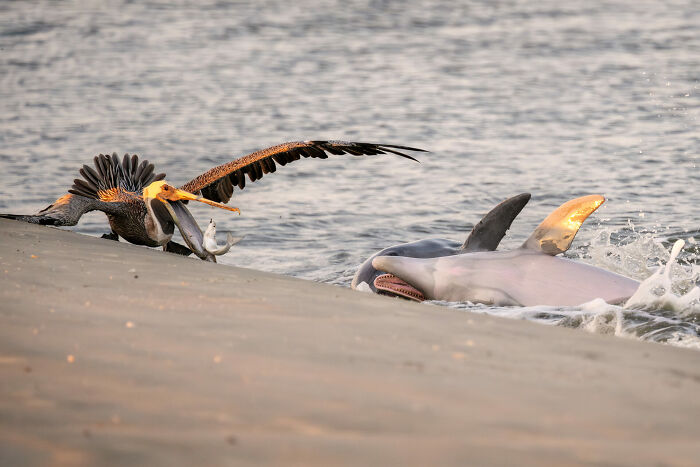
An opportunistic pelican swoops in to steal a fish from strand-feeding dolphins. "When dolphins strand-feed, they corral baitballs of fish and rush them onto the shore," says Zhou. "Pelicans usually lurk nearby, hoping to take advantage of an easy meal. Following the pelicans is usually a good indicator of where along the beach the dolphins might strand next. Though there are around 350 dolphins that call South Carolina home, this rare strand feeding behaviour is only performed by a few members of one pod."
USA
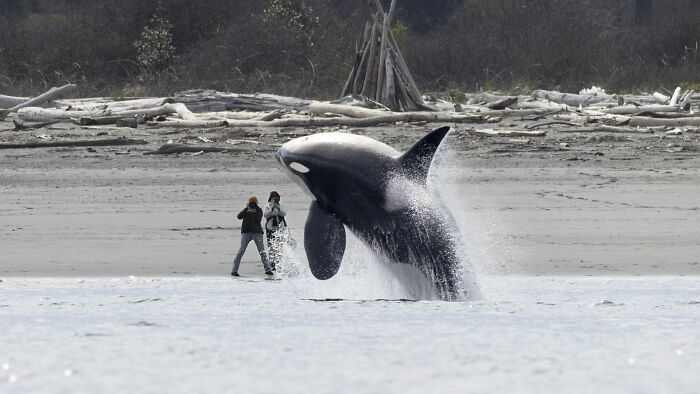
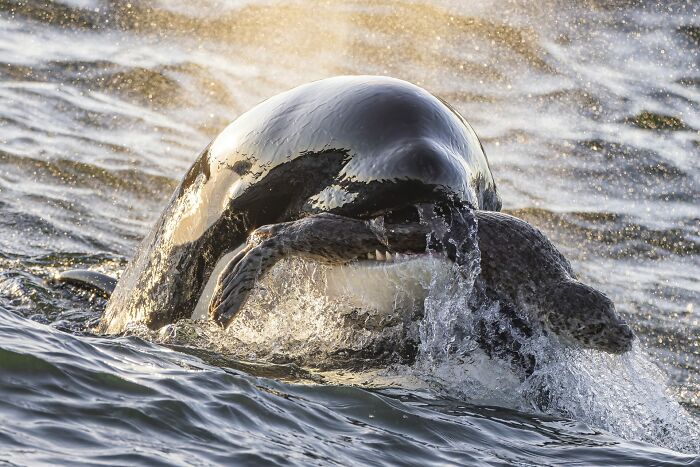
"This photo, taken on July 13, 2024, captures one-year-old Bigg’s orca T065B3 - known as 'Rook' - near Bird Rocks, WA," says Ling. "Against the glowing sunset, Rook proudly displays a harbour seal he found while his family patrolled nearby and later helped him capture. At this age, orcas typically rely on milk and rarely hunt alone, making this moment especially impressive. His emerging skill highlights the ecological richness of the Salish Sea, where both harbour seal and Bigg’s orca populations have rebounded thanks to the Marine Mammal Protection Act of 1972 - a testament to the impact of long-term conservation efforts."
Indonesia
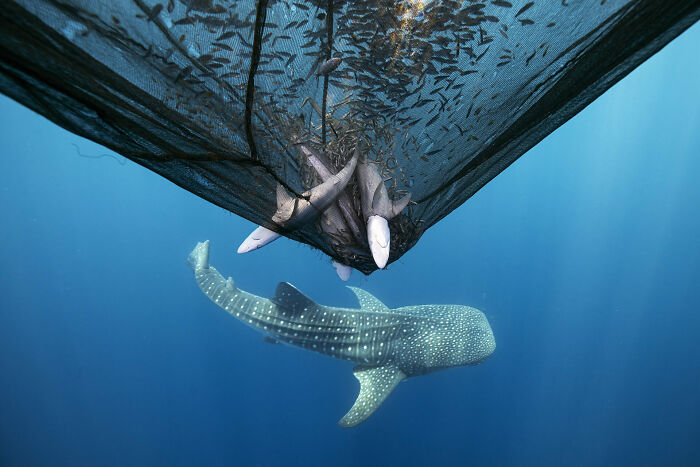
"Fear, fuelled by films like Jaws, blinds us to the truth: more than 100 million sharks are killed each year by humans - many as accidental bycatch," says Flormann. "I captured this image in West Papua, where three sharks died in a net meant for anchovies. Nearby, the half-cut-off caudal fin of a whale shark tells another sad story of human impact. Sharks are essential to ocean balance, yet we are driving them toward extinction. This moment is a quiet plea: to see sharks not as danger, but as endangered - and worth saving."
Indonesia
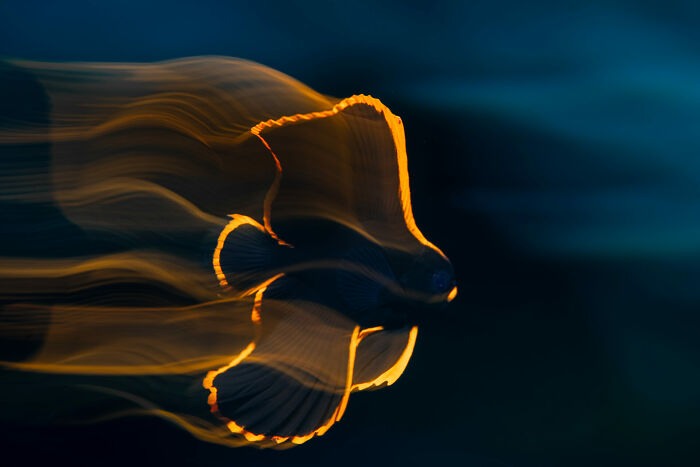
"This is an image of a juvenile Pinnate Batfish captured using a slow shutter speed, snooted light, and deliberate camera panning to create motion and drama," says Arpa Toribio. "Juveniles are known for striking black bodies outlined in vibrant orange — a coloration lost within months. I encountered this restless subject in the tropical waters of Indonesia’s Lembeh Strait. Capturing the image required patience and persistence over two dives, as these active young fish constantly dart into crevices for cover, making the shot particularly challenging to execute without interfering with the fish’s natural behaviour."
Australia
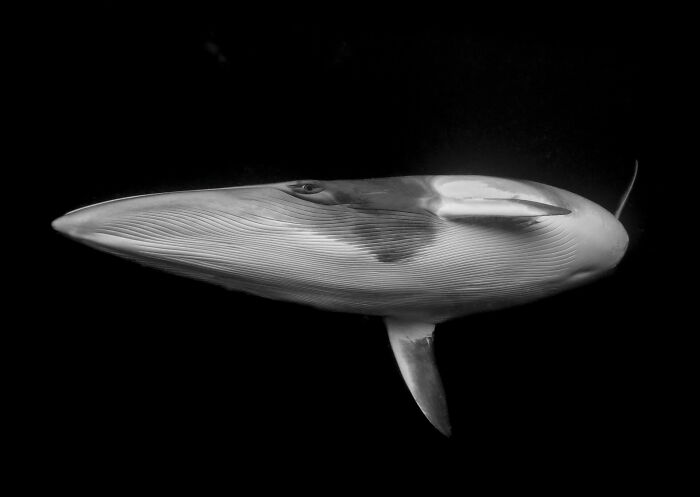
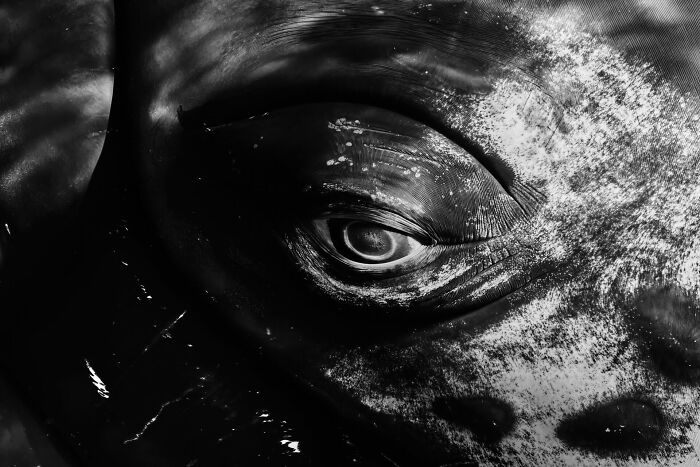
"Dwarf minke whales are known to visit the northern Great Barrier Reef during the winter, making it the only known predictable aggregation of these whales in the world," says Riederer. "These curious giants approach swimmers with an almost playful curiosity. Floating in the turquoise water, watching a sleek, dark body glide effortlessly towards you, its eye meeting yours in a moment of connection. The whales, seem to acknowledge your presence, circling and interacting with you. It's a humbling experience, reaffirming the wonder of the ocean and its inhabitants, and the urgent need to conserve it."
Japan
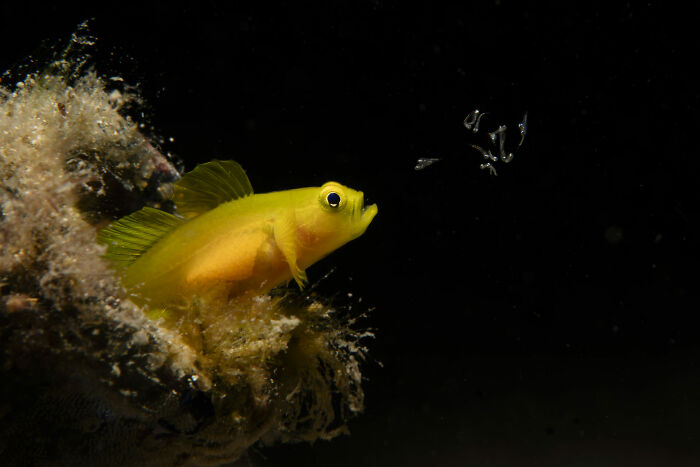
"This photo shows the larval dispersal behaviour observed during the hatching of the yellow pigmy goby," says Oyama. "In gobiid fishes, male parental care is common, but unusually, in the yellow pigmy goby, females also participate in parental hatching care. This individual is a female, releasing newly hatched larvae into the water column from her mouth."
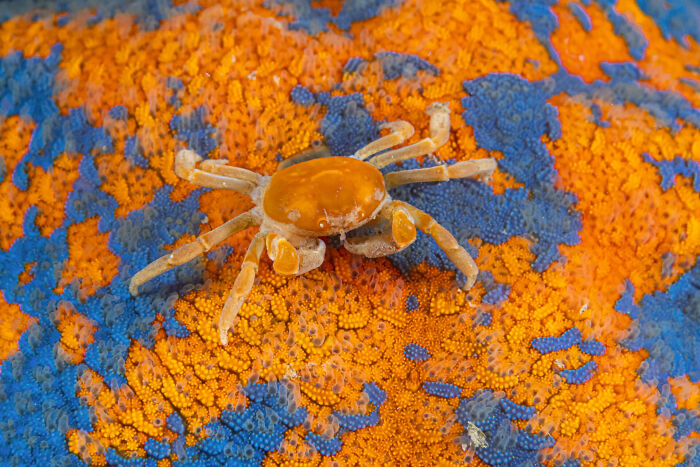
"I've been diving in the Rudnaya Bay area for more than 40 years, but I've never seen a pea crab," says Shpatak, "I was lucky. Pea crabs spend most of their lives inside the shells of grey mussels, a symbiotic relationship that only ends when the mussel or crab dies. I can only assume that this pea crab was looking for a home when I managed to photograph it."
French Polynesia
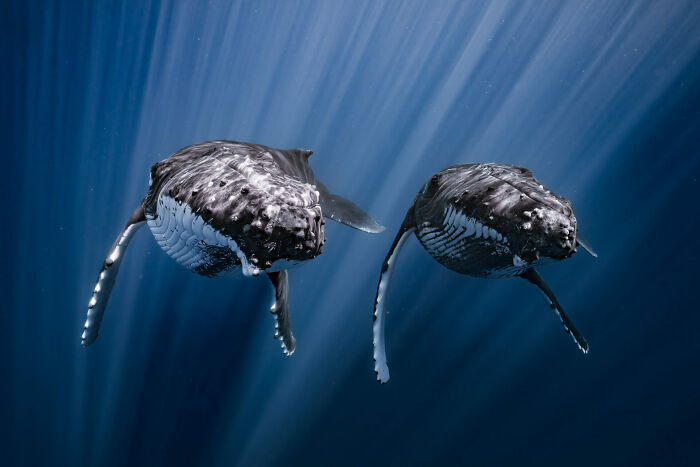
A pair of synchronised humpback whales. "Putting myself out in the field has taught me lessons no textbook ever could," says Takahashi. "It has also deepened my understanding of the profound biophilia held by the Tahitian people on the island of Mo’orea. These two humpback whales are always seen together, and I was fortunate to capture this rare moment of synchronicity. To me, this photo reflects the strong bond between them while also revealing their playful and curious personalities."
French Polynesia
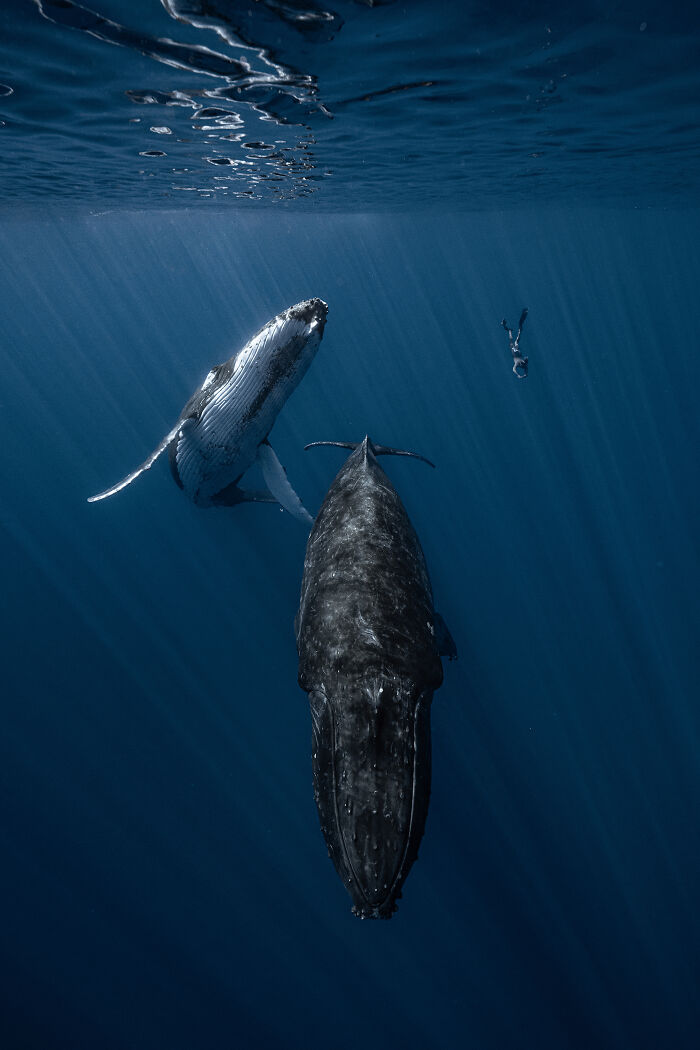
"A freediver, accompanied by two humpback whales in French Polynesia, maintains a respectful and prudent distance," says Herrero. "Recently, social media has been flooded with images of people getting very close to wildlife, including whales, often captured without proper knowledge, respect, or regard for safety and animal welfare. Many of these encounters are hastily staged or driven by the desire for striking photos. I share this photograph to promote a message of respect and responsible observation. It emphasizes the importance of maintaining safe distances and acting ethically."
Mexico
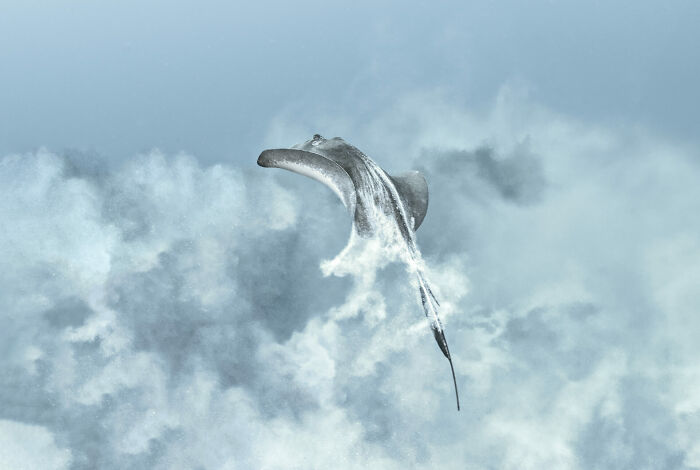
"With a powerful sweep of its pectoral fins, a stingray vanishes into the blue, leaving behind a swirling cloud of sand," says Coll. "This dramatic burst isn’t just beautiful—it’s a survival tactic. The stingray’s sudden movement disturbs the seafloor, creating a dense visual barrier that confuses predators and conceals its escape. In a single graceful motion, it demonstrates a remarkable adaptation for life on the ocean floor—where defence, camouflage, and movement come together in a fleeting but unforgettable display."
French Polynesia
"I took this photo during one of the most special encounters I’ve had in years," says Fregoni. "This curious female whale kept coming back to us, very close, again and again. It was just my group, her, and a male watching quietly from a distance, around 20m deep. He never came closer, but he didn’t leave either."
South Georgia Island
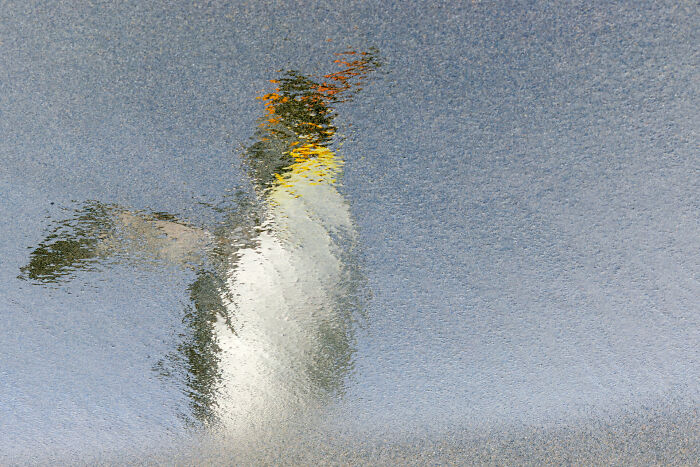
"My short time on South Georgia Island was intense," says Armada. "On the final morning, just hours before departure to Gough Island, I wandered along the beach with no intention of photographing, only observing. I noticed how the waves left behind ephemeral mirrors on the black sand, disappearing as fast as they appeared. A lone penguin stood still in the calm, and for a moment, the reflection was perfect. The cold air, changing clouds, and fleeting light made everything feel transitive. I raised the camera almost instinctively, knowing that this stillness wouldn’t happen again."
United States
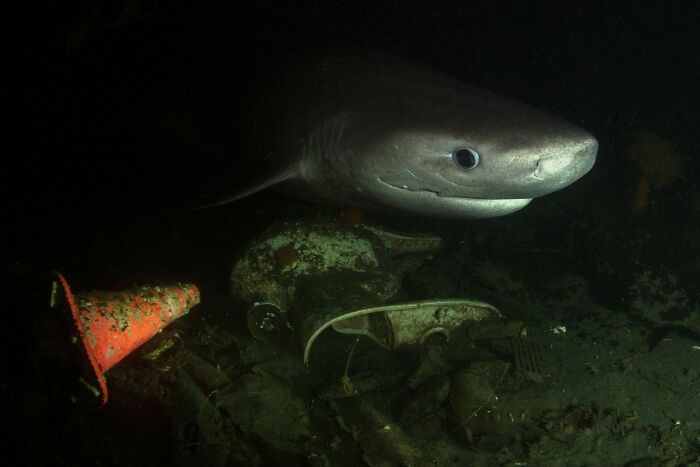
"In recent years, Sixgill Sharks have been spotted at our local dive spot, Redondo Beach in Des Moines, Washington," says Miller. "Every time I encounter one of these ancient animals, it is truly a spiritual experience. When I initially took this image, I almost discarded it due to the toilet and traffic cone. But something drew me back to it. I believe it is the contrast between a 200 million year old prehistoric animal and trash that humans have created. This image is a juxtaposition between nature’s beauty and humanity’s destructive nature."
Spain
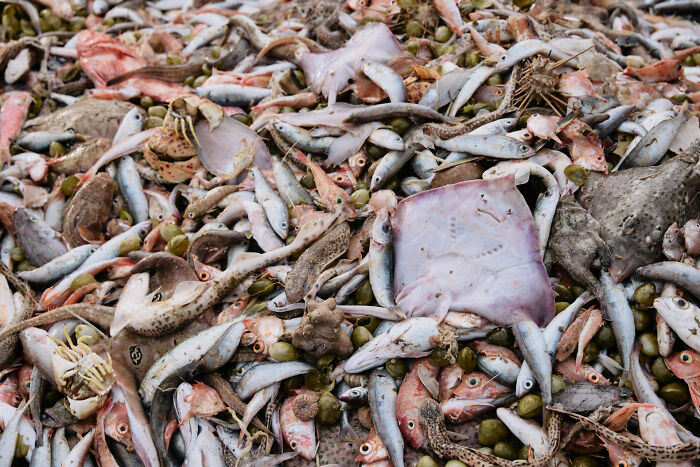
"This image captures a rarely seen moment aboard a small bottom trawler in the Mediterranean," says Ochs. "After slowly gaining the fishermen’s trust, I was allowed to join them for a 14-hour shift at sea. Twice a day, a 100-metre net is dragged along the seafloor at depths of up to 800 metres. When it resurfaced, the catch spilled onto the deck – catsharks, rays, crabs, and countless others, many still struggling for life. Most wouldn’t feed anyone. They were bycatch, later discarded as waste. The experience left a lasting mark, and strengthened my resolve to expose this destructive practice and help end it."
Papua New Guinea
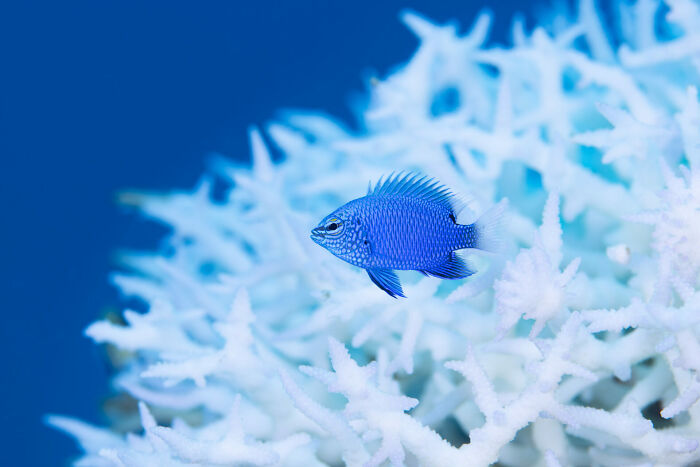
"After 25 years, I returned to Milne Bay, Papua New Guinea, remembering its incredible corals and biodiversity," says Smith. "Tragically, our first dive revealed the worst coral bleaching I'd ever witnessed. Creating compelling imagery that illustrates bleaching's impact while remaining visually engaging proves challenging. I discovered this endemic Melanesian Blue Devil damselfish, found only in Papua New Guinea, living around a small branching coral colony that had bleached. We rarely consider how bleaching devastates species like these, which depend entirely on healthy coral habitats. This image captures their story - beautiful fish persisting amid environmental catastrophe, representing countless species facing similar threats worldwide."
Philippines
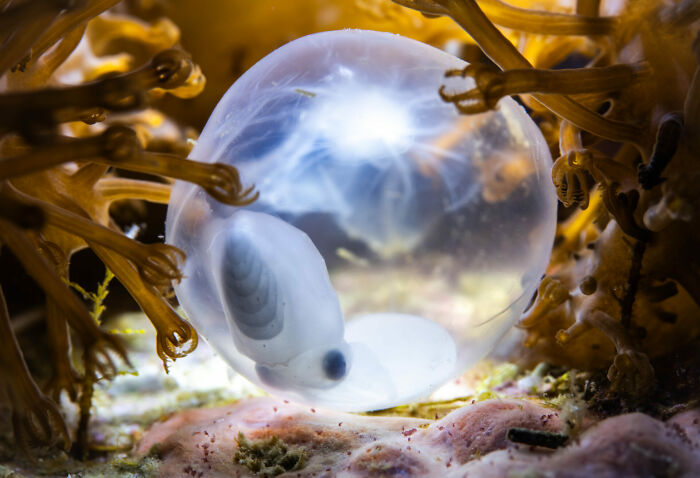
"This image was taken on an early morning dive at Gatto Island, about a 50-minute boat ride from Malapascua in the Philippines," says Földi. "I have been to this dive site many times and I have always been amazed by the variety of underwater life. At the end of the first dive I noticed this squid egg on the seabed. The egg, only 2-3 centimetres in diameter, had drifted away from the squid's nest and other eggs. I didn't have much time to take a picture because I had to return to the surface."
Mexico
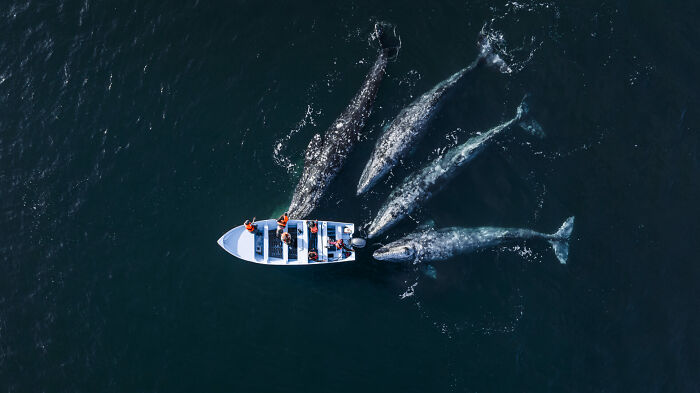
"The behaviours exhibited by grey whales in their mating and calving lagoons in Baja California, Mexico, are unlike anything else seen around the world," says Subramaniam. "They have a remarkable curiosity, actively approaching small fishing skiffs to see what is happening. I shot this on an incredible morning, when we had over 20 whales around our boat. The four that you see in this image were the initiators, after which all the others wanted in on a piece of the human action. To this day, this remains the most incredible wildlife interaction I have ever had."
Australia
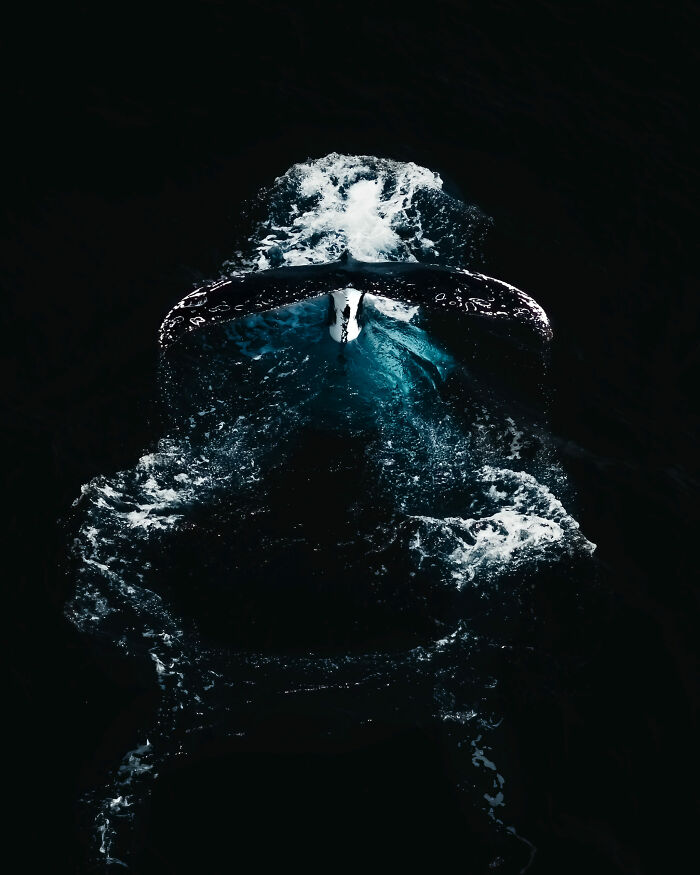
"During the annual whale migration, over 40,000 humpback whales travel along the east coast of Australia," says Burgess. "This is a special time that I love documenting. On this occasion, it was an overcast start to the day with not many whales visible due to the conditions. Then, I noticed this humpback travelling with her calf and began watching their behaviour, slowly rising above the surface, bridging the world between land and sea, before silently disappearing back into the depths of the Pacific."
Australia
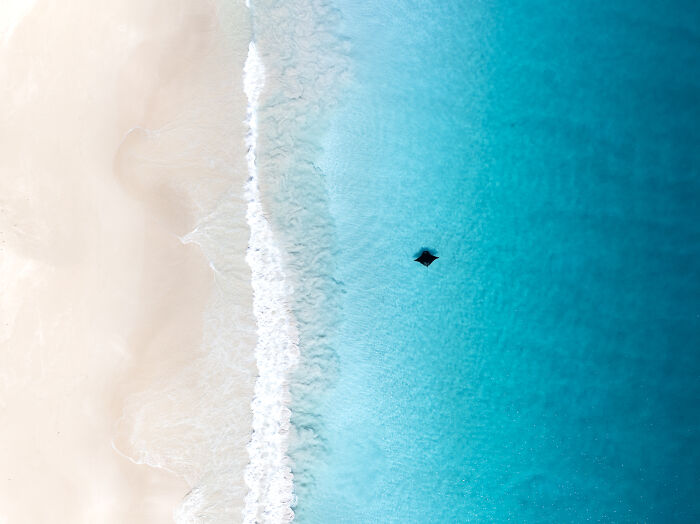
"While driving along the beach with my family, I noticed a manta ray just beyond the shoreline," says de Haas. "I launched the drone and discovered five of them cruising no more than five metres from shore. Calm water, soft waves, and pristine clarity made this rare sight possible. Moments like this are a gift, but also a reminder of what’s at stake. These gentle giants face increasing pressure from warming seas and human impact. To witness them so close, undisturbed, was powerful. We swam alongside them later, humbled by their presence. This image captures that still, fleeting connection with the wild."
Philiippines
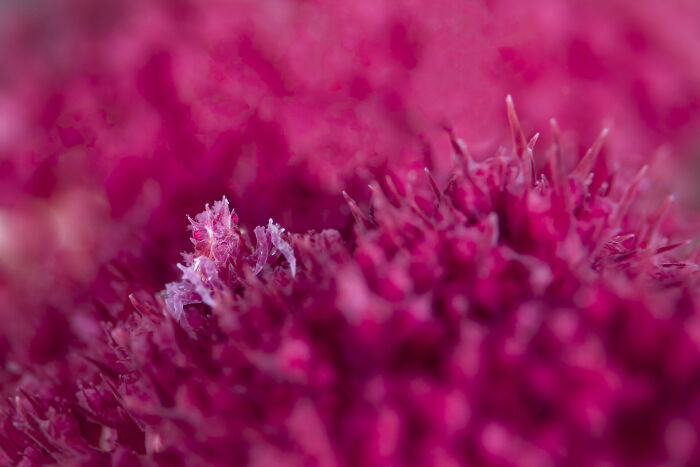
"This image features a tiny juvenile candy crab, measuring a mere centimetre in size and perched on her pink coral mattress, which is also her favourite source of nutrition," says Hoksbergen. "This dinky but stunning crustacean evades predators and spectators alike not only due to its miniature stature, but its camouflage. The candy crab is a true hidden gem beneath the waves of the Tañon Strait in the Philippines, where this image was taken."
Antarctica
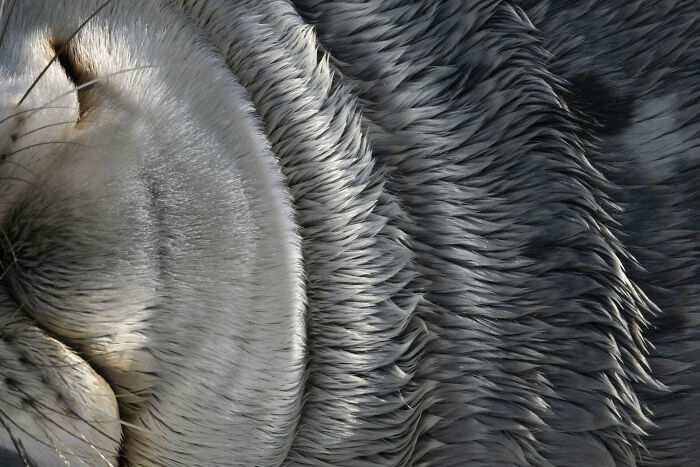
"Weddell seals thrive in the harshest environment on the planet," says Portelli. "These large mammals, distributed throughout Antarctica, have a thick layer of fur and blubber that act both as a food reserve and insulation. The finely packed fur allows them to survive in temperatures as low as -60 degrees Celsius. This image was taken after this seal had hauled itself out of the water and onto the ice floe to rest. It would later return to the icy depths of Antarctica to hunt."
United Kingdom
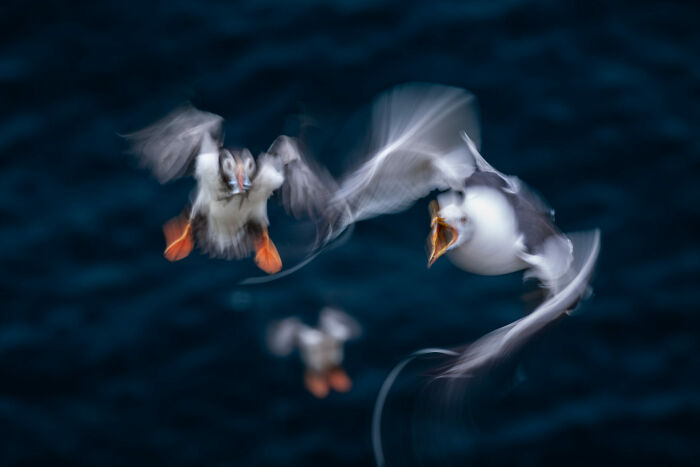
"I'd definitely have dropped the fish," says Watkinson. "I'd probably have given this Greater Black-backed Gull my money, watch and keys too, such was the loud, determined ferocity of its attack. When puffins are feeding chicks, gulls cruise around nesting sites looking for adults returning with fish to harass and rob."
Portugal
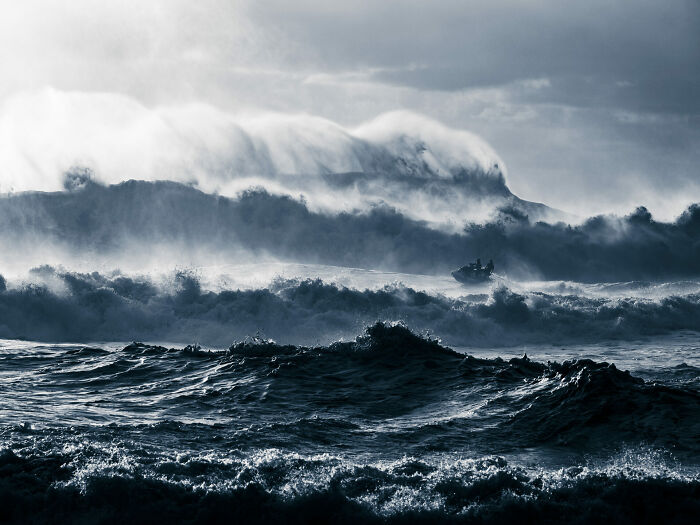
“A rough day at Nazaré,” says Thouard. “The wind was blowing from the north, which makes the surf tricky. Not many surfers went out, but Justine Dupont and Eric Rebiere, whom I was there to shoot, decided to give it a try. It was the end of the afternoon; the light was interesting from the beach instead as from the usual cliff view. It was hard to shoot anything because of the big sets and the saltwater in the air. But, eventually, this moment happened.”
Australia
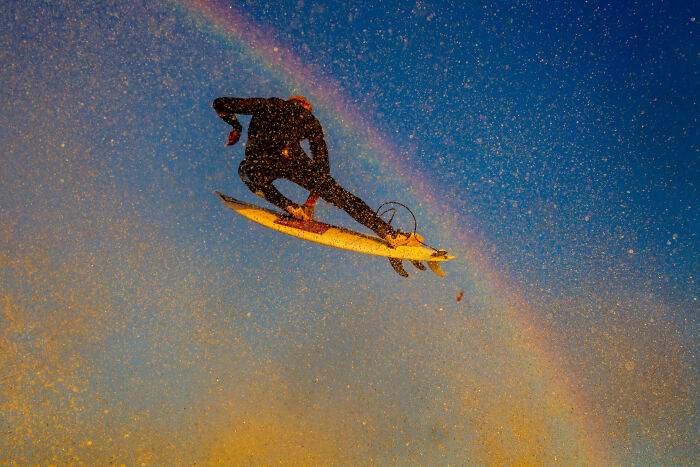
Professional surfer Noa Deane flies through a rainbow at Huzzas surf break, Western Australia. “This image is baffling,” says Feast. “It was created at sunset. I had to track the surfer coming at me and then lose him for a moment as he prepared to launch. I had to turn blindly and shoot, predicting that he would fly through my frame. The resulting rainbow I was not prepared for – it’s something I’ve never seen before and not been able to replicate since.”
Mexico
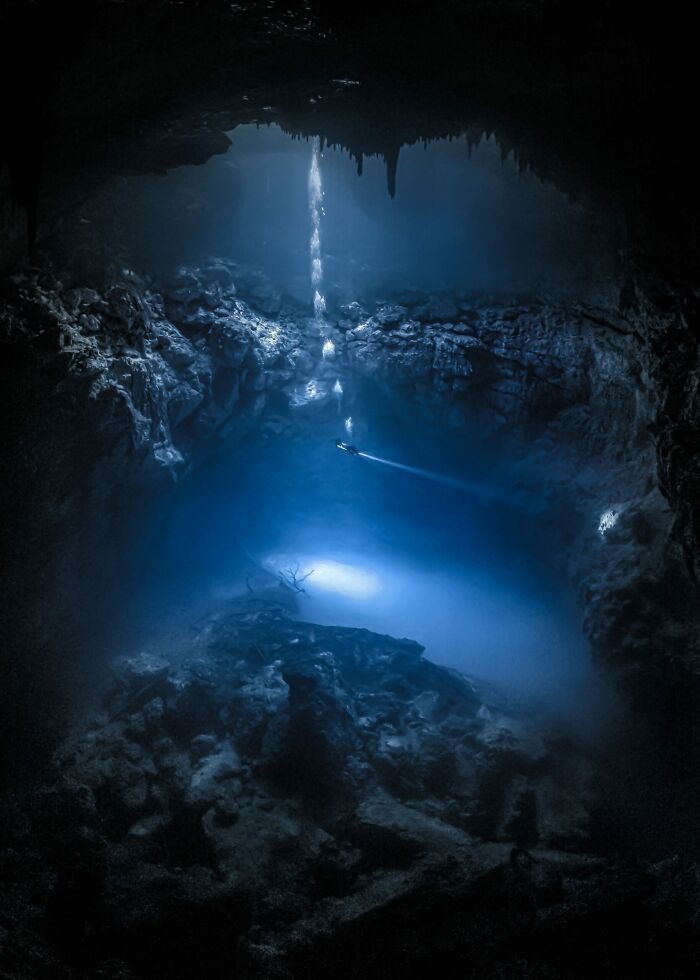
"This location is a cenote in Cancun," says Yul Park. "I wanted to capture the entire view from the entrance in a single frame, so I went all the way to the back of the cenote and positioned myself for the shot. I waited a long time to take the photo without any other divers around."
French Polynesia
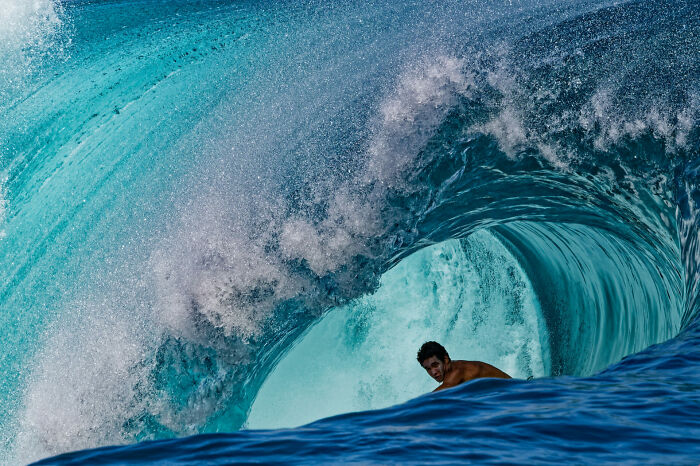
"At the mythical Teahupo’o, a wave sculpted by the power of the ocean forms a perfect tube framing the surfer," says Lenfant. "The surfer’s head is positioned exactly in the centre, creating a striking illusion: the curve of the wave looks like a giant eye, with the surfer becoming its iris. In this fleeting moment of harmony, the surfer seems to merge with this natural work of art."
Australia
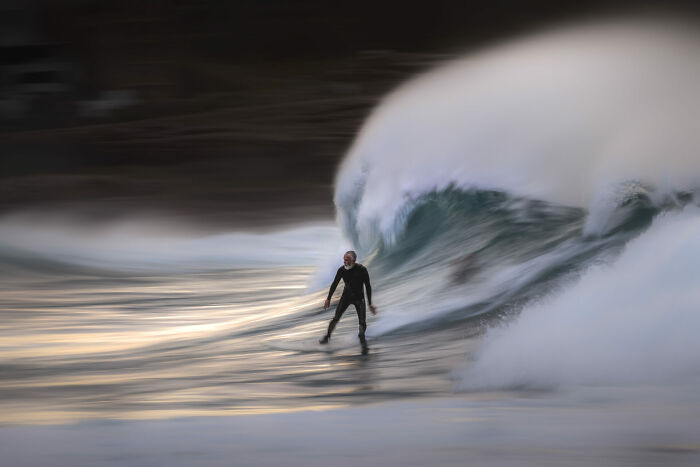
"Captured on a crisp winter morning at Bronte Beach, this image was the result of a rare alignment," says Rugli. "A powerful southerly swell met strong offshore winds under a soft morning light. I used a slow shutter speed to capture the wave’s motion in a painterly blur while keeping the surfer sharp. This technique allowed me to freeze both chaos and grace in one frame. The title of this image is 'Melchizedek'. referencing the mysterious old king from The Alchemist, who, like this surfer, moved with surprising vitality and purpose."
Bonaire
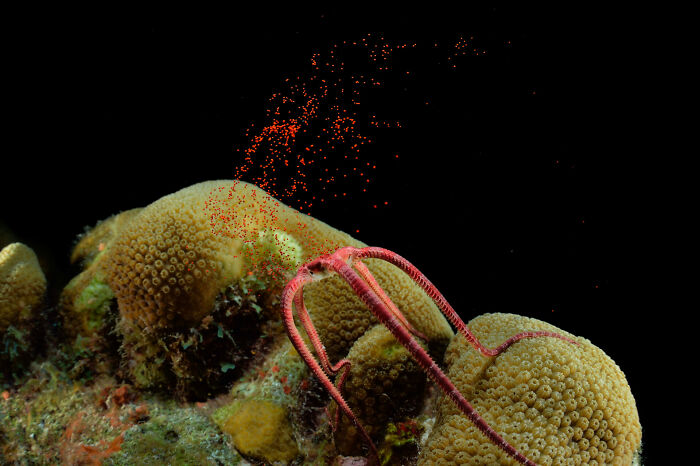
"On the Caribbean island of Bonaire, a female brittle star rears up on the tips of its arms on top of a coral to release its eggs, a few nights after the full moon," says Zankl. "The process is synchronised by the moon so that the eggs are fertilised by sperm from males in the open water and a new generation is born."
Indonesia
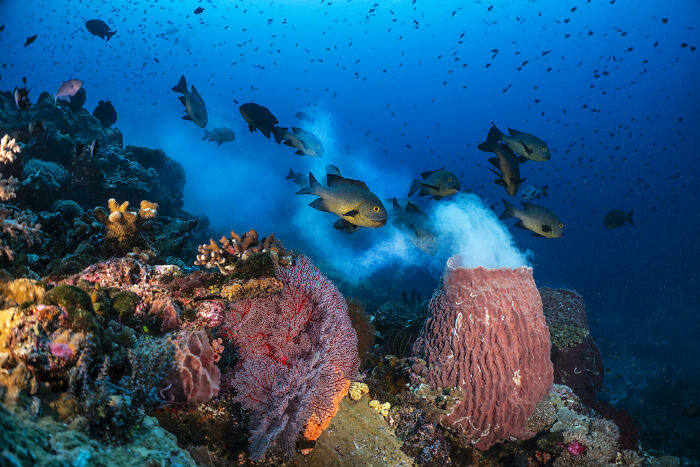
Clouds of white spawn billow from a giant barrel sponge, a rare and fleeting event that breathes new life into the reef. Surrounding the sponge, a frenzy of Midnight Snappers, feast upon the rising plumes. Mouths agape these opportunistic feeders take turns consuming the nutrient-rich spawn, plunging into the white clouds, gorging themselves.
"Capturing this image was no simple task," says Sanders. "The Midnight Snappers, initially wary of my presence, kept their distance, hesitant to approach the sponge while I was nearby. I had to remain perfectly calm and still, patiently waiting for them to grow comfortable enough to circle the sponge. Over time, my presence became just another part of their environment, and they began to feed freely, allowing me the opportunity to frame this intricate feast."
Australia
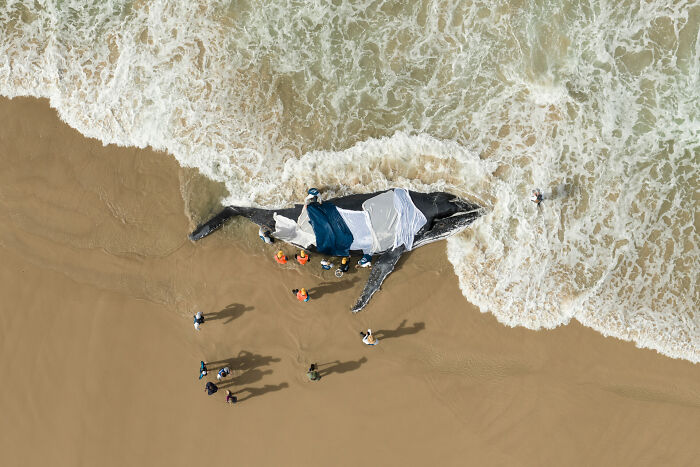
"In the early hours of July 1st, we received a call about a stranded humpback whale," says Parry. "Wildlife veterinarian Steve Van Mil quickly assessed the situation and contacted SeaWorld Marine Rescue and other key agencies to coordinate a response. For 15 hours, rescue teams and the local community worked tirelessly in a unified effort to save her. Sadly, despite their dedication, she could not be saved. While the outcome was heartbreaking, witnessing the collaboration and compassion shown by multiple agencies and volunteers was incredibly moving - a powerful reminder of what can be achieved when people come together with a shared purpose."
Iceland
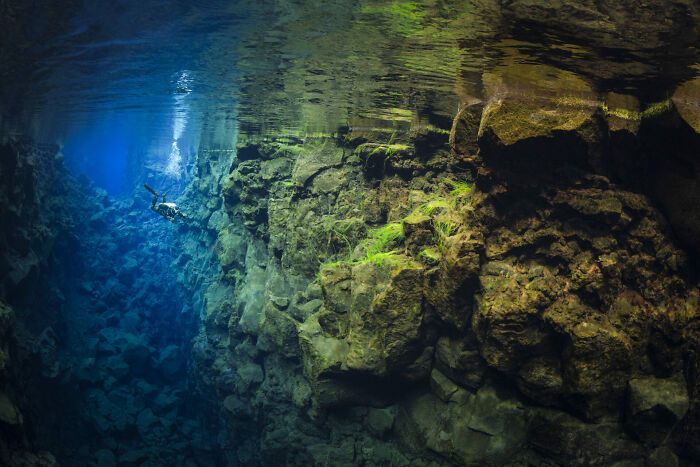
"Silfra fissure is a ‘visibility wonderland’," says Conroy. "It is the ultimate wide angle ambient light shooting destination. Visibility extends to more than 100 metres and the fissure looks completely different depending on the time of day and the time of year. My favourite time is spring when we get angled light and the first growth of the green algae."
Antarctica
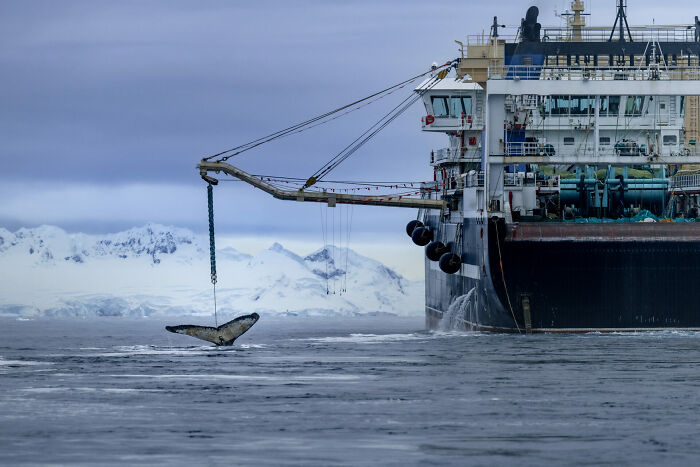
"Over the past 20 years, krill fishing has quadrupled," says Kerdavid, "mainly to produce non-essential products like Omega-3 supplements, pet food, and feed for farmed salmon - used to make the flesh pink for Western supermarkets. A single trawler can catch up to 500 tonnes of krill per day. That's enough to feed 150 whales. Less krill means less food for whales, seals, penguins, and countless other species. Today, krill extraction is one of the fastest-growing threats to Antarctic wildlife. That’s why Sea Shepherd is heading to Antarctica: to expose this industry and show the world what’s really happening: hungry whales following krill trawlers, desperately searching for food."
Martinique
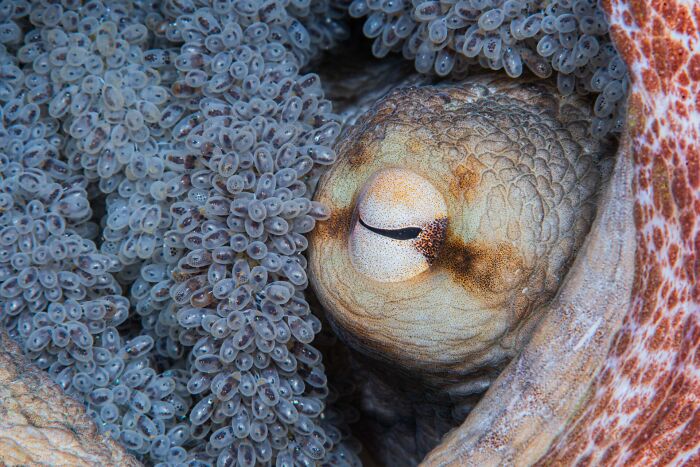
"In Martinique, the octopus, known locally as 'chatroux', is becoming increasingly rare due to human overconsumption," says Maynier. "Marine reserves have been created to offer a refuge for all species, including the octopus, in order to protect them from overfishing and to preserve biodiversity. In this context, this encounter with an octopus and its eggs, observed in the Kay Pothuau marine reserve, clearly stands as a true sign of hope for conservation."
Norway
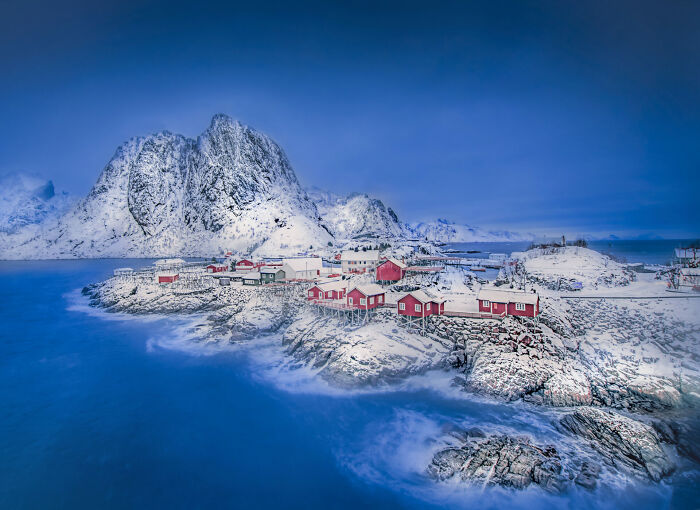
"In the middle of a Nordic winter, snow-clad mountains and islands frame the Reine fishing village," says Li. "Crimson cabins punctuate the cold blue expanse like beacons of warmth, while gentle waves lap against rocky shores. The image captures the Arctic’s silent romance - a harmony of solitude and the oceanic rhythm."
Mexico
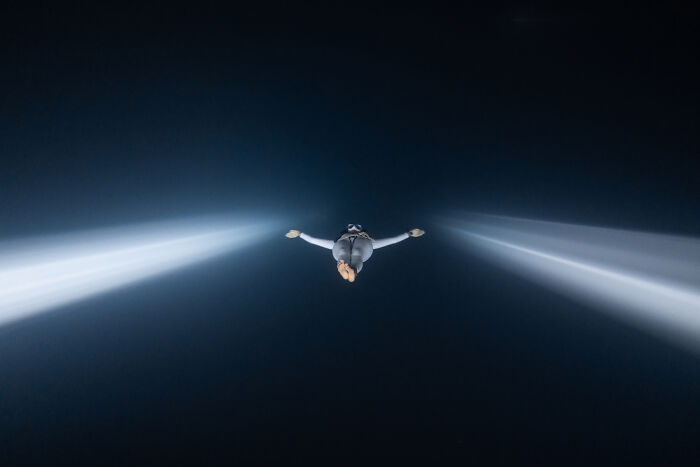
"Freediver Surya Lecona Moctezuma dives down in between light beams in a Mexican cenote," says Verhoeven. "I was looking for the contrast between not just the light and dark areas, but the sudden appearance of linear geometry in a natural setting, so I asked Surya to dive right in the middle of the beams. I dived after her, positioning myself directly above."
Philippines
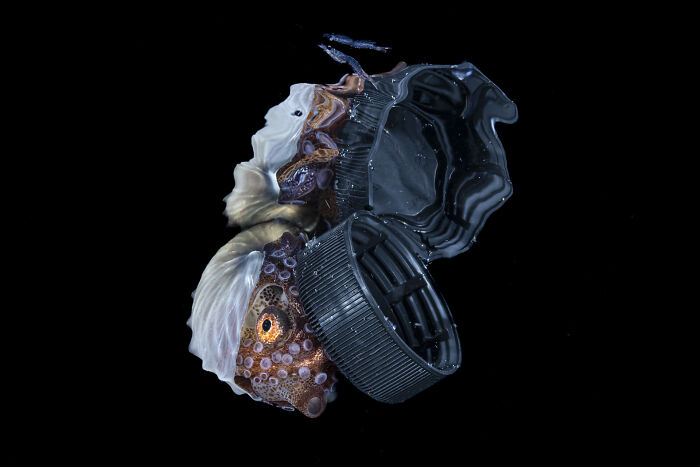
"In the darkness of the open ocean at night, a tiny paper nautilus clings to a plastic bottle cap," says Mazarese. "In the wild, females of this species seek out floating organisms like jellyfish to hitch a ride and navigate the water column. But here, instead of a living creature, she finds only what humanity has discarded. This image, taken in Anilao, Philippines, reflects the silent impact of pollution and the resilience of marine life."
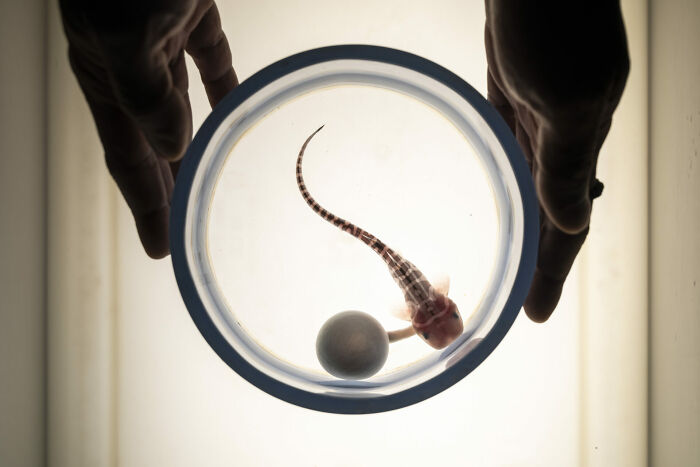
Thailand "An aquarist holds a glass jar with an early-stage embryo of an Indo-Pacific Leopard shark (Stegostoma tigrinum), its egg case removed for a rearing experiment at Aquaria Phuket, one of Thailand’s largest private aquariums," says Arunrugstichai. "Since 2023, the aquarium’s staff-driven breeding program has produced over 40 pups of this Endangered species, listed on the IUCN Red List. Aquaria Phuket now works with the Department of Marine and Coastal Resources, ReShark, WildAid, Ocean Blue Tree, and private partners on the StAR (Stegostoma tigrinum Augmentation and Recovery) Project Thailand, reintroducing these sharks to the wild, beginning August 2025."





























 No fees, cancel anytime