Get Premium
Dark mode theme is available exclusively for premium users. Learn more about the benefits of subscribing.
No fees, cancel anytime.

 Dark Mode Ad-Free Browsing Unlimited Content
 Ad-Free Browsing Unlimited Content Dark Mode
Join 1.2 million Panda readers who get the best art, memes, and fun stories every week!

Airbnb sounds great in theory: homeowners make extra cash renting out their properties, and travelers get a taste of authentic local life.
In practice, though, it’s sparked backlash in many cities, with locals frustrated over tourist crowds and soaring housing costs.
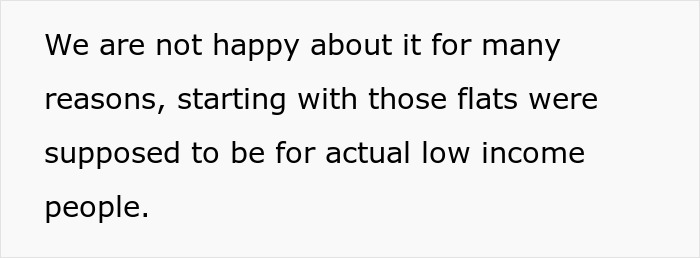
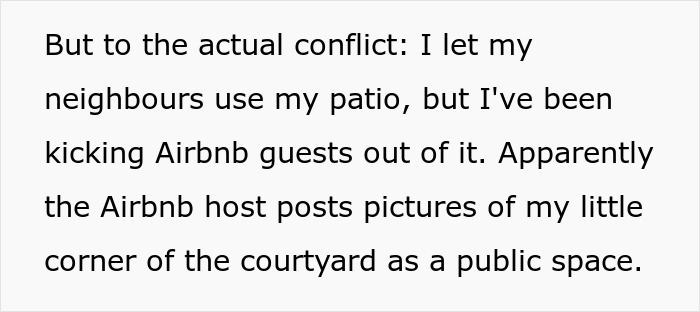
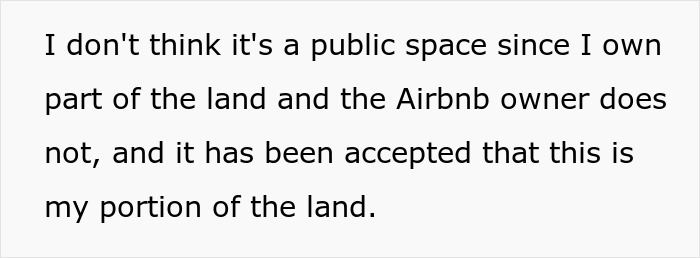
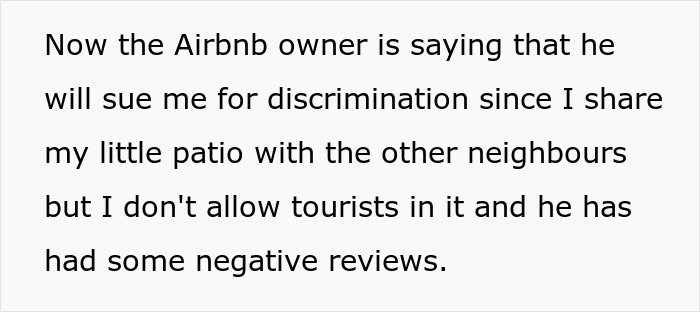
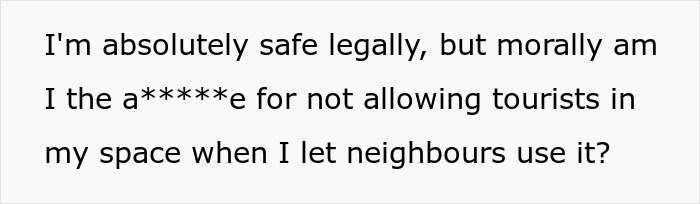
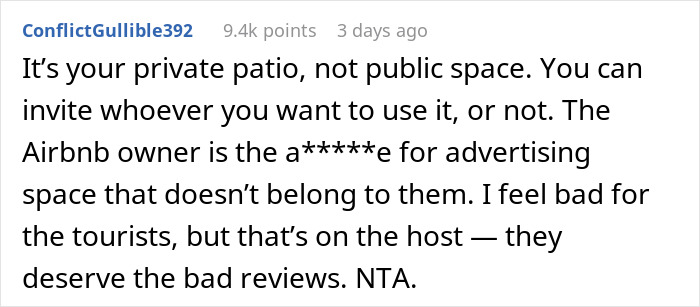
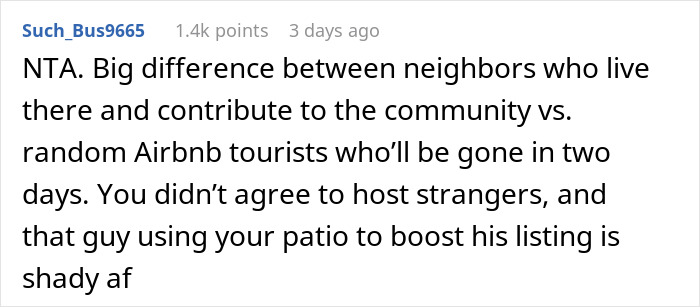
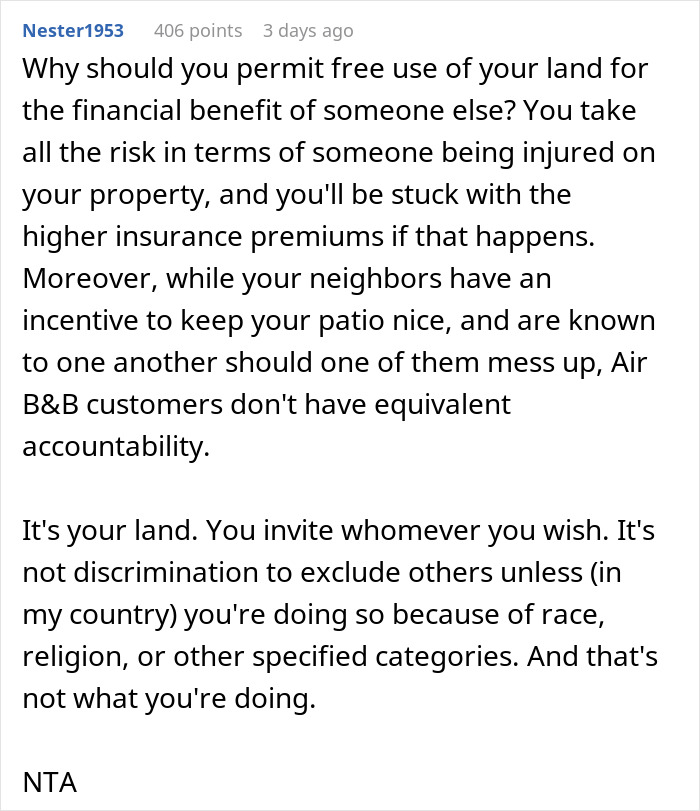
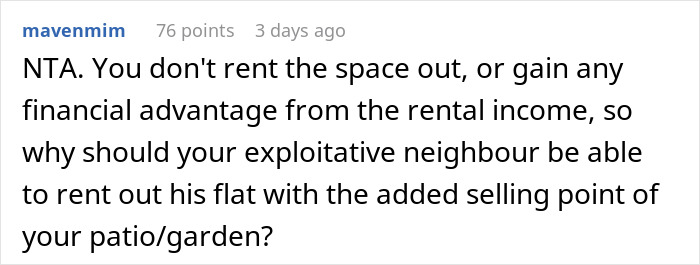
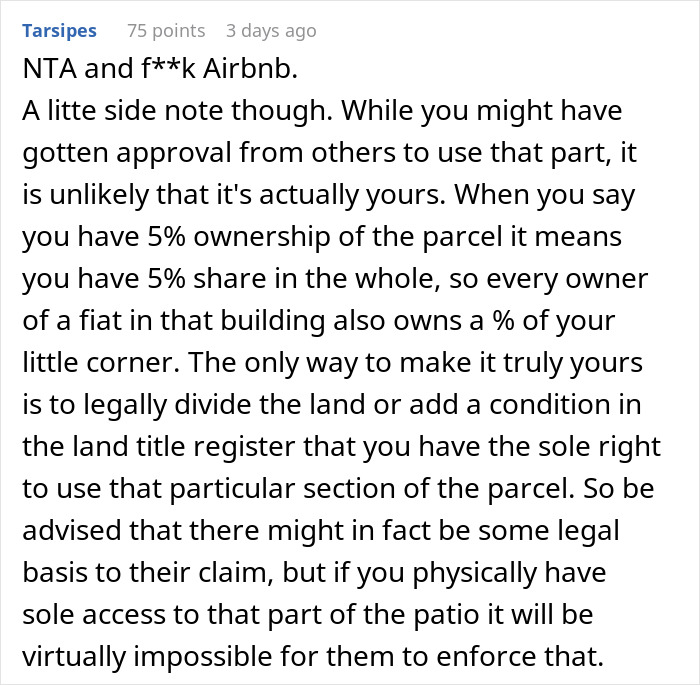
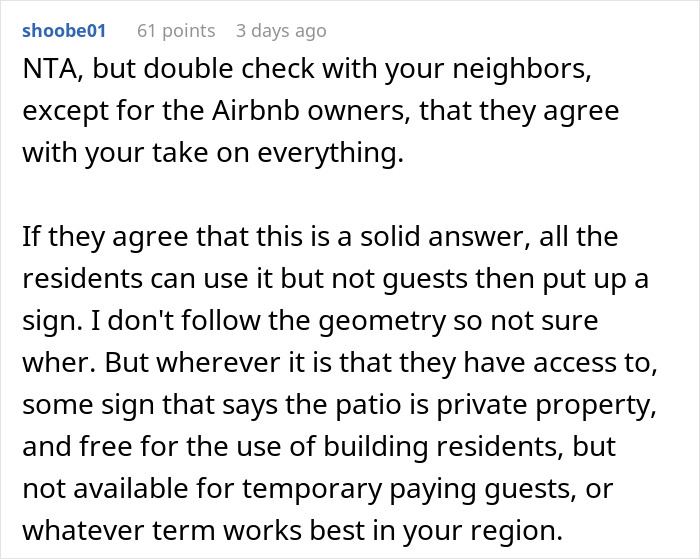
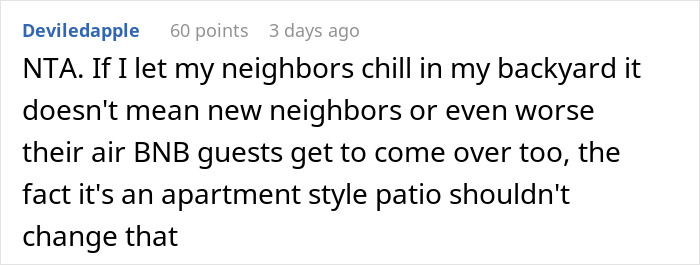
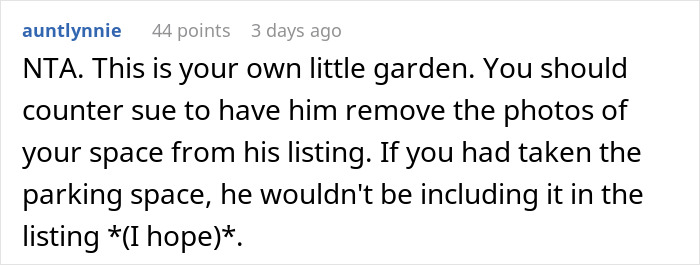
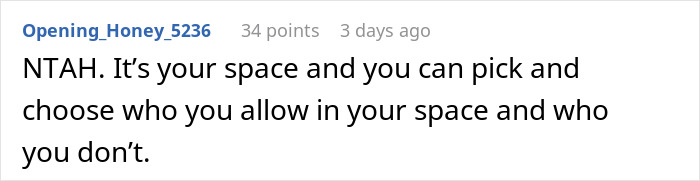
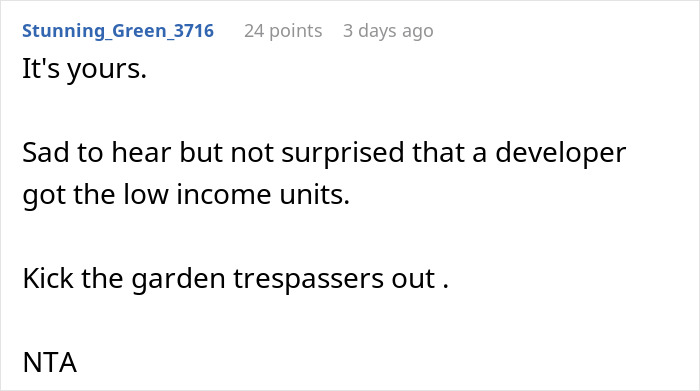
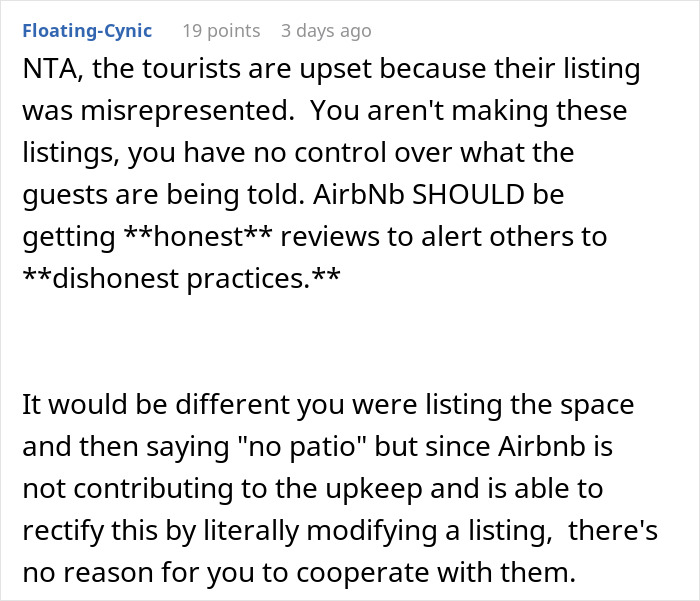
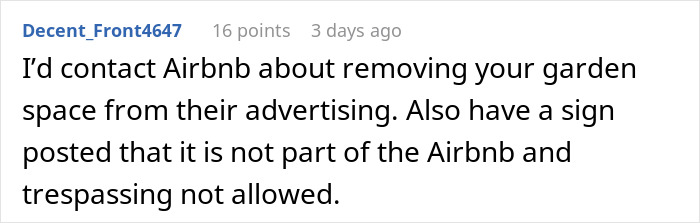
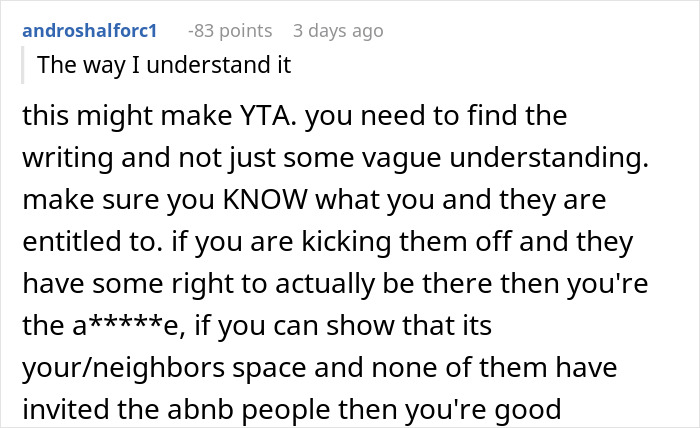
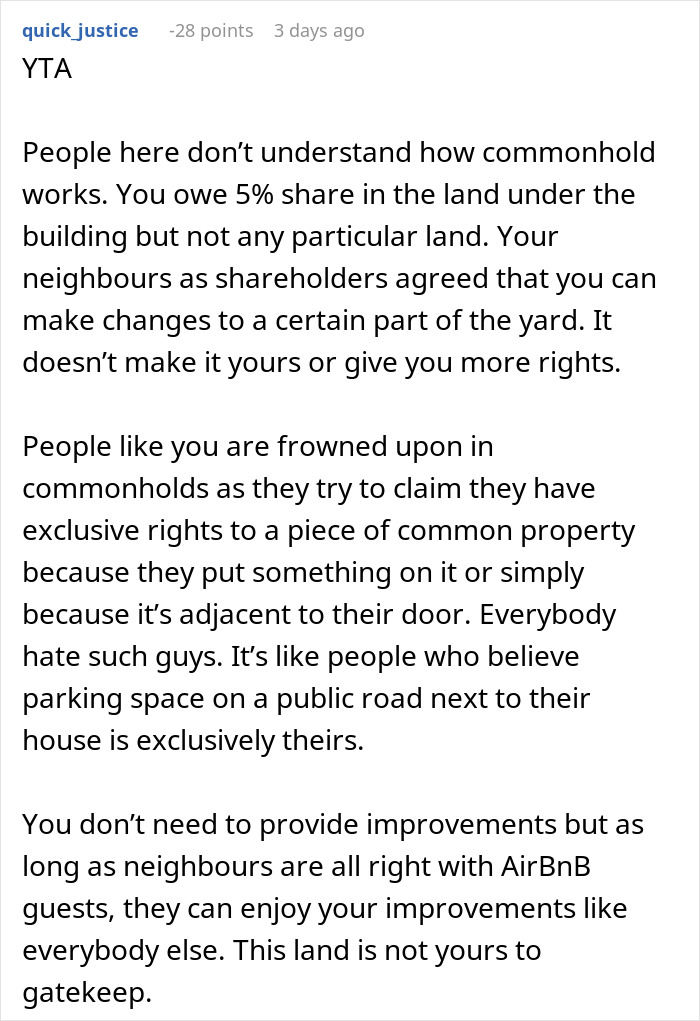
One Redditor knows this struggle firsthand. They transformed their share of the courtyard into a cozy garden that neighbors love, but things changed when an Airbnb host bought units in the building. Now, tourists keep trying to use the space, and when the homeowner turns them away, the host is furious.
Are they being unfair, or simply protecting what’s theirs? Read on and judge for yourself.
Image credits: Antonio Verdín / unsplash (not the actual photo)
Image credits: Getty Images / unsplash (not the actual photo)
Image credits: Getty Images / unsplash (not the actual photo)
Image credits: anonymous
Image credits: A. C. / unsplash (not the actual photo)
When everything goes right, an Airbnb stay can be incredible for both guests and hosts.
A truly passionate host can turn a stay into a memorable experience, offering a cozy, character-filled space along with tips on exploring the area.
Guests get flexibility, the chance to cook their own meals, and the feeling of being a traveler rather than just another tourist. Even without splurging, there are often budget-friendly options that beat hotel prices.
Hosts, on the other hand, can earn extra income while meeting people from all over the world.
But when things go wrong, it can get messy fast—steep cleaning fees, unfriendly neighbors, strict house rules, misleading photos, or simply an unpleasant host.
Beyond the rental itself, the rise of short-term stays has stirred tension with locals who feel overwhelmed by tourists and priced out of their own neighborhoods.
And it’s not just online complaints fueling this sentiment. Research shows many people aren’t thrilled about having Airbnbs as neighbors.
A survey from Anytime Estimate found that only 40% of Americans believe Airbnbs make good neighbors, while more than a quarter of homebuyers would even lower their offer on a home near one.
Only 30% of respondents think Airbnb guests care about the neighborhoods they visit, and just 36% have positive feelings toward short-term rental companies overall. The stats paint a clear picture: 42% don’t trust Airbnbs to follow rental laws, 52% feel less comfortable letting their kids play outside near them, and a whopping 82% want stricter regulations.
Over half of respondents said they’d rather live next to their in-laws, and nearly a third would rather live next to their ex.
It’s no surprise, then, that even travelers themselves are drifting back to hotels.
“I vote for hotels. Airbnb is too strict. When I stayed at an Airbnb, my host threatened to charge fees if anything went missing or out of place—I mean anything. I can’t relax under that kind of stress. I have good manners and take care of the places I stay. I’ve been choosing hotels since. I’ve also had several female friends complain about their male hosts hanging around when they weren’t supposed to be there—very creepy. Hotels all the way,” a woman named Melissa told Boston.com.
“I know what I’m getting into with a hotel. I don’t with Airbnb. The long lists of complaints about surprises—including rules, tasks, and fees that make the prices comparable—make it far less attractive,” added Donna.
Hopefully, these concerns can be addressed so that short-term rentals don’t have to feel like a gamble for locals or for travelers.
What’s your experience with short-term rentals, especially Airbnbs? Do you prefer them or stick to hotels when you travel?

By entering your email and clicking Subscribe, you're agreeing to let us send you customized marketing messages about us and our advertising partners. You are also agreeing to our Privacy Policy.
Thank you! You've successfully subscribed to newsletters!



To right . Hate the dam things , we have a few in our village , which isn’t big , n it’s bloody annoying , thankfully non near me I’m up top end of village phew but it means house prices are being pushed up and locals are pushed out (Cotswolds village ) from what I’ve heard a lot of them are a nightmare at times , who ever came up with the freaking air b n b idea needs shooting tbh !
Load More Replies...
AirBnB is one of the most terrible things to come out of the internet

AITA is one of the cesspools of Reddit, and this is absolutely fantasy writing by someone who knows nothing about real estate ownership or law, even less so in Europe. Most commenters -all by the last one- are also way off. First, there is no such thing of "owning a generic 5% of the common areas". Common areas are either 1) shared, so anyone can use them, including temporary guests, but renovations are also paid by a common fund; or 2) shared ownership but exclusive use, where some expenses are shared, most of them are in charge to the usufructuary, that is also the only one that can access the space. This is always well cleared in the lease or deed. Furthermore, "discrimination" has nothing to do with any of this.
To right . Hate the dam things , we have a few in our village , which isn’t big , n it’s bloody annoying , thankfully non near me I’m up top end of village phew but it means house prices are being pushed up and locals are pushed out (Cotswolds village ) from what I’ve heard a lot of them are a nightmare at times , who ever came up with the freaking air b n b idea needs shooting tbh !
Load More Replies... AirBnB is one of the most terrible things to come out of the internet
AITA is one of the cesspools of Reddit, and this is absolutely fantasy writing by someone who knows nothing about real estate ownership or law, even less so in Europe. Most commenters -all by the last one- are also way off. First, there is no such thing of "owning a generic 5% of the common areas". Common areas are either 1) shared, so anyone can use them, including temporary guests, but renovations are also paid by a common fund; or 2) shared ownership but exclusive use, where some expenses are shared, most of them are in charge to the usufructuary, that is also the only one that can access the space. This is always well cleared in the lease or deed. Furthermore, "discrimination" has nothing to do with any of this.
























 No fees, cancel anytime














42
19