Get Premium
Dark mode theme is available exclusively for premium users. Learn more about the benefits of subscribing.
No fees, cancel anytime.

 Dark Mode Ad-Free Browsing Unlimited Content
 Ad-Free Browsing Unlimited Content Dark Mode
Join 1.2 million Panda readers who get the best art, memes, and fun stories every week!

There are definitely three things in this world you can wait your whole life for and never get: winning the lottery jackpot, seeing the Cowboys reach the Super Bowl, and a fair and deserved assessment of your abilities and accomplishments by your higher-ups at work. Although statistically speaking, winning the jackpot is sometimes much easier…
But seriously, the narrator of our story today is seriously considering changing jobs. After three years at the same place, excellent results, and promises of a quick promotion, all she’s gotten is the endless task of mentoring a new team lead. Okay, let’s cut to the chase.
More info: Reddit
Image credits: gzorgz / Freepik (not the actual photo)
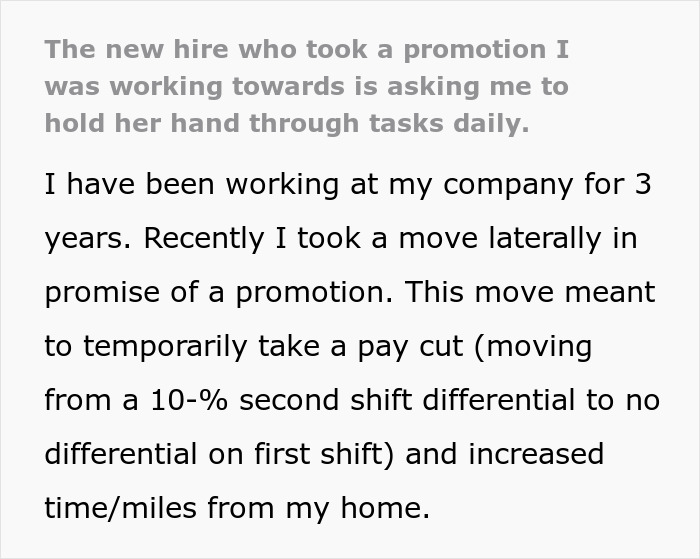

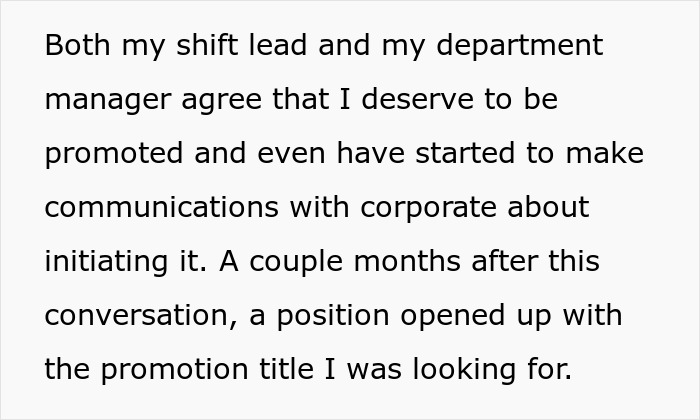
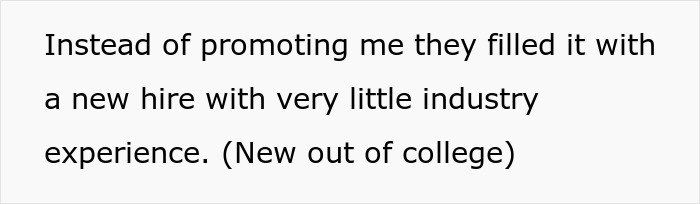
Image credits: freepik / Freepik (not the actual photo)
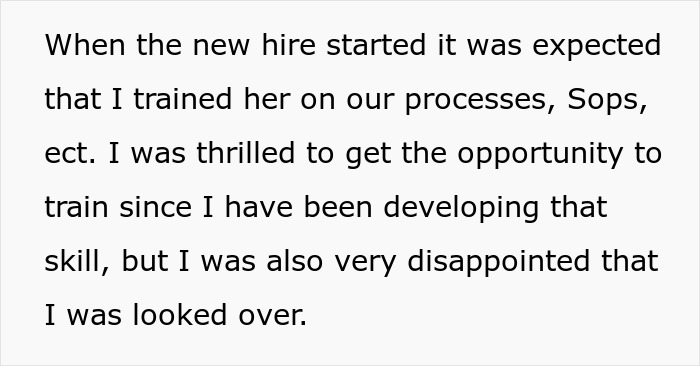
Image credits: garetsvisual / Freepik (not the actual photo)
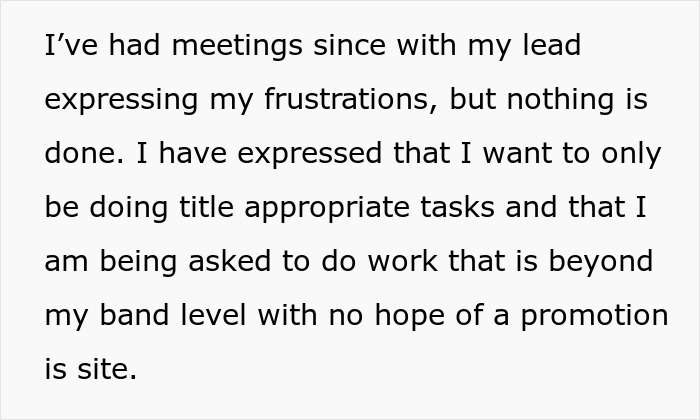
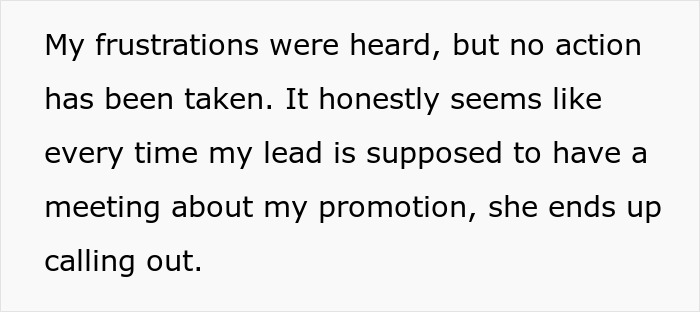
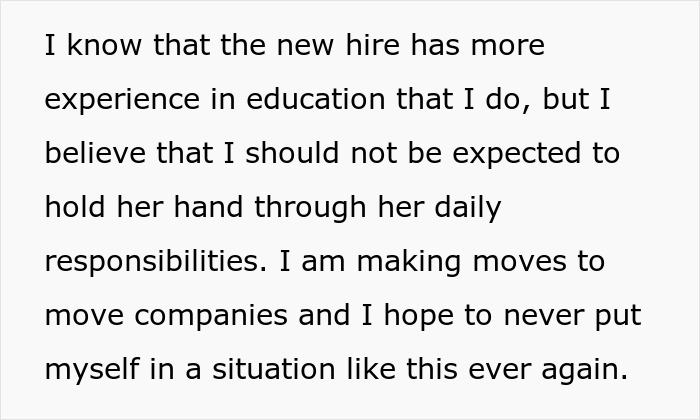
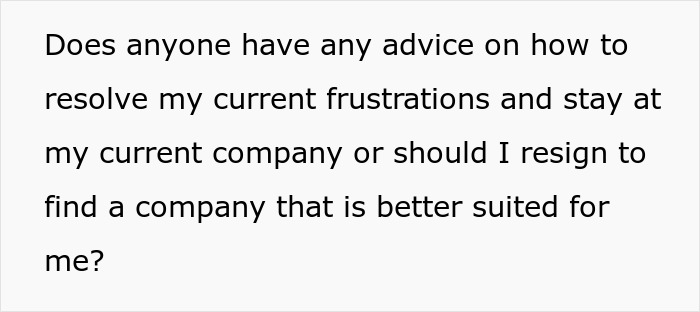
Image credits: Local-Muffin-1217
So, the Original Poster (OP) is 25 years old, and after three years working at a company, in biotech, she took a lateral move in anticipation of a potential upcoming promotion. The move meant a temporary pay cut and a longer commute, but our heroine, after speaking with her shift lead and department manager, was confident the sacrifice would be worth it.
She was wrong. A new employee was hired for the vacant position that soon opened, and the author was asked to train her. This was an undeniable blow for the OP, but she gritted her teeth and faithfully fulfilled her coaching duties. Moreover, as the author herself admits, the new hire had more theoretical knowledge than she did, though she certainly lacked experience.
What’s even more upsetting and irritating to the OP is that even now, almost a year after her onboarding, the new employee still expects her to literally hold her hand through daily tasks. Meanwhile, her status in the company remains higher than OP’s, and she earns more.
The OP had several talks with her immediate supervisors about why she was ultimately passed over for a promotion, but they cited the wishes of the higher-ups. However, as the woman sadly notes, her frustrations were heard, but no further action was actually taken. And now the author has decided to ask for advice online – what should she do?
Image credits: freepik / Freepik (not the actual photo)
Well, as George Orwell sarcastically wrote in Animal Farm, “All animals are equal, but some animals are more equal than others.” Experts do believe that if an employee is unfairly passed over for promotion, creating a so-called career “stallout” within the company, this only reduces their motivation, self-esteem, and, ultimately, negatively impacts their desire to stay with the company.
This feeling can be especially painful when another employee is being promoted at the same time as you. The authors of this dedicated study, published at Wharton Knowledge, note that employees in such cases can perceive career failure as a personal defeat, as a clear signal of “I’m not appreciated.” Even if such a decision by management was entirely objective.
One way out of this difficult situation, the study’s authors suggest, is a special corporate job with the “runner-ups,” like offering them ideas for career development, regular feedback, and transparent information about their probable next steps. Otherwise, there’s always the risk of losing an employee who is still valuable to the company.
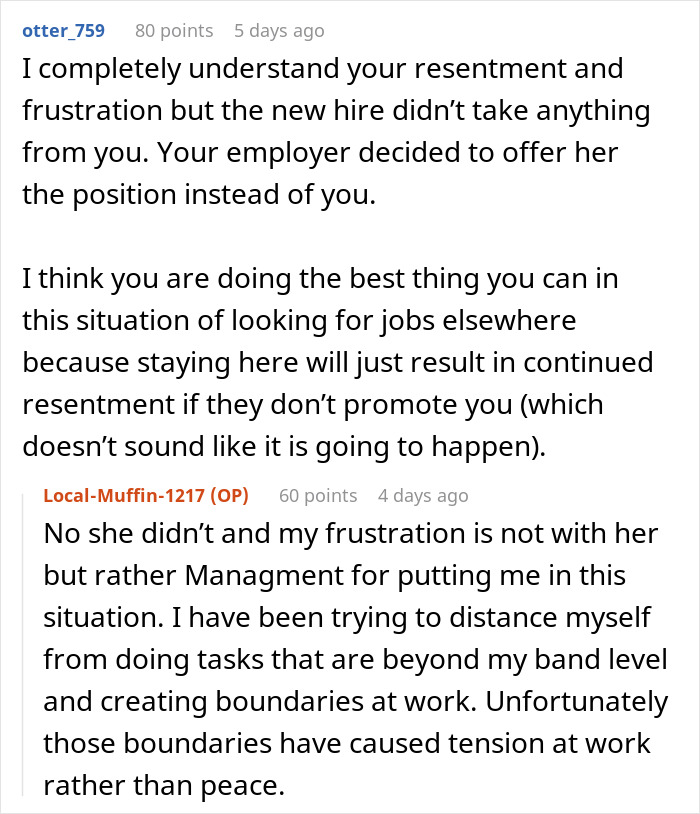
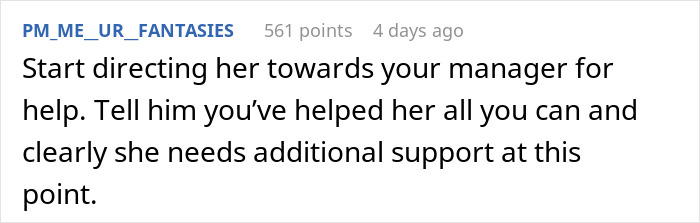
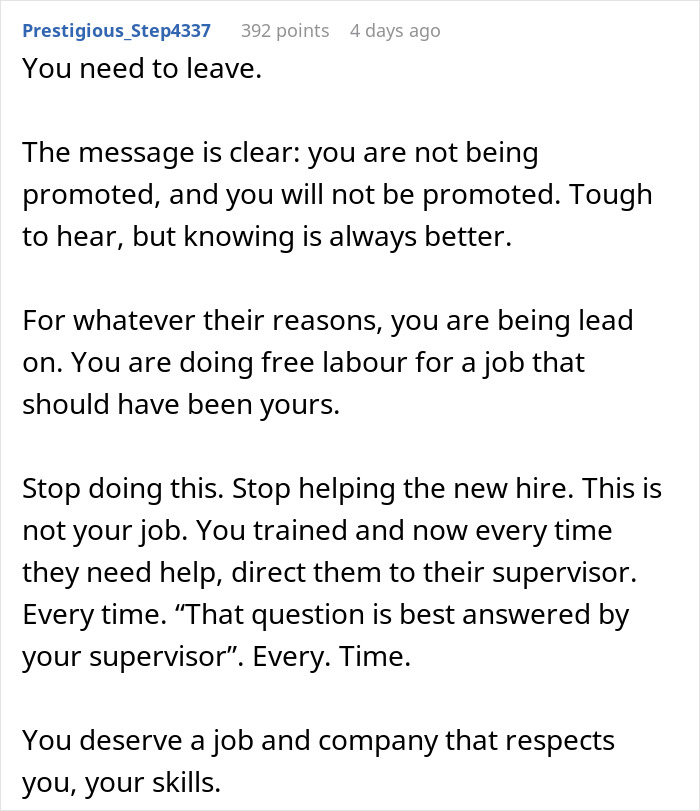
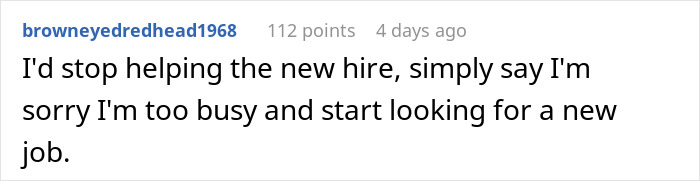
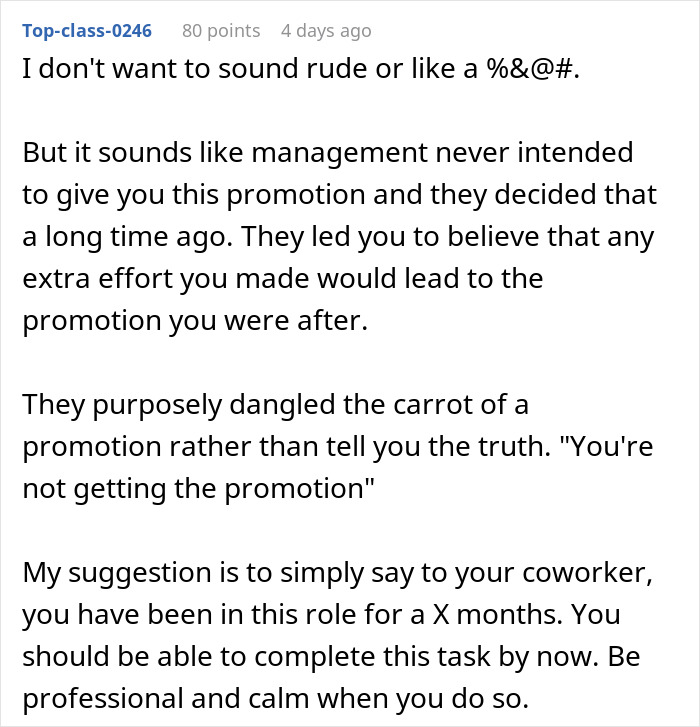
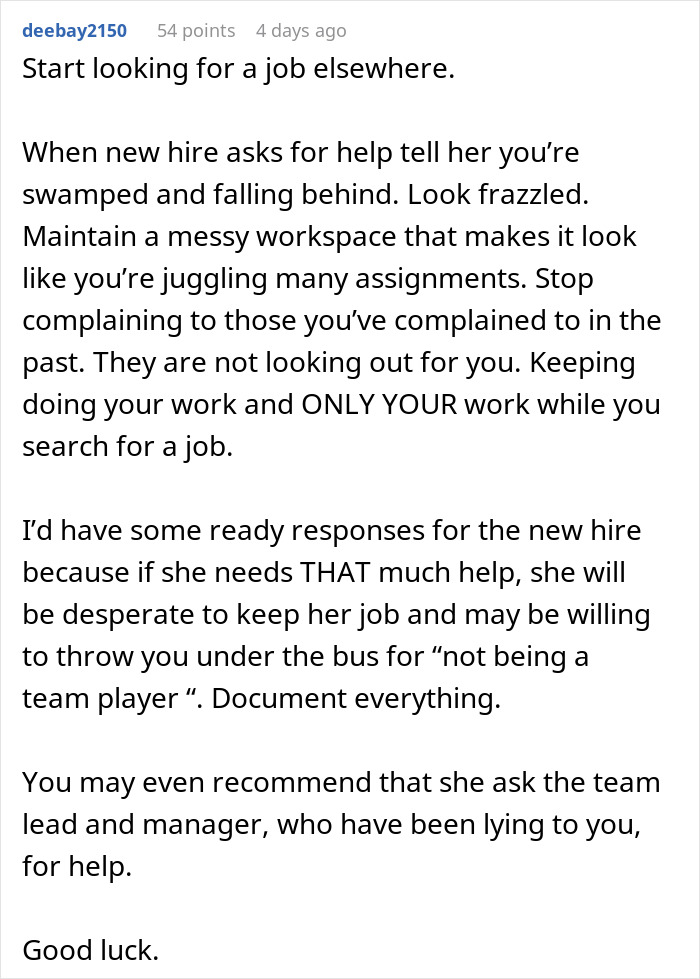
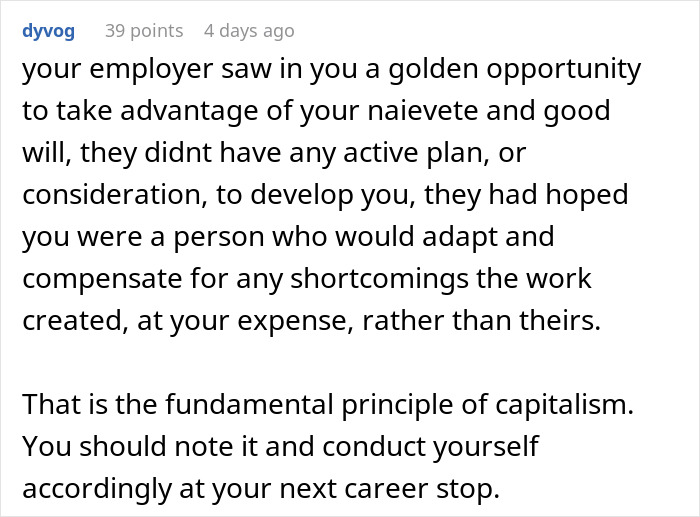
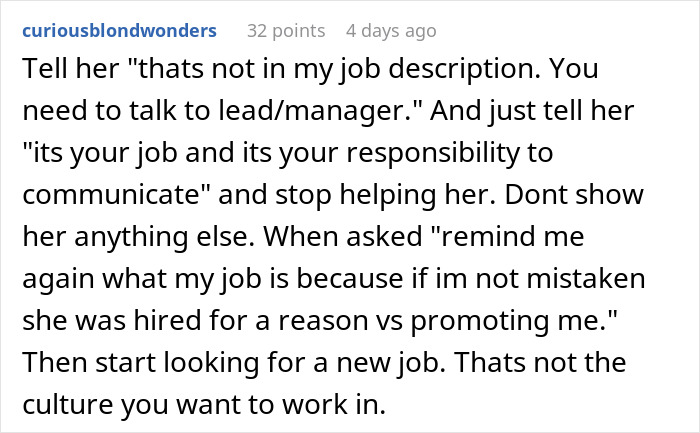
Incidentally, commenters on the original post were nearly unanimous, urging the author to quit this company, where she’s clearly not valued at all. The author herself also admitted that she’s monitoring vacancies and may indeed leave soon. So what do you, our dear readers, think about this situation? Is quitting always the right solution or not?

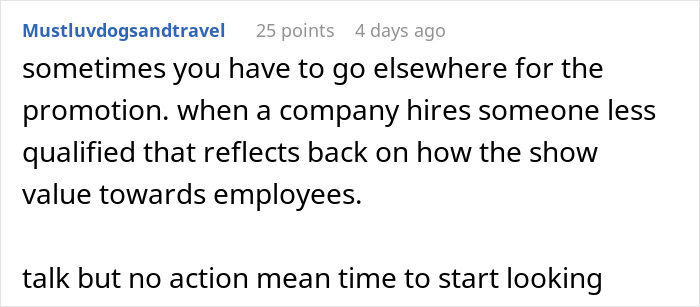


OP is being too nice. In a situation like that, the management has no pressure to sort the situation. They have raised their frustrations, but from the managers perspective the work is getting done, so they won't rock the boat. OP needs to start pushing back on things they are asked to do which is above their official role, saying they are very keen to be involved in that work, but their current BAU work means they don't have time. If the higher level work is already getting done currently, the business are not going to pay for another position at that level.
The one thing I would say is that when OP does leave this job, she should make sure to give a very detailed explanation of her frustrations (and name names, too) in her exit interview.
OP is being too nice. In a situation like that, the management has no pressure to sort the situation. They have raised their frustrations, but from the managers perspective the work is getting done, so they won't rock the boat. OP needs to start pushing back on things they are asked to do which is above their official role, saying they are very keen to be involved in that work, but their current BAU work means they don't have time. If the higher level work is already getting done currently, the business are not going to pay for another position at that level.
The one thing I would say is that when OP does leave this job, she should make sure to give a very detailed explanation of her frustrations (and name names, too) in her exit interview.




































 No fees, cancel anytime









23
5