Get Premium
Dark mode theme is available exclusively for premium users. Learn more about the benefits of subscribing.
No fees, cancel anytime.

 Dark Mode Ad-Free Browsing Unlimited Content
 Ad-Free Browsing Unlimited Content Dark Mode
Join 1.2 million Panda readers who get the best art, memes, and fun stories every week!
Jerusalem has been continuously inhabited for over 5,000 years, and archaeologists have been digging through it for decades. At some point, you would think they had found everything there is to find—every tunnel, every tomb, every buried wall and forgotten staircase.
You would think that a city this excavated, this studied, and this obsessed over by historians, archaeologists, and governments alike would have run out of surprises by now. And then, on a completely routine pre-construction survey in 2026, someone’s shovel hit something that nobody had seen before. And nobody has any idea what it was for.
Image credits: News1 / YouTube
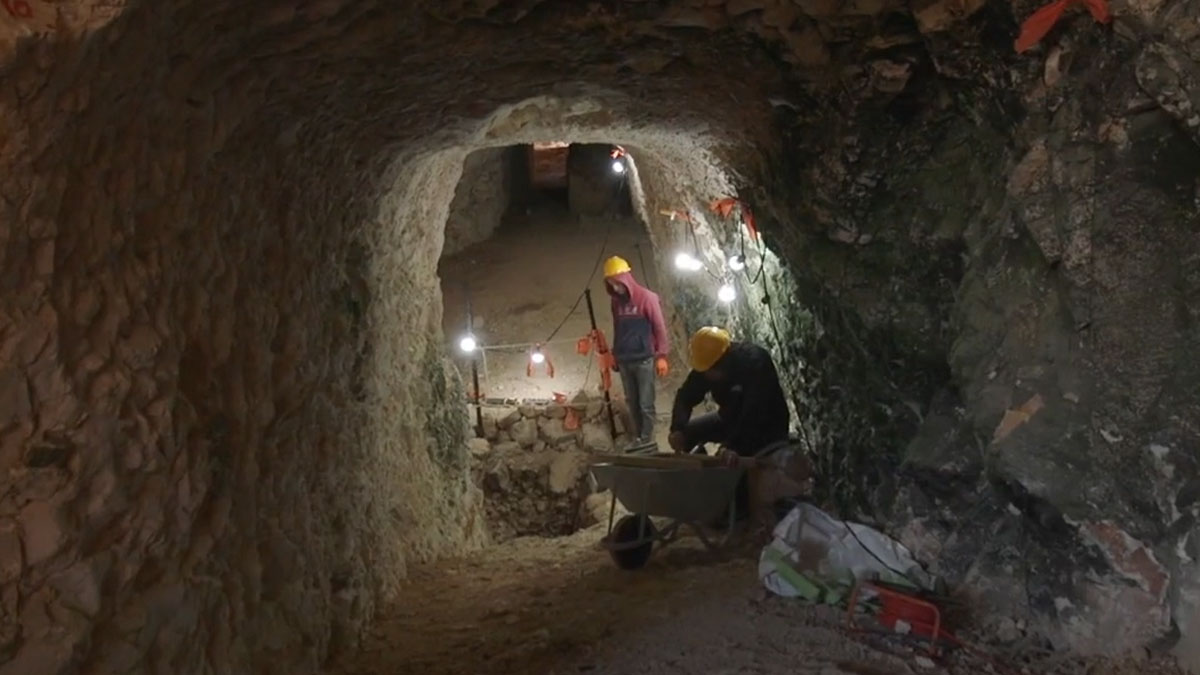
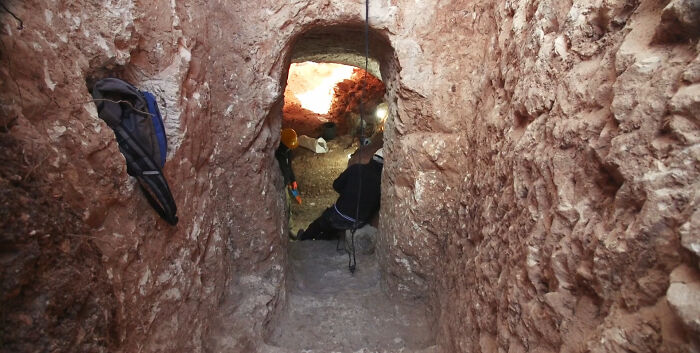
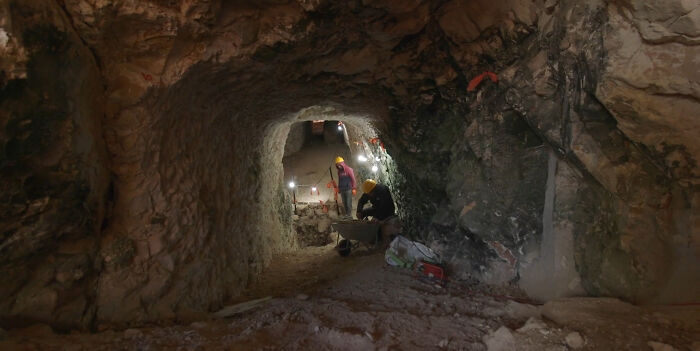
A mysterious tunnel was unearthed during a salvage excavation ahead of the construction of a new neighborhood near Kibbutz Ramat Rachel in Jerusalem. In Israel, all construction projects are required by law to include archaeological surveys, which have turned up more than a few surprises over the years, but rarely anything quite like this.
The tunnel stretches approximately 50 meters, hewn directly through rock, and comes complete with a staircase and an entrance. In some places, the ceiling reaches nearly 5 meters, roughly the height of a double-story house. This was clearly not a small or casual undertaking, and archaeologists were baffled, not understanding the tunnel’s origin or purpose.
Image credits: News1 / YouTube
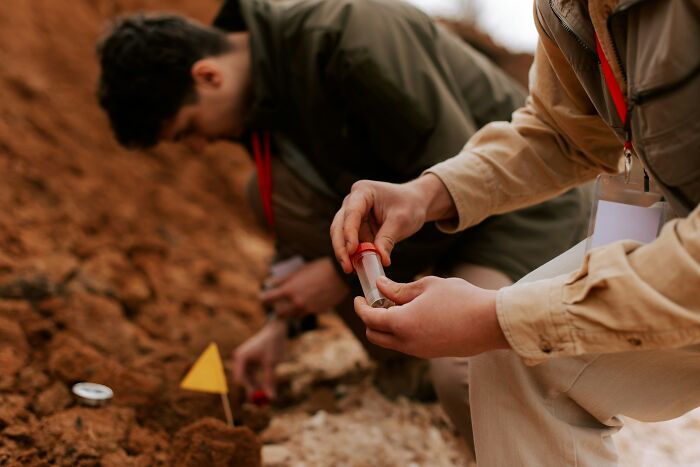
Image credits: adramirez76 / Magnific (not the actual photo)
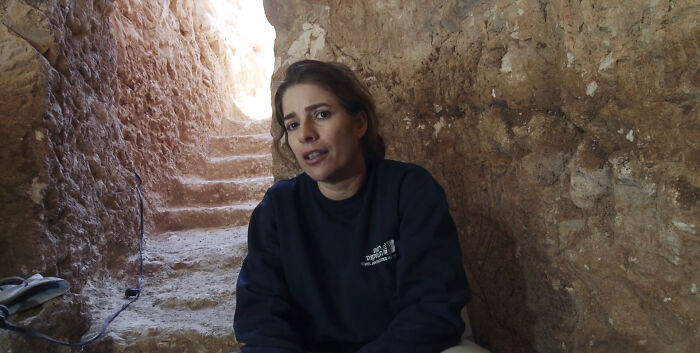
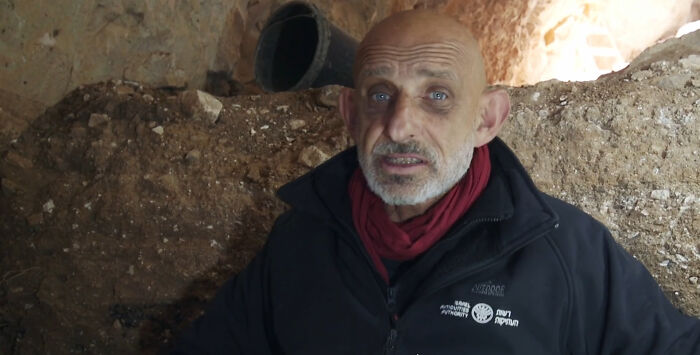
The Israel Antiquities Authority’s co-director of excavation, Zinovi Matskevich, said the scale of what they found stopped them in their tracks almost immediately. “At the beginning, we thought it might just be a natural cave, but then we realised that could not be the case,” he said.
“A huge investment of manpower and resources went into building this tunnel.” The debris filling the tunnel is estimated by experts to have accumulated over hundreds, and possibly thousands, of years, ruling out any modern origin. What remains stubbornly unclear is who built it, exactly when, and perhaps most intriguingly of all, why.
Image credits: News1 / YouTube
Image credits: News1 / YouTube
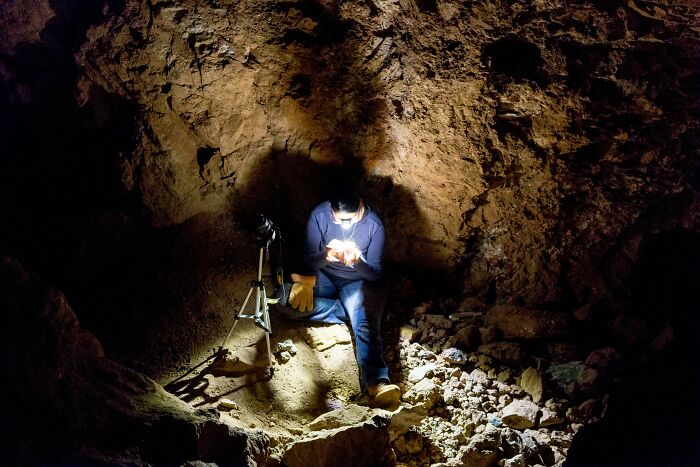
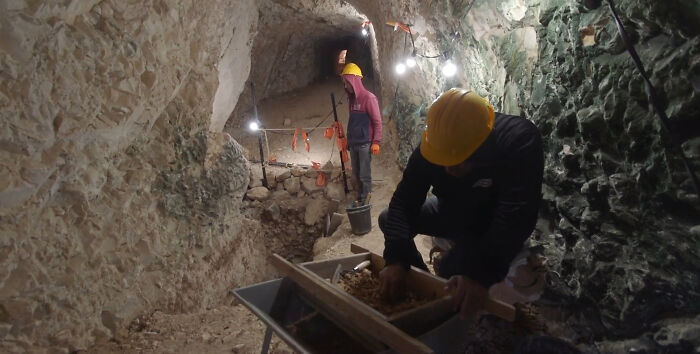
The archaeologists have not been able to fully excavate the tunnel, and may not be able to for some time. Test pits were dug at various points along its length, and pottery fragments and even prehistoric flint tools from the Neolithic period were recovered from the surrounding area. However, none of those artefacts could be directly tied to the construction of the tunnel itself, leaving the dating frustratingly inconclusive.
So what was it actually for? The leading theory right now is that the tunnel served as a quarry. Quarrying debris was found on the tunnel floor, and a shaft carved into the ceiling is consistent with ventilation systems used in ancient quarrying operations. The area around Ramat Rachel, just half a kilometer away, was continuously occupied from the Iron Age through to Islamic times.
It is home to ancient administrative buildings from both the Iron Age and Roman periods, and all of this would have required enormous quantities of stone. The tunnel, in other words, may have been the source.
Image credits: user20177777 / Magnific (not the actual photo)
Image credits: News1 / YouTube
This is not even close to the first time Jerusalem has casually produced something extraordinary in recent months. In February 2026, archaeologists stumbled upon a 2,000-year-old stone vessel factory near the City of David. Experts were tailing people who were illegally digging in the area when they realized the looters had inadvertently led them straight to a production site for ancient stone purification vessels.
And before that, in November 2025, a 2,700-year-old pottery sherd turned up during routine soil sifting near the Western Wall. It carried an Assyrian inscription, making it the first Assyrian inscription ever found in Jerusalem. The Assyrian Empire was one of the most powerful forces in the ancient world, and this tiny piece of fired clay represents the first physical, written evidence of their presence in the city.
Jerusalem is one of the most heavily excavated, most studied, most argued-over pieces of land on the entire planet. Generations of archaeologists have dedicated their careers to it. And yet it keeps producing firsts. It keeps generating discoveries that stop seasoned experts in their tracks.
Matskevich, who has spent over 20 years excavating in Jerusalem, said he had never found anything as surprising and fascinating as this tunnel. This is a man who has spent two decades digging through one of history’s most excavated cities, and he is still being surprised. That should tell you everything.
Image credits: user20177777 / Magnific (not the actual photo)
Image credits: Kateryna Hliznitsova / Unsplash (not the actual photo)
It is easy to look at ancient civilizations and picture them as primitive, people with simpler tools, simpler lives, and simpler capabilities. But discoveries like the Jerusalem tunnel have a way of dismantling that assumption. The tunnel’s near five-meter ceilings, its ventilation shaft, its staircase—these are not the marks of a people fumbling in the dark. These are the marks of people who knew exactly what they were doing.
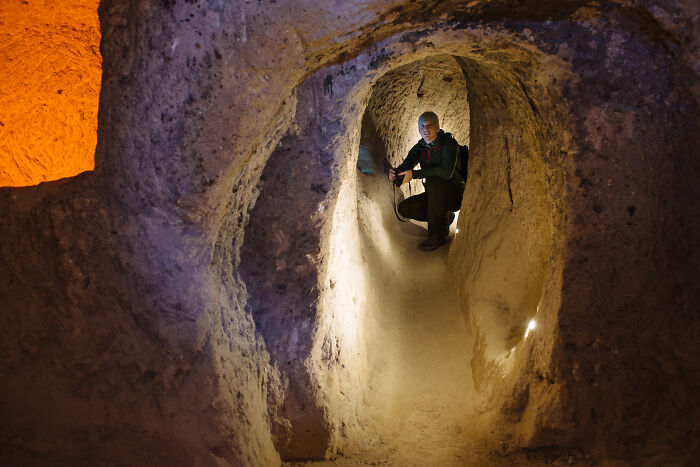
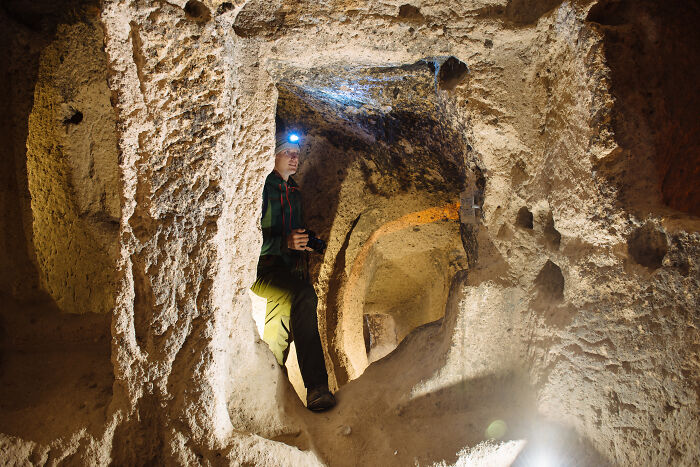
In Turkey, an entire underground city called Derinkuyu sits beneath the earth. It is 18 stories deep, stretching far enough to have once housed up to 20,000 people along with their livestock, food stores, wineries and churches. It was carved out of volcanic rock, possibly as far back as the 8th century BC, and it was only rediscovered in 1963 when a man knocked down a wall in his home and found a tunnel behind it.
An entire city. Hidden under a house. Which means the next time someone tells you there is nothing left to discover, you can tell them to go dig a little deeper.
What is the most interesting accidental discovery you have heard of? Share some details in the comments!

Any time I see ancient tunnels, I just think about how the Igigi where sick of digging so the Gods made us to do the s***e work instead. Haha
Any time I see ancient tunnels, I just think about how the Igigi where sick of digging so the Gods made us to do the s***e work instead. Haha





































 No fees, cancel anytime










30
1