Get Premium
Dark mode theme is available exclusively for premium users. Learn more about the benefits of subscribing.
No fees, cancel anytime.

 Dark Mode Ad-Free Browsing Unlimited Content
 Ad-Free Browsing Unlimited Content Dark Mode
Join 1.2 million Panda readers who get the best art, memes, and fun stories every week!

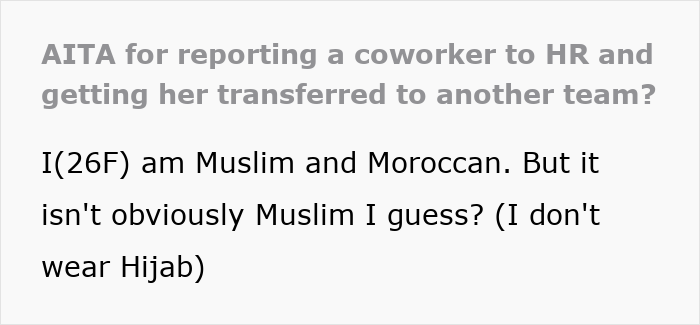
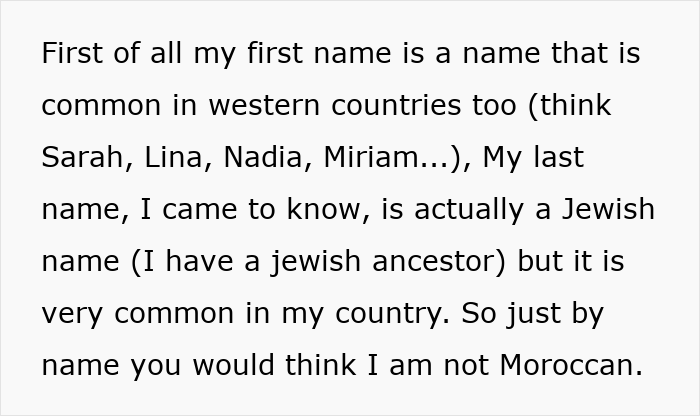
Coworkers don’t have to be friends and can disagree on things. But when their behavior is outright discriminatory, that’s crossing a red line. The Council on American Islamic Relations reports that in 2024, 15.4% of all complaints it received had to do with employment discrimination.
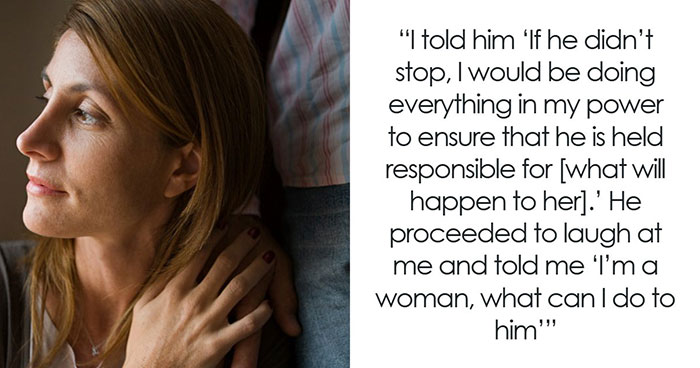
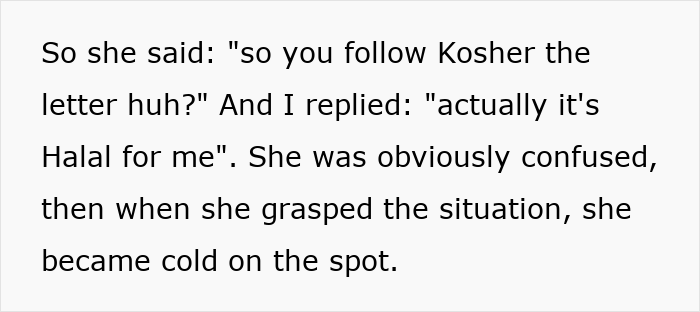
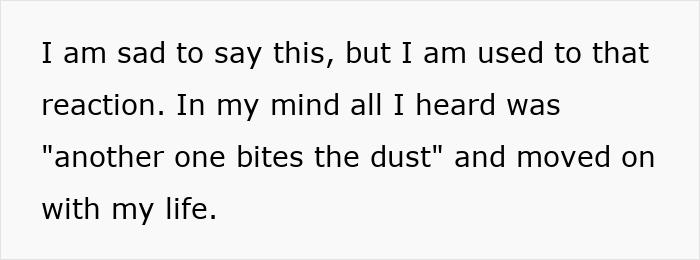
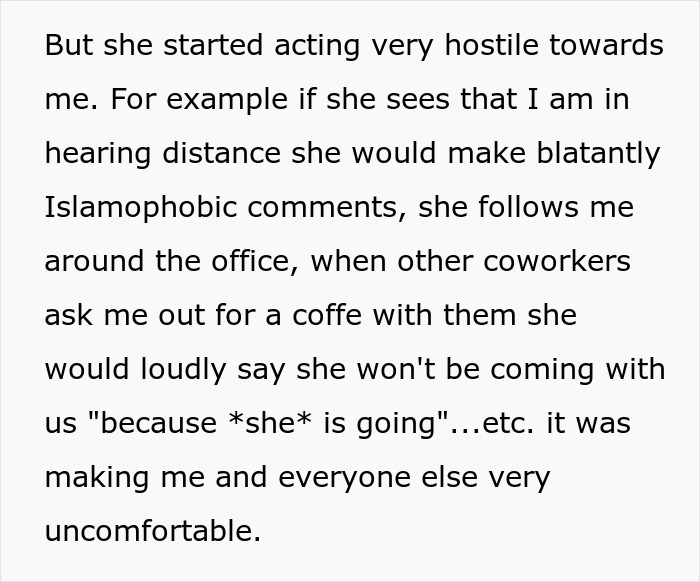
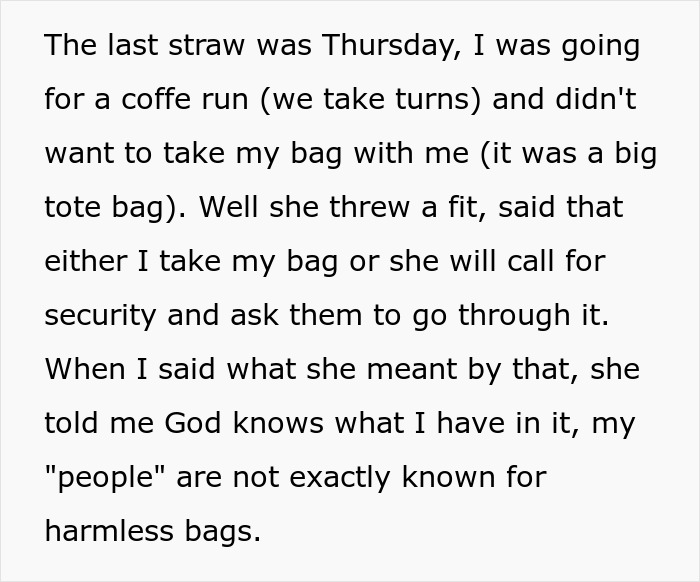
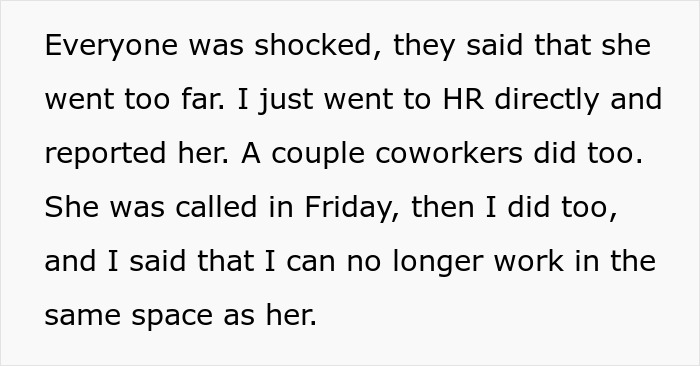
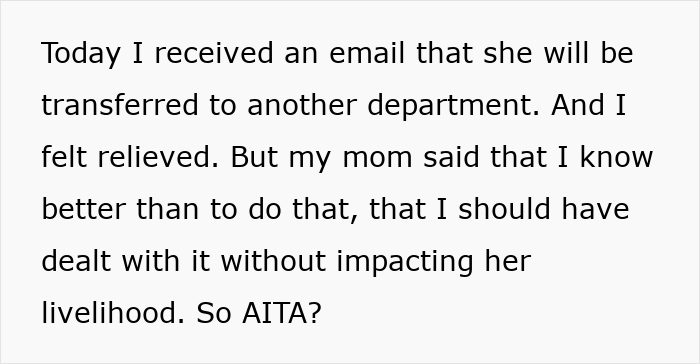
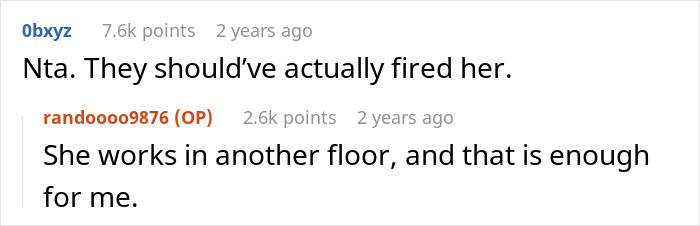
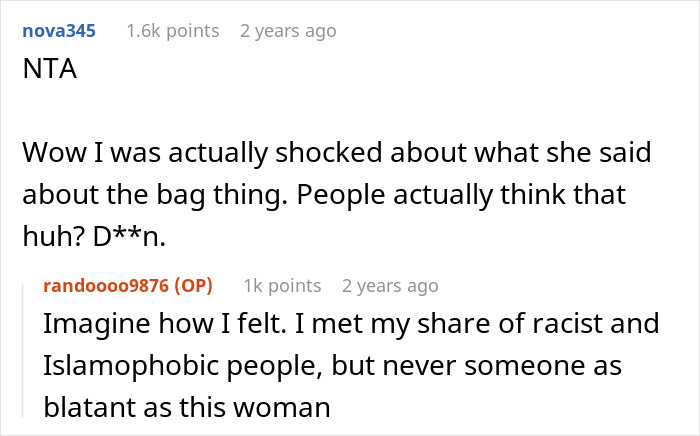
And the woman in this story would probably be part of that statistic. She faced some blatant Islamophobia at work, but refused to ignore it and just keep silent. When her coworker made a particularly nasty comment, the woman went straight to HR. And the company didn’t play about religious discrimination, either.
Image credits: Soheil Kmp (not the actual photo)
Image credits: Getty Images (not the actual photo)
Image source: randoooo9876
Image credits: Hatice Baran (not the actual photo)
The rise of Islamophobia in recent years has been alarming, and it’s a problem outside of the U.S., too. In the UK, 69% of workers say they have encountered Islamophobia at work. All across Europe, Muslims have been experiencing a surge in racism and discrimination.
According to a report by the European Union Agency for Fundamental Rights, one in two Muslims in Europe has experienced racial discrimination. The worst offenders are Austria (71%), Germany (68%), and Finland (63%).
But with U.S. employers abandoning their commitments to DEI policies during the current administration, the situation might be getting a lot worse. The Council on American-Islamic Relations (CAIR) observes that the number of complaints about discrimination in the workplace has increased since the start of the Israel-Gaza war.
Image credits: Getty Images (not the actual photo)
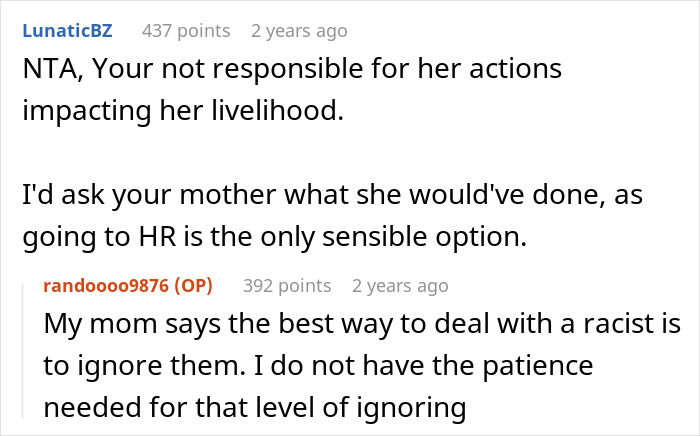
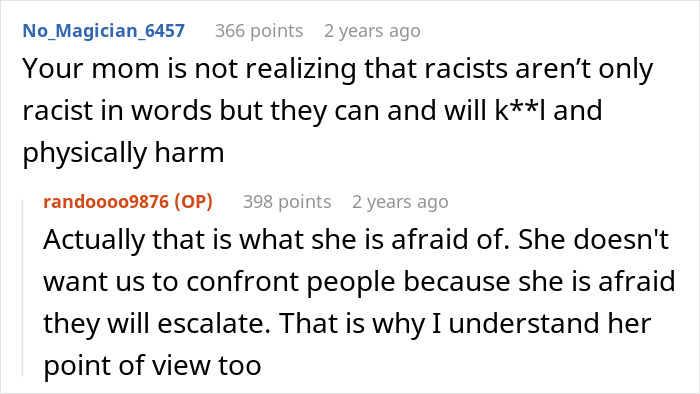
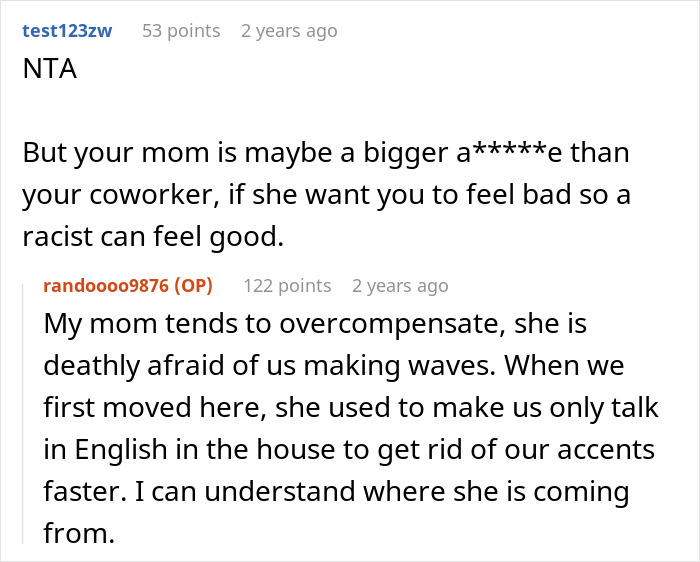
The author mentions how her mother urged her not to report her colleague to HR. She recounts how she was brought up to ignore discrimination or racist comments and to try to assimilate in America as much as possible.
Although the author chose to stand up for herself and wasn’t afraid to mention her religious practices at work, many Muslims still are. According to a 2023 report, 29% of American Muslim employees feel uncomfortable discussing their religious practices at work.
Muslim women are especially likely to say that they’re experiencing discrimination in their day-to-day life. In a 2017 Pew survey, 55% of Muslim women said they’ve had at least one discriminatory experience, while only 43% of men said the same.
Muslims in the U.S. often get mistakenly stereotyped as religious fanatics. Interestingly, according to the same Pew survey, Christian Americans exhibit very similar levels of religious commitment to Muslims.
68% of Christians say their religion has an important place in their lives. As for Muslims, 65% of the respondents said that. When it comes to attending religious services, the numbers are similar as well. 45% of Christians in the U.S. say they go to church weekly, while 43% of Muslims say the same.
Image credits: Christina @ wocintechchat.com (not the actual photo)
Educating the company and its employees is one of the most important steps in making it a discrimination- and hate-free space. A study in 2018 confirmed that the “contact hypothesis” rings true when applied to anti-Muslim views. According to the researchers, people who have never met a Muslim person are most likely to hold Islamophobic views.
Organizational psychologist Janice Gassam Asare, Ph.D., writes for Forbes that companies should bring people into the organization to educate employees about Islam and any other associated religions.
“There is, for example, a common misconception that Sikhs are Muslim; the turbans worn by Sikh men are often associated with Muslim headwear,” Asare points out.
“Bringing in speakers and having open forums where employees can candidly ask questions and learn more about different faiths can reduce the misconceptions that are perpetuated.”

By entering your email and clicking Subscribe, you're agreeing to let us send you customized marketing messages about us and our advertising partners. You are also agreeing to our Privacy Policy.
Thank you! You've successfully subscribed to newsletters!



This is the most surprising part for me. If I was in HR, I'd be very concerned about this woman. She's a walking law suit time bomb. Eventually she will say the wrong thing to the wrong person, and they will litigate.
Load More Replies... This is the most surprising part for me. If I was in HR, I'd be very concerned about this woman. She's a walking law suit time bomb. Eventually she will say the wrong thing to the wrong person, and they will litigate.
Load More Replies...

















 No fees, cancel anytime












35
44