Get Premium
Dark mode theme is available exclusively for premium users. Learn more about the benefits of subscribing.
No fees, cancel anytime.

 Dark Mode Ad-Free Browsing Unlimited Content
 Ad-Free Browsing Unlimited Content Dark Mode
Join 1.2 million Panda readers who get the best art, memes, and fun stories every week!
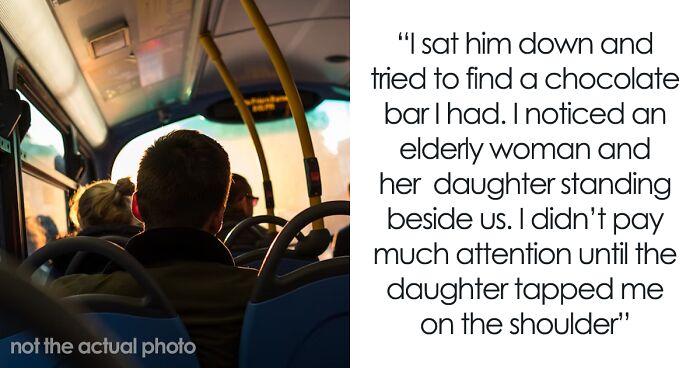
Social norms act as unwritten rules of how we should behave. And it works well most of the time. It creates mutual respect and helps maintain polite interactions. Yet sometimes it can also cause trouble between strangers.
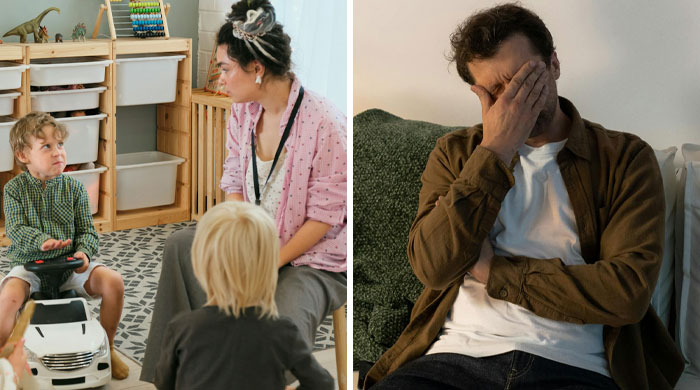
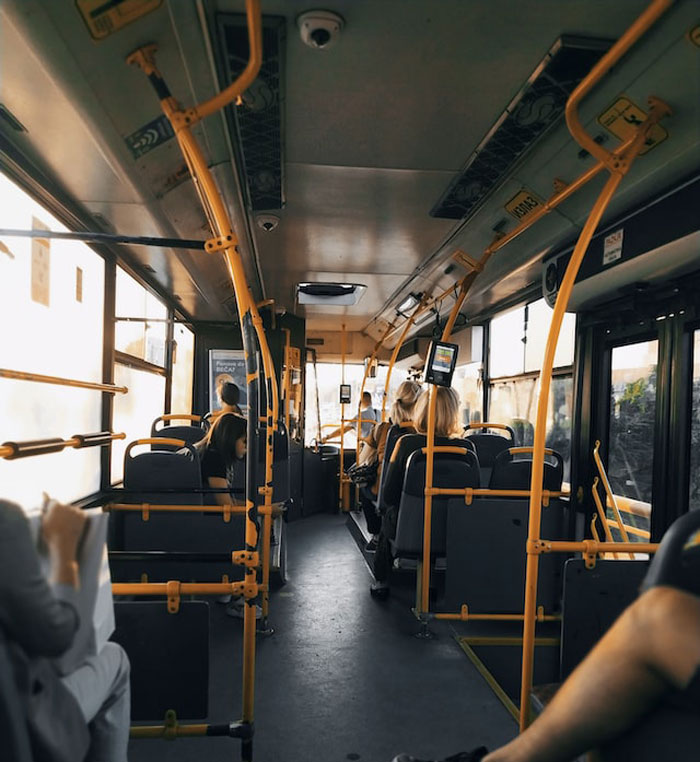
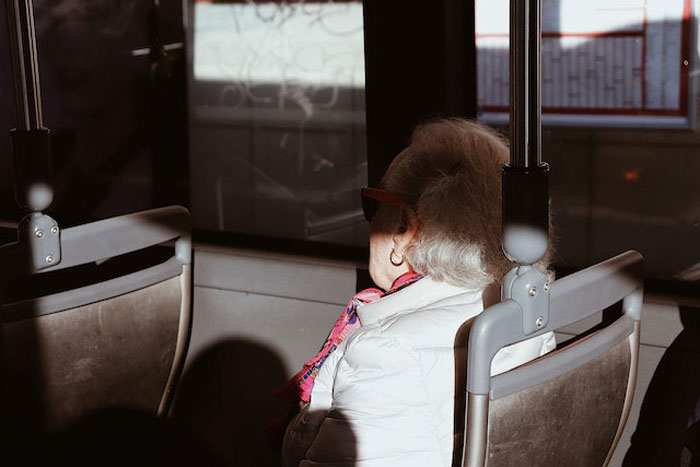
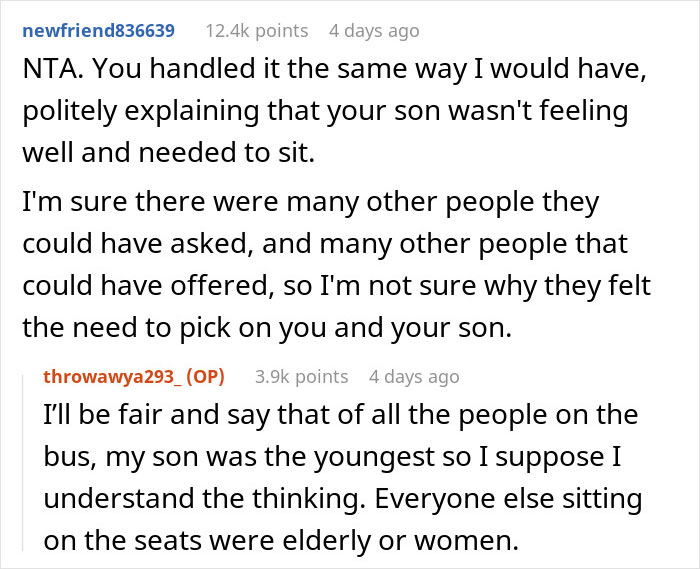
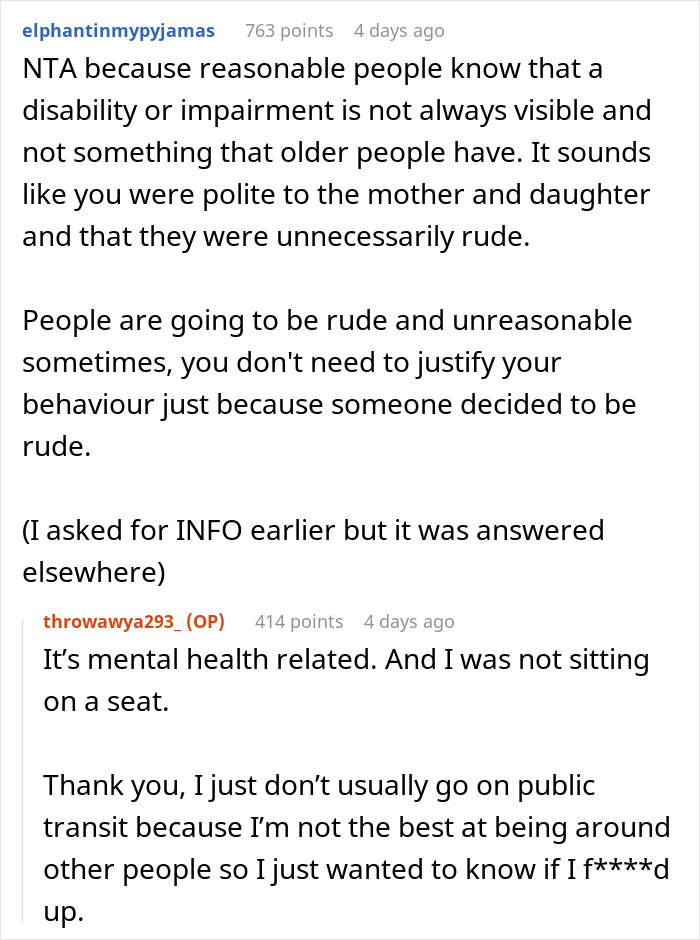
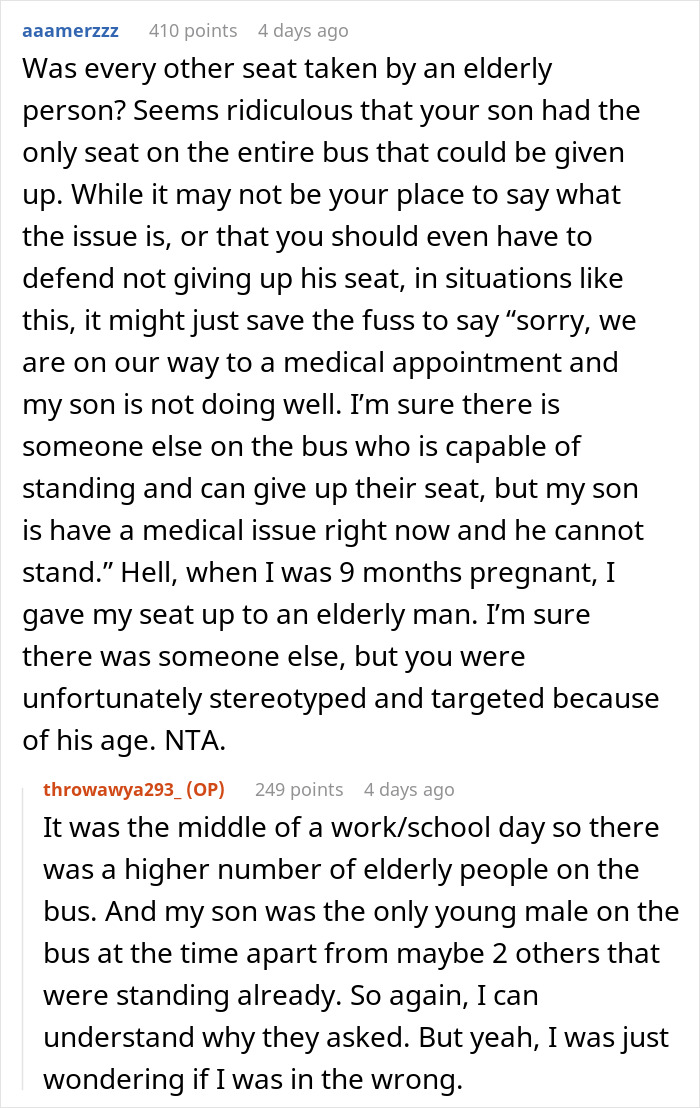
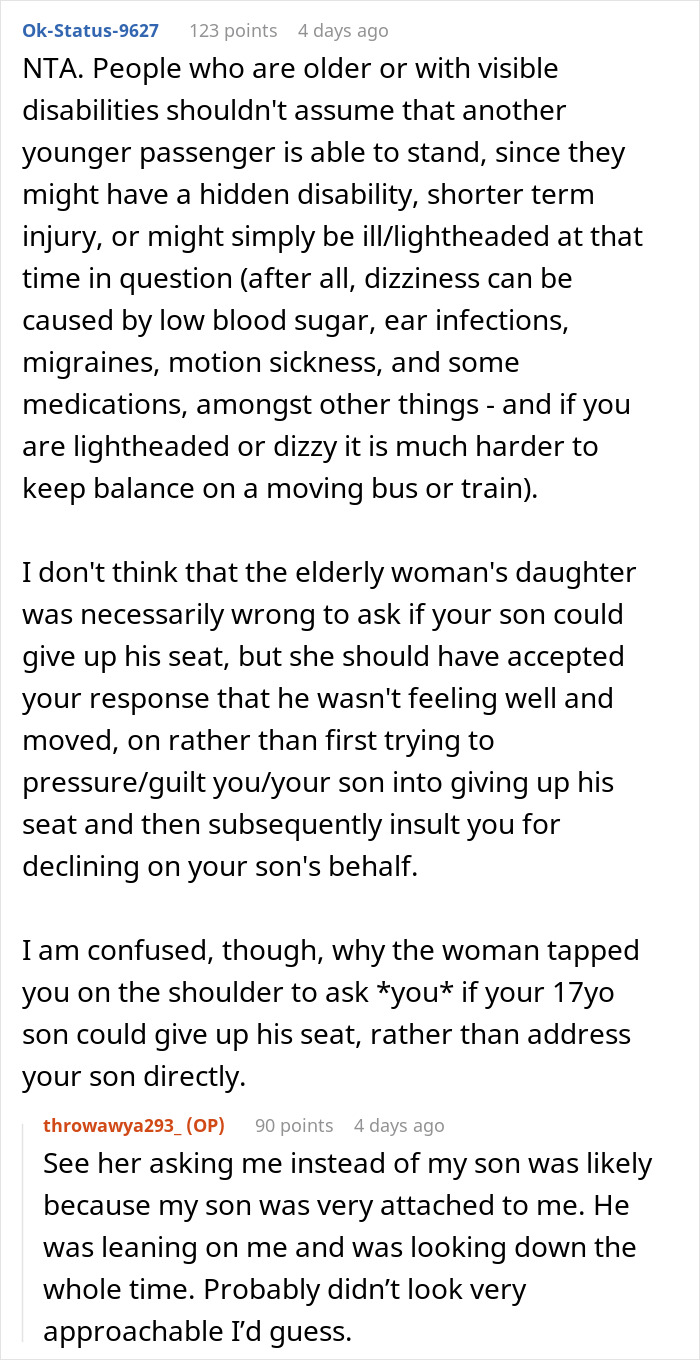
Redditor throwawya293_ opened up about an unpleasant situation on the bus after she didn’t follow such norms. Her son wasn’t feeling well, so she sat him down on the last empty seat. When an elderly lady entered the bus, the mother couldn’t force her feeble son to give it up. Unsurprisingly, people were not happy about it and they let her know.
In order to better understand the situation, Bored Panda has discussed the role empathy plays in social interactions with Dr. Michelle Lobchuk, a professor at the Rady Faculty of Health Sciences, at the University of Manitoba.
Image credits: Jun Huang (not the actual photo)
Image credits: Kiril Krsteski (not the actual photo)
Image credits: rüveyda (not the actual photo)
People on the bus expected the OP’s son to give up his seat for the elderly lady. Based on prevailing social norms, that’s the right thing to do. Such examples of common courtesy are often introduced to us as kids. Growing up, we might also start to hear the argument of being younger and stronger than some other members of our society. You have likely been in a situation yourself where you offered to help a weaker person because you could. And likely because there was a tiny voice in your head saying that you should.
Such gestures often come at the expense of your convenience. They might require suppressing feelings of selfishness. And that is likely one of the reasons people tend to judge those who refuse to conform to such social norms. The comments the OP had to listen to work as great proof of that. But in her case, she wasn’t being selfish for her own good. The woman had her kid’s best interests at heart, which is why she decided to take the heat from the people rather than force him to get out of his seat.
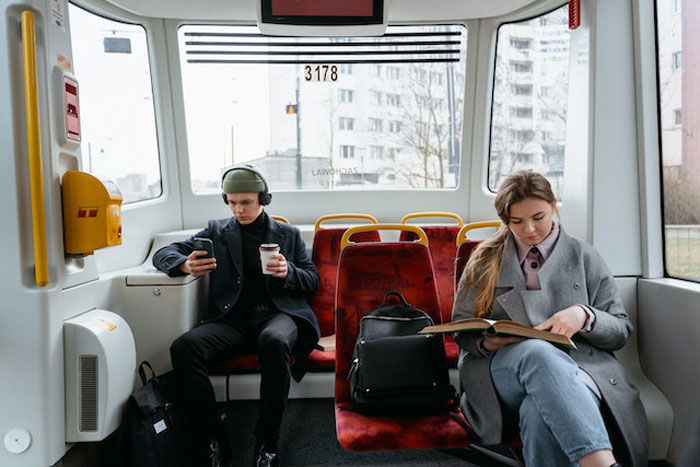
Image credits: MART PRODUCTION (not the actual photo)
Even after she told the elderly lady and her daughter that her son wasn’t feeling well, they didn’t seem to empathize with the young man. They said that they saw him standing before, but, as the saying goes, you shouldn’t judge a book by its cover. Sometimes people might be going through difficulties, making social norms the last thing on their minds.
You might not know that something’s wrong, but in cases you do (as the two women did), it’s important to imagine walking a mile in their shoes. Being able to empathize with others starts with looking at yourself first.
Dr. Michelle Lobchuk expanded on this thought in an interview with Bored Panda: “To achieve an empathic connection with strangers, a person needs to always start with understanding oneself. We have to take care that we do not judge strangers by our biases, stereotypes or prejudices—this is why self-reflection is key to taking an empathic stance with others.”
“Knowing oneself first helps us to see others better by controlling our own reactions from influencing our understanding of others. Empathy helps us to focus on seeing and hearing others and not our inner self during the encounter,” she added.

Image credits: Kindel media (not the actual photo)
Our ability to empathize with others depends on numerous factors. Dr. Michelle Lobchuk distinguished four main ones that include our a) past experiences (our experiences in similar situations or with others), b) prejudice (preconceived opinions not based on reason or actual experience), c) feelings (stress, fatigue, fear can result in less energy or motivation to engage in empathy), and d) environment (for example, time, tasks, information overload, masks/technology, less in-person communication, family dynamics). “These factors can distract or inhibit our ability or motivation to engage in the empathic stance,” she said.
Sometimes, even if you feel for others, you might have to prioritize things and choose the lesser of the two evils. The OP cared more for the well-being of her son and didn’t receive much compassion for it. And even though she herself tried empathizing with the other side—she saw how tired the elderly lady looked and felt bad—she couldn’t force herself to follow the social norms at the expense of her son. That shows that these norms can be a morally confusing question.
“Empathy is intentional and requires conscious effort. It starts with self-reflection that helps us to ‘own’ our thoughts and reactions that can influence our connections with others. The conscious empathic stance helps others to see that we are at least ‘trying’ to understand their viewpoints without judgment but from a place of ‘curiosity’,” Dr. Michelle Lobchuk said.
Following social norms usually means treating others with respect. But that is a two-way street, and both sides should always try to consider each other’s feelings.


There's some pretty heavy misogyny to suggest that one of the women sitting couldn't stand up for this elderly woman. The rule is to prioritize seating for the elderly and the less able bodied. So if an enable bodied woman sees an elderly person standing then they are the AH for not offering the seat and the people asking the young boy and hearing of his difficulties are the AH for not asking one those ladies. This is what equality means. Live in the world we should all be fighting to live in.

From what is told it sounds like it's much more ageism than misogyny, he was the youngest one so didn't deserve that seat. Don't get me wrong, both do play a part there.
Load More Replies...
And this is why I just loudly ask “is anyone able to give up a seat?” While gesturing to my cane, when on transit. You never know what someone else is dealing with; not all disabilities are visible. And ability can vary, day to day but even hour to hour in a single day. OP is NTA.

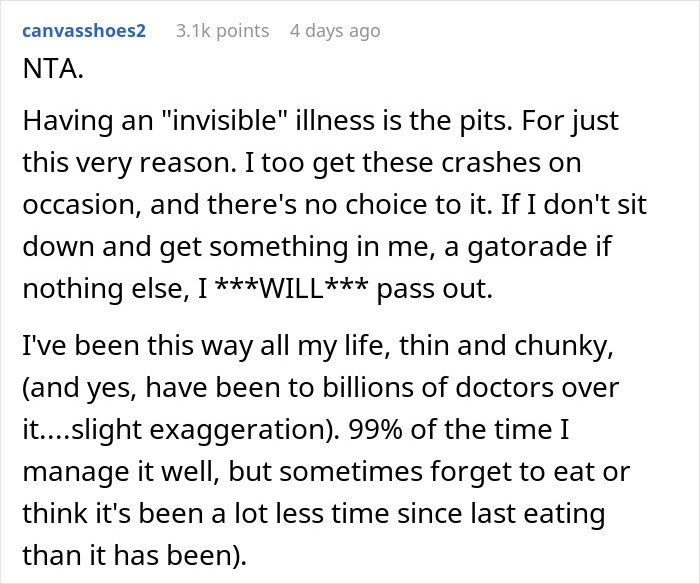
I completely agree. My disability, multiple sclerosis, is "invisible". Some days I can barely get out of bed because of the symptoms. Other days it's not as bad. I get dirty looks from some people when I get out of my truck that's parked in a handicapped parking spot.♿ Maybe some people believe that if you aren't using a wheelchair, you shouldn't park there. The funny thing is that there were 10 years that I was using a wheelchair. During those years I rarely parked in those spots.
Load More Replies...
Why didn't they just ask someone else? This is strange. Or if the conversation kept going on this long, I would like to think that someone else would have heard and given their seat.
Ageism in that believing that young people can't have any ailments, thus they don't deserve any seats if an older person is there.
Load More Replies...
The younger you are the more people assume you must be in perfect health, ignoring that they could have an invisible disability, disorder, health condition. Some people just can't see or consider anything that goes past their minds and eyes.

When i was ~16 I was on crutches after a surgery and some lady in a train demand of me that I must give her my seat.... so yea.. ppl gonna be ppl

Yep. I was once the only person giving up my seat to a person getting on with crutches - I had been in an accident and had bruises and a broken arm. Lots of healthy looking young people remained sitting. Surely, one of them must have been fitter than me by the law of averages! Then when the person with crutches got off I reclaimed my seat and someone else getting on was annoyed about it! I know I can stand but you do get jolted and have to hold on and it's not that easy.
Load More Replies...

oh dang the amount I feel this is horrible. I can't use public transit as there aren't really any around me sadly, but I feel like this would happen to me. I have foot issues, which causes me huge amounts of pain. I feel like my anxiety wouldn't be able to decide which is the better option in this case

The problem with hidden disabilities/illnesses/conditions is people can't see them, and so don't even think about them being a possibility. A very handy thing is a collapsible walking stick. It gives a people a visual signal the individual might need a accommodation. This works for people who don't need a mobility aid.
Load More Replies... NTA What a shame this didn't happen in Rome! The whole bus would have gotten involved, stuff being said getting further and further from the original discussion, and truth, EPIC! Just the fact that you were standing, and he was sitting, should have told them he was really not well.

I wpuld have defended her and her son. This would happen to me when I was younger - it was as if I couldn't be sick because of age? I passed out 20+ times a day until *I* figured out what to do about it and that included not getting up if I felt bad. But I looked okay until the moment hit, so...

Why didn't the woman who criticized mom give up HER seat to the elderly woman?!


Sometimes a situation sucks and can't be helped... :( But one still can't just assume someone's condition if they don't know shĬt about them.

When I had had surgery, my doctor especially told me to not stand at trams for over a month. I was young at the time so I did get my fair share of older, mainly women, giving me dirty looks or right out demanding my seat. Giving the answer that "doctor ordered me, so I won't pull my stitches and literally spill my guts" often worked tho. I've heard of younger, very visibly disabled people being harassed by these elders with karenitis

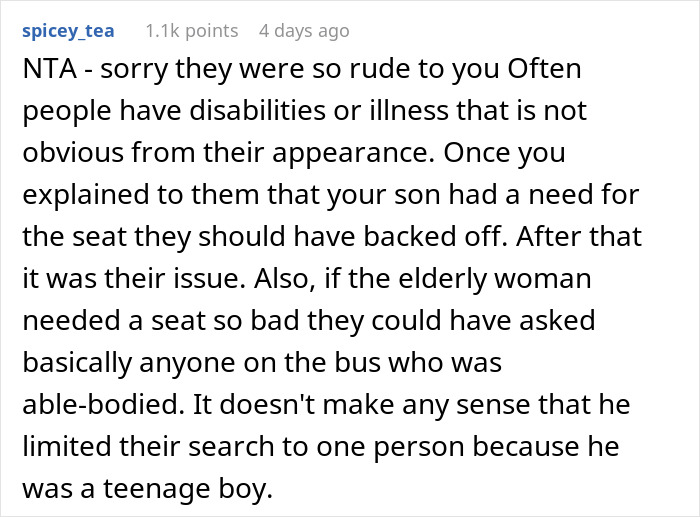
NTA there were other people to ask if standing really was an issue for the elderly.

And I suppose every other seat was taken by an old pregnant disabled person? Otherwise there is no reason for them to be so hung up on you.

I feel like we are just glossing over the fact that another woman mentioned something, like why didn't that woman give up HER seat if she felt so strongly about it? And if the kid was leaning against the mother not looking "approachable " then it seems to me that it would be obvious something was wrong and he wasn't just a healthy teenager.


Entitled senior citizens make me crazy. The child wasn't sitting in a designated handicapped / senior seat, whoever was should have offered their seat. i had both feet in casts and was using crutches. Three shuttle buses for seniors and handicapped came and went. The seniors pushed me preventing me from boarding. Security personnel had to hold them back so I could board. Also, i witnessed two older women look down their noses at a blind man while he helplessly flailed about on the subway; wildly waving his cane, unable to get his balance. Seats are reserved for people in need. An able bodied older person doesn't need the seat. When i was recovering from foot and leg problems and clearly disabled, faster seniors beat me to the reserved seat. They complained bitterly if others made accommodations for me. My parent's generation - age 75+, can be incredible jerks. Now in my 60's, I cannot imagine behaving so cruelly.

You would think people would know invisible illnesses are a thing! I have a handicap hang tag, and I'm always worried when I use it that somebody will "call" me out for it. Having it is such a blessing for me, and allows me to do more. Just because somebody looks healthy doesn't mean that they are!

NTA I was once asked to give up my seat. I was 7 months pregnant and had a 2 yr old with me. She had a broken arm. I got my toddler to sit on my knee but she was so rude about it. She didn't realise I was pregnant. So I let my son sit and I stood making sure my bump was in her face. It still pisses me off to this day and the child I was pregnant with is 16!
Argh, this is one of those ones that already know they're not the a*****e, they just want sympathy

While it is polite to offer your seat to an elderly person, you are not obligated to do so. The sense of entitlement blows my mind. You can ask, don't demand.


The son and mom was in the right. But at the same time, I wonder how much the son was actually "out of it" and how much was mom just needing to cut the umbilical cord. But if he was truly "out of it", then NTA
Mental health condition and forgets to eat? Sounds like anorexia to me. And until they accept their condition (like addicts) denial is massive. Cutting the cord, could mean literal life/death.
Load More Replies...
Just keep doing what any mother would do and that is taking good care of your son. God knows the truth 🙏🏽

Had the son stood up and fainted no one on that bus would be going anywhere soon. The bus driver would be obliged to call paramedics for insurance reasons and they'd all be parked up until they arrived and got done with their stuff. I have invisible illnesses too and have fainted in this scenario because I felt pressured to give up my seat. The other passengers were pissed when they had to get off and get the next bus as mine was parked up with my head injury and waiting for the ambulance.

I have had seizures (Epilepsy) most of my life and 99% of the time avoid public transport. But sometimes I have no choice but to do so. In the UK I suffer - mostly - glares and muttering if I'm on a crowded bus/train - especially when I am in a disabled seat (if there are no others available). Now I'm pushing 60, it doesn't happen as much but I'm not physically frail-looking, so... invisible disabilities/illnesses can be the pits in public, so NTA.
This makes me feel better about when I was re-learning how to walk after breaking my foot and would frantically explained this to every older person that got on the bus when there were no seats left. I was terrified that people were silently judging me, looks like I was probably right. I could walk carefully and gently on stable ground, but if the bus shifted and I stepped down hard on my foot I could do damage. One day there were already no seats left at my stop and I literally sat on the filthy floor rather than risk injury.


Why didn’t the husband set the example and give the elderly woman his seat? Better yet, why didn’t the mother of she was feeling fine.


So the bus was full? That's what, 40 people and they ask for your sick son to give up his seat? No a single other person offered after hearing this interaction? NTA! The AH are this woman and other people on the bus! Hope your son gets better soon.

Invisible illness is just vile. I have 3 chronic illnesses. 2 of which are physical. But I have no way (nor should I have to) of proving them to encourage people to give up a seat. I could have taken a specific disabled bus the other week, but didn’t because I felt like a fraud. Just be nice. You usually have no clue what others are dealing with. My boss of 11 years still can’t grasp it! What hope do strangers have? I do think the disabled symbol needs an update though as it only covers what you can see, not what you can’t.

I need to know something... was OP herself seated during this? The fact that she says her son "leaned against her" suggests she was. in which case, why didn't SHE offer HER seat? I've had to sit next to strangers many times in my life growing up when my mother would at least stand offer the seat next to me, when I was unwell. (I've suffered lifelong chronic pain conditions) The kid didn't have to move, but if OP was also seated, she could have. That said, the elderly do need to stop thinking the world revolves around them and that younger people can't be ill or in pain. e_e

The OP was standing up like the two other women.
Load More Replies... One of the many reasons I'm terrified to take the bus as a young woman with dysautonomia. You can't tell by looking at me that something is wrong, unless you happen to catch me falling down and shaking uncontrollably. I guess I've gotten to the point though where I would literally tell someone to f**k off if they gave me a hard time and also explain to them that I wish they could be trapped in my body for just one day.

Invisible illnesses are terrible when you need to use accommodation, especially when you're young... because so many people automatically assume you're either being lazy or are deliberately being horrible. So many people seem to think that if you don't use a wheelchair, a cane, or a service animal... you must not have a disability.

"What is he, the only person on this bus? Ask someone else, he's about to pass out. There are many others you can ask." Just because someone is young it doesn't mean they can't ever get sick. Hell, I had arthritis when I was 5 and couldn't walk, I had to be put in traction in the hospital for a week and then get physical therapy to walk again. I could not have stood for the world, let alone an entitled b*tch like that.


I have had episodes like the son on and off during my life. They got especially bad after I got diagnosed with diabetes. If I am extremely hungry, I will get dizzy and lightheaded and feel like I am going to pass out. The way the mother explained it, most people would have noticed that something was wrong with the boy and left them alone. She said that the boy was leaning against her and looking down. To me, that would mean that he was sick or something. The way I see it is if the old woman had the energy to cuss at someone, she had the energy to stand. The other person that said something when they got off the bus could have given up their seat if they were so concerned about the old woman. Not all disabilities are visible and we need to be respectful to everyone and stop assuming that people are perfectly healthy.


Unless everyone else sitting down was pregnant, elderly, disabled or injured . . . If he was really the only guy I'd suggest sitting cross legged on the ground but it seems unlikely that was called for




There's some pretty heavy misogyny to suggest that one of the women sitting couldn't stand up for this elderly woman. The rule is to prioritize seating for the elderly and the less able bodied. So if an enable bodied woman sees an elderly person standing then they are the AH for not offering the seat and the people asking the young boy and hearing of his difficulties are the AH for not asking one those ladies. This is what equality means. Live in the world we should all be fighting to live in.
From what is told it sounds like it's much more ageism than misogyny, he was the youngest one so didn't deserve that seat. Don't get me wrong, both do play a part there.
Load More Replies... And this is why I just loudly ask “is anyone able to give up a seat?” While gesturing to my cane, when on transit. You never know what someone else is dealing with; not all disabilities are visible. And ability can vary, day to day but even hour to hour in a single day. OP is NTA.
I completely agree. My disability, multiple sclerosis, is "invisible". Some days I can barely get out of bed because of the symptoms. Other days it's not as bad. I get dirty looks from some people when I get out of my truck that's parked in a handicapped parking spot.♿ Maybe some people believe that if you aren't using a wheelchair, you shouldn't park there. The funny thing is that there were 10 years that I was using a wheelchair. During those years I rarely parked in those spots.
Load More Replies... Why didn't they just ask someone else? This is strange. Or if the conversation kept going on this long, I would like to think that someone else would have heard and given their seat.
Ageism in that believing that young people can't have any ailments, thus they don't deserve any seats if an older person is there.
Load More Replies... The younger you are the more people assume you must be in perfect health, ignoring that they could have an invisible disability, disorder, health condition. Some people just can't see or consider anything that goes past their minds and eyes.
When i was ~16 I was on crutches after a surgery and some lady in a train demand of me that I must give her my seat.... so yea.. ppl gonna be ppl
Yep. I was once the only person giving up my seat to a person getting on with crutches - I had been in an accident and had bruises and a broken arm. Lots of healthy looking young people remained sitting. Surely, one of them must have been fitter than me by the law of averages! Then when the person with crutches got off I reclaimed my seat and someone else getting on was annoyed about it! I know I can stand but you do get jolted and have to hold on and it's not that easy.
Load More Replies... oh dang the amount I feel this is horrible. I can't use public transit as there aren't really any around me sadly, but I feel like this would happen to me. I have foot issues, which causes me huge amounts of pain. I feel like my anxiety wouldn't be able to decide which is the better option in this case
The problem with hidden disabilities/illnesses/conditions is people can't see them, and so don't even think about them being a possibility. A very handy thing is a collapsible walking stick. It gives a people a visual signal the individual might need a accommodation. This works for people who don't need a mobility aid.
Load More Replies... NTA What a shame this didn't happen in Rome! The whole bus would have gotten involved, stuff being said getting further and further from the original discussion, and truth, EPIC! Just the fact that you were standing, and he was sitting, should have told them he was really not well.
I wpuld have defended her and her son. This would happen to me when I was younger - it was as if I couldn't be sick because of age? I passed out 20+ times a day until *I* figured out what to do about it and that included not getting up if I felt bad. But I looked okay until the moment hit, so...
Why didn't the woman who criticized mom give up HER seat to the elderly woman?!
Sometimes a situation sucks and can't be helped... :( But one still can't just assume someone's condition if they don't know shĬt about them.
When I had had surgery, my doctor especially told me to not stand at trams for over a month. I was young at the time so I did get my fair share of older, mainly women, giving me dirty looks or right out demanding my seat. Giving the answer that "doctor ordered me, so I won't pull my stitches and literally spill my guts" often worked tho. I've heard of younger, very visibly disabled people being harassed by these elders with karenitis
NTA there were other people to ask if standing really was an issue for the elderly.
And I suppose every other seat was taken by an old pregnant disabled person? Otherwise there is no reason for them to be so hung up on you.
I feel like we are just glossing over the fact that another woman mentioned something, like why didn't that woman give up HER seat if she felt so strongly about it? And if the kid was leaning against the mother not looking "approachable " then it seems to me that it would be obvious something was wrong and he wasn't just a healthy teenager.
Entitled senior citizens make me crazy. The child wasn't sitting in a designated handicapped / senior seat, whoever was should have offered their seat. i had both feet in casts and was using crutches. Three shuttle buses for seniors and handicapped came and went. The seniors pushed me preventing me from boarding. Security personnel had to hold them back so I could board. Also, i witnessed two older women look down their noses at a blind man while he helplessly flailed about on the subway; wildly waving his cane, unable to get his balance. Seats are reserved for people in need. An able bodied older person doesn't need the seat. When i was recovering from foot and leg problems and clearly disabled, faster seniors beat me to the reserved seat. They complained bitterly if others made accommodations for me. My parent's generation - age 75+, can be incredible jerks. Now in my 60's, I cannot imagine behaving so cruelly.
You would think people would know invisible illnesses are a thing! I have a handicap hang tag, and I'm always worried when I use it that somebody will "call" me out for it. Having it is such a blessing for me, and allows me to do more. Just because somebody looks healthy doesn't mean that they are!
NTA I was once asked to give up my seat. I was 7 months pregnant and had a 2 yr old with me. She had a broken arm. I got my toddler to sit on my knee but she was so rude about it. She didn't realise I was pregnant. So I let my son sit and I stood making sure my bump was in her face. It still pisses me off to this day and the child I was pregnant with is 16!
Argh, this is one of those ones that already know they're not the a*****e, they just want sympathy
While it is polite to offer your seat to an elderly person, you are not obligated to do so. The sense of entitlement blows my mind. You can ask, don't demand.
The son and mom was in the right. But at the same time, I wonder how much the son was actually "out of it" and how much was mom just needing to cut the umbilical cord. But if he was truly "out of it", then NTA
Mental health condition and forgets to eat? Sounds like anorexia to me. And until they accept their condition (like addicts) denial is massive. Cutting the cord, could mean literal life/death.
Load More Replies... Just keep doing what any mother would do and that is taking good care of your son. God knows the truth 🙏🏽
Had the son stood up and fainted no one on that bus would be going anywhere soon. The bus driver would be obliged to call paramedics for insurance reasons and they'd all be parked up until they arrived and got done with their stuff. I have invisible illnesses too and have fainted in this scenario because I felt pressured to give up my seat. The other passengers were pissed when they had to get off and get the next bus as mine was parked up with my head injury and waiting for the ambulance.
I have had seizures (Epilepsy) most of my life and 99% of the time avoid public transport. But sometimes I have no choice but to do so. In the UK I suffer - mostly - glares and muttering if I'm on a crowded bus/train - especially when I am in a disabled seat (if there are no others available). Now I'm pushing 60, it doesn't happen as much but I'm not physically frail-looking, so... invisible disabilities/illnesses can be the pits in public, so NTA.
This makes me feel better about when I was re-learning how to walk after breaking my foot and would frantically explained this to every older person that got on the bus when there were no seats left. I was terrified that people were silently judging me, looks like I was probably right. I could walk carefully and gently on stable ground, but if the bus shifted and I stepped down hard on my foot I could do damage. One day there were already no seats left at my stop and I literally sat on the filthy floor rather than risk injury.
Why didn’t the husband set the example and give the elderly woman his seat? Better yet, why didn’t the mother of she was feeling fine.
So the bus was full? That's what, 40 people and they ask for your sick son to give up his seat? No a single other person offered after hearing this interaction? NTA! The AH are this woman and other people on the bus! Hope your son gets better soon.
Invisible illness is just vile. I have 3 chronic illnesses. 2 of which are physical. But I have no way (nor should I have to) of proving them to encourage people to give up a seat. I could have taken a specific disabled bus the other week, but didn’t because I felt like a fraud. Just be nice. You usually have no clue what others are dealing with. My boss of 11 years still can’t grasp it! What hope do strangers have? I do think the disabled symbol needs an update though as it only covers what you can see, not what you can’t.
I need to know something... was OP herself seated during this? The fact that she says her son "leaned against her" suggests she was. in which case, why didn't SHE offer HER seat? I've had to sit next to strangers many times in my life growing up when my mother would at least stand offer the seat next to me, when I was unwell. (I've suffered lifelong chronic pain conditions) The kid didn't have to move, but if OP was also seated, she could have. That said, the elderly do need to stop thinking the world revolves around them and that younger people can't be ill or in pain. e_e
The OP was standing up like the two other women.
Load More Replies... One of the many reasons I'm terrified to take the bus as a young woman with dysautonomia. You can't tell by looking at me that something is wrong, unless you happen to catch me falling down and shaking uncontrollably. I guess I've gotten to the point though where I would literally tell someone to f**k off if they gave me a hard time and also explain to them that I wish they could be trapped in my body for just one day.
Invisible illnesses are terrible when you need to use accommodation, especially when you're young... because so many people automatically assume you're either being lazy or are deliberately being horrible. So many people seem to think that if you don't use a wheelchair, a cane, or a service animal... you must not have a disability.
"What is he, the only person on this bus? Ask someone else, he's about to pass out. There are many others you can ask." Just because someone is young it doesn't mean they can't ever get sick. Hell, I had arthritis when I was 5 and couldn't walk, I had to be put in traction in the hospital for a week and then get physical therapy to walk again. I could not have stood for the world, let alone an entitled b*tch like that.
I have had episodes like the son on and off during my life. They got especially bad after I got diagnosed with diabetes. If I am extremely hungry, I will get dizzy and lightheaded and feel like I am going to pass out. The way the mother explained it, most people would have noticed that something was wrong with the boy and left them alone. She said that the boy was leaning against her and looking down. To me, that would mean that he was sick or something. The way I see it is if the old woman had the energy to cuss at someone, she had the energy to stand. The other person that said something when they got off the bus could have given up their seat if they were so concerned about the old woman. Not all disabilities are visible and we need to be respectful to everyone and stop assuming that people are perfectly healthy.
Unless everyone else sitting down was pregnant, elderly, disabled or injured . . . If he was really the only guy I'd suggest sitting cross legged on the ground but it seems unlikely that was called for





















 No fees, cancel anytime
















112
89