Get Premium
Dark mode theme is available exclusively for premium users. Learn more about the benefits of subscribing.
No fees, cancel anytime.

 Dark Mode Ad-Free Browsing Unlimited Content
 Ad-Free Browsing Unlimited Content Dark Mode
Join 1.2 million Panda readers who get the best art, memes, and fun stories every week!
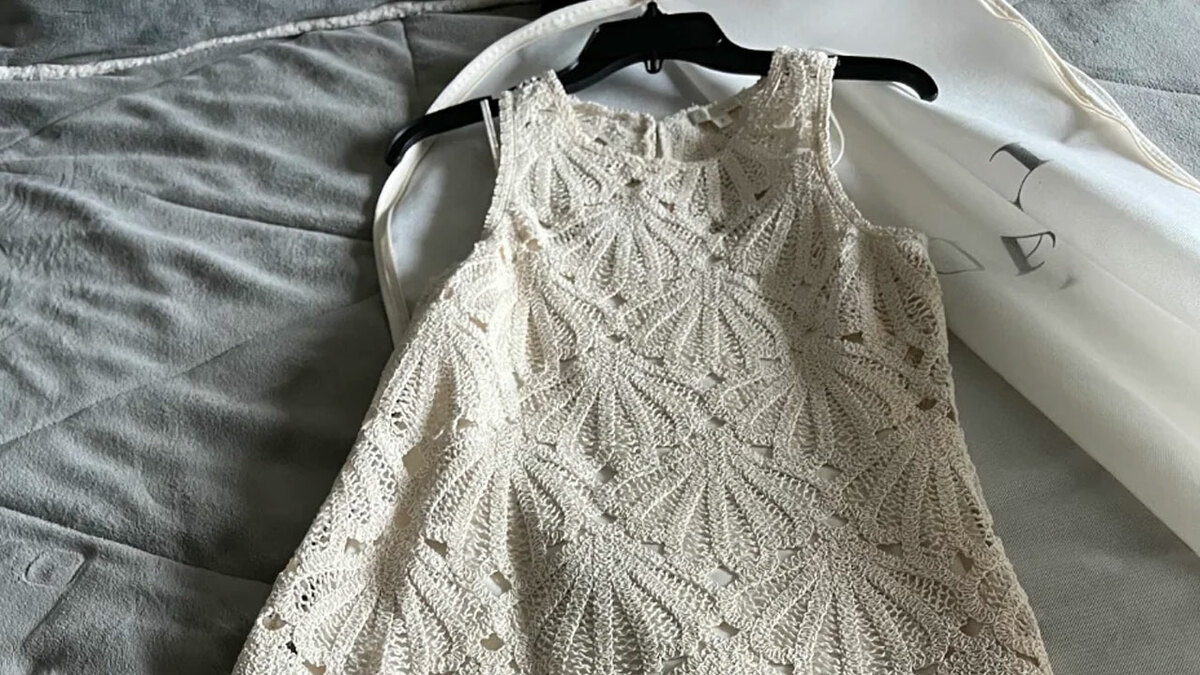
Weddings have a penchant for turning ordinary family preferences into much bigger questions about who gets a say. A dress can become a statement, a dinner reservation can become a negotiation, and an invitation can suddenly feel like a referendum on a family relationship. For couples who planned an intimate ceremony, those tensions can be especially difficult because there are fewer traditional wedding events to absorb everyone’s expectations.
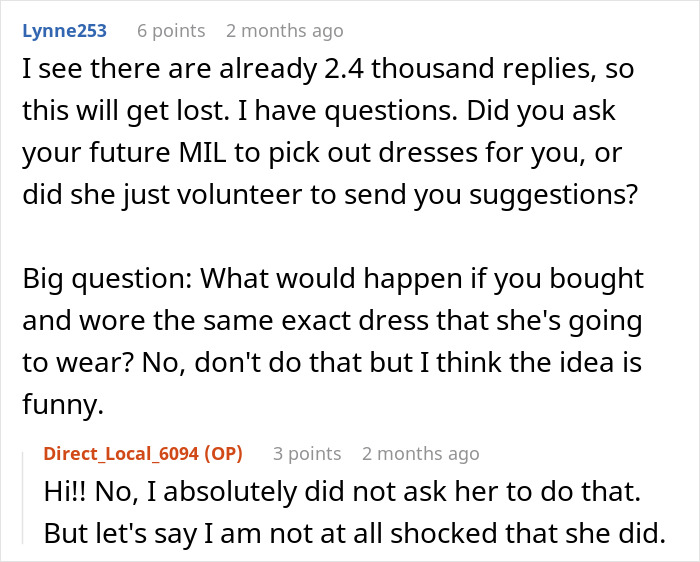
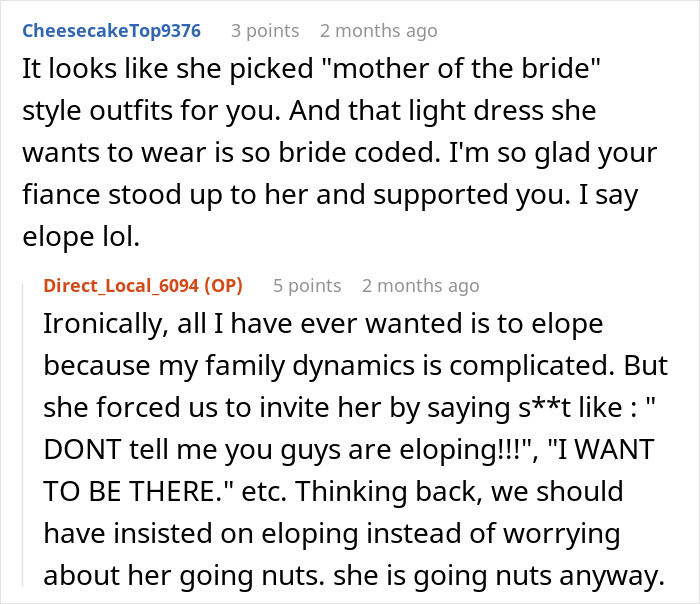
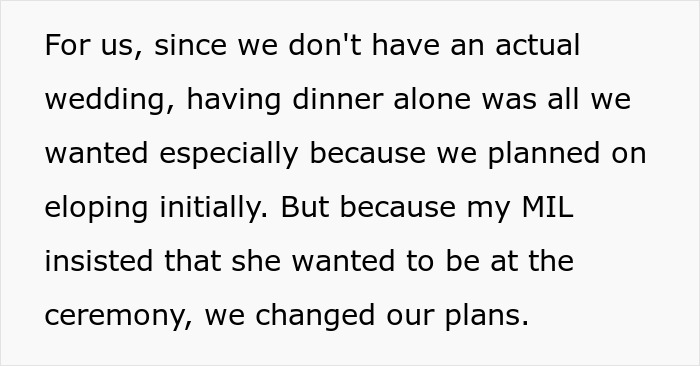
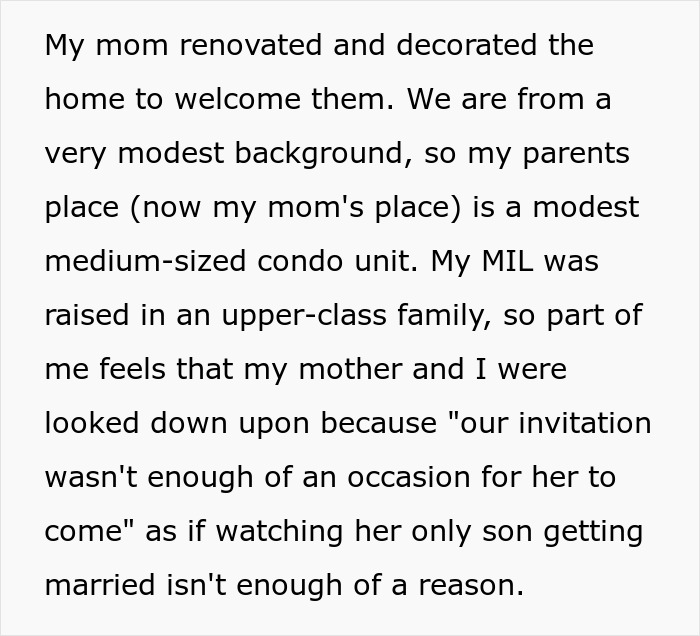
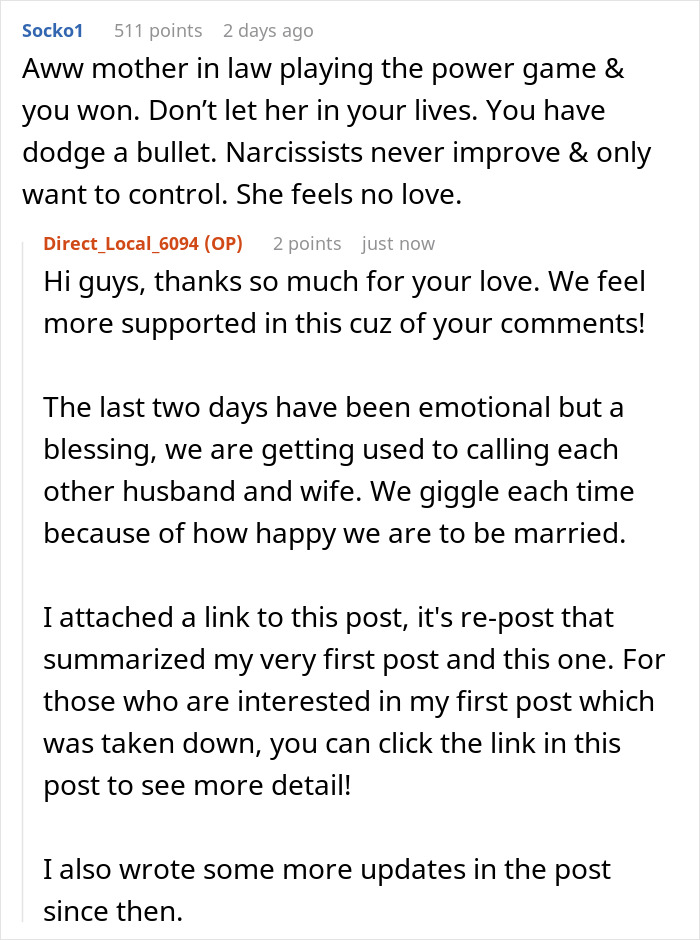
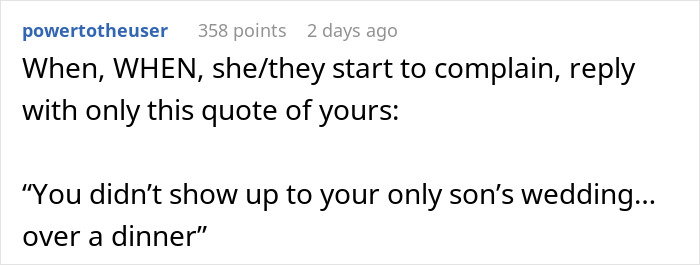
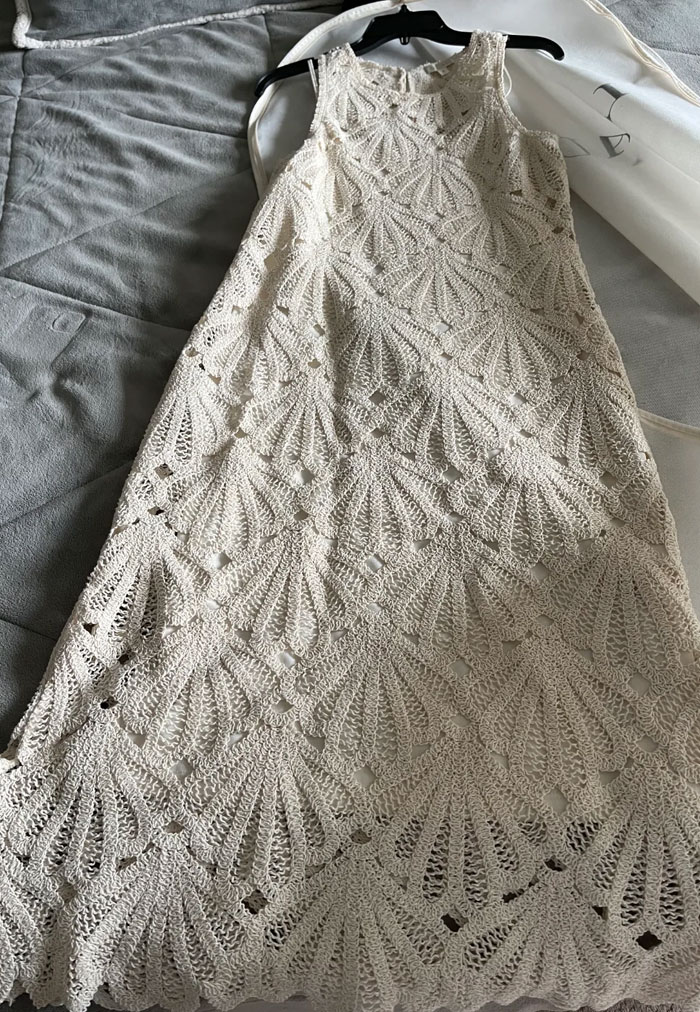
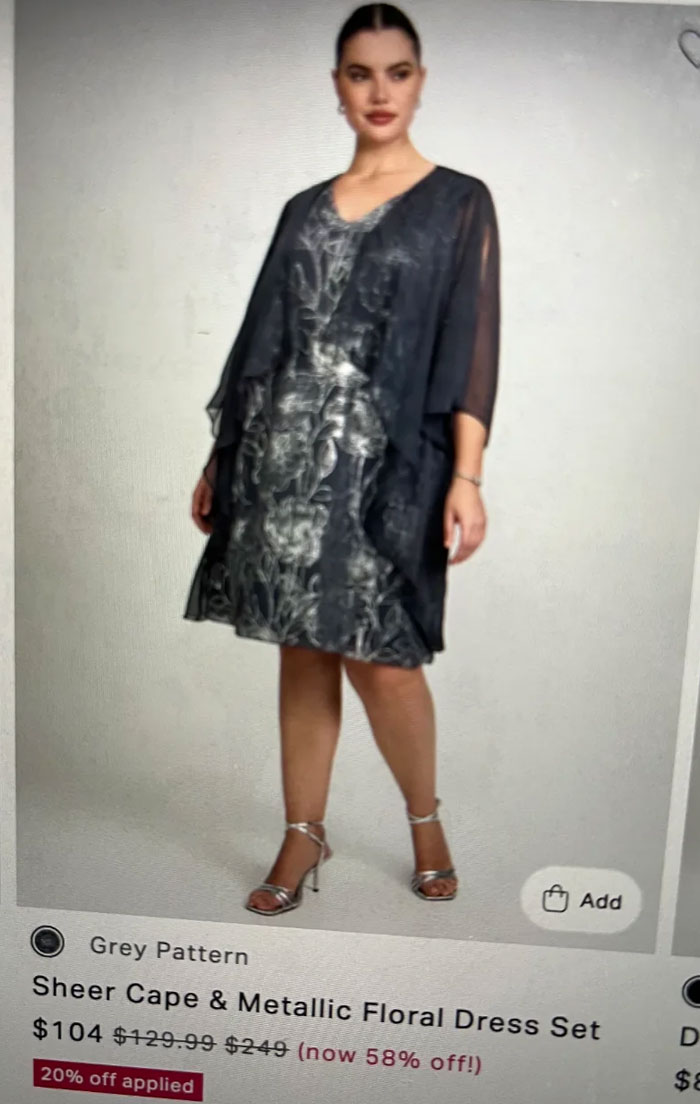
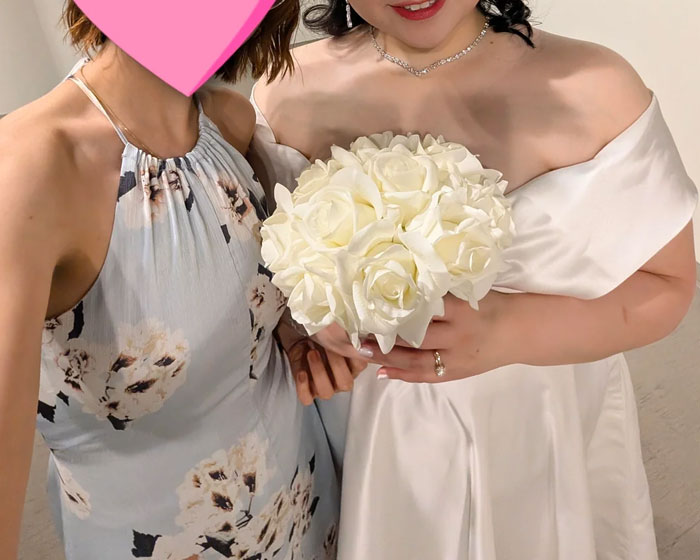
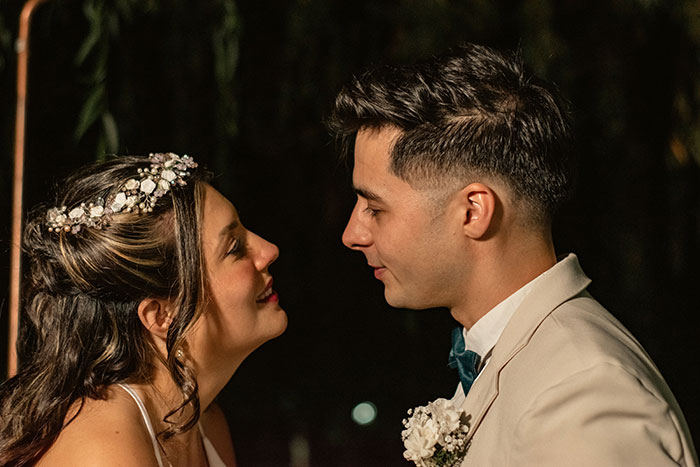
That tension is at the heart of this story. The bride wanted a white dress for her civil ceremony and later chose to keep a private dinner with her new husband, even after changing their original elopement plans to accommodate his parents. Her mother-in-law’s reaction, however, left her deeply upset.
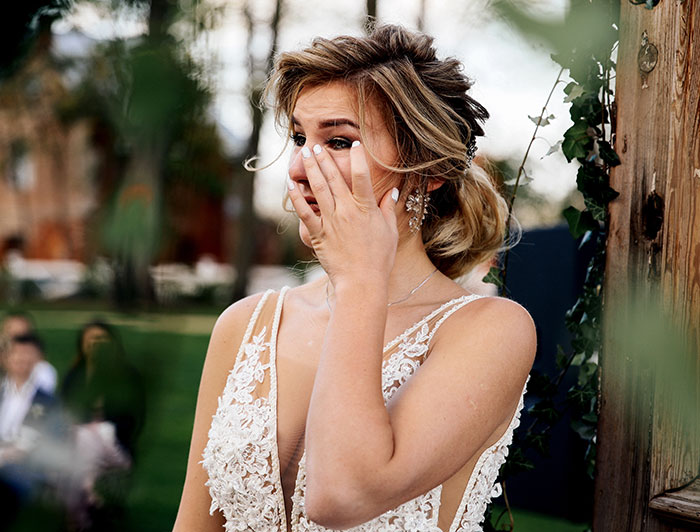
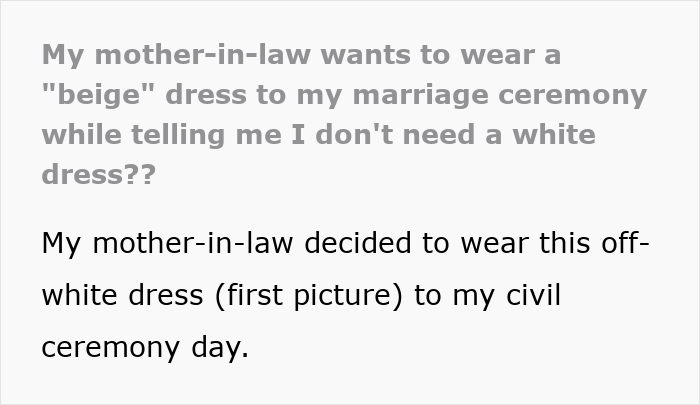
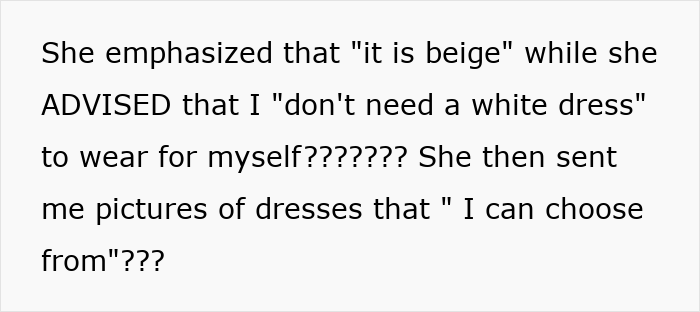
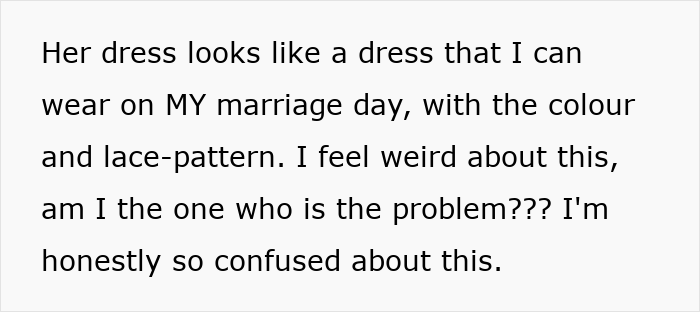
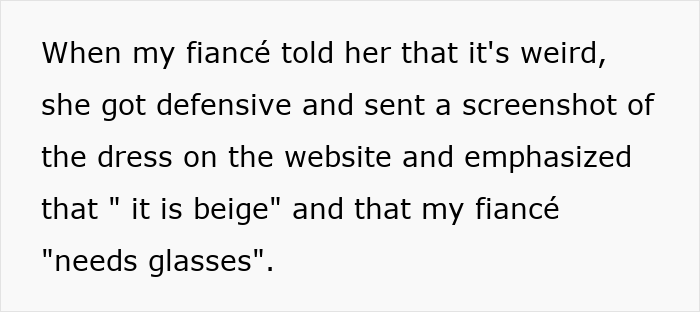
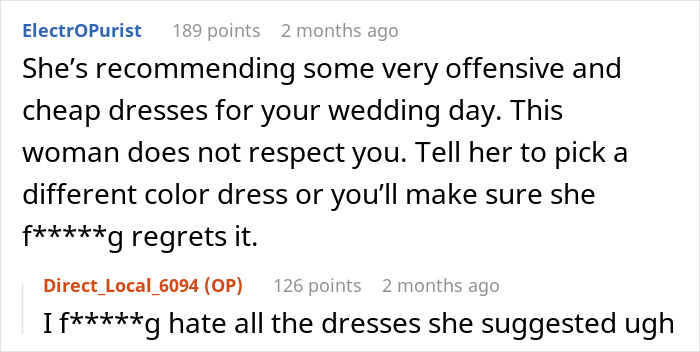

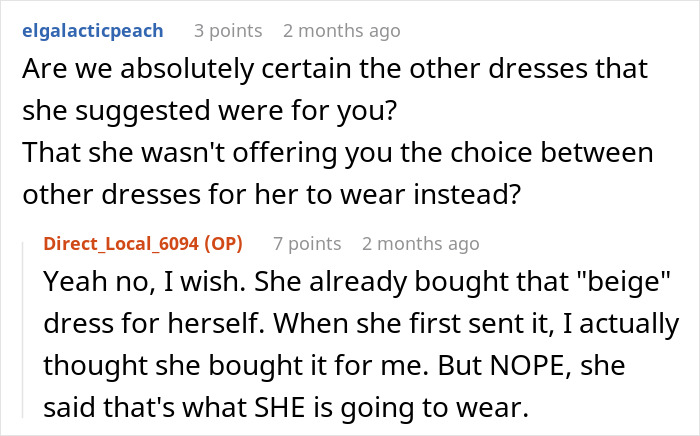











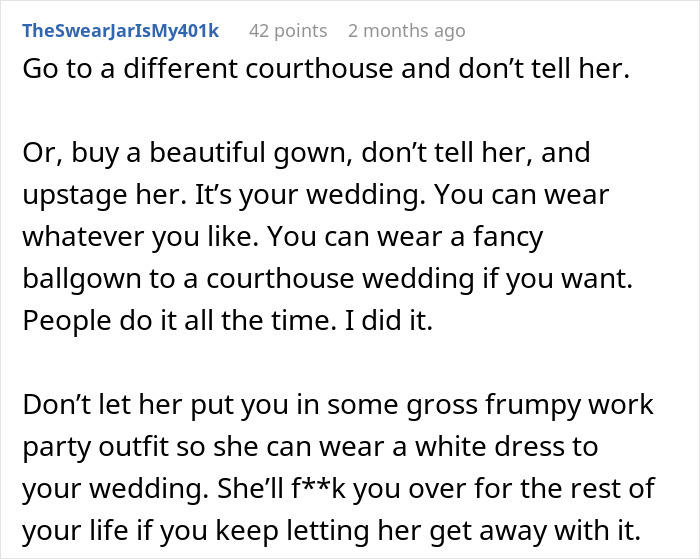






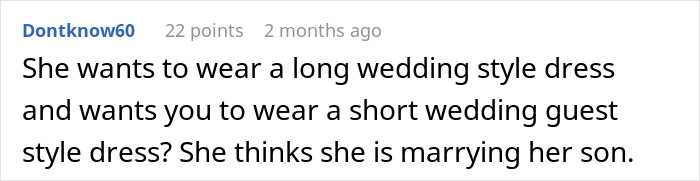


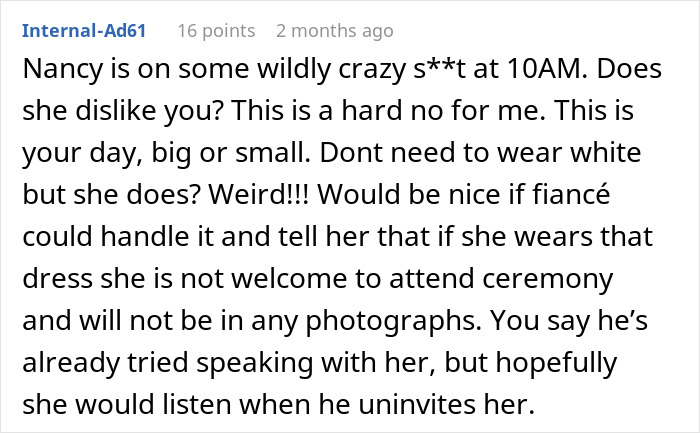
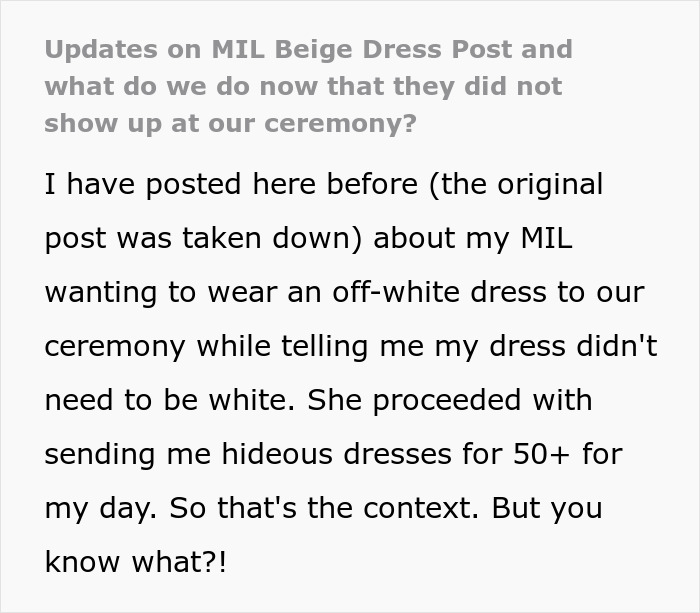
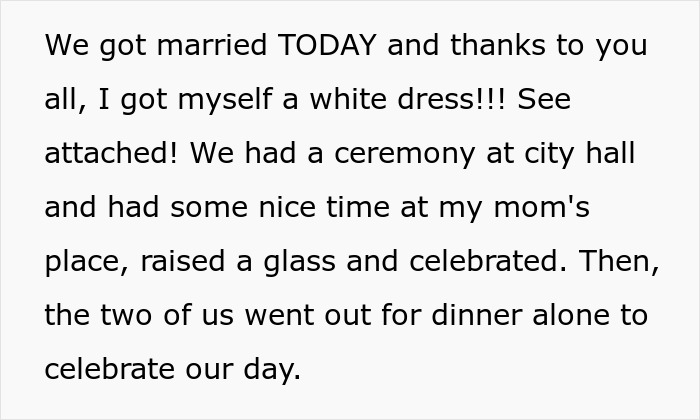


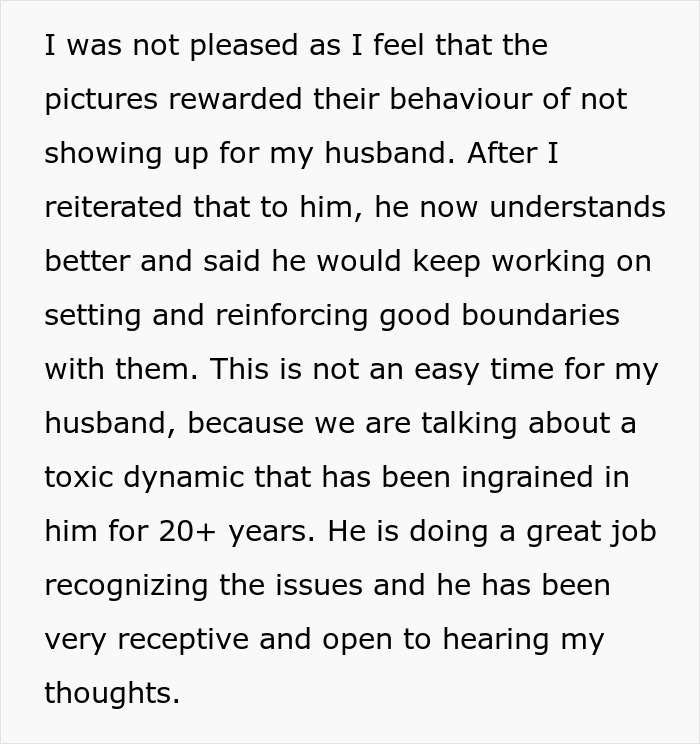
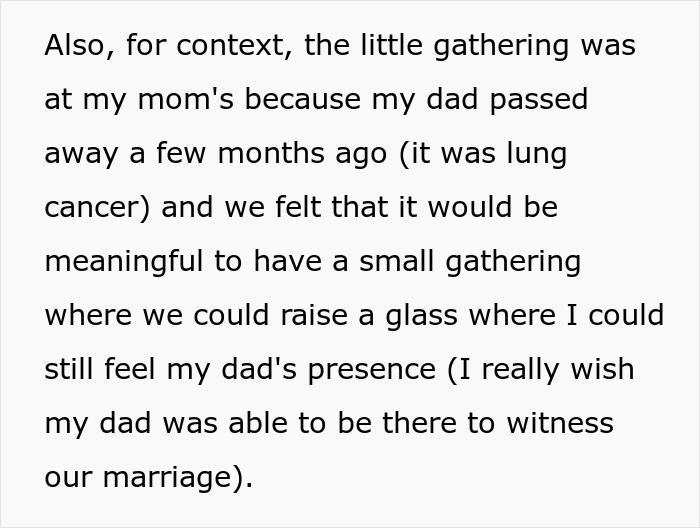
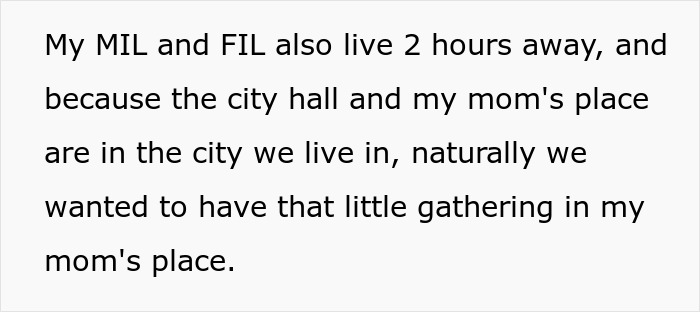
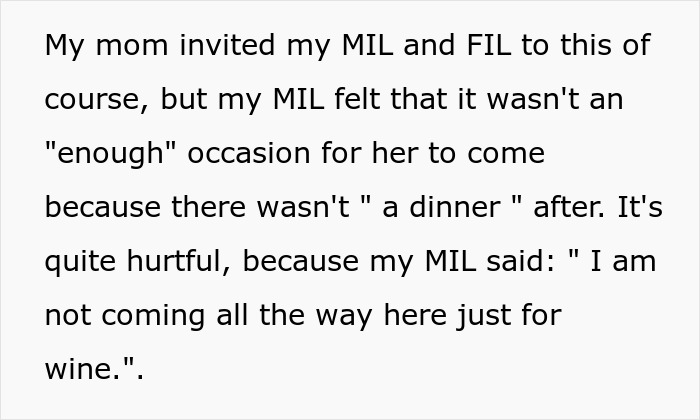
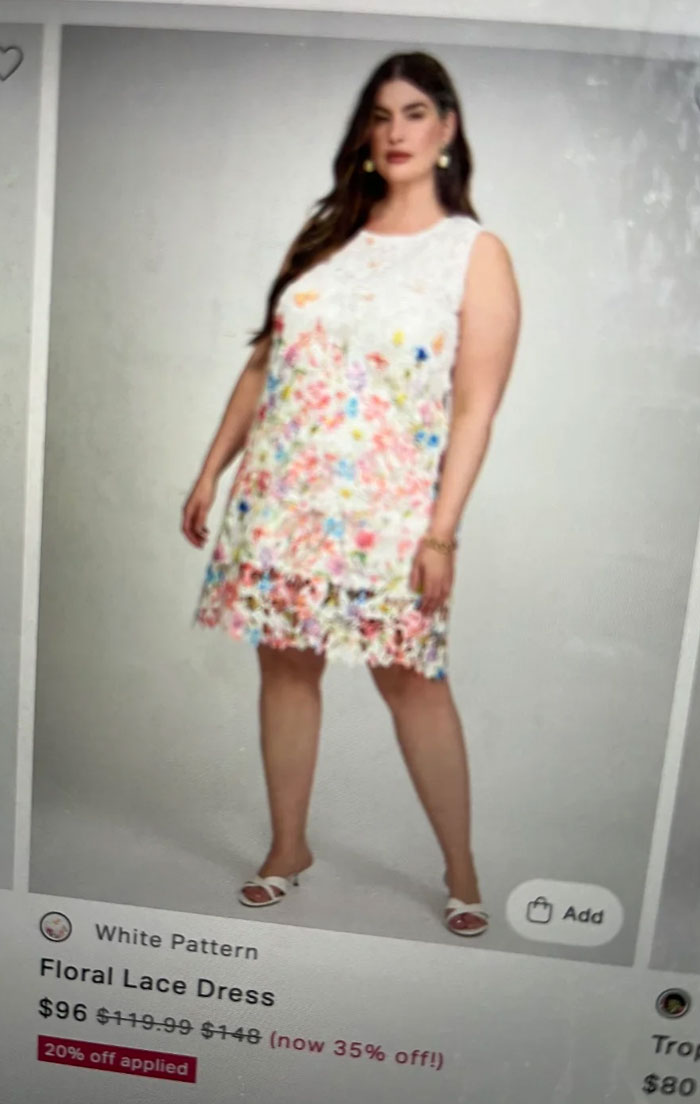
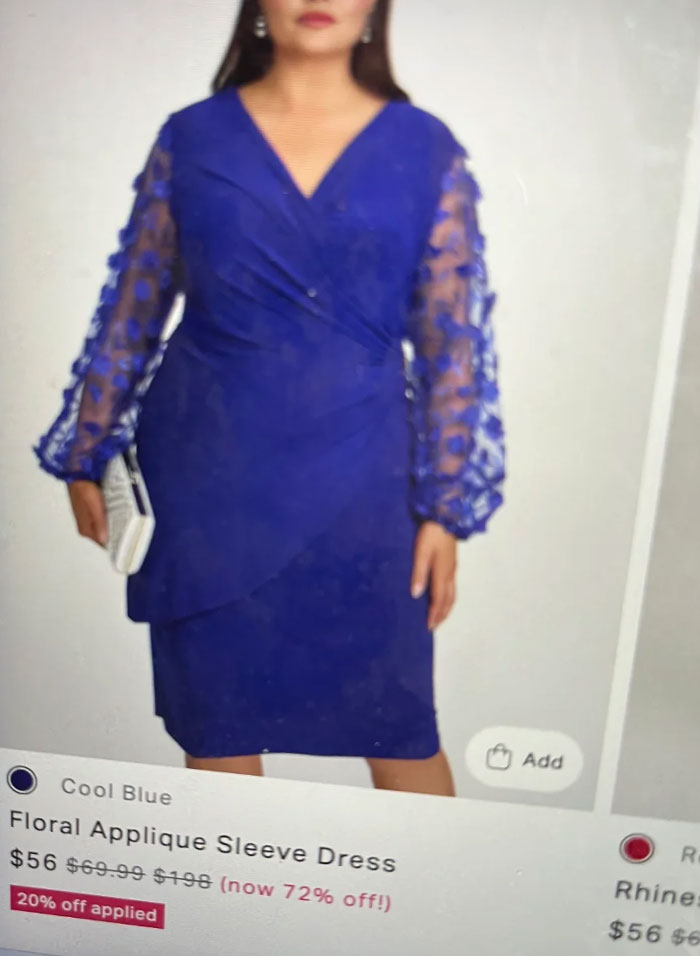
The bride’s discomfort over her mother-in-law’s off-white dress is partly rooted in how strongly bridal white has been established in Western wedding culture. Fashion History Timeline explains that white became associated with weddings after Queen Victoria wore a white ensemble when she married Prince Albert in 1840. The tradition was never as ancient or universal as people sometimes assume, but it became deeply embedded in modern wedding imagery.
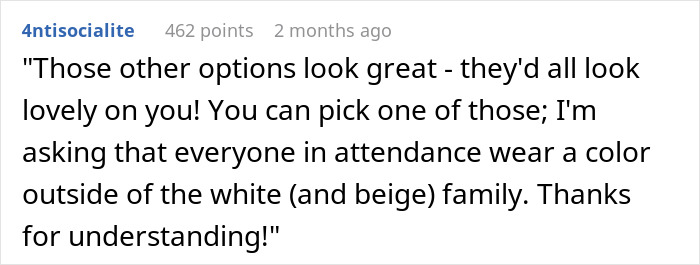
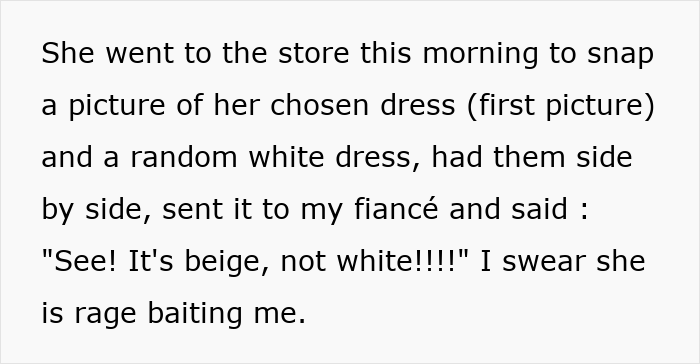
That history helps explain why the distinction between “beige” and “off-white” can matter even when a guest technically avoids pure white. Current etiquette guidance also extends caution to ivory, cream, and other shades that could read as bridal. The issue is less about a particular color swatch and more about whether the overall outfit could visually resemble what the bride is wearing.
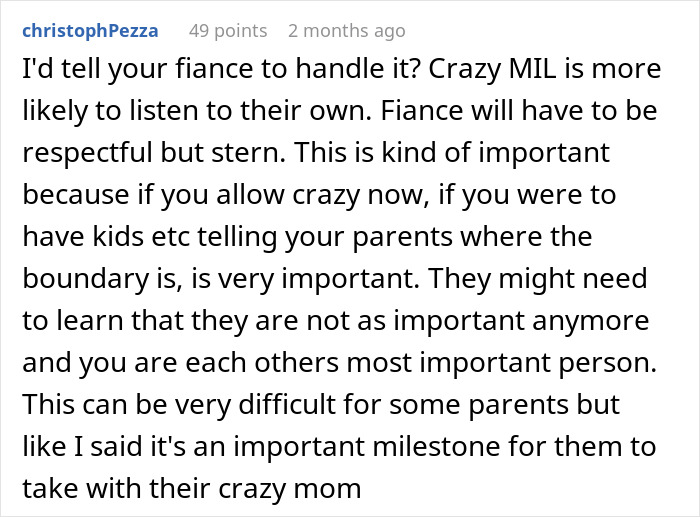
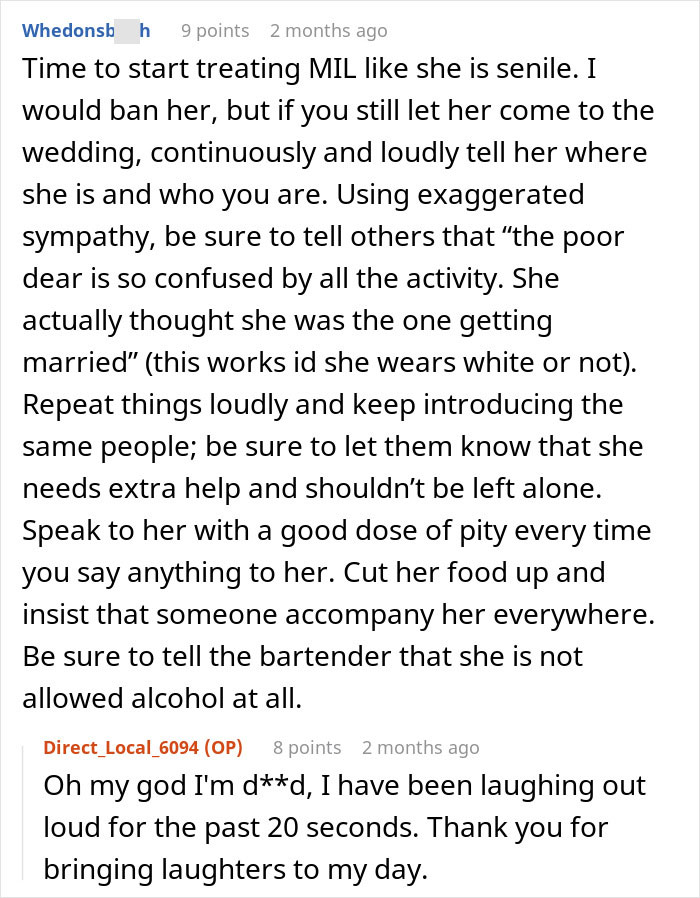
It’s not uncommon that there’s conflict around wedding planning. Weddings do have an ability to bring toxic family dynamics to the surface. They can also revive dynamics between parents and their now-adult children because parents may have become accustomed to having a degree of influence over their children’s decisions.
Psychology Today explains that the reason for this is that weddings also create a new family unit, which can make questions about control, inclusion, and decision-making more visible. What looks like an argument about a dress or guest list can therefore be connected to much larger expectations about the changing parent-child relationship. This, therefore, can lead to boundary resistance.
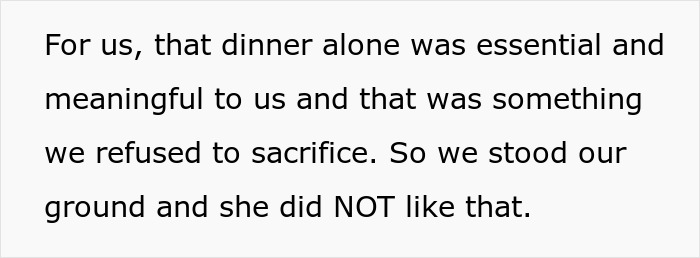
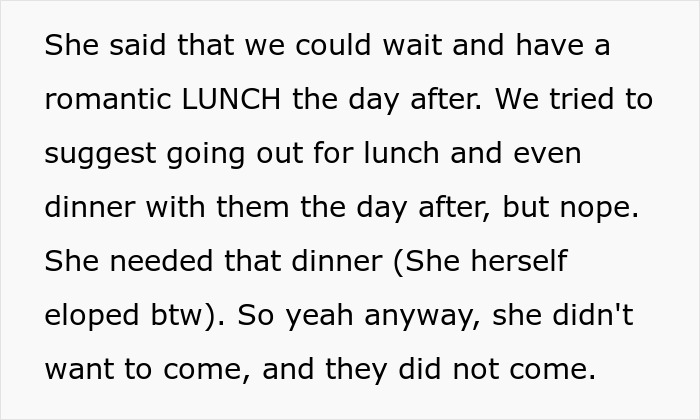
The couple’s decision to keep their wedding-night dinner private is another example of a boundary that can be difficult for relatives to accept. However, the emotional importance of that boundary can also be understood in the context of what weddings represent. Weddings are not simply social gatherings. Rather, they mark a major transition from one stage of life to another.
For some families, attending the ceremony may therefore represent participation in an important family milestone, while for the couple it can represent the creation of their own new household and identity. Those meanings can coexist, but they do not always produce the same expectations about how the day should unfold.
For that reason, the emotional fallout can also extend beyond the wedding itself and could even lead to parent-adult-child estrangement. Of course, it doesn’t mean that one missed ceremony automatically amounts to estrangement, but it does illustrate why conflicts at major family milestones can feel much bigger than the immediate disagreement that triggered them.
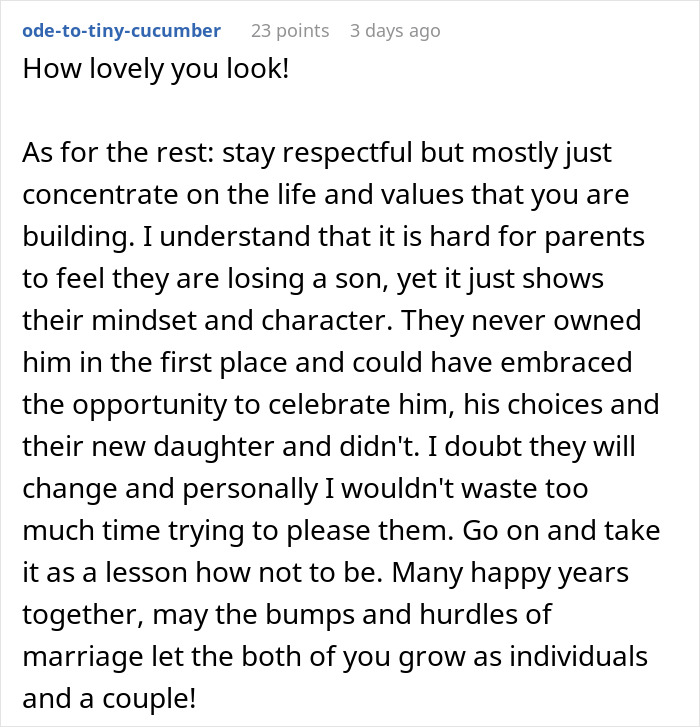
What do you think about this situation? Where do you think the line should be between respecting your parents’ wishes and setting boundaries as a married couple? We would love to hear from you!

















By entering your email and clicking Subscribe, you're agreeing to let us send you customized marketing messages about us and our advertising partners. You are also agreeing to our Privacy Policy.
Thank you! You've successfully subscribed to newsletters!


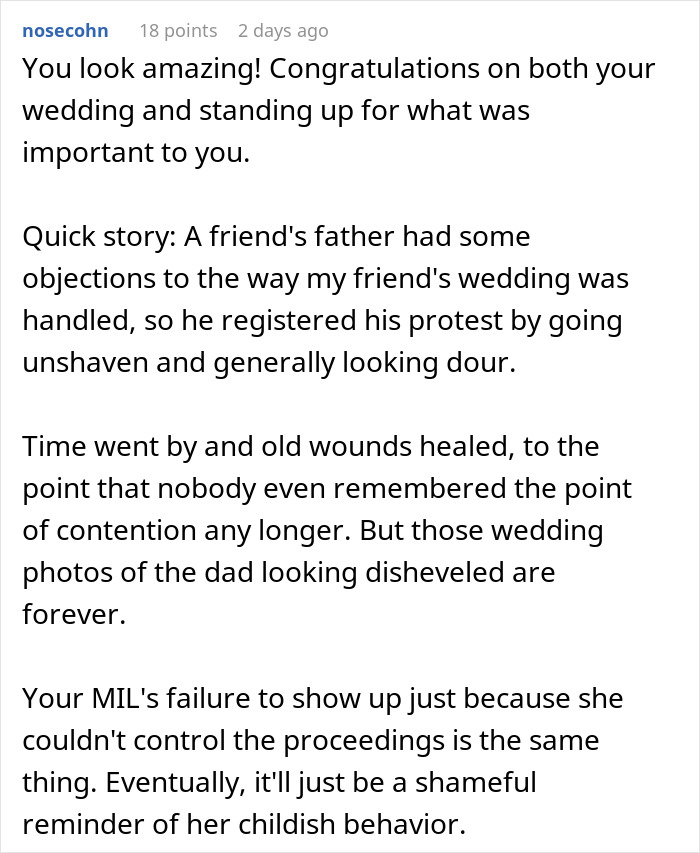
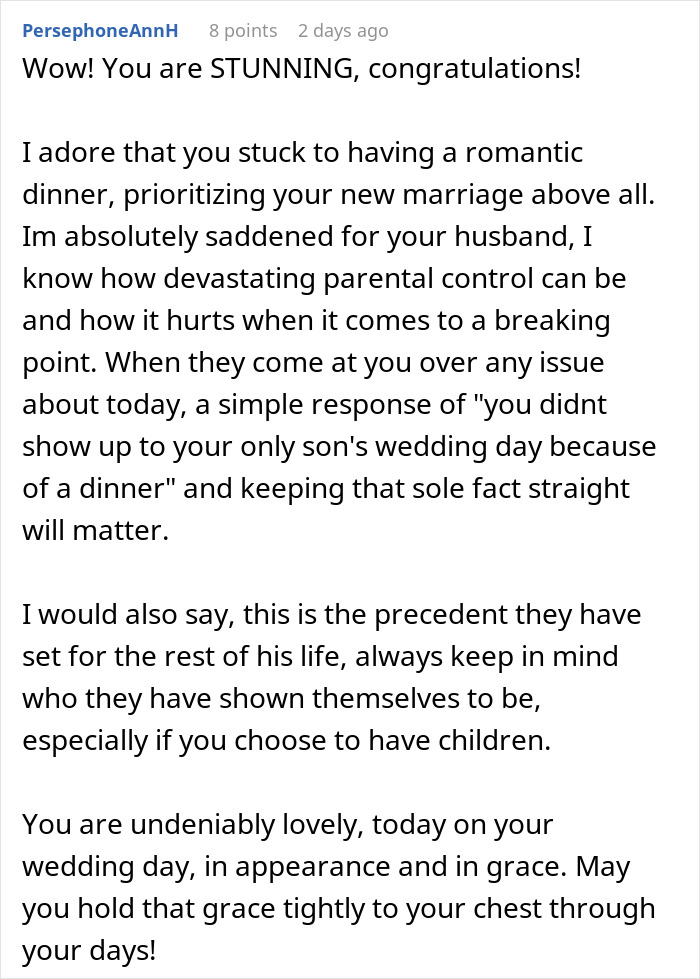
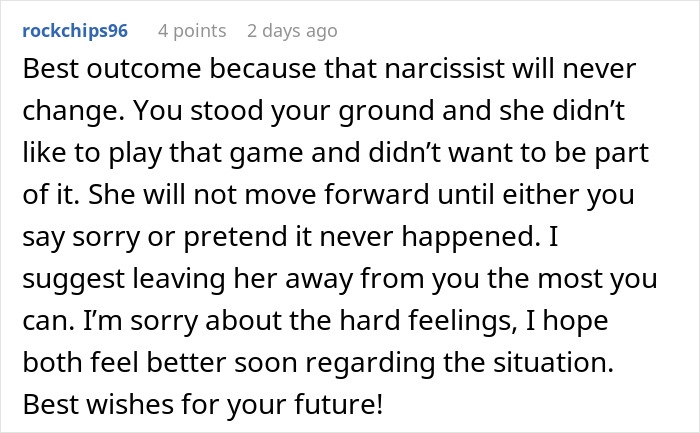
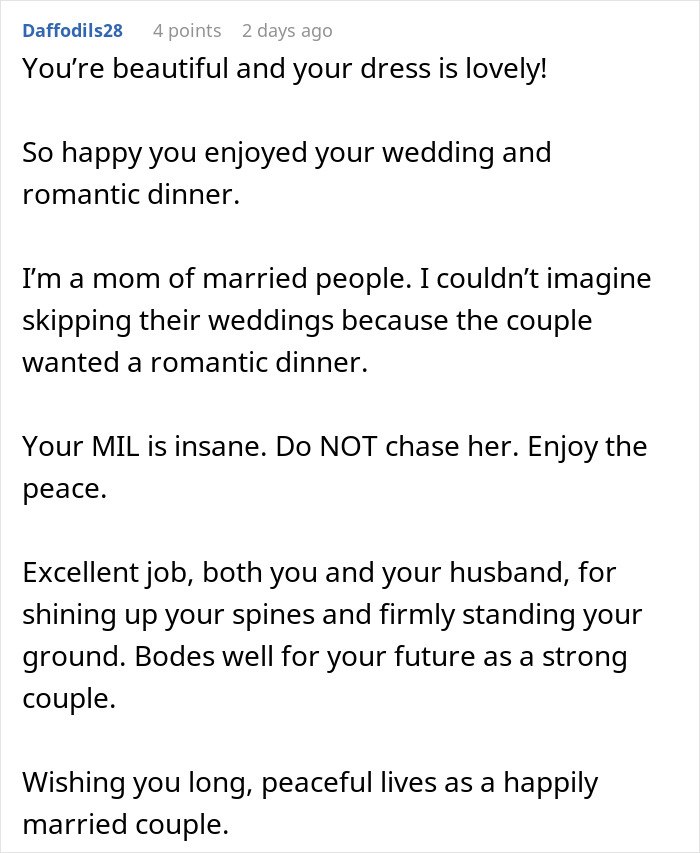
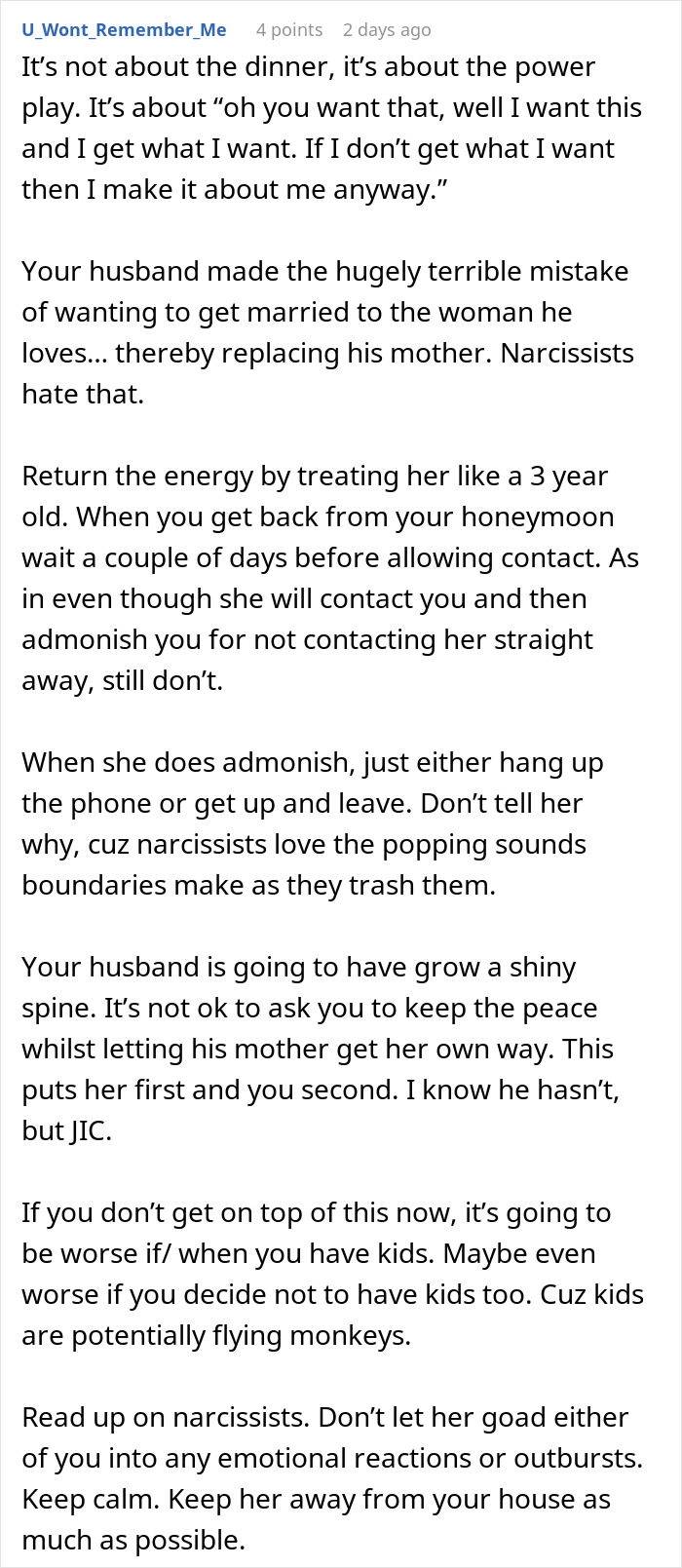
Let's hope that shiny spine of the husband hardens to steel as the years go on

I'd just make sure we saw as little of her as we could manage and maybe move farther away.
Let's hope that shiny spine of the husband hardens to steel as the years go on
I'd just make sure we saw as little of her as we could manage and maybe move farther away.






















 No fees, cancel anytime






28
3