Get Premium
Dark mode theme is available exclusively for premium users. Learn more about the benefits of subscribing.
No fees, cancel anytime.

 Dark Mode Ad-Free Browsing Unlimited Content
 Ad-Free Browsing Unlimited Content Dark Mode
Join 1.2 million Panda readers who get the best art, memes, and fun stories every week!

Married life is a rollercoaster of emotions, with fighting and arguments involved on a regular basis. Two people having to agree on every decision that will affect their futures, and sometimes, love isn’t the strongest of reasons to remain together. Especially when there are relatives who are convinced they have a say in your marriage.
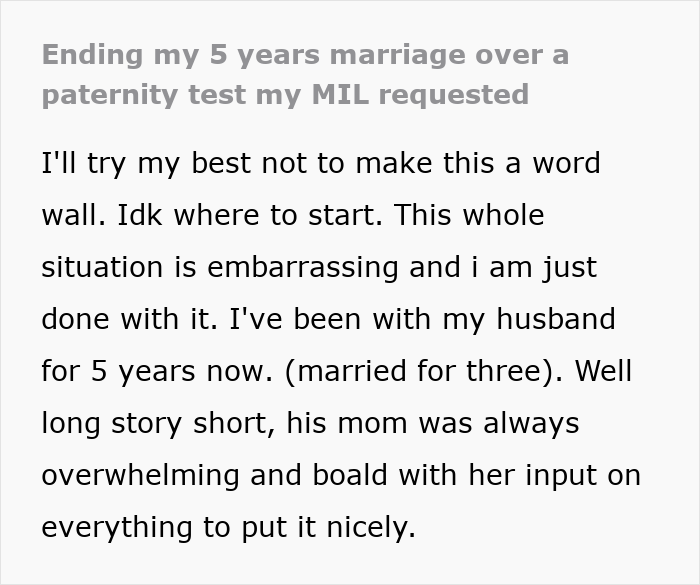
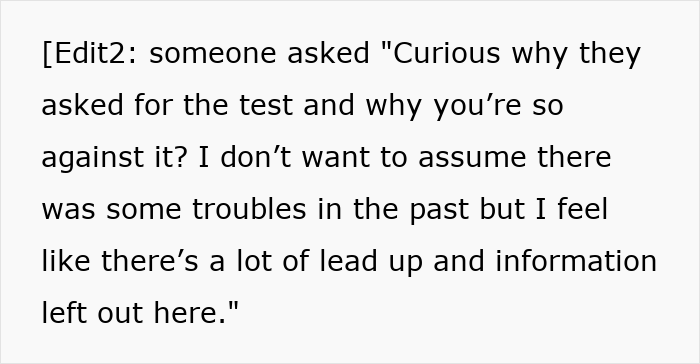
The Original Poster (OP) of our next story shared how her mother-in-law kept meddling in her relationship. Her husband decided to take a paternity test, not by his own will, but because his mother constantly doubted her grandchild was actually her son’s child. To the wife, this was finally the last straw.
More info: Reddit
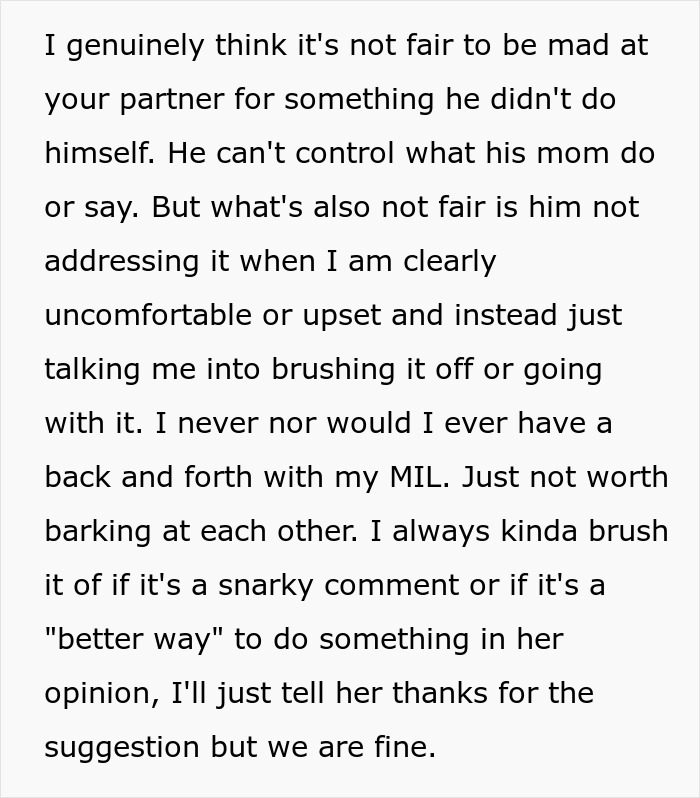
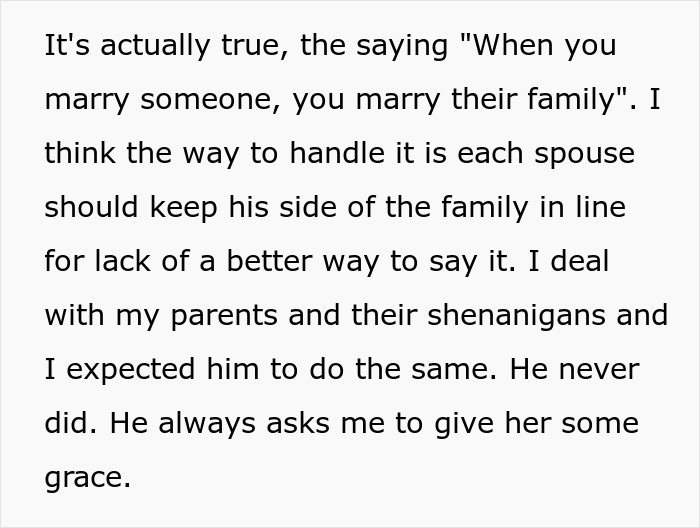
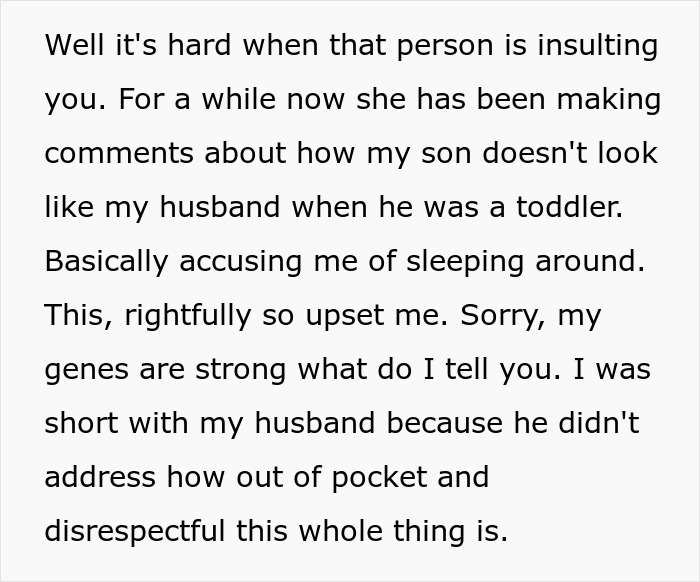
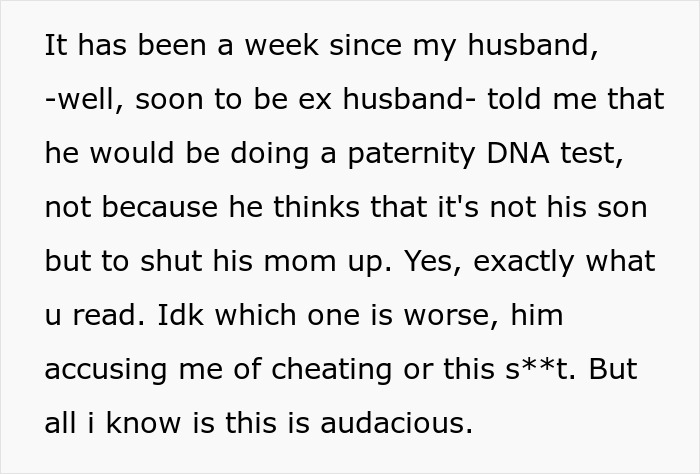
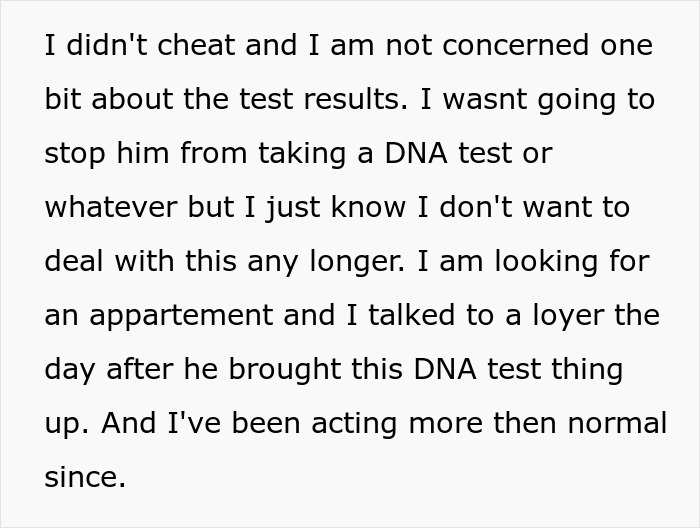

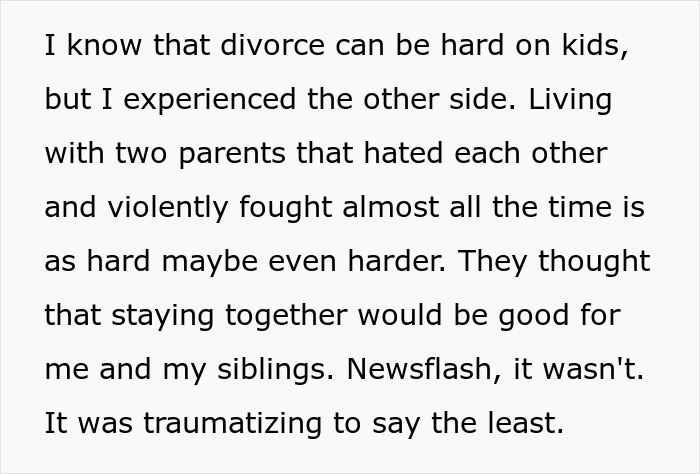
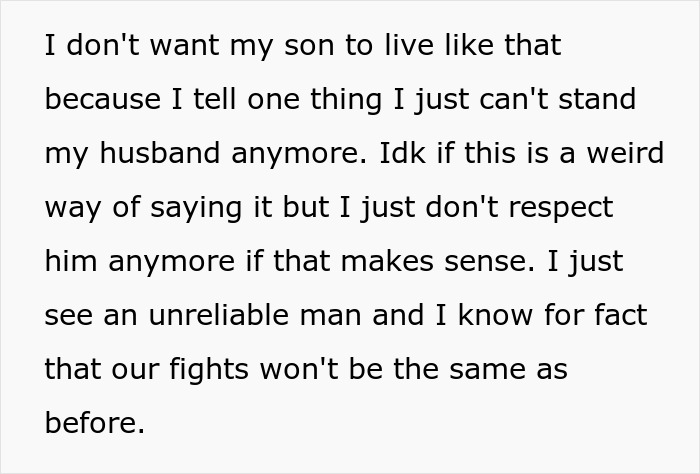




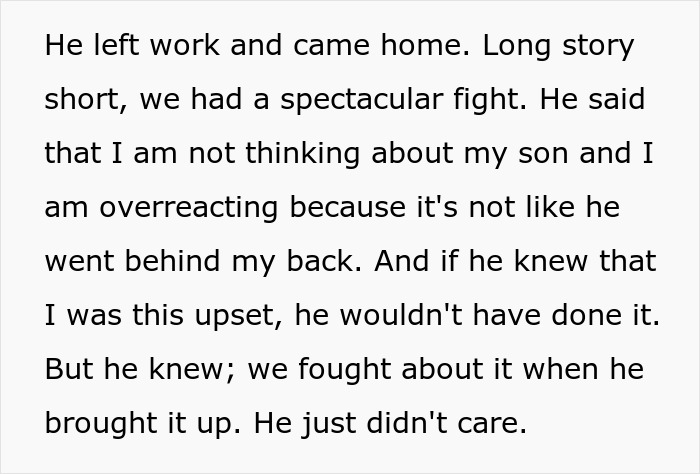
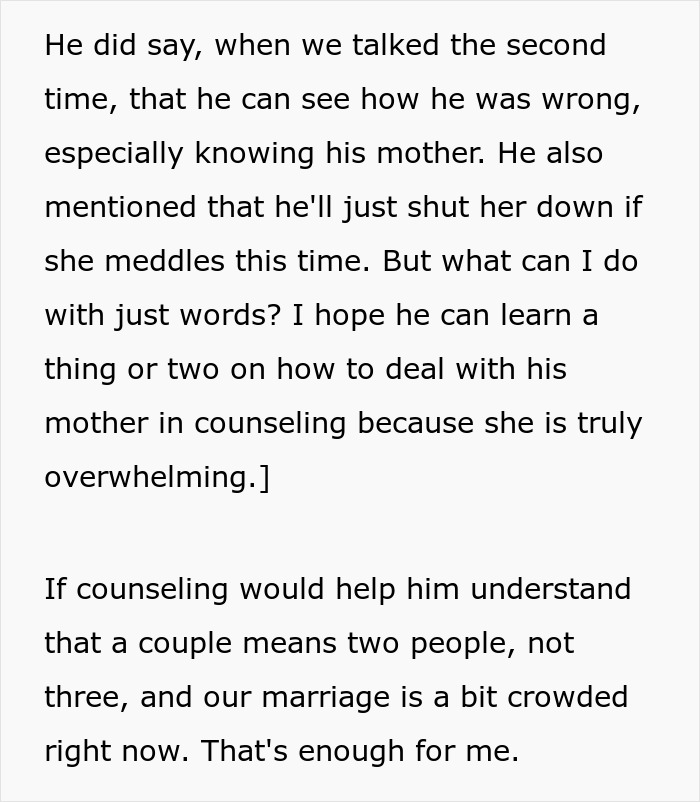
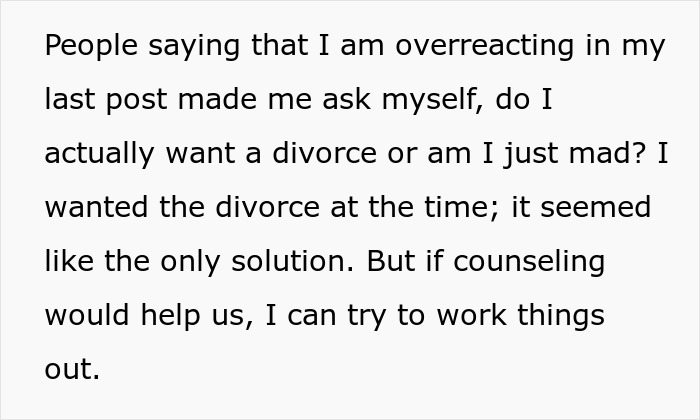
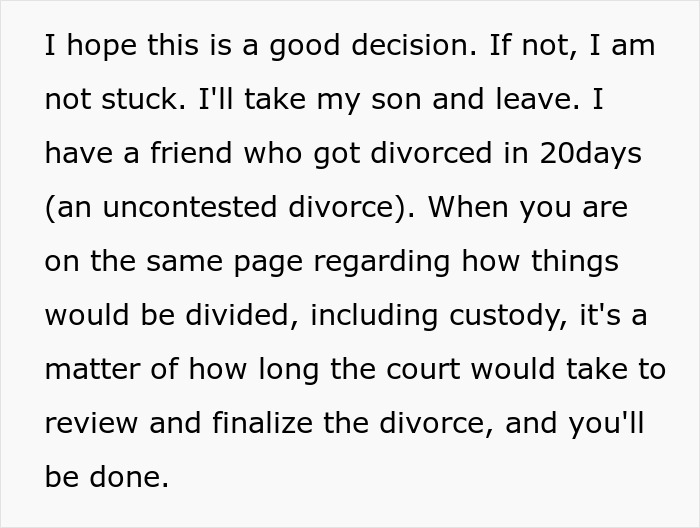
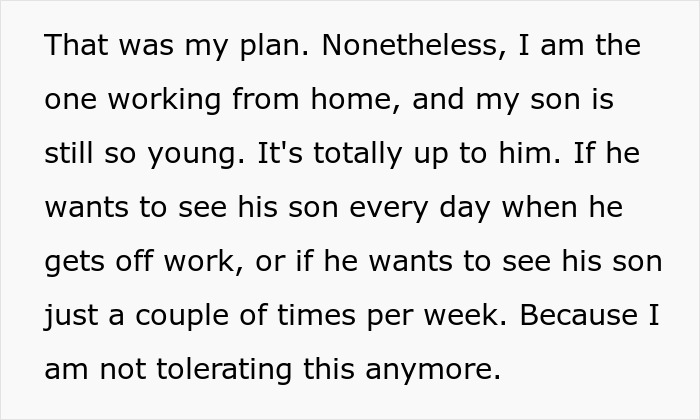
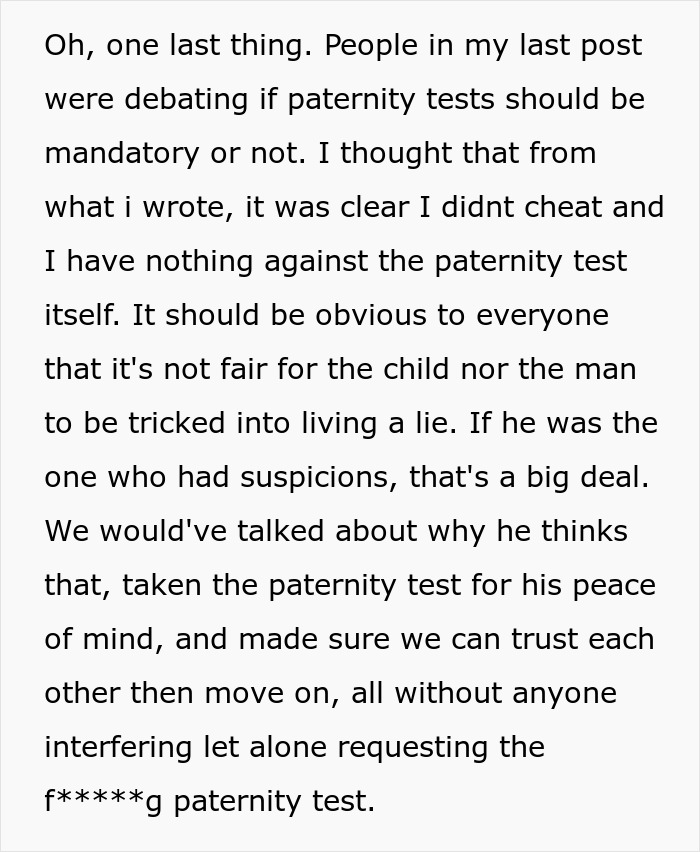
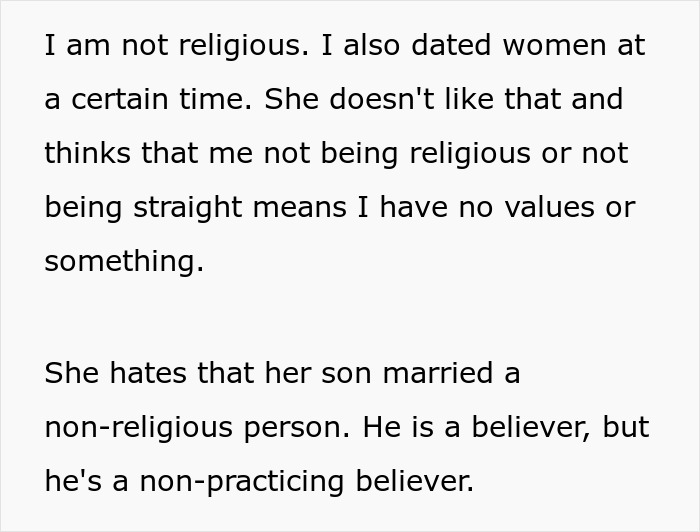
The OP had been married for 3 years and had spent years dealing with her mother-in-law’s constant interference. She usually avoided confrontation and expected her husband to handle his own family, but he asked her to overlook his mom’s comments. Everything changed when the woman began suggesting that the couple’s young son did not resemble his father, indirectly questioning his paternity.
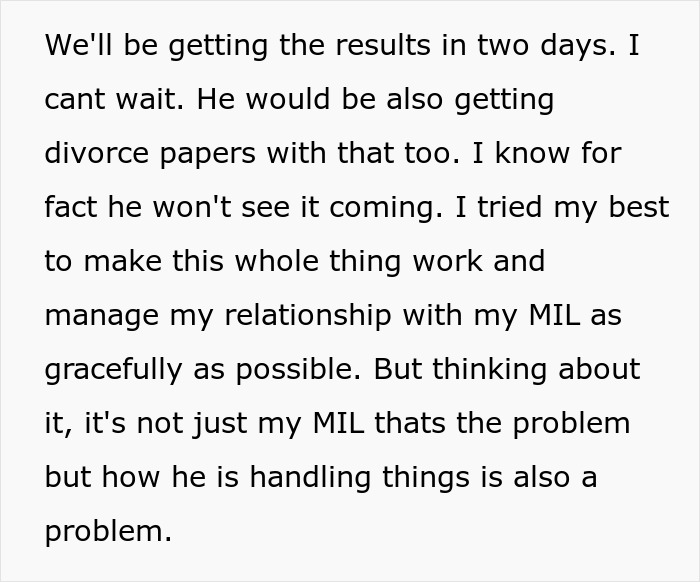
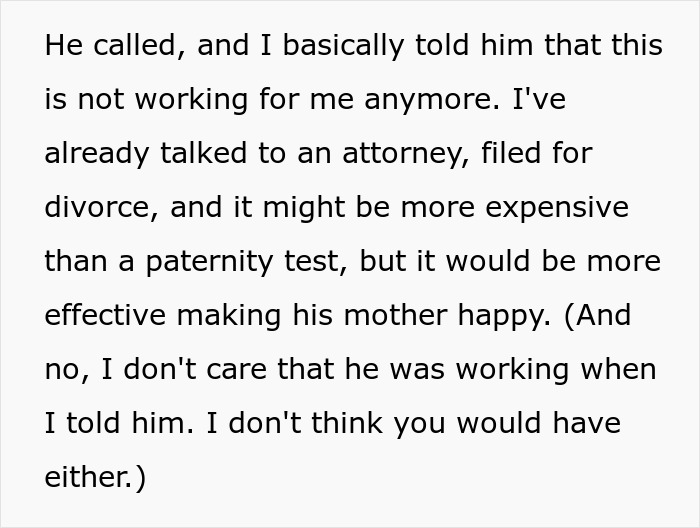
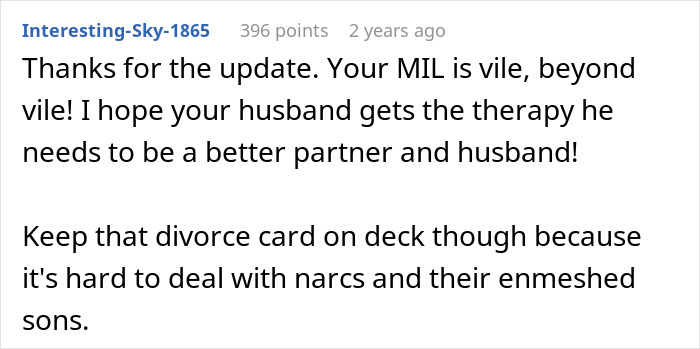
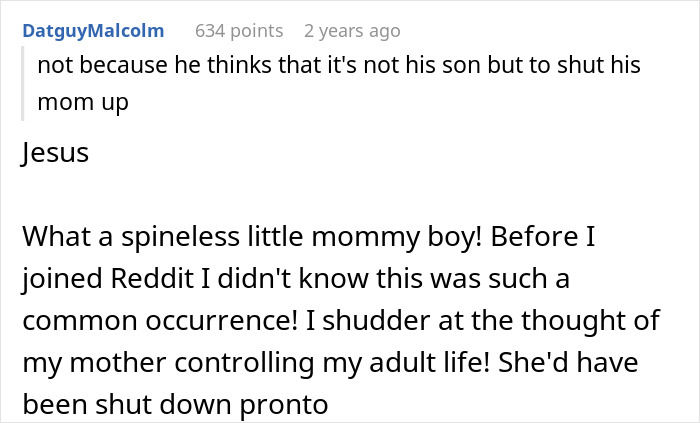
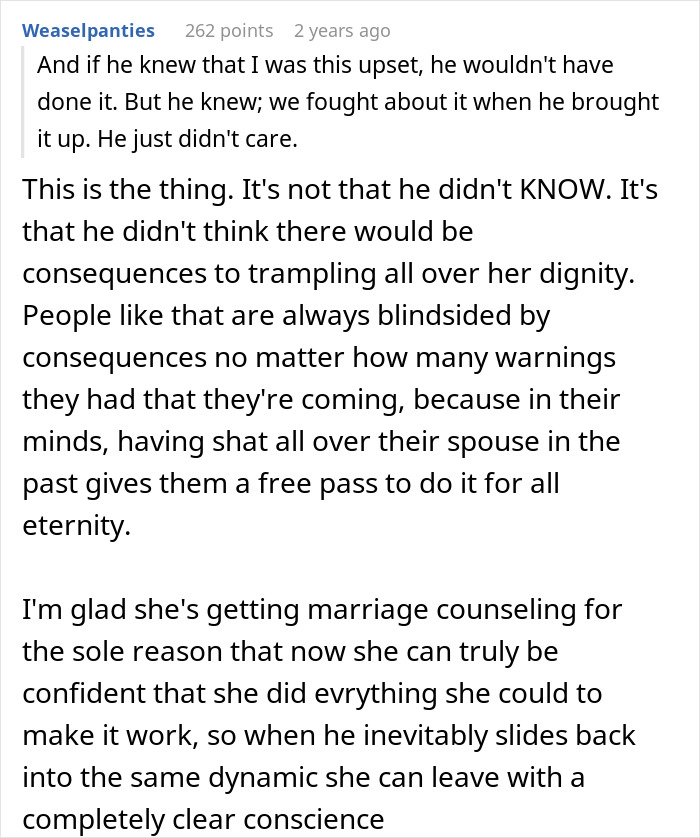
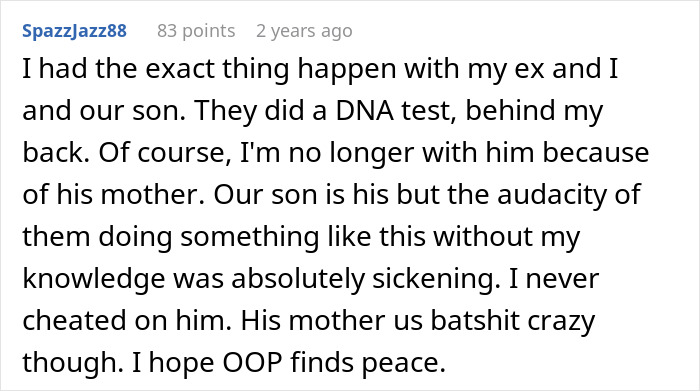
Her husband eventually caved, claiming he only wanted to silence his mother rather than expressing personal doubts. However, the OP felt deeply betrayed because she had never cheated and had already clarified how hurtful the situation was to her. She contacted an attorney, prepared for divorce, and began looking for an apartment while continuing her normal routine.
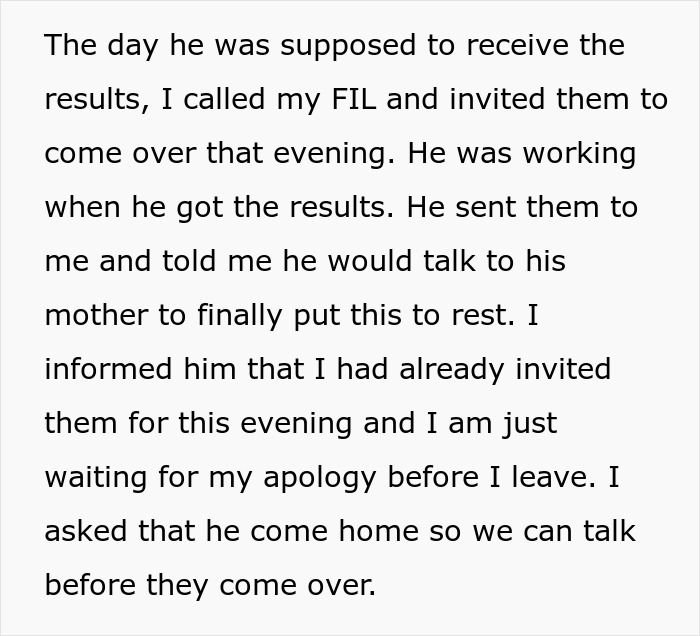
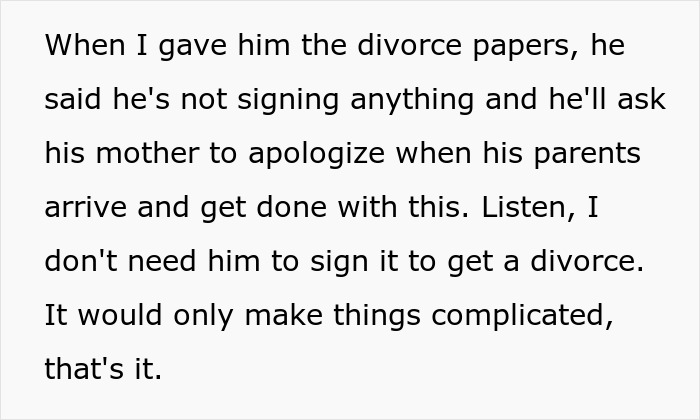
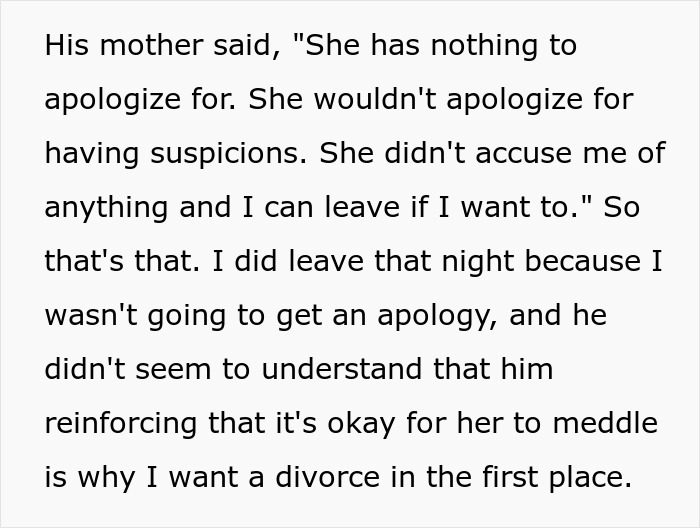
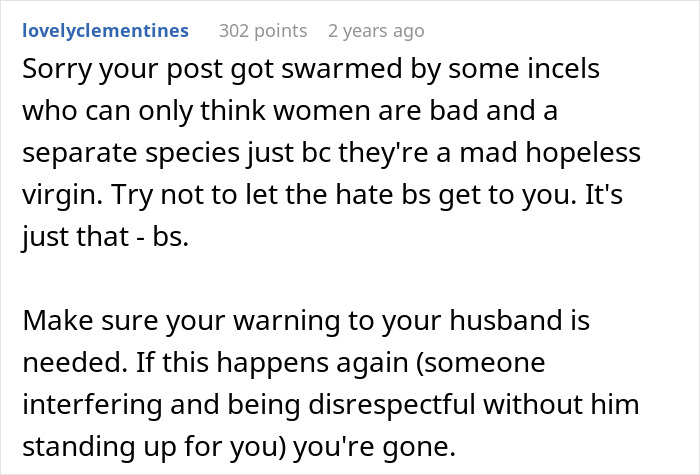
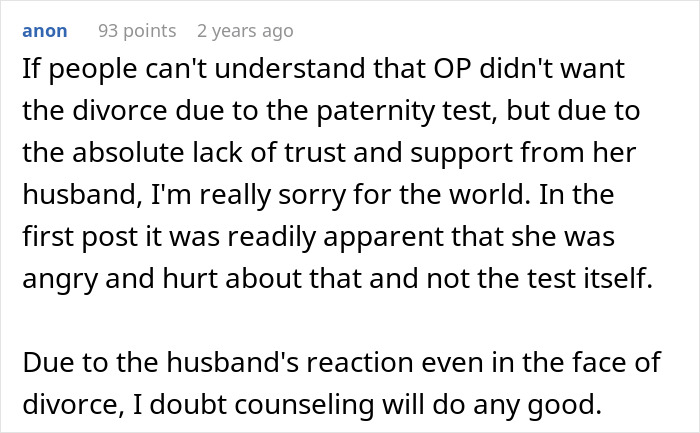
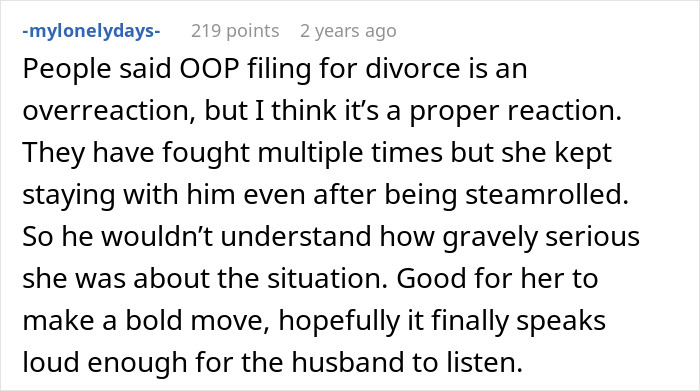
When the test confirmed her husband was indeed the father, the OP invited his parents over and expected an apology before leaving. Instead, her mother-in-law insisted she had nothing to apologize for, while her husband thought she was overreacting. The author handed him divorce papers, explaining that it was his failure to establish boundaries the real reason she was leaving.
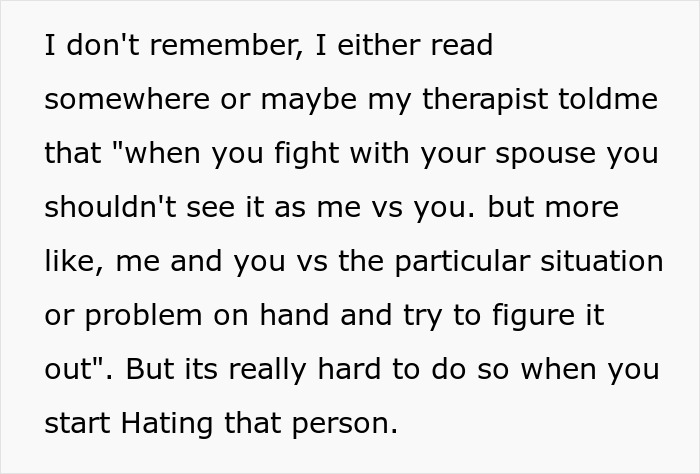
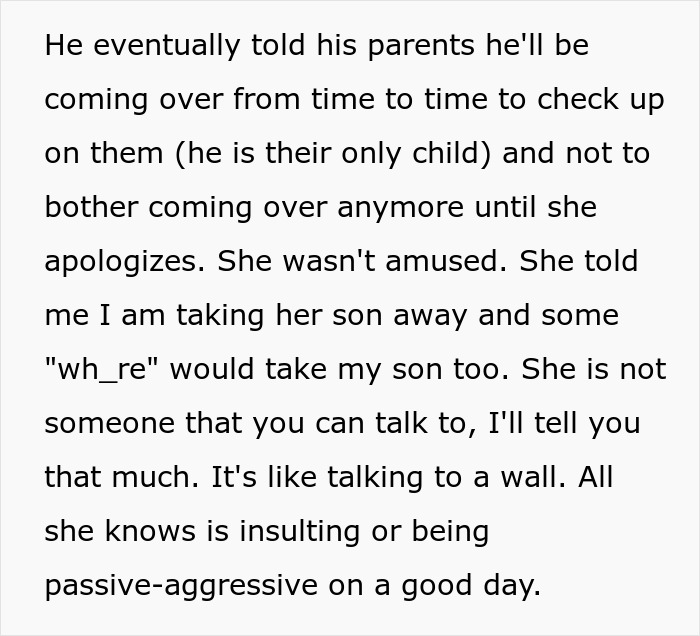
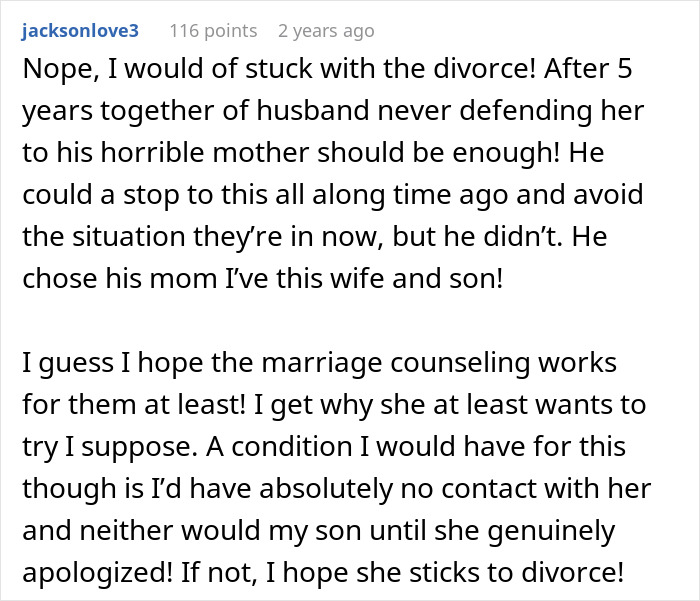
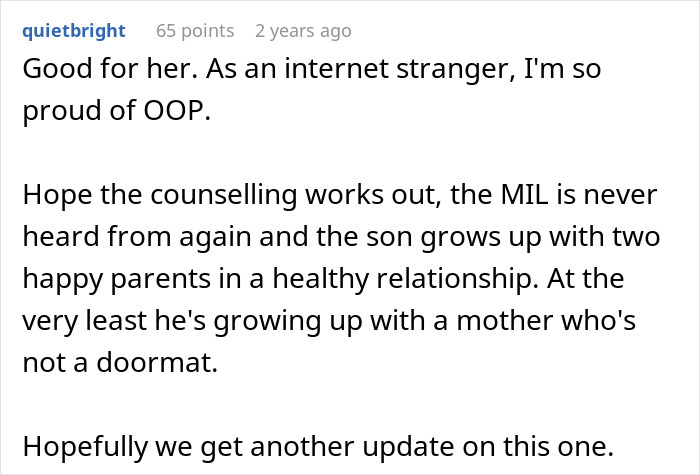
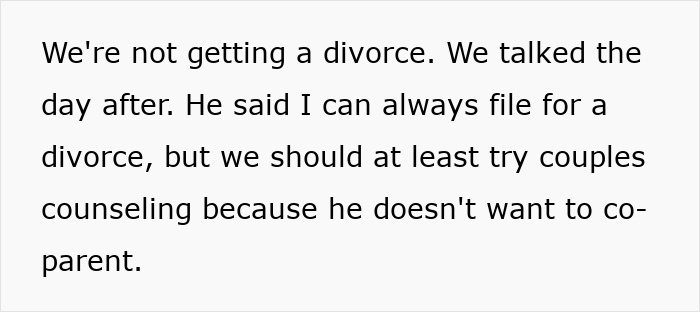
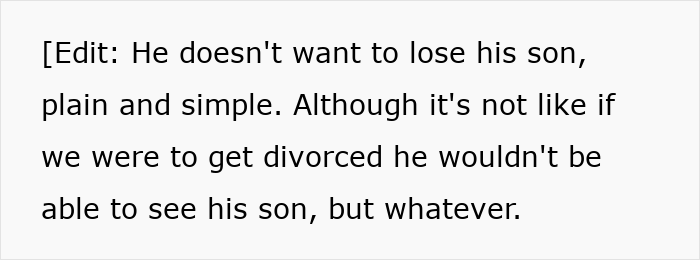
The OP later decided to give her husband a chance after he acknowledged that he had handled the situation poorly. They agreed to try counseling, although she remained prepared to leave if things didn’t improve. She clarified that she had enough of her mother-in-law’s passive-aggressiveness, and was hurt that her husband failed to defend their marriage from outside interference.
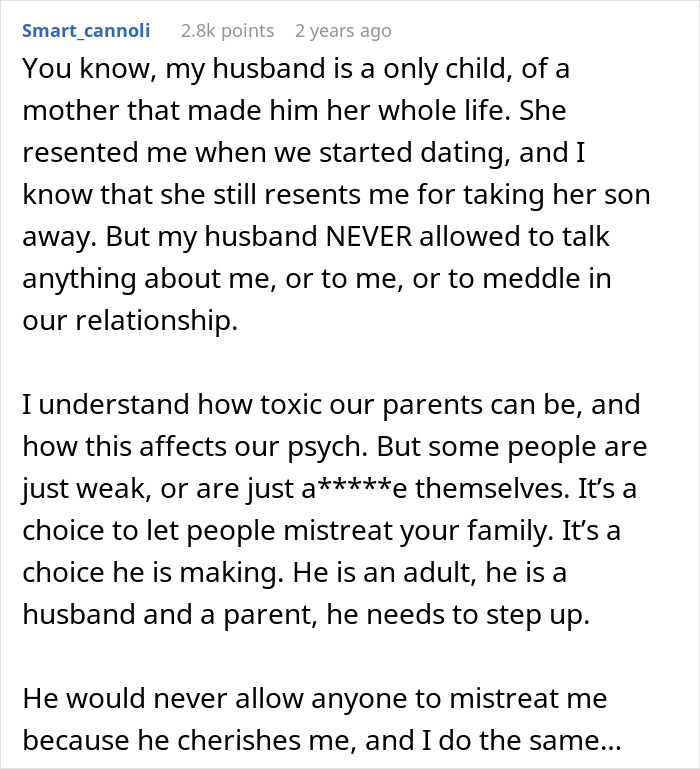
To begin with, marriage does not erase extended family influence. However, couples must absolutely set their own boundaries. Professionals note that in-law conflict can affect marital satisfaction and recommend that partners maintain a united front when handling difficult relatives. Couples should discuss expectations together rather than leaving one spouse to manage family conflicts alone.
Furthermore, this article recommends clear boundaries, open communication, and having each partner address concerns with their own parents. It also suggests protecting the couple’s private space and limiting contact when family interactions repeatedly harm the relationship. In other words, “giving someone grace” cannot replace setting reasonable limits.
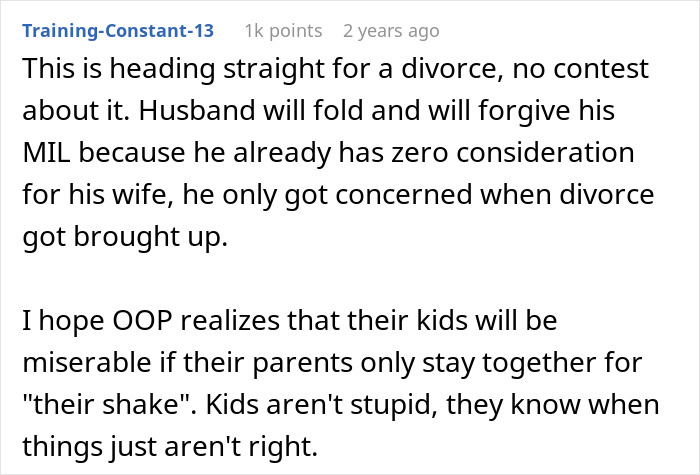
In the story, the OP had tried to remain civil with her mother-in-law, ignoring snarky comments and avoiding direct confrontation. The problem grew because her husband repeatedly asked her to tolerate his mother’s behavior instead of defending his wife. By the time the paternity test appeared, it represented years of unresolved tension.
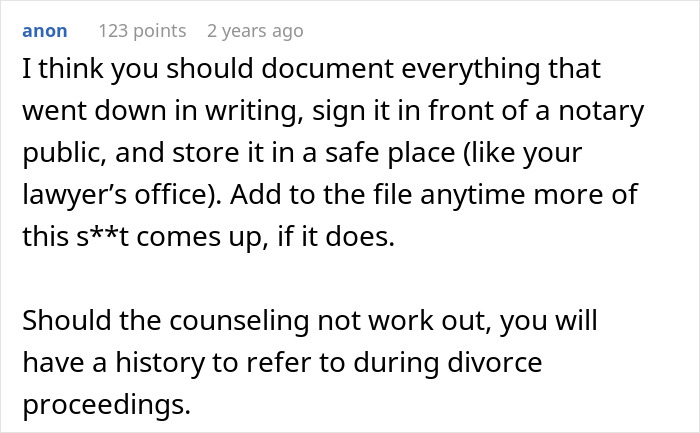
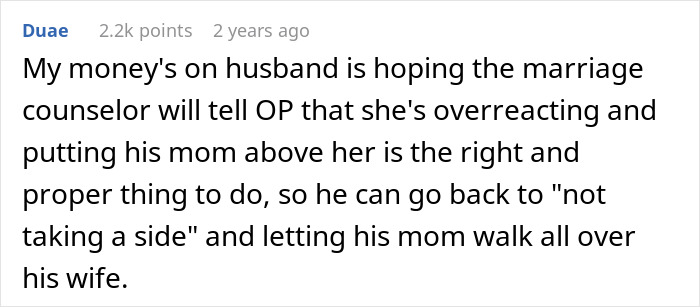
Still, agreeing to couples counseling gave the marriage one possible path forward. Experts in psychology explain that therapy can help couples work through difficult issues and determine whether reconciliation remains possible or separation makes more sense. For the OP, counseling could reveal if her husband’s promises would finally become meaningful changes.
Was the OP right to end her marriage over the paternity test? And do you think her husband deserved another chance? Share your thoughts in the comments!













By entering your email and clicking Subscribe, you're agreeing to let us send you customized marketing messages about us and our advertising partners. You are also agreeing to our Privacy Policy.
Thank you! You've successfully subscribed to newsletters!



Husband always knew that his Mom was overbearing and disrespectful; he just didn't care that much. The paternity test was just the final demeaning insult. I hope counseling works, but it only will if he gets it through his head that he has no room to be surprised or offended that he's in this position. If you do not respect your spouse's honour and dignity, your marriage will have a cancer at its heart.
Husband always knew that his Mom was overbearing and disrespectful; he just didn't care that much. The paternity test was just the final demeaning insult. I hope counseling works, but it only will if he gets it through his head that he has no room to be surprised or offended that he's in this position. If you do not respect your spouse's honour and dignity, your marriage will have a cancer at its heart.





































 No fees, cancel anytime













32
2