Get Premium
Dark mode theme is available exclusively for premium users. Learn more about the benefits of subscribing.
No fees, cancel anytime.

 Dark Mode Ad-Free Browsing Unlimited Content
 Ad-Free Browsing Unlimited Content Dark Mode
Join 1.2 million Panda readers who get the best art, memes, and fun stories every week!

When couples choose to go all out for their wedding instead of just eloping, there is a ton of work to be done.
But of course, big weddings come with big responsibilities, which can cause a lot of stress — sometimes bringing the couple closer, and other times ruining the foundation altogether.
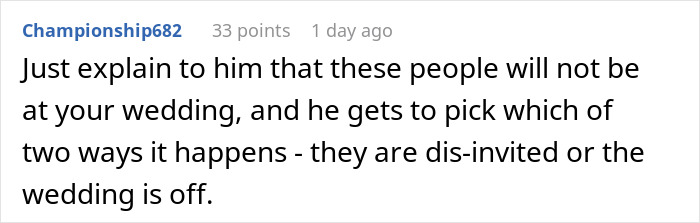
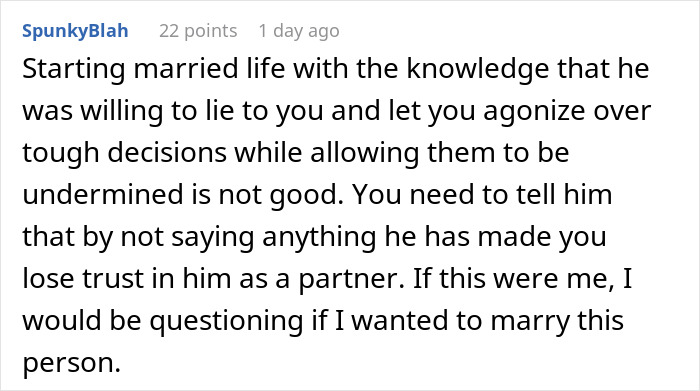
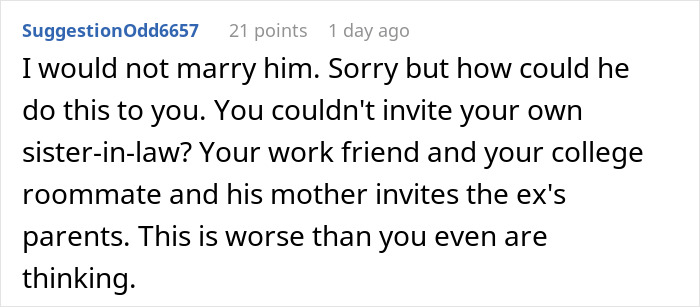
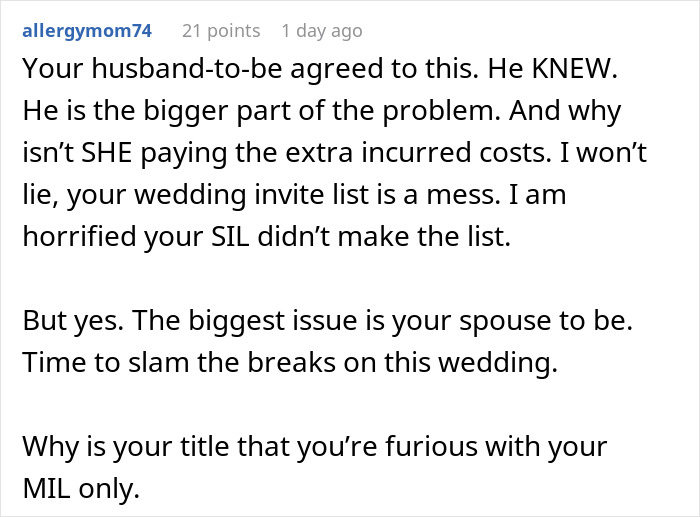
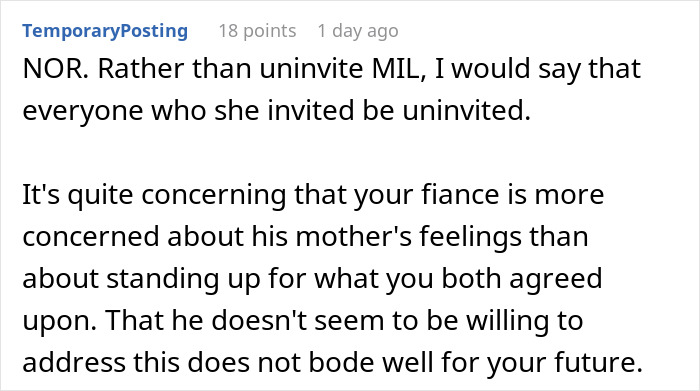
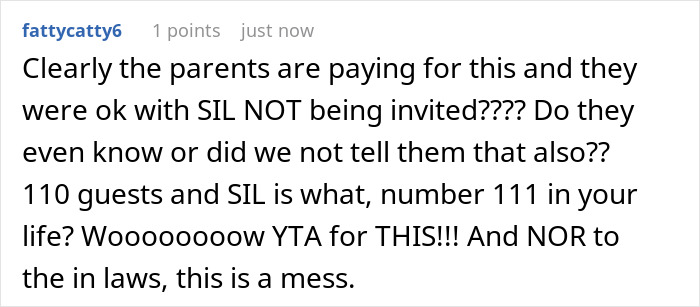
This is precisely what happened to one soon-to-be-bride only nine days before she was supposed to walk down the aisle. In her post online, she revealed how her fiancé had been lying to her for many months to protect his mother’s feelings.
Now, she is forced to make one of the most difficult decisions of her life.
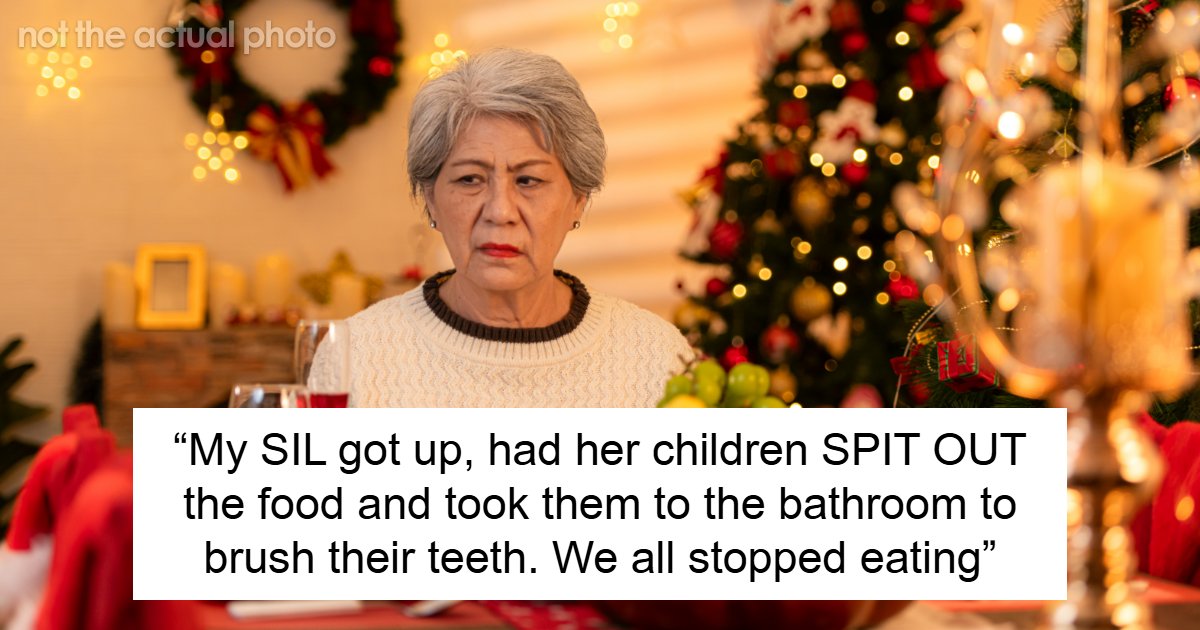
Image credits: Anna Shvets / Pexels (not the actual photo)
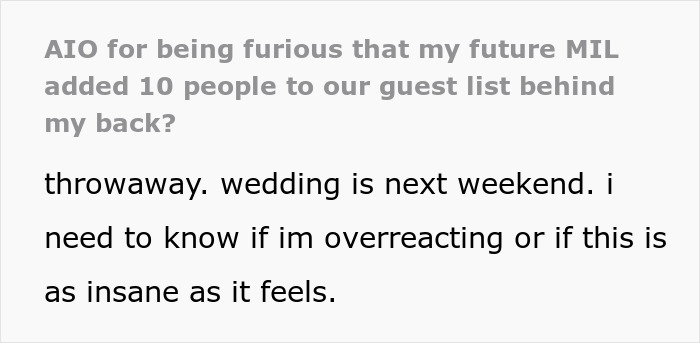
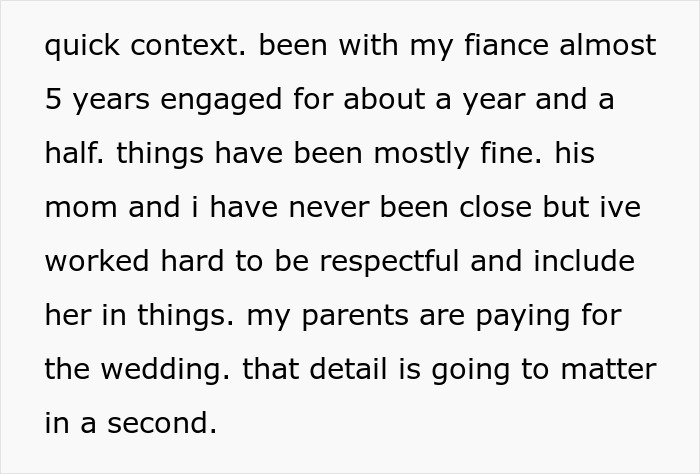
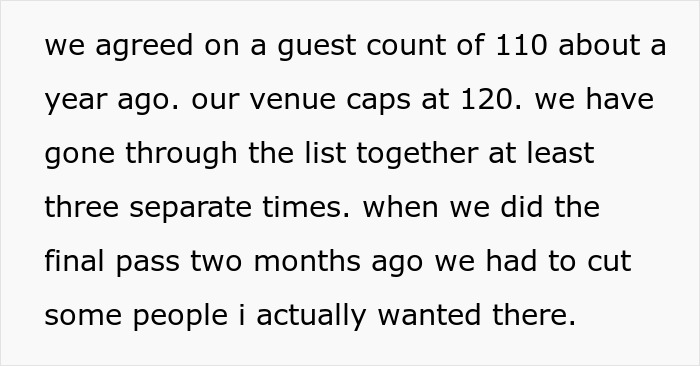
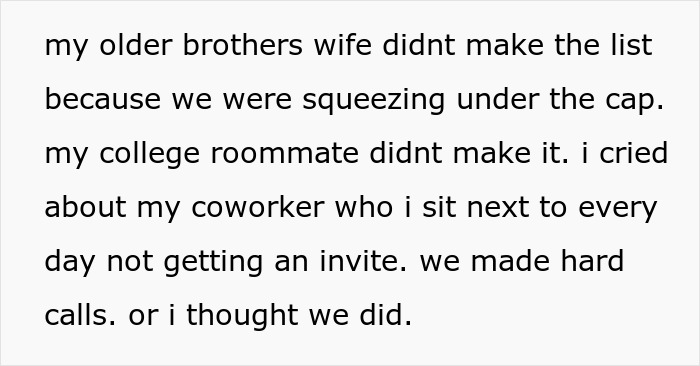
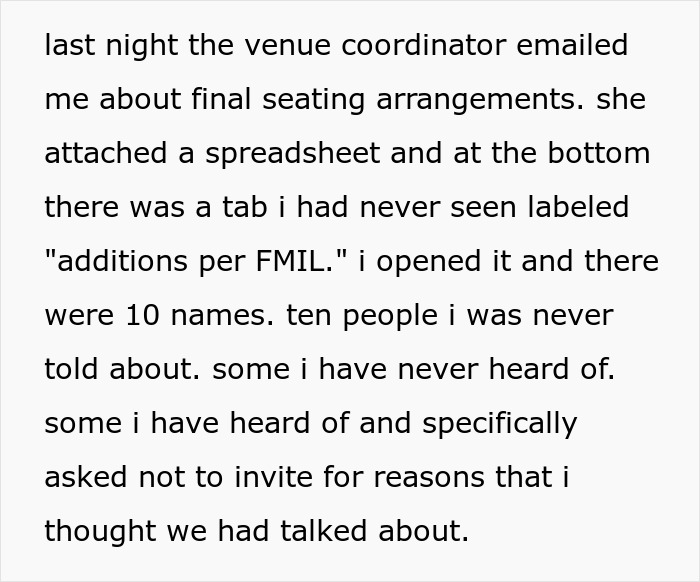
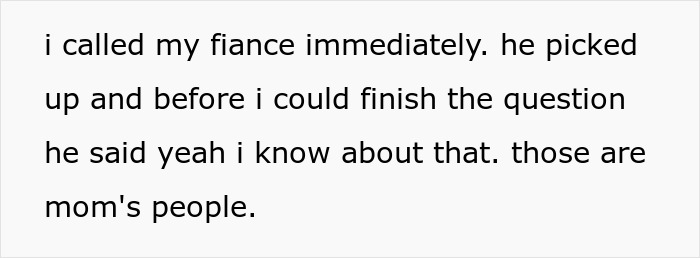
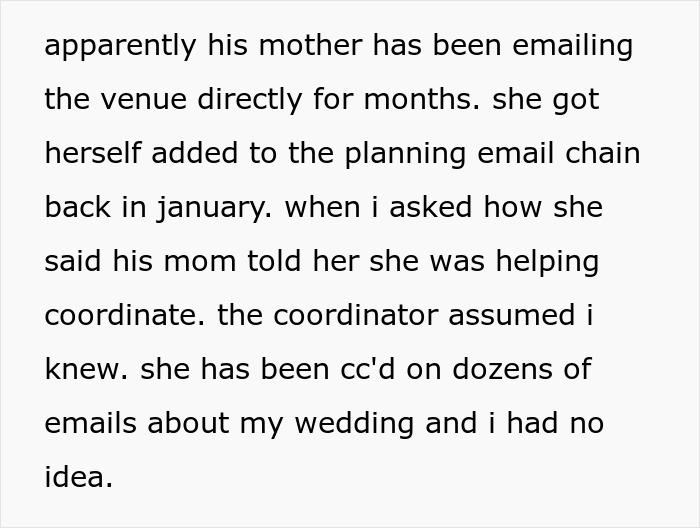
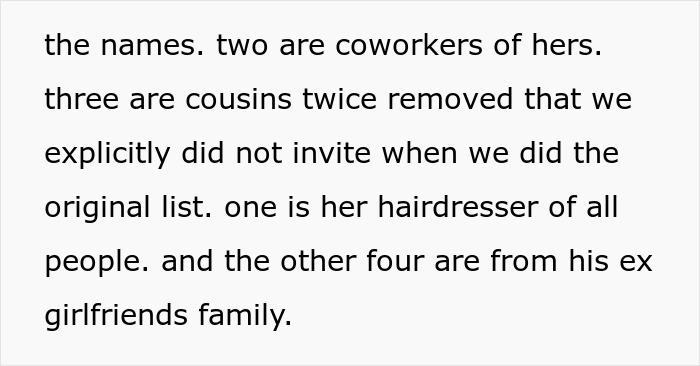
Image credits: www.kaboompics.com / Pexels (not the actual photo)
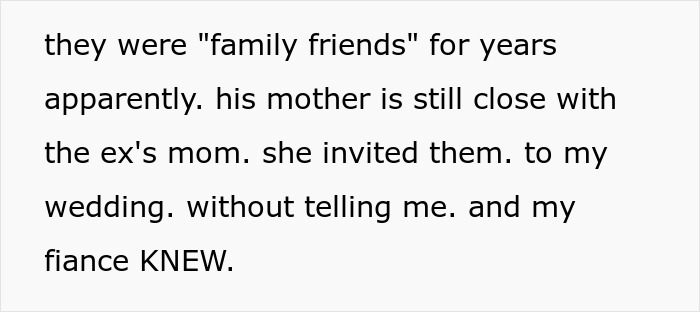
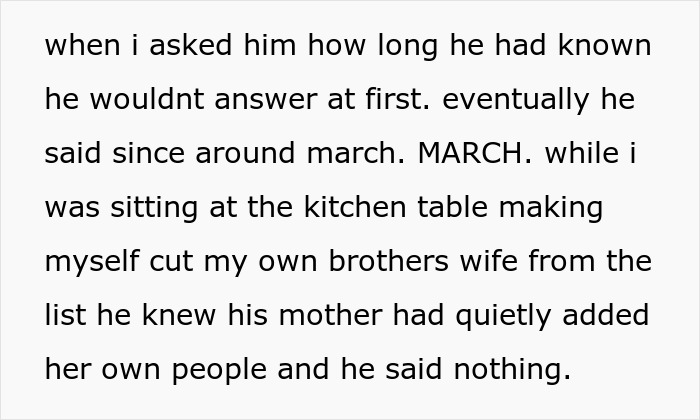
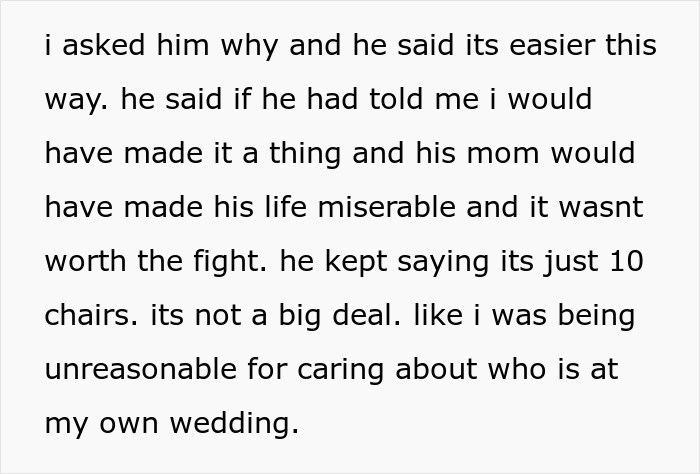
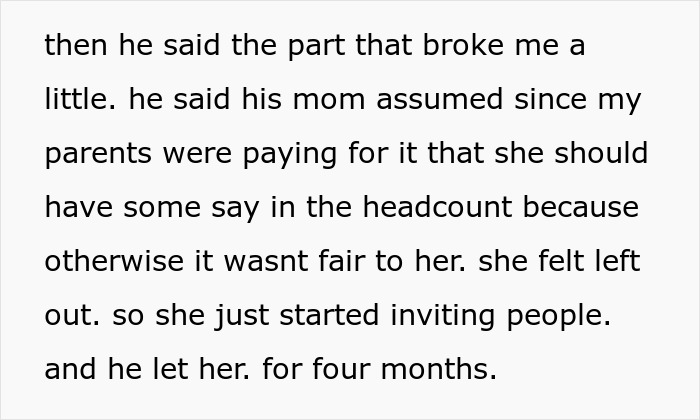
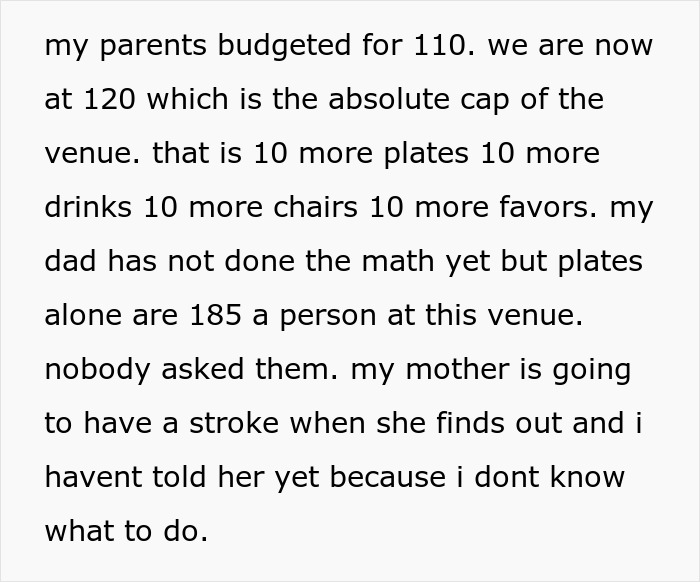
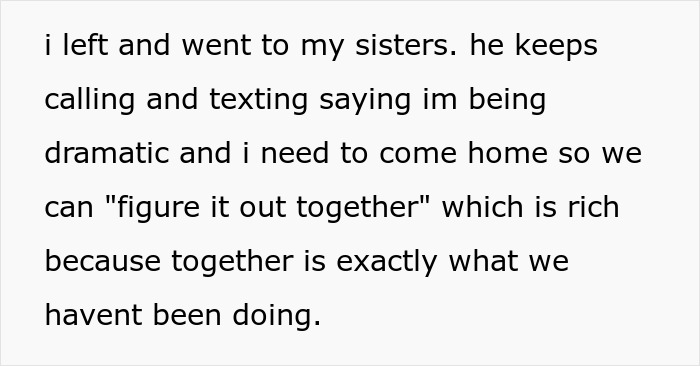

Image credits: Timur Weber / Pexels (not the actual photo)
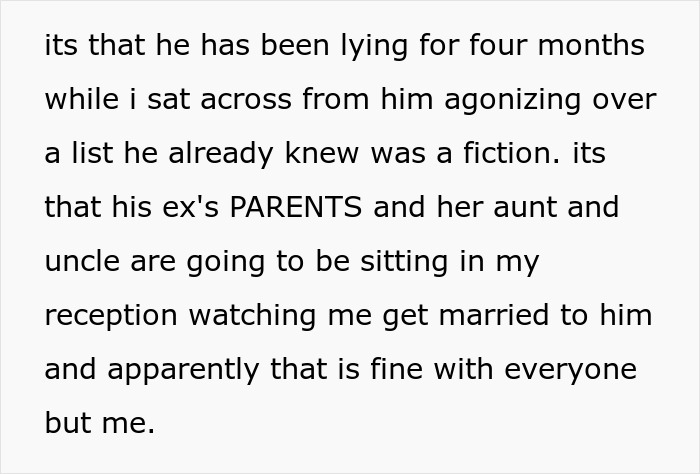
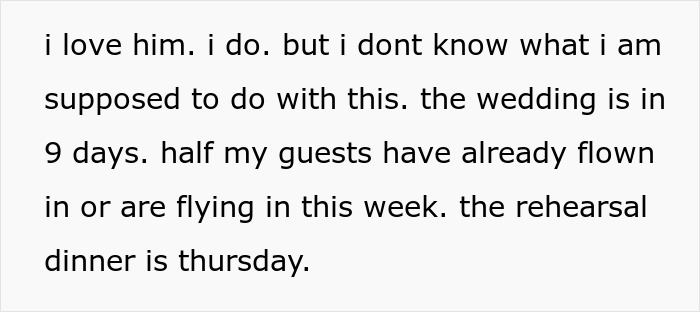
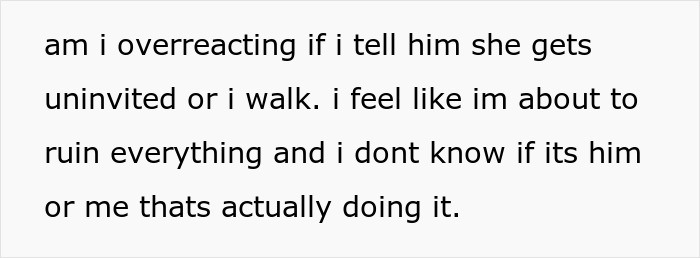

Image credits: generousclothing_55
Image credits: Ron Lach / Pexels (not the actual photo)
Planning a wedding is stressful enough. Toss in a group of overbearing in-laws trying to interfere in every little detail, and your stress levels are guaranteed to redline.
In a recent survey of newlyweds in the UK, over 32% cited guest lists and seating arrangements as a major source of anxiety. The same study ranked family conflicts as the number two wedding pressure point (37%), trailing just behind budgeting.
It’s no wonder budgeting takes the top spot. When you look at the raw numbers, the financial weight of a modern wedding is staggering.
According to The Knot 2026 Real Weddings Study, the average cost of a wedding in the US has hit $34,000. A massive chunk of that money disappears into catering.
A standard wedding meal averages around $75 to $85 per person in the US. But premium venues in major hubs or high-end settings easily skyrocket past $150 to $180 per plate once you factor in open bars, hors d’oeuvres, and mandatory venue service fees.
That per-head cost is exactly why guest lists become such a battlefield, and family expectations only amplify the strain.
Research shows that many parents view the wedding as a reflection of their own social standing, pushing for larger venues, fancier menus, and massive guest lists to satisfy family obligations.
Wedding spending is also treated as a way of signaling commitment and wealth within one’s community.
Experts believe that a crucial step in a successful marriage is establishing a unified boundary against outside family interference.
“In-law stressors may create wedding jitters and cause hesitation in you. You must communicate openly and honestly with your spouse about the situation and create reasonable boundaries with your in-laws. Healthy, open, and honest communication on a regular basis will ease your jitters,” says Dr. Frances Walfish, Psy.D., in Beverly Hills, California.
Experts also say that if your family is treating your partner like dirt and you try to “play both sides,” you aren’t being neutral — you’re failing both your partner and your family.
Image credits: Alena Darmel / Pexels (not the actual photo)
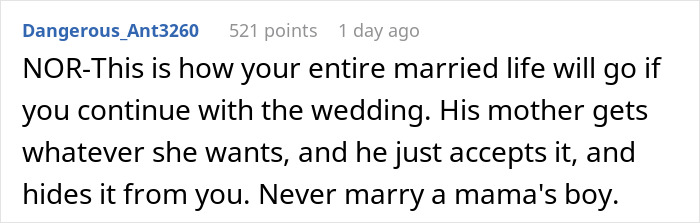
Hiding major choices for months isn’t just “avoiding a fight,” as the author’s fiancé tried to convince her. It’s straight-up betrayal.
According to experts, this kind of strategic deception can trigger genuine betrayal trauma for the spouse who was left out. When a fiancé chooses his mom’s comfort over his partner’s honesty, it sends a loud and clear signal — the partner is not their number one priority.
Research has shown that social pain, like betrayal, activates many of the same neural regions as physical pain.
“The anterior cingulate cortex and insula, areas involved in processing pain, show similar patterns of activation whether we’re experiencing physical injury or social rejection,” says Dr. Tracy A. Prout, an associate professor of Psychology at Yeshiva University.
“Betrayal involves multiple losses: the relationship as we understood it, the future we imagined, and often the shared history that now feels tainted. This grief is complicated by the fact that the person we would typically turn to for comfort is the source of our pain,” she adds.
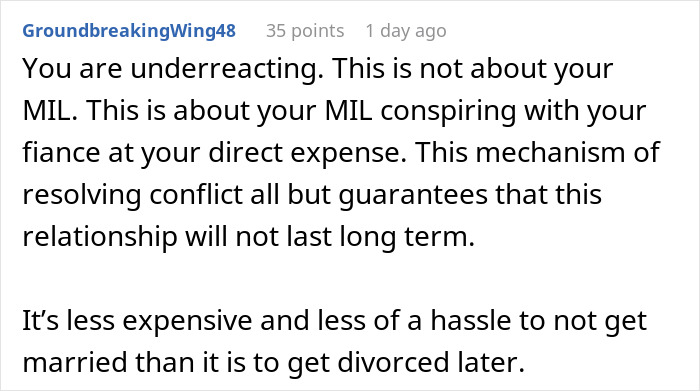
This behavior is also a massive red flag for the future of the marriage.
Experts warn that how a couple handles wedding drama is a trial run for how they will handle everything else.
If a partner defaults to lying and cave-ins now, they will likely do the same when it comes to major life choices down the road. For example, managing finances, buying a house, or raising kids.
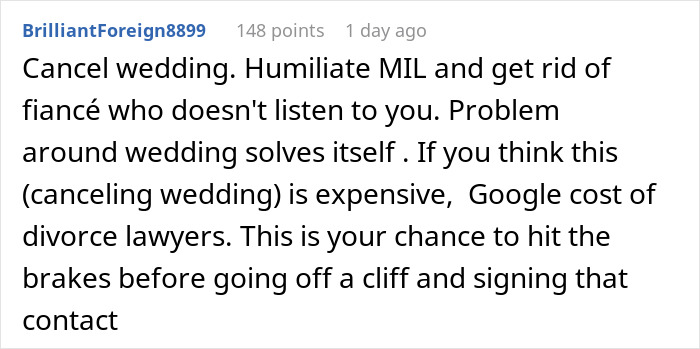
To resolve this impasse, the spouse who is left feeling completely isolated should immediately draw hard boundaries, according to experts.
Emergency couples counseling is a vital first step to address the breach of trust before walking down the aisle. If time runs out, therapists suggest postponing the big day to figure things out.
“You may lose out on some nonrefundable deposits or upset guests who have pre-booked their travel. However, keep in mind that confidence in your relationship is the most important factor to consider before making a lifelong commitment,” says Stephanie Weers, wedding planning expert.
At the end of the day, wedding planning stress isn’t just about guest lists and budgeting — it’s about how you weather the storm together.











By entering your email and clicking Subscribe, you're agreeing to let us send you customized marketing messages about us and our advertising partners. You are also agreeing to our Privacy Policy.
Thank you! You've successfully subscribed to newsletters!



The acct was banned and post removed, so we'll never know :(
Load More Replies...
"Sorry, this post was removed by Reddit’s filters." and account banned. Oh well.

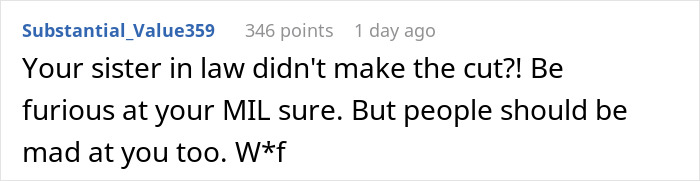
It's only 9 days old and also because who cuts their S-I-l and a couple of others you are close to to make the count. It's full of "if its brown it needs to go down".
Load More Replies... The acct was banned and post removed, so we'll never know :(
Load More Replies... "Sorry, this post was removed by Reddit’s filters." and account banned. Oh well.
It's only 9 days old and also because who cuts their S-I-l and a couple of others you are close to to make the count. It's full of "if its brown it needs to go down".
Load More Replies...

































 No fees, cancel anytime













31
15