Get Premium
Dark mode theme is available exclusively for premium users. Learn more about the benefits of subscribing.
No fees, cancel anytime.

 Dark Mode Ad-Free Browsing Unlimited Content
 Ad-Free Browsing Unlimited Content Dark Mode
Join 1.2 million Panda readers who get the best art, memes, and fun stories every week!

For every workplace that genuinely respects work-life balance, there’s always another that treats it like a fantasy.
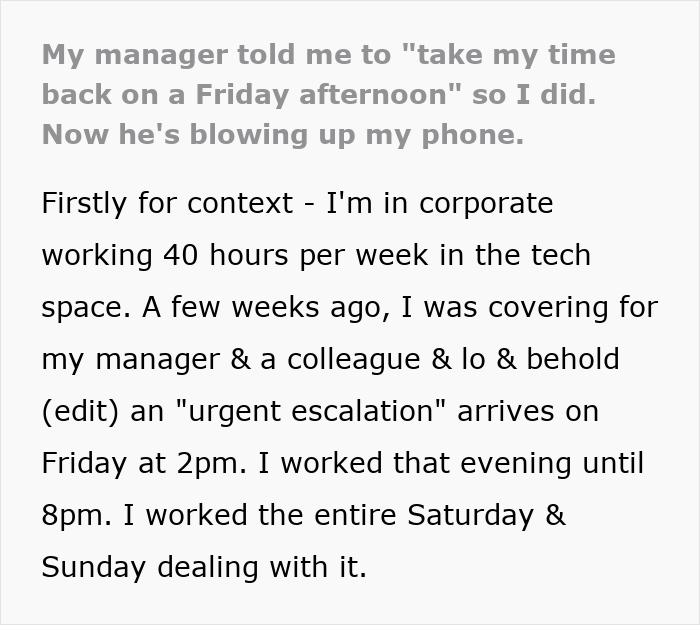
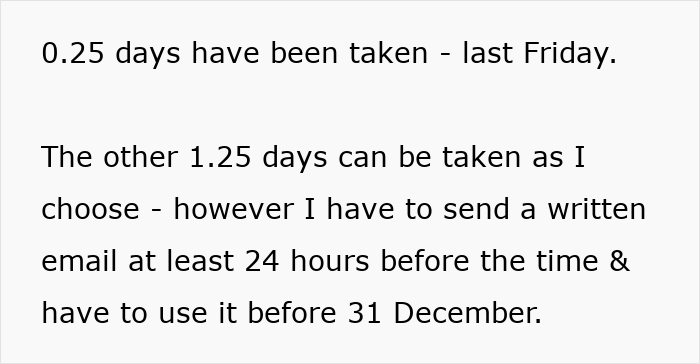
This Redditor ended up with a manager who belonged in the latter category. After working an entire weekend to fix an urgent issue, he asked for two extra days off as compensation. Instead, his boss told him to just leave early every Friday. So he did—exactly as instructed—and that’s when the trouble started.
What happened next was an awkward HR meeting that didn’t play out the way the manager expected. Read the full story below.
Image credits: katemangostar (not the actual image)
Image credits: rawpixel.com (not the actual image)
Image credits: Ambreen (not the actual image)
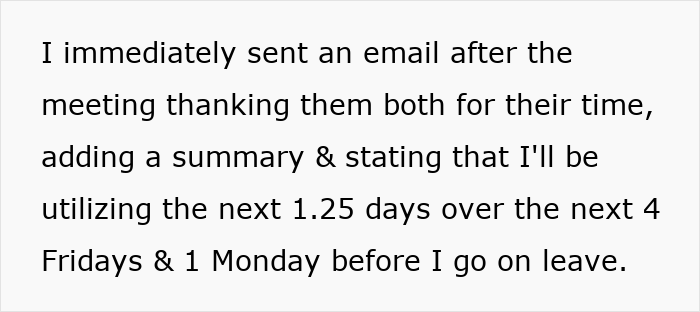
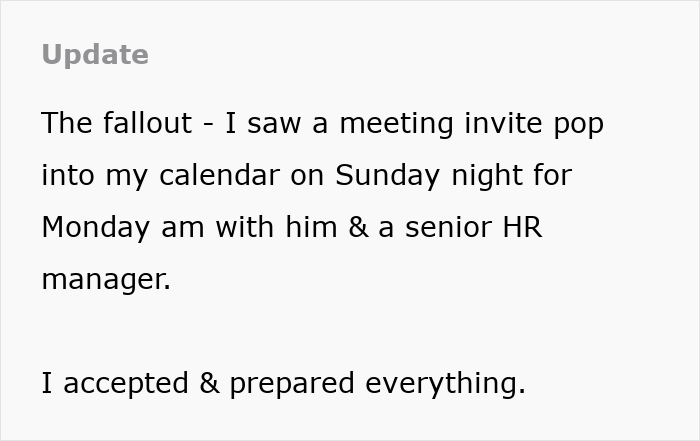
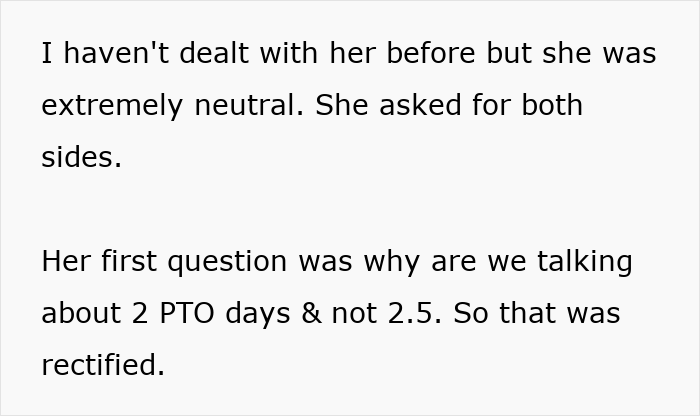
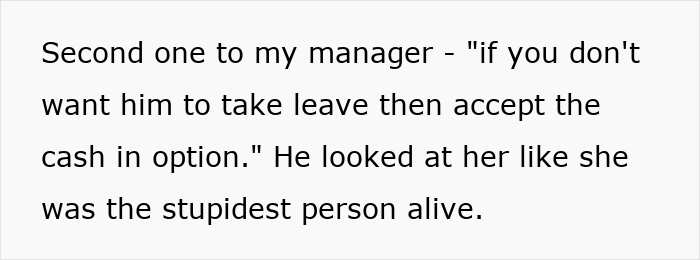
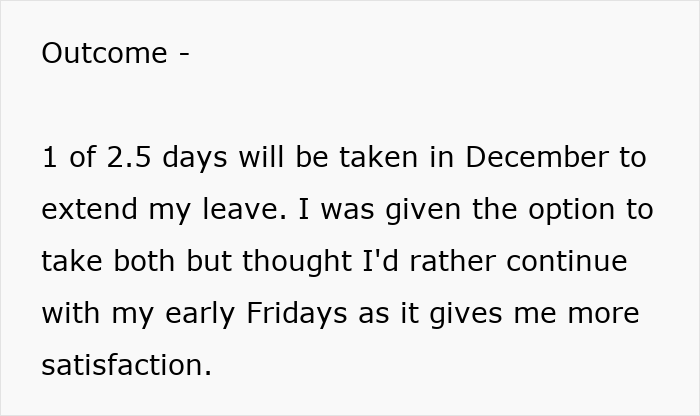
Image credits: Careless-Cat3327
We already spend so much time at our jobs. So when that time suddenly stretches into a whole weekend, as it did for the author of this story, it becomes incredibly demoralizing. It is even worse when the compensation you deserve never appears. And when it finally does, in the form of free Friday afternoons, you still end up getting called anyway.
Anyone would lose patience in a situation like that. Sadly, dealing with poor management is something many workers recognize all too well. One study found that 71 percent of employees have had a toxic boss at some point in their careers. A third are dealing with one right now.
And even when a boss is not intentionally toxic, they may still believe the relationship with their team is far better than it actually is. Research from Checkr shows that most managers think they communicate well and understand their employees, but far fewer workers agree.
In this story, the author at least had HR step in with a fair response. Many people are not as lucky, and the idea of standing up to a boss can be terrifying when you rely on your job. Harvard Business Review has a few pieces of advice for handling situations like these, including when it is time to walk away. Here is a summary of their main points.
One of their first suggestions is to put your own well-being first. When you work under someone who constantly creates stress, it is easy to internalize their mood and frustration. Your own emotions get pushed aside until you feel drained.
HBR recommends building habits that help you separate yourself from the tension, like investing time in hobbies, spending time with people who support you, or simply writing things down. Journaling has been shown to help people process stress and think more clearly. Even a few minutes a day can help put distance between you and whatever happened at work.
Another recommendation is to try having a constructive conversation with the boss, but only if it feels safe. The idea is to stay factual and calm. You explain how certain actions affect your ability to work well without turning the discussion into an argument. For example, instead of accusing someone of not valuing you, you explain that a specific decision made you feel undermined. The goal is to communicate without escalating the situation.
HBR also stresses the importance of keeping records. Notes, emails, and summaries of conversations can be incredibly helpful if you ever need support from HR. Writing a quick follow-up email after receiving verbal instructions is a simple way to protect yourself and avoid misunderstandings.
If things do not improve, it helps to talk to someone you trust at work. Other employees might have similar experiences and can offer advice. A mentor or senior colleague might also give you a clearer picture of what is happening behind the scenes.
And finally, if speaking directly is not realistic, HR can be an important next step. They can look at the documented facts and help you find a reasonable solution. And if nothing changes, HBR encourages workers to remember that leaving is always an option. No job is worth the long-term damage of dealing with someone who constantly undermines you.
Working for a toxic boss is incredibly hard. But understanding your options, protecting your wellbeing, and knowing when to move on can help you navigate situations that feel impossible.
Image credits: pixel-shot.com (not the actual image)

By entering your email and clicking Subscribe, you're agreeing to let us send you customized marketing messages about us and our advertising partners. You are also agreeing to our Privacy Policy.
Thank you! You've successfully subscribed to newsletters!

Where is the malice when they owe you the time off and the arrangement was agreed upon?

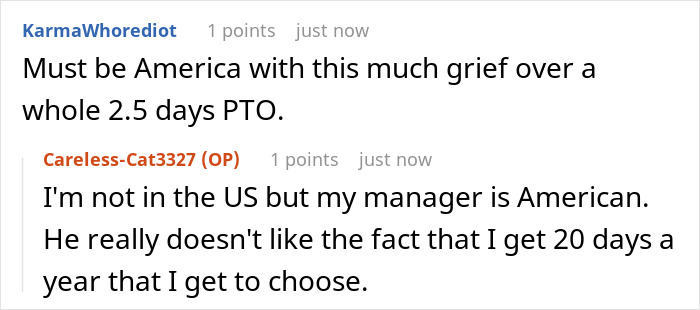
Thank goodness this person does lives in the USA Other countries have far better employment laws and protections. The HR person seems to be very fair, and will not tolerate 'retaliation' from the person's manager.

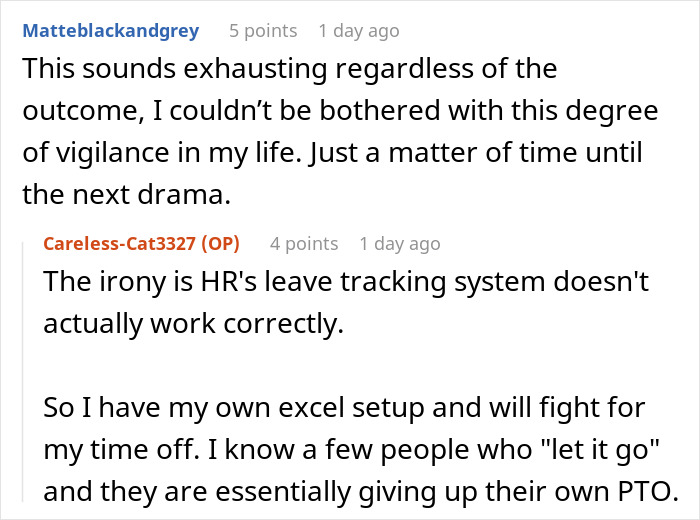
It was made plain in one of the replies that the OP is NOT in fact in the US, but the manager is.
Load More Replies...
Where is the malice when they owe you the time off and the arrangement was agreed upon?
Thank goodness this person does lives in the USA Other countries have far better employment laws and protections. The HR person seems to be very fair, and will not tolerate 'retaliation' from the person's manager.
It was made plain in one of the replies that the OP is NOT in fact in the US, but the manager is.
Load More Replies... 

































 No fees, cancel anytime























35
8