Get Premium
Dark mode theme is available exclusively for premium users. Learn more about the benefits of subscribing.
No fees, cancel anytime.

 Dark Mode Ad-Free Browsing Unlimited Content
 Ad-Free Browsing Unlimited Content Dark Mode
Join 1.2 million Panda readers who get the best art, memes, and fun stories every week!

Most of us understand that one should never work for free, but that doesn’t mean that some bosses and companies can’t find ways to manipulate folks into doing extra by dangling the carrot of a raise or promotion in front of them.
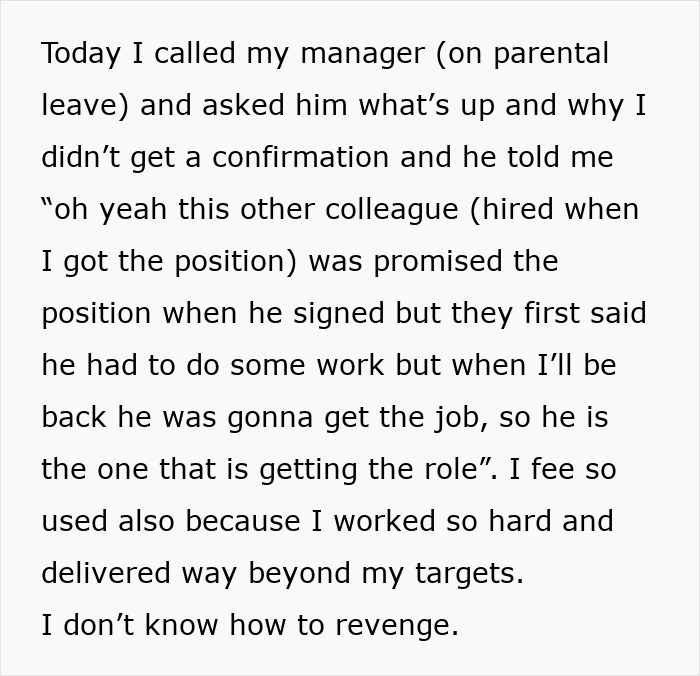
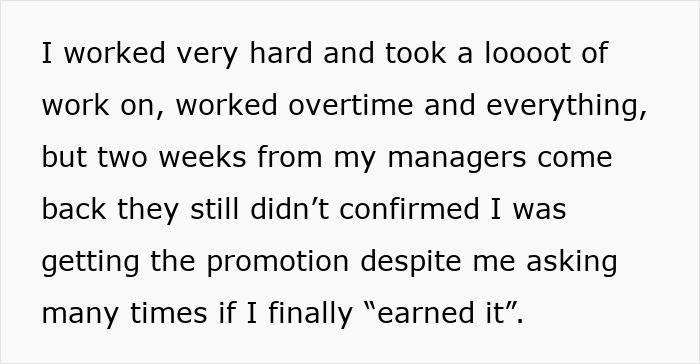
A woman vented online about how her manager told her she’d get a promotion if she worked hard for about six months, only to learn that he had already promised the position to her coworker. Later, she shared an update on what happened when she confronted them and her plans moving forward.
Image credits: pressfoto / freepik (not the actual photo)
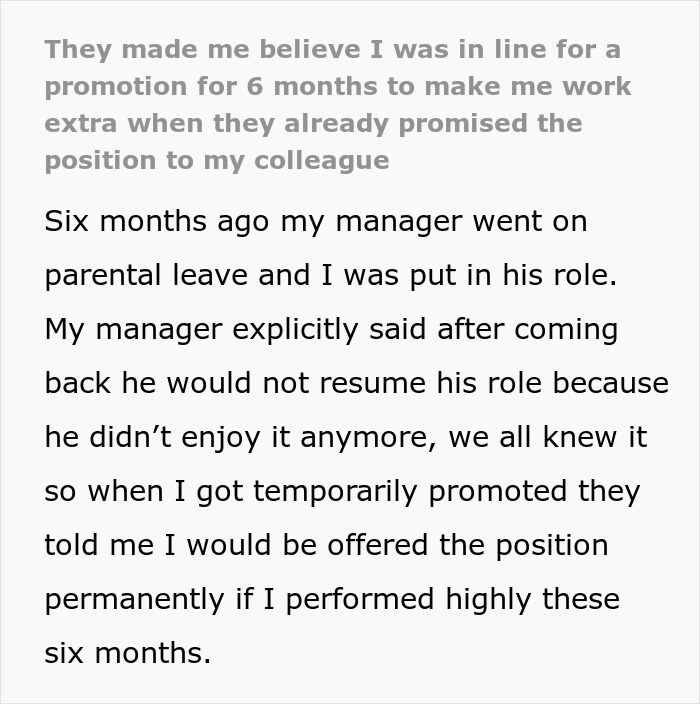
Image credits: user18526052 / freepik (not the actual photo)
Image credits: Adventurous-Wash3201
The corporate world often utilizes a strategy known as future faking where leaders promise a reward that they never intend to deliver. This psychological manipulation serves a very specific business goal which is the extraction of high level productivity without the immediate need for a salary increase or a permanent contract adjustment. When an organization tells a high performing individual that a role is theirs to earn they are essentially gamifying the workplace. They create a high stakes environment where the employee feels that every extra hour worked is an investment in their own future rather than a gift to the company.
This creates a feedback loop of overperformance fueled by the hope of stability and recognition. Unfortunately this tactic is frequently premeditated because it allows a company to bridge a gap in leadership or cover a busy period without committing to a long term financial obligation. It is a calculated move to keep the wheels turning at maximum velocity for the lowest possible price.
From a purely cold and analytical business perspective this behavior is seen as maximizing human capital. By dangling a promotion the company ensures that the employee will go above and beyond their standard duties which often saves the firm from hiring additional temporary help or paying overtime to multiple staff members. This is a form of exploitation that relies on the silence of workers and the natural desire of talented people to prove their worth. When the promise is revealed to be a lie the damage to the workplace culture is often ignored in favor of the short term gains achieved during that period of intense labor. The reality is that many companies view employees as replaceable resources rather than partners in success. This is why understanding your rights is crucial.
Image credits: Scott Graham / unsplash (not the actual photo)
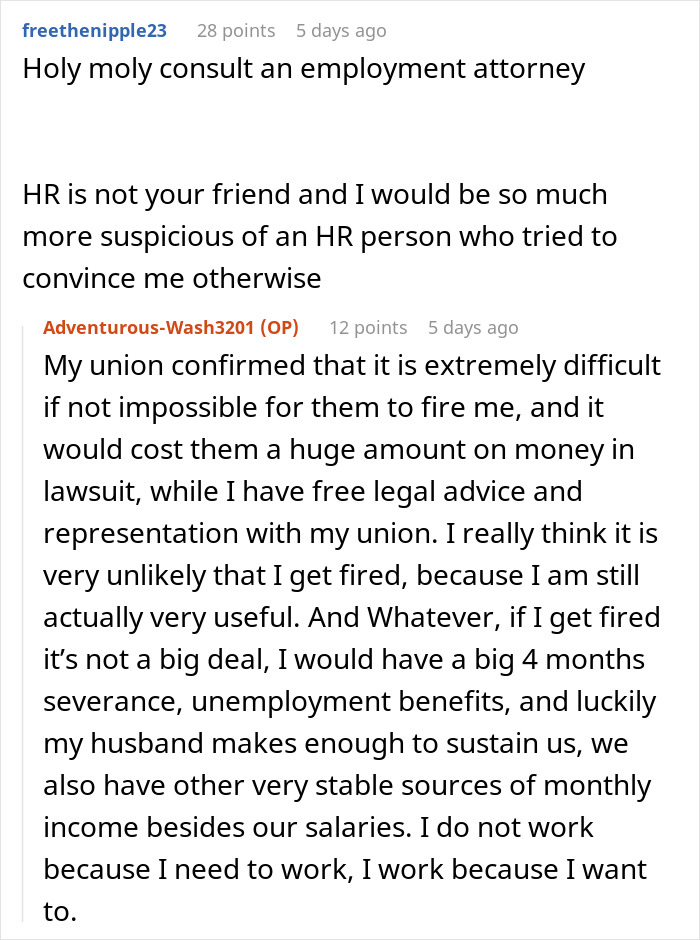
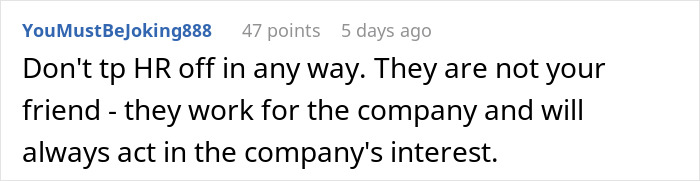
Protecting yourself from this kind of professional gaslighting requires a shift in how you view verbal promises. In many jurisdictions a verbal agreement regarding a promotion can be difficult to enforce unless there is a paper trail or a formal witness. This is why employment experts always suggest getting every performance expectation and promised reward in writing before you begin the extra work. If a manager says you will be promoted after six months of high performance you should ask for a signed document or at least a follow up email outlining the specific metrics required for that transition. If they refuse to provide this it is a major red flag that the carrot is not attached to a real stick.
When a company chooses to hire someone else for a role they promised to you it is not just a personal insult but a strategic betrayal. If you believe that the company misrepresented the terms of your employment or engaged in fraudulent inducement you might have grounds for a legal consultation. While the urge to seek revenge is a natural human response to being mistreated, the most effective form of justice is often ensuring that you are paid for every minute worked and finding a new employer that values integrity. It is important to review your original contract and any local labor laws to see if the temporary promotion should have come with a mandatory pay bump regardless of the permanent outcome.
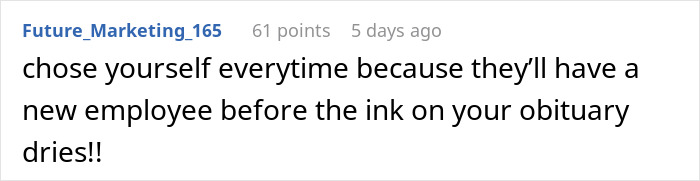
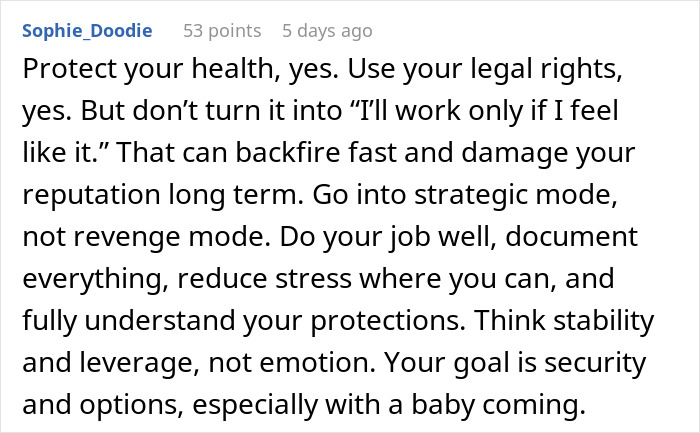
Sometimes the best way to handle a company that used you is to withdraw the extra labor immediately and transition back to the exact requirements of your original job description while looking for a new opportunity. This is often called quiet quitting or simply working to rule and it serves as a powerful reminder to the company that your extra effort was a gift that they failed to earn. By focusing your energy on your next career move rather than fixing a broken system you reclaim your power and your time. Companies that rely on deception to motivate their staff eventually face high turnover and a damaged reputation which is a far more permanent consequence than any individual act of revenge.
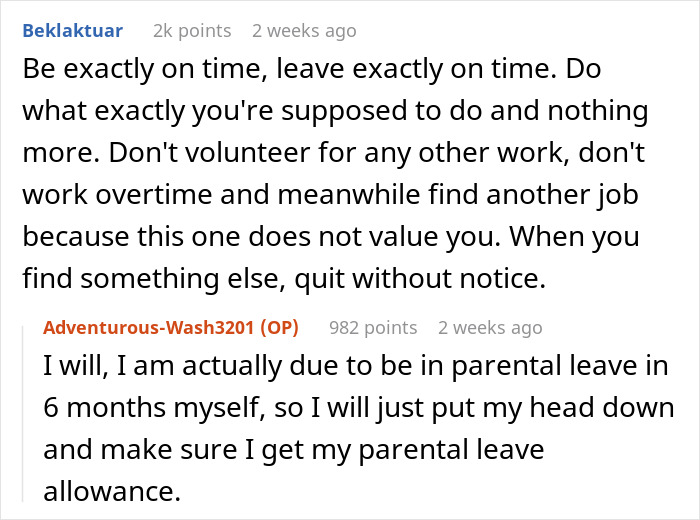
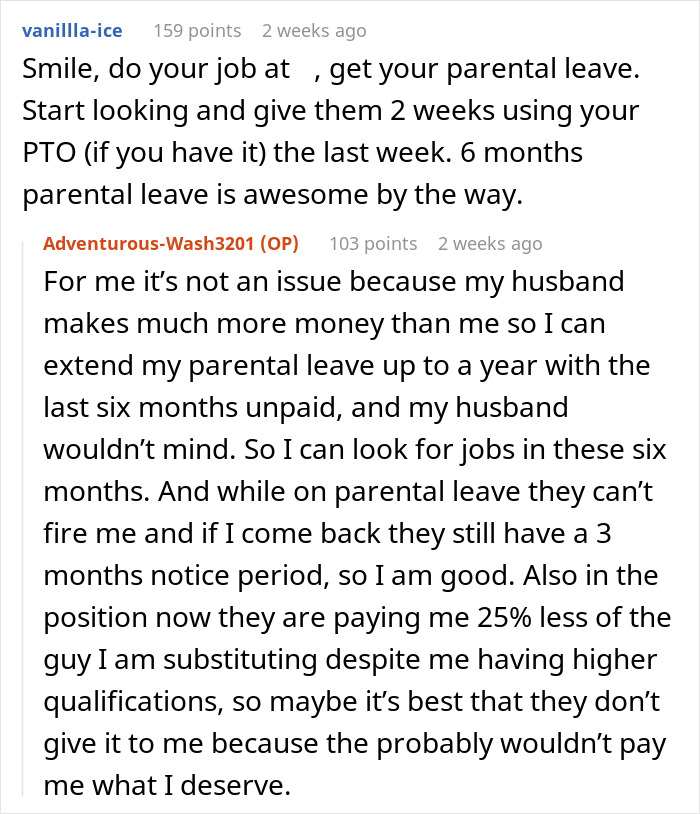

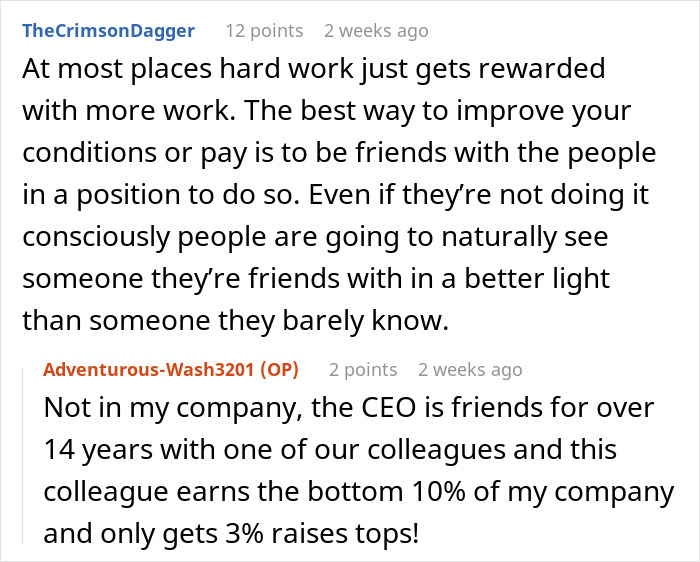
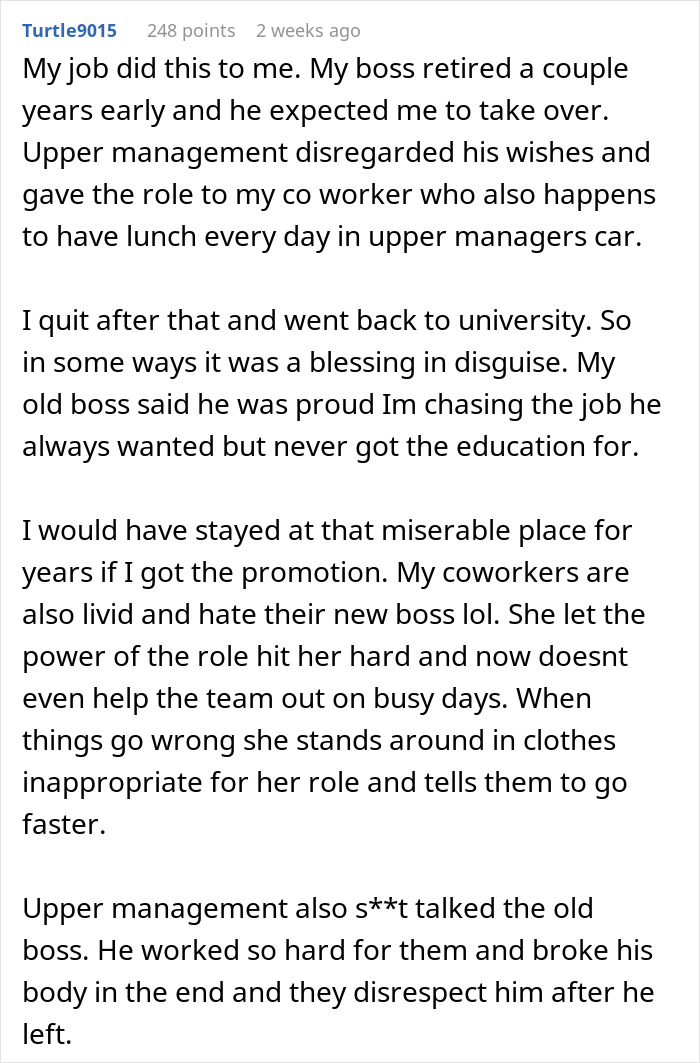
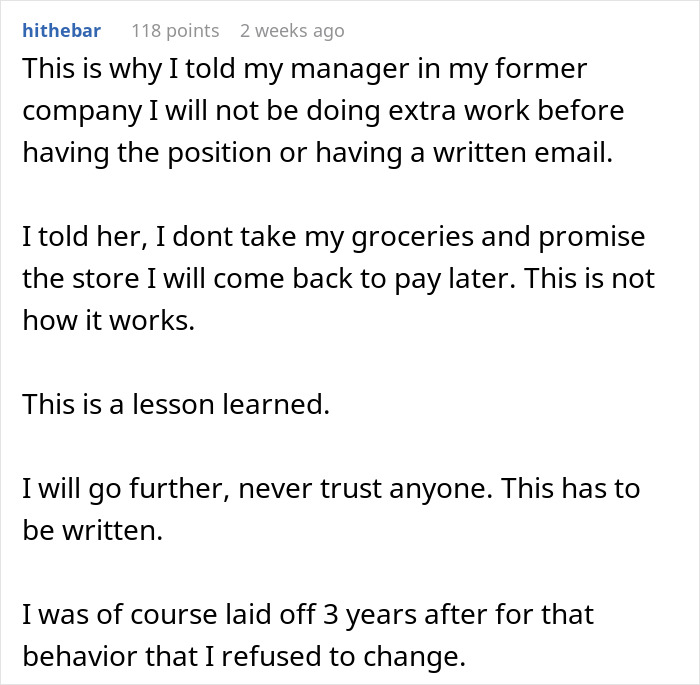
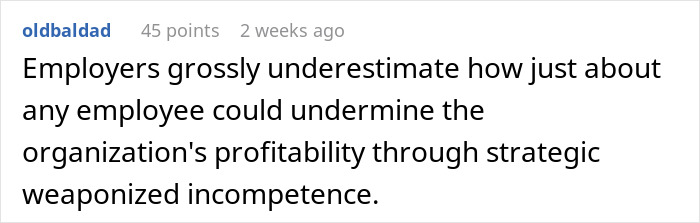

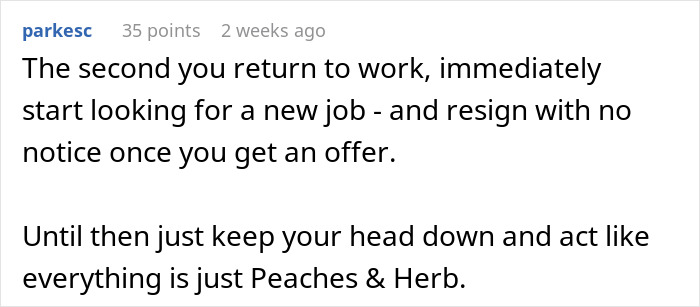
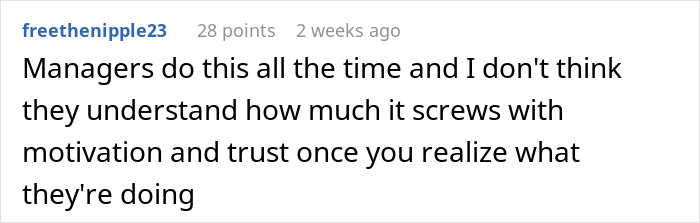
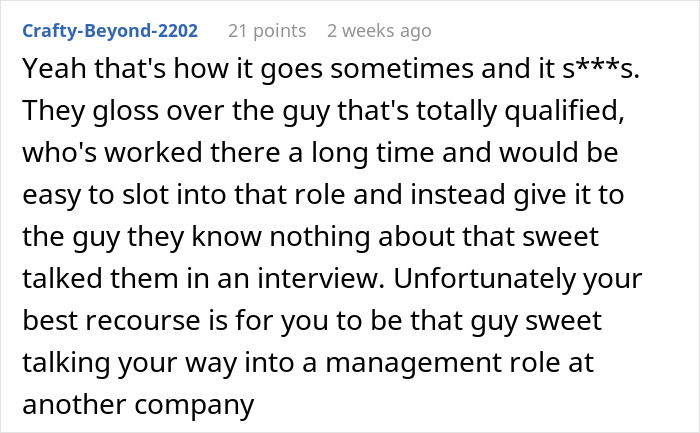
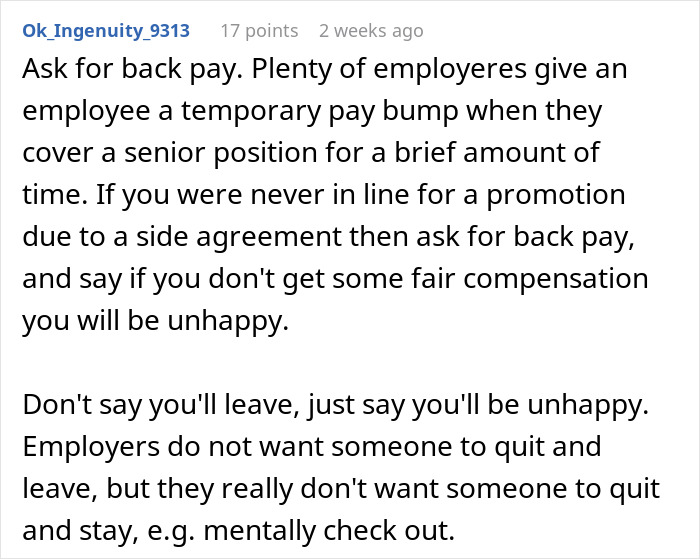
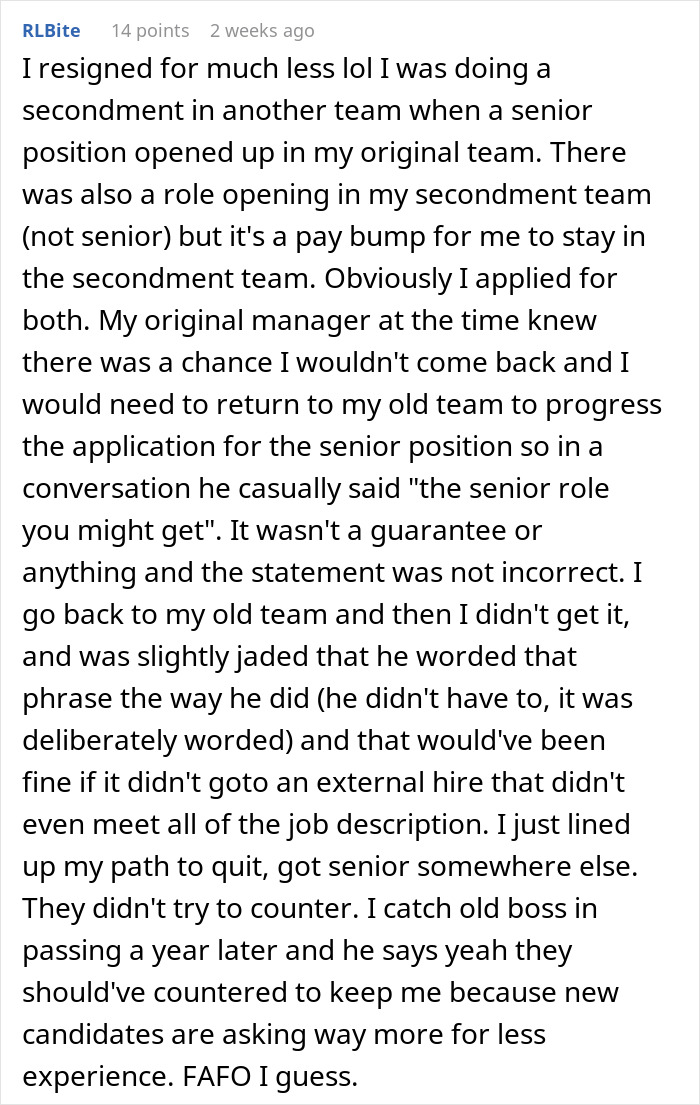
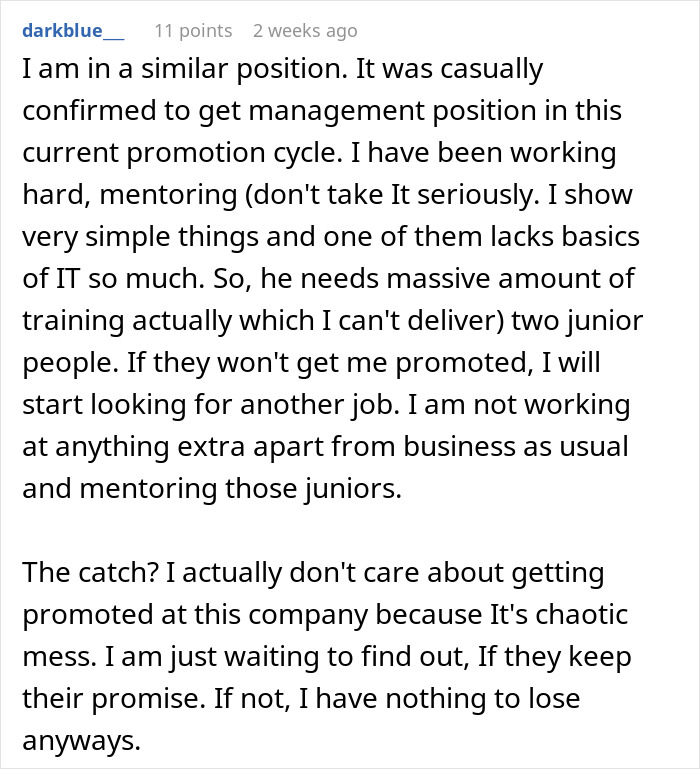

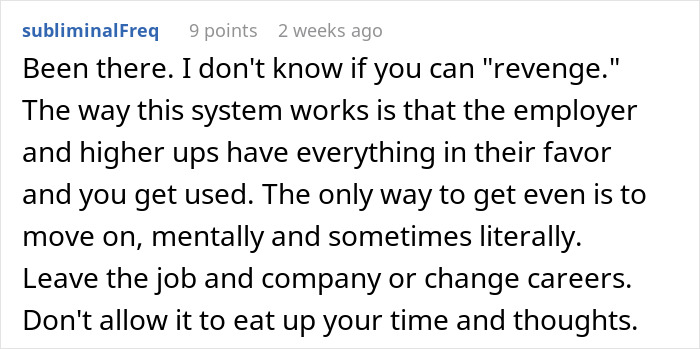
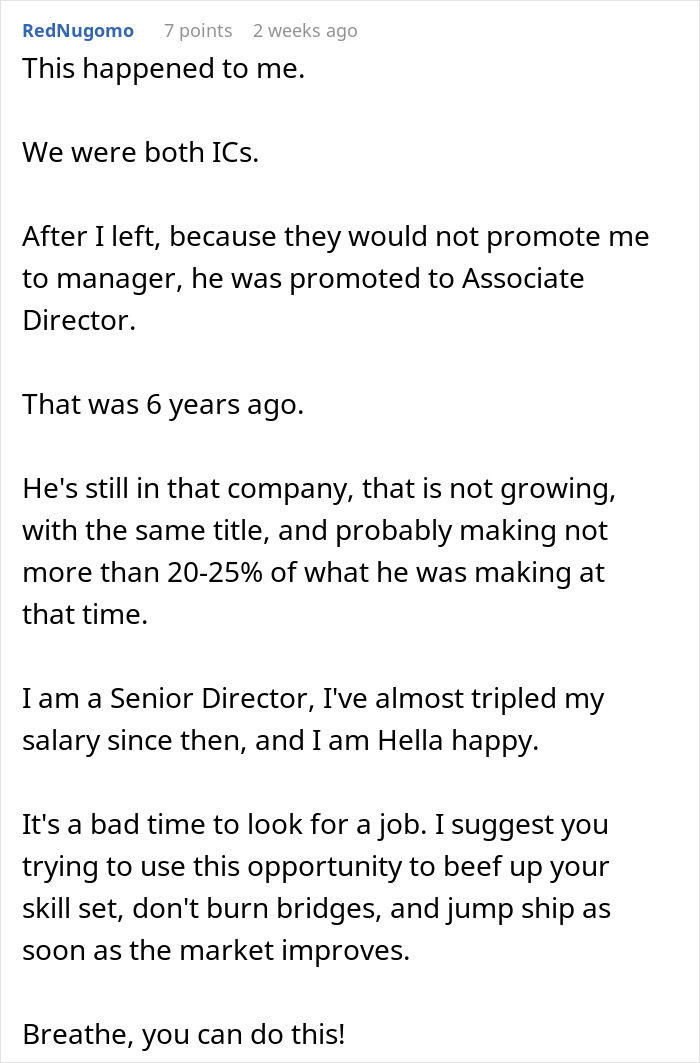


Image credits: DC Studio / freepik (not the actual photo)
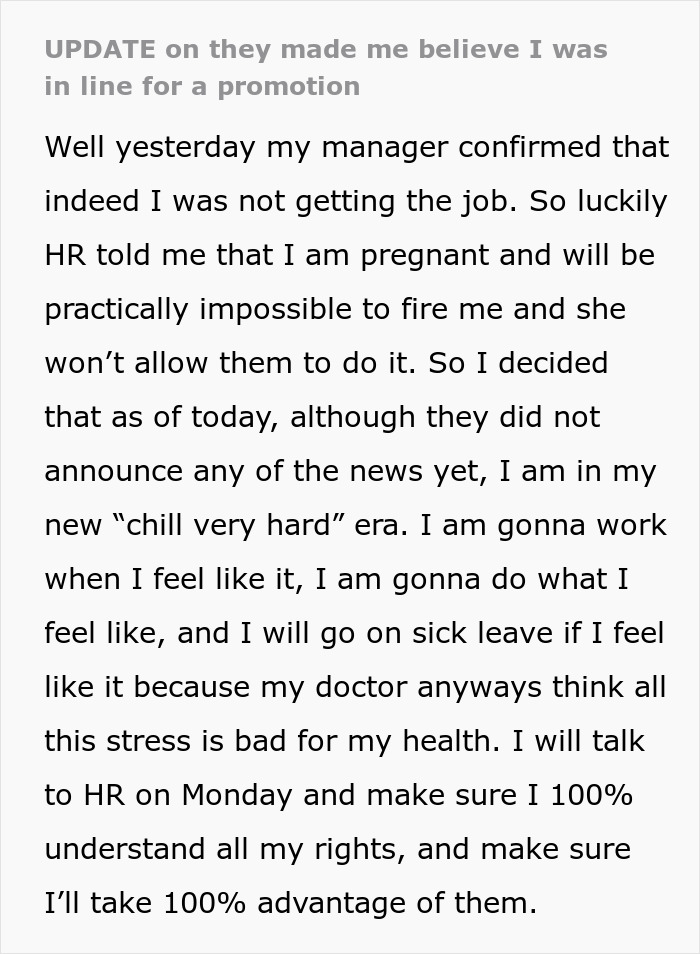
Image credits: Adventurous-Wash3201






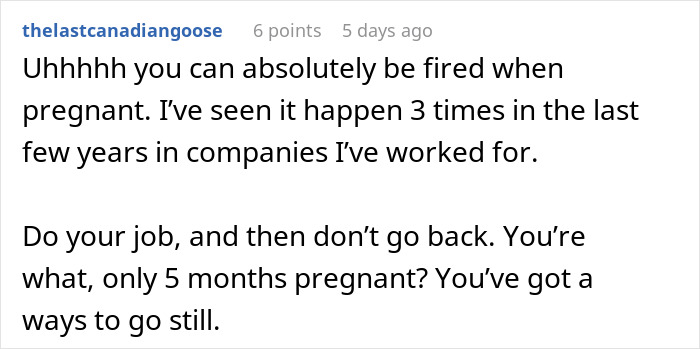

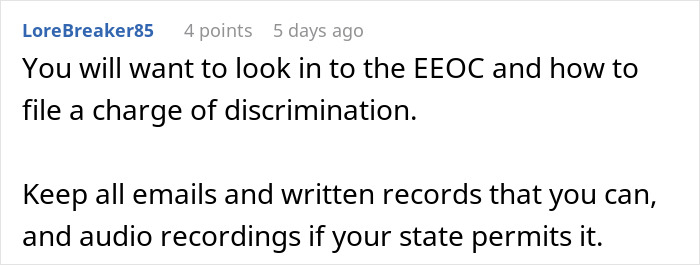


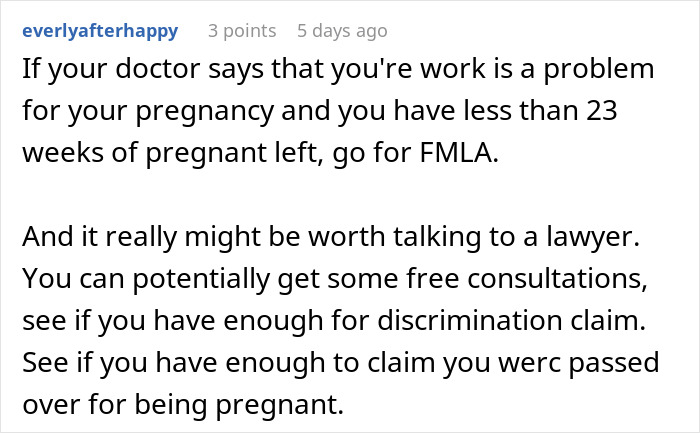



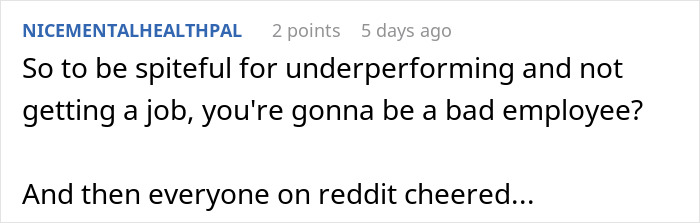



By entering your email and clicking Subscribe, you're agreeing to let us send you customized marketing messages about us and our advertising partners. You are also agreeing to our Privacy Policy.
Thank you! You've successfully subscribed to newsletters!



"nothing more", what you described, in most countries except the workers hell (USA) is called discrimination, and it's illegal
Load More Replies... "nothing more", what you described, in most countries except the workers hell (USA) is called discrimination, and it's illegal
Load More Replies...






































 No fees, cancel anytime











35
4