Get Premium
Dark mode theme is available exclusively for premium users. Learn more about the benefits of subscribing.
No fees, cancel anytime.

 Dark Mode Ad-Free Browsing Unlimited Content
 Ad-Free Browsing Unlimited Content Dark Mode
Join 1.2 million Panda readers who get the best art, memes, and fun stories every week!

The last thing you want to worry about when getting ready for work is what to wear. As long as an outfit is clean and appropriate for the weather and the job, it’s a great choice.
But even though successful companies are primarily concerned with employees’ performance rather than their attire, clothing sometimes does need to be addressed.
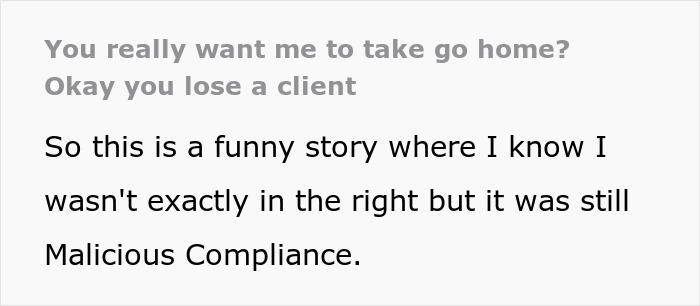
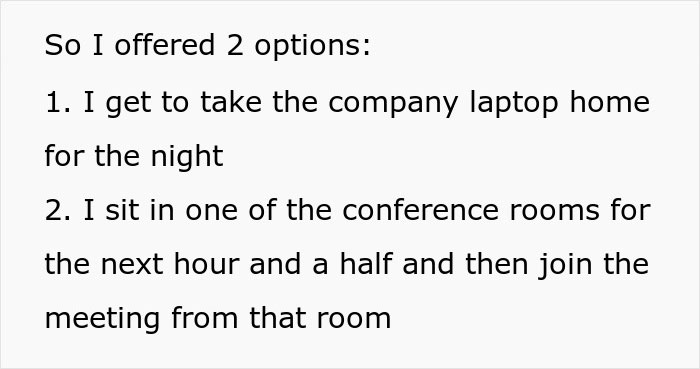
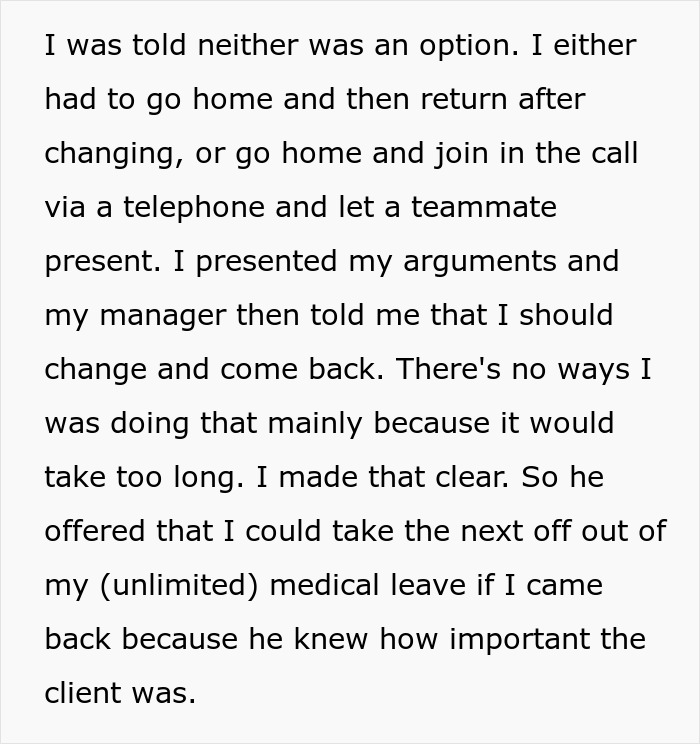
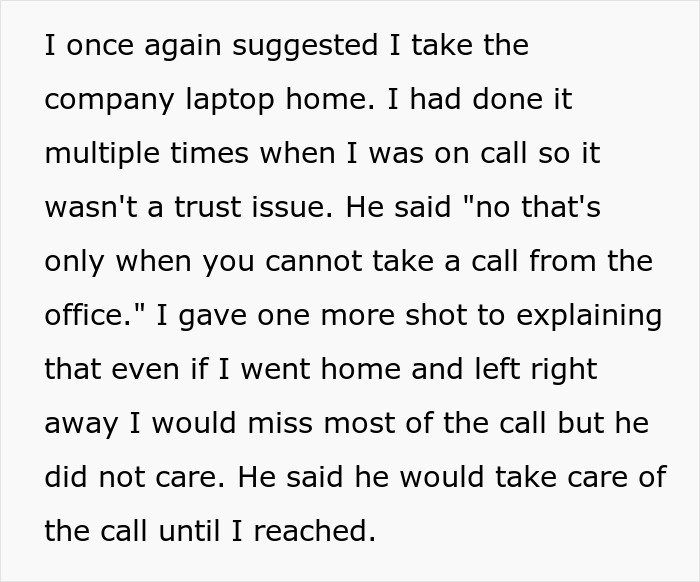
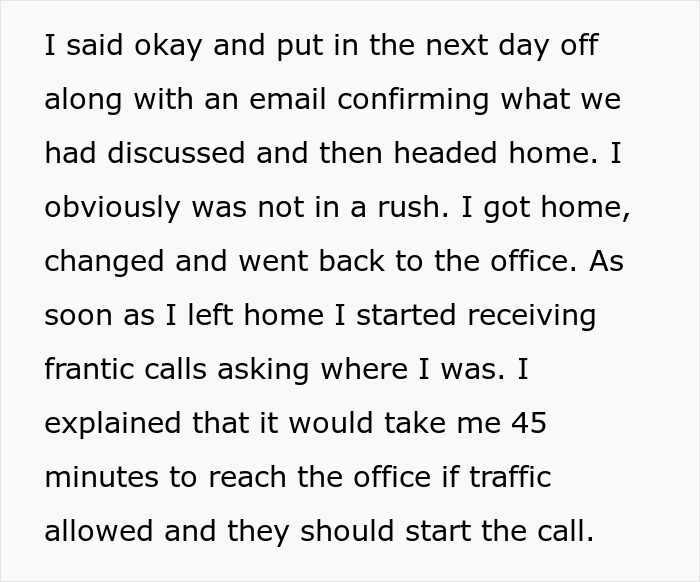
One woman made a post on Reddit detailing how her boss sent her home to change, despite her warnings that this would cause her to miss an important meeting. Continue scrolling to read her story!
Image credits: ThisisEngineering RAEng / unsplash (not the actual photo)
Image credits: Laura Chouette / unsplash (not the actual photo)
Image credits: Kaitlyn Baker / unsplash (not the actual photo)
Image credits: Headway / unsplash (not the actual photo)
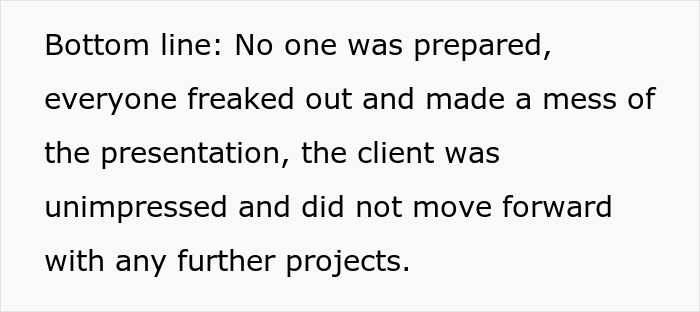
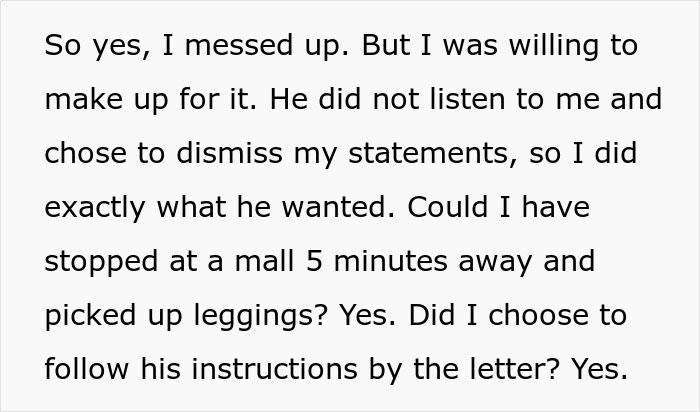
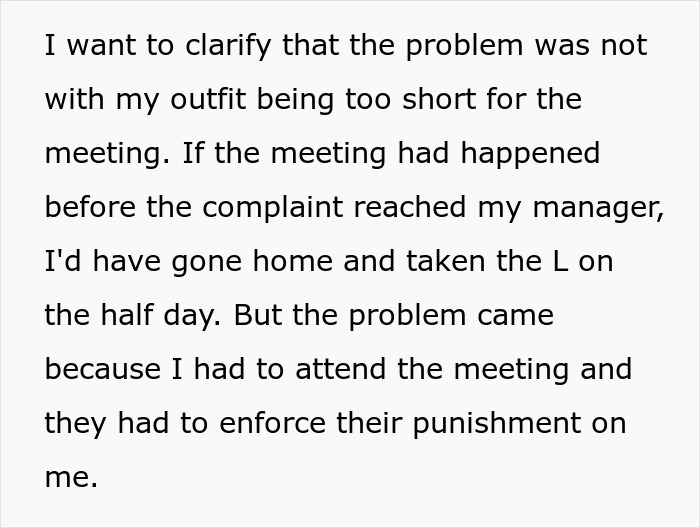
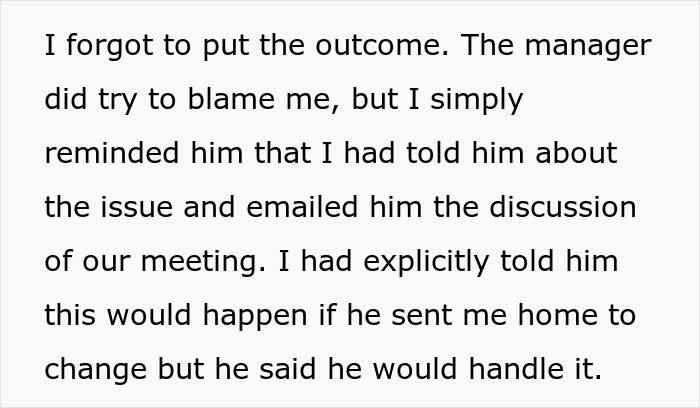
Image credits: wisereply2377
I remember adhering to strict dress codes when going to school while growing up. My elementary and middle schools had uniforms, so I wore the same skirt and button-down shirt every single day. We were never allowed to paint our nails, wear anything but very simple jewelry, or wear skirts of an inappropriate length. As an adult, however, I haven’t had to worry about a dress code or uniform for a very long time.
Most of the employers I have had have not set strict dress codes because it is typically understood amongst employees what is appropriate to wear and what’s not. I won’t show up to work in pajamas, athletic wear, or an extravagant gown, and HR will have nothing to worry about. But according to Trakstar Hire, dress codes can actually be beneficial to employees at times.
Dress codes ensure that employees who interact with customers or clients look professional and reflect positively on the company. Dress codes are also important for employees who do physical labor, work with food, or work in the medical field to keep themselves and others safe. A simple dress code can eliminate any worry from employees’ minds about whether or not their outfits are appropriate.
Image credits: Christina @ wocintechchat.com / unsplash (not the actual photo)
Because employees might not always be thrilled to comply with a dress code, Trakstar Hire notes that it’s important to keep in mind the dos and don’ts of implementing one. First, not all employees will require the same dress code. Some may have more physically demanding jobs, and others might never have to interact with customers. It’s wise to also consider what employees themselves think is appropriate and what isn’t.
Companies should be clear with the language they use and provide examples of what counts as an outfit that meets the dress code and outfits that don’t. Provide examples of current, up-to-date fashion, and have the dress code clearly written where employees can access it whenever necessary. Explain the consequences of breaking dress code, and make sure that the policy is fair for everyone.
Dress codes should include rules for all genders and not be stricter for men or women. Be careful to avoid gender, religious and racial discrimination with your dress code policies, and make sure that sexual harassment never plays a part in reporting employees for breaking the dress code. “A well-written and crafted policy won’t contain any offensive language. But be sure the employees who communicate it and handle violations never behave in a hostile manner,” Trakstar Hire explains.
Dress codes can also help level the playing field when a company has employees from diverse cultures. Some may feel that it’s important to dress up when going to work, while others might have no problem wearing jeans and casual T-shirts in the office. It’s important to communicate what is expected of them, so there are never misunderstandings or miscommunications.
Nowadays, dress codes at work don’t have to be very restrictive, as many companies are pivoting towards more casual attire. According to a 2023 Gallup poll, 41% of workers in the United States wear business casual, while nearly a third simply wear street clothes, and 23% say they wear uniforms to work. And only a measly 3% reported that they wear business professional attire for their jobs.
Vintti reports that having a casual dress code can be beneficial for employees, as it may make them feel more at ease in the workplace, it’s more convenient, can increase employee satisfaction and retention, can reduce stress and allows workers to feel more like themselves when they wear clothes that they feel comfortable in.
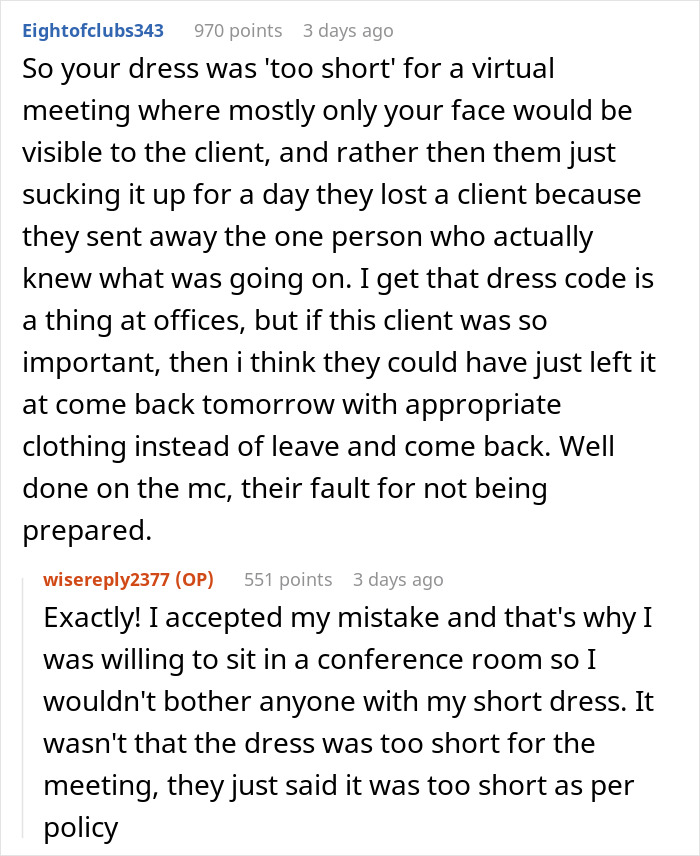
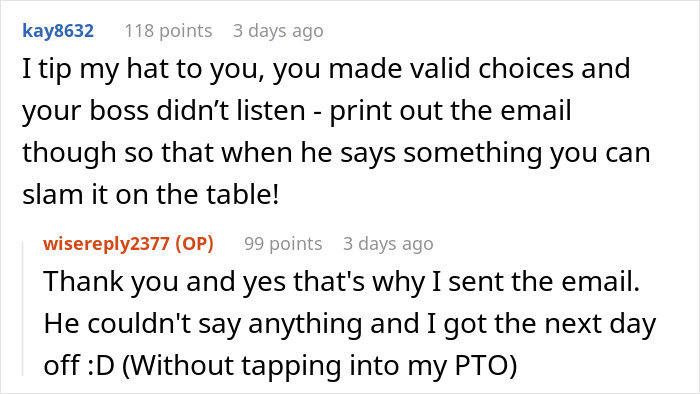
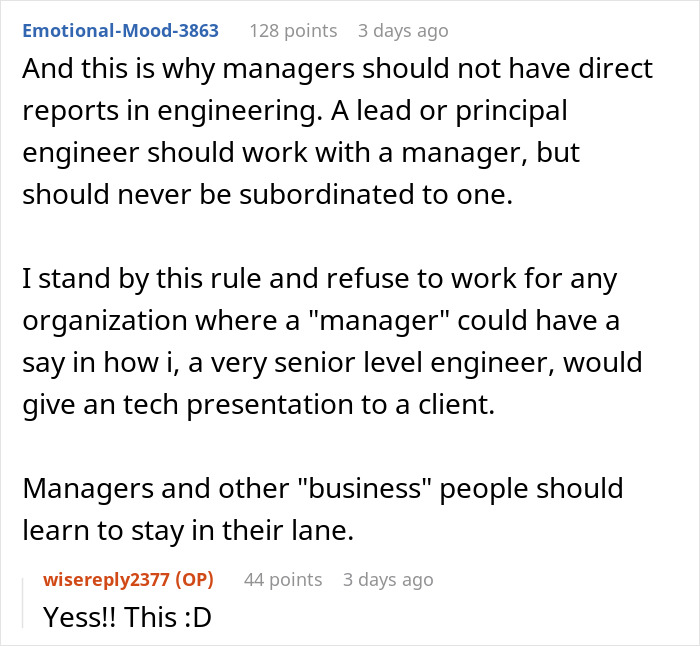
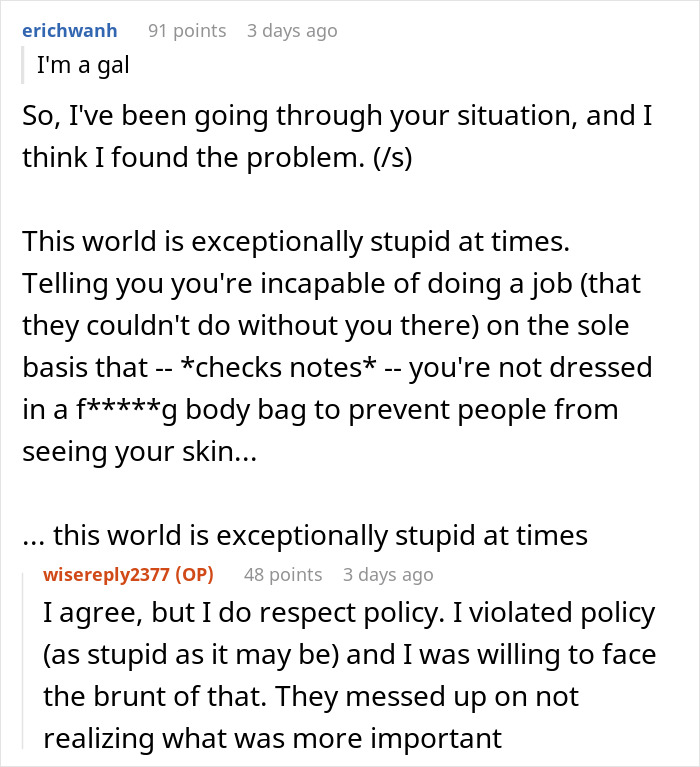
We would love to hear your thoughts on dress codes and this particular situation in the comments below, pandas. Do you think this woman was right to maliciously comply with her boss’ demands? Then, feel free to check out another Bored Panda article discussing dress codes!

By entering your email and clicking Subscribe, you're agreeing to let us send you customized marketing messages about us and our advertising partners. You are also agreeing to our Privacy Policy.
Thank you! You've successfully subscribed to newsletters!
18Kviews
Share on Facebook
Malicious compliance? Conscious passive-aggressiveness... Think the manager was a tool, but also think the OP deliberately left out suggesting the sensible option (and compromise) of going to a clothing shop nearby to sort the outfit. [This is my pov based solely on this particular interaction- if more context were given, my support would likely be more firmly on the OP's side, as I have a personal dislike of inept managers].

Boss is the bigger idiot here, but honestly, I'm the one who usually wears her Muppets and Star Wars t-shirt to work, but I know how to play it safe. Her not realising it was too short? Are knees and shoulders a new discovery for OP? Especially since it was a planned meeting. BTW, if I had that important meetings with clients, I'd also have a second set of clothes at the office, just in case of coffee accidents.

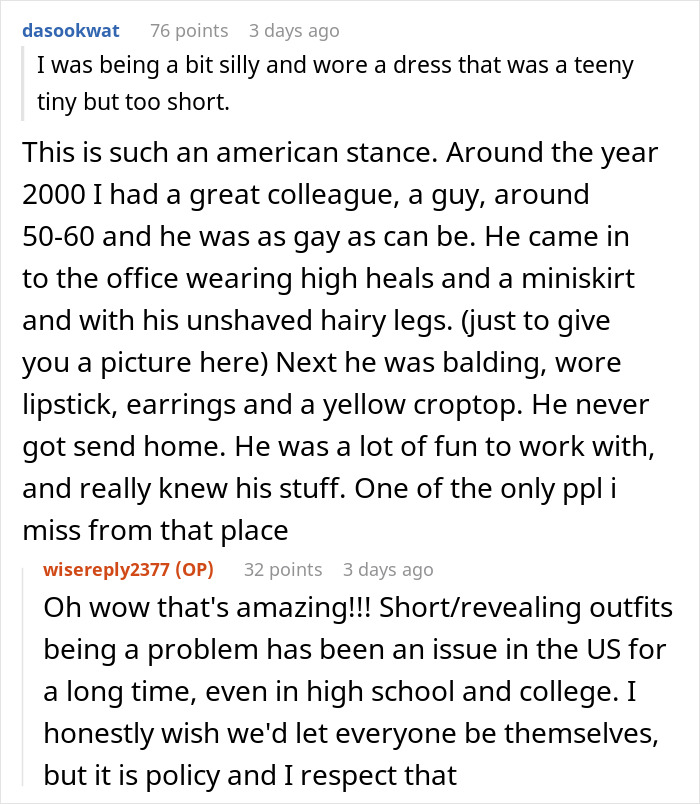
She said there was no explicit length defined in the policy, so it seems to be a very arbitrary rule. So the problem isn't really the existence of "knees and shoulders".
Load More Replies...
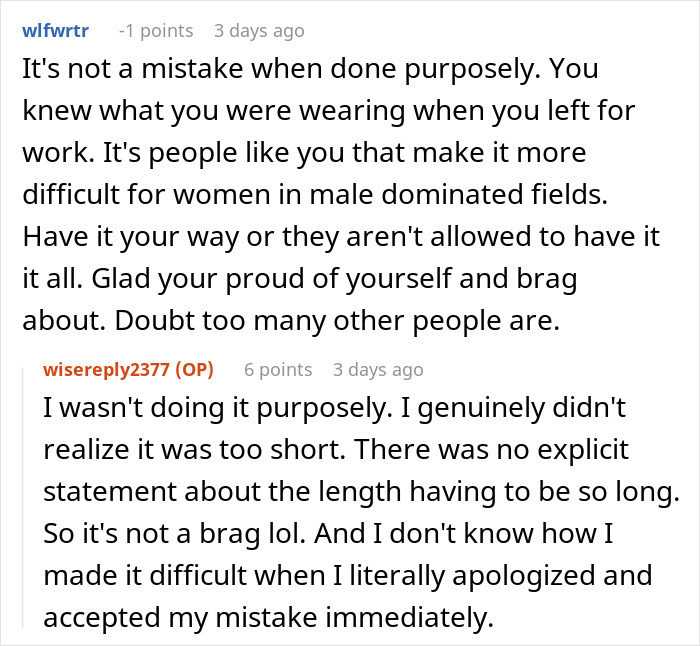
"It's people like you that make it harder for women in male dominated fields" - yeah, because she definitely did not offer solutions to the MALE that made her go home and change... hippotwatamus.
Malicious compliance? Conscious passive-aggressiveness... Think the manager was a tool, but also think the OP deliberately left out suggesting the sensible option (and compromise) of going to a clothing shop nearby to sort the outfit. [This is my pov based solely on this particular interaction- if more context were given, my support would likely be more firmly on the OP's side, as I have a personal dislike of inept managers].
Boss is the bigger idiot here, but honestly, I'm the one who usually wears her Muppets and Star Wars t-shirt to work, but I know how to play it safe. Her not realising it was too short? Are knees and shoulders a new discovery for OP? Especially since it was a planned meeting. BTW, if I had that important meetings with clients, I'd also have a second set of clothes at the office, just in case of coffee accidents.
She said there was no explicit length defined in the policy, so it seems to be a very arbitrary rule. So the problem isn't really the existence of "knees and shoulders".
Load More Replies... "It's people like you that make it harder for women in male dominated fields" - yeah, because she definitely did not offer solutions to the MALE that made her go home and change... hippotwatamus.

















 No fees, cancel anytime













15
33