Get Premium
Dark mode theme is available exclusively for premium users. Learn more about the benefits of subscribing.
No fees, cancel anytime.

 Dark Mode Ad-Free Browsing Unlimited Content
 Ad-Free Browsing Unlimited Content Dark Mode
Join 1.2 million Panda readers who get the best art, memes, and fun stories every week!
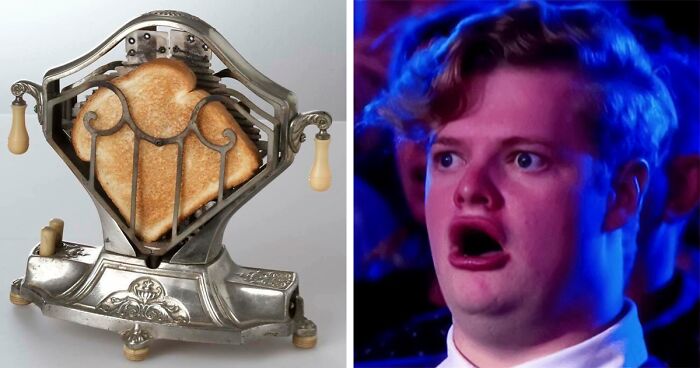
Have you ever wondered what your great-grandmother’s toaster looked like? Have you ever considered what kind of contraption you would have needed to mow your lawn over a century ago? Do you know how your great-grandparents made a fresh pot of coffee each morning?
The tools that past generations used look quite different from what our homes hold today, thanks to decades of innovation. But if you’d like to experience a blast from the past, we’ve got the perfect list for you. Bored Panda has scoured the internet for photos of early versions of the inventions we still use every day, so enjoy scrolling through this virtual museum and be sure to upvote the tools you’d happily purchase at an antique shop!
This post may include affiliate links.

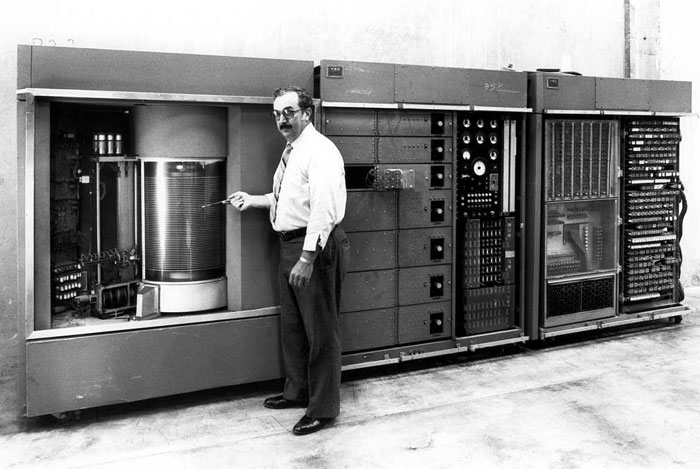
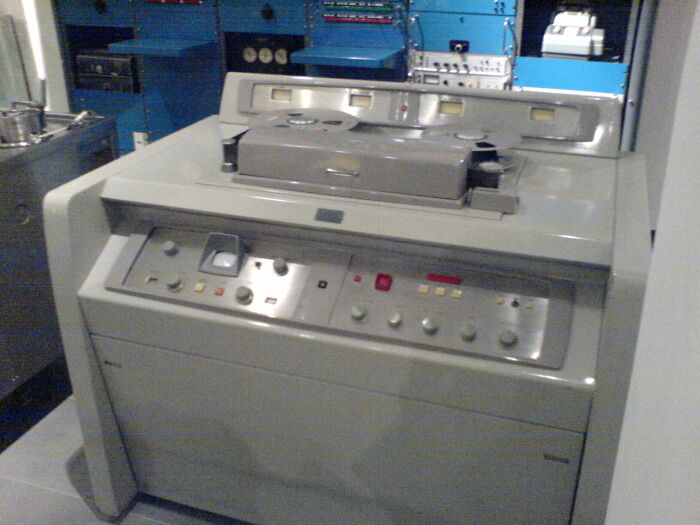
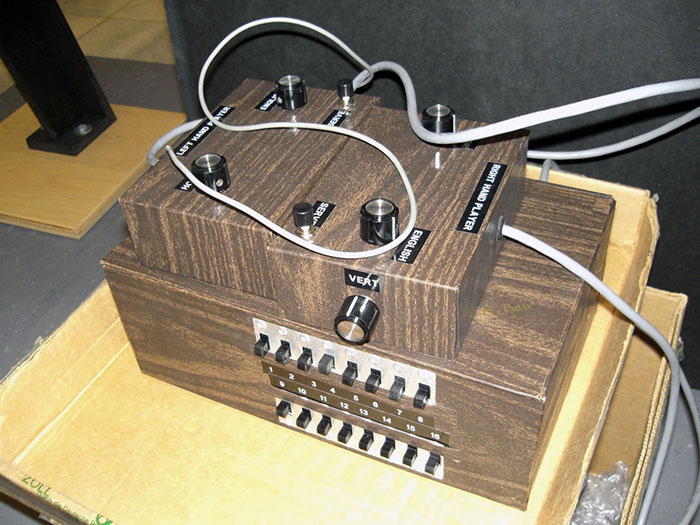
That's actually the hard disk drive he's pointing to. A stack of 16 individual disks with heads between each pair, so multiple disks could be accessed simultaneously. The same principle was still very common on IBM mainframes well into the 1980s (and beyond), although much greater capacity was possible by then. Programmers used to allocate disk space by columns to minimise head movements and increase access speed.

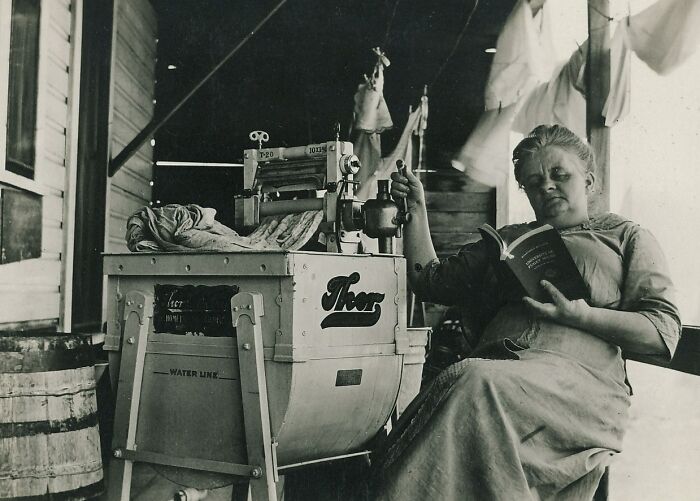
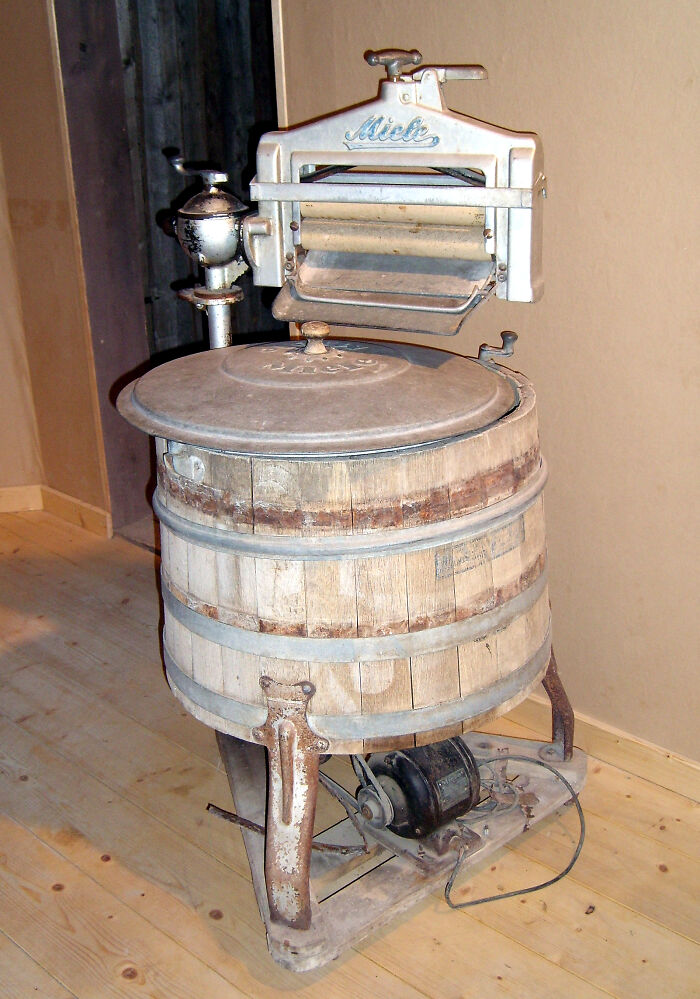
I think it was on bored panda where I read a person's comment about how their grandmother said that the washing machine was the greatest invention of all time because washing clothes by hand for a whole family waa extremely physically taxing and time consuming for her

See, back in those days, they didn't have microwaves. (Calm down, Brits... it's a joke.)
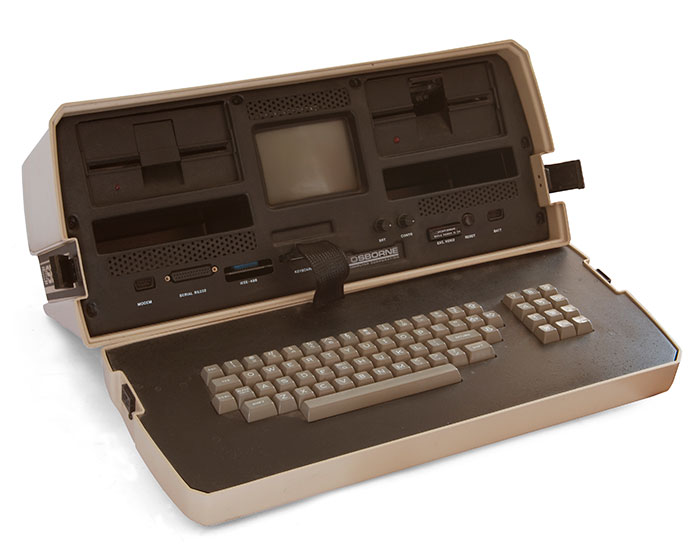
There's a term we get from Osborne computers: The Osborne Effect. It's where a very good product doesn't sell because the manufacturer is already touting the benefits of its successor. Osborne released the above machine, the Osborne 1, but before its release they were already trying to sell its not-yet-manufactured successor. This led to people not buying the Osborne 1 in favour of waiting for the Osborne 2. Because the Osborne 2's development required money from Osborne 1 sales, the Osborne 2 was never produced.
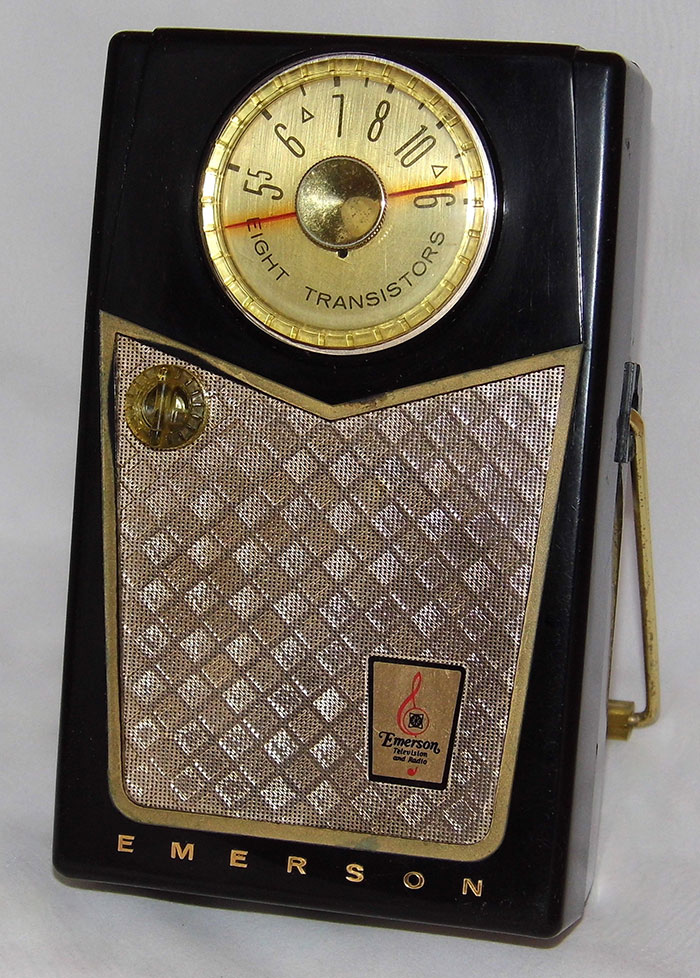
Eight transistors. The new iphone (14) has the equivalent of...wait for it...16 billion.

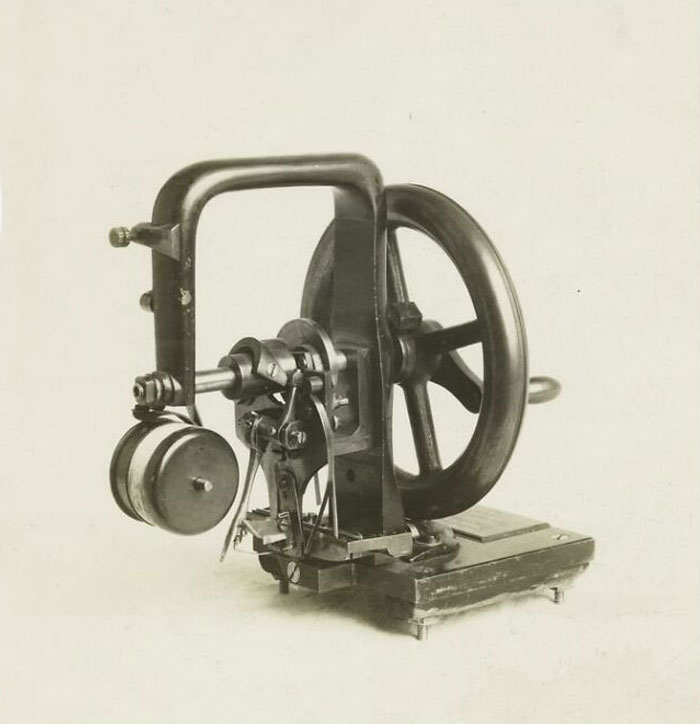
Not the very first sewing machine, but the first to use the 'lock-stitch' and become a wide success.

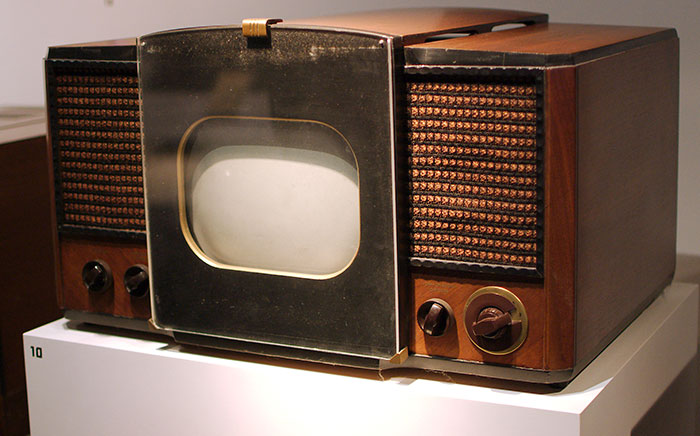
No 1st TV remote was the kids. Go change the channel Billy and play with the antenna a little.

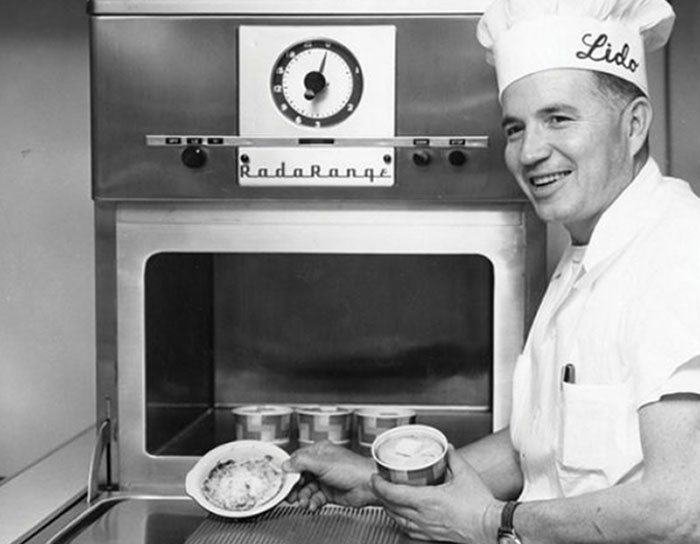
Percy Spencer noticed that a bar of chocolate in his pocket melted in seconds when he was standing near a radar tower, and yet it didn’t burn him. He realised there were some sort of “radio” waves that could create heat and invented the microwave. I think.

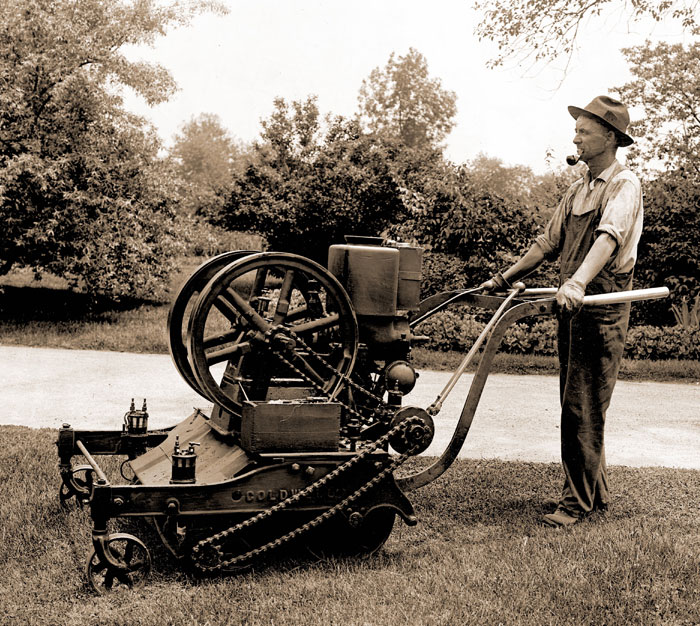
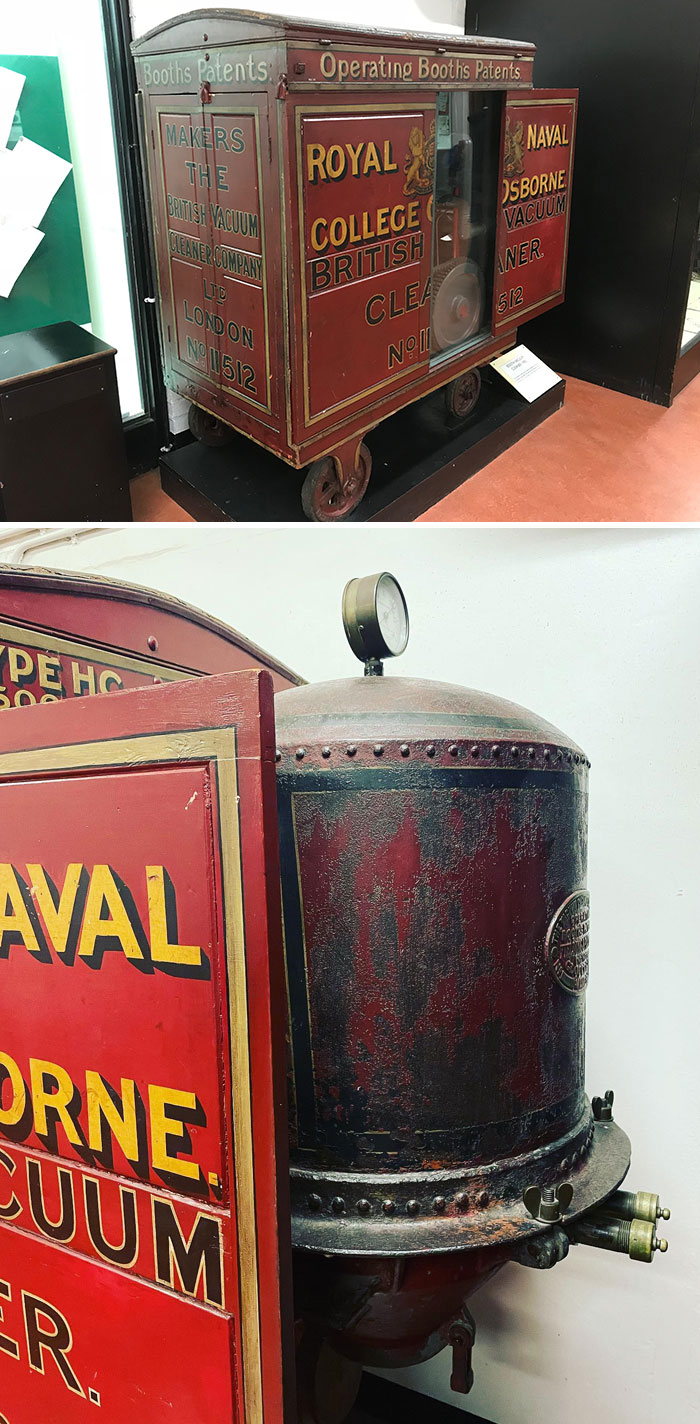
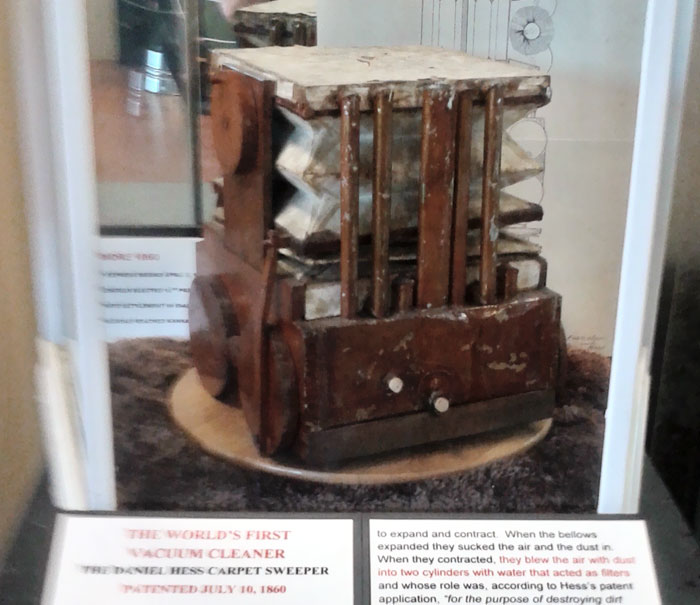
At that size, it should’ve been a Riding Vacuum Cleaner. Preferably a Zero Turn.

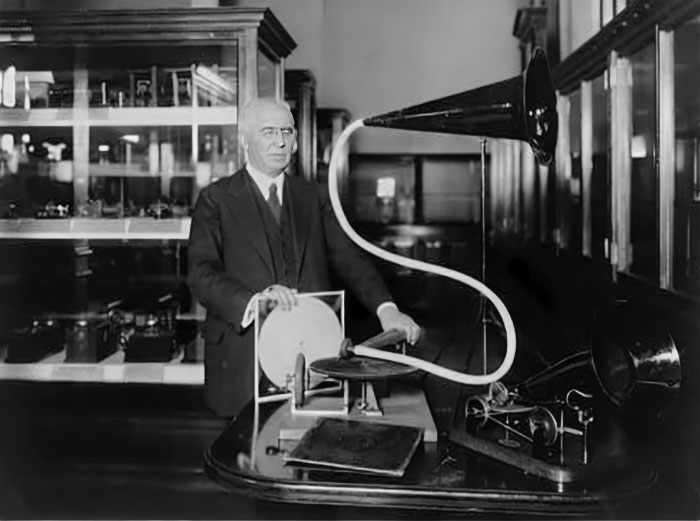
The big advantage here being that flat records can be stamped and produced quickly as opposed to Edison's cylinders.
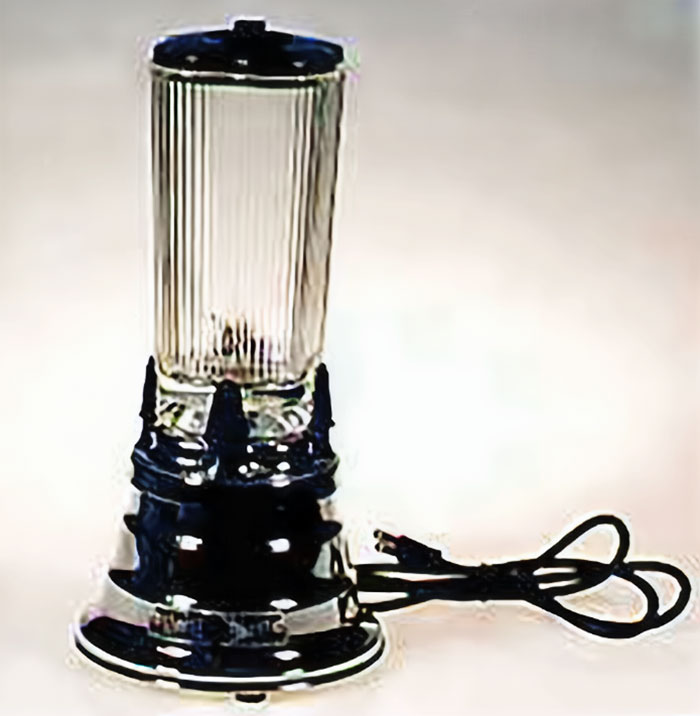
The first electric blender was developed in 1922, specifically for making malts and milkshakes at soda fountains. In 1932 its inventor, Stephen J. Poplawski, received patents for a machine that would reduce fruits and vegetables to a liquid.

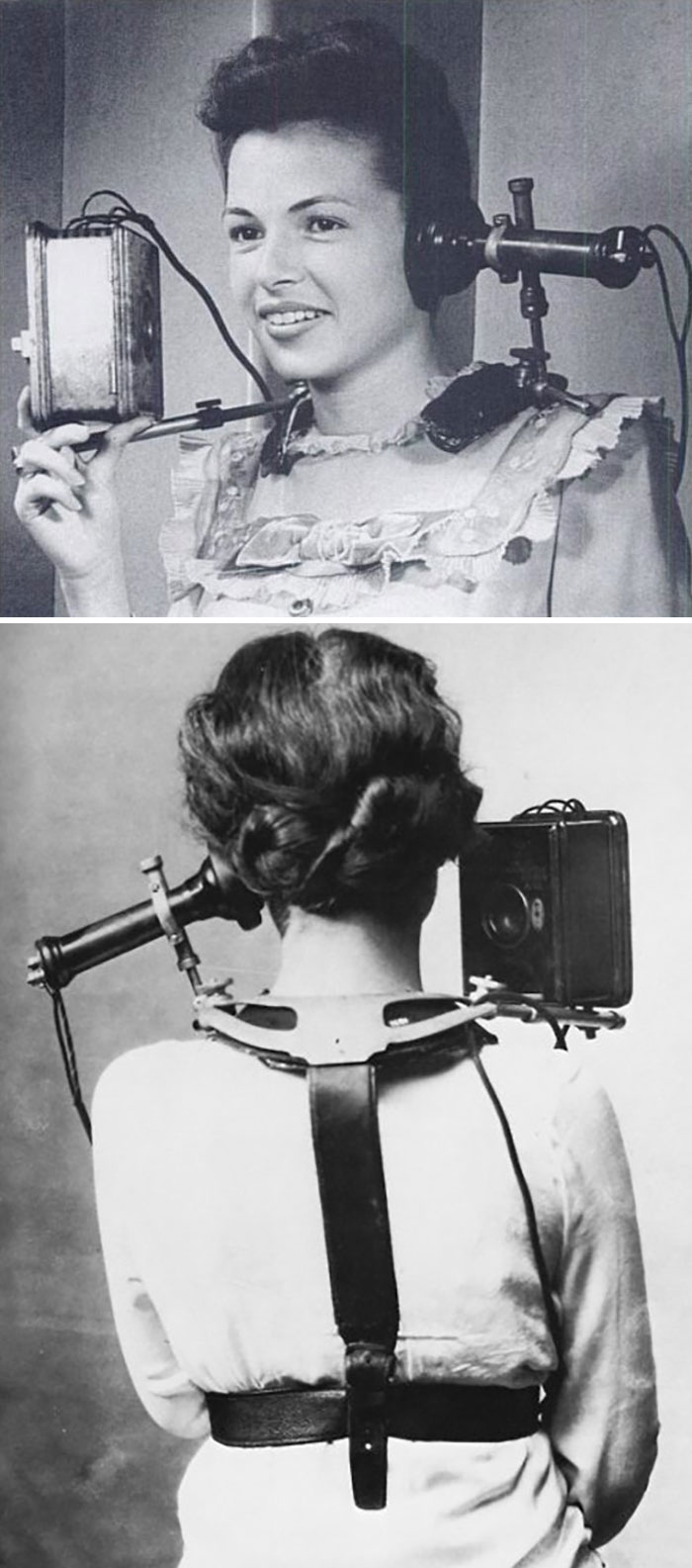
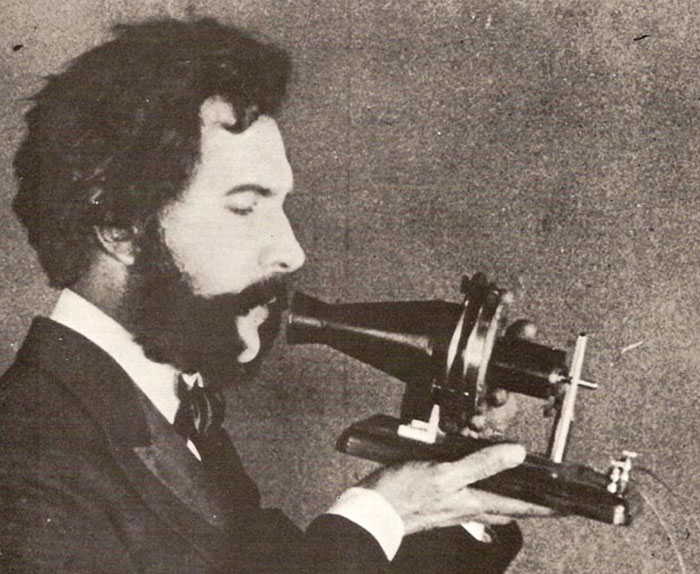
American Telegraph and Telephone is known to Americans as AT&T and has been providing horrible customer service for almost a hundred years.

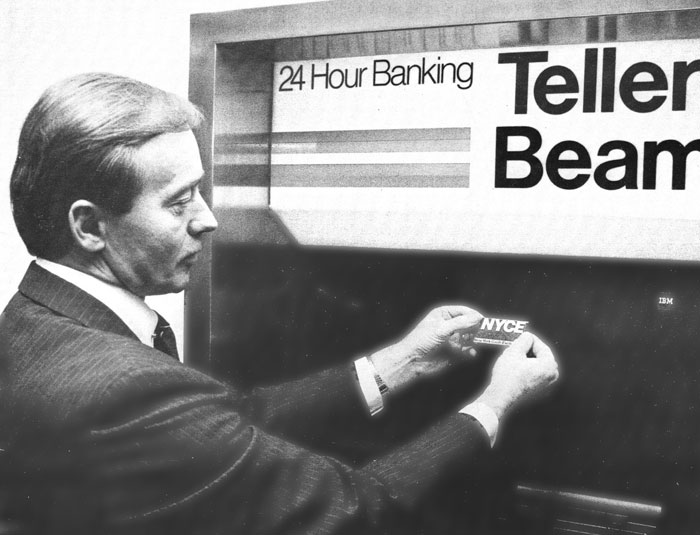
The first ATM to be used was at a Barclay's Bank in Enfield in North London in 1967.
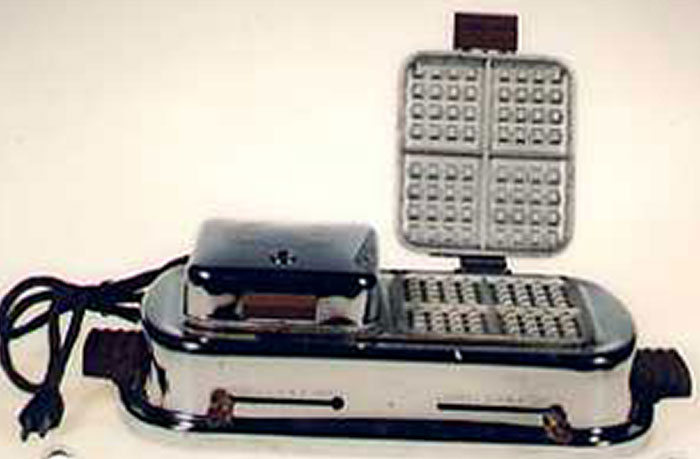
This deluxe Dominion waffle iron has twin grids that are controlled separately and have adjustable indicators for light or dark waffles. Companies advertised the cast aluminum grids as "fast heating" and "greaseless".

My family had one of these when I was a kid. It was a big deal when my mom hauled this behemoth out.
No it wasn't. Logie-Baird invented it about five minutes after the TV. The recorded items still exist, but we don't know how to play them.

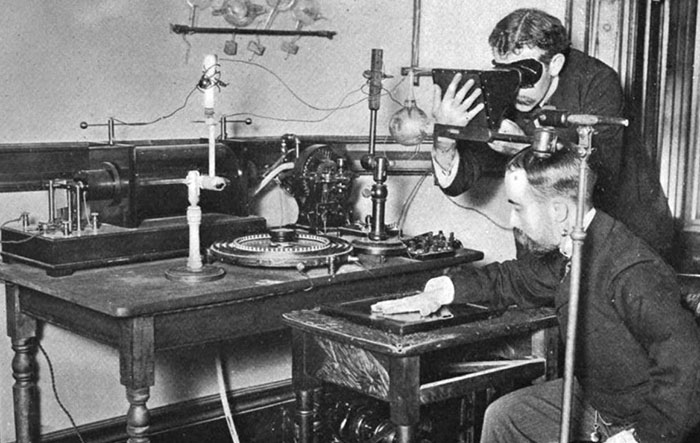
I remember that a local shoe store back in the 70s had an X-ray device as a very modern take on making children’s shoes fit better. It was a simple box with absolutely nothing for protection for anyone. What might have been harmless for the customers certainly wasn’t for the sales persons.
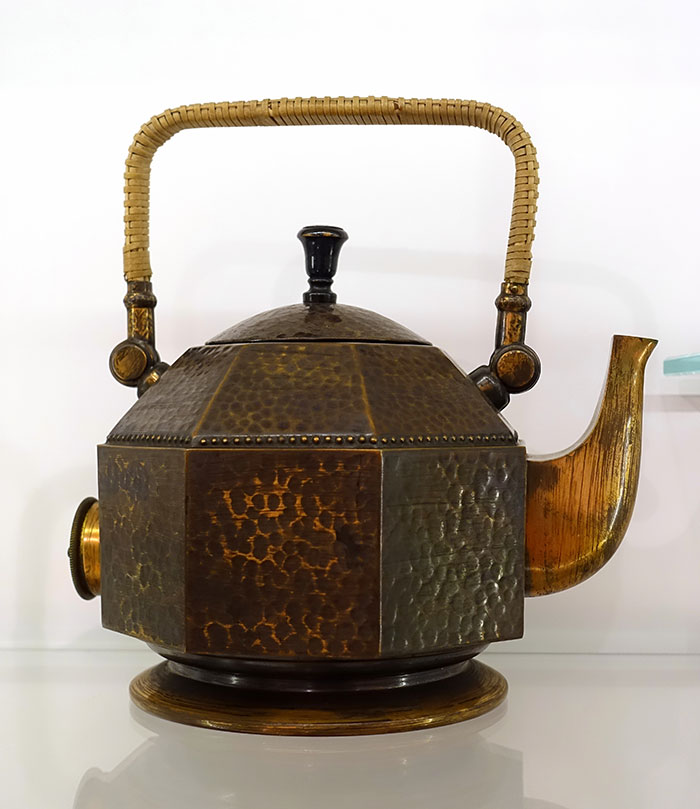
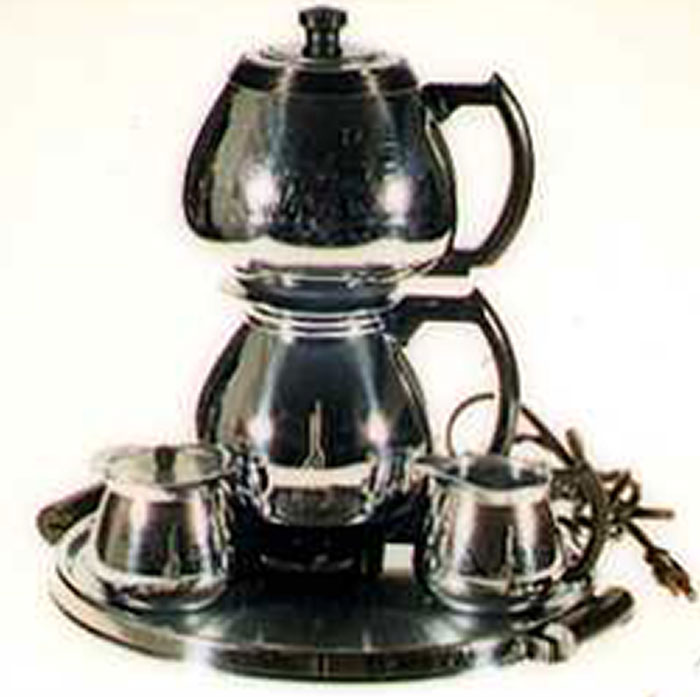
In 1940 this coffee maker sold singly for $16.00 or for $23.50 as part of a matched set. Its design was modern, one of many industrial designs by Alfonso Ianelli who was brought to Chicago in 1913 by Frank Lloyd Wright.
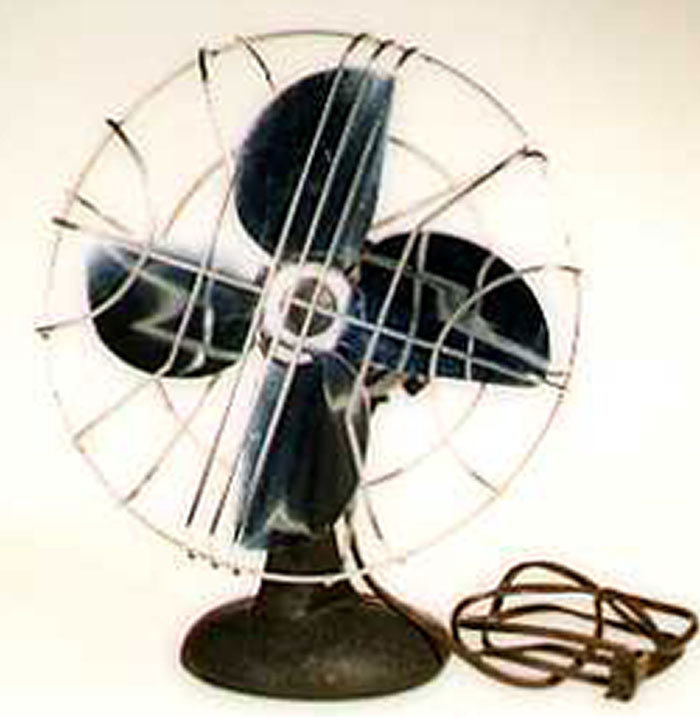
The electric desk fan has been around since 1882 when it was little more than a motor attached to two blades. This fan delivered "powerful breezes" in an arc around the room. It was turned on or off by a single switch, and the oscillator arm could be disconnected. Fans similar to this one were advertised as "economical to use" and of a "modern streamline design."
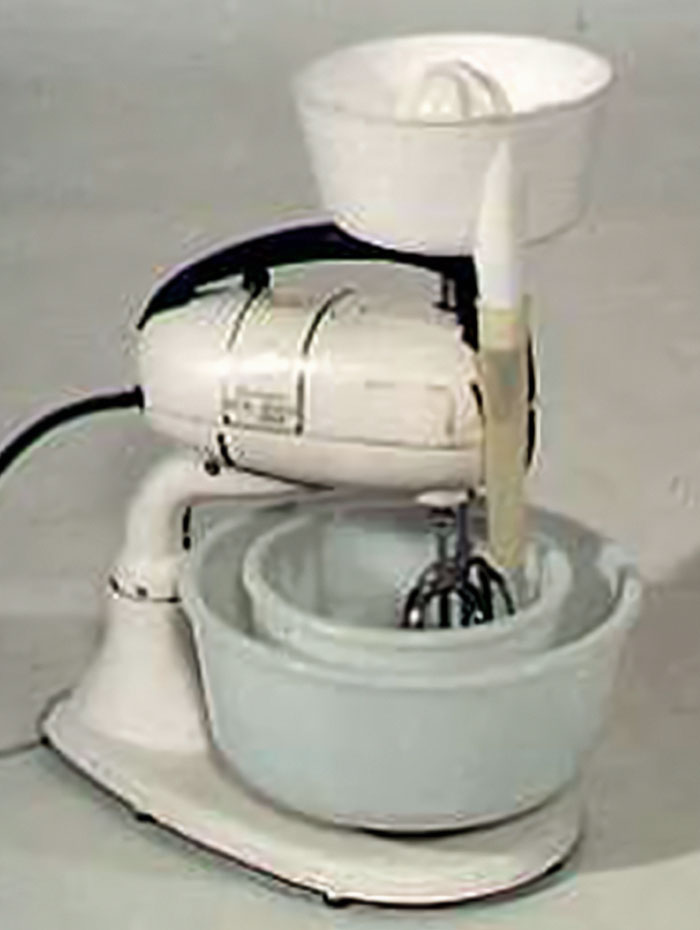
This Meal Maker mixer was purchased by Gerald and Shirley Berg of rural White Hall, Illinois. The Bergs butchered fifty chickens to raise the money necessary to buy it. The motor of this 1950 Meal Maker is adjustable to five speeds: mashing, mixing, beating, whipping, and "juice-grind." The juicer, which sits above the beaters, was designed with a long spout that allowed the juice to pour directly into the bowl. An attachment was also available for grinding meat.
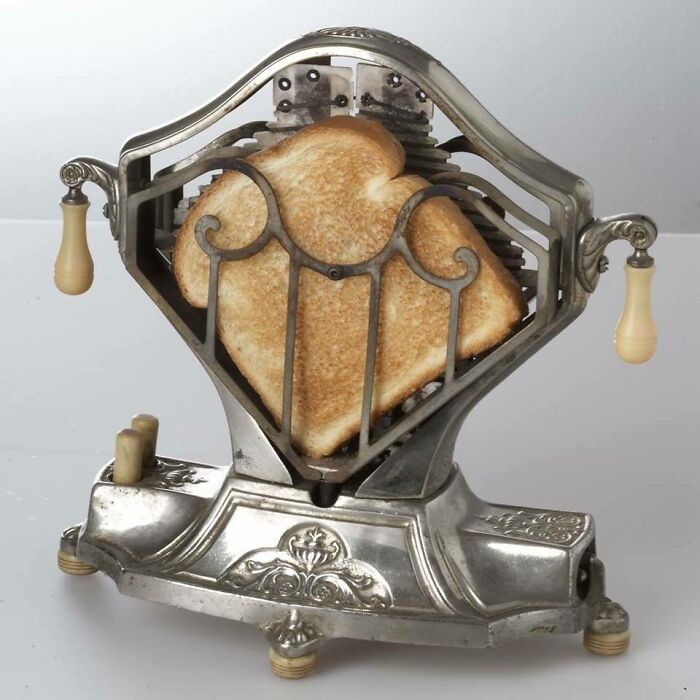
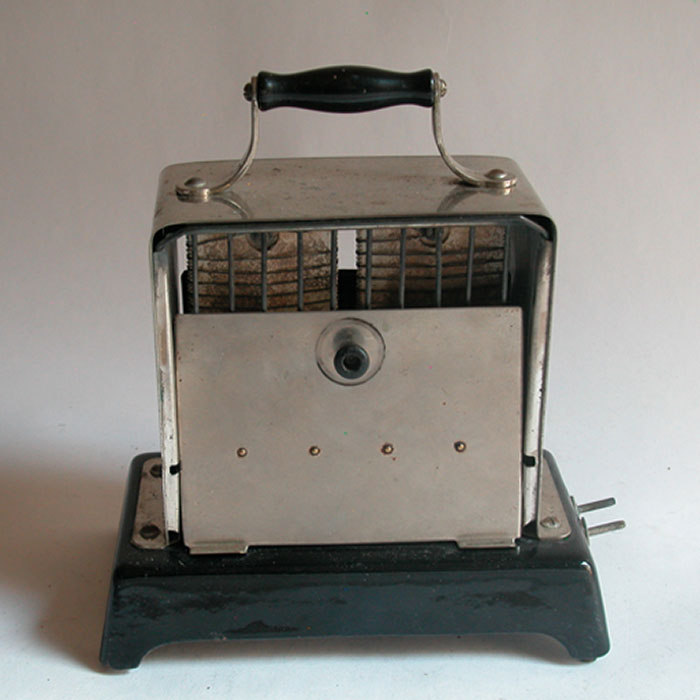
The patent for this Simplex toaster was applied for in 1909, and manufactured by a Boston company, The Simplex Electric Heating Company. According to William F. George, author of Antique Electric Waffle Irons 1900-1960 A History of the Appliance Industry in 20th-Century America, it was a division of Simplex Wire & Cable Company that grew from The Simplex Electrical Company incorporated in 1895 and doing business on Franklin Street in Cambridge.
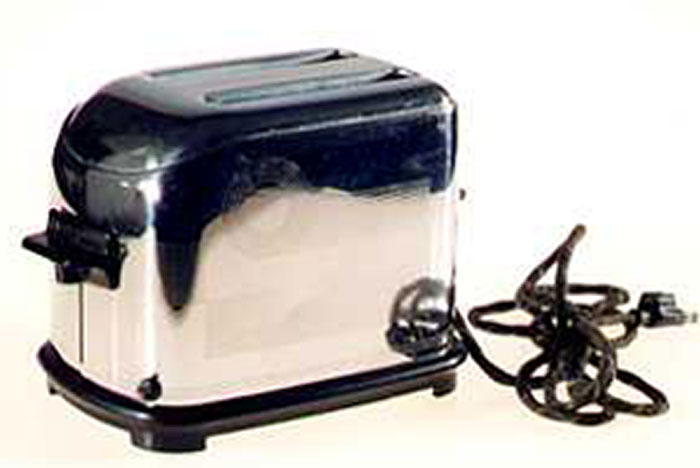
The first pop-up toaster was introduced in 1926 by the McGraw Electric Company. The Toastmaster sold for $12.50 and promised: "Perfect toast every time without watching, without turning, without burning." Over the years many mechanisms were introduced to improve temperature control. In 1939 the model shown here was sold alone or as part of the "Toastmaster DeLuxe Hospitality Set," which included trays, glass relish dishes, and a toast-cutting board.

They don't make Toastmaster De Luxe Hospitality Sets like they used to.
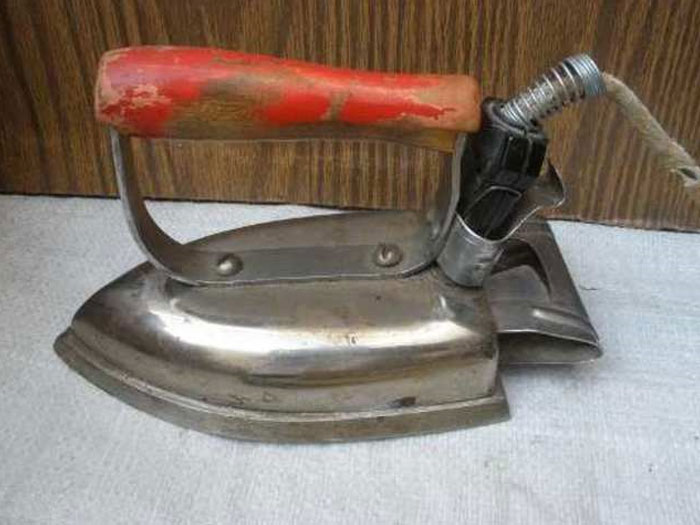
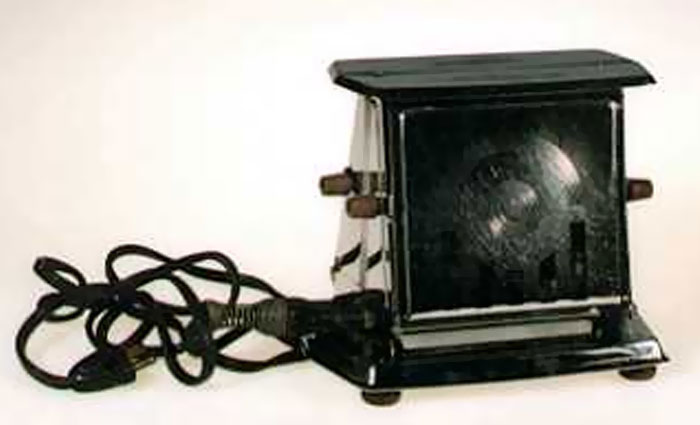
Such toasters, costing from $1.29 to $2.21 in 1939, were "on" as long as they were plugged in and had to be watched carefully.

A few more notable invention: -Air conditioning unit invented by Frederick M. Jones July 12, 1949 -Almanac invented by Benjamin Banneker Approx 1791 -Auto cut-off switch invented by Granville T. Woods January 1, 1839 -Biscuit cutter invented by A.P. Ashbourne November 30, 1875 -Blood plasma bag invented by Charles Drew Approx. 1945 -Cellular phone invented by Henry T. Sampson July 6, 1971 -Chamber commode invented by T. Elkins January 3, 1897 -Clothes dryer invented by G. T. Sampson June 6, 1862 -Gas mask invented by Garrett Morgan October 13, 1914 -Golf tee invented by T. Grant December 12, 1899 -Guitar invented by Robert F. Flemming, Jr. March 3, 1886 -Hair brush invented by Lydia O. Newman November 15, 1898
Guitar? That doesn't seem right. Acoustic guitars were earlier than that and electric guitars more recent.
Load More Replies...
A few more notable invention: -Air conditioning unit invented by Frederick M. Jones July 12, 1949 -Almanac invented by Benjamin Banneker Approx 1791 -Auto cut-off switch invented by Granville T. Woods January 1, 1839 -Biscuit cutter invented by A.P. Ashbourne November 30, 1875 -Blood plasma bag invented by Charles Drew Approx. 1945 -Cellular phone invented by Henry T. Sampson July 6, 1971 -Chamber commode invented by T. Elkins January 3, 1897 -Clothes dryer invented by G. T. Sampson June 6, 1862 -Gas mask invented by Garrett Morgan October 13, 1914 -Golf tee invented by T. Grant December 12, 1899 -Guitar invented by Robert F. Flemming, Jr. March 3, 1886 -Hair brush invented by Lydia O. Newman November 15, 1898
Guitar? That doesn't seem right. Acoustic guitars were earlier than that and electric guitars more recent.
Load More Replies... 

































 No fees, cancel anytime