Get Premium
Dark mode theme is available exclusively for premium users. Learn more about the benefits of subscribing.
No fees, cancel anytime.

 Dark Mode Ad-Free Browsing Unlimited Content
 Ad-Free Browsing Unlimited Content Dark Mode
Join 1.2 million Panda readers who get the best art, memes, and fun stories every week!
20submissions
1week left
History books can only cover so much, and most of us haven’t cracked one open since we were in college. But if you want to learn about some fascinating moments from the past, accompanied by captivating images, you’ve come to the right place!
We visited the History Cool Kids Instagram account and gathered some of their best posts down below. Keep reading to find a conversation with Gemma Hollman, Author and Creator of Just History Posts, and be sure to upvote the stories that you’ll never forget! Click here & follow us for more lists, facts, and stories.
This post may include affiliate links.
This is Adolfo Kaminsky. After his mother was k**led by N**** in 1941, he joined the French resistance at age 17. He spend most of World War 2 in an underground laboratory in Paris forging passports. He is estimated to have saved the lives of 14,000 French Jews. “I’ll always remember our biggest request for documents. 300 children in 3 days. It wasn’t possible. I had to stay awake as long as possible. Fight against sleep. The math was simple. In one hour, I made 30 fake documents. If I slept for one hour, 30 people would die. My biggest fear was making a technical mistake, any little detail that might escape me. On every document rests the life of a human being. So I worked, worked, worked until I passed out. When I woke up, I kept working. We couldn’t stop." Kaminsky passed away in January 9th, 2023 at the age of 97.
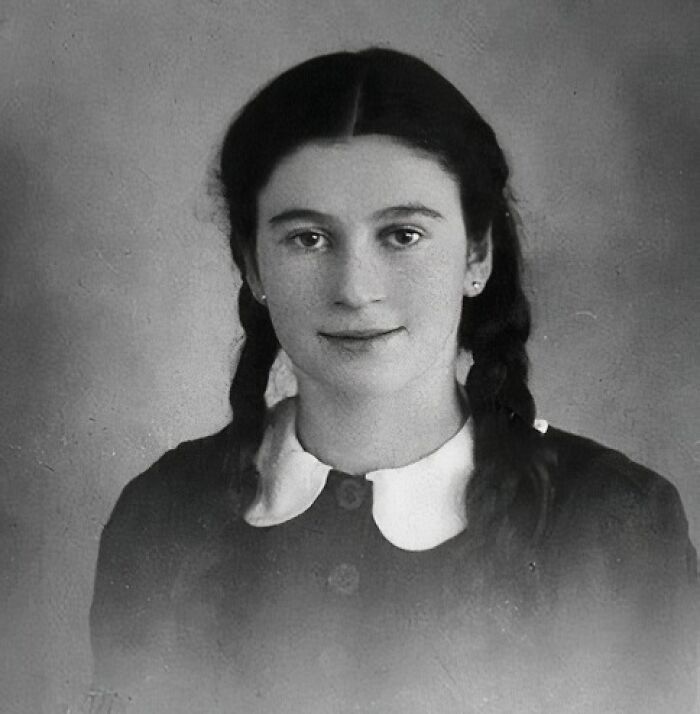
This is Gerda Weissmann Klein. She spent three years in several different N**i concentration camps. In late January of 1945, Gerda and 4,000 other Jewish women were forced to embark on a 350-mile march to flee the advances of the Allied forces. By early May, Gerda was one of only 120 women who were still alive. The rest—including several of her childhood friends—had died from exhaustion, starvation, random executions, and exposure to the elements. Gerda was one day shy of her 21st birthday when she was rescued by American soldiers. Weighing only 68 lbs. (30.84 kg), Gerda’s hair was nearly white and her clothes were tattered and crawling with lice. She hadn’t taken a bath in three years. She later recalled seeing the man who saved her life: “I stood in the doorway of that factory, and I knew that I was free. I saw a strange car coming down the hill, with the white star of the American army on its hood. Two men in strange uniforms sat in it, we gathered them to be Americans. One of the men came towards me, and I looked at him with incredible awe and disbelief that I was looking at someone who fought for us. Of course I was terribly frightened. I looked at him and said, ‘we are Jewish.’ There was a long paused, then he said, ‘so am I.’ It was the greatest moment of my life. He asked me to come with him, and he held the door open for me. He has now been holding the door open for 50 years as my husband.” Gerda married Kurt Klein (swipe left) in Paris and moved to Buffalo, New York where they eventually had three children and eight grandchildren. Gerda became a human rights activist and published her own autobiography titled, "All But My Life." She is still alive today at age 97.
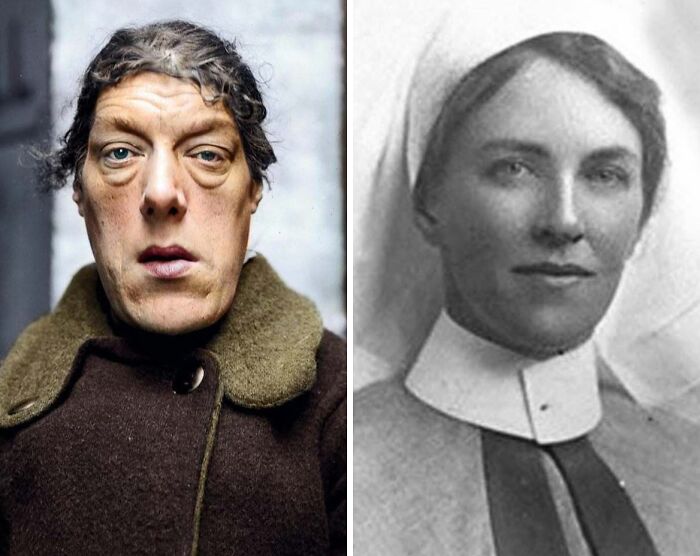
This is Mary Ann Bevan. I had seen her photo on the Internet a few times with the caption: “The Ugliest Woman in the World” but thought there was more to her story than just her appearance. So I did some digging and was surprised to discover that she did not always look like this. If you swipe left, you’ll see a photo of her before she began to exhibit symptoms of Acromegaly, shortly after her marriage at age 32. Acromegaly is a hormonal disorder that occurs when the pituitary gland produces too much growth hormone after the growth plates have closed. The disorder affects 3 out of 50,000 people and typically enlarges the hands and feet, but may also increase the size of the jaw, nose, and forehead. Mary was born in 1874 to a middle class family and was the only daughter (she had 7 brothers). She studied medicine and became a nurse in 1894. Nine years later, she married Thomas Bevan and had four children. They were a happy family until Mary was struck with the unknown disease at the time. Her husband stayed by her side, but passed away suddenly from a stroke in 1914. Mary could not find a job due to her physical appearance. Out of desperation, she entered an “Ugliest Woman” competition and won. She put up with the humiliation and ridicule in order to provide for her family. In 1920, Mary was invited to the Dreamland Circus in Coney Island, where she worked until her death in 1933. She also made guest appearances for Ringling Bros. and amassed enough money to raise her four children. Bevan should be remembered as an amazing mother who did what she had to do to survive.
The History Cool Kids Instagram account has amassed an impressive 1.5 million followers since its creation in 2016. But the page’s success will come as no surprise if you take the time to scroll through its feed. It has shared over 1,400 posts over the past 9 years and told just as many stories about fascinating moments that have taken place in the past.
Whether you want to learn about what groceries cost a century ago or see what kinds of clothes your great-great grandparents might have worn, History Cool Kids has got you covered. No matter how much you think you know about the past, I’m sure at least one post on this list will teach you something new. So let’s get learning, pandas!
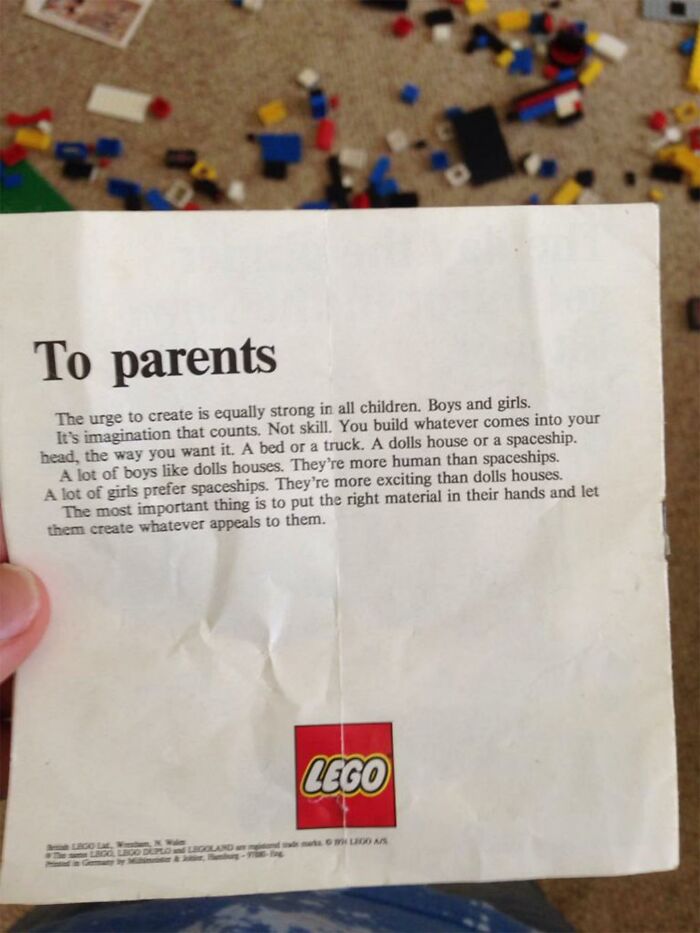
A Lego letter to parents from 1974. Here's the letter transcribed: "To Parents The urge to create is equally strong in all children. Boys and girls. It’s the imagination that counts. Not skill. You build whatever comes into your head, the way you want it. A bed or a truck. A dolls house or a spaceship. A lot of boys like dolls houses. They’re more human than spaceships. A lot of girls prefer spaceships. They’re more exciting than dolls houses. The most important thing is to put the right material in their hands and let them create whatever appeals to them."
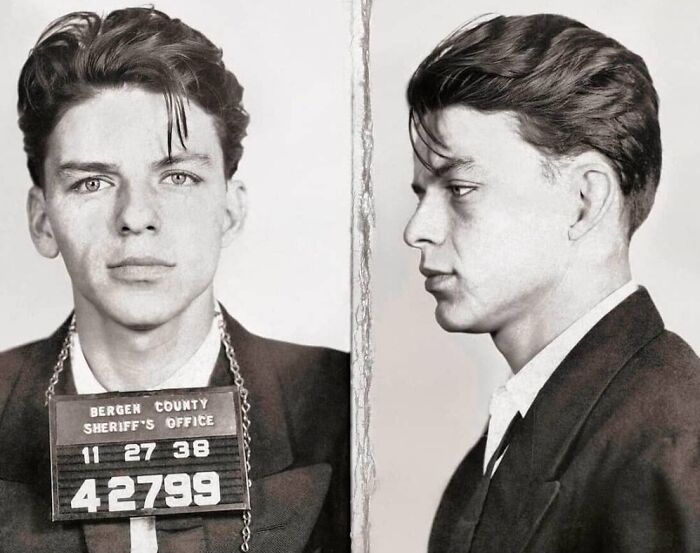
Frank Sinatra was a fervent anti-racist and an early activist during the civil rights movement. He refused to stay at hotels and play at clubs that did not admit black people. His band would also provide equal pay and treatment for black musicians. It was through his relentless and tireless efforts that Las Vegas quickly became integrated. In an interview in 2016, Frank Sinatra, Jr. had this to say about his father: "In the days when Las Vegas began to become popular, the black performers could play in showrooms, but they couldn't stay in the hotel. And it was Frank Sinatra who went to the board of directors, who had rather shady pasts, and he said, 'Are you guys going to come into the twentieth century, or aren't you?'...Somebody said 'Well, we have white people, we have black people." Sinatra, the story goes, said to them, 'The money is green. How about that?' And they began to look at each other and the wheels were turning, and because of Sammy (Davis), Las Vegas became integrated." Sinatra was also big-time supporter of Martin Luther King and helped him raise money to support the Civil Rights Movement by headlining fundraisers. In 1958, he wrote in Ebony Magazine: “A friend to me has no race, no class and belongs to no minority. My friendships are formed out of affection, mutual respect and a feeling of having something in common. These are eternal values that cannot be classified.”
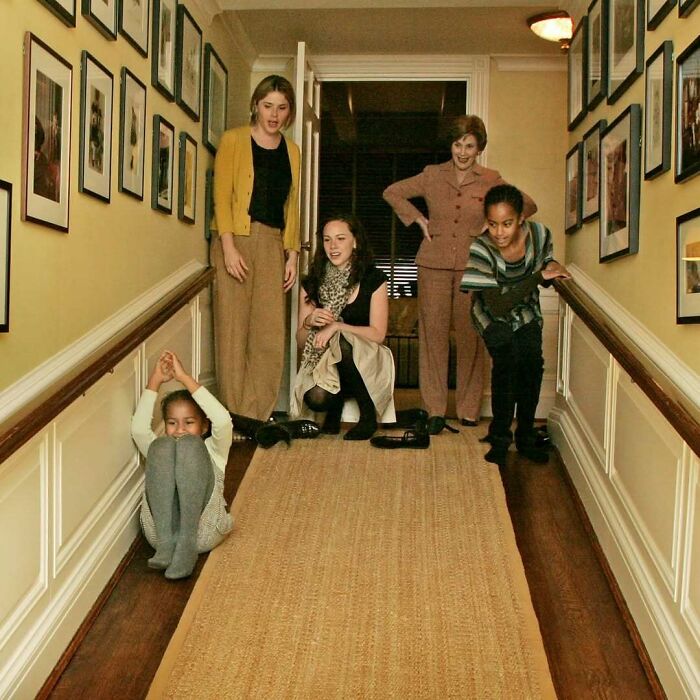
A photo from the Bush to Obama transition, 2009. Here's an excerpt from a letter written by Barbara and Jenna Bush to Sasha and Malia. "...Sasha and Malia, here is some advice to you from two sisters who have stood where you will stand and who have lived where you will live: —Surround yourself with loyal friends. They'll protect and calm you and join in on some of the fun, and appreciate the history. —If you're traveling with your parents over Halloween, don't let it stop you from doing what you would normally do. Dress up in some imaginative, elaborate costume (if you are like us a pack of Juicy Fruit and a Vampiress) and trick-or-treat down the plane aisle. —If you ever need a hug, go find Ramsey. If you want to talk football, look for Buddy. And, if you just need a smile, look for 'Smiley.' —And, a note on White House puppies—our sweet puppy Spot was nursed on the lawn of the White House. And then of course, there's Barney, who most recently bit a reporter. Cherish your animals because sometimes you'll need the quiet comfort that only animals can provide. —Slide down the banister of the solarium, go to T-ball games, have swimming parties, and play Sardines on the White House lawn. Have fun and enjoy your childhood in such a magical place to live and play. —When your dad throws out the first pitch for the Yankees, go to the game. —In fact, go to anything and everything you possibly can: the Kennedy Center for theater, State Dinners, Christmas parties (the White House staff party is our favorite!), museum openings, arrival ceremonies, and walks around the monuments. Just go. Four years goes by so fast, so absorb it all, enjoy it all! ...Many people will think they know him, but they have no idea how he felt the day you were born, the pride he felt on your first day of school, or how much you both love being his daughters. So here is our most important piece of advice: remember who your dad really is."
To learn more about why history is so fascinating, we reached out to Gemma Hollman, FRHistS, Author and Creator of Just History Posts. She was kind enough to have a chat with Bored Panda and share what she loves most about studying history.
"I personally am fascinated by just learning what life was like for humans at any period of time," Gemma says. "I find it so interesting imagining how my life would have been different had I not been born at this exact moment in time, especially as a woman. One of my favorite things is to find the similarities between now and another time, whether that be 100 years ago or 5000 years ago. Although so much has changed in the world, so little of human nature has."
Neerja Bhanot was a 22-year-old flight attendant working on Pan Am Flight 73 when it was hijacked by terrorists during a layover in 1986. The terrorists quickly executed an Indian-American passenger and threw his body out the plane. They then instructed Bhanot to collect all the passports of the passengers onboard so they could properly identify other Americans. Bhanot instead hid the passports of the 43 other Americans onboard, hiding some under seats and throwing some others in the trash. After 17 hours of holding the plane hostage, the terrorists started to set off explosives and open fire. Bhanot managed to open the airplane doors and instead of fleeing and saving her own life, she started to guide the other passengers off the plane. She was killed while shielding three American children from a hail of bullets. A 7-year-old child that Bhanot helped protect went on to become a captain of a major airline, and he noted that she was his inspiration.
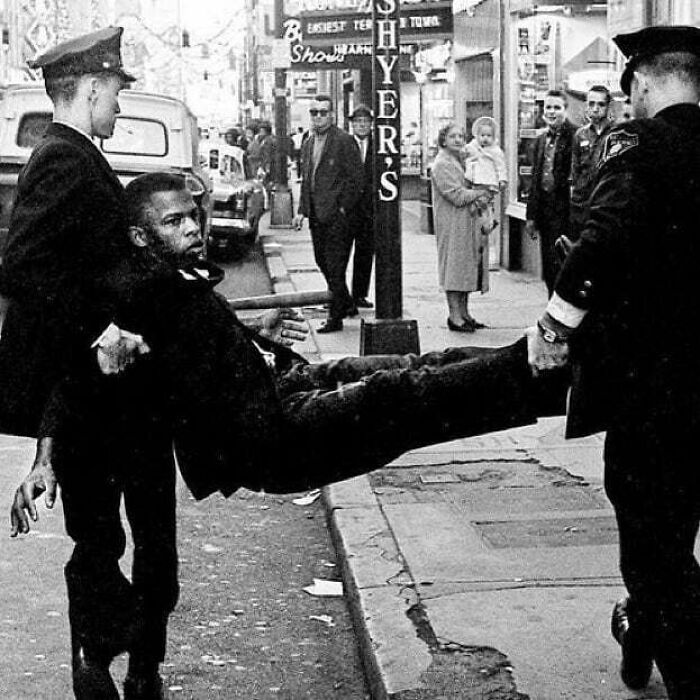
This is a photo of John Lewis being arrested in Tennessee for organizing and demonstrating during the Civil Rights movement, 1961. In the same year, at age 21, Lewis was attacked by two men in Rock Hill, South Carolina for attempting to enter a waiting room designated for "whites only". He suffered injuries to his face and ribs. Two weeks later, Lewis was arrested in Jackson, Mississippi where he was imprisoned at the State Penitentiary for nearly 40 days. His crime? He refused to leave the "whites only" area at a local bus station. Upon his release, Lewis and 12 other freedom riders went to Birmingham, Alabama where they were beaten by a mob made up of KKK members who were weilding baseball bats, metal pipes, chains and rocks. The group managed to escape to Montgomery where Lewis was hit in the head with a wooden crate. "It was very violent. I thought I was going to die. I was left lying at the Greyhound bus station in Montgomery unconscious," recalled Lewis. In 1965, Lewis was again leading a protest for Civil Rights, marching with some 600 people from Selma, Alabama to Montgomery. As they were leaving Selma, state troopers descended upon the protestors with clubs, bullwhips and tear gas. Lewis suffered a skull fracture on that day known as "[darn] Sunday." Fast forward to 2009—Lewis watched as Barack Obama was sworn in as the 44th President of the United States. When the inauguration came to an end, Lewis approached the first Black president with a piece of paper and asked if he could sign it. He wrote: “Because of you, John. Barack Obama.”
This is 18-year-old Alice Roosevelt and her long-haired Chihuahua named Leo in 1902. She also had a pet snake named Emily Spinach who she would wrap around on one arm and take to parties. Alice was extremely independent and unlike many women of her time, she was known to wear pants, drive cars, smoke cigarettes, place bets with bookies, dance on rooftops, and party all night. In a span of 15 months, she managed to attend 300 parties, 350 balls and 407 dinners. A friend of Alice’s stepmom once remarked that she was “like a young wild animal that had been put into good clothes.” Her stepmom went a step further and described her as a “guttersnipe” that went “uncontrolled with every boy in town.” William Howard Taft banned her from the White House after Alice buried a voodoo doll (of Taft’s wife) in the front yard. Woodrow Wilson also banned her after she told a very dirty joke (sadly no record of the joke exists) about him in public. Her father, Theodore Roosevelt famously said, “I can either run the country or I can attend to Alice, but I cannot possibly do both.” Alice once told President Lyndon B. Johnson that she specifically wore wide-brimmed hats around him so that he could not kiss her. During an interview in 1974, Alice described herself as a “hedonist.” She died in 1980 at the age of 96.
"You can read about petty jealousies between courtiers, or the love of a parent for their child, and in that moment, you feel connected to someone who lived so long ago that it is almost incomprehensible," Gemma continued. "I think that sense of empathy is so important."
"People – rightly – state that history is important to study so that we can learn from the mistakes of the past, or identify patterns of where we might be going in the future, but I think the simple act of learning about someone’s life and what happened to them, in circumstances so far removed from our own, and finding something that we can understand, is such a human act," she added.
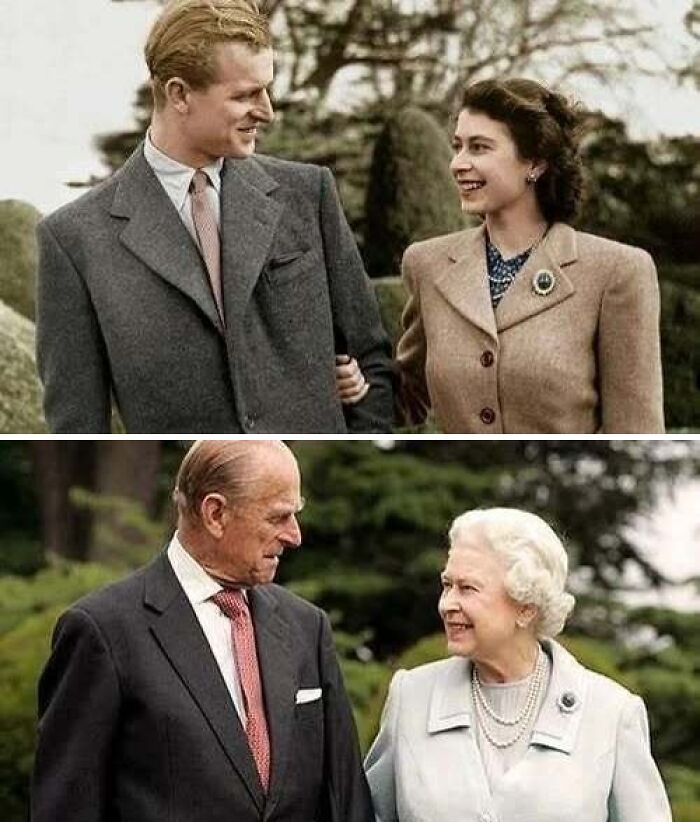
Queen Elizabeth has died at age 96. She spent 7 decades on the throne, which was longer than the reigns of her father, uncle, grandfather, and great-grandfather combined. Born on April 21, 1926, Queen Elizabeth was older than sliced bread, penicillin, ballpoint pens, nylon, Velcro, the Slinky, and the FM radio. She reigned for nearly 30% of US history.
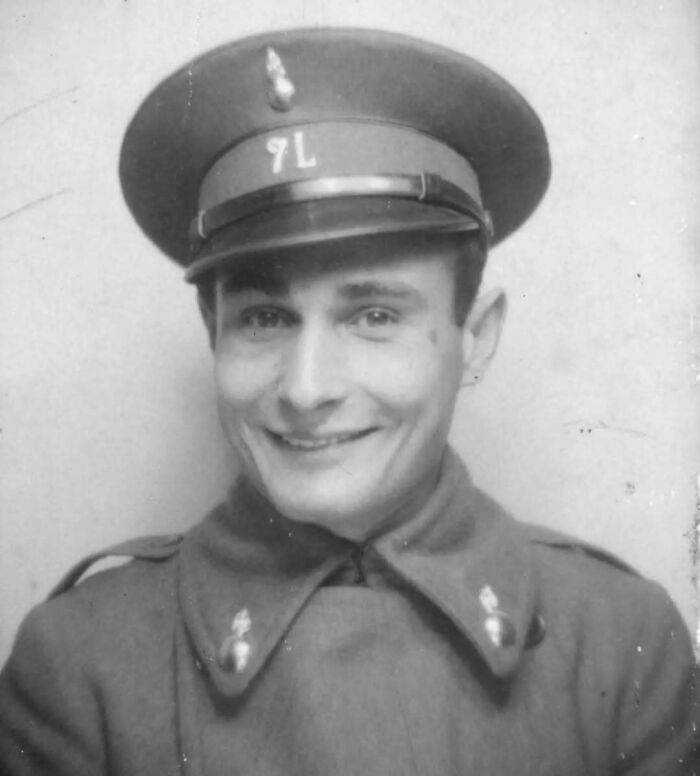
This is a portrait of Spanish spy and double agent, Juan Pujol Garcia in his uniform as a lieutenant in the Spanish Republic Army. Up until the breakout of World War II, Pujol was pretty much a failure in all aspects of his life. He had failed at being a student, soldier, businessman, and cinema magnate. Not to mention, his marriage was falling apart. When the war broke out, Pujol approached the British three different times to work for them. When they turned him away, he approached the N****, and they accepted him (giving him the codename Arabel). Once he earned credentials working as a N**i spy, he approached the Allies again, this time getting a job as a double agent (codenamed Garbo). He began to feed the N**** a combination of misinformation that was true but useless. Any high-value information always got to the N**** just a little too late. He even started a spy network consisting of 27 sub-agents. However, in reality, none of them existed. They were completely made up. Nevertheless, he submitted expense reports for them and the N**** paid their salaries. At one point, Pujol had to explain why some high-value information got to the N***s late. He told them that one of his spies had died and even managed to get the N**** to pay pension to the imaginary spy's imaginary wife for her loss. Not only did his false information get the N**** to waste millions of dollars, but he was also instrumental in convincing the N**** that the attacks on D-Day were just a diversion, and the real attack was yet to come, keeping vital resources away from the front lines. Pujol is one of the only people to ever get an Iron Cross from the N**** (which required Hitler's personal authorization, since he wasn't a soldier) and an MBE (Member of the Order of the British Empire) from King George VI After the war, Pujol feared that he would be hunted by surviving N****. In 1949, with the help of MI5, Pujol travelled to Angola where he faked his own passing from malaria. He then moved to Lagunillas, Venezuela, where he set up a small bookstore and gift shop, living in anonymity until he passed in 1988.
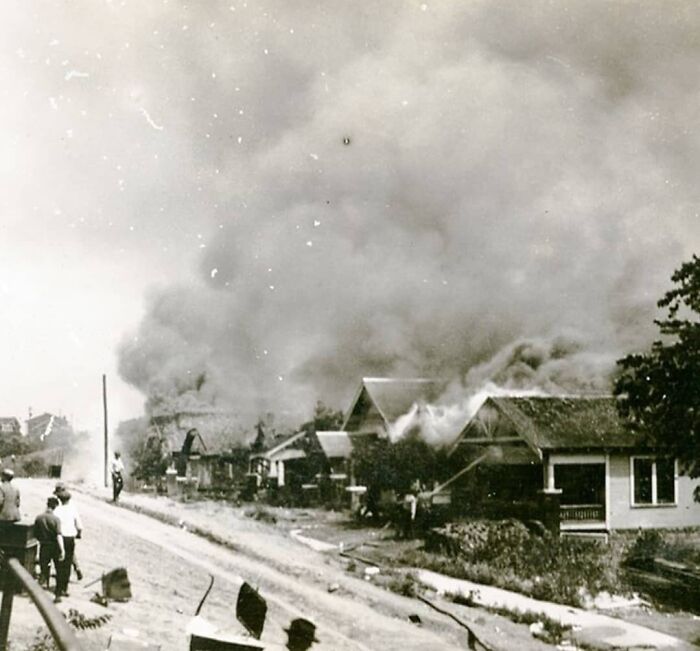
100 years ago—on May 31 and June 1, 1921—the Tulsa m******e occurred on "Black Wall Street," the wealthiest Black community in the United States at the time. Black businesses that flourished on Greenwood Avenue were attacked and destroyed by an angry mob. 35 city blocks were destroyed, 1,200 homes burned to the ground, an estimated 75 to 300 people were killed, and over 800 people were injured. Eyewitnesses said they even saw a dozen or more private planes in the sky dropping burning balls of turpentine onto the buildings. It has been called "the single worst incident of racial violence in American history." And yet the Tulsa m******e was not mentioned in any of the history books I read growing up and I would have never known about it had I not had this one history teacher... He gave the whole class an assignment to build a replica of Greenwood Avenue using paper, cardboard, index cards, paint and popsicle sticks. It took us almost a month to complete it... For the final part of the lesson, we took the replica and carefully carried it outside to the courtyard near the handball courts. Our teacher made us sit in a circle around the replica and let us take in what we had achieved. He then lit a match and proceeded to burn it down as we all sat there watching in horror. You can call it irresponsible, distasteful or cheap shock value—and this lesson will more than likely not fly in today's classroom—but this was Brooklyn during the late 90s. There were no such things as trigger warnings. 20 years later, I still vividly remember it and I have never forgotten. Source: The Burning: M******e, Destruction, and the Tulsa Race Riot of 1921 (2003) by Tim Madigan
Next, we wanted to know if Gemma has any personal favorite moments or time periods from the past.
"I honestly love all of history; give me a book or a TV show about anyone, from any country, from any time, and I’ll drink it in," she told Bored Panda. "But one period of history that has always resonated with me is the Black [....] which hit Europe in the middle of the 1300s."
"In just a matter of years, it is estimated that half of the continent died. Whole towns vanished, entire families could be wiped out within a matter of hours, and society was irrevocably changed," the history expert continued. "I remember the first time I properly studied the outbreak, and just sitting in silence trying to imagine even a fraction of what that might have been like. I suppose we had something of a taste of this with Covid, but even that cannot begin to compare. You can understand why people would have thought the world was ending."
In 1973, Sacheen Littlefeather took the stage to reject an Oscar on behalf of Marlon Brando. She was given 60 seconds on stage to provide the following speech: “Hello. My name is Sacheen Littlefeather. I'm Apache and I am president of the National Native American Affirmative Image Committee. I'm representing Marlon Brando this evening and he has asked me to tell you in a very long speech, which I cannot share with you presently because of time but I will be glad to share with the press afterwards, that he very regretfully cannot accept this very generous award. And the reasons for this being are the treatment of American Indians today by the film industry – excuse me – and on television in movie reruns, and also with recent happenings at Wounded Knee. I beg at this time that I have not intruded upon this evening and that we will in the future, our hearts and our understandings will meet with love and generosity. Thank you on behalf of Marlon Brando.” She kept her full composure despite the boos and jeers coming from the audience. John Wayne had to be restrained by security because he wanted to physically a*****t her as she left the stage. Clint Eastwood mocked her by saying that he was presenting the award on behalf of “all the cowboys shot in all the John Ford Westerns.” Subsequently, Littlefeather was blacklisted by Hollywood and never worked in the film industry again. Nearly half a century later, Littlefeather will return to the Academy as a guest of honor on September 17, 2022.
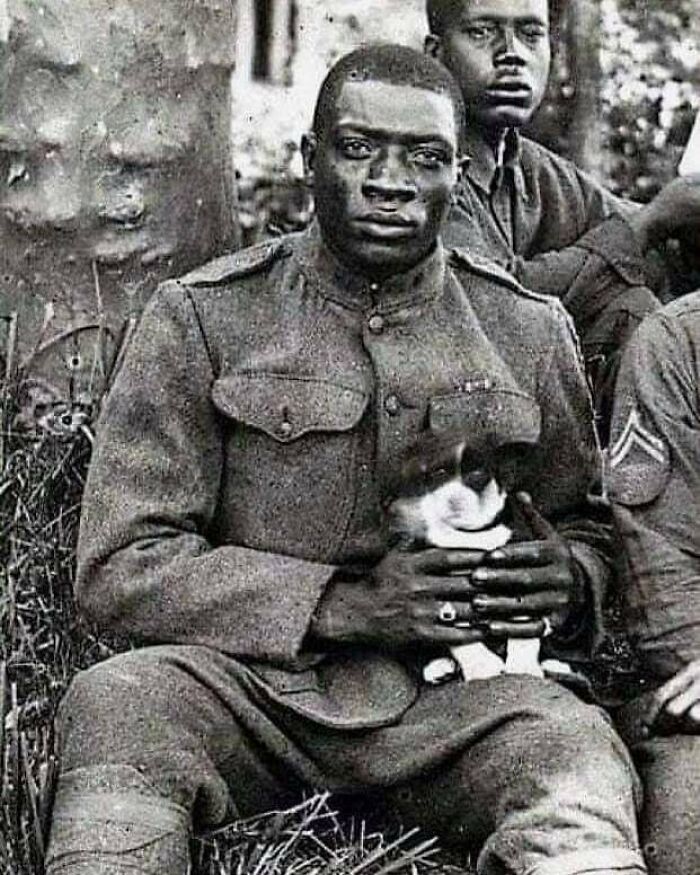
A member of the Harlem Hellfighters (369th Infantry Regiment) poses for the camera while holding a puppy he saved during World War 1, 1918. The Harlem Hellfighters was a regiment made up of decorated Black soldiers who fought as part of the French army because the U.S. did not allow Black soldiers to fight alongside white soldiers. The French accepted the Harlem Hellfighters with open arms and did not racially segregate them. During World War 1, they fought on the front lines for 191 days, longer than any other American unit. And as a result, suffered the most casualties of any American regiment—losing approximately 1,500 men. Despite the heavy [...] toll and the poor replacement system, the Harlem Hellfighters never lost a trench or a foot of ground to the enemy; none of them became prisoners of war. Not only were they one of the most successful regiments of World War 1, but they also helped bring Jazz to France. Upon returning home, the Harlem Hellfighters received a welcome parade in New York City; a privilege that was denied to them before they had left for war. However, the celebrations were short lived as the summer of 1919 became known as the Red Summer, in which the country saw some of the worst racial violence since the Civil War. The Harlem Hellfighters who dreamed of returning home to a place that would finally treat them with respect and as equal human beings, quickly realized that nothing had changed at all.
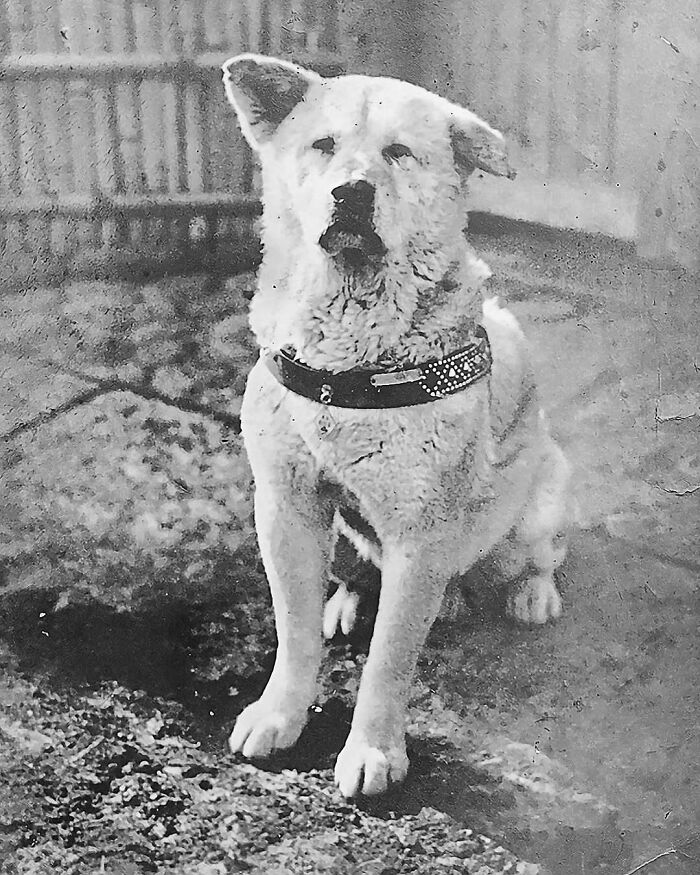
This is a photo of Hachikō, a Japanese Akita dog remembered for his unwavering loyalty to his owner. Hachikō belonged to Professor Eizaburo Ueno who lived in Shibuya and taught at Tokyo Imperial University during the early 1920s. Every day, Ueno would walk to Shibuya Station with Hachikō and take the train to work. Once he was done for the day, he would take the train back and return to the station at precisely 3 PM. Hachikō would always be there waiting patiently to accompany the professor home. One day, Ueno suffered a stroke and never arrived at the station. Hachikō went to the station every day for 9 years until he passed in 1935.
So if someone wants to expand their understanding of history, where should they begin? "I would suggest finding a medium they enjoy the most, and start by searching popular pieces from a range of periods," Gemma says. "This could be television, books, podcasts, or video games. If you’re enjoying consuming something – especially fiction – then it doesn’t matter how accurate it might be to start with."
"Once you’ve found something that sparks your interest, it’s easy to then want to dive into more," she noted. "Did that TV show portray that character how they really were? Did that podcast sensationalize that particular event, or was history really that wild?"
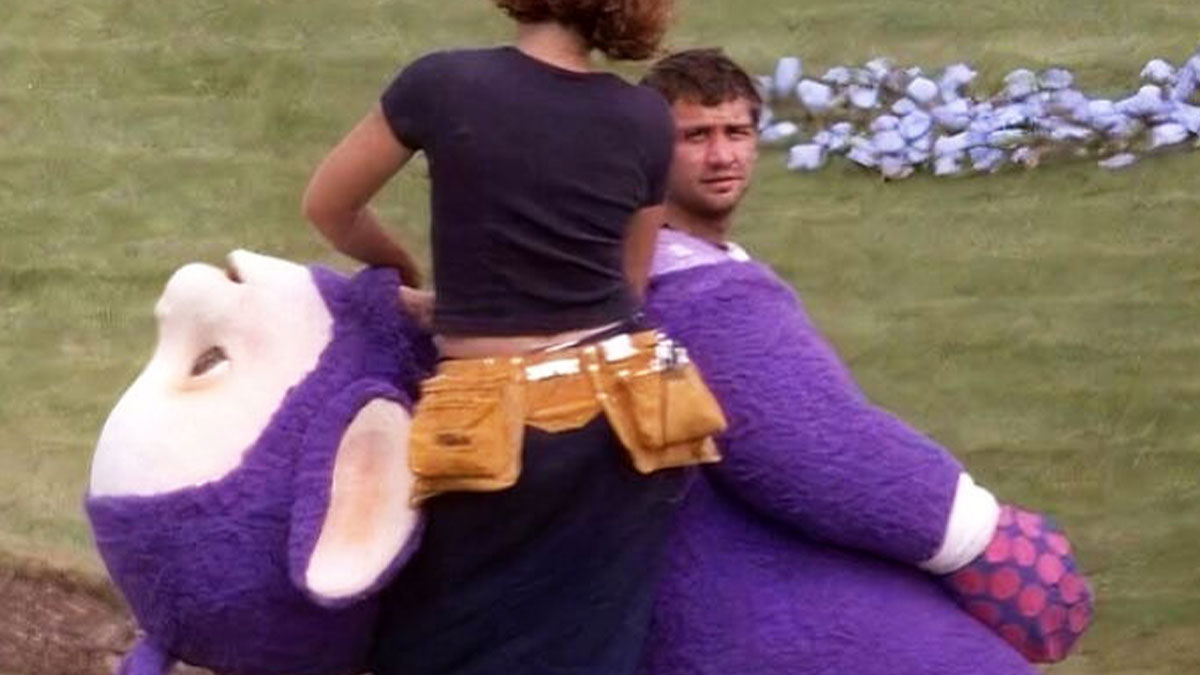
Behind the scenes from the British television show, Telletubbies, which originally aired from 1997 to 2001. In real life, the Telletubbies were actually very tall. The oldest, purple Teletubby, Tinky Winky, stood at 10 feet tall (305 cm). The red Teletubby, Po, was 6 feet 6 (198 cm) inches tall. The yellow Teletubby, Laa-Laa, was 6 feet 5 inches (196 cm). The green Teletubby, Dipsy, was 8 feet (244 cm). The show was filmed on an incredibly large set to create the illusion that the Telletubbies were small. The location of the set was so secret that visitors had to be blindfolded. Eventually, word got out and it became known that a sloping hill on a private field in Wimpstone, Warwickshire in England was the home to "Tubbytronic Superdome". After the show ended, tourists began to flock to the iconic set. The landowners became fed up with trespassers, stating that "it was never meant to be a tourist attraction. We had people jumping fences, crossing cattle fields and all sorts..." They ultimately decided to flood the entire set and it has now been underwater for nearly two decades. The set is now occupied by a family of swans and freshwater fish.
In 1960, David Latimer planted a spiderwort sprout inside of a large glass bottle, added a quarter pint of water, and then sealed it shut. He opened the bottle 12 years later in 1972 to add some water and then sealed it for good. The self contained ecosystem has flourished for more than 60 years. For those who are wondering how this is even possible: the garden is a perfectly balanced and self-sufficient ecosystem. The bacteria in the compost eats the plants and breaks down the oxygen that is released by the plants, turning it into carbon dioxide, which is needed for photosynthesis. The bottle is essentially a microcosm of earth.
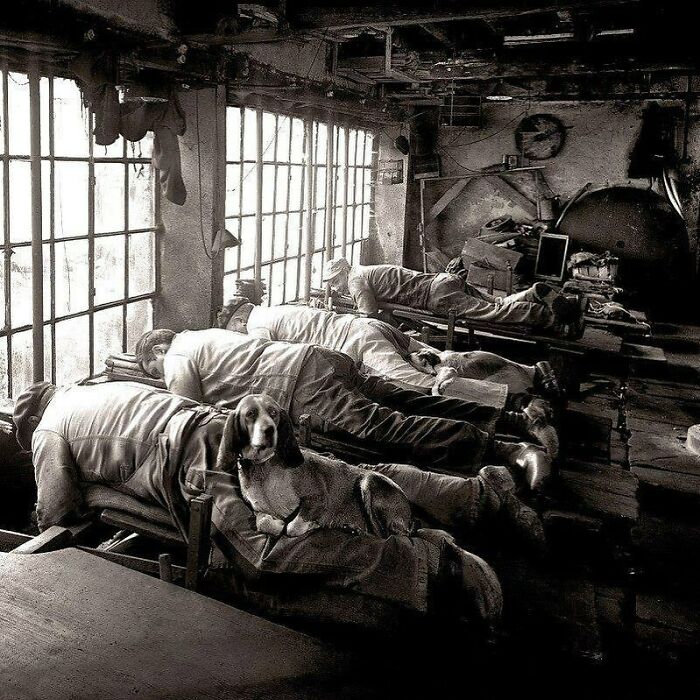
French knife grinders were called ventres jaunes (“yellow bellies” in English) because of the yellow dust that would be released from the grinding wheel. This photo from 1902 shows the workers on their stomachs in order to save their backs from being hunched all day. They were also encouraged to bring their dogs to work to keep them company and also act as mini heaters by having them rest on their owners’ legs.
Gemma also recommends following historians on social media, "as they are great at promoting their own and others’ work, so it’s an easy way to discover new people to read or time periods to explore. And get stuck in!"
"The best way to learn is by doing. There are so many online courses around, or you can take a class, or create something of your own; I started writing a history blog years ago, and I learnt so much history just by researching for my own pieces of writing," she shared.
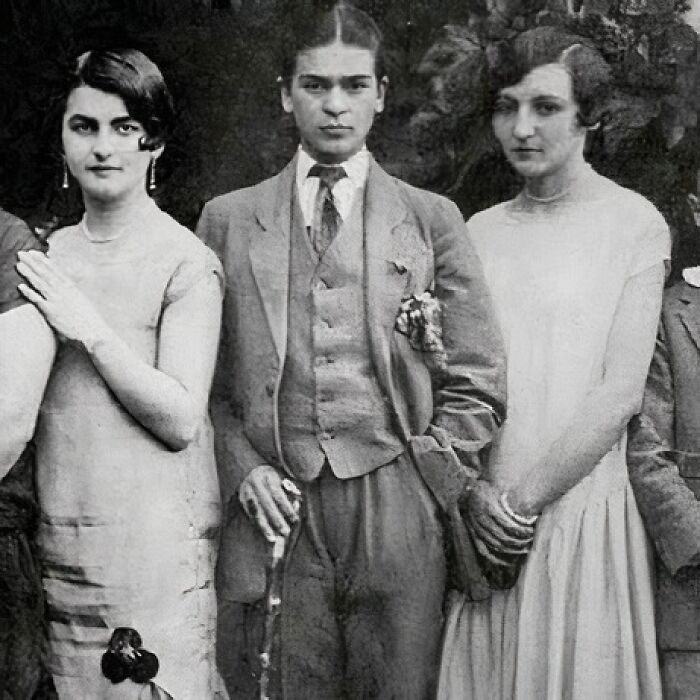
Frida Kahlo takes a family photo, wearing a 3-piece suit and holding a cane, 1924. Nearly 30 years later, in 1953, she writes a letter to Diego Rivera as she awaits surgery to amputate one of her legs. "I’m writing this letter from a hospital room before I am admitted into the operating theatre. They want me to hurry, but I am determined to finish writing first, as I don’t want to leave anything unfinished. Especially now that I know what they are up to. They want to hurt my pride by cutting a leg off. When they told me it would be necessary to amputate, the news didn’t affect me the way everybody expected. No, I was already a maimed woman when I lost you, again, for the umpteenth time maybe, and still I survived. I am not afraid of pain and you know it. It is almost inherent to my being, although I confess that I suffered, and a great deal, when you cheated on me, every time you did it, not just with my sister but with so many other women. How did they let themselves be fooled by you?" "...Let’s not fool ourselves, Diego, I gave you everything that is humanly possible to offer and we both know that. But still, how the h**l do you manage to seduce so many women when you’re such an ugly son of a b***h?" The reason why I’m writing is not to accuse you of anything more than we’ve already accused each other of in this and however many more [darn] lives. It’s because I’m having a leg cut off (d***** thing, it got what it wanted in the end). I told you I’ve counted myself as incomplete for a long time, but why the f*** does everybody else need to know about it too? Now my fragmentation will be obvious for everyone to see, for you to see… That’s why I’m telling you before you hear it on the grapevine..." "...I’m writing to let you know I’m releasing you, I’m amputating you. Be happy and never seek me again. I don’t want to hear from you, I don’t want you to hear from me. If there is anything I’d enjoy before I die, it’d be not having to see your f*****g horrible b*****d face wandering around my garden. That is all, I can now go to be chopped up in peace. Good bye from somebody who is crazy and vehemently in love with you, Your Frida"
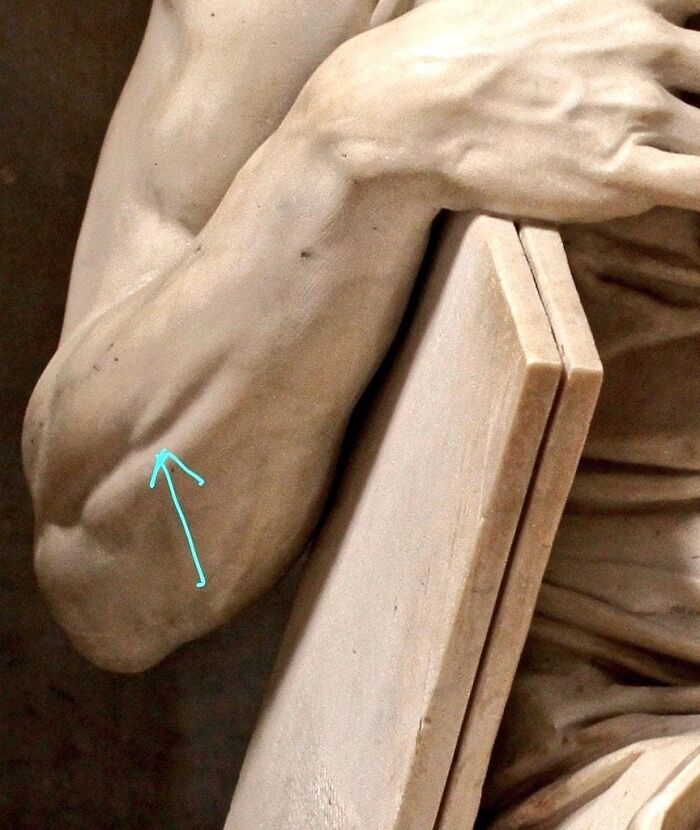
This is the right forearm of Michelangelo's Moses (c. 1513–1515) statue. The arrow points to a small muscle called the extensor digiti minimi, which only contracts when the pinky is lifted, otherwise it is invisible. Most of Michelangelo's sculptures are painstakingly detailed and you can clearly see his obsession with the human body, which he saw as a physical representation of the soul. Michelangelo always preferred sculpting over painting. Here's a letter he wrote to Giovanni da Pistoia (a member of the Florentine Academy) while painting the Sistine Chapel. "I’ve already grown a goiter from this t*****e, swollen up here like a cat from Lombardy (or anywhere where the stagnant water’s p****n). My stomach’s squashed under my chin, my beard’s pointing at heaven, my brain’s crushed in a casket, my breast twists like a harpy’s. My brush, above me all the time, dribbles the paint so my face makes a fine floor for droppings! My haunches are grinding into my guts, my poor a*s strains to work as a counterweight, every gesture I make is blind and aimless. My skin hangs loose below me, my spine’s all knotted from folding over itself, I’m bent taut as a Syrian bow. And because I’m like this, my thoughts are crazy perfidious tripe: anyone shoots badly through a crooked blowpipe. My painting is over. Defend it for me, Giovanni, protect my honor. I am not in the right place—I am not a painter."






































 No fees, cancel anytime