Get Premium
Dark mode theme is available exclusively for premium users. Learn more about the benefits of subscribing.
No fees, cancel anytime.

 Dark Mode Ad-Free Browsing Unlimited Content
 Ad-Free Browsing Unlimited Content Dark Mode
Join 1.2 million Panda readers who get the best art, memes, and fun stories every week!
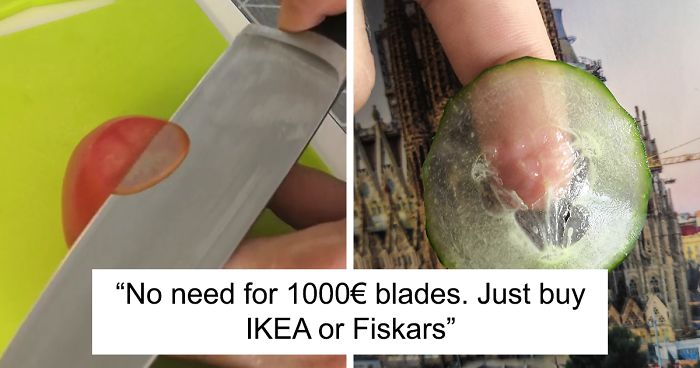
Most of us have daydreamed about becoming professional chefs and wowing everyone with our superstar skills in the kitchen. Sadly, not all of us are equally good when it comes to cooking, and intense training in the secretive ways of the culinary arts seems like a grueling task.
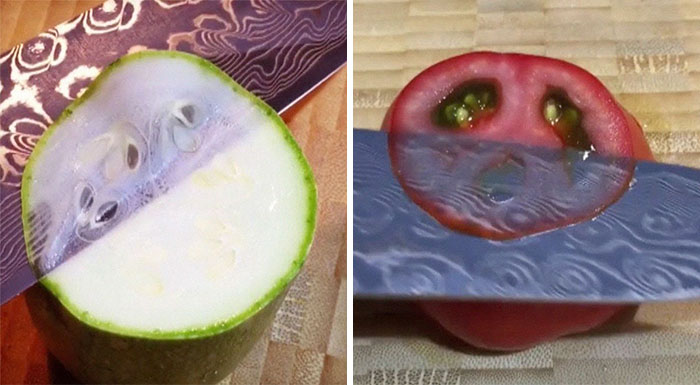
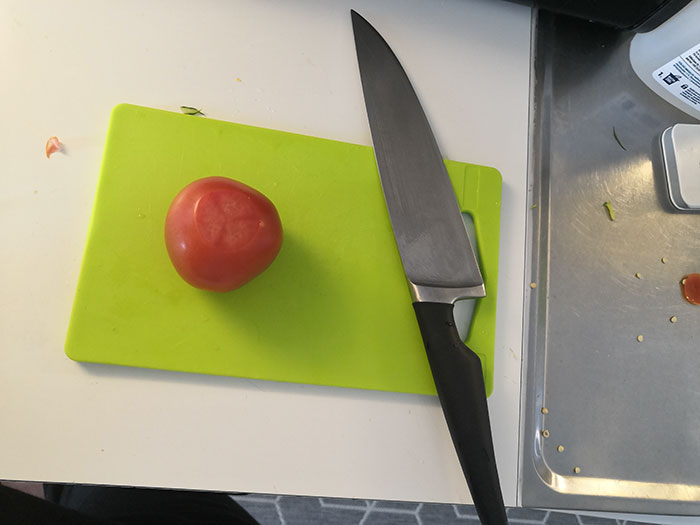
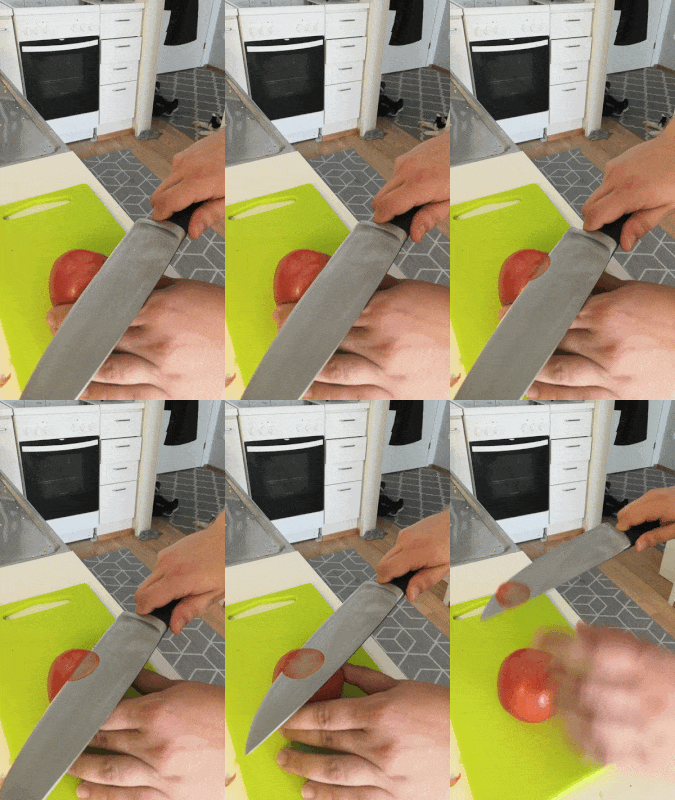
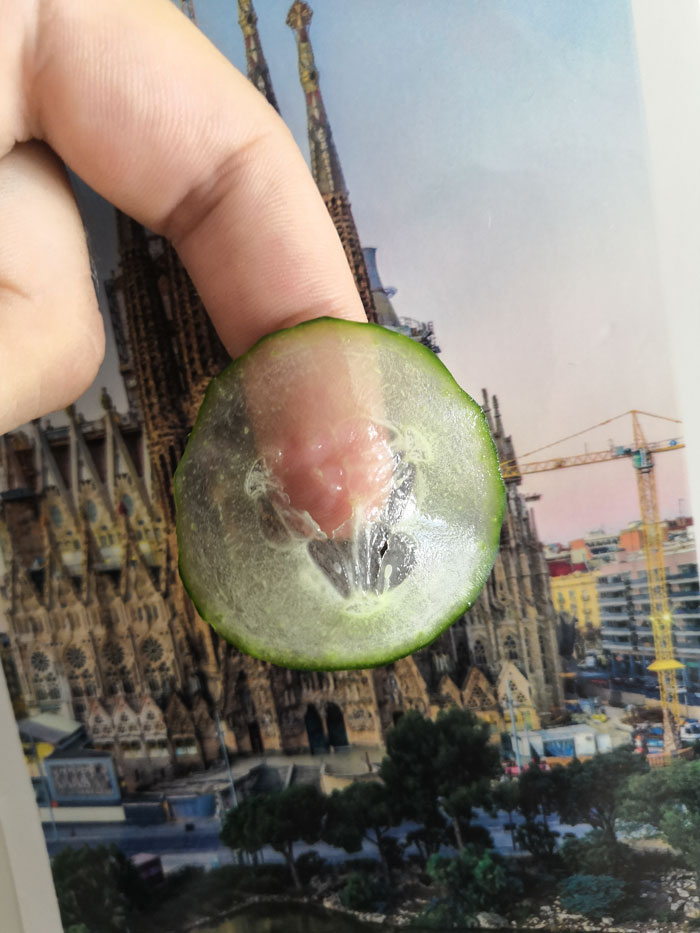
Petteri, a chef from Finland, is here to tell you that absolutely anybody can act like a professional cook — if they know the right techniques. He uploaded a series of photos to imgur, demonstrating how to use average kitchen knives to cut food into ultra-thin slices.
Image credits: hewari
Image credits: hewari
Bored Panda interviewed chef Petteri from Finland about how to properly use cooking knives for cutting food, and how to take proper care of them. Petteri told us that he spent 3 years learning the trade at a hotel, restaurant and catering college, and a further 8 years working at fine dining, a la carte and lunch restaurants, as well as in the catering business.
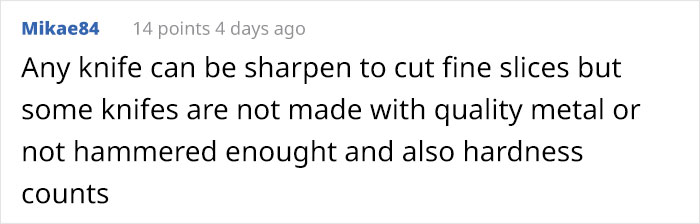
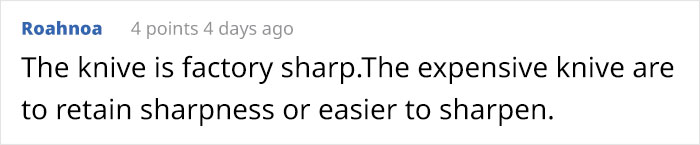
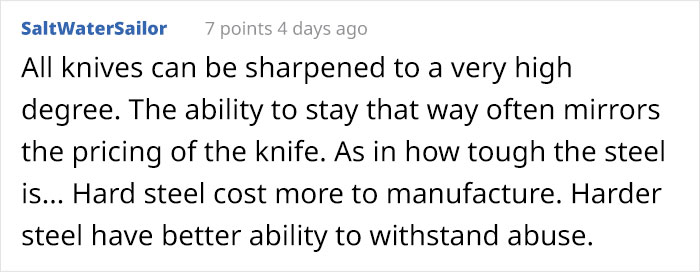
“You don’t get the benefits of a high-end knife if you use them only for home cooking,” Petteri shared some of his in-depth knowledge about knives with Bored Panda and explained that the main difference between expensive and cheap knives is the quality of steel. “For example, my expensive knives actually dull faster and need more sharpening and maintaining compared to the knives I have at home because they are in constant use. Good mid-range knives last for a lifetime if cared for properly.”
Image credits: hewari
Image credits: hewari
The chef also recommended anyone interested in taking care of their cooking knives to get a whetstone and honing stick: “They are easy to use and the Internet is full of great guides on how to use them. Honing the blade will straighten the blade and keep it sharp and the whetstone will reform the actual blade and remove little nicks and dents from it. Hone the knife when you feel it isn’t cutting smoothly. And use whetstone when you feel that the honing isn’t helping anymore.”
Image credits: hewari
Image credits: hewari
Petteri warned us that we should never, ever put a knife in a dishwasher. “Rinse the blade with water and use a brush if there is something sticky, rinse and repeat. Avoid using soap and always store knives separately, such that the blade part does not come in contact with other knives and other utensils. I recommend getting a magnetic rack or a knife rack.”
Image credits: hewari
Image credits: hewari
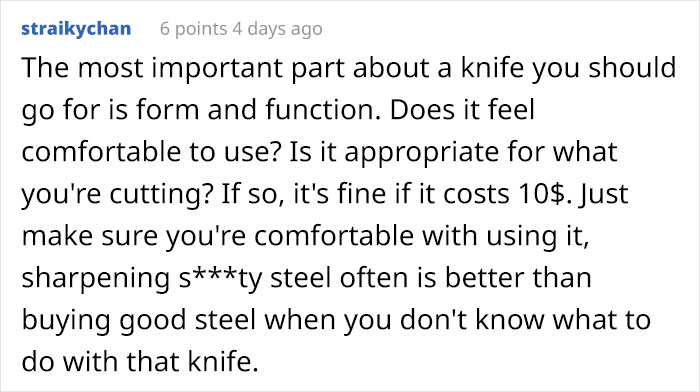
“When testing the quality of a knife, I look for a few things. Is the handle comfortable in your hand? Do you like the grip? Is it well balanced? How fast does it lose its edge? Sadly, there is no sure way to tell if the knife is fantastic on the spot. Usually, after a month of use, I have a clear idea if I like the knife or not. I have had knives made of really high-quality steel but the handle falls apart or the blade is really top-heavy which makes the knife cumbersome to use,” the chef added.
Image credits: hewari
Image credits: hewari
Image credits: hewari
He also had some final advice for anyone planning on going shopping for cooking knives in the future: “Don’t buy those knives that market themselves as “never needs sharpening” or “never dull”. They actually can’t be sharpened and once it’s dull or you accidentally drop it and the blade nicks a little, it’s gone and you wasted money. It’s important to get the right knife for the right job and I recommend, at the very least, to get one knife for meat, one for veggies, and one for pairing. In the end, it’s not how expensive your knife is, it’s how well you treat and use it that counts.”



Can you make me a very very thin tomato sandwich please :)
Load More Replies...
Can you make me a very very thin tomato sandwich please :)
Load More Replies... 
























 No fees, cancel anytime













116
30