Get Premium
Dark mode theme is available exclusively for premium users. Learn more about the benefits of subscribing.
No fees, cancel anytime.

 Dark Mode Ad-Free Browsing Unlimited Content
 Ad-Free Browsing Unlimited Content Dark Mode
Join 1.2 million Panda readers who get the best art, memes, and fun stories every week!
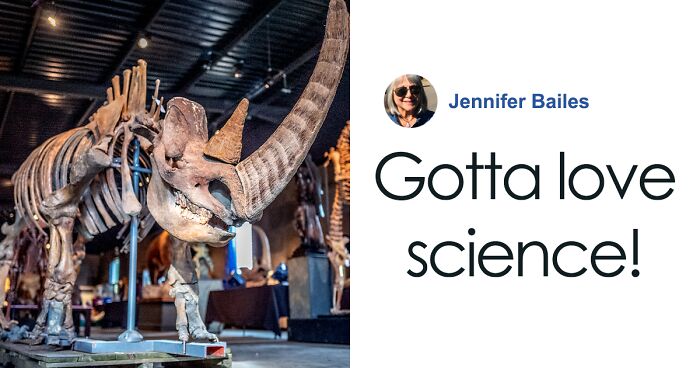
In the ever-evolving world of science, remarkable advancements are continuously illuminating the mysteries of our prehistoric past and the living beings that once roamed our planet.
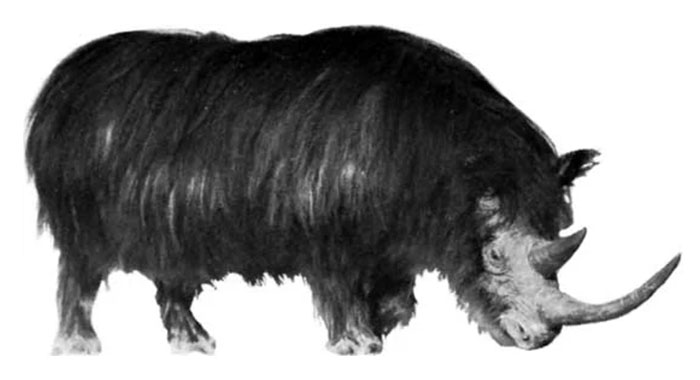
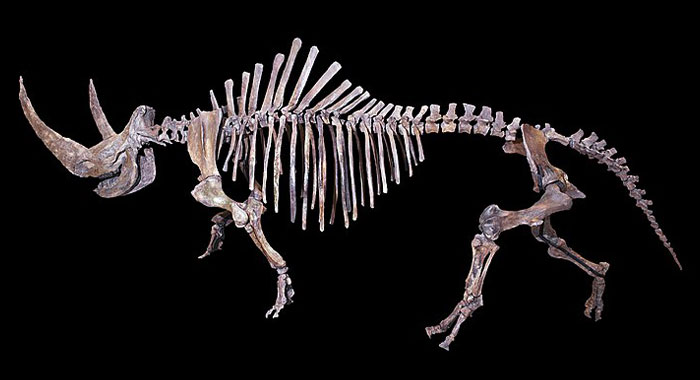
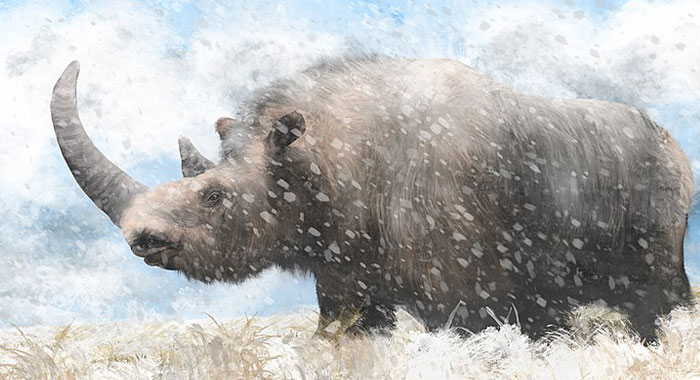
A potentially rich source of ancient DNA has now come to light, surprising researchers as they have successfully pieced together the mitochondrial genome of the long-extinct wooly rhinoceros (Coelodonta antiquitatis).
Image credits: Encyclopedia Britannica
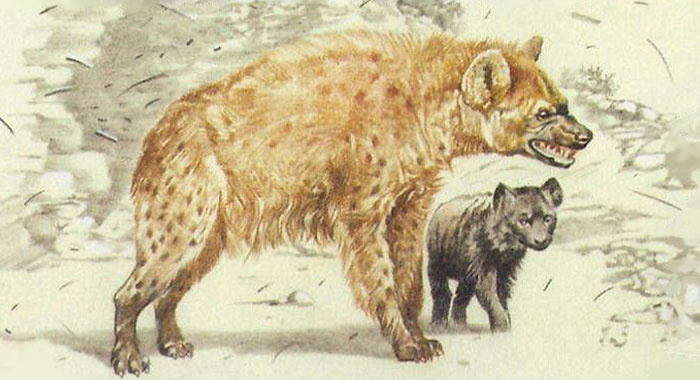
Scientists have been using genetic material extracted from fossilized excrement left behind by cave hyenas (Crocuta crocuta spelea) that consumed the large mammal as a meal, according to Science Alert.
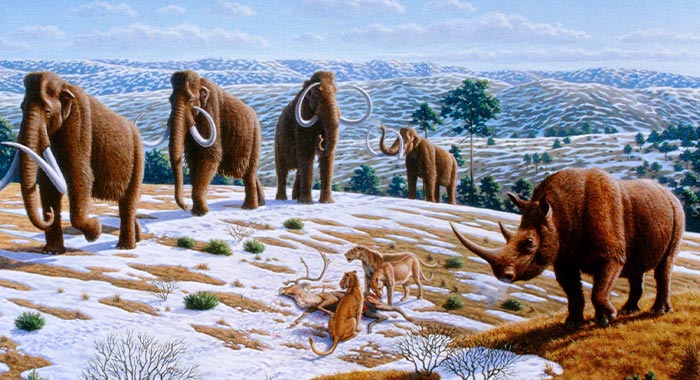
This marks the inaugural recovery of a genome for the European wooly rhinoceros, as all prior genetic data pertaining to this species originated from Siberian specimens.
This development not only holds the potential to offer insights into potential regional distinctions among rhino herds but also underscores the significance of fossilized feces, or coprolites, as a valuable scientific resource.
Image credits: Wikipedia Commons
The researchers wrote in their paper: “The mitogenome assemblies produced here are the first mitogenomic records of European wooly rhinoceros and are thus an important resource to help resolve the phylogeography of this iconic Pleistocene megafauna species.
“The fact that these were retrieved with relative ease from a coprolite of another species (i.e. no remain associated directly to wooly rhinoceros was needed) stresses the value of obtaining genomic data from a wide range of materials.”
As it turns out, archaic dookies have emerged as a treasure trove of historical information, the publication states.
These preserved fecal remnants enable current researchers to deduce the diets of both ancient humans and animals, examining the parasites that afflicted them, and investigating shifts in the human gut microbiome over time.
Image credits: Wikipedia Commons
Led by molecular biologist Peter Andreas Seeber from the University of Konstanz in Germany, a research team conducted a study on two fossilized hyena excrements dating back to the Middle Paleolithic era in what is present-day Germany.
This epoch extends from approximately 300,000 to 30,000 years ago.
These particular coprolites had been unearthed during excavations and had been resting in museum collections, much like many coprolites today.
A research paperpublished the previous year emphasized the untapped potential of these ancient droppings within museum collections as invaluable resources for delving into the biological history of our planet.
Peter and his team employed specialized methods to extract material from within the coprolites, processed the DNA for analysis, and subsequently subjected the findings to DNA sequencing.

Image Credits: Rupert van Der Werff/Getty Images
Despite the DNA’s degradation, the scientists successfully salvaged genetic material from both the cave hyena and the woolly rhinoceros.
They then proceeded to compare these genetic profiles with other genomes, encompassing both contemporary and ancient specimens.
Remarkably, even with just a single rhino DNA sample, the research offered fresh insights into the species and its evolutionary spread across the vast Eurasian landmass.
Surprisingly, the discrepancy in genetic makeup between the European rhinoceros, which became a meal for hyenas, and their Siberian counterparts suggests that these two groups embarked on a process of divergence quite a long time ago.
The separation of European rhinos from their Siberian counterparts likely commenced between 2.5 million and 150,000 years in the past.
Image credits: Wikipedia Commons
This discovery stands in direct contrast to the hypothesis proposing repeated range expansions of rhinos into Western Europe during the late Pleistocene, at least concerning the particular rhino in question.
Continued efforts to recover and analyze the DNA of these ancient and majestic rhinoceroses promise to unveil further facets of their history, even if this valuable information has to be extracted from a source as unglamorous as extremely old poop.
Researchers wrote: “As with these samples, many archaeological objects retrieved in past excavations and existing in collections, are to date a largely overlooked source of ancient DNA.”
Image credits: Wikipedia Commons
Moreover, Peter told IFLScience that the findings may also have relevance today, especially in light of the current climate crisis.
He said: “Insights into the population dynamics of (sub)species that have gone extinct probably because of a changing climate may help predict future developments and the fate of extant wildlife populations.”




No, let’s not clone them. Look up from your phone and take a couple minutes to really think it through. If they did it, for no other reason than they can, would they even be successful, or would the poor thing die at birth? If it lived, how long would it survive? What kind of quality of life could it have? It would be the only one of its kind. Would modern rhinos accept it? Could it even live in the modern rhino’s habitat? How fair would it actually be for the animal in this science project? Science isn’t just doing s**t without thinking. Just because we CAN do something doesn’t always mean we SHOULD do it. Good science also takes into consideration the ETHICS of an experiment. Cloning an extinct rhino species, or a wooly mammoth, or a Neanderthal—-all of which are ideas that have been considered, and rejected—-falls into the UNETHICAL side of the equation. So no, we shouldn’t do it.

And let me guess you're also against mice being cloned (which has been going on for MANY MANY MANY YEARS...DECADES even) so scientists can study diseases like cancer, and get an accurate sense of how the disease truly progresses....or how about cloning monkeys, which scientists have been doing as a way to develop new medicines for humans, and the only way to make one that is SAFE is to use subjects that are closely related to humans as possibly and subjects that are identical as possible to ensure the SAME side effects, results, etc can be obtained and documented. Does that fall into the unethical side of the equation too??
Load More Replies... No, let’s not clone them. Look up from your phone and take a couple minutes to really think it through. If they did it, for no other reason than they can, would they even be successful, or would the poor thing die at birth? If it lived, how long would it survive? What kind of quality of life could it have? It would be the only one of its kind. Would modern rhinos accept it? Could it even live in the modern rhino’s habitat? How fair would it actually be for the animal in this science project? Science isn’t just doing s**t without thinking. Just because we CAN do something doesn’t always mean we SHOULD do it. Good science also takes into consideration the ETHICS of an experiment. Cloning an extinct rhino species, or a wooly mammoth, or a Neanderthal—-all of which are ideas that have been considered, and rejected—-falls into the UNETHICAL side of the equation. So no, we shouldn’t do it.
And let me guess you're also against mice being cloned (which has been going on for MANY MANY MANY YEARS...DECADES even) so scientists can study diseases like cancer, and get an accurate sense of how the disease truly progresses....or how about cloning monkeys, which scientists have been doing as a way to develop new medicines for humans, and the only way to make one that is SAFE is to use subjects that are closely related to humans as possibly and subjects that are identical as possible to ensure the SAME side effects, results, etc can be obtained and documented. Does that fall into the unethical side of the equation too??
Load More Replies...

































 No fees, cancel anytime


















45
8