Get Premium
Dark mode theme is available exclusively for premium users. Learn more about the benefits of subscribing.
No fees, cancel anytime.

 Dark Mode Ad-Free Browsing Unlimited Content
 Ad-Free Browsing Unlimited Content Dark Mode
Join 1.2 million Panda readers who get the best art, memes, and fun stories every week!
35submissions
Finished
Humans are nostalgic creatures. There's simply something magical about traveling back in time to witness the black and white (or bronze tinted) world before us. Is it the nostalgia for better, simpler times? Or perhaps a hunt for costume ideas for an Edwardian-era party? Either way, scrolling through photos of the bygone days is a joy in itself, no matter the reason.
That's why today we gathered some of the most captivating photos that were taken 100 years ago. Right about when horses were still the most popular (although fading) form of transportation, and Mount Rushmore was nothing but a rock. So whether you’re a photography aficionado or a history nerd always looking for new pieces of a puzzle that is life before us, we hope you enjoy this century-old album.
Click here & follow us for more lists, facts, and stories.
This post may include affiliate links.
The power of nostalgia is undeniable. And historical photos, such as the ones you see on this list, can be a quick one-way ticket to the source of this enigmatic emotion. But what exactly is nostalgia and why is looking at a bunch of Napoleonic veterans so effective at evoking it?
Well, before we go any further, we need to agree that history and nostalgia are not the same thing. As a Guardian journalist once wrote in his piece about vintage pictures: "Looking at Cornelia Sorabji [first woman to study law at Oxford University], it is not so much her historic achievements that move me as the fact she is there, before my eyes, as immediately as my parents or my childhood self."
In other words, not knowing the history or significance of the photo you're looking at may not affect its nostalgic charm on you. Just think of the iconic 'V-J Day Kiss in Times Square' photo. Does not knowing what in the world was happening behind the lens lessen the frozen moment's magic? We doubt it.
For some, the nostalgic value of a historical photo lies purely in the visual and aesthetic qualities of the image. This may also explain why social media brought into fashion the use of a retro filter (thanks Instagram!). According to one study, 63% of respondents said that they prefer vintage-style photos to modern ones.
And yet, think of a picture of your grandparents on their wedding day or a hazy shot of your hometown before it was filled with multi-story offices and Starbucks. Can you feel the warmth and fuzz? Well, that's the other kind of nostalgia that works because of our personal memories and cultural associations - something that films like last year's Oscar winner Aftersun manage to capture in all its colors.
Believe it or not, there was a time when nostalgia, and the leisurely act of flipping through scrapbooks, was seen in a negative light. Physicians in the 17th and 18th centuries viewed it as a neurological disease, sometimes even using it as an excuse to discharge soldiers from the battlefield.
Obviously, the prevailing view on this bittersweet emotion has changed over the years. As one research study has found, nostalgia generates positive feelings, improves self-regard, and even enhances our bonds with others.
But can nostalgia explain why many of us enjoy an occasional dip in century-old photo albums? According to Clay Routledge, a leading expert in the psychology of nostalgia, to whom Bored Panda spoke to better understand our collective fascination with this bittersweet emotion, it most likely can.
“Our personal stories are part of a broader social and cultural fabric that link people across generations. For instance, the movies from my childhood that are connected to my personal nostalgia have characters and themes that were inspired by the creative works of previous generations,” Routledge said, giving examples of the timeless classics, Star Wars and The Terminator.
Does this mean there'll be a time far in the future when a photo of Mr. Beast playing with a fidget spinner will unleash the same wave of nostalgia as a couple taking a mirror selfie in the 1920s does for us? Probably so.
Another great reason why many of us enjoy looking at online lists such as this one is hope. Not just any hope, but hope for the future. "Even historical nostalgia that appears largely unrelated to our memories might have a comforting and motivating effect if it helps give us ideas for solving today's challenges and building a better future," Routledge explained.
Although this kind of nostalgia is mostly associated with our personal memories and is often used as a coping mechanism (instead of a spark for action); one study has found that people who recalled a nostalgic event reported feeling more optimistic about their future than those who remembered an ordinary event.
Recently, a catchy new term emerged on the internet which explains why current generations enjoy scouring through vintage photos. "If I understand the concept correctly, 'retronauting' is about reflecting on the past in order to feel better about the present," David Ludden, a professor of psychology at Georgia Gwinnett College, explained to Bored Panda. "We see these vintage photos and think, 'Wow, life was really hard back then. We’re really lucky to be living in modern times.' And this sentiment is largely accurate. We’re healthier, we live longer, and we have so many modern conveniences."
While nostalgia and the so-called retronauting share the same appeal, David notes that they both do it in completely opposite ways. "Nostalgia is the act of reflecting on a past time that was better than the present to make us feel better now," he said. "While retronauting sees the present as better than the past" for the same effect. So no matter which camp you belong to, you will still reap the joys of nostalgia.
Another phenomenon that became more and more apparent the longer we've dealt with the pandemic over the last few years: we use nostalgia as a blanket to get through the difficult times. Just think of all the sourdough starters you or your friends made. The binging of 90s cult classics like "Friends", which experienced a massive 30% bump in viewership right after we collectively got stuck inside.
Routledge thinks this is because nostalgia has the power to remind us of better times, and that everything will eventually be alright. "We tend to become more nostalgic during times of rapid change and the uncertainty and anxiety such change creates because nostalgia is psychologically stabilizing," he said.
You may have noticed the increasing popularity of TV shows based in the years when people still, unironically said "gnarly." Just look at the popularity of Netflix's "Stranger Things". Likewise, the slow but steady comeback of record players. This may have to do with our digital lifestyles, Routledge explains. "Interestingly, and ironically, the age of the internet may be both increasing our need for nostalgia and providing more ways to meet that need," he told.
Matt Raoul, the founder of the TimeHop app which feeds users their forgotten social media photos, told WIRED magazine that smartphones might be responsible for that as well. "[They] gave us the ability to document every single aspect of our lives – but they don’t help us make sense of the information. Reflecting on past memories is a way to slow down and make sense of all that noise," Raoul explained.
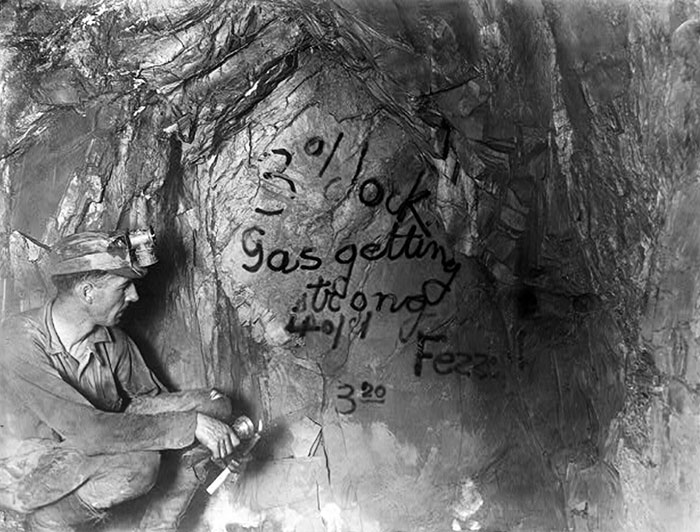
The message on the wall reads: "3 O'clock, gas getting strong"
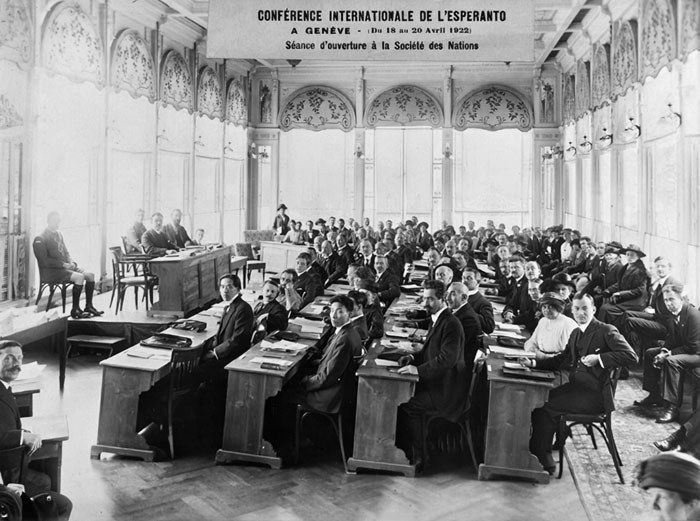
Esperanto was a synthetic language devised by Polish eye doctor Ludwik Lazar Zamenhof, who in 1887, published a pamphlet in Russian, Polish, French, and German describing Esperanto and proposing it as an easy-to-learn second language. An international Esperanto movement developed in the 1890s, culminating in the first world congress of Esperanto speakers in 1905. After WWI, the League of Nations considered adopting Esperanto as a working language and recommending that it will be taught in schools, but proposals along these lines were vetoed by France.










 No fees, cancel anytime