Get Premium
Dark mode theme is available exclusively for premium users. Learn more about the benefits of subscribing.
No fees, cancel anytime.

 Dark Mode Ad-Free Browsing Unlimited Content
 Ad-Free Browsing Unlimited Content Dark Mode
Join 1.2 million Panda readers who get the best art, memes, and fun stories every week!
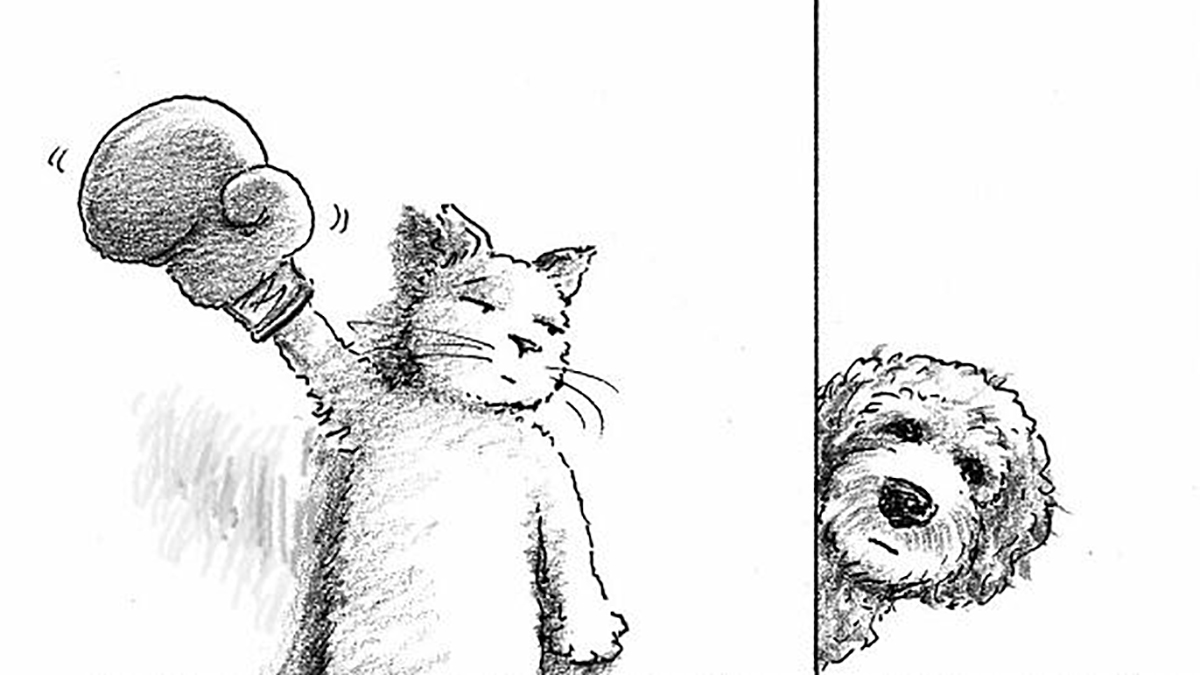
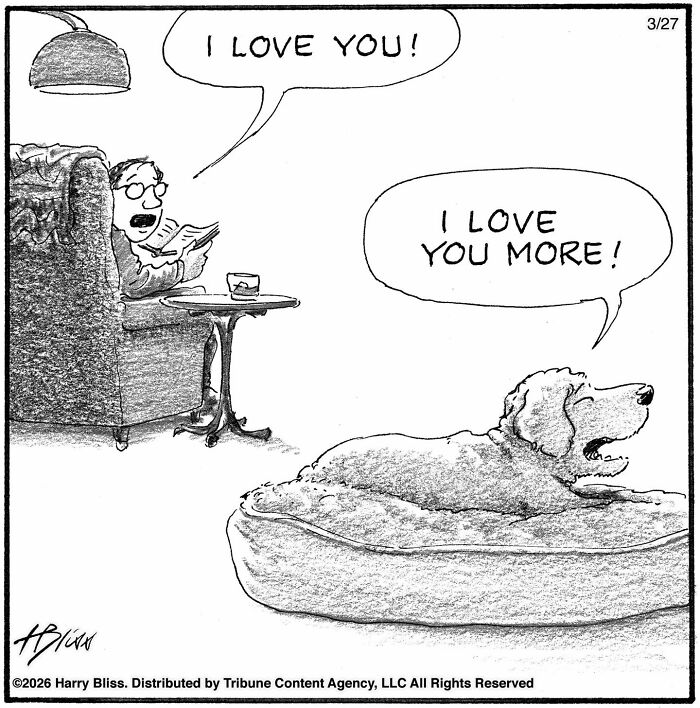
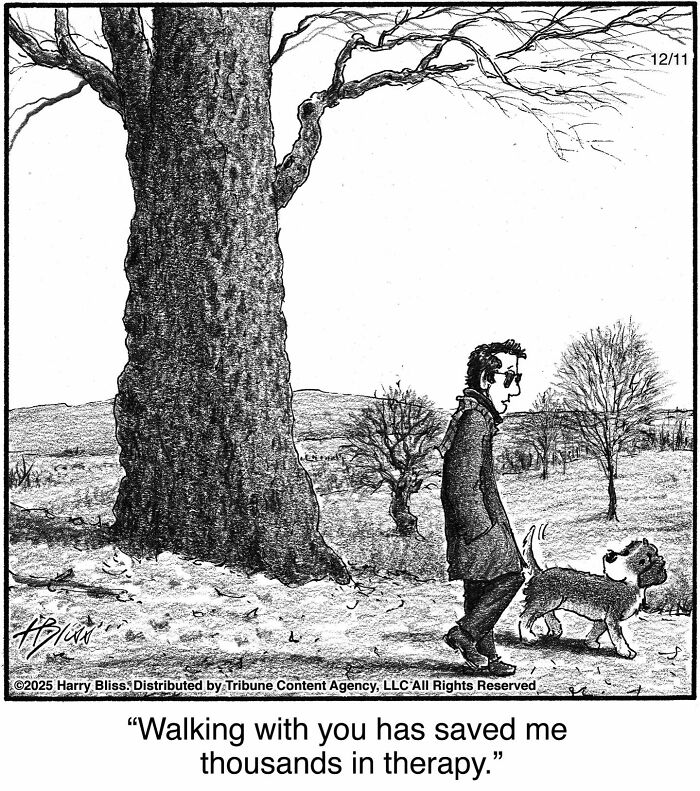
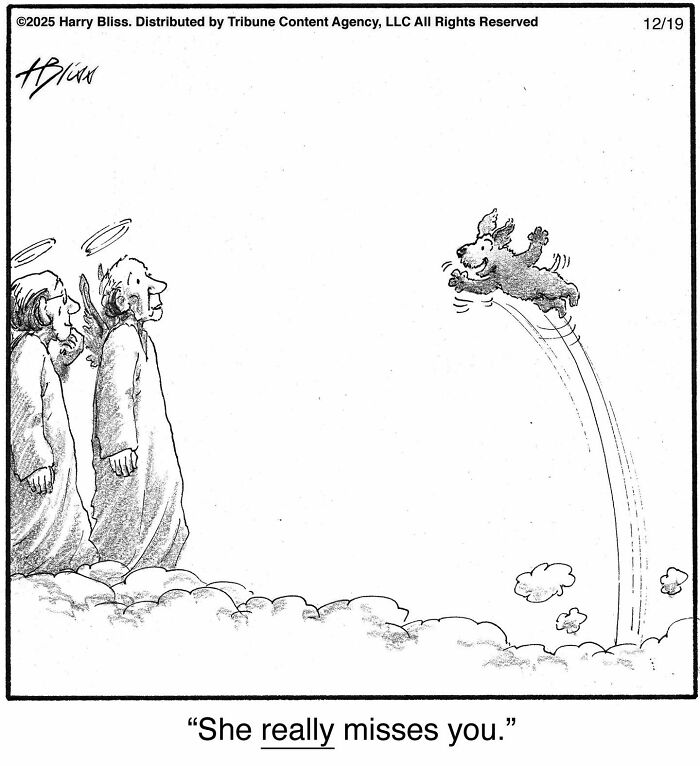
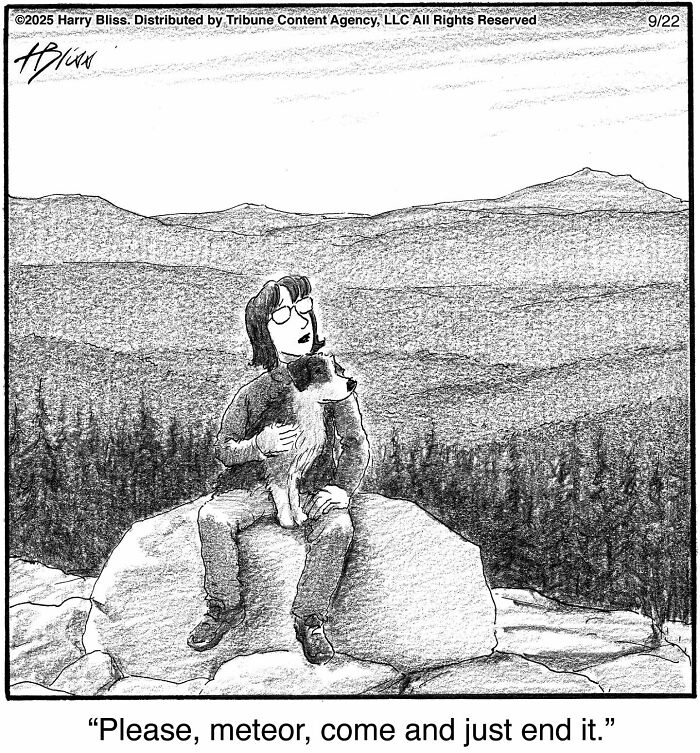
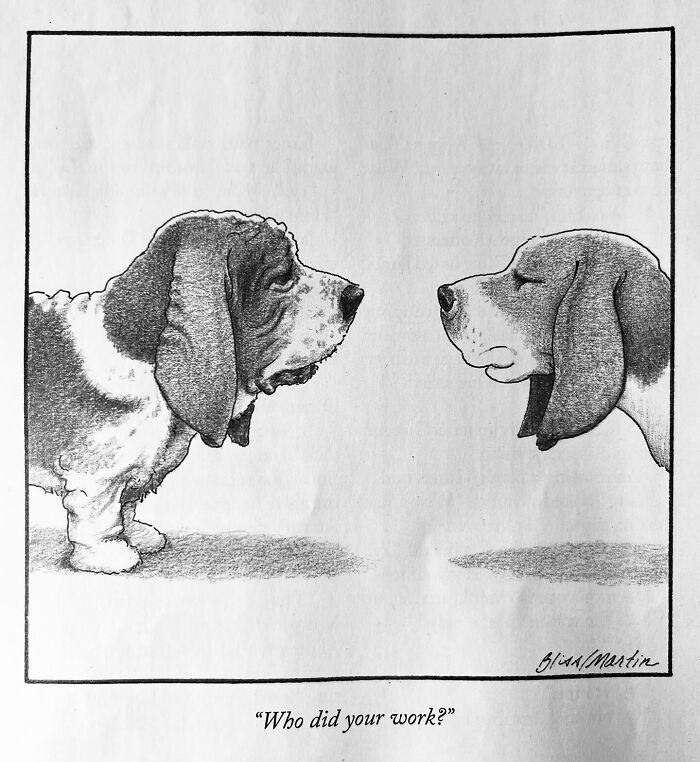
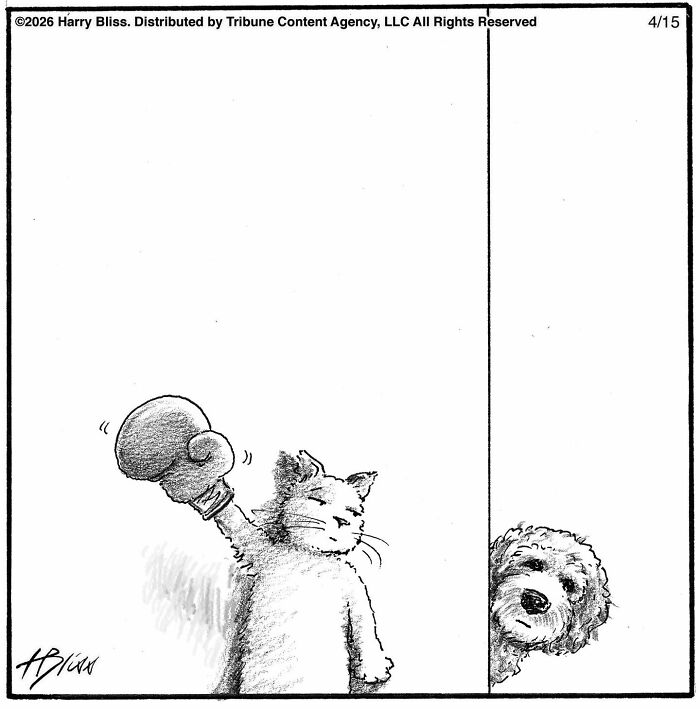
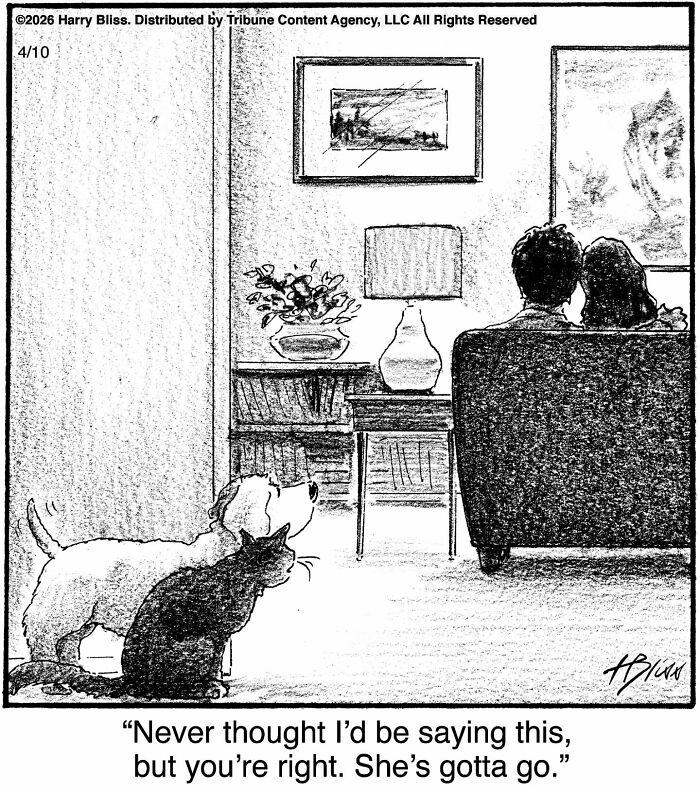
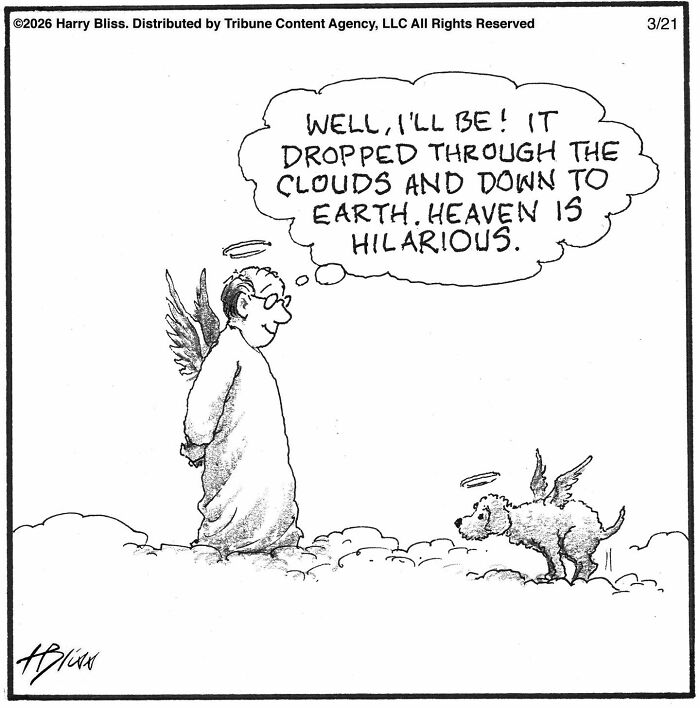
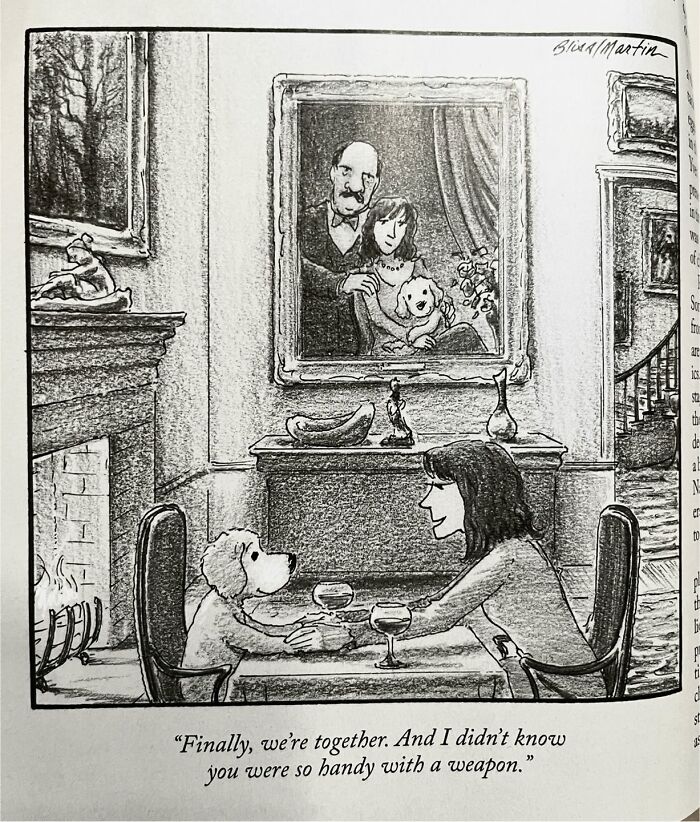
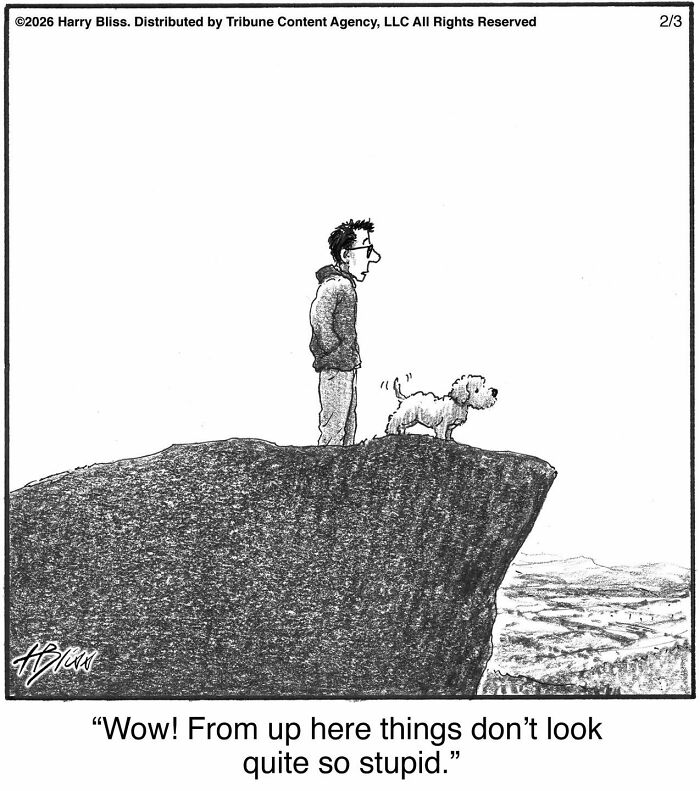
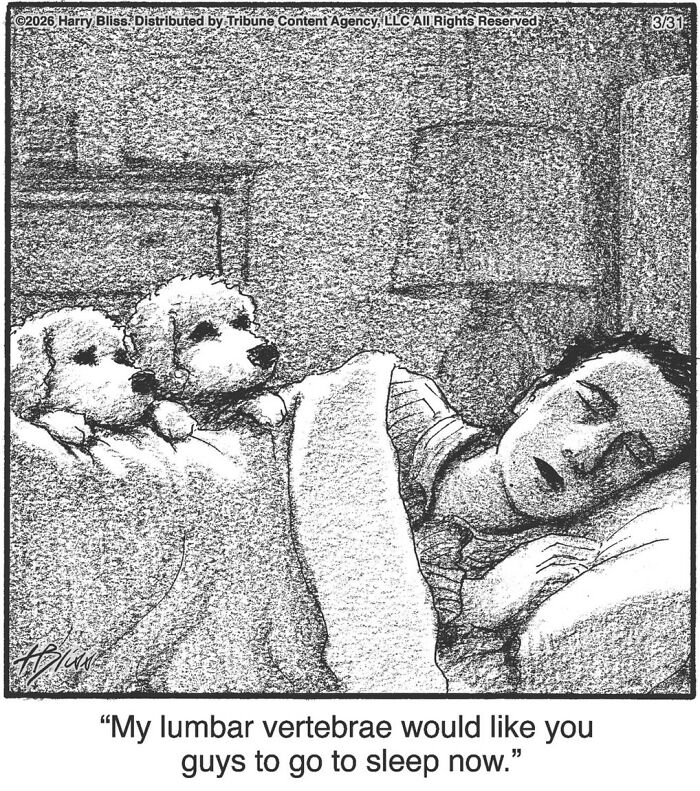
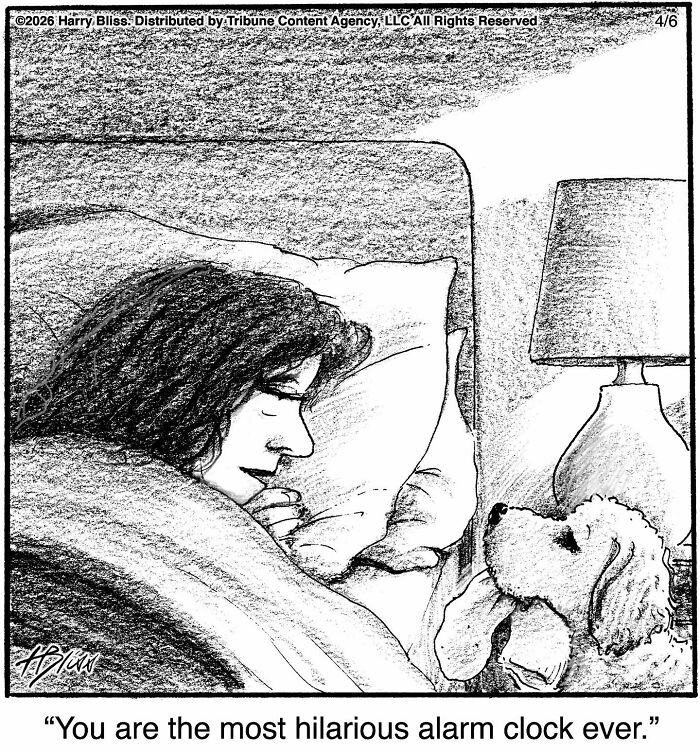
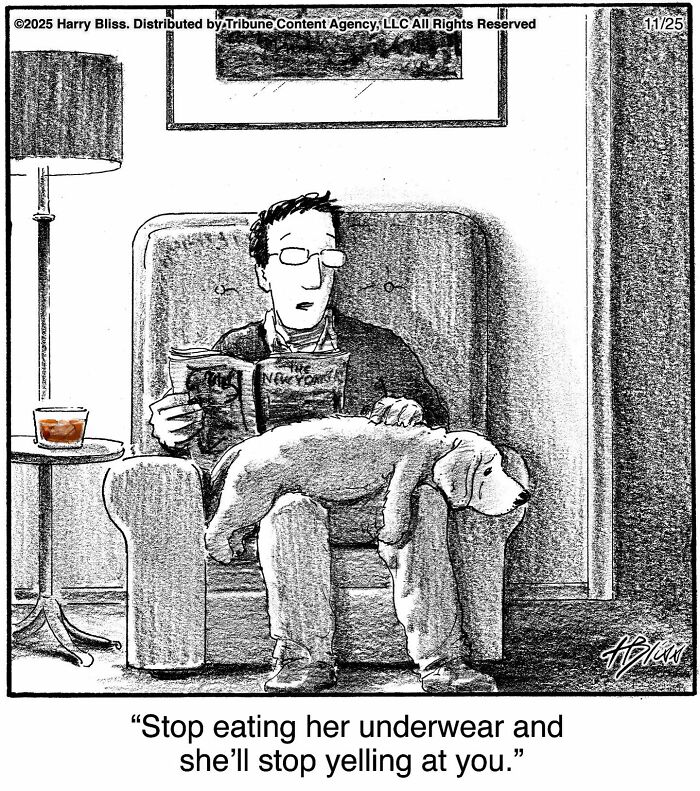
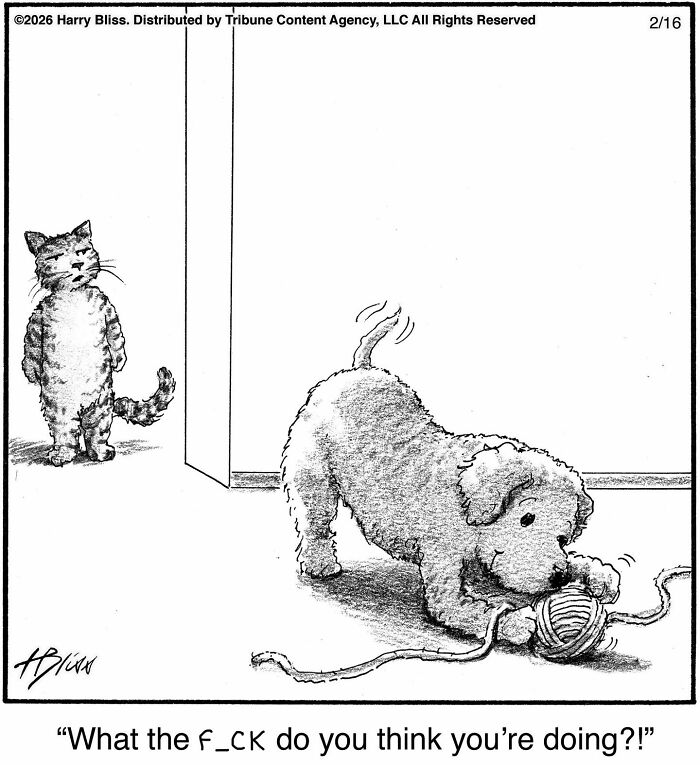
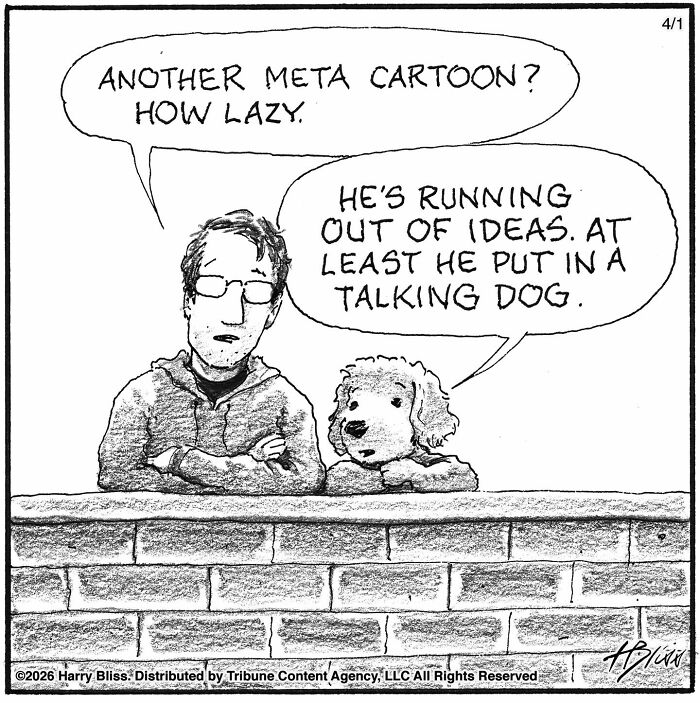
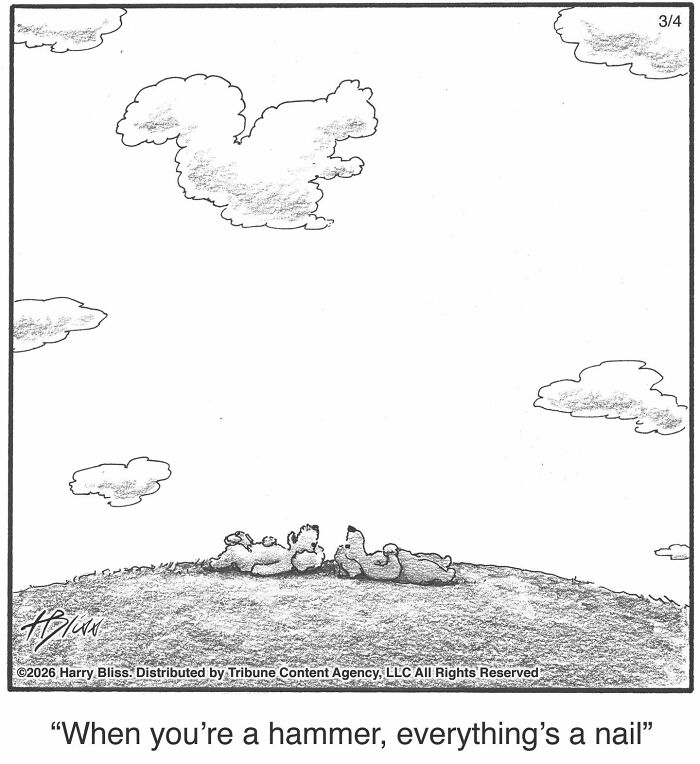
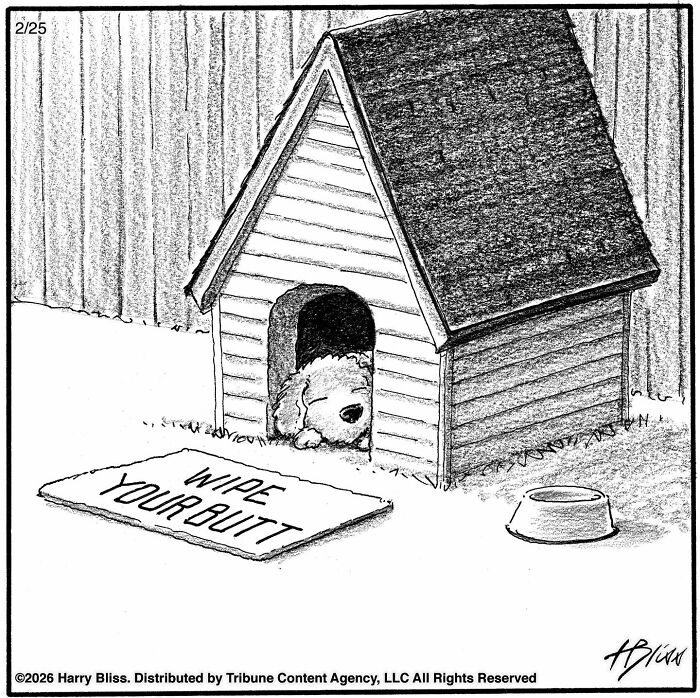
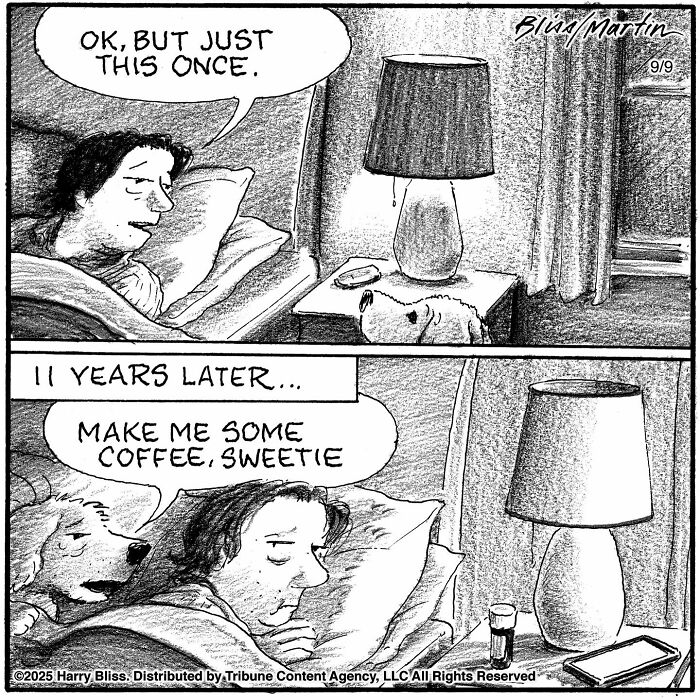
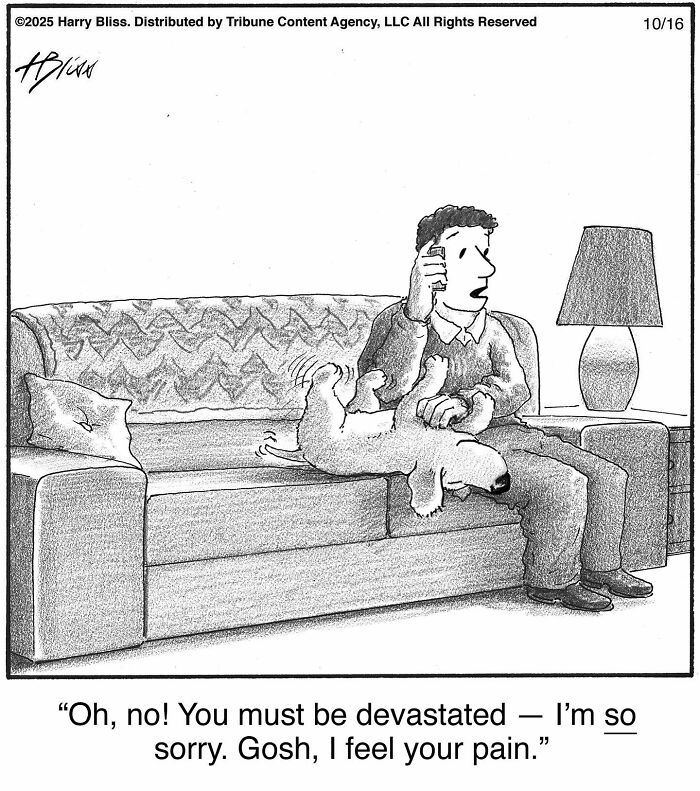
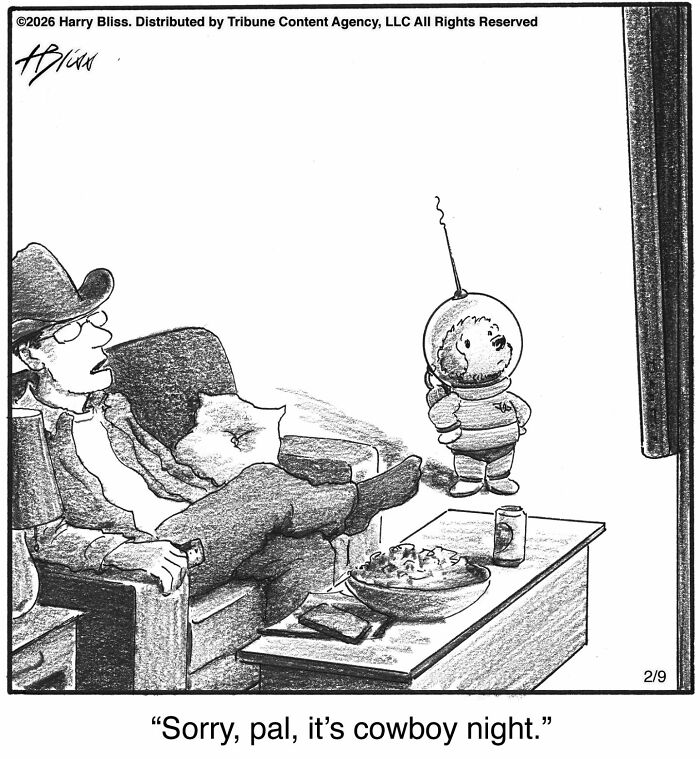
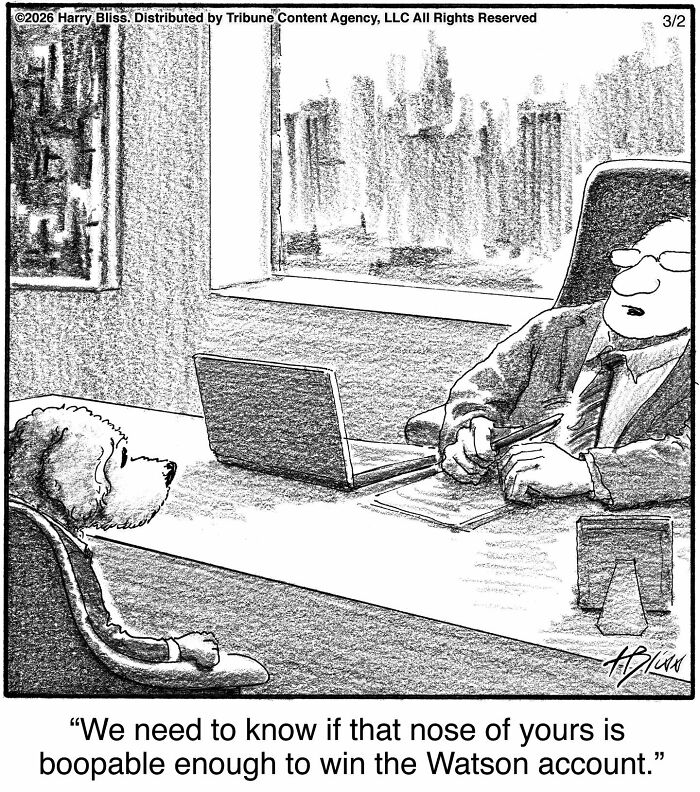
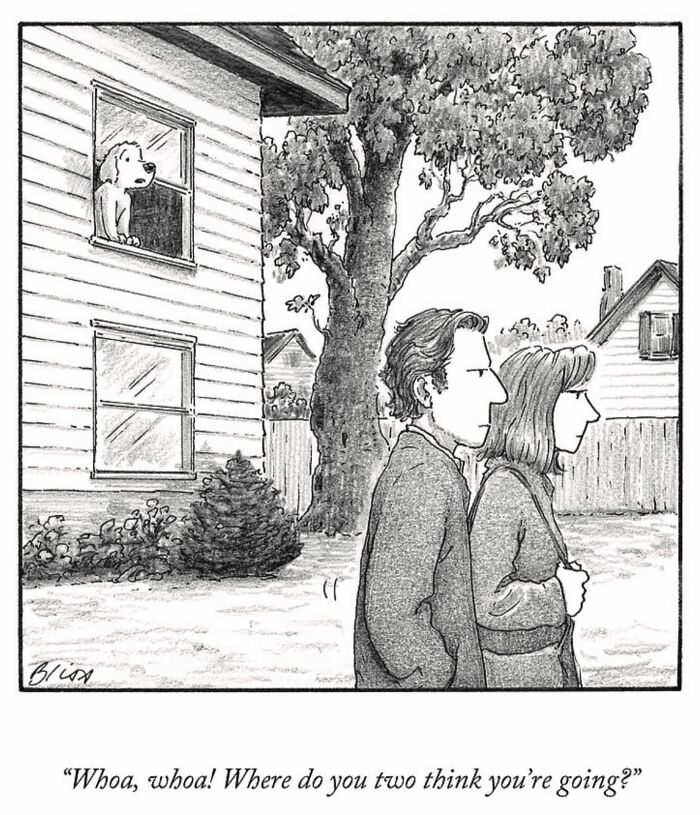
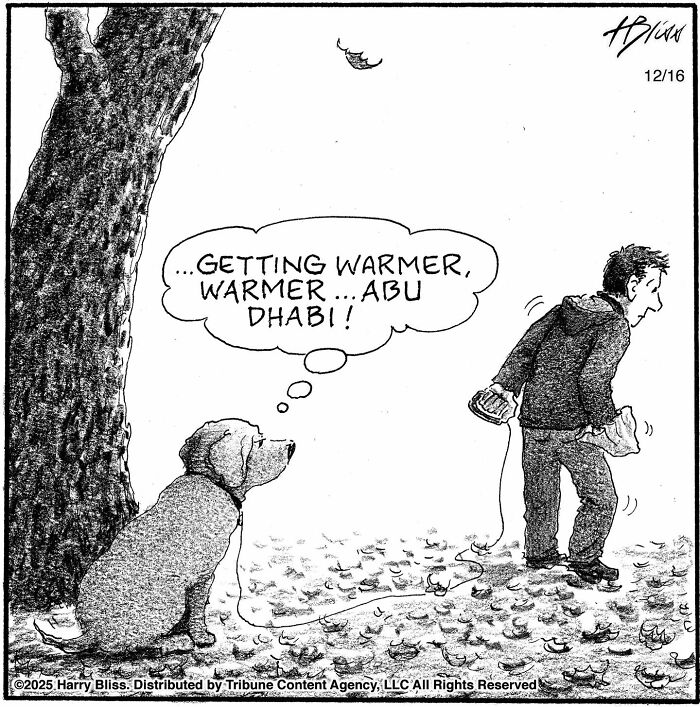
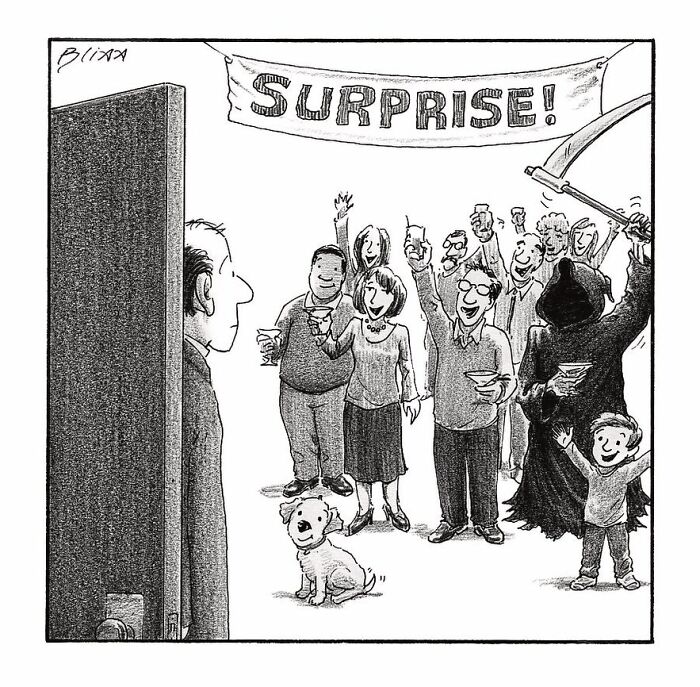
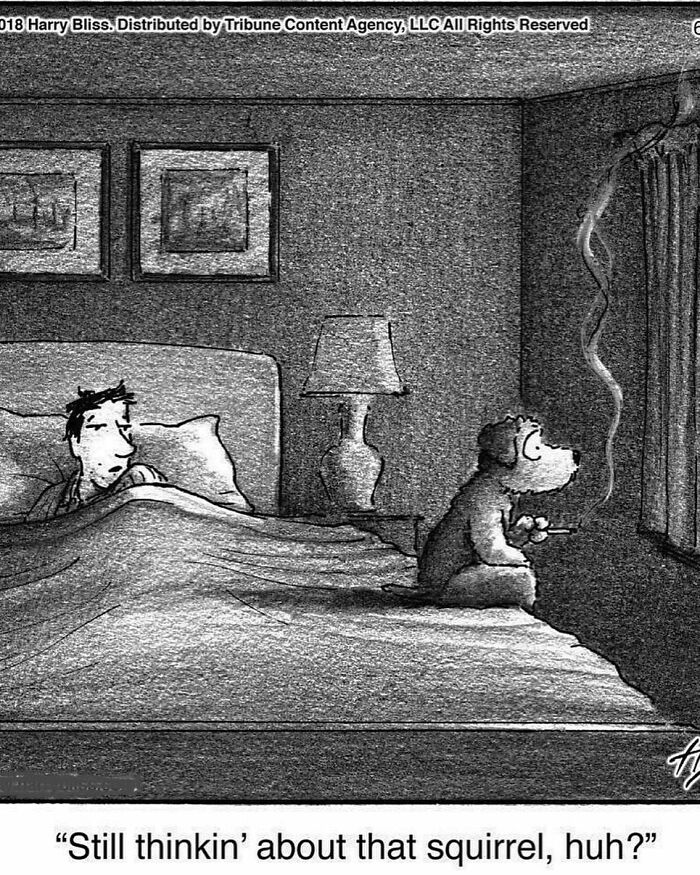
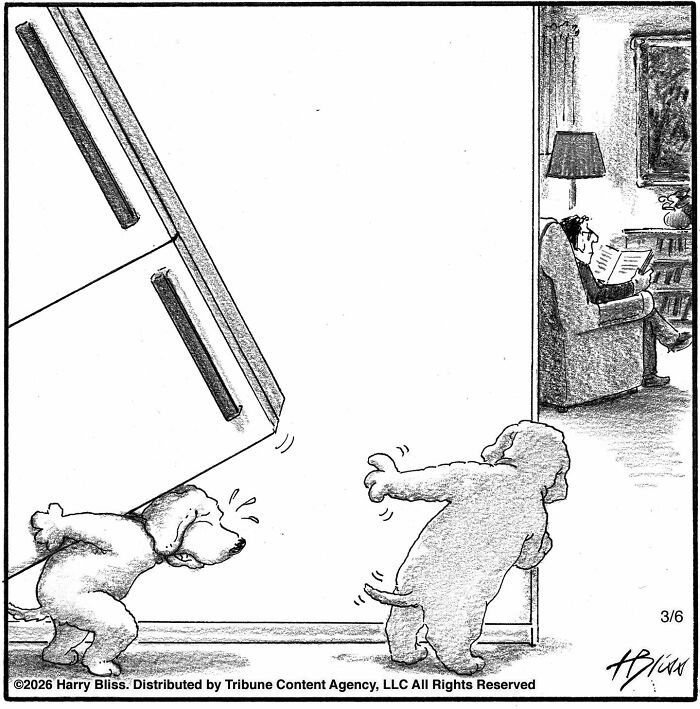
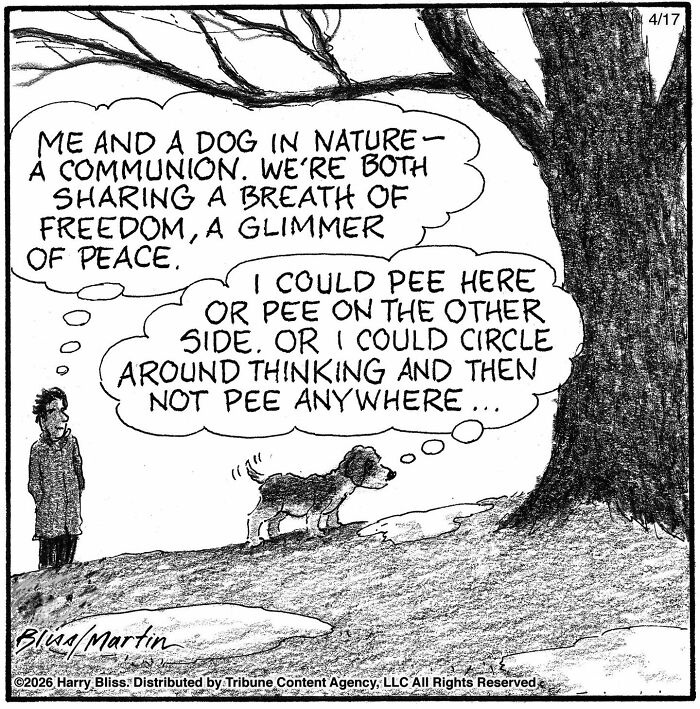
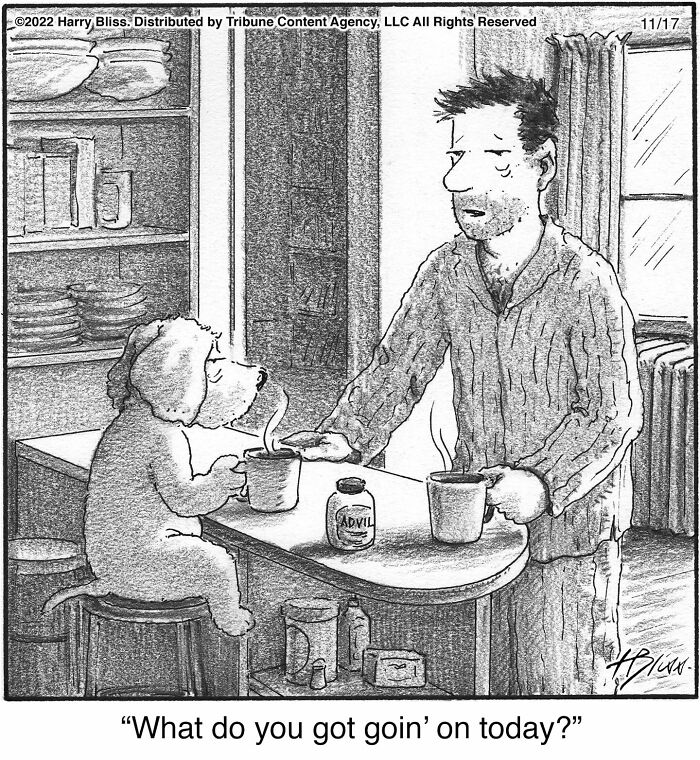
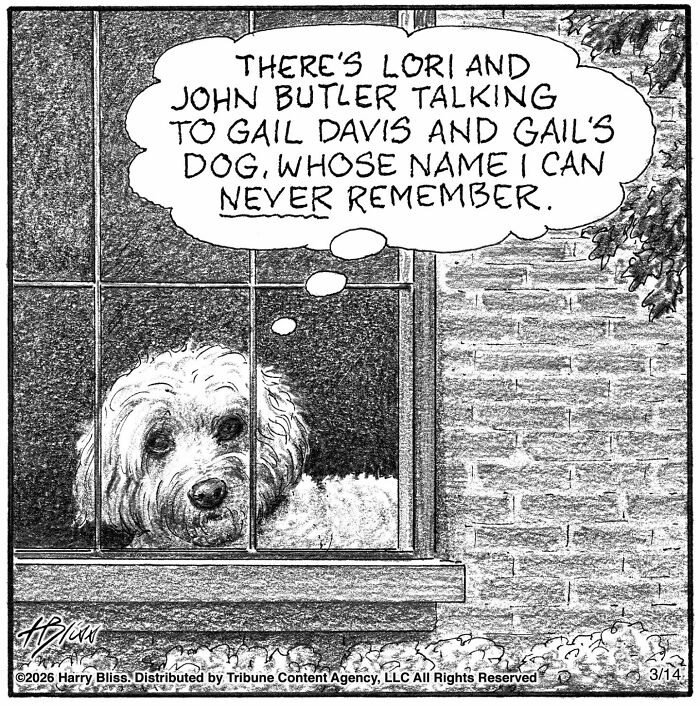
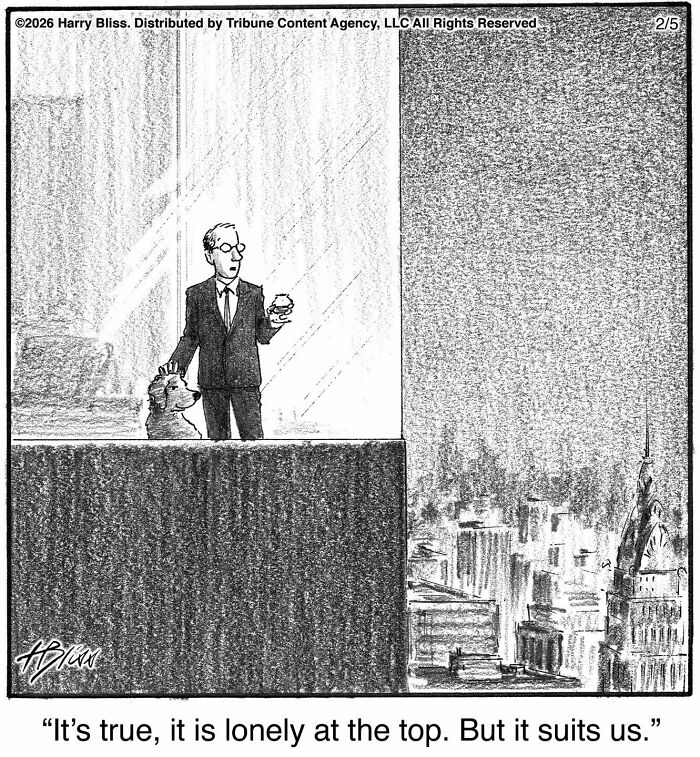
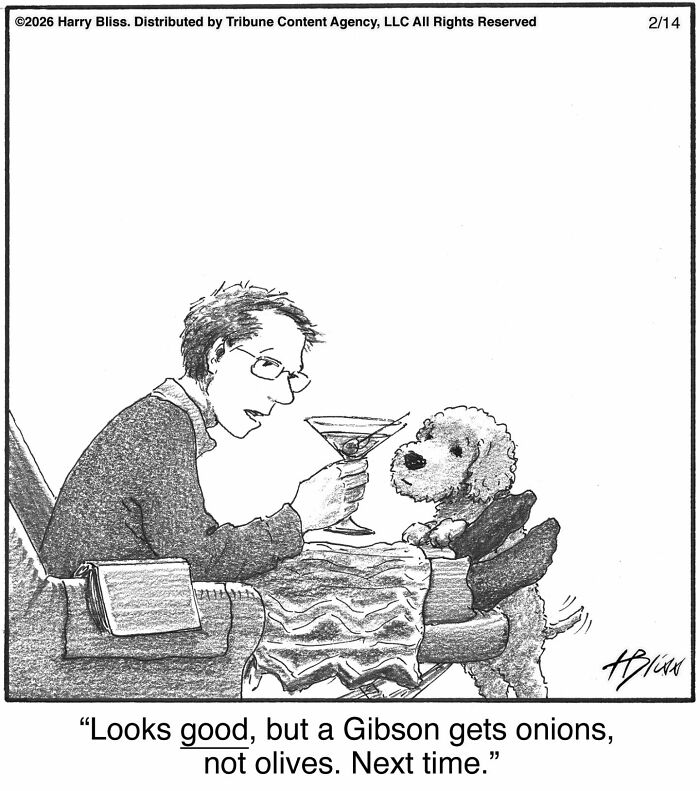
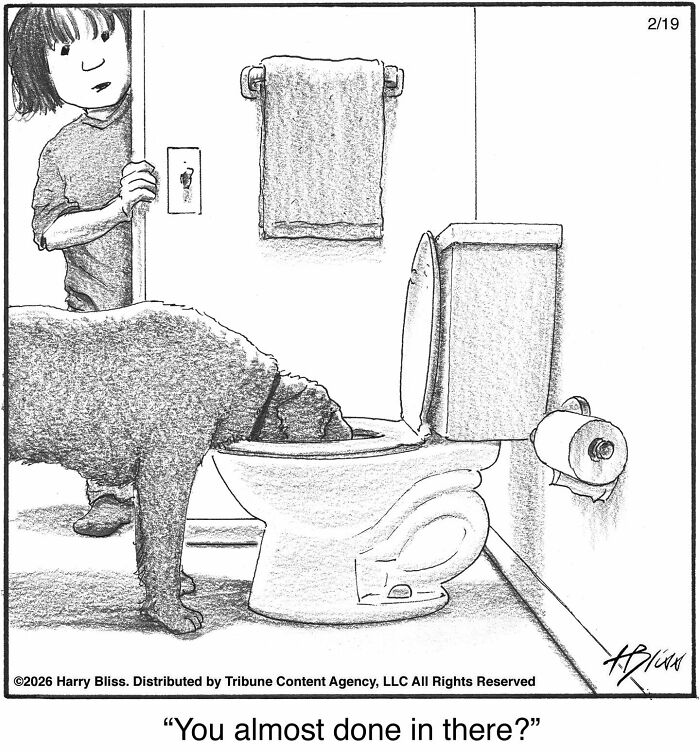
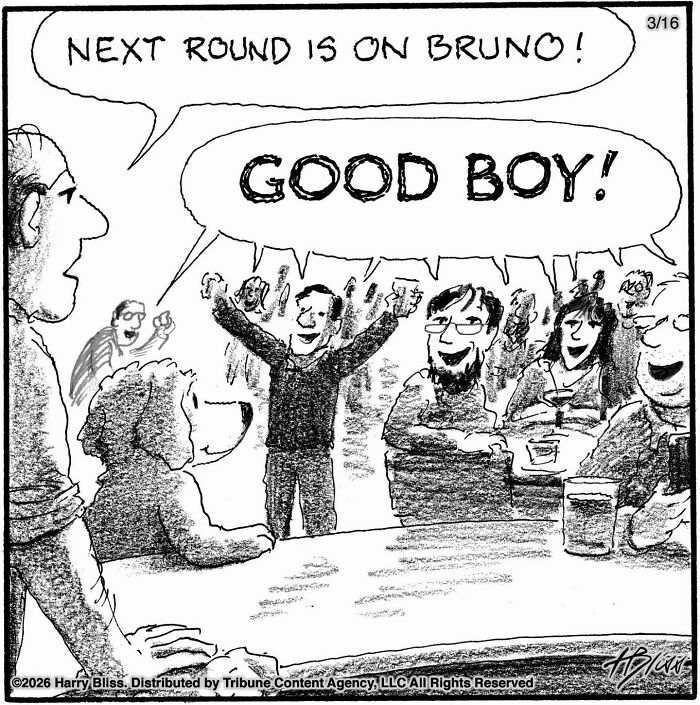
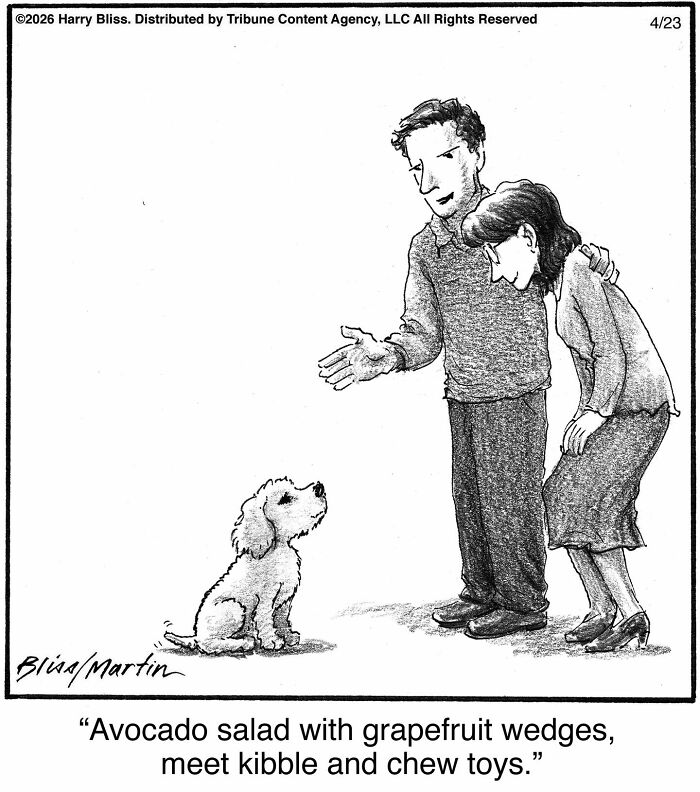
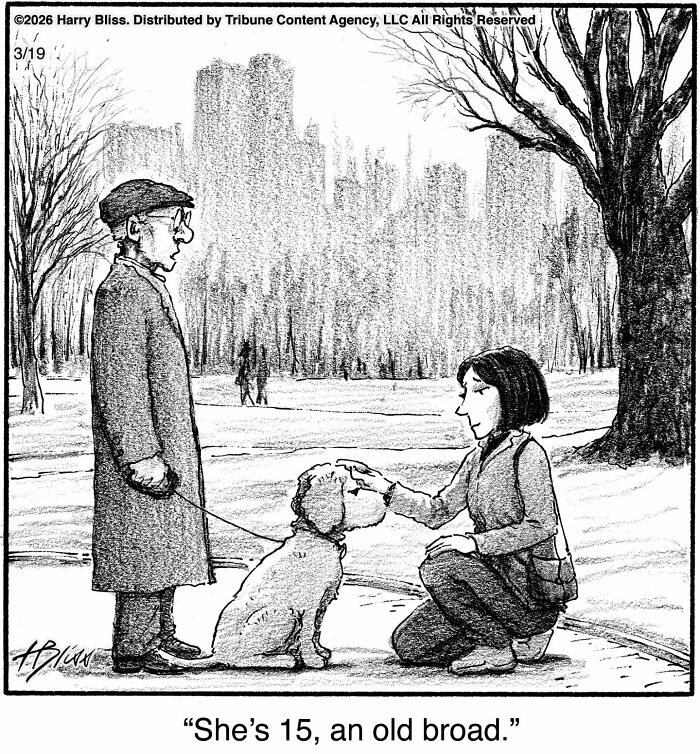
Harry Bliss has spent decades proving that a single panel can say more than pages ever could. Best known for his work in The New Yorker, Bliss has a way of distilling life down to its most revealing moments, often with a dog sitting right at the center of it all. In his world, dogs aren’t background characters or comic relief. They’re observers, confidants, and, more often than not, the emotional core of the story.
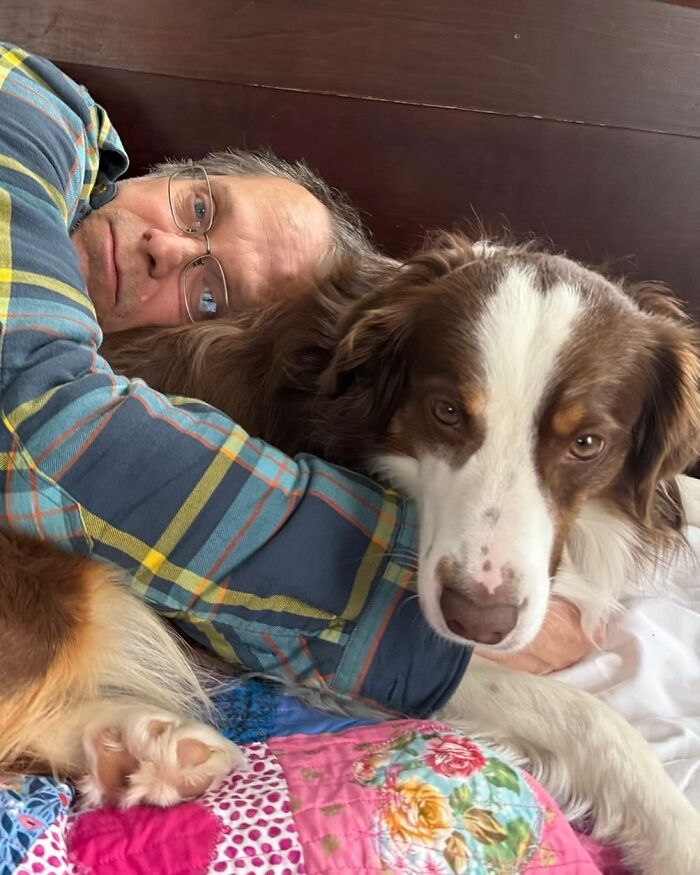
More info: Instagram | store.harrybliss.com
This post may include affiliate links.
That emotional core becomes even more visible in his book "You Can Never Die," which began not as a creative ambition but as a personal necessity. “My book is a memoir, and I began writing it as a way to cope,” Bliss shared in an interview with Bored Panda. “My book is a memoir, and I began writing it as a way to cope with the loss of our beloved dog, Penny, after 17 years,” he said. What started as journaling slowly unfolded into something much more layered, “some autobiographical essays,” as he describes it, until a clearer intention emerged. “I wanted to connect to a reader, have a shared intimacy.”
The process wasn’t easy. “Curating the book was very difficult. I had to weave humor, art, cartoons, raw biographical essays and visceral grief into something that is essentially me.” It took three years to complete, and what came out of it feels less like a project and more like a self-portrait. “If anyone out there wants to get to know who I am, just read the book—it’s all there, the good, the bad, and the hilarious.”

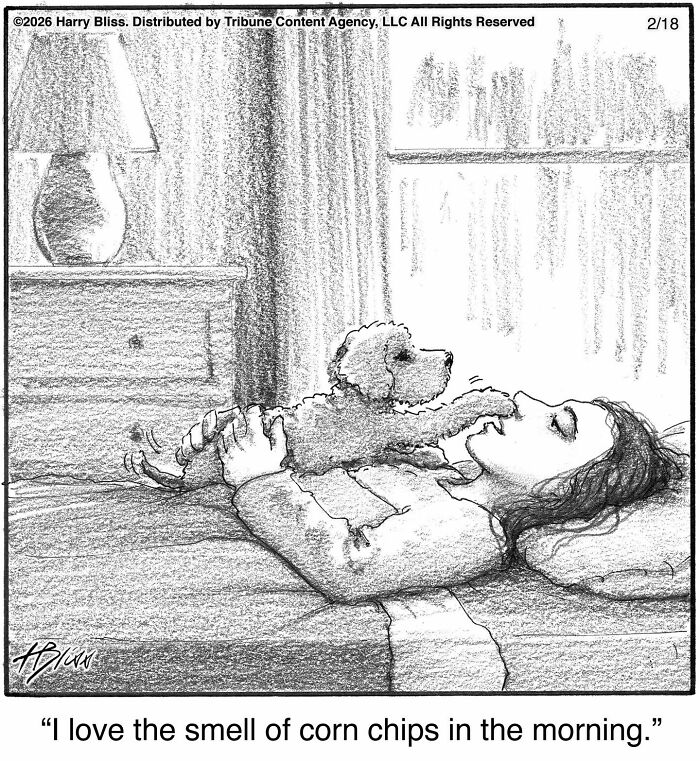
Exactly how it works. I have a cat, not a dog. But the way she sleeps on top of me is so healing to my mind, body, and soul.
That same emotional honesty runs through his relationship with dogs, both in life and in art. When asked where that sensitivity comes from, Bliss doesn’t over-explain it. “I’m not entirely sure… I can only guess that it comes from a deep observation and a curiosity about all things.” But he also pointed to something more personal: “The sensitivity has a direct correlation to the loneliness I had as a child.”
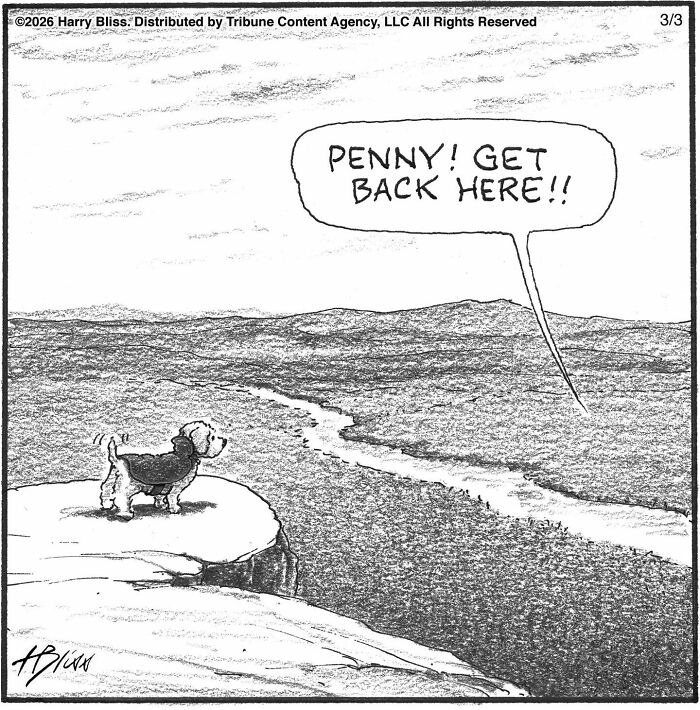
His bond with Penny, in particular, reshaped the way he sees the world. “She was instrumental in teaching me how to slow down. I never pulled on her leash, I always let her take her time.” As she grew older, that connection deepened. “When she aged and became more dependent on us, there was a newfound empathy I began to experience… It’s remarkable that these things can lie dormant in us and a pet can activate them.” That shift naturally found its way into his work: “My work these days is less sardonic, more driven by a mirthful kindness.”
When it comes to creating his dog cartoons, Bliss doesn’t separate imagination from reality; it’s both. “I’ll give you a real-life example,” he said. “I was out walking in the woods with my new dog, Junior. He had grabbed a very large stick. I was talking to my wife, and he ran up behind us and clipped her leg.” Her reaction made the moment unforgettable: “She yelled, ‘Oww! Junior just Tonya Hardinged me!’” Bliss laughed. “That made me laugh—real life!”
In the end, what he hopes people take away isn’t complicated. “I want them to laugh or smile,” he said, “but embedded in this I want them to feel a kindness.” It’s a simple idea, but one that is truly important: “There isn’t enough of this in the world these days. Slow down and be kind.”

"Do you have any idea how much that stuff COSTS??!? And how hard it is to find a good fit?"
Cuts both ways, I guess. Mike walks into the pet store or the dog park, and it's all "Hey! It's Ren's Dad!"














 No fees, cancel anytime