Get Premium
Dark mode theme is available exclusively for premium users. Learn more about the benefits of subscribing.
No fees, cancel anytime.

 Dark Mode Ad-Free Browsing Unlimited Content
 Ad-Free Browsing Unlimited Content Dark Mode
Join 1.2 million Panda readers who get the best art, memes, and fun stories every week!
34submissions
1week left

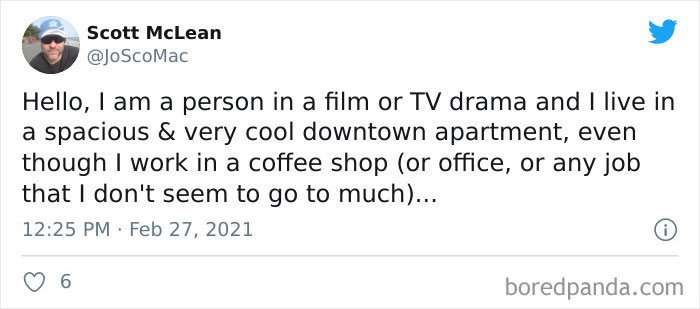
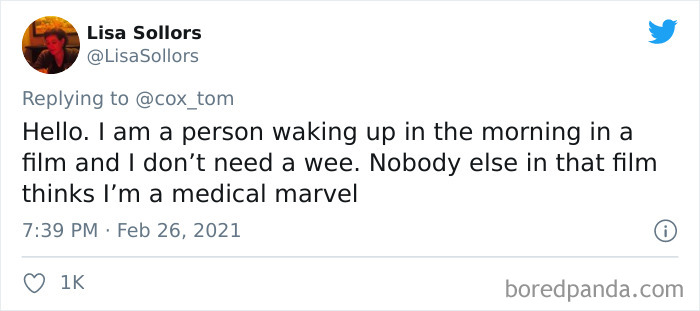
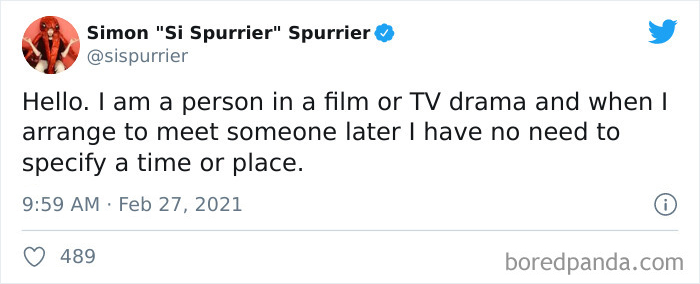
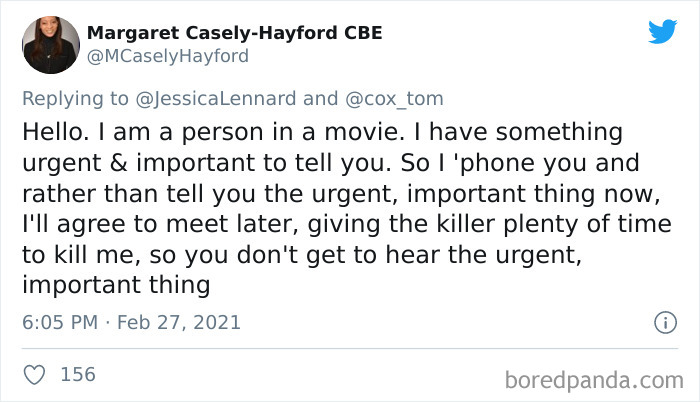
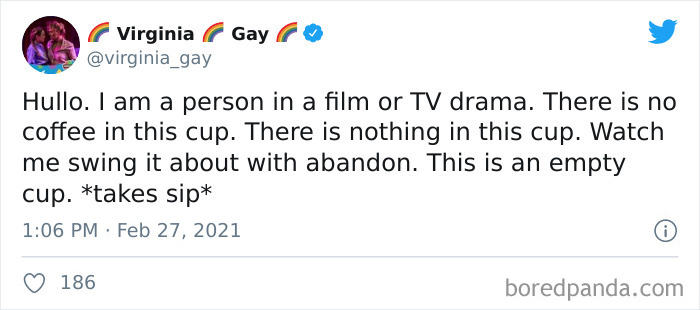
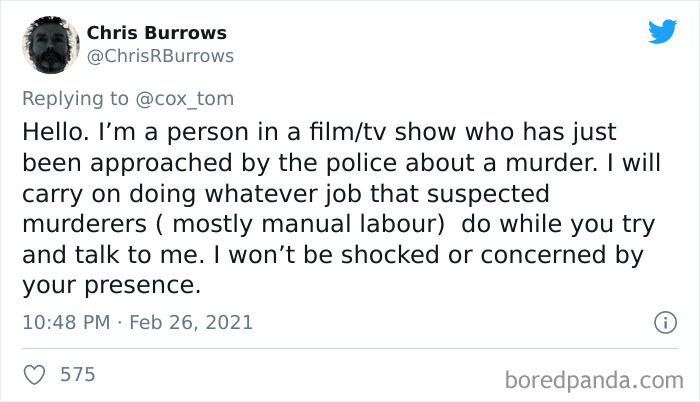
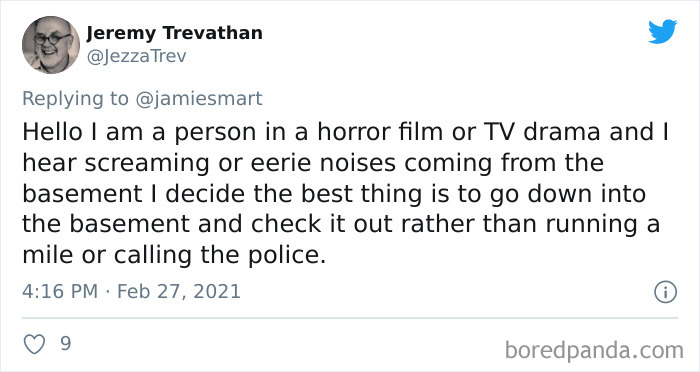
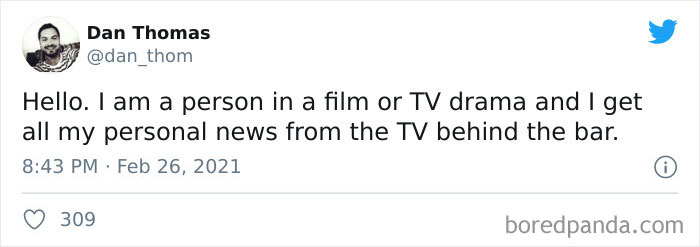
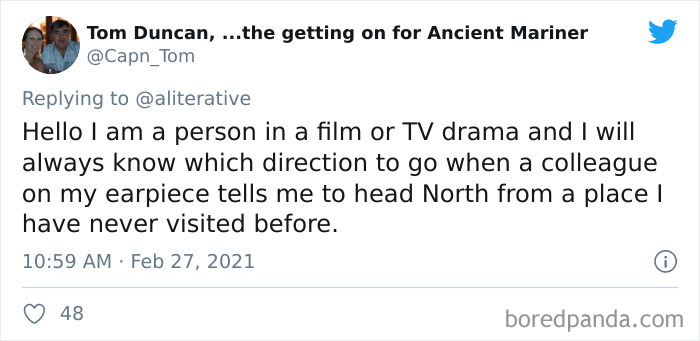
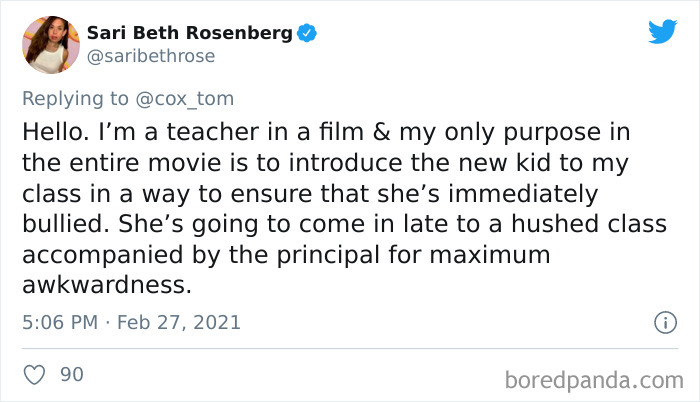
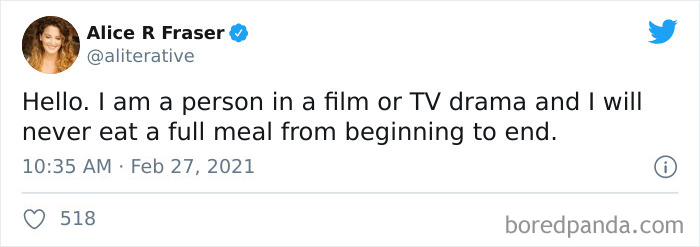
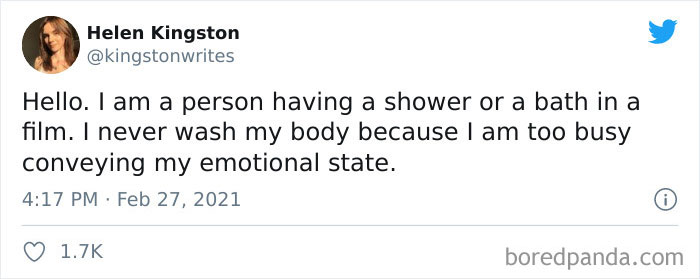
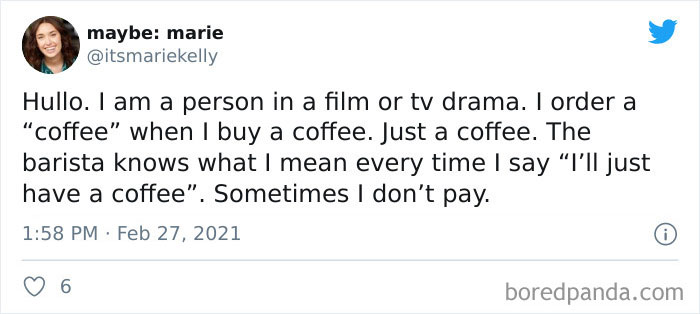
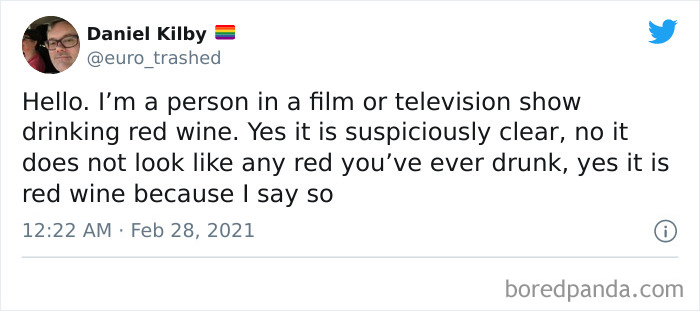
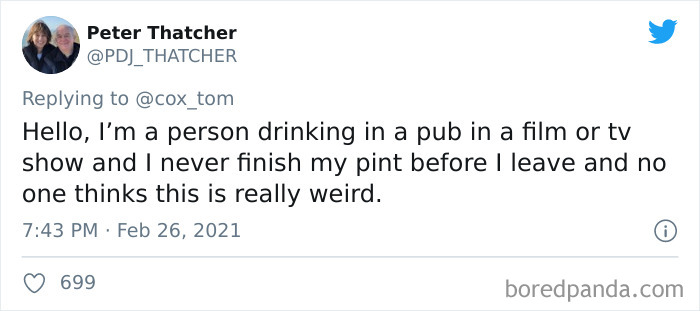
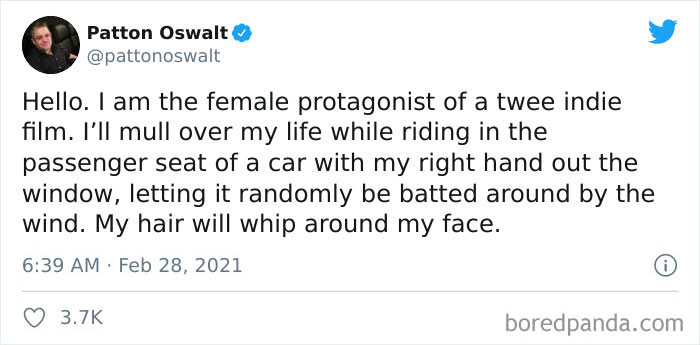
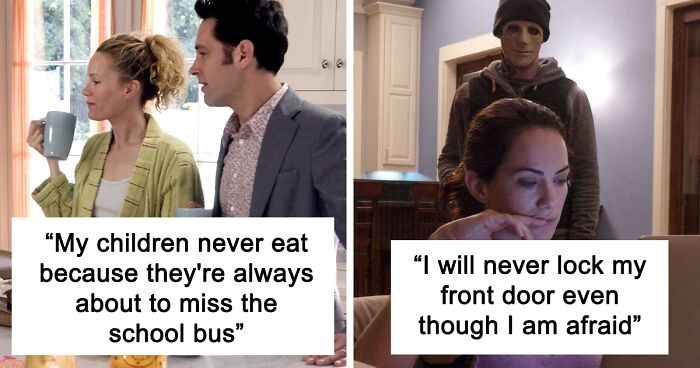
When you think about it, TV Land is such a weird place. Characters never seem to finish their meals (and leave most of their food untouched in cafes which hurts me on a personal level), they don’t say ‘goodbye’ when they end their calls, and whenever they switch on the TV, there’s always a news segment on that’s relevant to their situation.
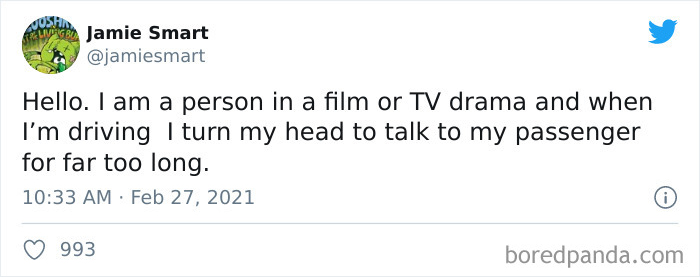
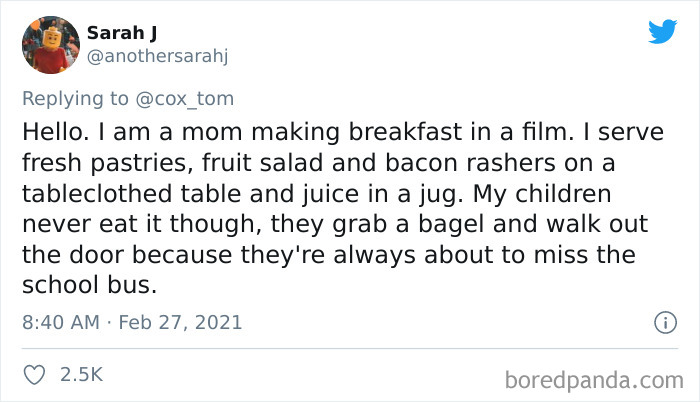
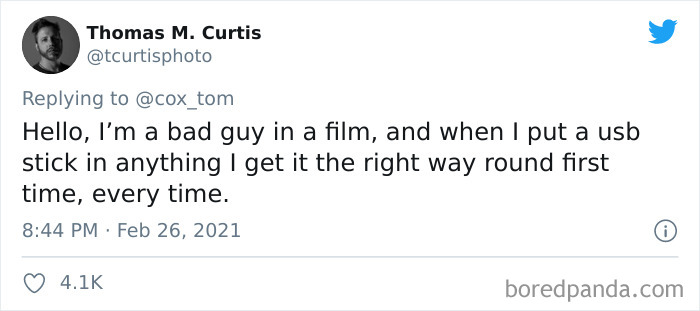
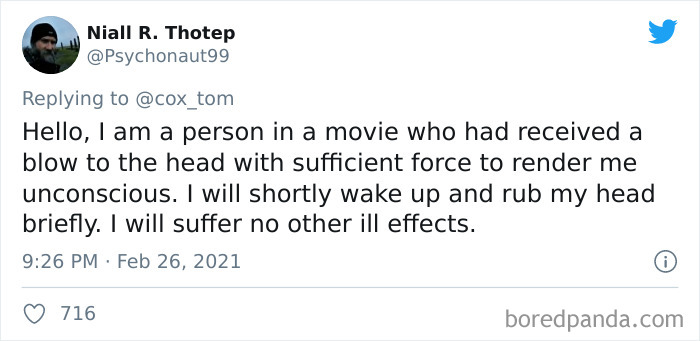
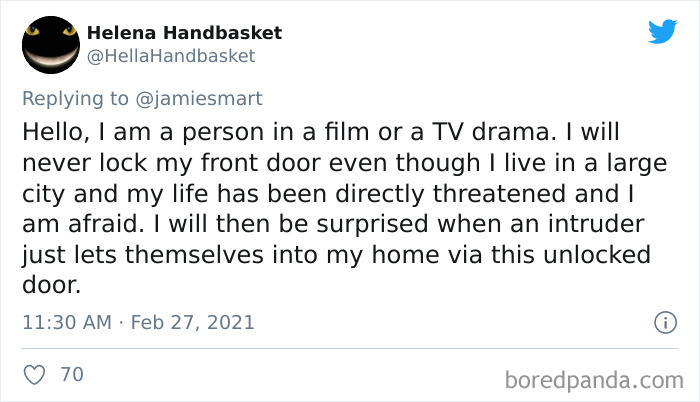
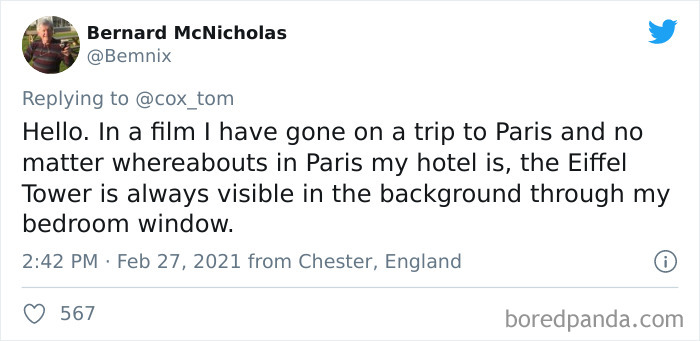
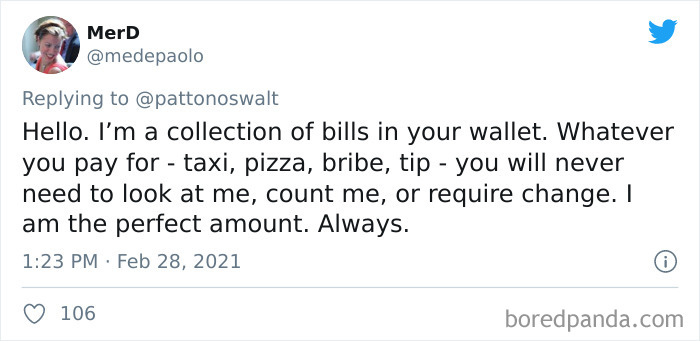
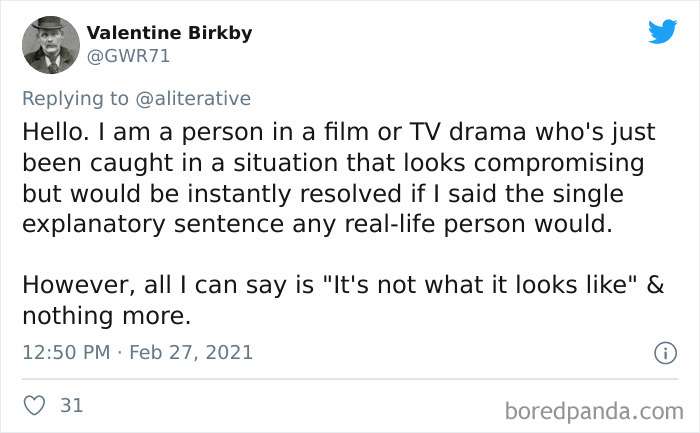
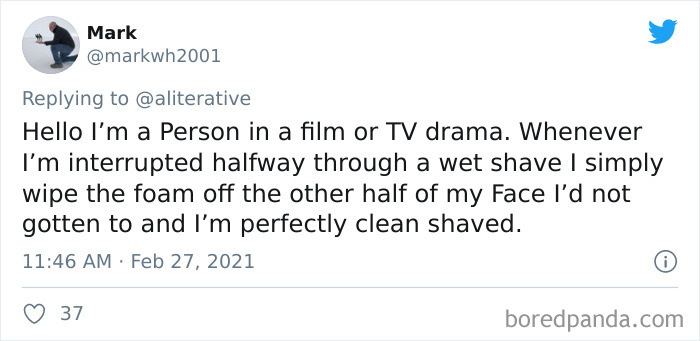
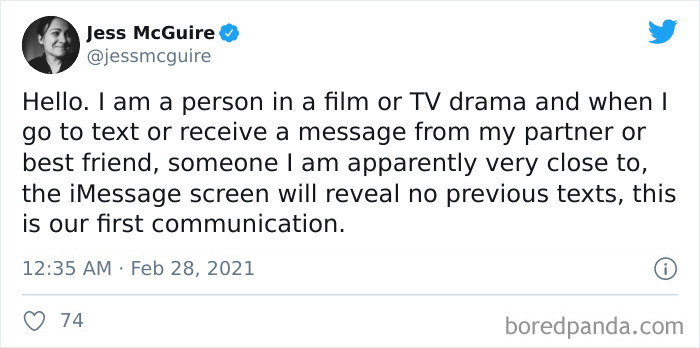
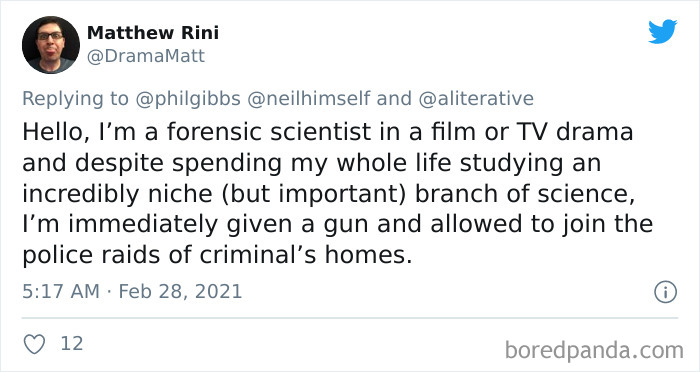
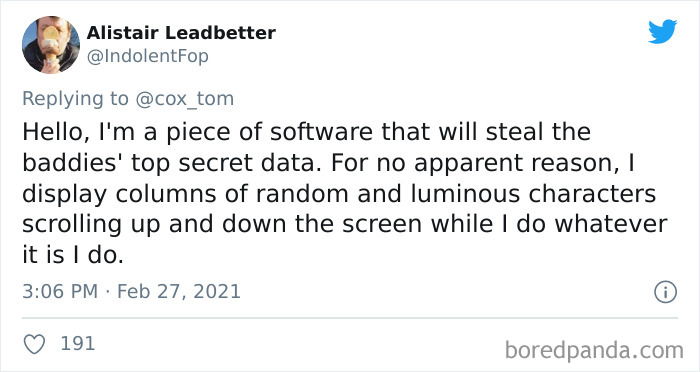
Really, life seems much more convenient on-screen. But it is raising some eyebrows. So much so that the people over on Twitter are posting example after example of how bizarre life is when you’re a film or TV character. Scroll down to check out these funny quirks and remember to upvote the ones that made you pause for a moment.
Pop culture and entertainment expert Mike Sington, who is a former Senior Executive at NBCUniversal, explained to Bored Panda that unrealistic scenarios and acting decisions are required to keep the plot moving on a TV show. "No one wants to see characters eat a full meal, that would bring a storyline to a screeching halt! Things like seeing a relevant news segment playing can immediately fast forward a storyline or emphasize a plot point. It’s a common tool that writers use," he said. And we fully agree. (Though the Joey Tribbiani in all of us is wondering how good the meal has to be to get featured from start to finish.)
Click here & follow us for more lists, facts, and stories.
This post may include affiliate links.
Mike was brutal but honest in his evaluation of how much excitement there is any single one of our lives. "I’d estimate 80% of your real life would have to edited or rewritten to make it compelling and interesting to watch on screen. That may sound harsh because your real life is interesting to you, but probably not so much to a mass audience."
He added: "Deep down you know it because you’re only posting the highlights on social media. You’re actually already self-editing your own life for your audience."
We rarely think about how peculiar people act in movies and on TV shows because we’re so used to things that we don’t notice the discrepancies between their behavior and our lives. In other words, we’ve fully absorbed the weirdness and we’re no longer bothered by it… unless somebody on social media reminds us of it.
The trend seems to have been started by Tom [private part], a British author who was born in Nottinghamshire. He has published nearly a dozen books so far and plans to release 2 more in 2021. Some of the themes that he repeats in his books have to do with cats, golf, folklore, wildlife, local history, rock, and rambling.
Tom’s thread, which he started on the 26th of February, got over 15k likes and soon spread like wildfire. In fact, if you’ve been browsing Twitter this weekend, you might have noticed at least one or two people sharing the weird things that characters tend to do that befuddle us.
However, there are plenty of good reasons why movies and shows are so far removed from our daily lives. In brief, living as a human being is… quite ordinary. There’s lots of downtime. Lots of unscheduled pee breaks that get in the way of dramatic moments. And plenty of dullness without anything exciting happening.
That’s why it’s so important to edit real life into something that’s fit for watching. Sure, there will always be some people who have the patience to watch paint dry/somebody working in their cubicle all day long only to go back home, microwave their dinner, and play video games. However, it doesn’t make for riveting TV for the vast majority of us.
By editing out inconveniences like needing to eat full meals (and the guilt of leaving so much food behind, as well as wasting food), showing people working and doing ordinary stuff like washing the dishes, scriptwriters, directors, and actors can get to the most exciting and interesting tidbits. The meat of things, so to speak. (Halloumi if you’re vegetarian, lettuce if you’re vegan.)
It probably won’t surprise you to learn that audiences tend to have very short attention spans. Digital Information World explains that back in 2000 we had an average attention span of 12 seconds. In 2015, this dropped to just over 8 seconds. Research has shown that our attention spans are dropping.
The media we consume changes how attentive we are which in turn changes the media even more. In a fast-paced world, there’s no time for patience, no place for slow storylines and buildup, and especially no room for boring things that regular people do in real life that would mess with the fast pace of the story.
However, even though our attention spans might be decreasing, it’s not just that. They’re being fractured as well. One screen isn’t enough for us anymore. A recent Total Audience Report that was conducted in 2018 by Nielsen showed that a whopping 88 percent of adults living in the US used their digital devices while watching TV either rarely, occasionally, or frequently.
That means that a single screen is no longer enough to please viewers who are busy googling stuff related to what they’re watching, posting their thoughts about what’s happening on social media, or discussing the show with their friends. It’s a different form of engagement that doesn’t necessarily mean having your audience’s eyes glued to one screen.
Something else that we rarely think about (unless you’re a pro in the field) is how strangely people talk. When you’re chatting to someone (masked) face to (masked) face, everything sounds great. But if you happen to record or film the conversation, you might find a different side to the tale: the way that we speak in real life is often disorganized, broken, and unclear.
That’s why scriptwriters have no other choice than to write dialogue that people can actually understand. Sure, not many people speak this way IRL, but we have to think of what’s best for the audience. Do you want to listen to a guy or gal ramble on for 10 minutes or do you want a confident protagonist who enunciates well, argues well, and drops snappy one-liners?
Of course, that doesn’t mean that ‘realistic dialogue’ has no place in filmography. It does, but it has to be skillfully crafted. Filmmakers like Woody Allen create realistic-sounding dialogue and it can be jarring to most of us who have grown up on a diet of delicately-curated sentences.
You might also like: Hollywood careers: 29 actors who squandered their potential









 No fees, cancel anytime